Fiction Nation: Legal and Jurisprudence Systems


Section 4: Legal and Jurisprudence Systems as Fictions

The Nature of Legal Systems

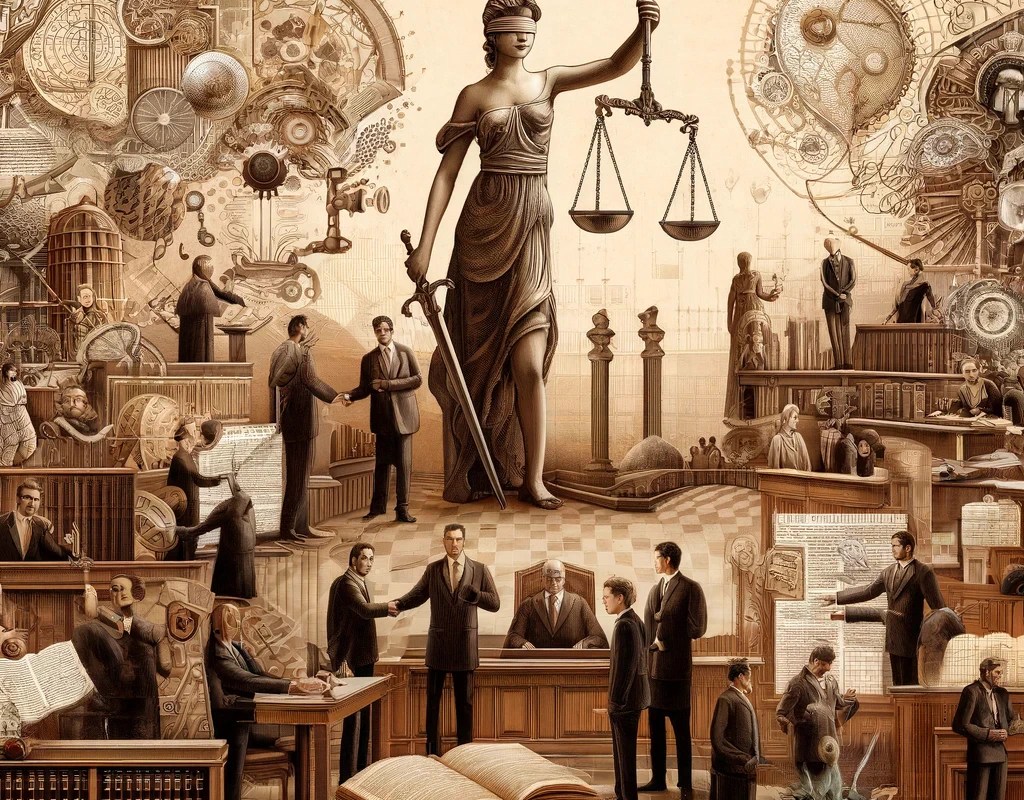
Legal and jurisprudence systems are among the most complex and entrenched fictions in society. Laws are human-made rules that govern behaviour, established by governments and enforced by judicial institutions. While laws aim to create order and justice, they are ultimately constructs, products of human agreement and cultural evolution.

The concept of law varies significantly across cultures and historical periods. Ancient legal codes, such as the Code of Hammurabi or Roman law, illustrate the long-standing tradition of codifying rules to govern society. However, these codes, like modern laws, are not natural phenomena but rather inventions designed to regulate human interactions and maintain social cohesion.

The Evolution of Legal Fictions

Legal systems have evolved alongside societies, adapting to changes in cultural norms, technological advancements, and political landscapes. The development of common law, for example, is a testament to the adaptive nature of legal systems. Common law, which originated in medieval England, is based on judicial precedents and case law rather than written statutes. This system relies heavily on the interpretation and application of past decisions, demonstrating how legal principles are constructed and reconstructed over time.

Moreover, legal fictions are often used within these systems to achieve practical outcomes. For instance, the concept of corporate personhood, where a corporation is treated as a legal person with rights and responsibilities, is a legal fiction designed to facilitate business operations and protect individual shareholders from certain liabilities. This illustrates how legal constructs can shape economic activities and social relations.

Implications of Legal Fictions

The recognition that legal systems are fictions has profound implications for how we understand and engage with the law. It highlights the role of human agency in creating and modifying legal norms, suggesting that laws are not immutable truths but rather adaptable tools for governance.

Legal systems are often seen as impartial and objective, but they are deeply influenced by the values, beliefs, and power dynamics of the societies that create them. This can lead to biases and inequalities being embedded within legal frameworks. For example, historical laws that discriminated based on race, gender, or class demonstrate how legal fictions can perpetuate social injustices.

Understanding the fictional nature of legal systems also opens the door to questioning and reforming these systems. It encourages us to consider alternative approaches to justice and governance that may better reflect contemporary values and address the needs of diverse populations.

The Role of Legal Narratives

Legal narratives, the stories told through laws and legal decisions, play a crucial role in shaping public perceptions and societal norms. These narratives construct realities that influence how individuals and communities understand their rights, responsibilities, and relationships with the state.

The work of scholars like Robert Cover, who in “Nomos and Narrative” (1983) argued that law is a system of meaning-making through narratives, underscores the importance of storytelling in the legal realm. By examining these narratives critically, we can uncover the underlying assumptions and power structures that they reinforce.

Future of Legal Systems

As societies continue to evolve, so too will their legal systems. The rise of international law, human rights conventions, and transnational legal frameworks reflects the growing interconnectedness of the world. These developments challenge traditional notions of state sovereignty and domestic legal autonomy, suggesting a future where legal systems may become even more complex and intertwined.

By recognizing legal systems as fictions, we are better equipped to navigate and influence these changes. This awareness can lead to more inclusive and equitable legal frameworks that serve the broader goals of justice and human flourishing.

References

  1. Cover, Robert. “Nomos and Narrative” (1983).
  2. Graeber, David. Debt: The First 5,000 Years (2011).
  3. Anderson, Benedict. Imagined Communities: Reflections on the Origin and Spread of Nationalism (1983).
  4. Giddens, Anthony. The Consequences of Modernity (1990).
  5. Beck, Ulrich. Cosmopolitan Vision (2006).

Fiction Nation: Economies & Money (part 3)

➡ Fiction Nation: Living in a World of Fictions (section 5)

Fiction Nation: The Concept of Fiction

Video: YouTube rendition of the content on this page.

Introduction

In our daily lives, we encounter numerous constructs that shape our understanding of the world. These constructs, though deeply ingrained in our societies, may be more fictional than factual. We accept the existence of nations, economies, money, and legal systems as fundamental aspects of our reality, yet these entities are human-made inventions. In this article, we will explore the notion that many of the pillars supporting our world are, in fact, fictions. By examining the nature of these fictions, we can better understand their impact on our lives and how they shape our perceptions and interactions.

Section 1: The Concept of Fiction

Definition of Fiction

Oxford Languages via Google defines fiction as:

fic·tion /ˈfɪkʃən/ noun

  1. literature in the form of prose that describes imaginary events and people.
  2. something that is invented or untrue.
    they were supposed to be keeping up the fiction that they were happily married

Fiction, in its most common sense, refers to imaginative literature—stories created from the author’s mind, describing events and characters that do not exist in reality. However, fiction also encompasses broader definitions, including any invented or untrue concept. This dual definition highlights the versatility of fiction: it is not only the realm of novels and stories but also the domain of societal constructs and beliefs that, while not grounded in tangible reality, exert a powerful influence over our lives.

Examples of Fiction in Everyday Life

Fiction extends beyond the pages of a book or the scenes of a movie. It permeates various aspects of our everyday existence. For instance, consider the concept of a corporation. Legally, a corporation is an entity that possesses many of the rights and responsibilities of a person, yet it is not a physical being—it is a construct, a legal fiction, created to facilitate economic activities. Similarly, brands and trademarks are fictions designed to create distinct identities for products and services, influencing consumer behaviour and shaping market dynamics.

The significance of these fictions lies in their ability to organize and structure society. They provide frameworks within which we operate, enabling complex interactions and collaborations. However, it is crucial to recognize their invented nature, as this awareness allows us to question and, if necessary, reshape these constructs to better serve our collective needs.

By acknowledging the fictional basis of many societal elements, we can unravel the layers of assumptions and beliefs that underpin our reality. This understanding sets the stage for a deeper exploration of specific fictions—nations, economies, money, and legal systems—and their profound impact on our world.

Continue to Fiction Nation: Section 2

Identity as Fiction: You Do Not Exist

Identity is a fiction; it doesn’t exist. It’s a contrivance, a makeshift construct, a label slapped on to an entity with some blurry amalgam of shared experiences. But this isn’t just street wisdom; some of history’s sharpest minds have said as much.

— Friedrich Nietzsche

Think about Hume, who saw identity as nothing more than a bundle of perceptions, devoid of any central core. Or Nietzsche, who embraced the chaos and contradictions within us, rejecting any fixed notion of self.

Edmund Dantes chose to become the Count of Monte Cristo, but what choice do we have? We all have control over our performative identities, a concept that Judith Butler would argue isn’t limited to gender but applies to the very essence of who we are.

— Michel Foucault

But here’s the kicker, identities are a paradox. Just ask Michel Foucault, who’d say our sense of self is shaped not by who we are but by power, society, and external forces.

You think you know who you are? Well, Erik Erikson might say your identity’s still evolving, shifting through different stages of life. And what’s “normal” anyway? Try to define it, and you’ll end up chasing shadows, much like Derrida’s deconstruction of stable identities.

— Thomas Metzinger

“He seemed like a nice man,” how many times have we heard that line after someone’s accused of a crime? It’s a mystery, but Thomas Metzinger might tell you that the self is just an illusion, a by-product of the brain.

Nations, they’re the same mess. Like Heraclitus’s ever-changing river, a nation is never the same thing twice. So what the hell is a nation, anyway? What are you defending as a nationalist? It’s a riddle that echoes through history, resonating with the philosophical challenges to identity itself.

— David Hume

If identity and nations are just made-up stories, what’s all the fuss about? Why do people get so worked up, even ready to die, for these fictions? Maybe it’s fear, maybe it’s pride, or maybe it’s because, as Kierkegaard warned, rationality itself can seem mad in a world gone astray.

In a world where everything’s shifting and nothing’s set in stone, these fictions offer some solid ground. But next time you’re ready to go to the mat for your identity or your nation, take a minute and ask yourself: what the hell am I really fighting for? What am I clinging to?

Fact & Fiction

“Facts are the strangest sort of fiction.”

— Bry Willis

There, I said it. Perhaps I need to help find this quote a home in a story.

Some people love to hide behind facts, convinced that they are somehow inviolable truths. There are facts, but then there are interpretations of them. Therein lies the rub.

As my day taught me, there are three sides to every story. One side, the other side, and the truth. This truth is analogous to the fact of the matter, but it is never directly accessible, and so any started fact is necessarily a constructed fiction, no matter how committed we are to it. This includes tautological facts, which are simply whims of nomenclature.

Evolution of Free Will

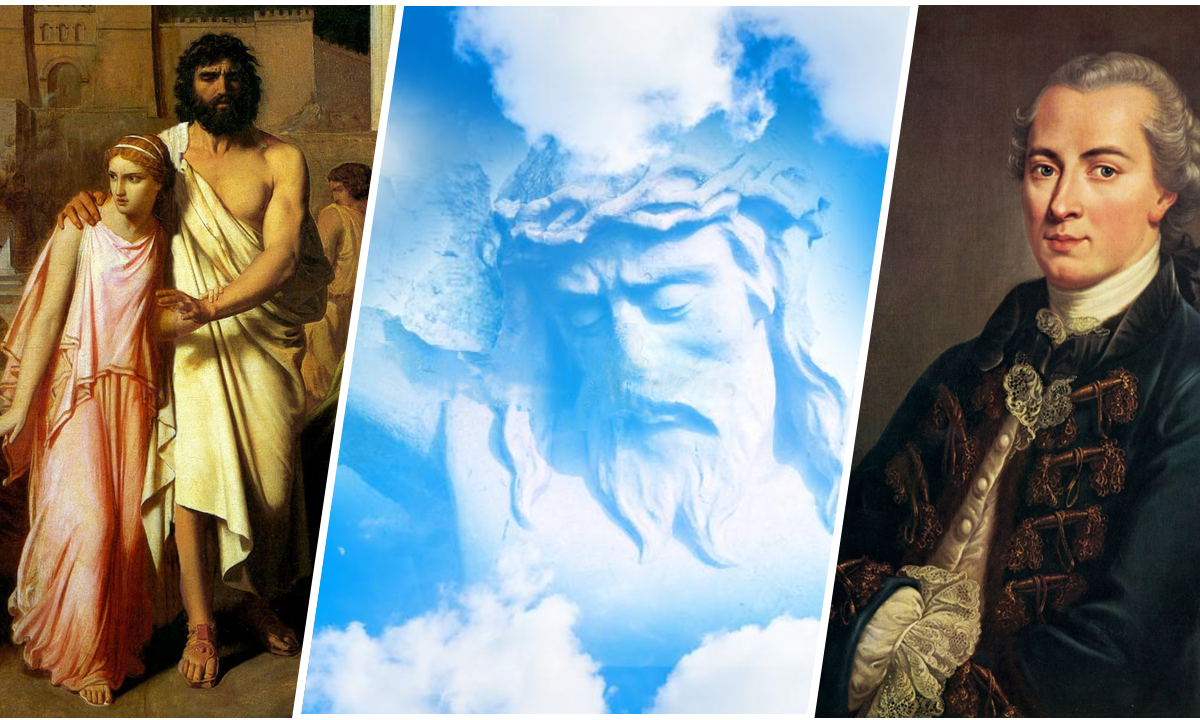
The more I read about free will the more I feel that it is a modern invention. I don’t mean to claim that this is cut and dry, but as the image accompanying this post suggests, Sophocles’ story of Œdipus Rex is precisely about a man attempting to escape his fate. Without getting mired in a discussion about the distinction between fate and determinism, we understand that the plight of Œdipus is set in stone.

As I said, I am simplifying as I know there are authors debating free will before this, but it is also known that many people simply believed that their lives were governed. I suspect that in certain slave societies this might be a source of comfort. If Buddhist thought that life is suffering holds true, what better consolation than it was just meant to be, I might as well just make the best of it.

Enter Christianity and Aquinus. Their god may have set things up, but there can be no notion of growth or responsibility without free will, so we’d better create a narrative around this. How an omniscient creator can not know every possible plotline and twist remains a question, though rationale akin to retrograde motion has been suggested to accommodate it. Now, it seems that we’ve got a little less determined and a little freer if I think of it as a zero-sum game.

Si Dieu n’existait pas, il faudrait l’inventer

Voltaire, Épître à l’Auteur du Livre des Trois Imposteurs (1769)

By the time Kant enters the picture, he rather spills the beans on the whole narrative. Perhaps riffing on Voltaire’s quip, ‘If God did not exist, it would be necessary to invent Him‘. Kant tells us that if we need to blame people and presume responsibility, then we need to assume free will. And so we did.

In this day and age, most people have been marinated in this worldview, so it’s difficult to see outside of this frame. The rhetoric of free will has been particularly effective. Though we have evidence of free will not being dominant in some cultural conversations, we have little idea in preliterate societies. I’d be interested to gain additional perspective from historians or anthropologists. Some may have already been published. I’ve already been so overwhelmed with the deluge of information and opinions to date. I’ve learned much and have been introduced to many new scholars. As I wrote the other day, this is somewhat daunting. I wish I were a grad student and could justify spending so much time trying to justify my position.

The Appointment in Samarra*

There was a merchant in Bagdad who sent his servant to market to buy provisions and in a little while the servant came back, white and trembling, and said, Master, just now when I was in the marketplace I was jostled by a woman in the crowd and when I turned I saw it was Death that jostled me. She looked at me and made a threatening gesture, now, lend me your horse, and I will ride away from this city and avoid my fate. I will go to Samarra and there Death will not find me. The merchant lent him his horse, and the servant mounted it, and he dug his spurs in its flanks and as fast as the horse could gallop he went. Then the merchant went down to the marketplace and he saw me standing in the crowd and he came to me and said, why did you make a threatening gesture to my servant when you saw him this morning? That was not a threatening gesture, I said, it was only a start of surprise. I was astonished to see him in Bagdad, for I had an appointment with him tonight in Samarra.

I was astonished to see him in Bagdad,
for I had an appointment with him tonight in Samarra.

Death

I love this story of fatalism. Originally from the Babylonian Talmud, Sukkah 53a, it’s a story about one attempting to alter their determined fate. An interesting side-comment on the original version. The last line attributes fate to the servant’s feet.

A man’s feet are responsible for him; they lead him to the place where he is wanted

Babylonian Talmud, Sukkah 53a

This interpretation would allow for the feet to be determined but in conflict with the intellect and reason of the head, much as is said about the conflict between the head and the heart. It could be argued that the only fate this accounts for is that of death, but that’s well beyond my scope of inquiry.

Final Note

Some people seem to not quite grasp the distinction between constructed and unreal. Many things are human social constructs, from money to states and countries, to nations, to governments, to ethnicities, and to gender. Even sex. All of my favourite weasel words are constructs.

But there’s a difference between money and unicorns. No amount of money can buy you a unicorn. This is the difference between fiction and figment. We can say that money is ‘real’ insomuch as it affects our everyday lives. We transact. We buy things. We sell things. It’s an agreed-upon medium of exchange. Without going into details, long before cryptocurrency, most money is in the form of computer bits and bytes—rather it has no form. The currency and coins we can touch are a small fraction of the money that exists. The money behind your credit card or debit card is not banknotes—and it’s not gold. When a central bank wants to create money, it simply has to type a number in a computer register and press enter, and it exists.

So whilst each of these is pretend, some things are manifest in our ‘real’ world and have real-world implications. Not so much for unicorns and fairies.


* The Appointment in Samarra as retold by W Somerset Maugham (1933)

The self as a centre of narrative gravity

As with ‘identity’, ‘self’ is a fiction. I’ve commented on this time and again. To be fair, I haven’t done much direct research on the topic. It just always felt a bit specious to me. Yet again, I feel that hubris and apophenia get the best of humans.

And then I am reading Daniel Dennett’s Consciousness Explained—published in 1991 no less. Skimming further, I find he published an article from which I lifted the title of this post.

I’ve long adopted his position on consciousness—well before reading this book some 30-odd-years after it was published—, but to find this was a pleasant surprise.

In a nutshell, the self is a confluence of events. His centre of gravity approach is borrowed from physics. In this television interview, he does the topic better justice than I would.

This is a well-behaved concept in Newtonian physics. But a center of gravity is not an atom or a subatomic particle or any other physical item in the world. It has no mass; it has no color; it has no physical properties at all, except for spatio-temporal location. It is a fine example of what Hans Reichenbach would call an abstractum. It is a purely abstract object. It is, if you like , a theorist’s fiction. It is not one of the real things in the universe in addition to the atoms. But it is a fiction that has nicely defined, well delineated and well behaved role within physics.

Daniel Dennett

Plus, why not hear it from the source?

Before this, I viewed it more as individual frames from a film—appearing to have motion and contiguity but in fact, is an illusion that takes advantage of human sense perception deficits and cognitive gap-filling functions.