
Or: How the Brightest Ideas in Europe Got Us into This Bloody Mess
Disclaimer: This output is entirely ChatGPT 4o from a conversation on the failure and anachronism of Enlightenment promises. I’m trying to finish editing my next novel, so I can’t justify taking much more time to share what are ultimately my thoughts as expounded upon by generative AI. I may comment personally in future. Until then, this is what I have to share.
AI Haters, leave now or perish ye all hope.
The Enlightenment promised us emancipation from superstition, authority, and ignorance. What we got instead was bureaucracy, colonialism, and TED Talks. We replaced divine right with data dashboards and called it progress. And like any good inheritance, the will was contested, and most of us ended up with bugger-all.
Below, I take each Enlightenment virtue, pair it with its contemporary vice, and offer a detractor who saw through the Enlightenment’s powder-wigged charade. Because if we’re going down with this ship, we might as well point out the dry rot in the hull.
1. Rationalism
The Ideal: Reason shall lead us out of darkness.
The Reality: Reason led us straight into the gas chambers—with bureaucratic precision.
Detractor: Max Horkheimer & Theodor Adorno
“Enlightenment is totalitarian.”
—Dialectic of Enlightenment (1944)
Horkheimer and Adorno saw what reason looks like when it slips off its leash. Instrumental rationality, they warned, doesn’t ask why—it only asks how efficiently. The result? A world where extermination is scheduled, costs are optimised, and ethics are politely filed under “subjective.”
2. Empiricism
The Ideal: Observation and experience will uncover truth.
The Reality: If it can’t be measured, it can’t be real. (Love? Not statistically significant.)
Detractor: Michel Foucault
“Truth isn’t outside power… truth is a thing of this world.”
—Power/Knowledge (1977)
Foucault dismantled the whole edifice. Knowledge isn’t neutral; it’s an instrument of power. Empiricism becomes just another way of disciplining the body—measuring skulls, classifying deviants, and diagnosing women with “hysteria” for having opinions.
3. Individualism
The Ideal: The sovereign subject, free and self-determining.
The Reality: The atomised consumer, trapped in a feedback loop of self-optimisation.
Detractor: Jean Baudrillard
“The individual is no longer an autonomous subject but a terminal of multiple networks.”
—Simulacra and Simulation (1981)
You wanted autonomy? You got algorithms. Baudrillard reminds us that the modern “individual” is a brand in search of market validation. You are free to be whoever you want, provided it fits within platform guidelines and doesn’t disrupt ad revenue.
4. Secularism
The Ideal: Liberation from superstition.
The Reality: We swapped saints for STEMlords and called it even.
Detractor: Charles Taylor
“We are now living in a spiritual wasteland.”
—A Secular Age (2007)
Taylor—perhaps the most polite Canadian apocalypse-whisperer—reminds us that secularism didn’t replace religion with reason; it replaced mystery with malaise. We’re no longer awed, just “motivated.” Everything is explainable, and yet somehow nothing means anything.
5. Progress
The Ideal: History is a forward march toward utopia.
The Reality: History is a meat grinder in a lab coat.
Detractor: Walter Benjamin
“The storm irresistibly propels him into the future to which his back is turned.”
—Theses on the Philosophy of History (1940)
Benjamin’s “angel of history” watches helplessly as the wreckage piles up—colonialism, genocide, climate collapse—all in the name of progress. Every step forward has a cost, but we keep marching, noses in the spreadsheet, ignoring the bodies behind us.
6. Universalism
The Ideal: One humanity, under Reason.
The Reality: Enlightenment values, brought to you by cannon fire and Christian missionaries.
Detractor: Gayatri Chakravorty Spivak
“White men are saving brown women from brown men.”
—Can the Subaltern Speak? (1988)
Universalism was always a bit… French, wasn’t it? Spivak unmasks it as imperialism in drag—exporting “rights” and “freedom” to people who never asked for them, while ignoring the structural violence built into the Enlightenment’s own Enlightened societies.
7. Tolerance
The Ideal: Let a thousand opinions bloom.
The Reality: Tolerance, but only for those who don’t threaten the status quo.
Detractor: Karl Popper
“Unlimited tolerance must lead to the disappearance of tolerance.”
—The Open Society and Its Enemies (1945)
Popper, bless him, thought tolerance needed a firewall. But in practice, “tolerance” has become a smug liberal virtue signalling its own superiority while deplatforming anyone who makes the dinner party uncomfortable. We tolerate all views—except the unseemly ones.
8. Scientific Method
The Ideal: Observe, hypothesise, repeat. Truth shall emerge.
The Reality: Publish or perish. Fund or flounder.
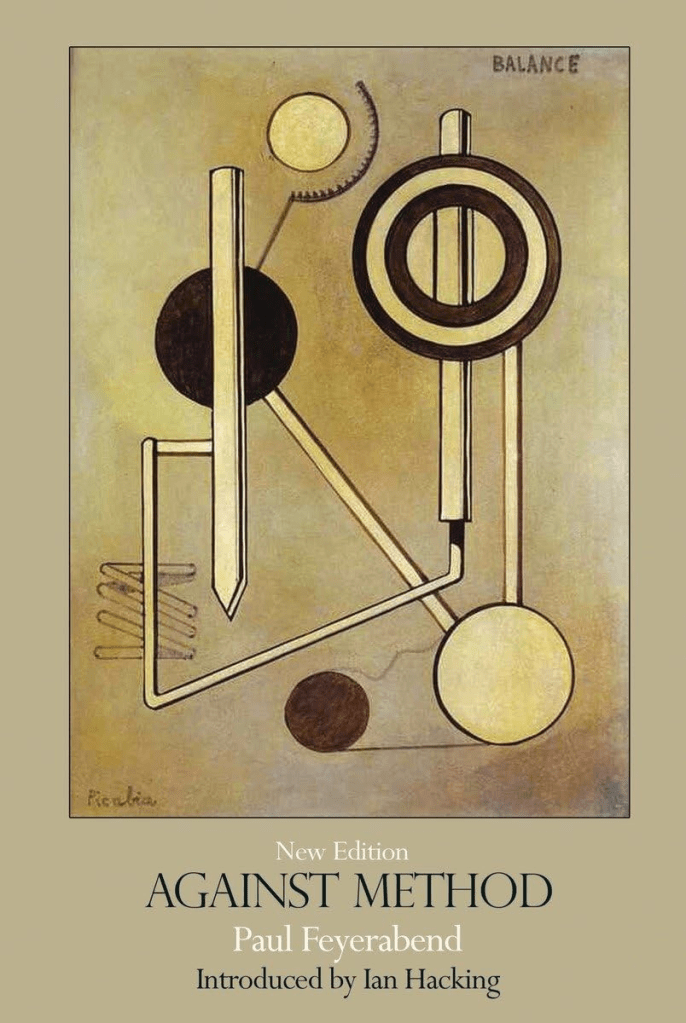
Detractor: Paul Feyerabend
“Science is not one thing, it is many things.”
—Against Method (1975)
Feyerabend called the whole thing a farce. There is no single “method,” just a bureaucratic orthodoxy masquerading as objectivity. Today, science bends to industry, cherry-picks for grants, and buries null results in the backyard. Peer review? More like peer pressure.
9. Anti-Authoritarianism
The Ideal: Smash the throne! Burn the mitre!
The Reality: Bow to the data analytics team.
Detractor: Herbert Marcuse
“Free election of masters does not abolish the masters or the slaves.”
—One-Dimensional Man (1964)
Marcuse skewered the liberal illusion of choice. We may vote, but we do so within a system that already wrote the script. Authority didn’t vanish; it just became procedural, faceless, algorithmic. Bureaucracy is the new monarchy—only with more forms.
10. Education and Encyclopaedism
The Ideal: All knowledge, accessible to all minds.
The Reality: Behind a paywall. Written in impenetrable prose. Moderated by white men with tenure.
Detractor: Ivan Illich
“School is the advertising agency which makes you believe that you need the society as it is.”
—Deschooling Society (1971)
Illich pulls the curtain: education isn’t emancipatory; it’s indoctrinatory. The modern university produces not thinkers but credentialed employees. Encyclopaedias are replaced by Wikipedia, curated by anonymous pedants and revision wars. Truth is editable.
Postscript: Picking through the Rubble
So—has the Enlightenment failed?
Not exactly. It succeeded too literally. It was taken at its word. Its principles, once radical, were rendered banal. It’s not that reason, progress, or rights are inherently doomed—it’s that they were never as pure as advertised. They were always products of their time: male, white, bourgeois, and utterly convinced of their own benevolence.
If there’s a path forward, it’s not to restore Enlightenment values, but to interrogate them—mercilessly, with irony and eyes open.
After all, the problem was never darkness. It was the people with torches who thought they’d found the only path.



 Philosophics