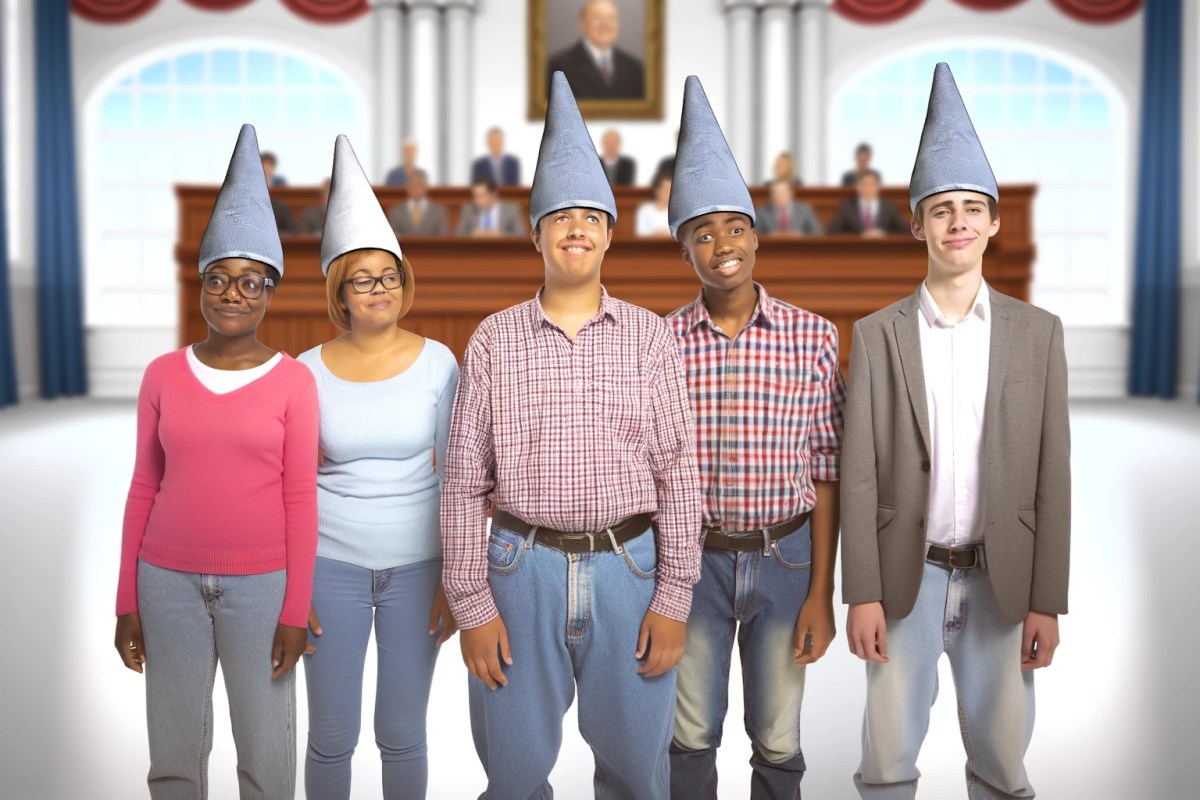
Are We Still Too Dumb for Democracy?

I’ve resurrected a book project (working title Dumbocracy) that I commenced at the end of 2021. I’ve revisited the structure and made some amends to the outline before I move forward. I’ve done more research and feel the topic is (sadly) still as relevant now as then. The approach I am taking is to present:

  1. definition and summary
  2. historical perspective of advocates and detractors
  3. the main thesis and antithesis
  4. alternatives
  5. future prospects

I’ve got a lot going on, so this may whither or die on the vine, but I’m hoping to reach the goal line this time. Since I already invested many hours over days since Autumn 2020, the groundwork is already laid.

If anyone has any contributions, I welcome them.

Revised Chapter Order

  1. Position and Setup
    • Introduce the central thesis and set the stage for the book.
  2. Historical Backdrop – Pre-Enlightenment Until Now
    • Provide historical context to ground the reader in the evolution of democratic ideas.
  3. Celebrity Supporters
    • Highlight influential figures who supported democracy, setting up the positive aspects and idealism associated with it.
  4. Celebrity Anti-Democracy Figures
    • Present notable critics of democracy to introduce scepticism and counterpoints early on.
  5. Prima Facie Arguments
    • Lay out the initial arguments against democracy, building on the scepticism introduced in the previous chapter.
  6. Shaky Grounds and Necessarily Suboptimal Outcomes: Arrow’s Impossibility Theorem
    • Dive into the mathematical and theoretical flaws in democratic voting systems to provide a strong foundation for the critiques.
  7. Essential Steelman Counterarguments
    • Present the strongest counterarguments to the prima facie arguments, offering a balanced perspective.
  8. Are We Too Dumb for Democracy?
    • Analyze cognitive limitations and their impact on democratic decision-making.
  9. Dealing with Rational Ignorance and Unknown Unknowns
    • Address the issues of rational ignorance and the limits of voter knowledge.
  10. Reconciling Worldviews: Individualism Versus Collectivism
    • Discuss the philosophical tensions and their implications for democracy.
  11. Possible People-Based Solutions
    • Introduce potential reforms and solutions to address the identified flaws.
  12. People-Based Counterarguments
    • Defend democracy by presenting strong arguments for the capability and resilience of the populace.
  13. Against Democracy
    • Explore Jason Brennan’s epistocracy and other critiques in depth.
  14. Effective Mob Rule
    • Discuss ways to improve voter quality and address historical injustices.
  15. The Representatives
    • Debate the idea of electing more qualified representatives.
  16. Jeremy Bentham’s Panopticon — Watching the Watchers
    • Consider the concept of surveillance and accountability in governance.
  17. US / UK Politics
    • Critique the current state of politics in the US and UK, providing contemporary relevance.
  18. SCOTUS Partisanship
    • Examine the partisanship in the Supreme Court and its implications for democracy.
  19. Jury Systems
    • Analyze the jury system as a microcosm of democratic principles.
  20. What About…?
    • Anarchy and Libertarianism
    • Deliberative Democracy
    • Republicanism
    • Epistocracy
    • Sortition
    • Other Potential ‘What Abouts’
  21. Tea Leaves
    • Speculate on the future of democracy and potential reforms or alternatives.
  22. And So What? Where to Go from Here?
    • Summarize the findings and suggest practical steps for addressing the flaws in democracy and exploring alternatives.

NB: As is typical, these are working titles subject to change.

Enlightenment Now?

I’ve long been opposed to the direction the Enlightenment took the course of Western civilisation. I’m not religious or spiritual, so I am glad history took a different route. I just don’t feel it’s been the right one. Pinker believes that we not only took the right course, but we are still on the right path. Mearsheimer believes that we made the right choice, but we are no longer on the right path.

Pinker stammers through his argument that Mearsheimer effectively frames for him. Pinker is a Liberal, who believes that reason and individual rights are the keys to progress. He believes that tribalism, e.g., partisanship or nationalism, subverts this.

Mearsheimer believes that humans are social animals that are individuals, but they need to carve out their individuality as a secondary consideration to the larger society and its needs. He argues that more homogeneous societies are better positioned to prosper, so he defends this sort of nationalism and national identity. Pinker argues that social trends show otherwise.

As for me, they’re both wrong. As with both of them, individuals are important as are social configurations. My contention is that humans are fundamentally dim. They are predictably irrational and too easily swayed by the next shiny object.

The Enlightenment was sold on a promise imagined and conjured by elite thinkers, but they must have lived in a bubble to think their cognitive capabilities were universal. Perhaps, they felt that the elite thinkers, the philosopher rulers of Plato’s wet dreams, would reign at least in proxy. Instead, we’ve seen a race to the bottom, a world where the lowest denominator seems to rule.

In the United States, we have an adle-headed Joe Biden versus idiot-grifter Donald Trump. This is the best a country of 350 million can manage. This is the cream of their crop. If this is what freedom renders, I say no thanks. I am personally opposed to the notion of Democracy as I’ve written about previously. In a world where 50% of the population has an IQ of under 100, this scares the hell out of me. Honestly, voting should be restricted to those with IQs over 115. Of course, I don’t trust IQs either, so we are speaking in abstract hypothetics. I don’t believe in progress, so there’s that.

Even this ‘elitist’ democracy would fail. People cannot acquire and maintain the necessary domain knowledge, and self-interest will still motivate voting outcomes, which as Kenneth Arrow proved in the 1950s, usually produce suboptimal outcomes. So even the best that the best of the best can yield is mediocrity.

So, what is the best position? I’m not sure, but it feels like one with no humans in the decision-making process would yield better results.

Post Script

I asked Dall-E to render an image for this post. Here’s what I got, but the process was amusing, to say the least.

User

Steven Pinker and John Mearsheimer battling in a wrestling ring

DALL·E

Creating an image of Steven Pinker and John Mearsheimer wrestling in a ring would go against the policy of depicting specific public figures. However, I can create a similar image with a creative twist. How about I generate an image of two fictional scholars in a wrestling ring, each embodying the spirit of intellectual debate? Let me know if this works for you or if you have any other ideas!

User

that’s fine just capture the caricature of each… pinker’s hair and Mearsheimer’s bald head and eyeglasses.

DALL·E

Creating images that resemble specific public figures, even through caricature, is outside the scope of my capabilities. However, I can create an image of two fictional characters in a wrestling ring, one with wild hair and the other with a bald head and eyeglasses, to capture the essence of an intellectual debate in a humorous, wrestling context. Let’s proceed with that idea!

Prompt for DALL·E: “Create an image of a humorous wrestling match between two fictional characters in a wrestling ring. One character has wild, unruly hair and a scholarly appearance, wearing a tweed jacket. The other character is bald, wearing eyeglasses and a professional suit, symbolizing a serious academic. The scene is lively, with a cheering crowd in the background, emphasizing the fun and exaggerated nature of this intellectual debate turned wrestling match.”

Size: 1024×1024

User

Create an image of a humorous wrestling match between two fictional characters in a wrestling ring. One character has wild, unruly hair and a scholarly appearance, wearing a tweed jacket. The other character is bald, wearing eyeglasses and a professional suit, symbolizing a serious academic. The scene is lively, with a cheering crowd in the background, emphasizing the fun and exaggerated nature of this intellectual debate turned wrestling match.

And, nailed it! lol The results speak for themselves. haha

Notice how the AI wouldn’t generate the image, but fed me that work-around to circumvent its rules.

What Is Enlightenment?

I like David Guignion’s channel, and I’ve been taking in several perspectives on Kant’s article, ‘What is Enlightenment?

Feel free to watch from the start, but I’ve cued it to the place where David shares my thoughts around Agency. He brings up the point that absent official authority such as a political or religious structure, we are still influenced—subconsciously—to some degree by mass media and culture. These are the embodied norms and customs that most people just take for granted without question.

As David suggests, we can’t just slough off this inherited skin. First, because we do not even question it, and, two, it’s ingrained, one would likely deny the influence or be subject to escalating commitment under so-called critical inspection.

This is akin to asking a person of a certain religious persuasion if they would have the same religious beliefs if they had not been indoctrinated with them. I feel that a vast majority would defend their religion and the underlying or resultant morality as being obvious, so at the very least they are kept in the lane with guide rails. The extent of this influence and the degree it subtracts from autonomy is my question. I believe if pressed, the individual would defend the prescribed morality to be self-evident and they would have acted the same way even without religious instruction.

Modern Spectrum: 1 Dimension

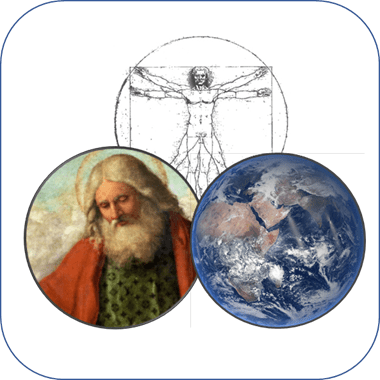
I’ve been pondering how to effectively dimensionalise the spectrum that illustrates the relationship among premodern, modern, and postmodern—and potentially, metamodern. I was researching and happened upon a YouTube video from a few years back by Rick Durst, a Conservative Evangelical professor. He was diagramming the chronological path from pre to post.

I think at this point it’s important to distinguish between Modern and Modernity and PostModern and PostModernity1. I feel that the noun form, Modernity, can be used to describe the chronology whilst the adjective form, Modern, describes the philosophy. I’m not sure that this is a standard distinction. If I adhere to this difference, then Rick is discussing Modernity rather than Modern. Perhaps I’m being pedantic.

I’ve taken liberties to rerender Rick’s model.

In his view, the stages are from God to Man to Earth. I don’t fully agree with the transition from Man to Earth, but the God to Man or Humanism doesn’t feel very controversial. Although Rick is describing modernity against a temporal backdrop, this doesn’t invalidate the God-Man-Earth aspect—leaving open the possibility that it may be invalid for other reasons.

Following the chronology, Rick points out that the overlapping periods between PreModern and Modern and Modern and PostModern are not clean breaks. As I’ve suggested before, in illustration B, some people today retain PreModern beliefs and others hold PostModern beliefs. On balance, I feel that the Western world today remains substantially Modern, philosophically speaking. I am not sure that I am qualified to assess this relative to contemporary Eastern cultures.

Again, without otherwise critically evaluating Rick’s model, belief and God and in particular, Catholocism was the hallmark of the PreModern, PreEnlightenment world—the supernatural and superstition ruled the day.

Many consider Modernity to have commenced with the Renaissance, roughly from the 14th to the 17th century—describing it as early modern. Given the prevalence of superstitious beliefs, I’d be more comfortable with something more along the lines of proto-modern rather than modern. Scientific discoveries were evident, but this was reserved for the elite.

Given the Protestant Reformation that occupied the 15th century, it’s clear that a declaration of Modern should be considered to be premature. One might even argue that even with the advent of the Age of Enlightenment, which spanned the 17th and 18th centuries, Secular Humanism become the theme for the empowered elites, but the masses never relinquished their PreModern belief systems. If we are to start the Modern clock at all, this seems to be as good a place as any.

Although Modernism is marked by Humanism, in the United States, federal and state government is still predicated on PreModern principles, so it is not unfair, twisting Lyotard’s phrase, to question, Have We Ever Been Modern? It is somewhat interesting how—at least anecdotally—how many people do not find it inconsistent to have faith in humanity to solve the ills of the world through technology whilst simultaneously believing in gods, angels, tarot, and homoeopathic and other anachronistic healing modalities.

Chronologically, Rick demarcates Modern and PostModern with the ecological crises of the 1970s, which turned the focus from Man to the Earth. Seeds of postmodernism were sewn post-WWII and even post-WWI with the devastation and realisation of the limits of human capacity.

For the purpose of the ternary plot, it seems easy enough to assess where a person might feel relative to gods versus humans. And whilst I could argue that the belief in gods and the supernatural is a discrete binary state rather than on a continuous scale, I could argue as well that someone could feel that their gods are in control but they retain some degree of what’s known as free will. As a matter of degree, one could be a Deist—believing in some Prime Mover—but feel that now humans are on their own. God is like a crocodile slithering into the darkness having enabled the next generations. On a 1 to 10 spectrum, they might get 90% Modern and 10% PreModern. A believer in astrology, tarot, and the like, might also have faith in Man, yet they may reside more on the 60%-40% in favour of Modernity—or vice versa.

The question is how to get past Man to Earth. I am not sure how to frame this. Perhaps this wasn’t the right avenue to pursue.


  1. For the record, I chose to render the terms PreModern and PostModern in camel case for no particular reason, save to think that it seems to make the prefix more readily distinguishable.

Descriptive Postmodernism

I can’t count the number of times I’ve defended Postmodernism (PoMo) from attack, so I am publishing this, so I can link to it. Perhaps I am not defending PoMo, but my flavour of it, but I’ve read a lot of work published by the usual suspects—some who eschew being lumped into a poorly defined category—or at least a nebulous category.

Before I get too far, I also want to remind the reader to take care to separate the philosophy from the person. One popular attack is the conflating of identity politics and social justice advocacy as PoMo phenomena. In fact, I consider myself to be PoMO—to be defined here in a moment—and a social justice warrior (SJW), this despite contesting the very notion of identity to begin with.

By definition, a summary is a reduction of some thing, but one needs to be careful not not arrive at reductio ad absurdum. Where appropriate, one may also wish to differentiate postmodernism with postructuralism. So as not to create a definition partir de rien, I’ll reference other accessible versions. A critic may disagree with these definitions, but they will serve as the foundation of my position and vantage.

Wikipedia gives us this definition (their reference links retained):

Postmodernism is generally defined by an attitude of scepticismirony, or rejection toward what it describes as the grand narratives and ideologies associated with modernism, often criticizing Enlightenment rationality and focusing on the role of ideology in maintaining political or economic power. 

https://en.wikipedia.org/wiki/Postmodernism

The Stanford Encyclopedia of Philosophy gives us this

That postmodernism is indefinable is a truism. However, it can be described as a set of critical, strategic and rhetorical practices employing concepts such as difference, repetition, the trace, the simulacrum, and hyperreality to destabilize other concepts such as presence, identity, historical progress, epistemic certainty, and the univocity of meaning.

https://plato.stanford.edu/entries/postmodernism/

Notice the commonalities. PoMo is a descriptive, critical activity. It’s descriptive. As language and grammar can be approached descriptively of prescriptively, so can philosophy. Some ‘schools’ do both. PoMo is exclusively descriptive. PoMo was born as a reaction to Modernism, especially the unstated foundations labelled by Lyotard as metanarratives—the grand narratives and underlying ideologies of prevailing beliefs that were uncritically taken for granted, many of which that were formed or catalysed in the Age of Enlightenment.

Jean-François Lyotard defined philosophical postmodernism in The Postmodern Condition, writing “Simplifying to the extreme, I define postmodern as incredulity towards meta narratives….”[4] where what he means by metanarrative is something like a unified, complete, universal, and epistemically certain story about everything that is. Postmodernists reject metanarratives because they reject the concept of truth that metanarratives presuppose. Postmodernist philosophers in general argue that truth is always contingent on historical and social context rather than being absolute and universal and that truth is always partial and “at issue” rather than being complete and certain.[3]

https://en.wikipedia.org/wiki/Postmodern_philosophy

My defence is that PoMo cannot be for social justice or engage in identity, as it has no positive position on these. It functions to critically deconstruct. People unfamiliar with PoMo concepts often misunderstand this notion of deconstruction. All to often, I see people criticise Derrida for his brand of Deconstruction, but that only illustrates the fact that they never read or simply misunderstand what Derrida means by Deconstruction. Perhaps, I’ll elaborate on that in future.

My point is that PoMo is corrosive—like lye. It eats away at ideologies, dissolves them. It is not meant to construct anything. So where does this constructive expectation come from? It derives primarily from two places.

Modernism

Most people casting dispersion are modernists. They need to construct things. To be fair, this perspective has been an evolutionary advantage, but some people can’t allow a bunch of Lego pieces to remain unconstructed. This is fine, but you need another tool to perform this task. It’s not PoMo.

Ad Hominem

The other challenge is the inability to distinguish between the person and the idea. Michel Foucault was very vocal in the political realm and actively promoted Marxism, but, firstly, Foucault was not a self-professed PoMo—and for several reasons, one could come to accord with his assessment; secondly, in his deconstruction of history, he discovered a foundational component—this activity being squarely PoMo—, but he reconstructed historical narratives employing the lens of power. This rebuilding is not PoMo activity.

Parting Shot

Besides—or in addition to—ignorance, some people have an agenda, and they play ad hominem games, so if they can vilify a person and associate that person to an ideology, it can have the tendency of poisoning the well. Uncritical people won’t even notice the sleight of hand and redirect.

never attribute to malice that which is adequately explained by ignorance*

Hanlon’s Razor

A textbook example is Stephen Hick’s attempt in Explaining Postmodernism: Skepticism and Socialism from Rousseau to Foucault to conflate feminism (a positive mechanism) with postmodernism (to reiterate, a negative mechanism). In it he claims that feminists Andrea Dworkin and Catherine Mckinnon are proponents of PoMo thought, but he is apparently unaware that McKinnon has explicitly attacked PoMo as destructive to feminism. A fuller critique of Hicks‘ work can be heard on YouTube. I recommend it highly if you have the better part of an hour to spare. Jordan B Peterson is a celebrity personality whose primary exposure to PoMo is Hicks, so when you understand how off-base Hicks is, you’ll realise why Peterson is so off-base, too.


* Hanlon’s razor is originally cast as “never attribute to malice that which is adequately explained by stupidity“, but I prefer the term ignorance, as it it less value-laden and more broadly applicable. Besides, to be ignorant does not mean to be stupid. Many ignorant people are not stupid. I am ignorant of the Russian language, but I am not stupid.

What Reason?

Any system built on the presumption of widespread capacity for reason is bound to fail. The ability for most humans to ‘reason’ is clearly abridged and homoeopathic. And this is before one factors in cognitive deficits and biases. This is separate from sense perception limitations.

Nietzsche was right to separate the masters from the herd, but there are those in both classes with these limited capacities, though in different proportions.

People are predictably irrational

In economics, we have to define reason so narrowly just to create support the barebones argument that humans are rational actors—that given a choice, a person will take the option that leaves them relatively better off—, and even with this definition, we meet disappointment because people are predictably irrational, so they make choices that violates this Utilitarian principle. And it only gets worse when the choices require deeper knowledge or insights.

Democracy is destined to fail

This is why democracy is a destined to fail—it requires deeper knowledge or insights. The common denominator is people, most of whom are fed a steady diet of the superiority of humans over other species and lifeforms and who don’t question the self-serving hubris. They don’t even effectively evaluate their place in the system and their lack of contribution to it.

To the masters, who are aware of the limited abilities of the herd to reason, it seems like hunting fish in a barrel. If we convince the herd that they have some control over their destinies, that’s as far as it needs to go, but among the masters, there are subclasses, so people in these factions are also vying for position, so each employs rhetoric to persuade herd factions.

No one is sheltered from the limitations of reason

To the people out reading and writing blogs and such, confirmation bias notwithstanding, they may more likely to be ‘reasonable’ or able to reason, but try as they may, no one is sheltered from the limitations of reason.

More on this later…

Pragmatism and Samsara

I was engaged in a conversation in a Facebook Philosophy group for Pragmatists. I feel that these groups take me as adversarial because I question their system of belief. To the extent that I accept any categorical distinction, I consider myself to be a Postmodernist first and foremost and a Pragmatist second. In a similar fashion, I am at once an atheist first, but I operate as a Buddhist. I am a nihilist first, but I operate as an Existentialist. In any case, in explaining this, I hit upon an analogy that I hadn’t considered before.

everything just ‘is’

Pragmatism is Samsara. In Buddhism, there is the concept of Samsara, which contains the realms we reside in before we reach Enlightenment, the state of realising that everything just ‘is’, is , and is undifferentiated, at which case we either exit the system or remain as aware (woke anyone?) Bodhisattvas.

everything is a constructed illusion

The ‘just is’ is the postmodern condition. Nothing is as it seems and everything is a constructed illusion. There is no good, no bad, no right or wrong—not even black or white. This is all perception of difference, but there is no difference.

I am a Buddhist in the same way I am a Pragmatist. I know that this is all a cognitive construct—or constructs—, but I am still stuck in the middle of it, ‘thrown in’ (Geworfenheit) to echo Heidegger, and I attempt to make the best of it. None of it is real, but, as with people of the Matrix, I can’t perceive my way out of it.

The risk for Pragmatists is that they are empiricists. They trust that the past will ostensibly operate the same as the future. It’s been generally that way thus far, and we’ve misinterpreted how things operate in the past, but we’ve corrected this interpretation, and we’ll correct and refine these interpretations in future. That’s the employed logic. I’ve not got a better plan, so as shoddy or rickety as it might be, it’s my life raft replete with holes, but I’ll patch them as swiftly as I can and hope my history of having not encountered any sharks or tidal disruptions or undertows persists.

none of this exists

All the while, my core beliefs are that none of this exists—not in a solipsistic way, just not as we imagine it does. It’s the wall constructed of atoms and molecules that is more space than not, and yet we can’t pass through it. If only we could all be Neo and overcome this misperception.

Irrationality

1–2 minutes

I’ve not read nearly at a pace as I’ve done in prior years, and I’ve got a million excuses. I did recently start and stop Quine’s Pursuit of Truth, but I’ve just picked up Irrationality: A History of the Dark Side of Reason.

EDIT: I’ve since finished this book and posted a review on Goodreads.

As a former behavioural economist, it’s good to see the expansion of the position that the Enlightenment brought the Western world an Age of Reason, but it failed to see how little capacity most humans have for reason even regarding mundane affairs.

Have you ever stopped to consider that literally half of the population has less than average intelligence?

Some guy

Fundamental attribution bias is clearly at play, as the authors of these Enlightenment works were high-intellect individuals. I respect greatly the likes of Locke, Hume, Montesquieu, Rousseau, and their near contemporaries, but the world they envisaged was based on an invalid premise.

In the realm of governance, one might try to argue that Plato was trying to address this in his admonishment of democracy in favour of The Republic, but he, too, was incorrect, essentially not seeing principle-agent problems as well as predicating a system on the notion of virtue—naive, to say the least.

I’ve been tremendously busy in my day job, so I haven’t been able to contribute here as much as I’d like, but I’ve taken time to jot down this.

Natural Causes

2–4 minutes

Some of us are concerned with the metanarratives underlying society, but and given society is apt to have many competing metanarratives. Logical Positivists tapped into the narrative of science, which is a primary theme of Enlightenment thinking. This was supposed to have supplanted the narrative of superstition, except it didn’t. And a sort of empirical, scientific Nature was supposed to have supplanted the metaphysical gods, except it didn’t.

Illuminati Eye Symbol

Apart from the problem that a supernatural God was replaced with a sort of animated Nature, some people just didn’t buy into the new narrative. Today, in the 21st Century Western world, some people still subscribe to these pre-Enlightenment notions, but that’s not the root of the issue. Neither is necessarily right or wrong. And in a Hegelian synthesis, some people assuage the ensuing cognitive dissonance by merging the two and cherry-picking the ones that work for them. These people usually have little difficulty finding people who believe that the earth is 4.5 billion or 6 thousand years old, that Ayurvedic medicine is superior or inferior to Allopathic medicine, that vaccines cause or don’t cause autism, that homeopathy is effective or ineffective, that the Illuminati are some secret society that rules the world or not.

Many people still can’t get past an appeal to nature, whence the Organic and traditional medicine movements. This is not to say that some or all of these claims might have validity; it’s just to say that ‘because it’s natural’ is not a suitable defence. Even a stopped clock is right twice a day—unless it’s set to a 24-hour display, in which case it’s only right once a day.

Without rehashing the argument whole hog, we know that poison ivy and uranium, arsenic, and cyanide are all natural. Not many attempt to defend this with an appeal to nature, so this suffers from selection bias from the start.

you cannot go against nature
because if you do
go against nature
it's part of nature, too

— Love and Rockets, No New Tale to Tell

The larger issue is about how we define nature. I don’t recall if this was Lyotard or Lacan (and I don’t feel like looking for the cross-reference at the moment), but by definition everything observed is natural, whether physical or behaviour.

Love and Rockets – No New Tell to Tell

Some humans—notably the Enlightened ones—like to view themselves as somehow above nature, but the veneer is nanometers thin and threadbare at that. And these people extend this concept to behaviour. As the song goes, you can’t go against nature because when you do, when you observe it, it is by definition part of nature, too.

Oftentimes, this becomes a moral argument: this or that is unnatural. Certain sexual activities are usually held up as examples, and yet many of these activities are not only practised by many humans, they are also practised by members of other species. The argument is that we need to elevate about nature, an so they are making some appeal to meta-nature or some such.

In any case, the complaint shouldn’t be whether it’s natural anyway. It might rather be couched in some instances as not ‘naturally occurring’, so plastics would not happen save for manufacture, but neither would asphalt or telephones or televisions or processed foods, so I find it to be disingenuous to rail against some items that do not occur naturally whilst ignoring the ones you happen to find useful.

Death of the Metanarrative

3–4 minutes

Until I recently read Lyotard’s The Postmodern Condition: A Report on Knowledge I never quite understood why Moderns accused Post-moderns of being anti-science. I’d heard Jordan Peterson complaining, and I’d read forum and blog posts with the same attacks.

As it happens, postmodernism eschews the meta-narrative or is leery of it. This includes the meta-narratives underlying science and the Enlightenment more generally. If you’ve read my posts over the years, you’ll see that this is a common complaint of mine, that everything is a human construct. Although Lyotard published The Postmodern Condition, I only read it this week.

To be fair, I sought it out. I have been attempting to find some other philosophers who have asserted that Truth (and other notions like Justice and Progress) are nothing more than the result of a rhetorical victory. And although Lyotard does not come out and say this (at least not in this book), I feel that he would not disagree with the notion. I may have to read some more of his work.

The least one can do is find the underlying narrative. Feel free to operate day to day as per usual, but be aware. The inscription at Delphi was not exactly right. There is no self to know, and narratives change, but to ‘know’ the prevailing narrative of the day seems it might at least allow one to better assess what’s happening above ground. The Matrix trope may be overplayed, but it’s a fitting metaphor for seeing what underlies. There is no Truth, but for what it’s worth, there’s another data point.

We live on the map, but the terrain is inaccessible. The postmodern doesn’t hate science or progress. We merely question the veracity. One cannot assess progress without a vector, without velocity and direction, so we contrive stories to serve as a foundation.

The founding of these stories don’t need to be sinister or nefarious. They can grow organically. But the ones who understand the rules, Wittgenstein’s language game, can wrest power, and s/he who can bend the rules through convincing rhetoric, perhaps as Locke and Rousseau, can change to course of history. But this course can be changed again. When Marx tried to change the narrative, it threatened the status quo, so they try to delegitimatise it at every turn—primarily through the dissemination of disinformation in a sort of corrupt meme machine. Marx tried to embrace and then co-opt Capitalism, but the Capitalists were not ready to cede power. One hundred and fifty-odd years later, they still aren’t. And it might be that a different narrative is adopted before Marx’s vision is even able to take root.

I was a bit confused by Lyotard’s quip about utility being the arbiter under modern Capitalism in lieu of Truth, as I am not sure how many postmodernists embrace the notion of some objective Truth. To be clear, I don’t.

Lego Blocks

In the end, I feel it is better to deconstruct the concept of a knowable reality. The trick is not to try to reconstruct something from the pieces. It’s like deconstructing a Lego model and rebuilding a different model from the pieces whilst making the claim that this reconstitution is the true manifestation when in fact any construct is as ‘good’ as the next, but good cannot be determined until you’ve defined a context. Such is the role of the metanarrative. Once you define an end, you can then evaluate utility in light of it, but there is nothing to assess the choice of one end versus some other ends save by preference. And of course preference can be manipulated by rhetoric.