Why IQ is Not Enough – and Never Was
I’m not a fan of IQ as a general metric. Let us be done with the cult of the clever. Let us drag the IQ score from its pedestal, strip it of its statistical robes, and parade it through the streets of history where it belongs—next to phrenology, eugenics, and other well-meaning pseudosciences once weaponised by men in waistcoats.
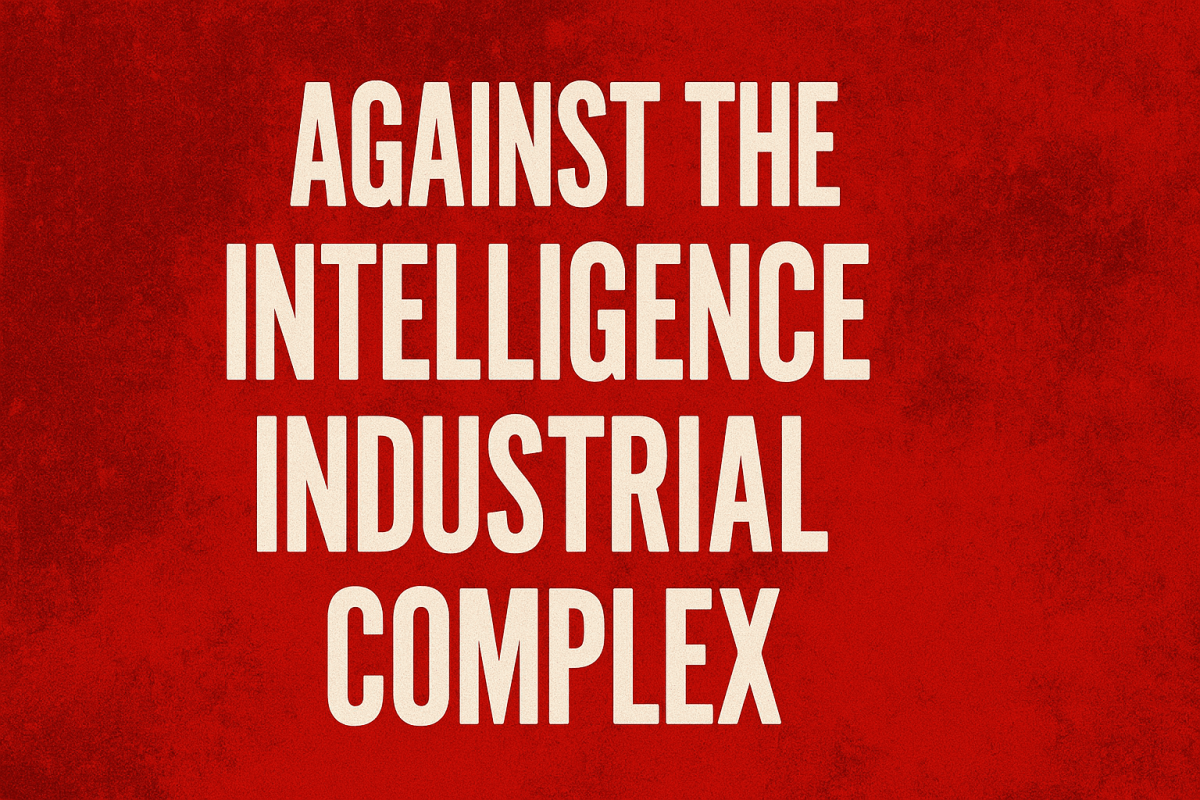
The so-called Intelligence Industrial Complex—an infernal alliance of psychologists, bureaucrats, and HR departments—has for too long dictated the terms of thought. It has pretended to measure the immeasurable. It has sold us a fiction in numerical drag: that human intelligence can be distilled, packaged, and ranked.
What it measures, it defines. What it defines, it controls.
IQ is not intelligence. It is cognitive GDP: a snapshot of what your brain can do under fluorescent lights with a timer running. It rewards abstraction, not understanding; speed, not depth; pattern recognition, not wisdom. It’s a test of how well you’ve been conditioned to think like the test-makers.
This is not to say IQ has no value. Of course it does—within its own ecosystem of schools, bureaucracies, and technocracies. But let us not mistake the ruler for the terrain. Let us not map the entire landscape of human potential using a single colonial compass.
True intelligence is not a number. It is a spectrum of situated knowings, a polyphony of minds tuned to different frequencies. The Inuit hunter tracking a seal through silence. The griot remembering centuries of lineage. The autistic coder intuiting an algorithm in dreamtime. The grandmother sensing a lie with her bones. IQ cannot touch these.
To speak of intelligence as if it belonged to a single theory is to mistake a monoculture for a forest. Let us burn the monoculture. Let us plant a thousand new seeds.
A Comparative Vivisection of Intelligence Theories
| Theory / Model | Core Premise | Strengths | Blind Spots / Critiques | Cultural Framing |
|---|---|---|---|---|
| IQ (Psychometric g) | Intelligence is a single, general cognitive ability measurable via testing | Predicts academic & job performance; standardised | Skewed toward Western logic, ignores context, devalues non-abstract intelligences | Western, industrial, meritocratic |
| Multiple Intelligences (Gardner) | Intelligence is plural: linguistic, spatial, musical, bodily, etc. | Recognises diversity; challenges IQ monopoly | Still individualistic; categories often vague; Western in formulation | Liberal Western pluralism |
| Triarchic Theory (Sternberg) | Intelligence = analytical + creative + practical | Includes adaptability, real-world success | Still performance-focused; weak empirical grounding | Western managerial |
| Emotional Intelligence (Goleman) | Intelligence includes emotion regulation and interpersonal skill | Useful in leadership & education contexts | Commodified into corporate toolkits; leans self-help | Western therapeutic |
| Socio-Cultural (Vygotsky) | Intelligence develops through social interaction and cultural mediation | Recognises developmental context and culture | Less attention to adult or cross-cultural intelligence | Soviet / constructivist |
| Distributed Cognition / Extended Mind | Intelligence is distributed across people, tools, systems | Breaks skull-bound model; real-world cognition | Hard to measure; difficult to institutionalise | Post-cognitive, systems-based |
| Indigenous Epistemologies | Intelligence is relational, ecological, spiritual, embodied, ancestral | Holistic; grounded in lived experience | Marginalised by academia; often untranslatable into standard metrics | Global South / decolonial |
Conclusion: Beyond the Monoculture of Mind
If we want a more encompassing theory of intelligence, we must stop looking for a single theory. We must accept plurality—not as a nod to diversity, but as an ontological truth.
Intelligence is not a fixed entity to be bottled and graded. It is a living, breathing phenomenon: relational, situated, contextual, historical, ecological, and cultural.
And no test devised in a Princeton psych lab will ever tell you how to walk through a forest without being seen, how to tell when rain is coming by smell alone, or how to speak across generations through story.
It’s time we told the Intelligence Industrial Complex: your number’s up.

 Philosophics