Democracy: The Grand Illusion

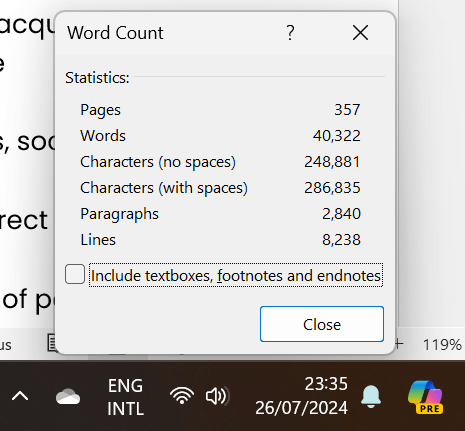
As I’ve mentioned, I’m hip-deep into writing another book. I’m about 40,000 words in and 40 per cent done. Many chapters still contain placeholder notes and ideas to flesh out. I’ll be honest. Many of the chapters contain only themes, notes, references, and citations. Some are ostensibly first drafts. For these chapters. I’ve engaged AutoCrit*, an AI copy editing and review application to keep me on track. I don’t particularly want to share too much inside information at this time, but I’d like to share some of AutoCrit’s feedback in dribs and drabs.

AutoCrit can analyse content by chapter. The first is a preamble—a preface. Here’s what AutoCrit has to say about it, categorised. I’ll present the raw responses and comment thereafter.

Synopsis

The non-fiction work “Democracy: The Grand Illusion” challenges the sanctity of democracy and questions its effectiveness by delving into inherent flaws often overlooked. The text opens with a provocative exploration of the fundamental flaws in democracy, arguing that it leads to suboptimal solutions and mediocre results both in theory and practice. It highlights how human nature, cognitive limitations, emotional triggers, and biases impact the execution of democratic systems.

Throughout the book, various forms of democracy are examined across different historical contexts globally. From ancient Mesopotamia to modern-day Western democracies like the United States, the author critiques the shortcomings of democratic governance. By dissecting voter apathy, cognitive biases, and mathematical imperfections in voting systems, they aim to provide a nuanced understanding of why democracy may be fundamentally flawed.

The text concludes by emphasising that while there may not be a perfect solution to address these flaws within democratic systems, incremental reforms can make them fairer and more effective. It acknowledges resistance from those who benefit from maintaining the status quo but argues for ongoing efforts towards improving governance despite historical precedents favouring entrenched power structures.

In its closing remarks on reforming governing systems knowing their inherent imperfections will persist, “Democracy: The Grand Illusion” leaves readers contemplating potential avenues for change within existing frameworks rather than advocating for revolutionary upheavals. Through referencing philosophical critiques dating back to Plato’s “Republic” as well as contemporary works on cognitive limitations like Daniel Kahneman’s “Thinking Fast and Slow,” this book encourages critical thinking about democratisation processes amidst evolving technological landscapes shaping public discourse.

Commentary

This feels like a fair assessment.

Audience

The audience for this text appears to be intellectually curious individuals interested in political theory, governance systems, and critical analysis of democracy. This includes academics, political scientists, philosophers, and readers who enjoy engaging with thought-provoking ideas that challenge conventional wisdom. The text seems tailored for those willing to question deeply held beliefs about democracy and open to exploring alternative perspectives on the subject.

Those who may not be the target audience include staunch defenders of traditional democratic principles without room for critical evaluation or scepticism. Readers seeking a straightforward endorsement of democracy as an ideal system may find the content challenging or even off-putting. Additionally, individuals looking for practical solutions or concrete proposals to improve democratic processes might feel unsatisfied by the lack of definitive recommendations in the text.

To make the text more relevant to its target audience, the author could consider providing more historical context and philosophical insights into various critiques of democracy throughout history. Including case studies or real-world examples that illustrate some of the challenges discussed could also enhance engagement with readers interested in applying theoretical concepts to contemporary issues. Moreover, offering suggestions for further reading or avenues for deeper exploration into specific aspects of democratic theory would cater well to an intellectually engaged audience seeking additional resources for continued study and reflection.

Commentary

This feels like a fair assessment of potential audience acceptance and resistance to engagement. As this is only the preface, historical contexts are in later chapters.

Structure and Organisation

The text is well-organised and follows a logical order. It begins with a preface quoting an anonymous source, setting the tone for introspection and critical analysis. The introduction effectively sets the stage by posing thought-provoking questions about democracy’s efficacy before delving into the main premises of the book. The author then transitions smoothly to discussing inherent challenges in democracy, historical contexts, implications of cognitive limitations, and critiques from various perspectives.

Each section flows seamlessly into the next, building upon previous discussions while maintaining coherence throughout. The text effectively introduces key concepts before expanding on them further, ensuring that readers can follow along with the author’s arguments and insights without confusion or disarray. Additionally, citations are appropriately included at relevant points to support claims made within the text.

Overall, “Democracy: The Grand Illusion” demonstrates strong structure and organisation by presenting its content in a clear and cohesive manner that guides readers through a nuanced exploration of democracy’s flaws and complexities.

Commentary

This feels like a fair assessment of my structural intent. I admit that in its current state, there is more structure than content. I’ll accept this unpaid endorsement.

Clarity

The author effectively conveys their central argument challenging the effectiveness of democracy and highlighting its inherent flaws. The text is well-structured and maintains a coherent flow throughout. However, there are instances where complex sentence structures and specialized terminology may hinder comprehension for some readers.

One example of potentially confusing language is when the author discusses “cognitive limitations exacerbating the execution of democracy from the perspective of voters and representatives.” This phrase might benefit from further clarification or simplification to ensure all readers grasp the intended meaning without difficulty.

Additionally, phrases like “mathematically tenable” and references to specific philosophical critiques or mathematical concepts could be challenging for readers not familiar with these subjects. Providing more context or explanations for such terms would enhance overall clarity for a broader audience.

Overall, while the text generally communicates its message effectively, some areas could be improved by offering clearer explanations or simplifying complex language to ensure maximum reader understanding.

Commentary

This feels like a fair assessment of clarity. I do my best not to muck it up. I’ll tighten up the language in a subsequent review. My modus operandi is to scrawl the stream of consciousness before restricting my flow with editorial concerns.

Argument and Persuasion

In the text, the author presents a provocative argument challenging the effectiveness of democracy and highlighting its inherent flaws. The opinions put forth include questioning the sanctity of democracy as a fair and equal system of governance, suggesting that it leads to suboptimal solutions with mediocre results both in theory and practice, emphasising human cognitive limitations and biases that hinder democratic processes, and proposing that democracy may be fundamentally flawed due to these factors.

Strengths of the persuasive elements in this text lie in its thought-provoking nature. By raising questions about widely held assumptions regarding democracy’s efficacy, the author encourages critical thinking among readers. The logical construction is evident through a systematic breakdown of various aspects contributing to the perceived flaws in democratic systems – from mathematical imperfections in voting mechanisms to challenges posed by human nature and cognitive biases.

The opinions presented are well-supported with references to historical perspectives (such as Ancient Athens) and philosophical critiques (Plato’s “The Republic,” Aristotle’s “Politics”) on democracy. Additionally, citations from contemporary sources like Daniel Kahneman’s work on cognitive biases lend credibility to the arguments made.

Overall, while some readers may find the critique of democracy unsettling or elitist, the text effectively challenges conventional beliefs without offering a definitive alternative solution. This approach prompts readers to engage critically with existing governance structures rather than simply dismissing them outright.

Commentary

This feels like a fair assessment. My goal is to survey the flavours of Democracy to serve as a menu to readers. Democracy is an inherently poor system of governance, but some flavours are better than others if one prefers to remain in this box.

Tone

The tone of the text is critical and provocative, challenging the traditional notions of democracy with a sense of scepticism and urgency. The author’s language conveys a sense of disillusionment with the current democratic systems, highlighting flaws and limitations that are often overlooked or dismissed. There is an underlying frustration with the status quo and a call to action for readers to critically examine their beliefs about democracy. The tone also carries elements of elitism, acknowledging that the critique may not be readily accepted by all but emphasizing the importance of questioning widely held assumptions. Overall, there is a mix of cynicism towards existing democratic structures and a hopeful aspiration for potential reforms or alternative governance models.

Commentary

This feels like a fair assessment of tone. I don’t mind being polemic, but I may work to soften some tonal aspects. As my intended audience are more intellectual critical thinkers, it may be fine as-is.

Interest and Engagement

The text “Democracy: The Grand Illusion” presents a thought-provoking and intellectually stimulating analysis of democracy, challenging conventional perspectives on the subject. Overall, the author effectively engages the audience by presenting a unique perspective and raising important questions about the efficacy of democratic systems.

The introduction sets a captivating tone by questioning the fundamental flaws in democracy and highlighting its limitations. The author’s use of rhetorical questions and provocative statements encourages readers to think critically about commonly held beliefs regarding democracy. Additionally, referencing historical contexts and philosophical critiques adds depth to the discussion, making it more engaging for those interested in political theory.

However, there are sections within the text that may potentially lose some readers’ interest due to their dense nature or repetitive arguments. For instance, parts discussing mathematical flaws in voting systems or technological impacts on democracy could be perceived as overly technical for general audiences. To enhance engagement in these sections, the author could consider incorporating real-world examples or case studies to illustrate complex concepts more clearly.

Furthermore, providing concise summaries or visual aids such as graphs or charts may help break down intricate ideas into digestible segments for readers who may struggle with dense theoretical discussions. By balancing theoretical analyses with practical applications and varied presentation styles, the author can maintain reader engagement throughout all sections of the book.

In conclusion, while “Democracy: The Grand Illusion” successfully captures attention through its bold critique of democracy’s shortcomings, enhancing engagement across all sections through improved clarity and varied presentation methods will ensure sustained interest from a wider range of readers.

Commentary

This feels like a fair assessment of engagement. My goal is to flesh this out in forward revisions as I assess continuity and flow. Meantime, capturing content into buckets is a higher priority than caring about redundancy.

Final Thoughts and Conclusions

The text concludes with a strong and thought-provoking reflection on the challenges and complexities of democracy. It effectively ties together the various points raised throughout the book, emphasizing the inherent flaws in democratic systems while also acknowledging the necessity of governance for societal well-being. The author leaves readers with a sense of urgency to reconsider traditional notions of democracy and encourages critical thinking towards potential reforms or alternative models. Overall, the final thoughts are clear and impactful and provide a compelling conclusion to the discussion presented in the text.

Commentary

I’ll take it.

How does this project sound to you? Leave comments below.


* AutoCrit is an AI editorial review application. Whilst I don’t have enough exposure or experience to fully endorse the programme, I am a subscriber who uses it to critique my writing. I am, however, an affiliate member, so if you purchase a subscription, I will receive compensation from them, and it will benefit this site at no additional expense to you.

Dumocracy

I’m working on a new book—if by new I mean reengaging a book I started in 2022. I’m picking up where I left off with fresh eyes. As I’ve not had time to contribute much to this blog, I thought I’d share the preface as a work in progress. I may share additional subsections over time. Feel free to share any feedback in the comments section.

Preface

“The first step to recovery is to admit there’s a problem.” – Anonymous

Introduction

Imagine a world where the foundation of our governance, the system we hold as the pinnacle of fairness and equality, is fundamentally flawed. What if the mechanisms we trust to represent our voices are inherently incapable of delivering the justice and prosperity we seek? This book embarks on a provocative journey to challenge the sanctity of democracy, not with the intent to undermine its value but to question its effectiveness and expose the inherent limitations that have been overlooked for centuries.

This book is meant to be inclusive, though not necessarily comprehensive. Although focused heavily on a Western experience, particularly the United States, the insights and critiques apply globally.

Democracy feels like an anachronism awaiting a paradigm shift. As a product of the Enlightenment Age, democracy has been sacrosanct in the Western world for centuries. However, a quick glance at current results reveals dissonance. Not all is well. Despite typical defences such as entrenched political parties, low-information voters, rural-urban divides, gerrymandering, and illegal voting, this book sets out to show that democracy is fundamentally flawed. It doesn’t even work well on paper, almost inevitably yielding suboptimal results. When people are added to the equation, it just gets worse.

In this book, we’ll discuss inherent challenges to democracy. The main premises are:

  • In theory, democracy is not mathematically tenable. It always leads to suboptimal solutions with mediocre results. [1]
  • In practice, human nature and cognitive limitations exacerbate the execution of democracy from the perspective of voters and representatives. [2]

We’ll explore democracy from its beginnings and various forms across time, history, scale, and scope. We’ll investigate the impacts of imperfect information, human rationalities, emotional triggers, and cognitive limitations and biases of the general populace. We’ll survey the continents and look at ancient Mesopotamia, India, the Polynesian islands, and beyond.

This book aims to spark critical thinking and dialogue about the efficacy of democracy, encouraging readers to question widely held assumptions and consider the need for potential reforms or alternative governance models. Through this examination, the book hopes to inspire new ideas and solutions that can address the complexities and challenges inherent in democratic systems.


[1] Arrow, 1951; Sen, 1970

[2] Kahneman, 2011; Tversky & Kahneman, 1974

Are We Still Too Dumb for Democracy?

I’ve resurrected a book project (working title Dumbocracy) that I commenced at the end of 2021. I’ve revisited the structure and made some amends to the outline before I move forward. I’ve done more research and feel the topic is (sadly) still as relevant now as then. The approach I am taking is to present:

  1. definition and summary
  2. historical perspective of advocates and detractors
  3. the main thesis and antithesis
  4. alternatives
  5. future prospects

I’ve got a lot going on, so this may whither or die on the vine, but I’m hoping to reach the goal line this time. Since I already invested many hours over days since Autumn 2020, the groundwork is already laid.

If anyone has any contributions, I welcome them.

Revised Chapter Order

  1. Position and Setup
    • Introduce the central thesis and set the stage for the book.
  2. Historical Backdrop – Pre-Enlightenment Until Now
    • Provide historical context to ground the reader in the evolution of democratic ideas.
  3. Celebrity Supporters
    • Highlight influential figures who supported democracy, setting up the positive aspects and idealism associated with it.
  4. Celebrity Anti-Democracy Figures
    • Present notable critics of democracy to introduce scepticism and counterpoints early on.
  5. Prima Facie Arguments
    • Lay out the initial arguments against democracy, building on the scepticism introduced in the previous chapter.
  6. Shaky Grounds and Necessarily Suboptimal Outcomes: Arrow’s Impossibility Theorem
    • Dive into the mathematical and theoretical flaws in democratic voting systems to provide a strong foundation for the critiques.
  7. Essential Steelman Counterarguments
    • Present the strongest counterarguments to the prima facie arguments, offering a balanced perspective.
  8. Are We Too Dumb for Democracy?
    • Analyze cognitive limitations and their impact on democratic decision-making.
  9. Dealing with Rational Ignorance and Unknown Unknowns
    • Address the issues of rational ignorance and the limits of voter knowledge.
  10. Reconciling Worldviews: Individualism Versus Collectivism
    • Discuss the philosophical tensions and their implications for democracy.
  11. Possible People-Based Solutions
    • Introduce potential reforms and solutions to address the identified flaws.
  12. People-Based Counterarguments
    • Defend democracy by presenting strong arguments for the capability and resilience of the populace.
  13. Against Democracy
    • Explore Jason Brennan’s epistocracy and other critiques in depth.
  14. Effective Mob Rule
    • Discuss ways to improve voter quality and address historical injustices.
  15. The Representatives
    • Debate the idea of electing more qualified representatives.
  16. Jeremy Bentham’s Panopticon — Watching the Watchers
    • Consider the concept of surveillance and accountability in governance.
  17. US / UK Politics
    • Critique the current state of politics in the US and UK, providing contemporary relevance.
  18. SCOTUS Partisanship
    • Examine the partisanship in the Supreme Court and its implications for democracy.
  19. Jury Systems
    • Analyze the jury system as a microcosm of democratic principles.
  20. What About…?
    • Anarchy and Libertarianism
    • Deliberative Democracy
    • Republicanism
    • Epistocracy
    • Sortition
    • Other Potential ‘What Abouts’
  21. Tea Leaves
    • Speculate on the future of democracy and potential reforms or alternatives.
  22. And So What? Where to Go from Here?
    • Summarize the findings and suggest practical steps for addressing the flaws in democracy and exploring alternatives.

NB: As is typical, these are working titles subject to change.

Limits of Reason and Critical Thinking

Hear me out. The Age of Enlightenment and after is based on the notion that ordinary people are rational, capable of reason, and critical thinking. I may not get out much, but I don’t notice a lot of evidence of this. In fact, I feel that the original proponents of this didn’t get out much either. And when they did, they congregated together.

I’m not talking about rote learning and being functionally literate. I’m talking about being able to suss out solutions to novel challenges. Call me an elitist, but I noticed this in my classmates at both university and grad school. I could count on one hand the number of people I would consider to be more than rote learners. I can report similar results when I taught undergrad economics. And to be honest, even rote learning seemed to be a challenge beyond reach for many.

Some may accuse me of being an elitist or a misanthrope, and I understand the motivation, but I could also be critiqued for claiming elephants to be large land mammals or ice to be cold. To be fair, notions of intelligence are sketchy enough without trying to measure reason and rationality, so I am speaking generically and metaphorically as I have no good measure either. I’m operating on intuitions.

The right hemisphere is about creative problem-solving.

In reading Iain McGilchrist’s books, he might argue that these people are just left-hemisphere dominant. That’s all rote activity. The right hemisphere is about creative problem-solving. I may be wrong, but I think it’s more than that.

As a metaphor, pick your favourite high-performing athlete. I’m not into sports, so I’ll toss out some names. Perhaps you’ve heard of some: Cristiano Ronaldo, Kylian Mbappé, Leo Messi, Virat Kohli, Micheal Jordan, LeBron James, or whomever. Who’s your favourite athlete? Leave a comment.

I might have practised some 10,000* hours a year for decades and I wouldn’t have been able to elevate my skills to the level of any of these. Moreover, even if I were to target someone in the lowest centile of all professional athletes in any given sport, I wouldn’t likely reach that level. I was holding out for curling, but alas, I still don’t think so. If you happen to be a professional athlete, then switch metaphors to music or art and ask if you could then reach the pinnacles of these disciplines.

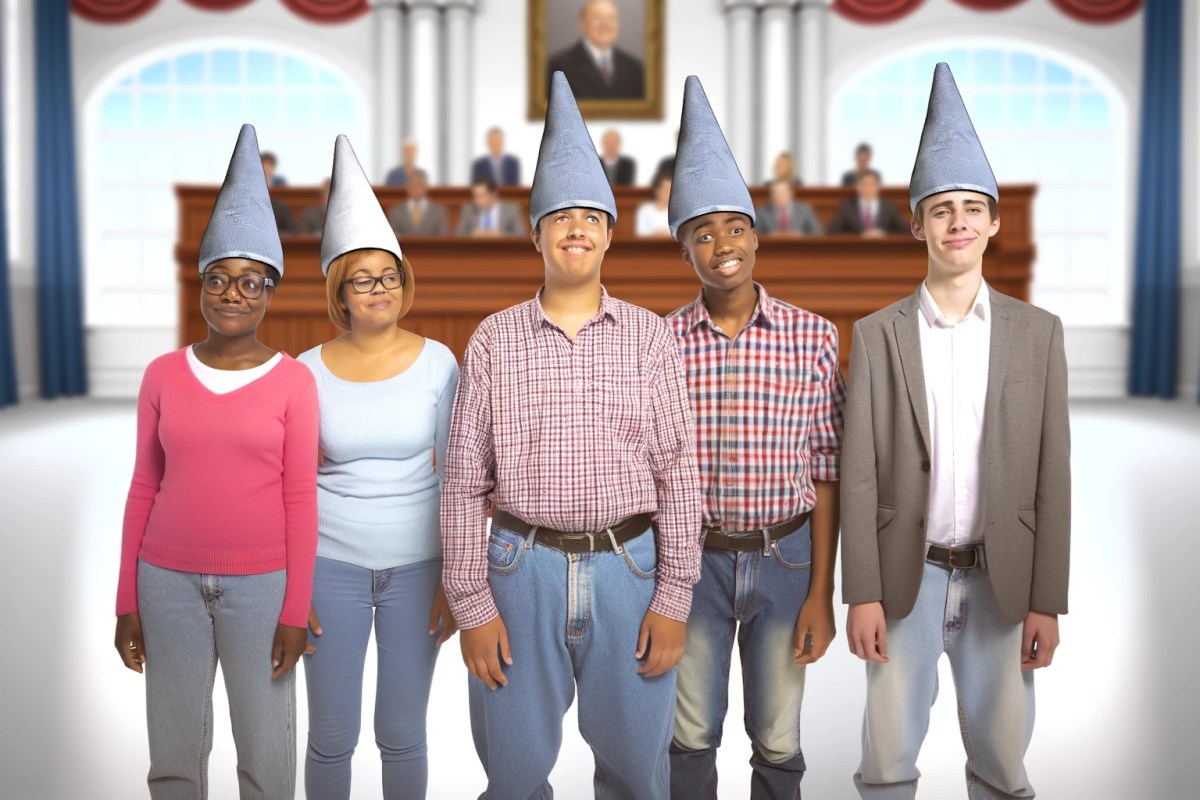
The point I am trying to make is that when it comes to reason, most people aren’t even rank amateurs. They are more like pigeons playing chess. And let’s be serious, whether these pigeons are playing chess, checkers, go, or croquet, they aren’t going to fare any better.

Phenotypes such as brown eyes or red hair are determined. Aspects such as height and intelligence have propensities.

When a person is born into this world, some aspects are determined outright, whilst others have propensities. Phenotypes such as brown eyes or red hair are determined. Aspects such as height and intelligence have propensities.

At birth, a person’s height is limited by some upper limit under optimal conditions. If I encounter nutritional deficits or some other stressors, this theoretic height may never be reached. I feel the same is true for intelligence and how well we can reason. I don’t particularly agree that IQ scores are a great measure, but I’ll use the notion conceptually since most people likely know of them and generally how they work. In a nutshell, a score of 100 is considered average, give or take a standard deviation in either direction, so roughly speaking about 68.26 per cent of people in a population fall between 85 and 115. This leaves about 16 per cent above and below average. By extension, about 85 per cent of people are average and below.

I’d like to assert is that the majority if not the entirety of this cohort cannot reliably reason or think rationally or critically.

What I’d like to assert is that the majority if not the entirety of this cohort cannot reliably reason or think rationally or critically. They can memorise that 1 + 1 = 2 and Paris is the capital of France, but novelty and synthesis are pretty much out of scope. And they can reason about small things in small doses.

Practically, this means a couple of things. Firstly, on the positive side, they can be trained to be drones. Wage slaves. Most jobs in the world are rote. Insert tab A into slot B. Follow an algorithm or procedure. This is not limited to so-called unskilled labour. This goes all the way up the food chain to doctors and lawyers, two rote professions if there are any.

Secondly, on the negative side, they cannot be trained to participate in democratic processes. This is a failure of insight of the Fathers of the Enlightenment. Is that a thing? Moving on. To be fair, they did notice. Plato noticed, too. This is why, among other reasons, they sought a republic over a pure democracy. The problem, besides bad incentives and ulterior motives, is that many of these people aren’t any, or materially better, thinkers. Recall my previous reference to lawyers. How many politicians are lawyers? Q.E.D. OK, so I’m being irascible, but still.

The problem is that the masses have been taught that participative democracy is both good and a right to be cherished. And it would be if the population were up to par. In the United States, they’ve had challenges in the past with literacy tests to limit access to the polls, but one, this wasn’t testing the right thing, and two, as I said at the start there isn’t really a test for this particular capacity.

Let’s imagine that there was a test. And let’s further imagine that it was somewhat aligned to IQ score. Let’s say that the threshold kicks in just over 115. This would mean that only 15.9 per cent of the adult population would be able to vote. Even if the threshold was met at 100, that would still eliminate 50 per cent of eligible voters. That would not go over very well. Remember these people are rote learners, and they learned that (1) rights are inalienable and sacred and (2) voting is a right. Justified or otherwise, you could expect a revolt, even in America where people are afraid of their own shadows. They aren’t the French showing their numbers in yellow vests. They are much more docile when it comes to things like this. Gun-related violence is another story, but unless they are shooting each other this is where fending for their rights end.

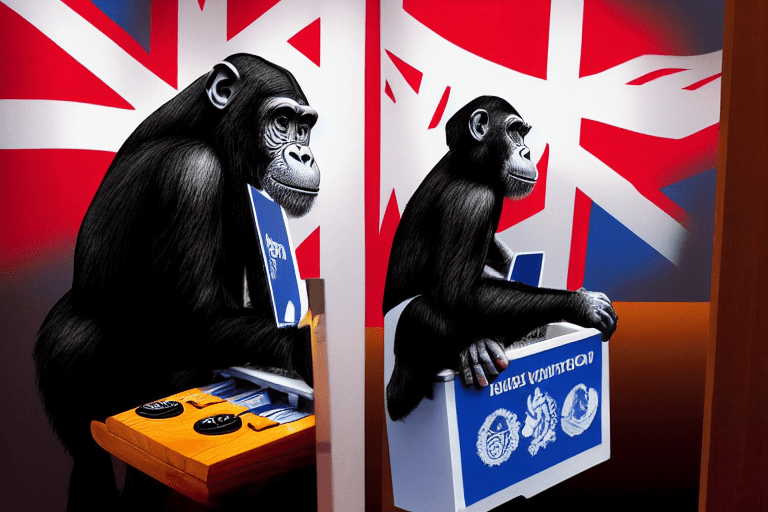
perhaps we could start allowing chimps to participate in the process

And maybe I am wrong, perhaps we could start allowing chimps to participate in the process. I’ve heard a lot of good things about dolphins and octopuses. I look around me, and I see a lot of nice people. People who enjoy life and are nice to talk with, maybe even about the weather. But being affable doesn’t make one a critical thinker. It doesn’t make a great foundation for government or even the selection of government.

Voting Chimps

The 64,000 question is what to do. The problem, as with any challenge involving people, is that it involves people. We could construct a test, and the affluent would find a way to bribe to get a favourable result or pay for the rote information and strategy to pass the test. They already use both of these approaches for college admissions, so I wouldn’t expect anything different here.

On a final note, some including Kant and Chomsky have argued that there are limits to human reason on a global level. I am just applying this to the local level, and there are many more local limits that never come close to encountering this higher global limit. That’s a challenge in and of itself.

In the end, you can rest assured. No one is going to voluntarily give up their voting rights any time soon. No meaningful test is on the horizon. The system will likely implode on itself first. In some places sooner than others.


* Yes, I know there are only 8,760 hours in an earth year. I was hoping you didn’t notice.

Slotrocket

Being in a band is hard. It’s like being married to a bunch of partners, and if you are a band and not just some cat with some supporting characters, you’ve got artistic differences to consider. This is where I soured on direct democracy.

Slotrocket is the name of one of the bands I performed with. We played under this name exactly once, but let’s rewind to the democracy bits.

Skipping a lot of the details, I played bass in this line-up. It was a 3-piece with a focus on alt-post-grunge-nu-metal, but we all came from different places musically. The drummer came from speed metal, death metal, and maths rock. The guitarist-vocalist came from Classic Rock, Grunge and Nu-Metal. I came from all sorts of places, but I wanted to focus this project on the post-grunge thing. For the uninitiated, this is the likes of Seether, Three Days Grace, Breaking Benjamin and so on.

We didn’t have a name. Since we only played with friends and at parties and sometimes provided the backing for live karaoke, it was just us. We did arrive at the name of Breached, but it turned out that a Canadian band was already calling dibs on that, so we just let it slide—especially when they released an EP in the vein of early Incubus.

But then the guitarist-vocalist didn’t want to hold both roles. Too much effort. He didn’t care which. In the end, they found a female singer who was interested. It seems that there was a mixup in communication. They asked if I minded if she joined us during our next rehearsal. I figured it was just another live karaoke session, so when I said yes, it turns out that she was now a member of the band. Truth be told, I didn’t think a female would cop the vibe I was seeking. She was no Lacy Sturm or Amy Lee. She didn’t know any grunge material as she was more of a Country gal. But that’s not the story.

The story is the name. We deliberated for well over a month to settle on a name. We decided to create a spreadsheet. We’d all force rank the entries. And each of us had infinite veto votes to kill an offending entry from the list.

Skipping ahead a few chapters, I liked Rapeseed. It was a benign word that sounded edgy. The boys were fine with it. Notsomuch, the girl. There was no particular rush until we booked a gig—the gig. We’d need a name to promote.

I came up with Slotrocket. Again the boys were fine with it; her notsomuch. However, she didn’t veto—later claiming that she didn’t think we could possibly be serious. Since I booked the date and created the adverts, everything seemed to go under the radar—or under the rug.

A bit before the show, I was distributing material and advertising on our media outlets (as it were) and she caught a glimpse of the promo mats. Let’s just say that she was not amused. Still, when the time came, we performed.

OK, so I skipped over some stuff—the months of pouring over a spreadsheet. Our goal was unanimity. The name didn’t have to be everyone’s top pick, but we did need to attain a consensus view. As it happened, two of the biggest decisions came about by accident, and they both resulted in hard feelings.

It’s not that the 3 or 4 of us couldn’t have eventually come to a unanimous decision amounting to all of our first choices, but this would have taken time—and who knows how much.

One may feel justified accusing me of allowing perfection to be the enemy of the good, but that’s just something apologists tend to say, as they defend their preference for democracy.

Are we too dumb for Democracy?

The road to Hell is paved with good intentions. I wanted to post a fairly robust piece arguing against democracy, but it is proving to be a bit daunting of a task. There is a lot of data and information to support this position. Too much, in fact. I’ve decided to step back and approach supporting this position more academically (which is to say, less blog-like… citations, footnotes, counterpoints, and the rest).

“Democracy don’t rule the world, You’d better get that in your head; This world is ruled by violence, But I guess that’s better left unsaid.”

—Bob Dylan

As it happens, I’ve been spending a lot of prep time reading, reviewing, watching online content, and so on. To be honest—I know, right?—, I’ve been engaging in deliberate selection bias, seeking arguments and evidence to make my case. In fact, it’s not too difficult to locate. The reality is that most people, such as David Moscrop, who asks Are We Too Dumb for Democracy? are creating provocative titles to grab attention, but their punchline is always ‘of course not’ and let me tell you why not by peddling hope and optimism. There is a reason self-help books sell.

Where I am now as 2021 has bled into 2022 is to try to create a structure around my thoughts. So far, it looks like this—not necessarily in this order:

  • Position and setup
  • Prima facie arguments
  • essential strawman counter arguments
  • historical backdrop – pre-enlightenment until now (pro-dem args)
    • Celebrity supporters (Marx, Churchill)
    • Celebrity anti-dem peeps (Plato, Churchill, Washington, Adams)
  • Shaky grounds and necessarily suboptimal outcomes: Arrow’s Impossibility Theorem
  • Possible people-based solutions
    • Are we too dumb for Democracy? (David Mascop’s defence)
      • Reconciling worldviews: Individualism versus Collectivism
      • Dealing with rational ignorance and unknown unknowns
    • Against Democracy (Jason Brennan’s proposed epistocracy solution)
      • Effective mob rule (better voters: or how to avoid learning from Jim Crow era mistakes)
    • The representatives (what about better-qualified representatives: or Plato was a dumbass)
      • Jeremy Benthem’s Panopticon — watching the watchers
  • People-based counter arguments
    • US / UK politics (your country likely sucks, too)
    • SCOTUS partisanship (SCROTUS? — evidently, this term already exists. Now I feel bad)
    • Jury systems
    • Rittenhouse – Pathetic paternalism and subverting outcomes
  • What about…?
    • Anarchy and Libertarianism
    • Deliberative Democracy
    • Republicanism
    • Epistocracy
    • Sortition 
    • Tea Leaves
  • And so what? Where to go from here?

Special guest appearances by…

  • Irrationality, cognitive dissonance and other biases and deficits, logical fallacies, and hubris
  • Misanthropy versus pity
  • Limits of intelligence and IQ

Obviously, this is a work in progress, so the structure and contents may change and discovery may lead me down different paths.

Woe Anarchy, Democracy, and the Rest

Think about it: The average person has an IQ of 100. Essentially, half of the people have lower and half have higher. Not a good hand to be dealt. I don’t particularly buy into the whole IQ thing, but it serves this line of logic. Adopting this framework and reflecting on normal or so-called Gaussian distributions, this means (pun initially unintended) that within one standard deviation of the mean, 68 per cent of the population falls, which is to say having an IQ between 85-115.*

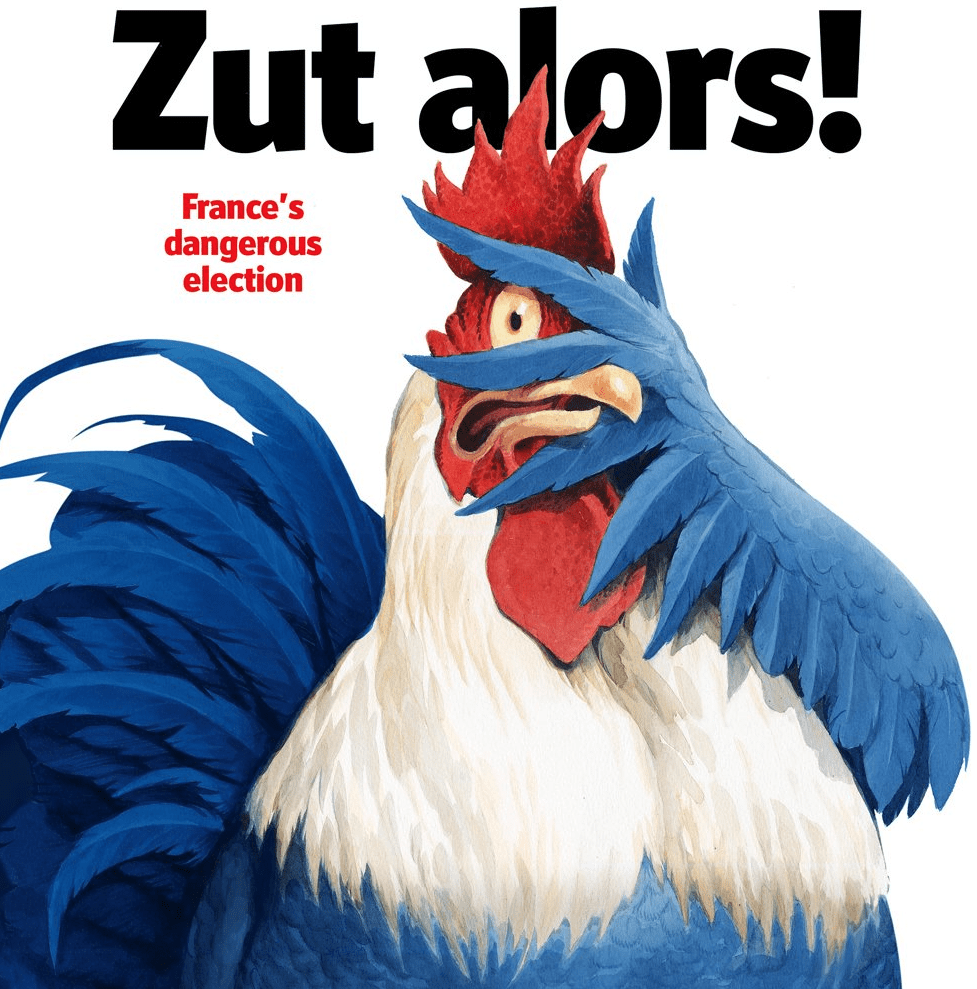
Zut Alors!

An IQ score of 100 wouldn’t be that bad if it was calibrated to Einstein or Hawking, but it’s not. The average police officer in the US has an IQ of around 103. Think about it. This is who democracy is asking to be in charge; this is who we expect to make good voting decisions. Amor fati. Memento mori.

Continuing on my It’s People riff, I am further struggling with options. As a Disintigrationist, I don’t feel compelled to provide answers, but as a personal matter, it seems that I am stuck in the middle. Idiocracy was supposed to be satire, but it’s serious.

So, accuse me of being an elitist. Call me a misanthrope. But it’s more patho-anthropy. It’s pity. Dunning-Kruger, be damned. On the one hand, a hierarchical structure leaves us with self-interested opportunists, megalomaniacs and narcissists; on the other, we get to know the political opinions of the Paul Blart‘s and Homer Simpson‘s of the world. And there’s nothing in between.

The Devil You Know

Following Plato’s Republic, the current system presumes a sort of meritocracy that elevates those who excel at politics to rise to the top. Optimistically, this is precisely what happens; pessimistically, this is precisely what happens. This is as good as it gets—self-serving politicos doing all they can to maintain their positions.

But what about the other people? Surely some honourable people are attracted to the political calling, right? Some who make it into the system are spat out by it; some are marginalised; the remainder are corrupted by it.

Then there’s the other side of the coin. There’s something to consider with local democracy. At least you know the idiots you are dealing with, but that’s not really a consolation. Here, Plato noted the benefits of rhetoric.

15 Things You Should Know About Dogs Playing Poker | Mental Floss
Police break up an illegal poker match—doggy style

Given the limited prospects for even a third-tier suboptimal solution, we might be better off by adopting RNG as a ruling system. No boundaries. No parameters. Remove any interference by humans. They’ll only muck it up.

Where to Go from Here

Hyperbole aside, what is the solution? Nazi Germans took a stab at it, but of course, they were idiots, too. Plain and star-bellied Sneetches. Pots calling the kettles black. People have tried literacy testing, income and wealth testing, lots, and any other number of approaches. The challenge is to have a system with no human intervention. Sadly, even this system would necessarily be constructed by humans, so we’re pretty much doomed.

Sneetches

Finally, to silence those who might label me an elitist, no, I don’t think that a society comprised and governed by people only with IQs at and above, say, 160 would fare much better because the problem is broader than facile intelligence.


* If your reaction is ‘but my IQ is in this range’, you may now get my trepidation.

It’s People

No, this is not some riff on Soylent Green. At the end of each year, like Janus, I tend to reflect to then look ahead to the next year. My interest at this juncture is anarchism. This is not a new interest. As I’ve written, I consider myself to be an anarcho-syndicalist or anarcho-communist, save for a few fundamental problems, each of which might just distil down to the same root cause.

My issue with syndicalism is that it centres on the worker. And whilst some workers remain relevant and pivotal to the system, it seems that workers may become less and less critical in the operation of the economy and of the society at large. As I work in a place where I can witness the immaturity and incompetency that sees this further in the future than some, I can still interpolate some speculative future where the vast majority of humans are no longer necessary cogs in the machine. This obviates anarcho-syndicalism in favour of anarcho-socialism.

Whilst anarcho-syndicalism centres on the worker, anarcho-communism is focused on the person without regard to their state of employment. This sounds even more equitable. So what’s my problem? It’s people.

These days, many people whitter on about democracy. Many are disappointed by republican apparatus and seek something closer to direct democracy. This is not the exclusive flavours we’ve witnessed in history—where the landed gentry get a vote. It’s a full-on participative democratic free-for-all—save for children and animals and non-sentient beings, it goes without saying.

The core problem is the same, whether archy or anarchy: people are the weak link. Arguments have been made that bringing decisions close to the source of the problem yields a better solution, if one defines better are more equitable, but this doesn’t translate into something universally or categorically better outside of this particular dimension. If equity is your sole goal—and I’m neither sure that it’s the right goal to optimise nor a particularly interesting goal in the first place, as it feels that this is merely a local solution to a global challenge; so equitably distributing deck chairs on the sinking titanic or sharing the wealth as the climate tips well beyond any hope of recovery.

Moreover, if each social unit—however that’s defined—is sovereign and autonomous, then this might operate OK on an intrasocial level, but how are intersocial conflicts resolved? What if a predacious 100-count society encounters a 50-count society over access to some local finite resource? It seems that numbers will prevail—the tyranny of the majority.

The other challenge I have with democracy and anarchy is that political interests will coalesce and power systems will emerge. To prevent such eventualities could be considered fascistic or authoritarian, so how is this resolved. Returning to the 100- versus 50-count societies, what if the 100-count wished to install a leader, so they vote for their leader to rule over the 150? This seems all but an inevitability.

I don’t have an answer. And though I am familiar with governmental and societal structures as well as with anarchy, I’ve not seen this addressed beyond hopes and wishes, attempting to move an ought to an is.

Democracy Casino

« Democracy is the worst form of government – except for all the others that have been tried. »

— Winston Churchill

Those of us in the West defending Capital-D Democracy with passion know this quote by Winston Churchill. We accept the inherent frailties in the system of Democracy because at least we get to participate. The sentiment generally follows a path of (1) it’s not perfect, but it’s the best we have, and (2) if we could have a benevolent dictator, things would be so much easier to tidy up around the edges—only we can’t trust the succession of the benevolent dictator; (3) a Republic is Democracy levelled up. This solves many of the weaknesses of Democracy. Plato said that Socrates said so. So it must be true. Always trust men in togas.

Let’s unwind this ball of twine. Taking the quote in context, Churchill had just been voted out as Prime Minister so he was feeling a bit of a sting of democracy in action. He was being conciliatory whilst attempting to euphemise his sour grapes sentiment.

At a casino, the odds are stacked against you. As with casinos, you can raise your fist and rail at the casino for not making you better off exiting the system than when you entered it, but everyone will tell you that you should have known better. Some will encourage you with ‘Better luck next time’. Casinos and Democracy alike, if you are relying on luck for positive outcomes, you may need to consider taking another look.

At the start, Democracy is untenable even in a classroom textbook context with no frictions. At any scale, it can’t yield optimal results. What this means is that even if Democracy was operated with the precision of dispassionate AI logic, it would still be suboptimal. By extension, this means that outcomes move from suboptimal to less than mediocre when we add humans and emotions to the equation. On top of all this, what it is that we are optimising compounds these challenges. Coming to accord here is paramount. In American baseball lets consider this to be strike three.

So what about this proverbial benevolent dictator. This actually adds nothing to the equation. If the ideas of the dictator happen to align with everything our hearts desire as individuals, it does nothing to the dissenters. They are left in the same position, which is to say disenfranchised—effectively outvoted. If we are the dissenters, thus we are disenfranchised. Not that we will have been enfranchised in any case, but our desires will remain as unmanifest as if we had lost the vote.

A Republican construction, not the trademark, circle-R, Republicans, who are the Tories of the United States of America. Let Freedom ring, and don’t tread on me Republicans. These follow the Platonic franchise. This Republican construction merely kicks the tin up the alley. We’ve got fewer voters with the same suboptimal outcomes, but now we’ve exacerbated it with principle-agency problems. Not only might one’s vote not be heard, but this agent may have secured office on the promise of delivering our wants only to take the ball and run with it in another direction. Off the playground. No universal healthcare for you lot. Yoink!

In the end, Democracy offers nothing but hope. Pandora’s box hope and empty promises. It’s a specious proposition of smoke and mirrors. And to be honest it’s more smoke than mirrors. Echoing the words of a wise poet, and the feeling that it’s all a lot of oysters, but no pearls.

So, wait. What do I mean by mathematically untenable? Kenneth Arrow demonstrated that no voting systems, whether in theory or in practice, will yield optimal results. Again, this is before humans are introduced into the equation. No form, whether all or nothing, instant run-off, proportional, ranked, and so on. There’s simply no way. With as few as 3 voters and 3 initiatives, voting fails. Add voters and initiatives and it fails harder. Add human voters and it fails miserably. Many of us rail at the candidates and aspects of the system such as disenfranchisement and gerrymandering, but it had already failed prior to this. We’ve been sold a bill of goods, and the contents are rotten.

In closing, my point is that Democracy is over-sold. It’s hype appealing to emotion. We’ve got illusions of self and personal agency intertwined with illusions of control. And it is used to lull people into believing they have an impact. Instead, they complain when things don’t quite work out. A near-perfect analogy is railing at the casino when you don’t get the payout you had expected. Or that lottery ticket. It’s not that Democracy is a bad system. It’s just not all it’s cracked up to be.

And it’s not like you are being over-billed and getting ninety-nine per cent of what you bargained for. You are more likely getting less than half, and the rest is filler. You are paying for filet mignon, and you are getting bologna. You’d not accept that outcome at a restaurant, yet with Democracy, the best one can defend is that it’s imperfect.

And do politicians exploit these at every opportunity? No, as hard as they try, they miss some opportunities to exploit, but they are yet another nail in the coffin of the dream of democracy.

What Reason?

Any system built on the presumption of widespread capacity for reason is bound to fail. The ability for most humans to ‘reason’ is clearly abridged and homoeopathic. And this is before one factors in cognitive deficits and biases. This is separate from sense perception limitations.

Nietzsche was right to separate the masters from the herd, but there are those in both classes with these limited capacities, though in different proportions.

People are predictably irrational

In economics, we have to define reason so narrowly just to create support the barebones argument that humans are rational actors—that given a choice, a person will take the option that leaves them relatively better off—, and even with this definition, we meet disappointment because people are predictably irrational, so they make choices that violates this Utilitarian principle. And it only gets worse when the choices require deeper knowledge or insights.

Democracy is destined to fail

This is why democracy is a destined to fail—it requires deeper knowledge or insights. The common denominator is people, most of whom are fed a steady diet of the superiority of humans over other species and lifeforms and who don’t question the self-serving hubris. They don’t even effectively evaluate their place in the system and their lack of contribution to it.

To the masters, who are aware of the limited abilities of the herd to reason, it seems like hunting fish in a barrel. If we convince the herd that they have some control over their destinies, that’s as far as it needs to go, but among the masters, there are subclasses, so people in these factions are also vying for position, so each employs rhetoric to persuade herd factions.

No one is sheltered from the limitations of reason

To the people out reading and writing blogs and such, confirmation bias notwithstanding, they may more likely to be ‘reasonable’ or able to reason, but try as they may, no one is sheltered from the limitations of reason.

More on this later…