A short podcast on the reason Postmodernism is rubbish.
Video: YouTube (added 2/9/2022)
Postmodernism is rubbish. It makes no sense, and here’s why.
The term ‘modern’ is analogous to the term ‘now’. It is a time reference that privileges the moment. With time, we have a structure of yesterday, today, and tomorrow. Now fits into a structure of before, now, and later.
Conversely, where ‘modern’ means now, postmodern would mean ‘later’, it makes no sense to label an ongoing pursuit postmodern, anymore than tomorrow can run contemporaneously with today.
Just labelling something as modern is pretentious enough. It’s similar to labels such as New Wave or New Age. It’s just trying to privilege a movement by branding it new.
So, if Modern was the new kid on the block, how might postmodern operate.
Another problem with the term postmodern is that most people considered postmodern, did not consider themselves to be postmodern. In fact, many vehemently disagreed.
A reason for this disagreement, is that the term is not owned by the purported Postmoderns. Rather, it’s a disparaging slur by so-called and improperly named Moderns.
Apart from the nomenclature challenge, postmodern is a reaction to the promise of modernity, but the reactions differ by discipline. Postmodern art and architecture are different to postmodern literature, which is different to postmodern philosophy.
And since postmodernism is rather a disparaging catchall, those with ideas not conformant to mainstream doctrine get tossed into the bin. This means that any number of feminists and post-colonialists are thrown onto the postmodernist pyre.
Here’s some food for thought. I argue that postmodernism cannot have a privileged perspective, because it claims that there is no such perspective available. If a feminist or a post-colonialist is saying anything, they are pointing out, that one needs to look through their lens too. By and large, they are not claiming that it is the lens of lenses.
In essence, if the modern lens is red, they might recommend viewing the same events through a blue lens or from a different angle. Walk a mile in another’s shoes. This shift in perspective can make all the difference.
The difference between a modern and the bolloxed-up postmodern is that the Modern thinks either that they have the only lens, or in any case, they have the right one. Moderns tend to be absolutists and universalists, so subjectivists and relativists rather rub them the wrong way.
The final thing I’d like to say about postmodernism is the notion of Deconstruction as made famous by one Jacques Derrida and misunderstood and misapplied by millions since. I’ll spare you the instruction, but I like to capture the sentiment of the way it is misunderstood by suggesting my own term, Disintegration. Perhaps, I’ll share more on Disintegrationism™ in future. Meantime, it’s just the process of breaking systems down to their core elements to inspect the working parts. Disintegrationism notes that these pieces can be re-integrated into new systems, but it makes no claim that one is better than another because that can only be determined by purpose. Another thing Moderns tend to ‘know’, is what the purpose is. Conditionally, if I know what the purpose is, I can claim to know, by extension, what the best system is.
Abraham Maslow gave us the law of the instrument, popularly conveyed as the aphorism, if you’re a hammer, everything looks like a nail. Moderns are hammers and insist that every solution can be solved as if it were a nail. Only, everything is not a nail. The postmodern reminds us that hammers don’t make the best knives or screwdrivers or spanners.
What are your thoughts on postmoderns and postmodernism? What about moderns? Is there a term you feel might better capture the essence of these two schools?
I’ve finally returned to the second author of Four Views on Free Will. The first author was Robert Kane. Here, I was introduced to John Martin Fischer, who wrote a section on Compatibilism. I’ve never read anything by Fischer. Indeed, I have no familiarity with him or his work. Allow me to start by saying that I was not impressed. Before diving into the content, let’s just say that he was extremely repetitive and circumlocutive. I found myself questioning whether the book was assembled with duplicate pages. Hadn’t I just read that? I’ll spare the reader the examples.
I repeat myself when under stress
I repeat myself when under stress
I repeat myself when under stress
I repeat myself when under stress
— King Crimson, Indiscipline
The topic was 44 pages on compatibilism. The first 30 pages were compatibilism before he changed to his brainchild, semi-compatibilism. Full disclosure: I am not a compatibilist. My recollection is that the majority of contemporary philosophers are compatibilists. Joining Fischer are Dan Dennett, Frithjof Bergmann, Gary Watson, Susan R. Wolf, P. F. Strawson, and R. Jay Wallace. Historically, this cadre are joined by Hobbes, Locke, Hume, and Mill. This motley crew has been opposed by Peter van Inwagen and historical figures, Arthur Schopenhauer, William James, and Immanuel Kant.
Semi-compatibilism is the idea that regardless of whether free will and determinism are compatible, moral responsibility and determinism are.
At a meta-level, Fischer repeatedly—I’ll discontinue using this term as, like Fischer, it will become very, very repetitive—invoked law and common sense. Law is not a moral structure in search of truth. It’s a power structure employed to retain the status quo. And, as Voltaire quipped, ‘common sense is not so common.’ This is an argumentum ad populum (appeal to popularity) fallacy. It also relies on belief and perception. I suppose he’s not familiar with Descartes’ Meditations. It seems he is trying to forge Compatibilism into a cast of soft determinism with hopes that no one notices the switcheroo.
Fischer targets some quotes buy Kant, James, Wallace Matson, and Nietzsche with the general critique that they are expecting too much of an agent by expecting it to be the cause of its own actions. Nevermind, that he is guilty of just this in attempting to parse passive and active agents—passive being insentient dominos and active being conscious entities.
I’m not convinced that maths is a strong point. He sets up a hypothetical scenario where physics has proven that causal determinism is true, so 100 per cent of everything in the universe can be known with certainty. But then he does two things.
First, he exempts human agency—cuz reasons. Second, he creates a parallel scenario where 100 per cent might be 99 or 99.9 per cent.
Second, he claims that because he feels free, he must be free.
Similarly, it is natural and extraordinarily “basic” for human beings to think of ourselves as (sometimes at least) morally accountable for our choices and behavior. Typically, we think of ourselves as morally responsible precisely in virtue of exercising a distinctive kind of freedom or control; this freedom is traditionally thought to involve exactly the sort of “selection” from among genuinely available alternative possibilities alluded to above. When an agent is morally responsible for his behavior, we typically suppose that he could have (at least at some relevant time) done otherwise.
— Fischer, p. 46
Nothing is such that thinking doesn’t make it so.
It seems that when watching a movie for the third time, the victim who gets killed in the cellar won’t descend the stairs this time. Fisher must get perplexed when she does every time. Of course, he’d argue without evidence that an active agent would be able to make a different decision—even under identical circumstances. He insists that the agent possesses this free will.
Whilst sidestepping physicalism and materialism, he simply posits that consciousness is just different and not subject to other causal chain relationships—and that these cannot be deterministic even if everything else is.
I’m going to digress on his next point—that the person who knows not to cheat on taxes, and who does so anyway, is responsible as any normal person would be. Perhaps the person feels that the taxes are being used for illegal or immoral purposes and is taking the moral high ground by depriving the institution of these proceeds.
Around 2007 or so, I paid my taxes due minus about $5,000, which was the calculated amount of the per capita cost of the illegal and immoral Iraq invasion by the United States and its cadre of war criminals in charge. I attached a note outlining my opposition and rationale.
Some months later, the Internal Revenue department sent a legal request to my employer for the withheld sum. Payroll summoned me and conveyed that they were required to comply with the request. I told them my perspective and said if they could sleep with that on their conscience, then they were in their power. And so no nights of sleep were lost.
The point of this anecdote is to say that morals are social constructs. Clearly, Fischer is just an old-fashioned conformist. I suspect he thinks of Valjean as a bad person.
Like many if not most people, he employs a compos mentis approach, exempting persons of reduced cognitive capacity and those under duress or coercion, but he is not a proponent of the causa sui defence.
He has an entire subsection devoted to the libertarian notion of freedom. To recapitulate, he simply regurgitated all of the standard arguments and exempts the aforementioned agents and adds people under hypnosis, the brainwashed, and so on. Nothing to write home about—not here either.
In the next subsection, his focus is on consequences. He calls out Peter van Inwagen’s Consequence Argument.
Similarly, the skeptical argument about our freedom employs ordinary ideas about the fixity of the past and the fi xity of the natural laws (putatively) to generate the intuitively jarring result that we are not ever free, if causal determinism turns out to be true (something we can’t rule out apriori). If this skeptical argument is sound, it calls into question any compatibilist analysis of freedom (that is, freedom of the sort under consideration – involving the capacity for selection among open alternatives). If the argument is sound, then not only both the simple and refined conditional analysis, but any compatibilist analysis (of the relevant sort of freedom) must be rejected.
Fischer p. 53
He leans on Borges’ garden of forking paths and claims (without support) that although the past might be fixed, freedom is the ability to add to the future, citing Carl Ginet as the source of this notion. He misses the point that that’s what the future is, tautologically. It adds now to the past and generates a future. Choice is not necessary for this function to operate, but he continues to insist on invoking it.
Standard Frankfort examples are referenced as well as Locke. Here he wants to point out regulative control—but he skirts the question of where the volition comes from by saying ‘for his own reasons‘, as if these reasons are somehow meaningful. In the end, he recites the scenarios, performs some hand-waving, and summons his accord with Robert Kane’s “dual voluntariness” constraint on moral responsibility.
He leaves us with the thought that if the Consequence Argument were true, it would be compatibilism’s death knell, but it’s not true (in his mind), so all is well in Whoville. Crisis averted.
Source incompatibilism is next. His focus here is on the “elbow room” necessary to exercise free will.
Elbow Room is the title of a book by Daniel Dennett originally published in 1984 and republished in 2015. I’ve recently read this on holiday, but I haven’t had time to review it. Please stand by.
His approach in this subsection is to attack opposing perspectives as reductionist. Of course, he’s right, but they are no more reductionist than anything he’s suggested thus far. Besides, simply injecting favoured concepts to add to a model to make it compatible with one’s hypothesis doesn’t make it less reductionist. It just makes the model more convoluted.
Here he attempts to elevate consciousness into a special category in order to shield it from the physics of the universe. We can’t say for sure what consciousness is, but you can bet it’s a magical place where practically anything can happen. OK, that’s a bit of hyperbole.
He uses the metaphor of trying to assess how a television works by only studying the components. Of course, if that is all one did, one would be left with questions. But that is not where one stops. To be fair, neuroscience has come a long way since this was published in 2007. Neuroscientists are asking questions beyond the hardware.
He sets up a strawman by labelling total control as a chimaera as if anyone is arguing that if a theory doesn’t allow for total control, it will not be accepted. He does allow that…
We do not exist in a protective bubble of control. Rather, we are thoroughly and pervasively subject to luck: actual causal factors entirely out of our control are such that, if they were not to occur, things at least might be very different.
— Fischer, p. 68
We agree on this point, but I feel that he underestimates the remaining degrees of freedom after all of this is accounted for.
He attempts to create a mental model with vertical and horizontal lines. At least he admits that he does “not suppose [to] have offered a knockdown argument” because he doesn’t.
Finally, he wraps up this subsection by invoking Nietzsche’s famous Munchausen Causa Sui statement in Twilight of the Idols. He attacks this rationale as being “both ludicrous and part of commonsense.” He loves his commonsense.
Next, he wants to convince us, Why Be a Semicompatibilist? Semicompatibilism just needs enough elbow room to assert freedom. I suppose that’s the ‘semi‘ part. It feels to me an exercise in self-delusion.
The main idea behind semicompatibilism is to shrink the target size of compatibility and focus centrally on moral responsibility and agent control rather than the larger realm of free will.
Fischer makes what might be considered to be a religious argument. We should adopt this perspective because it feels better and is in our best interest. He cites Gary Watson’s view of using indeterminism to undermine determinism, but he feels that rather etiolates control rather than strengthening it because it “becomes unclear that our choices and actions are really ours.”
In the next subsection, he leads with the argument “that moral responsibility does not require regulative control, but only guidance control, and further that it is plausible that guidance control is compatible with causal determinism.” At least, this is the story he’s sticking to.
In Fischer’s “approach to guidance control, there are two chief elements: the mechanism that issues in action must be the “agent’s own,” and it must be appropriately “reasons-responsive.””
As for the “agent’s own” constraint, he simply notes that counterclaims exist, but he asserts that he doesn’t accept them.
In the final subsection, he writes about the Lure of Semicompatibilism. I do feel he is lured by the concept and makes light of the label. He advances the notion that “Kant believed that compatibility and incompatibilism are consistent“. Say what? But he takes a weaker position on this claim, using the Kant name-drop for cover.
As I said at the start, I don’t know anything about Fischer, but he is obsessed with legal theory as if it has any bearing on philosophical standing. Perhaps I’ll include a summary from a quick internet perusal. After I’ve wrapped this up. He mentions moral desert, which is a concept employed in matters of restorative and retributive justice.
The section concludes with a list of publications by him and others. Perhaps I’ll list them here in future as an addendum. For now, I’ll pop outside of this edit window and see what I can find on John Martin Fischer.
John Martin Fischer (born December 26, 1952) is an American philosopher. He is Distinguished Professor of Philosophy at the University of California, Riverside and a leading contributor to the philosophy of free will and moral responsibility.
Jordan Peterson and Russell Brand chat for about 12 minutes on sex differences and personality, but that’s not where I want to focus commentary. What I will say is that Peterson continually conflates sex and gender, and I find that disconcerting for a research psychologist.
I’ve queued this video near the end, where Peterson delineates his conception of how the political right and left (as defined by him and the US media-industrial complex).
I feel he does a good job of defining the right, and he may have even captured whatever he means by left—radical left even—, but he doesn’t capture my concerns, hence I write.
To recap his positions,
Premises
We need to pursue things of value
Hierarchies are inevitable
[One has] to value things in order to move forward in life
[One has] to value things in order to have something valuable to produce
[One has] to value some things more than others or [they] don’t have anything like beauty or strength or…competence or…whatever…
If [one] value[s] [some domain] then [one is] going to value some [things in that domain] more than others because some are better
If [one] play[s] out the value in a social landscape, a hierarchy [will result]
A small number of people are going to be more successful than the majority
A very large number of people aren’t going to be successful at all
Conservative (Right)
Hierarchies are justifiable and necessary
Left
Hierarchies … stack [people] up at the bottom
[Hierarchies] tilt towards tyranny across time
Critique
I feel I’ve captured his position from the video transcript, but feel free to watch the clip to determine if I’ve mischaracterised his position. I have reordered some of his points for readability and for a more ordered response on my part.
To be fair, I feel his delivery is confused and the message becomes ambiguous, so I may end up addressing the ‘wrong’ portion of his ambiguous statement.
We need to pursue things of value
This is sloganeering. The question is how are we defining value? Is it a shared definition? How is this value measured? How are we attributing contribution to value? And do we really need to pursue these things?
Hierarchies are inevitable
Hierarchies may be inevitable, but they are also constructed. They are not natural. They are a taxonomical function of human language. Being constructed, they can be managed. Peterson will suggest meritocracy as an organising principle, so we’ll return to that presently.
[One has] to value things in order to move forward in life
This is a particular worldview predicated on the teleological notion of progress. I’ve discussed elsewhere that all movement is not progress, and perceived progress is not necessarily progress on a global scale.
Moreover, what one values may not conform with what another values. In practice, what one values can be to the detriment of another, so how is this arbitrated or mediated?
[One has] to value things in order to have something valuable to produce
I think he is trying to put this into an economic lens, but I don’t know where he was going with this line. Perhaps it was meant to emphasise the previous point. I’ll just leave it here.
[One has] to value some things more than others or [they] don’t have anything like beauty or strength or…competence or…whatever…
This one is particularly interesting. Ostensibly, I believe he is making the claim that we force rank individual preferences, then he provides examples of items he values: beauty, strength, competence, and whatever. Telling here is that he chooses aesthetic and unmeasurable items that are not comparable across group members and are not even stable for a particular individual. I won’t fall down the rabbit hole of preference theory, but this is a known limitation of that theory.
If [one] value[s] [some domain] then [one is] going to value some [things in that domain] more than others because some are better
We’ve already touched on most of this concept. The key term here is ‘better‘. Better is typically subjective. Even in sports, where output and stats are fairly well dimensionalised, one might have to evaluate the contributions of a single athlete versus another with lower ‘output’ but who serves as a catalyst for others. In my mental model, I am thinking of a person who has higher arbitrary stats than another on all levels versus another with (necessarily) lower stats but who elevates the performance (hence) stats of teammates. This person would likely be undervalued (hence under-compensated) relative to the ‘star’ performer.
In other domains, such as art, academics, or even accounting and all measurement bets are off.
If [one] play[s] out the value in a social landscape, a hierarchy [will result]
Agreed, but the outcome will be based on rules—written and unwritten.
A small number of people are going to be more successful than the majority
Agreed.
A very large number of people aren’t going to be successful at all
Agreed
Conclusion
The notion of meritocracy is fraught with errors, most notably that merit can be meaningfully assessed in all but the most simple and controlled circumstances. But societies and cultures are neither simple nor controlled. They are complex organisms. And as Daniel Kahneman notes, most merit can likely be chalked up to luck, so it’s all bullshit at the start.
In the end, Peterson and people like him believe that the world works in a way that it doesn’t. They believe that thinking makes it so and that you can get an is from an ought. Almost no amount of argument will convince them otherwise. It reminds me of the time Alan Greenspan finally admitted to the US Congress that his long-held adopted worldview was patently wrong.
Video: CSPAN: Oversight and Government Reform Committee Chairman, Rep. Henry Waxman and Former Fed Chairman Alan Greenspan Testimony
WAXMAN: “You found a flaw…”
GREENSPAN: “In the reality—more in the model—that I perceived is the critical functioning structure that defines how the world works, so to speak.”
WAXMAN: “In other words, you found that your your view of the world—your ideology—was not right. It was not what it had it…”
GREENSPAN: “Precisely. No, I… That’s precisely the reason I was shocked because I have been going for 40 years or more with very considerable evidence that it was working exceptionally well.”
I just wrapped up chapter eleven of The Righteous Mind by Jonathan Haidt. I’ve got only 35 pages to go to get through chapter twelve. I’ve been tempted to stop reading. Chapter eleven—and I am tempted to inject a bankruptcy pun here—has been more frustrating than the rest thus far. And yet I am glad to have persisted.
My intellectual focus these past months has been on agency. Et voilà, paydirt. Chapter eleven’s title reveals the context: Religion is a Team Sport. Let’s walk through this garden together.
A goal of Haidt is to educate the reader on his third principle of moral psychology: Morality binds and blinds. He establishes parallels between sports and religion. And here’s the thing—I don’t disagree. But here’s the other thing—I feel that are equally vapid—, with no apologies to sports fans or the religious. Let’s keep moving.
“A college football game is a superb analogy for religion.”
Jonathan Haidt, The Righteous Mind, Chapter 12: Religion is a Team Sport
He talks about the organising and unifying functions of both. But here’s the thing. It unifies the like-minded. Haidt claims to be irreligious and not be into sports, and yet he cites these as somehow desirable. I find him to be an apologist for religion.
I am not a psychologist, but if I were, I’d be tempted to claim that Haidt’s conclusions follow from his personal beliefs. He believes in morals, society, order, intuition, and institutions. He is a textbook Modern and an extrovert to boot. I think he also falls into teleological fallacy traps. Was that a play on words?
Although he views religion through rose-coloured glasses, he comes to the conclusion that religions have done a great deal of harm over the millennia, but the good outweighs the bad, especially if you consider it through a social-moral lens. But if religion creates in-groups versus out-groups, which they do, and religious in-groups outlive even non-religious ingroups, then this is a winning option. But what if you don’t like that option?
Personally, I am a collectivist, but this is not willy-nilly any collective.
Haidt contrasts the New Atheist vantage that religious belief is an evolutionary byproduct versus a position that what started as a byproduct evolved into group selection and then, perhaps, an epigenetic phenomenon.
Here’s my contention:
Borrowing from New Atheism, Haidt adopts the notion of a “hypersensitive agency detection device [that] is finely tuned to maximize survival, not accuracy”.
The first step in the New Atheist story—one that I won’t challenge—is the hypersensitive agency detection device. The idea makes a lot of sense: we see faces in the clouds, but never clouds in faces, because we have special cognitive modules for face detection. The face detector is on a hair trigger, and it makes almost all of its mistakes in one direction—false positives (seeing a face when no real face is present, e.g., ), rather than false negatives (failing to see a face that is really present). Similarly, most animals confront the challenge of distinguishing events that are caused by the presence of another animal (an agent that can move under its own power) from those that are caused by the wind, or a pinecone falling, or anything else that lacks agency.
The solution to this challenge is an agency detection module, and like the face detector, it’s on a hair trigger. It makes almost all of its mistakes in one direction—false positives (detecting an agent when none is present), rather than false negatives (failing to detect the presence of a real agent). If you want to see the hypersensitive agency detector in action, just slide your fist around under a blanket, within sight of a puppy or a kitten. If you want to know why it’s on a hair trigger, just think about which kind of error would be more costly the next time you are walking alone at night in the deep forest or a dark alley. The hypersensitive agency detection device is finely tuned to maximize survival, not accuracy.
Op Cit, p. 292
I fully agree with the assertion that the brain values fitness over truth, and I’ve commented in several posts that pareidolia and apophenia create false-positive interpretations of reality.
But now suppose that early humans, equipped with a hypersensitive agency detector, a new ability to engage in shared intentionality, and a love of stories, begin to talk about their many misperceptions. Suppose they begin attributing agency to the weather. (Thunder and lightning sure make it seem as though somebody up in the sky is angry at us.) Suppose a group of humans begins jointly creating a pantheon of invisible agents who cause the weather, and other assorted cases of good or bad fortune. Voilà—the birth of supernatural agents, not as an adaptation for anything but as a by-product of a cognitive module that is otherwise highly adaptive.
Op Cit, p. 293
For me, this supports my contention that agency is a wholly constructed fiction. The same agency we ascribe to unknown natural events, we ascribe to ourselves. And perhaps this ability served an egoistic function, which was then generalised to the larger world we inhabit.
I have an issue with his teleological bias. He feels that because we have evolved a certain way to date; this will serve as a platform for the next level as it were. I’ll counter with a statement I often repeat: It is possible to have adapted in a way that we have been forced into an evolutionary dead end. Historically, it’s been said that 99 per cent of species that ever occupied this earth are no longer extant. That’s a lot of evolutionary dead ends. I am aware that few species could have survived an asteroid strike or extended Ice Ages, but these large-scale extinction events are not the only terminal points for no longer extant species.
So finally, Haidt essentially says that it doesn’t matter that these religious and cultural narratives are wholly fictitious, if they promote group survival, we should adopt them. This seems to elevate the society over the individual, which is fine, but perhaps the larger world would be better off still without the cancer? Just because it can survive—like some virulent strain—doesn’t mean we should keep it.
Finally, given these fictions, what’s a logical reasonable person to do? I don’t buy into ‘this country is superior to that country’ or ‘this religion is better than that religion’ or even ‘this sports team is better than that’ or ‘this company is better than that’.
Haidt does idolise Jeremy Bentham, but this is more Pollyannaism. It sounds good on paper, but as an economist, I’ll reveal that it doesn’t work in the real world. No one can effectively dimensionalise and define ‘good’, and it’s a moving target at that.
No thank you, Jonathan. I don’t want to buy what you are selling.
News Flash: From the time I started this content, I’ve since read the final chapter. Where I categorically reject a lot of what Haidt proposes in this chapter, I tend to find chapter twelve to fit more amicably with my worldview. Perhaps I’ll share my thoughts on that next.
If you’ve reached this far, apologies for the disjointed presentment. I completed this over the course of a day through workaday interruptions and distractions. I wish I had an editor who could assert some continuity, but I am on to the next thing, so…
Bonus: I happened upon this journal article, and it somehow ended up here. I haven’t even read it yet, so I’ve got no commentary. Perhaps someday.
Rai, T. S., and A. P. Fiske. 2011. “Moral Psychology Is Relationship Regulation: Moral Motives for Unity, Hierarchy, Equality, and Proportionality.” Psychological Review 118:57–75
In other news, Boris Johnson resigns. Another Conservative politician hits the bin. I’m neither Conservative nor Liberal, so I think I am in a place where I can comment as a disinterested observer. Of course, I am not fully disinterested; I am rather apathetic to it all. None of my horses is in the prevailing parties.
As I’ve been reading (too much) Jonathan Haidt, of all things, a Liberal apologist for Conservatives aimed at a Liberal audience. I have to wonder why Conservative politicians are so corrupt.
Hear me out. Before you accuse me of a hack job, allow me to explain. Are Liberal politicians corrupt? Of course, they are. Probably as corrupt. By and large, they have the same handlers and funding sources. But then why call out Conservatives as being corrupt?
According to Haidt and his Moral Foundations Theory (MFT), Conservatives collectively have more moral dimensions than Liberals and they have elevated ‘disgust’ triggers. This is what makes them more obsessed with ‘purity’.
According to MFT, Liberals have two moral dimensions: Care and Fairness, regarding the left side of the value pairs. Conservatives share these, but they also include Loyalty, Authority, and Sanctity.
“The Righteous Mind: Why Good People Are Divided by Politics and Religion,” Haidt 2012
I am distracted for a moment by the epiphany that this explains a lot about why American police units operate the way they do—dysfunctionally from the Liberal and minority perspective. Whilst they care and want ‘fairness’, how they care is typically different (though there are clear overlaps), and ‘fairness’ means something different to them. Next, dogpile on loyalty, authority, and sanctity.
Loyalty is to their group of other blue lives as well as their nationalistic and paternal fealty. Authority is them. They are the authority, and this is an inviolable relationship. Don’t question it. And then there’s sanctity. We need to clean up the neighbourhoods and cleanse them of criminals. The dirty people need to be taken off the streets as we perform our moral duties.
And I’m back. Whilst this intermission was a diversion, it is at the same time on point because they share this worldview with Conservative politicians—tough on crime, law and order. But what I am calling out is that if this is their worldview, they should be measured by a higher standard.
Distracted again, this also explains a lot about the outrage over Julian Assange, Chelsea Manning, and Edward Snowden. Each of these people exposed unfathomable corruption, and Conservatives want their heads on platters. This reflects their viewing of the world through a deontological lens and as measured by a different sense of fairness.
I am not judging here. I am merely pointing out that their loyalty to country (or whatever) trumps the fairness mechanism. In a way, they see it as unfair that someone would have the audacity to betray their (notably corrupt) government. They even buy into the argument that they could have used the reporting mechanisms in place rather than air the dirty laundry in the public forum. These people find no discomfort in maintaining state secrets, even when the secrecy is for nefarious intent.
Back again. My point is that if these are primary drivers for Conservatives—fundamental attribution bias notwithstanding—, why do they subvert their own morals? For Liberals, there is no such subversion because they don’t believe these are relevant moral dimensions. This bleeds into the abortion debate—the sanctity of life: Life is sacred (and too much hypocrisy on the Right to unpack here), so you need to abide by moral code. Let’s not run astray again.
Wrapping this up, even if Conservatives are no more or less corrupt than Liberals, they are claiming to have a higher standard and yet they fail to abide by it. For a Conservative to call out a Liberal for the same violation is rather silly because the Liberal never agreed to the Terms & Conditions at the start.
Done
As I was mistyping the title, I realised that ‘resigns’ is ‘reigns’ with an inserted ‘s’. Nothing more.
Einstein was wrong. Time is not the relative factor in space-time. Space is. Time is constant. Here’s a lecture on the topic of the book.
Lee Smolin Public Lecture: Time Reborn
As a result of a discussion with a colleague, on the possibility of variability or mutability of so-called physical laws, he recommended Lee Smolin’s book Time Reborn: From the Crisis in Physics to the Future of the Universe. He mentioned that it would be suitable as an audiobook. Since I had a credit on Audible, I decided to use it so I could listen to this without deep scrutiny and a need for taking notes.
There is a nice review in the Guardian from 2013. I suppose I am a bit behind the times.
Whilst running errands, I listened to the Preface and Introduction. I stopped at the start of the first chapter, and am debating whether to continue. Given his setup, I don’t believe I am Smolin’s target audience. Many of the beliefs he is attempting to dispel, I already don’t hold. Yet I don’t feel that I need to hold time as a constant to hold them. He seems to feel otherwise.
Preface
For the record, Lee Smolin is a theoretical physicist, who has written several books in this space. Quickly, recapping some of his points:
He provides examples of various illusions humans tend to be swayed by:
Matter appears to be smooth but turns out to be made of atoms
Atoms seem indivisible but turn out to be built of protons, neutrons, and electrons
Protons and neutrons are further made of still more elementary particles called quarks
The sun appears to go around the Earth, but it’s the other way around
Smolin relates that the prevailing perspective today is that time is an illusion—name-dropping Plato and Einstein, who hold this view. He conveys that he used to share this belief, but now he disagrees—whence the book. He tells us:
Not only is time real, but nothing we know or experience gets closer to the heart of nature than the reality of time.
— Lee Smolin, Time Reborn
Next, he posits that some people believe in timeless events—events outside of time, eternal and not a function of time. Here’s where he goes off the rails in my book.
“We perceive ourselves as living in time, yet we often imagine that the better aspects of our world and ourselves transcend it. What makes something really true, we believe, is not that it is true now but that it always was and always will be true.”
Evidently, he feels or felt this way. I am sure many others. I am not among them.
“What makes a principle of morality absolute is that it holds in every time and every circumstance.”
My position is that all morality is a social construct, so this doesn’t resonate with me.
“We seem to have an ingrained idea that if something is valuable, it exists outside time.”
Again, I am not in his intended audience.
“We yearn for “eternal love.” We speak of “truth” and “justice” as timeless.”
Love, truth, and justice are all human constructs—weasel words.
“Whatever we most admire and look up to — God, the truths of mathematics, the laws of nature — is endowed with an existence that transcends time. We act inside time but judge our actions by timeless standards.”
Yet again, I am unburdened by these beliefs.
Nothing transcends time, not even the laws of nature. Laws are not timeless. Like everything else, they are features of the present, and they can evolve over time.
— Lee Smolin, Time Reborn
I think that this quote is a reason this book was recommended to me. I do believe that the properties that comprise laws can evolve over time. I’m not sure if this is by a probabilistic process or something else. There are a few possible implications. One is that the laws at the onset of the universe may have been different, making the understanding of that time more challenging if not impossible. I don’t know if I believe in multiverses, and I doubt I may ever live long enough to discover. However, even if there is only one universe, per the name, perhaps universes can exist sequentially and when one dies another appears with a different set of initial conditions and properties. Borrowing from evolution, perhaps these survive or perish based on the viability of this combination.
Smolin goes on to posit that, ‘thinking in time is not relativism but a form of relationalism‘.
He continues,
“Truth can be both time-bound and objective when it’s about objects that exist once they’ve been invented, either by evolution or human thought.”
— Lee Smolin, Time Reborn
I’m not sure he is going to define truth, but I believe he conflates moral truths with axiomatic or tautological truths. Perhaps it doesn’t matter because both are constructed.
Smolin makes it clear that he is not a determinist, but unless you take the view he is proposing, as a physicist, you almost have to be. As he says regarding Determinism, theoretically. a person could suss out a mathematical equation to predict every future event. He also considers this belief to be a metaphysical vestige of religion.
Introduction
According to [the] dominant view, everything that happens in the universe is determined by a law, which dictates precisely how the future evolves out of the present. The law is absolute and, once present conditions are specified, there is no freedom or uncertainty in how the future will evolve.
— Lee Smolin, Time Reborn
He continues to describe a deterministic system without mentioning indeterminism, which may be a more prominent belief given what we understand about quantum mechanics. He claims that this perspective diminishes time for several reasons. Inflating or at least elevating time is important for his thesis, and I am thinking that this is more an act of wishful thinking.
He takes a stab at the inherent reductionism of physics—it reduces everything to parts until there are no longer subparts, at which point the process fails—and explains that by adopting this approach, one needs to get outside of the universe to make some evaluations, but this is impossible. And this might be a true statement, but so what? The answer is not to make up a story that creates an environment where that’s no longer necessary.
Smolin reiterates over and again about timeless laws in a time-bound universe, but I question his notion of timelessness. He admits that he has no grand theory—just an idea he hopes others can pursue and build upon. Emergent properties appear to be an emerging theme.
Leibniz is next up, in particular his principle of sufficient reason. Leibniz’ vision is a relational universe composed of a network of relationships—the space is simply the absence of things. He contrasts this with Newton’s view that space is absolute and serves as the container for things. He sets up a future chapter that he says establishes that Leibniz’ vantage precludes the possibility of absolute time, but I don’t see this as a challenge for those of us who believe that time is constructed in the first place.
The Newtonian view prevailed until Einstein resurrected Leibnitz with his general relativity theory of space and time. The trending vogue is about relationalism, whether biology or information science.
He cites the challenges of maintaining Locke’s views on autonomy and personal liberties in a deterministic world (again leaving indeterminism unmentioned).
And he’s back on the emergence of emergence. (I was in the midst of writing a post on emergence when this interrupted my flow. I suspect it should be forthcoming in time.)
Falling
As it turned out, I ran another errand and listened to the first chapter of part 1. It is about gravity and parabolas, but I shan’t recount it here, save to note that he seems to be of the opinion that many people have the desire to transcend the bounds of human life. He may be right. I am not one of these people.
My first academic love was linguistics, and I am still very interested in language. Besides philosophy, I spend a lot of time researching, reviewing, and enjoying content on linguistics and music.
I’ve listened to several episodes of Jade Joddle, and she’s become disheartened with the decline of the English language—in particular, the demise of British English. In this clip, she shares her perspective on what she feels are the causes.
One of her peeves is American English. I know, right? Specifically, the bollox known as Netflix. Although it’s difficult to disagree with tripe that passes as content on Netflix, I’ll have to disagree with the notion of declining. It’s obvious that Jade is a prescriptivist—a characteristic more evident in women than in men for some reason—and a nostalgic conservative. She sees change as negative or dangerous, so she resists.
What’s interesting to me is that as a language teacher she doesn’t have a strong grasp of the fluidity of language. I’d love to see her in dialogue with John McWhorter or someone of this nature.
Jade has an episode from perhaps 2020 where she explains why she doesn’t smile much—because she’s serious. She is genuinely put off by a supposed lack of literacy and decay of standards. In her earlier videos, she was more playful and even performed what might be considered to be skits. She went on location, but then something changed.
Meantime, I do my part in maintaining proper British English—or World English, as I prefer to call it.
The first person who says she sounds like one of the teachers on Peppa Pig gets a demerit.
Robert Kane’s chapter in Four Views on Free Will is titled Libertarianism, and I’ve just finished it. I’ve been writing in the margins, and I’ll summarise my thoughts here.
TL;DR
As I wrote in my last post, I don’t find the Libertarian position on free will and agency compelling. Kane made some interesting points, but none persuaded me to buy what he was selling. The biggest challenge I had was to maintain focus because I think he was chasing red herrings—at least given my focus on agency. He spent a lot of time tearing down determinism and indeterminism instead of building up his own position. I feel the debate centres around agency. I waited for him to explain how this agency operated, but he just assumes agency—or at least a self to possess agency—from the start. I am not convinced. If you are interested, my more detailed commentary follows.
The Rest of the Story
My intent at the start is to approach this chronologically as I retrace my marginalia, hoping to recall whatever prompted my notes in the first place. I’ll be quoting or paraphrasing Kane’s positions to serve as a reference in the event you don’t have access to the book.
1, Determinism and the Garden of Forking Paths
Kane starts off by mentioning that determinism implies that ‘given the past and the laws of nature at any given time, there is only one possible future‘. Within this unvarying environment, he writes, ‘We believe we have free will when we view ourselves as agents‘. I don’t disagree with either of these points, and, as agents, we are ‘capable of influencing the world in various ways‘.
Kane introduces a garden of forking paths illustration, which I’ve recreated here.
Garden of Forking Paths
He uses this as a visual decision tree, where an actor traverses the branches and makes decisions at the various vertices. To breathe life into this tree, he gives us one of several forthcoming examples. He introduces us to Jane.
In his scenario, Jane is faced with a decision with one of two possible outcomes, and ‘she believes there is more than one possible path into the future available to her and it is “up to her” which of these paths will be taken‘. He continues, ‘This picture of different possible paths into the future is also essential, I believe, to what it means to be a person and to live a human life‘.
And herein lies the rub. Jane is not making these decisions in a vacuum. She is a puppet to forces beyond her control. I shouldn’t be so hard on psychology and Freud, but as Luke 23:34 of the Christian Bible relates, ‘Forgive them, for they know not what they do’.
Then Kane reinforces that if determinism were true that Jane would not have free will before bringing up the idea of responsibility, that ‘free will is … intimately related to notions of accountability, blameworthiness, and praiseworthiness for actions‘. I agree with Kane here.
Next, he invokes an emotional appeal-to-nature argument, asking us to imagine a ‘young man [who] is on trial for an assault and robbery in which his victim was beaten to death.’ He suggests that our tendency to blame this man is natural, but that we might search for mitigating circumstances that might account for his actions. He leaves us with a question, Did these influences entirely determine his actions, or did they “leave anything over” for him to be responsible for?
I have this question, too, but as I said, this is an appeal to emotion in the way Westerners have been conditioned to believe. There is little reason to accept this as some sort of universal law or principle.
2. Modern Challenges to Libertarian Free Will
He starts this section as follows, ‘I will be defending the libertarian view of free will in this volume. We libertarians typically believe that a free will that is incompatible with determinism is required for us to be truly morally responsible for our actions, so that genuine moral responsibility, as well as free will, is incompatible with determinism.’
He continues his setup, ‘A goal of this essay is therefore to consider this modern attack on the traditional libertarian view of free will and to ask how, and whether, it can be answered. Much is at stake, it seems to me, in knowing whether we do or do not have a freedom of the will of the ultimate kind that libertarians defend. The modern attack on it has two parts‘.
‘Part 1: The first prong of the modern attack on libertarian free will comes from compatibilists, who argue that, despite appearances to the contrary, determinism does not really conflict with free will at all.‘
‘[A]ccording to compatibilists, esoteric questions about whether determinism is true or not – in the physical or psychological sciences – are irrelevant to the freedoms we really care about in everyday life. All the varieties of free will “worth wanting” (as a modern compatibilist, Daniel Dennett, has put it) do not require the falsity of determinism for us to possess them, as the traditional libertarian view of free will suggests.‘
He informs the reader, ‘Influential philosophers of the modern era, such as Thomas Hobbes, John Locke, David Hume and John Stuart Mill, were all compatibilists‘.
Kane ends part 1 with, ‘If compatibilists are right, we can have both free will and determinism; and we need not worry that increasing scientific knowledge about nature and human beings will somehow undermine our ordinary convictions that we are free and responsible agents.’
I agree with this statement. It’s also why I consider agency to be the pivotal target, not determinism.
In part 2, he writes ‘The second prong goes further, arguing that libertarian free will itself is impossible or unintelligible and has no place in the modern scientific picture of the world.‘
He conveys that ‘modern defenders of libertarianism, such as Immanuel Kant, have argued that we need to believe in libertarian free will to make sense of morality and genuine responsibility, but we can never completely understand such a free will in theoretical and scientific terms.’
This is a good point, and Kant is correct. As a moral non-cognitivist, I feel that morality is a non-sensical human social construct. Inventing free will to make sense of another invention doesn’t get much sympathy from me. Kant finishes with an appeal to noumenism, yet another concept I’ve got no time for.
Next, Kane introduces us to another foe of free will, indeterminism. ‘Events that are undetermined, such as quantum jumps in atoms, happen merely by chance. So if free actions were undetermined, as libertarians claim, it seems that they too would happen by chance.’
He ends this section with two issues a libertarian must address:
The Compatibility Problem: free will really is incompatible with determinism
The Intelligibility Problem: indeterminism can be made intelligible and how, if at all, such a free will can be reconciled with modern scientific views
3. Is Free Will Incompatible with Determinism?: The Consequence Argument
Kane opens with a plea, ‘[L]ibertarians who believe free will is incompatible with determinism can no longer merely rely on intuitions about “forking paths” into the future to support their view that determinism conflicts with free will. These intuitions must be backed up with arguments that show why free will must be incompatible with determinism.‘
If determinism is true, then our acts are the consequences of the laws of nature and events in the remote past. But it is not up to us what went on before we were born; and neither is it up to us what the laws of nature are. Therefore the consequences of these things (including our own acts) are not up to us.
Peter van Inwagen, An Essay on Free Will, Oxford: Clarendon Press, 1983, p. 16
Then he sets up The Consequence Argument:
There is nothing we can now do to change the past.
There is nothing we can now do to change the laws of nature.
There is nothing we can now do to change the past and the laws of nature.
If determinism is true, our present actions are necessary consequences of the past and the laws of nature.
Therefore, there is nothing we can now do to change the fact that our present actions occur.
In other words, we cannot now do otherwise than we actually do.
Indeed, I agree in principle with the logic, but I’ll reiterate that I feel that the entire determinism angle is a red herring. Next, Kane goes into a discussion about the Transfer of Powerlessness Principle.
In essence, TP ‘says in effect that if you are powerless to change something X, and something else Y is necessarily going to occur if X does, then you are also powerless to change Y.‘
As I don’t think it’s’ important to my ends and I agree with Kane’s critique of this tailing logic, if you are powerless to change something X, and something else Y is necessarily going to occur if X does, then you are also powerless to change Y.
Finally, he argues that there is a likely insurmountable semantic challenge that accepting one meaning of ‘can’ and ‘power’ (and some other terms) will determine [pun intended] if one is a compatibilist or not.
4. Ultimate Responsibility
Carrying over from the previous section, Kane reminds us that ‘as a result of this impasse, philosophical debates have multiplied about just what “can” and “power” (and related expressions, such as “could have done otherwise”) really mean‘. But he also concedes that ‘The problem is that focusing on “alternative possibilities” (or “forking paths” into the future) or the “power to do otherwise” alone, as the Consequence Argument does, is too thin a basis on which to rest the case for the incompatibility of free will and determinism.’
He sets up his position.
Free will seems to require that open alternatives or alternative possibilities [AP] lie before us – a garden of forking paths – and it is “up to us” which of these alternatives we choose.
Free will also seems to require that the sources or origins of our actions lie “in us” rather than in something else.
This second point he terms ultimate responsibility [UR].
‘The basic idea of UR is this: To be ultimately responsible for an action, an agent must be responsible for anything that is a sufficient cause or motive for the action’s occurring.‘
‘To be ultimately responsible for the choice, the agent must be at least in part responsible by virtue of choices or actions voluntarily performed in the past for having the character and motives he or she now has.‘
This is what I am waiting for him to resolve. A red flag that has me on alert is the term character. This is on my list of weasel words. He also cites Aristotle as a reference—also relative to character—, so that’s a double red flag in my book.
He returns to his post that free will ‘does require that we could have done otherwise with respect to some acts in our past life histories by which we formed our present characters. I call these earlier acts by which we formed our present characters “self-forming actions,” or SFAs‘.
My causa sui post already illustrates that Kane doesn’t actually answer the question of how the self forms the so-called self-forming actions. He just invents the term, appeals to idiomatic notions of self and declares victory. I recent post discussed the challenges with self.
In the sense that the enemy of my enemy is my friend, he name-drops Daniel Dennett and a story Dennett had cited involving Martin Luther initiation of the Protestant Reformation. Luther said, “Here I stand, I can do no other.”
Kane then argues that Dennett’s deterministic interpretation is incorrect, but given that Dennett is a compatibilist, he doesn’t care if Luther was free or determined in a deterministic universe.
So the ability to do otherwise (“could have done otherwise”) or AP, says Dennett, is not required for moral responsibility or free will.
In the end, we are back into a language game—a semantic pissing match.
Continuing with Luther, Kane concedes, ‘We can grant that Luther could have been responsible for this act, even though he could not have done otherwise then and there and even if his act was determined. But this would be so, if UR is required, only to the extent that Luther was responsible for his present motives and character by virtue of some earlier struggles and self-forming actions.‘
I’m still left wondering how and when Kane is going to prove this argument.
Kane provides more context by telling us that an agent requires sufficient cause of motive, but he never does define sufficient. He is also aware that a causal chain can lead us back to the dawn of time, so he’s devised an angle:
‘The only way to stop this regress is to suppose that some acts in our life histories must lack sufficient causes altogether.’
Perfect. Let’s see how this works.
Now he’s bringing in his SFAs and character. No thank you, please.
‘UR makes explicit something that is often hidden in free will debates, namely that free will – as opposed to mere freedom of action – is about the forming and shaping of character and motives which are the sources or origins of praiseworthy or blameworthy, virtuous or vicious, actions.’
This is where the psychobabble word salad comes in full force. It feels that Kane is employing circular reasoning and claiming that free will is necessary to shape the character necessary to have free will. Perhaps I am missing something.
‘If persons are responsible for the wicked (or noble, shameful, heroic, generous, treacherous, kind or cruel) acts that flow from their wills (characters and motives), they must at some point be responsible for forming the wills from which these acts flow
This ‘forming’ argument feels like a non-sequitur. Let’s keep going.
5. Ultimate Responsibility and Alternative Possibilities
‘When one argues about the incompatibility of free will and determinism from alternative possibilities or AP (as in the Consequence Argument), the focus is on notions of “necessity,” “possibility,” “power,” “ability,” “can,” and “could have done otherwise.” By contrast, the argument from UR focuses on a different set of concerns about the “sources,” “grounds,” “reasons,” and “explanations” of our wills, characters, and purposes. Where did our motives and purposes come from, who produced them, who is responsible for them?’
These are my questions as well. He provides his answers to his own question:
‘To understand the connection between AP and UR, alternative possibilities and ultimate responsibility, we must first note that having alternative possibilities for one’s action – though it may be necessary for free will – is not sufficient for free will, even if the alternative possibilities should also be un-determined. This can be shown by noting that there are examples in which agents may have alternative possibilities and their actions are undetermined, and yet the agents lack free will.’
I can’t wait.
Next, he witters on about God and determinism and leaves us with the conclusion that ‘persons in such a world lack free will‘. Whew! Good thing.
I haven’t really addressed the issue here, but the very concept of will doesn’t sit right with me. It feels a bit magical, but let’s just leave that here.
This assertion relies on volition, cause, and motive—volition and motive feeling pretty weaselly.
Around here, he conveys a story about an assassin that I feel totally misses the mark. Pun intended because in this story, the assassin intent on shooting the Prime Minister gets an involuntary twitch and kills the aide instead.
‘UR captures this additional requirement of being the ultimate source of one’s will that is lacking in this imagined world. For UR says that we must be responsible by virtue of our voluntary actions for anything that is a sufficient cause or a sufficient motive (or reason) for our acting as we do.’
Kane says that the will of the assassin is sufficient motive and reason. I disagree. I’ll circle back to this in a moment with a robot assassin analogy. Kane goes on to say ‘Anything else he might do (miss the prime minister, kill the aide) would be done only by accident or mistake, unintentionally or unwillingly‘.
This second part is particularly interesting to me. If his intent was to kill the Prime Minister and failed but killed the aide without intention, does this mean he’s not culpable?
Kane tells us that ‘we are interested in whether they could have acted in more than one way voluntarily, intentionally, and rationally, rather than only in one way voluntarily, intentionally, and rationally and in other ways merely by accident or mistake, unintentionally or irrationally.‘
Kane revisits UR: If (i) free will requires (ii) ultimate responsibility for our wills as well as for our actions, then it requires (iii) will-setting actions at some points in our lives; and will-setting actions require (iv) the plurality conditions, the ability to act in more than one way voluntarily, intentionally and rationally.
I’m feeling strongly that a person agreeing with this line of argumentation has to already agree with the underlying conditions. In fact, one cannot will oneself to believe in free will if one doesn’t and vice versa. I’m not inclined to agree.
Kane injects pangs of conscience into the equation. I’ll ignore it, as conscience in this context is wholly constructed. I understand that Kane wants to say that conscience is an impetus for free. I’ll disagree and level it at that.
‘If we are to be ultimately responsible for our own wills, some of our actions must be such that we could have done otherwise, because some of them must have been such that we could have done otherwise voluntarily, intentionally, and rationally.‘
We are still in agreement. Now what?
He closes with a dual regress of free will. We need to be ultimate sources of our actions and ultimate sources of our actions wills.
6. The Intelligibility Problem: Is Libertarian Free Will Possible?
‘Can we make sense of a free will that requires Ultimate Responsibility of the kind described in the previous section? Can we really be the ultimate designers of our own ends and purposes? There are many skeptics about free will who think not. They argue that being the ultimate source of one’s will and actions is an incoherent and impossible ideal…‘
Please. Are we there yet?
The “Intelligibility Problem” says that incompatibilist free will requires that ultimate responsibility is intelligible or possible and can be reconciled with modern scientific views of human beings.
Kane articulates how indeterminism and probability might affect free will and how, given the ‘exactly same past’, can possibly arrive at different outcomes on our forking paths. He provides an example. I’ll relate it, but mostly to critique his narrative.
Recalling the forking paths we have two scenarios. The premise is that, in the first scenario, John has to decide whether to travel to Hawaii or Colorado. Based on the state of his person, he chose Hawaii.
This can be illustrated about be following the green line from point T0 to T4b. At decision point T3a, John had to choose between Hawaii and Colorado. T4a represents his Hawaii preference.
Still looking at the same chart (above), under the second scenario, something ever so slightly changed and John could have chosen the top branch rather than the lower branch, thus choosing Colorado instead.
‘“If the past had been just a tiny bit different, then John might have sensibly and rationally chosen differently (chosen Colorado instead).” Determinists and compatibilists can say this.’
The problem (referring to the chart below) is that a different choice at T2, no matter how small or seemingly insignificant, would have put him on a different path, choosing T3b on the lower branch over T3a on the upper branch. Therefore, the T4b option stemming from the upper T3a branch is not the same T4c option on the lower branch. Instead of a choice of travelling to Hawaii or Colorado, the choice may have between chicken or steak for dinner.
Whilst it is conceivable that the Colorado versus Hawaii decision might still occur, the person at T3 is not the same person.
Kane reintroduces Kant’s noumenal self by name, but he quickly discounts it on the grounds of obscurantism or mystery or “panicky metaphysics”. He’s right in doing so.
As Kane also admits creating the external actors tend to render supporters of these notions as nutters. Besides, if the external actor is the agent, it’s no different than a god doing it.
Before we move to the next section, I want to return to the assassin. My argument is that anyone, including the assassin, is a product of their environment. Full stop. Therefore, one cannot be responsible for anything. To illustrate this, let’s replace the human assassin with a robot assassin. We want to be sure the robot doesn’t twitch and miss.
The robot gets into place and does the assassination task as designed without a hitch (or a twitch). Is the robot in any way responsible for its actions? Not many would argue that it was. It was a victim of its own circumstances. Here, one might argue that the robot has no conscience, and so has no ability to do otherwise. The robot has been programmed. Even if this robot could acquire new information, it could only interpret it relative to the information and processes it already had. The human is no different. The human cannot transcend itself to invoke a different outcome. And any new input would. by definition, be an external influence.
7. Indeterminism and Responsibility
Kane wants to set the stage, so he conveys that ‘The first step in this rethinking about the Intelligibility Problem is to note that indeterminism does not have to be involved in all acts done “of our own free wills” for which we are ultimately responsible … only those acts by which we made ourselves into the kinds of persons we are, namely the “will-setting” or “self-forming actions” (SFAs) that are required for ultimate responsibility.’
Kane believes that ‘believe these undetermined self-forming actions or SFAs occur at those difficult times of life when we are torn between competing visions of what we should do or become.’ Thus, he reintroduces character.
Next, he makes an assertion that I disagree with: ‘The uncertainty and inner tension we feel at such soul-searching moments of self-formation is thus reflected in the indeterminacy of our neural processes themselves.’ It should be obvious that I object to the notion of soul-searching from the start.
Kane advances another assertion: ‘Just as indeterminism need not undermine rationality and voluntariness of choices, so indeterminism in and of itself need not undermine control and responsibility.’ I suppose it may ‘need not’, but let’s see if it does.
Then he introduces an example from communications theory, suggesting that a person can willfully concentrate on the signal to overcome noise: ‘Whether you are going to succeed in solving the problem is uncertain and undetermined because of the distracting neural noise. Yet, if you concentrate and solve the problem nonetheless, we have reason to say you did it and are responsible for it, even though it was undetermined whether you would succeed. The indeterministic noise would have been an obstacle that you overcame by your effort’. My margin note reads ‘silly’. I’ll just leave it at that.
8. Parallel Processing
I’ll admit at the start, that this section was just an annoyance, adding little to Kane’s position. My commentary will be brief.
Kane brings in his SFAs and suggests that if we are at a decision point with two (or multiple) options, each option is processed on its own thread. Reflecting on a woman faced with a decision, he tells us that ‘the choice the woman might make either way will not be “inadvertent,” “accidental,” “capricious,” or “merely random” (as critics of indeterminism say) because the choice will be willed by the woman either way when it is made, and it will be done for reasons either way – reasons that she then and there endorses.‘
NB: Underlined words in the paragraph above represent Kane’s italicised words in the chapter text.
Here, Kane continues down a rabbit hole wintering on about SFAs. I’m not convinced. It’s getting late. I’m getting cranky. I’ll will myself to continue. [Yes, that’s a joke.]
9. Responsibility, Luck, and Chance
Kane now wants to remind us that although one might ‘still find it hard to shake the intuition that if choices are undetermined, they must happen merely by chance – and so must be “random,” “capricious,” “uncontrolled,” “irrational,” and all the other things usually charged‘, and that ‘such intuitions are deeply ingrained‘.
Fair enough. Also interesting is how ingrained the sense of self and soul is, but never mind that for now.
Kane continues to unwind the bias he notes. His punchline is this:
‘(Imagine the assassin’s lawyer arguing in the courtroom that his client is not guilty because his killing the prime minister was undetermined and might therefore have failed by chance. Would such a defense succeed?)’
The ‘law’ is not seeking this truth. it is seeking blame and will go to great lengths to do so. Law is about closure. This feels like a strawman on a non-sequitur. Nothing to see here. Let’s keep on.
Kane’s final blow is that if ‘they endorsed the outcomes as something they were trying and wanting to do all along, knowingly and purposefully, not by mistake or accident‘, then they are responsible.
This reminds me of something that may or may not have been uttered by the Dalai Lama explaining the mechanics or scoring system that karma operates by. There are effectively three dimensions of karma:
Intent
Action
Reaction
Intent is the desire to do something, whether to give a gift or assassinate a Prime Minister.
Action is the activity itself: giving a gift or killing a Prime Minister.
Reaction is your emotional response: giving a gift or killing a Prime Minister.
Exploring this, say a person gains or loses a karmic point for each good or bad thing and receives no point where an event did not happen.
Let’s start with the assassin.
If your intent is to kill someone, you lose a karma point. Sort of a thought crime, I guess. [-1]
If you do kill the Prime Minister, you’ve lost another point. [-1]
Now, if you feel good about your success in this case, you lose yet another point [-1], netting you with minus 3 [-3] all tolled. However, if you feel remorse, you gain a point [+1], netting you with a minus 2 [-2].
Let’s say you have no intent to kill the Prime Minister, yet you lose control of your vehicle and smash into them. S/he dies instantly.
You get no intent point—positive or negative. [0]
You lose a point for the action. Sorry, Charlie. [-1]
Now, if you feel remorse about this event, you gain another point [+1], netting you with zero [0] all tolled. However, if you didn’t really like the Prime Minister and start singing—even in your head—Ding, Dong, the witch is dead, you lose another point [-1], netting you with a minus 2 [-2].
Let’s try gift-giving.
If you want to give a gift, you gain a karma point. [+1]
If you don’t follow through, you lose a karma point [-1], leaving you with zero [0]. There is no cause for reaction, so you remain at zero.
Let’s up the game a bit and instead of just wanting to buy a gift, you promise to buy one.
If you promise to give a gift, you gain a karma point. [+1]
If you don’t follow through, you lose a point [-1], leaving you with zero [0].
If you feel good about the ensuing disappointment, you lose another point. [-1]
If you feel bad about it, you regain a karma point [+1], so you are ahead of the game. And this, boys and girls, is how you game karma. But karma is ahead of your sorry ass, and it takes back the point. And then it takes away a penalty point if you don’t feel sorry about being a jerk.
But I digress. What were we talking about? Oh yeah, I do not endorse Kane’s endorsement idea.
10. Choice, Agency, Efforts, and Causes: Further Objections Considered
‘If indeterminism is involved in a process (such as the woman’s deliberation) so that its outcome is undetermined, one might argue that the outcome must merely happen and therefore cannot be somebody’s choice. But there is no reason to assume such a claim is true‘, Kane relates. More subterfuge.
‘Self-forming choices are undetermined, but not uncaused‘, Kane says. Tell me more.
‘They are caused by the agent’s efforts.’ Them’s fighting words.
He continues, ‘Perhaps indeterminism does not undermine the idea that something is a choice simply, but rather that it is the agent’s choice. This objection raises important questions about agency. What makes the woman’s choice her own on the above account is that it results from her efforts and deliberation, which in turn are causally influenced by her reasons and her intentions (for example, her intention to resolve indecision in one way or another). And what makes these efforts, deliberation, reasons, and intentions hers is that they are embedded in a larger motivational system realized in her brain…
‘A choice is the agent’s when it is produced intentionally by efforts, by deliberation and by reasons that are part of this self-defining motivational system and when, in addition, the agent endorses the new intention or purpose created by the choice into that motivational system as a further purpose to guide future practical reasoning and action.’
My reaction is that this so-called agent is just an invention.
‘Since those causally relevant features of the agent, which can be counted among the causes of the woman’s choice, are her reasons or motives, her conscious awareness and her deliberative efforts, we can also say that she is the cause of the choice by virtue of making the efforts for the reasons and succeeding.’
Just no.
Next, Kane conveys a situation where a guy smashes a glass table and blames it on chance events, ending with this argument.
‘We tend to reason that if an outcome (breaking a table or making a choice) depends on whether certain neurons fire or not (in the arm or in the brain), then the agent must be able to make those neurons fire or not, if the agent is to be responsible for the outcome.’
Let’s see if he comes up from this rabbit hole in the next section.
11. Responsibility and Control: Three Assassins
Watch out. Kane is doubling down—nay, tripling down—on the assassins. His primary argument appeals to emotion and indoctrination—the social programming of the reader.
‘Is the assassin less guilty of killing the prime minister, if he did not have complete control over whether he would succeed because of the indeterminism in his neural processes?’
Robert Kane, Four views on Free Will
Kane recalls the dilemma that I discussed in my Citizen Kane post of a woman to continue to the office or to help someone being mugged, and asserts (without evidence) that this is volitional and ‘is coming from her own will‘.
‘There must be hindrances and obstacles to our choices and resistance in our own wills to be overcome, if we are to be capable of genuine self-formation and free will. Compare Evodius’s question to St Augustine (in Augustine’s classic work On the Free Choice of the Will).‘
This seems like plausible logic, I suppose. But it doesn’t follow from this definition that self-formation—genuine or otherwise—or free will exists.
I tuned out at the God talk.
12 Conclusion: Complexity and “Being an Author of One’s Own Story”
Finally. The last section of this chapter before I turn to John Martin Fischer’s chapter on Compatibilism.
Kane introduces the complexity of chaotic systems next.
‘Agents, according to this modern conception with ancient roots, are to be conceived as information-responsive complex dynamical systems. Complex dynamical systems are the subject of “dynamical systems theory” and also of what is sometimes popularly called “complexity theory.” They are systems (which are now known to be ubiquitous in nature) in which new emergent capacities arise as a result of greater complexity or as the result of movement away from thermodynamic equilibrium toward the edge of chaos.’
‘Only when creatures attain the kind of inner complexity capable of giving rise to conflicts in their wills, or motivational systems, between incommensurable values does the capacity for self-formation characteristic of free will arise.’
Supposing a reaction by critics, he asks himself, ‘Even if one granted that persons, such as the businesswoman, could make genuine self-forming choices that were undetermined, isn’t there something to the charge that such choices would be arbitrary?‘
His response is that we can’t really answer this question and tries to redirect the reader’s attention to the semantics of the word arbitrary. In the end, his final position is that this is the right approach because he can feel it in his bones.
All too often, I’ll read or listen to a book and place bookmarks with the best of intents to revisit and comment. yet either never to return or to return and not recall the context and not wanting to reread to regain it. I am going to attempt to document my reaction to Jonathan Haidt’s book, The Righteous Mind: Why Good People are Divided by Politics and Religion. If you’ve read some posts here, you’ll understand that I am not a moralist, so I don’t expect to like the book or agree with it. I’ve already ready the forward materials, so I’ll return to comment on that before I get too far ahead. I have done this before at university, and it is decidedly slow progress and can chase one down rabbit holes—this one, anyway.
I have a habit of abandoning books in favour of others including dropping them outright. This is one of 16 I have in progress at the moment, some commenced as many as 5 years ago. To be fair to myself, many of those books are substantially completed. I feel I got the intended message—or at least got what I wanted out of them—, and I just haven’t read the final few chapters. In some cases, the book is an anthology, and I have been slogging my way through it. A few books I’ve read before and am reabsorbing the material, so I may decide not to re-read cover to cover. I just pulled a second reading book off the list to get to 16 from 17.
I have striven not to laugh at human actions, not to weep at them, not to hate them, but to understand them.
— Baruch Spinoza, Tractatus Politicus, 1676
Introduction
“Can we all get along?” — Rodney King
“Please, we can get along here. We all can get along. I mean, we’re all stuck here for a while. Let’s try to work it out.”
Born to be Righteous
I could have titled this book The Moral Mind to convey the sense that the human mind is designed to “do” morality, just as it’s designed to do language, sexuality, music, and many other things described in popular books reporting the latest scientific findings.
Empasis mine
Straight away, I have a contention. The human mind is not designed to do anything. It has evolved and performs functions. Perhaps, this is just a matter of semantics, but it puts me on guard. Moreover, that it does morality doesn’t evaluate the relative benefit or if it should even be done. Without going down the aforementioned rabbit hole, language is a perfect example. We use language to communicate, but language as a social mechanism may be a secondary or tertiary function. As I’ve argued—even quite recently—, this is a reason I feel that language is insufficient for the purpose of conveying abstract concepts, like for example, morals and morality.
But I chose the title The Righteous Mind to convey the sense that human nature is not just intrinsically moral, it’s also intrinsically moralistic, critical, and judgmental.
A primary function of the brain is as a difference engine. This is what allows us to discern friend from foe, edible versus poison, and so on. Reflecting on Kahneman and Tversky, most (if not ostensibly all) of this is a heuristic system I process, which is good enough but only at a distance. Morals allow us to create in-group and out-group distinctions.
I want to show you that an obsession with righteousness (leading inevitably to self-righteousness) is the normal human condition. It is a feature of our evolutionary design, not a bug or error that crept into minds that would otherwise be objective and rational.
To my first point—not only his insistence on a design metaphor, but doubling down and declaring it as not a bug or an error—, this is disconcerting. And it may be a normal human condition, but so is cancer. The appeal to nature isn’t winning me over.
Our righteous minds made it possible for human beings—but no other animals—to produce large cooperative groups, tribes, and nations without the glue of kinship.
Agreed.
What Lies Ahead
Part I is about the first principle: Intuitions come first, strategic reasoning second.
If you think that moral reasoning is something we do to figure out the truth, you’ll be constantly frustrated by how foolish, biased, and illogical people become when they disagree with you. But if you think about moral reasoning as a skill we humans evolved to further our social agendas—to justify our own actions and to defend the teams we belong to—then things will make a lot more sense.
Haidt and I are much aligned on these points.
Keep your eye on the intuitions, and don’t take people’s moral arguments at face value. They’re mostly post hoc constructions made up on the fly, crafted to advance one or more strategic objectives.
Not buying the ‘go with your intuitions‘ advice. Moving on.
…the mind is divided, like a rider on an elephant, and the rider’s job is to serve the elephant … I developed this metaphor in my last book, The Happiness Hypothesis.
I’m not sure I am going to like this dualism, and I haven’t read The Happiness Hypothesis, so I’ll just have to see where he takes it. It seems like Haidt is a hardcore Traditionalist.
Part II is about the second principle of moral psychology, which is that there’s more to morality than harm and fairness.
This feels about right.
The central metaphor of these four chapters is that the righteous mind is like a tongue with six taste receptors.
OK. Let’s see where this goes.
Part III is about the third principle: Morality binds and blinds.
I like this pair.
…human beings are 90 percent chimp and 10 percent bee.
Did he say bee? I agree with the chimp reference. Maybe this won’t be as bad as I thought.
A note on terminology: In the United States, the word liberal refers to progressive or left-wing politics, and I will use the word in this sense. But in Europe and elsewhere, the word liberal is truer to its original meaning—valuing liberty above all else, including in economic activities. When Europeans use the word liberal, they often mean something more like the American term libertarian, which cannot be placed easily on the left-right spectrum.10 Readers from outside the United States may want to swap in the words progressive or left-wing whenever I say liberal.)
Decent advice.
Why do you see the speck in your neighbor’s eye, but do not notice the log in your own eye? … You hypocrite, first take the log out of your own eye, and then you will see clearly to take the speck out of your neighbor’s eye.
— MATTHEW 7:3–5
I do find myself, probably too often, parroting this paragraph.
PART I
Intuitions Come First, Strategic Reasoning Second
Central Metaphor: The mind is divided, like a rider on an elephant, and the rider’s job is to serve the elephant.
Where Does Morality Come From?
A family’s dog was killed by a car in front of their house. They had heard that dog meat was delicious, so they cut up the dog’s body and cooked it and ate it for dinner. Nobody saw them do this.
A man goes to the supermarket once a week and buys a chicken. But before cooking the chicken, he has sexual intercourse with it. Then he cooks it and eats it.
TBD
The Origin of Morality
Quick reaction for now. Details to follow…
I’m not quite buying into Haidt’s attempt to parse the nature versus nature argument into three segments: nativism and empiricism whilst adding rationalism insomuch as rationalism is seen by many as ambiguous and not a mutually exclusive option. It feels as though he’s throwing up a rationalist strawman to take down. We’ll see where it leads
Nativism the theory that concepts, mental capacities, and mental structures are innate rather than acquired by learning.
Empiricism the theory that all knowledge is derived from sense-experience.
Rationalism the theory that reason rather than experience is the foundation of certainty in knowledge.
Let’s pick up on this later. I knew this would take a lot longer.
Someone will have to try very hard to convince me that the classical Greek philosophers were not strictly satirists. I believe I’ve commented on Plato in the past. I try to be well-rounded and not just cherry-pick material that supports my worldview—even though that competes for my available time and creates opportunity costs.
Listen on Spotify
This time, I decided to pick up Aristotle’s Nicomachean Ethics. If there is anything I needed to read to drive another nail into the coffin of Virtue ethics, this does the trick.
Nails in a coffin
Reading Classical philosophical texts feels like reading the Bible or any other religious works. It feels like it is only meant for disciples. It’s just choir preaching. If one agrees with the foundational position, it all works. Otherwise, it all falls apart.
I am not going to deconstruct the text. That would quite literally take several posts. What I want to point out is that within the frame he attempts to establish, his position is entirely heuristic. In this case, if one believes in virtue and honour and how these may or may not connect to happiness, then this is right up your street in much the same way as a Christian knows that s/he will be forgiven because Jesus loves them.
In some ways, it feels that the philosophy underlying Western Civilisation is more insidious than Abrahamic religions. They act in a similar way, attempting to convey an underpinning that simply doesn’t exist. Both are aspirational, but they claim to be foundational.
Like Plato’s Republic, Aristotle’s Nicomachean Ethics comes across (to me) as mental masturbation—some free-association thought experiment. I’m about 60 per cent through and tempted to quit, but on some level, I want to be able to defend that I have read it. Like the Bible, the I Ching, the Bhagavad Gita, and the Qur’an, and other such canon, I want to have read the source material and not just references to it.
So, I’ll take one for the team and see whatever gems I can find.
First page of a 1566 edition of the Nicomachean Ethics in Greek and Latin
UPDATE: I’ve finished the book. It doesn’t get any better. He drifts off into politics as he sets up his sequel. My biggest criticism is that he casts his elitist worldview as reality based on assertions based solely on his opinions and appeals to tradition and authority. Read this if only to understand where certain people derive this moralistic, virtue-laden worldview. I was surprised by the foreshadowing of Descartes’ Cogito—though given how that further led to popularise Dualism, I’m not saying that’s a good thing.





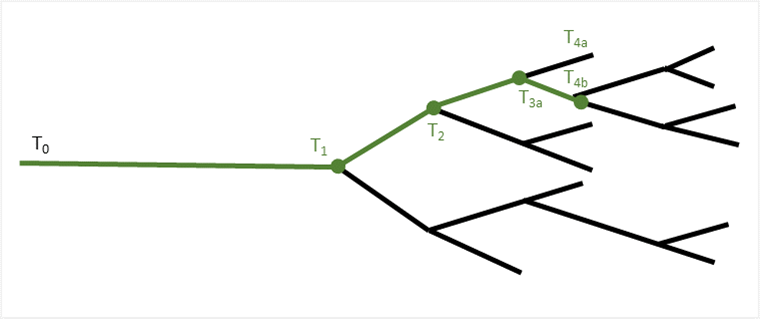
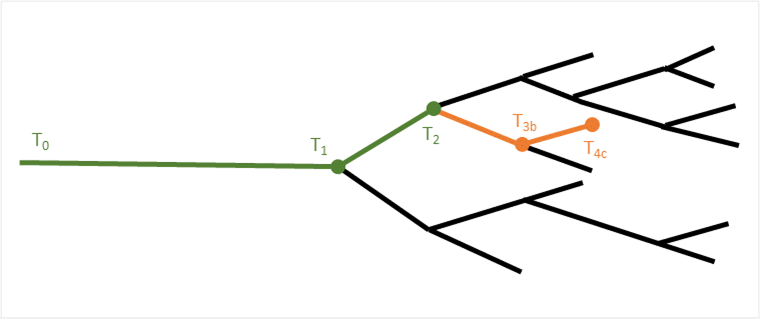


 Philosophics