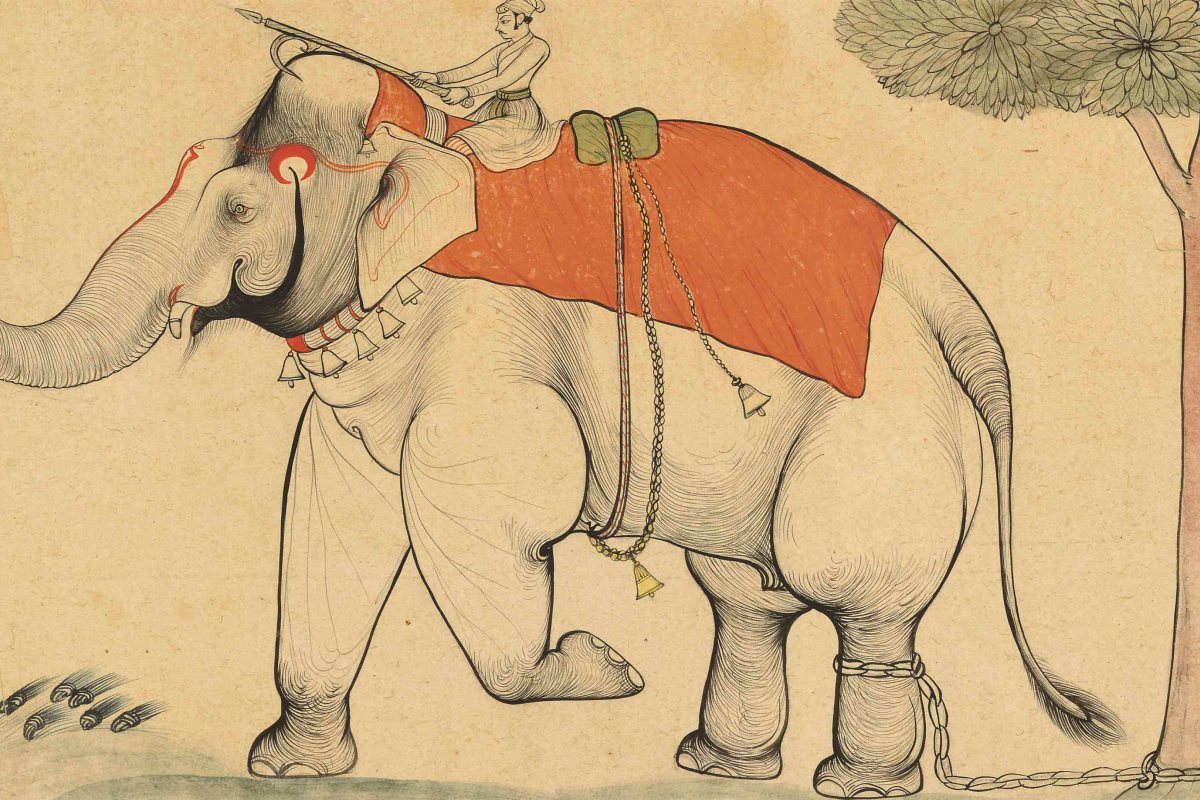
Blame

Even the moral sceptic is not immune from his own form of the wish to over-intellectualize such notions as those of moral responsibility, guilt, and blame. He sees that the optimist’s account is inadequate and the pessimist’s libertarian alternative inane; and finds no resource except to declare that the notions in question are inherently confused, that ‘blame is metaphysical’.

PF Strawson, Freedom and Resentment
Quote from Freedom and Resentment and Other Essays by PF Strawson

Part of my central thesis of non-agency is centred on the notion of blame, and it seems PF Strawson has a lot to contribute in this arena. In short, given my lack of belief of material human agency, I wish to investigate the connection between seemingly innate impulses to project blame and the absence of a blameworthy object.

In order to devote more time to researching and writing my thesis and less time editorialising elsewhere, I may post some shorter content such as these gems that I stumble upon along the way. This facilitates my desire to create and share content without the burden of devoting hours to render it. It also gives me places to come back to.

I only hope that you don’t blame me for doing so.


Meantime, indulge my recording my thoughts here in the public space.

What is blame?

We don’t have very precise definitions of blame, we have an intuitive sense of what it means. There is a subject (or object, as the case might be) that creates (or has been attributed to have created) an action that results in an interaction on an object (or process) with a subsequent effect and a notion of intentionality. But we have to parse casual effect, responsibility, and blame as they are not strictly equivalent. Let’s begin with a causal event.

I believe that on balance the causal event process and object interaction is uncontroversial. A billiard ball (Object A), through directed (or undirected) motion, collides (action) with a second billiard ball (Object B) with the subsequent effect of displacing the second ball.

What we can claim in this scenario is that A → B, A causes B to move. Except in the loosest of idiomatic speech, we can’t really extend this causal relationship to claim that A is responsible for B’s movement. Even further removed, one can’t claim that A is to blame for B’s movement.

Responsibility and blame are different moral claims attributed to an agent. I feel I am safe to claim that a billiard ball has no agency. Whilst human agency is defined as an individual’s capacity to determine and make meaning from their environment through purposive consciousness and reflective and creative action (Houston, 2010), an agent in a more general sense is a being with the capacity to act, and ‘agency’ denotes the exercise or manifestation of this capacity.

The word blame is infused with negative connotations. Praise is a loose antonym with positive connotations, but I won’t focus on it because it is not nearly as heavy and operates semantically differently. In any case, I feel justified to cross blame from the list of possible qualifiers for the billiard ball scenario.

Is A responsible for B? Again, I believe that most people do not assign responsibility to inanimate objects—notwithstanding animism, pantheism, and possibly panpsychism.

Here are some diagrammes.

Above, there is only cause and effect. We can intuit that the movement of Object A is not uncaused. Even so, it careens into Object B, causing it to move. And while one could say A is responsible for moving B, this would be non-standard English language use.

If one pulls back to catch a wider glimpse, one can see that the cause of Object A striking Object B, was a person striking Object A (possibly with a cue stick). Here, the casual event chain is the person causing A to strike B. Two cause-effect relationships at a macro level. However, in this case, we can also say that the person is responsible for the event to set A into motion. We can also say that the person caused B to move (by the way of Object A). Even here, blame would be inappropriate to assert.

We may be able to reframe the scenario slightly differently to get blame into the picture, but let’s take a short detour and create a praise situation. If Object B is hit into a pocket, we can praise the person. Perhaps this shot wins the game. The person is responsible for making the shot.

In scenario B, the person misses the shot. Moreover, Object A does collide with Object B, but perhaps Object B is the 8 ball, and it was not supposed to be pocketed yet. Or perhaps the cue ball deflects off of Object B causing A to scratch because it falls into a pocket. Either of these situations might cause the person to lose the match. A mate may blame this person for being responsible for the loss.

Before moving on, I’ll point out that one distinction that affords blame more weight than praise is the ongoing psychology. Whilst with praise, a person may reflect fondly on a positive event, there is not really a counter to a grudge in the case of blame. And while praise can be misattributed with benefits to social capital, misdirected blame can result in a loss of social capital with longer-term implications.

Perhaps someone unseen pushes you into another person causing them to be injured. You may have been the cause of this person being injured, but like the billiard ball, Object B, you are not morally responsible. Moreover, you may be the target of blame.

These are rather low-stakes scenarios. Imaging these as legal negligence or in a criminal setting. Innocent people are routinely convicted for crimes they never committed. Perhaps, they had been previously unaware of any of the actors or events, yet they are blamed and fined or incarcerated.

This isn’t my interest to discuss at the moment. This is a different scope, so let’s return to the main theme.

In the low-stakes billiards example we can say that the person seems to have agency. For trivial events, we can ignore whether this is more than seeming. In essence, we can ignore the antecedent event arrow that caused the person to be in a situation to have the opportunity to strike the ball in the first place. We’ll return to this later.
Motility, Automotion, and Agency

I just wrapped up chapter eleven of The Righteous Mind by Jonathan Haidt. I’ve got only 35 pages to go to get through chapter twelve. I’ve been tempted to stop reading. Chapter eleven—and I am tempted to inject a bankruptcy pun here—has been more frustrating than the rest thus far. And yet I am glad to have persisted.

My intellectual focus these past months has been on agency. Et voilà, paydirt. Chapter eleven’s title reveals the context: Religion is a Team Sport. Let’s walk through this garden together.

A goal of Haidt is to educate the reader on his third principle of moral psychology: Morality binds and blinds. He establishes parallels between sports and religion. And here’s the thing—I don’t disagree. But here’s the other thing—I feel that are equally vapid—, with no apologies to sports fans or the religious. Let’s keep moving.

“A college football game is a superb analogy for religion.”

Jonathan Haidt, The Righteous Mind, Chapter 12: Religion is a Team Sport

He talks about the organising and unifying functions of both. But here’s the thing. It unifies the like-minded. Haidt claims to be irreligious and not be into sports, and yet he cites these as somehow desirable. I find him to be an apologist for religion.

I am not a psychologist, but if I were, I’d be tempted to claim that Haidt’s conclusions follow from his personal beliefs. He believes in morals, society, order, intuition, and institutions. He is a textbook Modern and an extrovert to boot. I think he also falls into teleological fallacy traps. Was that a play on words?

His goal is to fuse the positions of Darwin and Durheim. Along the way, he reminds us of the New Atheists, their publications, and their positions: Sam Harris’ The End of Faith: Religion, Terror, and the Future of Reason; Richard Dawkins’s The God Delusion; Daniel Dennett’s Breaking the Spell: Religion as a Natural Phenomenon; and Christopher Hitchens’s God Is Not Great: How Religion Poisons Everything.

Although he views religion through rose-coloured glasses, he comes to the conclusion that religions have done a great deal of harm over the millennia, but the good outweighs the bad, especially if you consider it through a social-moral lens. But if religion creates in-groups versus out-groups, which they do, and religious in-groups outlive even non-religious ingroups, then this is a winning option. But what if you don’t like that option?

Personally, I am a collectivist, but this is not willy-nilly any collective.

Haidt contrasts the New Atheist vantage that religious belief is an evolutionary byproduct versus a position that what started as a byproduct evolved into group selection and then, perhaps, an epigenetic phenomenon.

Here’s my contention:

Borrowing from New Atheism, Haidt adopts the notion of a “hypersensitive agency detection device [that] is finely tuned to maximize survival, not accuracy”.

The first step in the New Atheist story—one that I won’t challenge—is the hypersensitive agency detection device. The idea makes a lot of sense: we see faces in the clouds, but never clouds in faces, because we have special cognitive modules for face detection. The face detector is on a hair trigger, and it makes almost all of its mistakes in one direction—false positives (seeing a face when no real face is present, e.g., ), rather than false negatives (failing to see a face that is really present). Similarly, most animals confront the challenge of distinguishing events that are caused by the presence of another animal (an agent that can move under its own power) from those that are caused by the wind, or a pinecone falling, or anything else that lacks agency.

The solution to this challenge is an agency detection module, and like the face detector, it’s on a hair trigger. It makes almost all of its mistakes in one direction—false positives (detecting an agent when none is present), rather than false negatives (failing to detect the presence of a real agent). If you want to see the hypersensitive agency detector in action, just slide your fist around under a blanket, within sight of a puppy or a kitten. If you want to know why it’s on a hair trigger, just think about which kind of error would be more costly the next time you are walking alone at night in the deep forest or a dark alley. The hypersensitive agency detection device is finely tuned to maximize survival, not accuracy.

Op Cit, p. 292

I fully agree with the assertion that the brain values fitness over truth, and I’ve commented in several posts that pareidolia and apophenia create false-positive interpretations of reality.

But now suppose that early humans, equipped with a hypersensitive agency detector, a new ability to engage in shared intentionality, and a love of stories, begin to talk about their many misperceptions. Suppose they begin attributing agency to the weather. (Thunder and lightning sure make it seem as though somebody up in the sky is angry at us.) Suppose a group of humans begins jointly creating a pantheon of invisible agents who cause the weather, and other assorted cases of good or bad fortune. Voilà—the birth of supernatural agents, not as an adaptation for anything but as a by-product of a cognitive module that is otherwise highly adaptive.

Op Cit, p. 293

For me, this supports my contention that agency is a wholly constructed fiction. The same agency we ascribe to unknown natural events, we ascribe to ourselves. And perhaps this ability served an egoistic function, which was then generalised to the larger world we inhabit.

I have an issue with his teleological bias. He feels that because we have evolved a certain way to date; this will serve as a platform for the next level as it were. I’ll counter with a statement I often repeat: It is possible to have adapted in a way that we have been forced into an evolutionary dead end. Historically, it’s been said that 99 per cent of species that ever occupied this earth are no longer extant. That’s a lot of evolutionary dead ends. I am aware that few species could have survived an asteroid strike or extended Ice Ages, but these large-scale extinction events are not the only terminal points for no longer extant species.

So finally, Haidt essentially says that it doesn’t matter that these religious and cultural narratives are wholly fictitious, if they promote group survival, we should adopt them. This seems to elevate the society over the individual, which is fine, but perhaps the larger world would be better off still without the cancer? Just because it can survive—like some virulent strain—doesn’t mean we should keep it.

Finally, given these fictions, what’s a logical reasonable person to do? I don’t buy into ‘this country is superior to that country’ or ‘this religion is better than that religion’ or even ‘this sports team is better than that’ or ‘this company is better than that’.

Haidt does idolise Jeremy Bentham, but this is more Pollyannaism. It sounds good on paper, but as an economist, I’ll reveal that it doesn’t work in the real world. No one can effectively dimensionalise and define ‘good’, and it’s a moving target at that.

No thank you, Jonathan. I don’t want to buy what you are selling.

News Flash: From the time I started this content, I’ve since read the final chapter. Where I categorically reject a lot of what Haidt proposes in this chapter, I tend to find chapter twelve to fit more amicably with my worldview. Perhaps I’ll share my thoughts on that next.

If you’ve reached this far, apologies for the disjointed presentment. I completed this over the course of a day through workaday interruptions and distractions. I wish I had an editor who could assert some continuity, but I am on to the next thing, so…

Bonus: I happened upon this journal article, and it somehow ended up here. I haven’t even read it yet, so I’ve got no commentary. Perhaps someday.

Rai, T. S., and A. P. Fiske. 2011. “Moral Psychology Is Relationship Regulation: Moral Motives
for Unity, Hierarchy, Equality, and Proportionality.” Psychological Review 118:57–75

Cover art source

Revisiting The Righteous Mind

Je m’accuse. I am as guilty as the next bloke when it comes to constructing false dichotomies. I like reading Steven Pinker, Jonathan Haidt, and Joshua Greene, though I disagree with some fundamental aspects. Having put Time Reborn to bed, I’ve reengaged with The Righteous Mind and it’s dawned on me what goes against my grain. In retrospect, it should have been obvious all along, and perhaps it was. When I read works by these cats, I catch myself saying, ‘Yeah, but…’. A lot.

To be fair, I’ve not read much of Greene, so I’ll focus on the other two, Haidt in particular. From what I can tell, Greene is cut from the same cloth. I’ll elaborate. When I cite Haidt, just know that I mean the other two and their ilk.

Haidt divides the world into Liberals and Conservatives. This is the false dichotomy. I’m aware that I recently expounded on the political spectrum, but this is more than that. Whether this would be better depicted as further Left on the political spectrum or another dimension is open to debate.

I believe the biggest dissonance I feel against this common perspective is that these guys are all Liberals. In particular, they are Ivory Tower Liberals™—paternalistic know-it-alls. Upon reflection, Cass Sunstein falls into this category: paternalistic intellectuals. I don’t mean this pejoratively, but each of these is a privileged prescriptivist. But that’s not my beef.

The other common thread is that these people are all institutionalists. This brings everything into focus. These people are defenders of Enlightenment Age morality, so they’ve all adopted the same metanarrative.

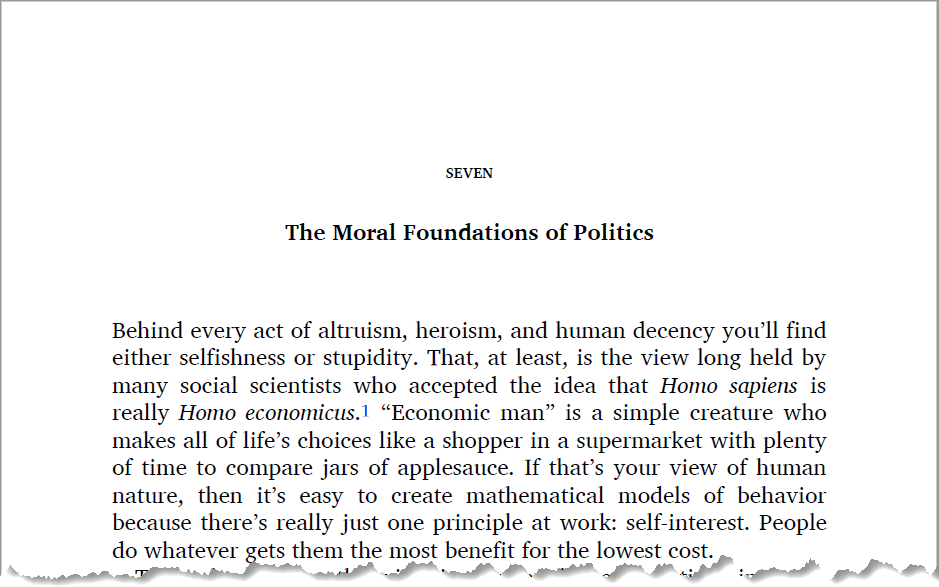
The Righteous Mind – Chapter 7

Haidt’s observations are accurate enough, but only within the frame of institutionalism—a frame I reject. This leaves my perspective out of view and unrepresented. In chapter seven, he establishes his action pairs that serve to divine moral truths about a person’s foundational political beliefs. He argues, like Pinker, that the mind is not a Blank Slate. He adopts neuroscientist Gary Marcus’ definition of innate:

“Nature bestows upon the newborn a considerably complex brain, but one that is best seen as prewired—flexible and subject to change—rather than hardwired, fixed, and immutable.”

— Gary Marcus, The Birth of the Mind (2004)

He further morphs Marcus’ ideas into this:

Nature provides a first draft, which experience then revises.… “Built-in” does not mean unmalleable; it means “organized in advance of experience.”

— Jonathan Haidt, The Righteous Mind (2012)

Given this background, Haidt invented these action pairs:

  • Care – Harm
  • Fairness – Cheating
  • Loyalty – Betrayal
  • Authority – Subversion
  • Sanctity – Degradation

I suppose I could reserve an entire post to disintegrate these. Suffice it to say that, categorically, I have issues with the meta of some of them—particularly, the last four. I am more accepting of the care – harm dichotomy, so my commentary would be more nuanced, especially in light of the scenario he cited, which shed light on his own thought processes.

I’m getting off track. The point I want to make is that these shared perspectives on society and identity, respectively macro- and microcosmic, make sense in an institutional framework, but is less necessary otherwise. And although Haidt attempts to defend his positions as not being invasive [my words, not his], this is simply because he accepts the underlying metanarratives blindly.

I’ll probably return to expound on this later, but for now, I am on to other things. Meantime, here is a review from a European, who rightly points out that this is a book written by an American for an American audience, even if he feels it is more universally applicable.

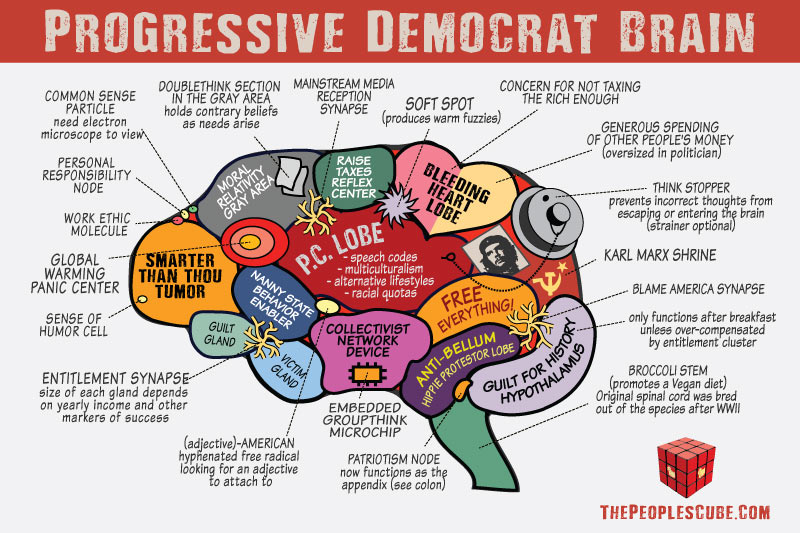
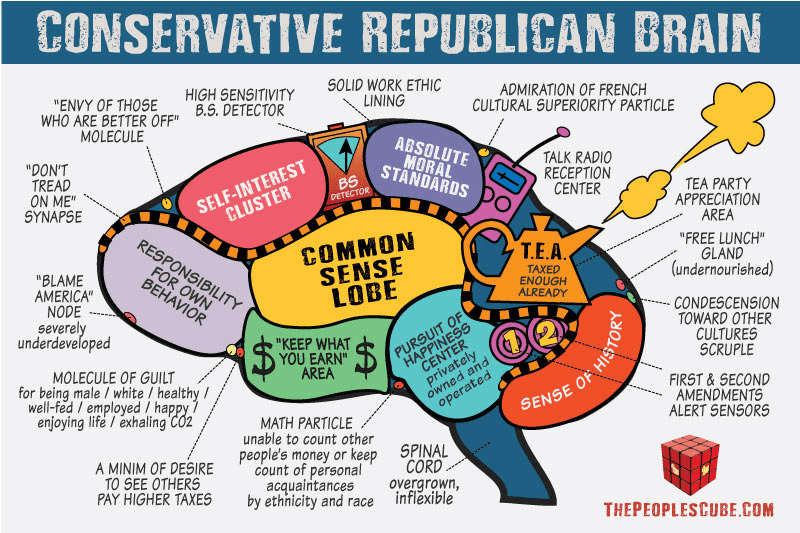
Out of a sense of fairness, I’ve included the Conservative brain image.

Revisiting Time Reborn

I’ve just finished with Time Reborn. I wasn’t expecting to be converted to Smolin’s proposition that time is real rather than constructed. I enjoyed the book, and he provided a solid foundational understanding of the conventional scientific perspective (circa 2013, when the book was published).

I understand that Smolin is a professional physicist with a PhD and his grasp of the fundamentals is solid, and I am a peripheral scientist at best. I fully grant that I may be on the left of the Dunning-Kruger curve and making rookie mistakes.

The biggest contention I have is that he insists that everything needs to have a reason, citing Leibnitz. His argument is based on the question of why is our universe so perfectly structured, that it would be improbable to have happened purely by chance.

Whilst I agree that everything has a cause, reasons are an artifice imposed by humans. In practice, where reasons don’t exist, we make them up. This is how we get false theories and gods. Smolin does discuss false theories of the past and attempts to claim that the prevailing theories occupy this space whilst his theory should replace it.

Any universe created without the ability to sustain life would not have us asking why it did not support life.

My reaction is that it just is. Whether Roger Penrose is correct in saying that the universe is continually recreated and destroyed, rinse and repeat, the reason the universe is constructed in such an (improbably) ordered fashion that can sustain life is that there is no reason. Any universe created without the ability to sustain life would not have us asking why it did not support life. It does. We are here to question, and so we do. End of story.

We can make up all sorts of stories, whether through science, religion, or some other origin myth. None of them is provable. As Smolin notes, this is a one-time event. If it is destroyed, so are we and our memories. If life is sustainable in a future—or even parallel—configuration, we’re sent back to start where we can fabricate new stories.

Perhaps in another universe, it will be configured so differently that some other sort of life is created, perhaps this life will not be DNA-based and be anaerobic? Who knows?

It seems that he has an interest in reserving a place for human agency, which has little room for movement in current scientific models. His model provides this room. Moreover, he further thinks that even in current models, human agency should be injected into the models. I suppose he is not familiar with Keynes’ animal spirits.

For some reason, he decided to devote the final chapter to the hard problem of consciousness. This was a particularly hot topic around that time, so he didn’t want to miss the boat. The long and the short of it, he didn’t think the qualia-consciousness answer would be found through physics—though he reserved that there was a non-zero probability that it could be. He posits this as an existential, experiential challenge, and science is not designed to address such affairs.

No Agent, No Agency

There is no spoon” is a classic line from The Matrix. Reality is a construct. I agree, but I’m not sure I believe that we can get under this reality to experience it differently. And this might hinge on a distinction between experience and perception.

Losing Ourselves is a book just published in the US and forthcoming (July 2022) in the UK promoting the Buddhist notion of no-self or selflessness. I’ve been partial to Buddhism since, when I lived outside of Tokyo, I was exposed to it in 1980.

Book Cover: Losing Ourselves

For me, this intersects with my anti-Agency endeavour. If the Self is a construct, there is no Agent, and without an agent, there is no Agency. I realise that this is a meta-position and not uncontroversial, but I do like to collect ideas and perspectives in my quiver.

Obviously, there seems to be a strong drive (at least in the West) to construct selves, not the least of which serves the purpose of an object to confer praise or blame. Interestingly, I’ve heard much about objectification, but not many seem to care about this form. It’s more about sub-objectification.

It’s OK to parse the person from the fabric of the universe, but don’t further disintegrate that person.

Time Reborn

Einstein was wrong. Time is not the relative factor in space-time. Space is. Time is constant. Here’s a lecture on the topic of the book.

Lee Smolin Public Lecture: Time Reborn

As a result of a discussion with a colleague, on the possibility of variability or mutability of so-called physical laws, he recommended Lee Smolin’s book Time Reborn: From the Crisis in Physics to the Future of the Universe. He mentioned that it would be suitable as an audiobook. Since I had a credit on Audible, I decided to use it so I could listen to this without deep scrutiny and a need for taking notes.

There is a nice review in the Guardian from 2013. I suppose I am a bit behind the times.

Whilst running errands, I listened to the Preface and Introduction. I stopped at the start of the first chapter, and am debating whether to continue. Given his setup, I don’t believe I am Smolin’s target audience. Many of the beliefs he is attempting to dispel, I already don’t hold. Yet I don’t feel that I need to hold time as a constant to hold them. He seems to feel otherwise.

Preface

For the record, Lee Smolin is a theoretical physicist, who has written several books in this space. Quickly, recapping some of his points:

He provides examples of various illusions humans tend to be swayed by:

  • Matter appears to be smooth but turns out to be made of atoms
  • Atoms seem indivisible but turn out to be built of protons, neutrons, and electrons
  • Protons and neutrons are further made of still more elementary particles called quarks
  • The sun appears to go around the Earth, but it’s the other way around

Smolin relates that the prevailing perspective today is that time is an illusion—name-dropping Plato and Einstein, who hold this view. He conveys that he used to share this belief, but now he disagrees—whence the book. He tells us:

Not only is time real, but nothing we know or experience gets closer to the heart of nature than the reality of time.

— Lee Smolin, Time Reborn

Next, he posits that some people believe in timeless events—events outside of time, eternal and not a function of time. Here’s where he goes off the rails in my book.

“We perceive ourselves as living in time, yet we often imagine that the better aspects of our world and ourselves transcend it. What makes something really true, we believe, is not that it is true now but that it always was and always will be true.”

Evidently, he feels or felt this way. I am sure many others. I am not among them.

“What makes a principle of morality absolute is that it holds in every time and every circumstance.”

My position is that all morality is a social construct, so this doesn’t resonate with me.

“We seem to have an ingrained idea that if something is valuable, it exists outside time.”

Again, I am not in his intended audience.

“We yearn for “eternal love.” We speak of “truth” and “justice” as timeless.”

Love, truth, and justice are all human constructs—weasel words.

“Whatever we most admire and look up to — God, the truths of mathematics, the laws of nature — is endowed with an existence that transcends time. We act inside time but judge our actions by timeless standards.”

Yet again, I am unburdened by these beliefs.

Nothing transcends time, not even the laws of nature. Laws are not timeless. Like everything else, they are features of the present, and they can evolve over time.

— Lee Smolin, Time Reborn

I think that this quote is a reason this book was recommended to me. I do believe that the properties that comprise laws can evolve over time. I’m not sure if this is by a probabilistic process or something else. There are a few possible implications. One is that the laws at the onset of the universe may have been different, making the understanding of that time more challenging if not impossible. I don’t know if I believe in multiverses, and I doubt I may ever live long enough to discover. However, even if there is only one universe, per the name, perhaps universes can exist sequentially and when one dies another appears with a different set of initial conditions and properties. Borrowing from evolution, perhaps these survive or perish based on the viability of this combination.

Smolin goes on to posit that, ‘thinking in time is not relativism but a form of relationalism‘.

He continues,

“Truth can be both time-bound and objective when it’s about objects that exist once they’ve been invented, either by evolution or human thought.”

— Lee Smolin, Time Reborn

I’m not sure he is going to define truth, but I believe he conflates moral truths with axiomatic or tautological truths. Perhaps it doesn’t matter because both are constructed.

Smolin makes it clear that he is not a determinist, but unless you take the view he is proposing, as a physicist, you almost have to be. As he says regarding Determinism, theoretically. a person could suss out a mathematical equation to predict every future event. He also considers this belief to be a metaphysical vestige of religion.

Introduction

According to [the] dominant view, everything that happens in the universe is determined by a law, which dictates precisely how the future evolves out of the present. The law is absolute and, once present conditions are specified, there is no freedom or uncertainty in how the future will evolve.

— Lee Smolin, Time Reborn

He continues to describe a deterministic system without mentioning indeterminism, which may be a more prominent belief given what we understand about quantum mechanics. He claims that this perspective diminishes time for several reasons. Inflating or at least elevating time is important for his thesis, and I am thinking that this is more an act of wishful thinking.

He takes a stab at the inherent reductionism of physics—it reduces everything to parts until there are no longer subparts, at which point the process fails—and explains that by adopting this approach, one needs to get outside of the universe to make some evaluations, but this is impossible. And this might be a true statement, but so what? The answer is not to make up a story that creates an environment where that’s no longer necessary.

Smolin reiterates over and again about timeless laws in a time-bound universe, but I question his notion of timelessness. He admits that he has no grand theory—just an idea he hopes others can pursue and build upon. Emergent properties appear to be an emerging theme.

Leibniz is next up, in particular his principle of sufficient reason. Leibniz’ vision is a relational universe composed of a network of relationships—the space is simply the absence of things. He contrasts this with Newton’s view that space is absolute and serves as the container for things. He sets up a future chapter that he says establishes that Leibniz’ vantage precludes the possibility of absolute time, but I don’t see this as a challenge for those of us who believe that time is constructed in the first place.

The Newtonian view prevailed until Einstein resurrected Leibnitz with his general relativity theory of space and time. The trending vogue is about relationalism, whether biology or information science.

He cites the challenges of maintaining Locke’s views on autonomy and personal liberties in a deterministic world (again leaving indeterminism unmentioned).

And he’s back on the emergence of emergence. (I was in the midst of writing a post on emergence when this interrupted my flow. I suspect it should be forthcoming in time.)

Falling

As it turned out, I ran another errand and listened to the first chapter of part 1. It is about gravity and parabolas, but I shan’t recount it here, save to note that he seems to be of the opinion that many people have the desire to transcend the bounds of human life. He may be right. I am not one of these people.

I don’t feel that I am in his target market.

Flavours of Free Will and Compatibilism

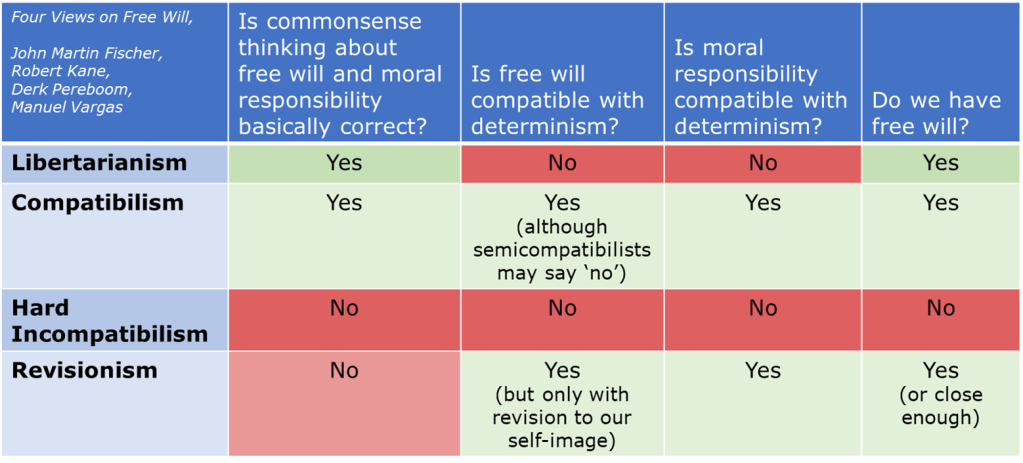
Reading Four Views on Free Will. In the introduction are some guiding definitions as well as this chart to help one to understand various views (row-wise) based on some questions (column-wise).

According to this chart, I’m a hard incompatibilist, As it reads,

  1. I don’t subscribe to notions of free will or moral responsibility.
  2. Free will and determinism cannot coexist in the same domain. (And the domain is the universe.)
  3. Moral responsibility cannot be assigned in a deterministic environment.
  4. Humans have no free will. (And neither can anything else.)

I’ve only read Robert Kane’s chapter so far. He’s a defender of Libertarianism.

John Martin Fischer is next. He’s known as a semi-compatibilist. We’ll find out what that means.

This is the end of a very short post, but I felt that the chart would be helpful for some.

Righteous Mind

Preamble

All too often, I’ll read or listen to a book and place bookmarks with the best of intents to revisit and comment. yet either never to return or to return and not recall the context and not wanting to reread to regain it. I am going to attempt to document my reaction to Jonathan Haidt’s book, The Righteous Mind: Why Good People are Divided by Politics and Religion. If you’ve read some posts here, you’ll understand that I am not a moralist, so I don’t expect to like the book or agree with it. I’ve already ready the forward materials, so I’ll return to comment on that before I get too far ahead. I have done this before at university, and it is decidedly slow progress and can chase one down rabbit holes—this one, anyway.

I have a habit of abandoning books in favour of others including dropping them outright. This is one of 16 I have in progress at the moment, some commenced as many as 5 years ago. To be fair to myself, many of those books are substantially completed. I feel I got the intended message—or at least got what I wanted out of them—, and I just haven’t read the final few chapters. In some cases, the book is an anthology, and I have been slogging my way through it. A few books I’ve read before and am reabsorbing the material, so I may decide not to re-read cover to cover. I just pulled a second reading book off the list to get to 16 from 17.

I have striven not to laugh at human actions, not to weep at them, not to hate them, but to
understand them.

— Baruch Spinoza, Tractatus Politicus, 1676

Introduction

“Can we all get along?” — Rodney King

“Please, we can get along here. We all can get along. I mean, we’re all stuck here for a while. Let’s try to work it out.”

Born to be Righteous

I could have titled this book The Moral Mind to convey the sense that the human mind is designed to “do” morality, just as it’s designed to do language, sexuality, music, and many other things described in popular books reporting the latest scientific findings.

Empasis mine

Straight away, I have a contention. The human mind is not designed to do anything. It has evolved and performs functions. Perhaps, this is just a matter of semantics, but it puts me on guard. Moreover, that it does morality doesn’t evaluate the relative benefit or if it should even be done. Without going down the aforementioned rabbit hole, language is a perfect example. We use language to communicate, but language as a social mechanism may be a secondary or tertiary function. As I’ve argued—even quite recently—, this is a reason I feel that language is insufficient for the purpose of conveying abstract concepts, like for example, morals and morality.

But I chose the title The Righteous Mind to convey the sense that human nature is not just intrinsically moral, it’s also intrinsically moralistic, critical, and judgmental.

A primary function of the brain is as a difference engine. This is what allows us to discern friend from foe, edible versus poison, and so on. Reflecting on Kahneman and Tversky, most (if not ostensibly all) of this is a heuristic system I process, which is good enough but only at a distance. Morals allow us to create in-group and out-group distinctions.

I want to show you that an obsession with righteousness (leading inevitably to self-righteousness) is the normal human condition. It is a feature of our evolutionary design, not a bug or error that crept into minds that would otherwise be objective and rational.

To my first point—not only his insistence on a design metaphor, but doubling down and declaring it as not a bug or an error—, this is disconcerting. And it may be a normal human condition, but so is cancer. The appeal to nature isn’t winning me over.

Our righteous minds made it possible for human beings—but no other animals—to produce large cooperative groups, tribes, and nations without the glue of kinship.

Agreed.

What Lies Ahead

Part I is about the first principle: Intuitions come first, strategic reasoning second.

If you think that moral reasoning is something we do to figure out the truth, you’ll be constantly frustrated by how foolish, biased, and illogical people become when they disagree with you. But if you think about moral reasoning as a skill we humans evolved to further our social agendas—to justify our own actions and to defend the teams we belong to—then things will make a lot more sense.

Haidt and I are much aligned on these points.

Keep your eye on the intuitions, and don’t take people’s moral arguments at face value. They’re mostly post hoc constructions made up on the fly, crafted to advance one or more strategic objectives.

Not buying the ‘go with your intuitions‘ advice. Moving on.

…the mind is divided, like a rider on an elephant, and the rider’s job is to serve the elephant … I developed this metaphor in my last book, The Happiness Hypothesis.

I’m not sure I am going to like this dualism, and I haven’t read The Happiness Hypothesis, so I’ll just have to see where he takes it. It seems like Haidt is a hardcore Traditionalist.

Part II is about the second principle of moral psychology, which is that there’s more to morality than harm and fairness.

This feels about right.

The central metaphor of these four chapters is that the righteous mind is like a tongue with six taste receptors.

OK. Let’s see where this goes.

Part III is about the third principle: Morality binds and blinds.

I like this pair.

…human beings are 90 percent chimp and 10 percent bee.

Did he say bee? I agree with the chimp reference. Maybe this won’t be as bad as I thought.

A note on terminology: In the United States, the word liberal refers to progressive or left-wing politics, and I will use the word in this sense. But in Europe and elsewhere, the word liberal is truer to its original meaning—valuing liberty above all else, including in economic activities. When Europeans use the word liberal, they often mean something more like the American term libertarian, which cannot be placed easily on the left-right spectrum.10 Readers from outside the United States may want to swap in the words progressive or left-wing whenever I say liberal.)

Decent advice.

Why do you see the speck in your neighbor’s eye, but do not notice the log in your own eye? … You hypocrite, first take the log out of your own eye, and then you will see clearly to take the speck out of your neighbor’s eye.

— MATTHEW 7:3–5

I do find myself, probably too often, parroting this paragraph.

PART I

Intuitions Come First, Strategic Reasoning Second

Central Metaphor: The mind is divided, like a rider on an elephant, and the rider’s job is to serve the elephant.

Where Does Morality Come From?

A family’s dog was killed by a car in front of their house. They had heard that dog meat was delicious, so they cut up the dog’s body and cooked it and ate it for dinner. Nobody saw them do this.

A man goes to the supermarket once a week and buys a chicken. But before cooking the chicken, he has sexual intercourse with it. Then he cooks it and eats it.

TBD

The Origin of Morality

Quick reaction for now. Details to follow…

I’m not quite buying into Haidt’s attempt to parse the nature versus nature argument into three segments: nativism and empiricism whilst adding rationalism insomuch as rationalism is seen by many as ambiguous and not a mutually exclusive option. It feels as though he’s throwing up a rationalist strawman to take down. We’ll see where it leads

Nativism
the theory that concepts, mental capacities, and mental structures are innate rather than acquired by learning.

Empiricism
the theory that all knowledge is derived from sense-experience.

Rationalism
the theory that reason rather than experience is the foundation of certainty in knowledge.

Let’s pick up on this later. I knew this would take a lot longer.

Nicomachean Ethics

Someone will have to try very hard to convince me that the classical Greek philosophers were not strictly satirists. I believe I’ve commented on Plato in the past. I try to be well-rounded and not just cherry-pick material that supports my worldview—even though that competes for my available time and creates opportunity costs.

Listen on Spotify

This time, I decided to pick up Aristotle’s Nicomachean Ethics. If there is anything I needed to read to drive another nail into the coffin of Virtue ethics, this does the trick.

Nails in a coffin

Reading Classical philosophical texts feels like reading the Bible or any other religious works. It feels like it is only meant for disciples. It’s just choir preaching. If one agrees with the foundational position, it all works. Otherwise, it all falls apart.

I am not going to deconstruct the text. That would quite literally take several posts. What I want to point out is that within the frame he attempts to establish, his position is entirely heuristic. In this case, if one believes in virtue and honour and how these may or may not connect to happiness, then this is right up your street in much the same way as a Christian knows that s/he will be forgiven because Jesus loves them.

In some ways, it feels that the philosophy underlying Western Civilisation is more insidious than Abrahamic religions. They act in a similar way, attempting to convey an underpinning that simply doesn’t exist. Both are aspirational, but they claim to be foundational.

Like Plato’s Republic, Aristotle’s Nicomachean Ethics comes across (to me) as mental masturbation—some free-association thought experiment. I’m about 60 per cent through and tempted to quit, but on some level, I want to be able to defend that I have read it. Like the Bible, the I Ching, the Bhagavad Gita, and the Qur’an, and other such canon, I want to have read the source material and not just references to it.

So, I’ll take one for the team and see whatever gems I can find.

First page of a 1566 edition of the Nicomachean Ethics in Greek and Latin

UPDATE: I’ve finished the book. It doesn’t get any better. He drifts off into politics as he sets up his sequel. My biggest criticism is that he casts his elitist worldview as reality based on assertions based solely on his opinions and appeals to tradition and authority. Read this if only to understand where certain people derive this moralistic, virtue-laden worldview. I was surprised by the foreshadowing of Descartes’ Cogito—though given how that further led to popularise Dualism, I’m not saying that’s a good thing.