The Death Lottery: What is the Value of Life?

In The Death Lottery, Johnny Thompson of PhilosophyMinis poses this question:

In 1975 the philosopher John Harris gave us one of the most interesting and challenging thought experiments in moral philosophy it’s inspired lots of science fiction since and it’s a great intuition pump to test how you feel about the value of human life it goes like this imagine at the hospital down the road three people are dying from organ failure and there are no organs to donate and so everybody is given a lottery ticket and if your ticket is chosen then you are killed your organs are harvested they’re given to the dying and your one life will save three and as harris puts it no doubt a suitable euphemism for killed could be employed perhaps we would begin to talk about citizens being called upon to give life to others Harris is keen to add that everybody in this scenario is as innocent as each other so none of the patients did anything in their lives to merit their organ failure and so what is wrong with this system or this world if we say that we value human life then surely saving three lives is three times better than saving just one it might be said that death shouldn’t be determined by the luck of a draw but surely this is what happens anyway one person gets cancer another does not one person is in a car crash another is not luck is the biggest single killer of humanity so what do you think is wrong with harris’s thought experiment and is one life ever more valuable than three?

Video: YouTube inspiration for this post.

This fits rather nicely into a recent theme I’ve been dissecting — The Dubious Art of Reasoning: Why Thinking Is Harder Than It Looks — particularly regarding the limitations of deductive logic built upon premises that are, shall we say, a tad suspect. So what’s actually happening in Harris’s tidy moral meat grinder?

Audio: NotebookLM podcast on this topic.

Let us begin at the root, the hallowed dogma no one dares blaspheme: the belief that life has value. Not just any value, mind you, but a sacred, irrefutable, axiomatic kind of value — the sort of thing whispered in holy tones and enshrined in constitutions, as though handed down by divine courier.

But let’s not genuflect just yet. “Value” is not some transcendent essence; it’s an economic artefact. Value, properly speaking, is something tested in a marketplace. So, is there a market for human life?

Historically, yes — but one doubts Harris is invoking the Atlantic slave trade or Victorian child labour auctions. No, what he’s tapping into is a peculiarly modern, unexamined metaphysical presumption: that human beings possess inherent worth because, well, they simply must. We’ve sentimentalised supply and demand.

Now, this notion of worth — where does it come from? Let us not mince words: it’s theological. It is the residue of religious metaphysics, the spiritual afterbirth of the soul. We’re told that all souls are precious. All life is sacred. Cue the soft lighting and trembling organ chords. But if you strip away the divine scaffolding — and I suggest we do — then this “value” collapses like a soufflé in a thunderstorm. Without God, there is no soul; without soul, there is no sacredness. Without sacredness? Just meat. Glorified offal.

So what are we left with?

Null values. A society of blank spreadsheets, human lives as rows with no data in the ‘Value’ column. A radical equality of the meaningless.

Now let’s take a darker turn — because why not, since we’re already plumbing the ethical abyss. The anti-natalists, those morose prophets of philosophical pessimism, tell us not only that life lacks positive value, but that it is intrinsically a burden. A cosmic mistake. A raw deal. The moment one is born, the suffering clock starts ticking.

Flip the moral equation in The Death Lottery, and what you get is this: saving three lives is not a moral victory — it’s a net increase in sentient suffering. If you kill one to save three, you’ve multiplied misery. Congratulations. You’ve created more anguish with surgical efficiency. And yet we call this a triumph of compassion?

According to this formulation, the ethical choice is not to preserve the many at the cost of the few. It is to accelerate the great forgetting. Reduce the volume of suffering, not its distribution.

But here’s the deeper problem — and it’s a trick of philosophical stagecraft: this entire thought experiment only becomes a “dilemma” if you first accept the premises. That life has value. That death is bad. That ethics is a numbers game. That morality can be conducted like a cost-benefit spreadsheet in a celestial boardroom.

Yet why do we accept these assumptions? Tradition? Indoctrination? Because they sound nice on a Hallmark card? These axioms go unexamined not because they are true, but because they are emotionally convenient. They cradle us in the illusion that we are important, that our lives are imbued with cosmic significance, that our deaths are tragedies rather than banal statistical certainties.

But the truth — the unvarnished, unmarketable truth — is that The Death Lottery is not a test of morality, but a test of credulity. A rigged game. An illusion dressed in the solemn robes of logic.

And like all illusions, it vanishes the moment you stop believing in it.Let’s deconstruct the metanarratives in play. First, we are told uncritically that life has value. Moreover, this value is generally positive. But all of this is a human construct. Value is an economic concept that can be tested in a marketplace. Is there a marketplace for humans? There have been slave marketplaces, but I’m pretty sure that’s not what this aims for. There are wage and salary proxies. Again, I don’t think this is what they are targeting.

This worth is metaphysical. But allow me to cut to the chase. This concept of worth has religious roots, the value of the soul, and all souls are precious, sacred, actually. One might argue that the body is expendable, but let’s not go there. If we ignore the soul nonsense and dispense of the notion that humans have any inherent value not merely conjured, we are left with an empty set, all null values.

But let’s go further. Given anti-natalist philosophy, conscious life not only has value but is inherently negative, at least ex ante. This reverses the maths – or flips the inequality sign – to render one greater than three. It’s better to have only one suffering than three.

Ultimately, this is only a dilemma if one accepts the premises, and the only reason to do so is out of indoctrinated habit.

Postscript: Notes from the Abyss

David Benatar, in Better Never to Have Been, argues with pitiless logic that coming into existence is always a harm — that birth is a curse disguised as celebration. He offers no anaesthetic. Existence is pain; non-existence, the balm.

Peter Wessel Zapffe, the Norwegian prophet of philosophical despair, likened consciousness to a tragic evolutionary overreach — a cosmic misfire that left humanity acutely aware of its own absurdity, scrambling to muffle it with distraction, denial, and delusion. For him, the solution was elegant in its simplicity: do not reproduce. Shut the trapdoor before more souls tumble in.

And then there is Cioran, who did not so much argue as exhale. “It is not worth the bother of killing yourself, since you always kill yourself too late.” He understood what the rest of us politely ignore — that life is a fever dream from which only death delivers.

So if the question is whether one life is worth more than three, we must first ask whether any of them were worth having in the first place.

The answer, for the brave few staring into the black, may be a shrug — or silence.

But certainly not a lottery.

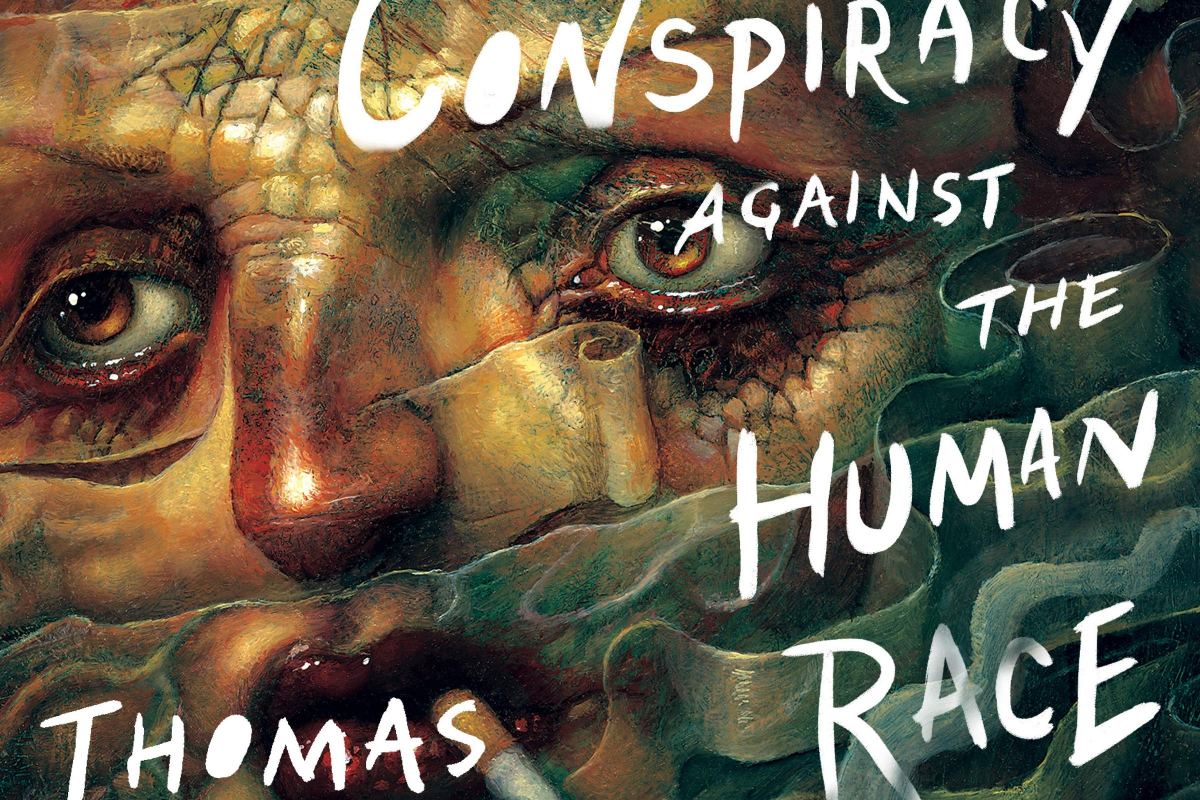
Book Review: Conspiracy Against the Human Race

The Conspiracy against the Human Race is a work of non-fiction by horror author Thomas Ligotti. There is an audio podcast version and a YouTube video version. Feel free to leave comments in the space below or on YouTube.

Transcript

In this segment, I’ll be reviewing a book by Thomas Ligotti, The Conspiracy Against the Human Race, A Contrivance of Horror.

I haven’t done any book reviews, but since I tend to read a lot of books, I figure why not share my take and see how it’s received? If you like these reviews, click the like button and I’ll consider creating more.

Let’s get started.

First, I’ll be providing a little background, and then I’ll summarise some of the content and main themes. I’ll close with my review and perspective.

The author is Thomas Ligotti. He is a published writer in the horror genre in the vein of Lovecraft’s atmospheric horror. I’ve not read any of his work and haven’t read much fiction in ages.

The Conspiracy Against the Human Race is Ligotti’s first work of non-fiction. The book was originally published in 2010. I read the 2018 paperback version published by Penguin Books.

Conspiracy Against the Human Race falls into the category of Ethics and Moral Philosophy in a subcategory of pessimism. The main thesis of this book is that humans ought never to have been born. Following in the footsteps of anti-natalist David Benatar, who published Better Never to Have Been Born in 2007, Ligotti doubles down on Benatar’s position on the harm of coming into existence and argues that humans should just become extinct. Moreover, we should take out life in general.

In the book, Ligotti posits that consciousness was a blunder of nature and is the root of all suffering. He argues the derived Buddhist position of dukkha, which translates as Life is suffering. He establishes that most people are aware of this fact, but that we are nonetheless wired to be biased toward optimism through delusion and what a psychoanalyst might call repressed memories. Moreover, pessimists are a cohort not tolerated by society, who don’t want their delusions shattered.

Philosophically, Ligotti is a determinist. I’ve created content on this topic, but in a nutshell, determinism is the belief that all events are caused by antecedent events, leading to a chain of causes and effects stretching back to the beginning of time and bringing us to where we are now. If we were able to rewind time and restart the process, we would necessarily end up in the same place, and all future processes will unfold in a like manner.

Ligotti likes the metaphor of puppets. He employs puppets in two manners. Firstly, being the determinist he is, he reminds us that we are meat puppets with no free will. Our strings are controlled by something that is not us. This something ends up being Schopenhauer’s Will, reminding us that one can want what we will, but we can’t will what we will. This Will is the puppeteer. Secondly, puppets are soulless, lifeless homunculi that are employed in the horror genre to create unease by means of an uncanny association.
He cites the work and philosophy of Norwegian author Peter Zapffe, who also elucidates human existence as a tragedy. Humans are born with one and only one right—the right to die. And death is the only certainty. The knowledge of this causes unnecessary suffering.

Quoting Ligotti,

“Stringently considered, then, our only natural birthright is a right to die. No other right has ever been allocated to anyone except as a fabrication, whether in modern times or days past. The divine right of kings may now be acknowledged as a fabrication, a falsified permit for prideful dementia and impulsive mayhem. The inalienable rights of certain people, on the other hand, seemingly remain current: somehow we believe they are not fabrications because hallowed documents declare they are real.”

Ligotti reminds us that consciousness is a mystery. We don’t really know what it is or what causes it other than it exists and we seem to have it, to be cursed with it. He adopts Zapffe’s position that consciousness is also responsible for the false notion of the self.

As all life is, humans are the result of an evolutionary process. Consciousness was just the result of an evolutionary blunder. He cites Zapffe and conveys that “mutations must be considered blind. They work, are thrown forth, without any contact of interest with their environment.”

Whilst pessimists view consciousness as a curse, optimists such as Nicholas Humphry think of it as a marvellous endowment.

He summarises the reason humans have it worse than the rest of nature:

“For the rest of the earth’s organisms, existence is relatively uncomplicated. Their lives are about three things: survival, reproduction, death—and nothing else. But we know too much to content ourselves with surviving, reproducing, dying—and nothing else. We know we are alive and know we will die. We also know we will suffer during our lives before suffering—slowly or quickly—as we draw near to death. This is the knowledge we “enjoy” as the most intelligent organisms to gush from the womb of nature. And being so, we feel shortchanged if there is nothing else for us than to survive, reproduce, and die. We want there to be more to it than that, or to think there is. This is the tragedy: Consciousness has forced us into the paradoxical position of striving to be unself-conscious of what we are—hunks of spoiling flesh on disintegrating bones.”

I’ll repeat that: Consciousness has forced us into the paradoxical position of striving to be unself-conscious.

He cites Zapffe’s four principal strategies to minimise our consciousness, isolation, anchoring, distraction, and sublimation

  1. Isolation is compartmentalising the dire facts of being alive. So, he argues, that a coping mechanism is to push our suffering out of sight, out of mind, shoved back into the unconscious so we don’t have to deal with it.
  2. Anchoring is a stabilisation strategy by adopting fictions as truth. We conspire to anchor our lives in metaphysical and institutional “verities”—God, Morality, Natural Law, Country, Family—that inebriate us with a sense of being official, authentic, and safe in our beds.
  3. Distraction falls into the realm of manufactured consent. People lose themselves in their television sets, their government’s foreign policy, their science projects, their careers, their place in society or the universe, et cetera. Anything not to think about the human condition.
  4. Sublimation. This reminds me of Camus’ take on the Absurd. Just accept it. Embrace it and incorporate it into your routine. Pour it into your art or music. Ligotti invokes Camus’ directive that we must imagine Sisyphus happy, but he dismisses the quip as folly.

Ligotti underscores his thesis by referencing the works of other authors from David Benatar to William James.

Interestingly, he suggests that people who experience depression are actually in touch with reality and that psychology intervenes to mask it again with the preferred veil of delusion and delf-deception. Society can’t operate if people aren’t in tune with the masquerade. Citing David Livingstone Smith in his 2007 publication, Why We Lie: The Evolution of Deception and the Unconscious Mind, Ligotti writes:
“Psychiatry even works on the assumption that the “healthy” and viable is at one with the highest in personal terms. Depression, “fear of life,” refusal of nourishment and so on are invariably taken as signs of a pathological state and treated thereafter.”

Ligotti returns to the constructed notion of the self and presents examples of how a lack of self is an effective horror trope, citing John Carpenter’s The Thing and Invasion of the Body Snatchers.

He spends a good amount of time on ego-death and the illusion of self, a topic I’ve covered previously. He mentions Thomas Metzinger and his writings in several places including his Being No One, published in 2004, ostensibly reinforcing a position described as naïve realism, that things not being knowable as they really are in themselves, something every scientist and philosopher knows.

He delves into Buddhism as a gateway to near-death experiences, where people have dissociated their sense of self, illustrating the enlightenment by accident of U. G. Krishnamurti, who after some calamity “was no longer the person he once was, for now he was someone whose ego had been erased. In this state, he had all the self-awareness of a tree frog. To his good fortune, he had no problem with his new way of functioning. He did not need to accept it, since by his report he had lost all sense of having an ego that needed to accept or reject anything.” Krishnamurti had become a veritable zombie. He also cited the examples of Tem Horwitz, John Wren-Lewis, and Suzanne Segal, but I won’t elaborate here.

Russian Romantic author, Leo Tolstoy, famous for War and Peace and Anna Karenina, was another pessimist. He noticed a coping approach his associates had employed to deal with their morality.

  1. Ignorance is the first. As the saying goes, ignorance is bliss. For whatever reason, these people are simply blind to the inevitability of their mortal lives. As Tolstoy said these people just did not know or understand that “life is an evil and an absurdity”.
  2. Epicureanism comes next. The tactic here is to understand that we are all in here and no one gets out alive, so we might as well make the best of it and adopt a hedonistic lifestyle.
  3. Following Camus’ cue, or rather Camus following Tolstoy and Schopenhauer, he suggests the approach of strength and energy, by which he means the strength and energy to suicide.
  4. Finally, one can adopt the path of weakness. This is the category Tolstoy finds himself in, writing “People of this kind know that death is better than life, but not having the strength to act rationally—to end the deception quickly and kill themselves—they seem to wait for something.”

The last section of the book feels a bit orthogonal to the rest. I won’t bother with details, but essentially he provides the reader with examples of how horror works by exploring some passages, notably Radcliffe’s, The Mysteries of Udolpho; Conrad’s Heart of Darkness; Poe’s Fall of the House of Usher; Lovecraft’s Call of Cthulhu; and contrasting Shakespeare’s Macbeth and Hamlet.

This has been a summary of Thomas Logotti’s Conspiracy against the human race. Here’s my take. But first some background, as it might be important to understand where I am coming from.

I am a Nihilist. I feel that life has no inherent meaning, but people employ existentialist strategies to create a semblance of meaning, much akin to Zapffe’s distraction theme or perhaps anchoring.
This said I feel that, similar to anarchism, people don’t understand nihilism. Technically, it’s considered to be a pessimistic philosophy because they are acculturated to expect meaning, but I find it liberating. People feel that without some constraints of meaning, that chaos will ensue as everyone will adopt Tolstoy’s Epicureanism or to fall into despair and suicide. What they don’t know is they’ve already fabricated some narrative and have adopted one of Zappfe’s first three offerings: isolation, which is to say repression); anchoring on God or country; or distracting themselves with work, sports, politics, social media, or reading horror stories.

Because of my background, I identify with Ligotti’s position. I do feel the suffering and anguish that he mentions, and perhaps I am weak and rationalising, but I don’t feel that things are so bad. I may be more sympathetic to Benatar’s anti-natalism than to advocate for a mass extinction event, though I feel that humans are already heading down that path. Perhaps this could be psychoanalysed as collective guilt, but I won’t go there.

I recommend reading this. I knocked it out in a few hours, and you could shorten this by skipping the last section altogether. If you are on the fence, I’d suggest reading David Benatar’s Better Never to Have Been. Perhaps I’ll review that if there seems to be interest. If you’ve got the time, read both.

So there you have it. That’s my summary and review of Thomas Ligotti’s The Conspiracy against the Human Race.

Before I end this, I’ll share a personal story about an ex-girlfriend of mine. Although she experienced some moments of happiness and joy, she saw life as a burden. Because she had been raised Catholic and embodied the teachings, she was afraid that committing suicide would relegate her to hell. In fact, on one occasion, she and her mum had been robbed at gunpoint, and her mum stepped between my girlfriend and the gun. They gave the gunmen what they wanted, so the situation came to an end.

My girlfriend laid into her mother that if she ever did something like that again and took a bullet that was her ticket out, she would never forgive her. As it turned out, my girlfriend died as collateral damage during the Covid debacle. She became ill, but because she was living with her elderly mum, she didn’t want to go to hospital and bring something back. One early morning, she was writhing in pain and her mum called the ambulance. She died later that morning in hospital, having waited too long.

For me, I saw the mercy in it all. She got her ticket out and didn’t have to face the hell eventuality. Not that I believe in any of that, but she was able to exit in peace. Were it not for the poison of religion, she could have exited sooner. She was not, in Tolstoy’s words, weak, so much as she had been a victim of indoctrination. I feel this indoctrination borders on child abuse, but I’ll spare you the elaboration.
So, what are your thoughts on this book? Is there a conspiracy against humanity? Are optimists ruining it for the pessimists? What do you think about anti-natalism or even extinction of all conscious beings or the extreme case of all life on earth? Is Ligotti on to something or just on something?

Share your thoughts in the comments below.