Natural Causes

2–4 minutes

Some of us are concerned with the metanarratives underlying society, but and given society is apt to have many competing metanarratives. Logical Positivists tapped into the narrative of science, which is a primary theme of Enlightenment thinking. This was supposed to have supplanted the narrative of superstition, except it didn’t. And a sort of empirical, scientific Nature was supposed to have supplanted the metaphysical gods, except it didn’t.
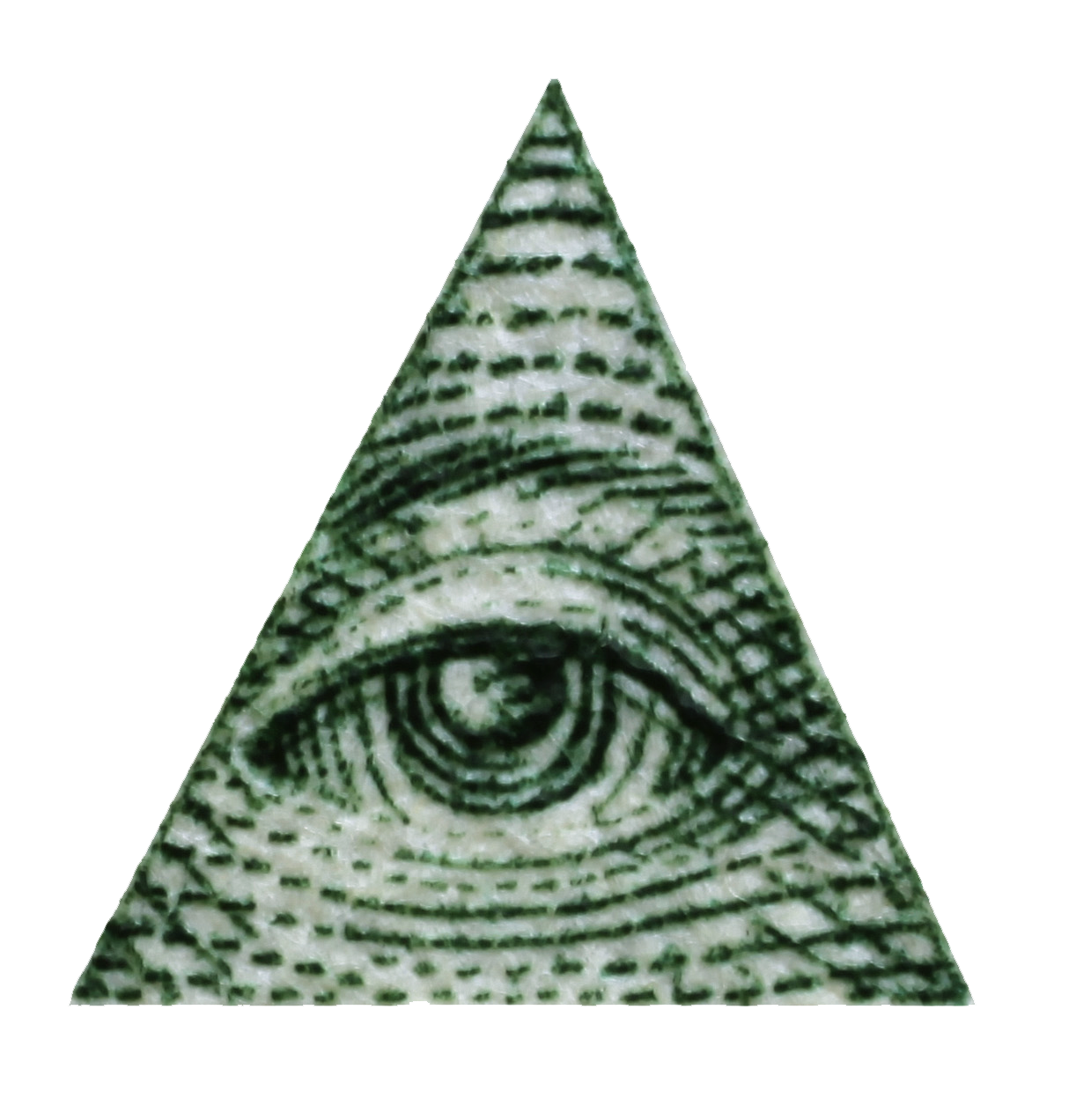
Illuminati Eye Symbol

Apart from the problem that a supernatural God was replaced with a sort of animated Nature, some people just didn’t buy into the new narrative. Today, in the 21st Century Western world, some people still subscribe to these pre-Enlightenment notions, but that’s not the root of the issue. Neither is necessarily right or wrong. And in a Hegelian synthesis, some people assuage the ensuing cognitive dissonance by merging the two and cherry-picking the ones that work for them. These people usually have little difficulty finding people who believe that the earth is 4.5 billion or 6 thousand years old, that Ayurvedic medicine is superior or inferior to Allopathic medicine, that vaccines cause or don’t cause autism, that homeopathy is effective or ineffective, that the Illuminati are some secret society that rules the world or not.

Many people still can’t get past an appeal to nature, whence the Organic and traditional medicine movements. This is not to say that some or all of these claims might have validity; it’s just to say that ‘because it’s natural’ is not a suitable defence. Even a stopped clock is right twice a day—unless it’s set to a 24-hour display, in which case it’s only right once a day.

Without rehashing the argument whole hog, we know that poison ivy and uranium, arsenic, and cyanide are all natural. Not many attempt to defend this with an appeal to nature, so this suffers from selection bias from the start.

you cannot go against nature
because if you do
go against nature
it's part of nature, too

— Love and Rockets, No New Tale to Tell

The larger issue is about how we define nature. I don’t recall if this was Lyotard or Lacan (and I don’t feel like looking for the cross-reference at the moment), but by definition everything observed is natural, whether physical or behaviour.

Love and Rockets – No New Tell to Tell

Some humans—notably the Enlightened ones—like to view themselves as somehow above nature, but the veneer is nanometers thin and threadbare at that. And these people extend this concept to behaviour. As the song goes, you can’t go against nature because when you do, when you observe it, it is by definition part of nature, too.

Oftentimes, this becomes a moral argument: this or that is unnatural. Certain sexual activities are usually held up as examples, and yet many of these activities are not only practised by many humans, they are also practised by members of other species. The argument is that we need to elevate about nature, an so they are making some appeal to meta-nature or some such.

In any case, the complaint shouldn’t be whether it’s natural anyway. It might rather be couched in some instances as not ‘naturally occurring’, so plastics would not happen save for manufacture, but neither would asphalt or telephones or televisions or processed foods, so I find it to be disingenuous to rail against some items that do not occur naturally whilst ignoring the ones you happen to find useful.

Rorty on Truth

2–4 minutes

To a comment on Death of the Metanarrative, I responded about the notion of truth relative to the map and the terrain. Although my rambling response was lengthy, I thought I’d share Richard Rorty’s view on this from his Contingency, Irony and Solidarity. According to Rorty, rationalists and empiricists turn claims about the world into the world—convincing others that a map of the world is the world.


We need to make a distinction between the claim that the world is out there and the claim that truth is out there.

—Richard Rorty

“We need to make a distinction between the claim that the world is out there and the claim that truth is out there. To say that the world is out there, that is not our creation, is to say, with common sense, that most things in space and time are the effects of causes which do not include human mental states. To say that truth is not out there is simply to say that where there are no sentences there is no truth, that sentences are elements of human languages, and that human languages are human creations.


Truth cannot be out there—cannot exist independently of the human mind—because sentences cannot so exist, or be out there.

Richard Rorty

“Truth cannot be out there—cannot exist independently of the human mind—because sentences cannot so exist, or be out there. The world is out there, but descriptions of the world are not. Only descriptions of the world can be true or false. The world in its own—unaided by the describing activities of human beings—cannot…

“The world does not speak. Only we do. The world can, once we have programmed ourselves with a language, cause us to hold beliefs. But it cannot propose a language for us to speak…

“It was Nietzsche who first explicitly suggested that we drop the whole idea of ‘knowing the truth’. But in abandoning the traditional notion of truth, Nietzsche did not abandon the idea of discovering the causes of our being what we are … In his view, in achieving this sort of self-knowledge we are not coming to know a truth which was out there (or in here) all the time. Rather, he saw self-knowledge as self-creation. The process of coming to know oneself, confronting one’s contingency, tracking one’s causes home, is identical with the process of inventing a new language … So the only way to trace home the causes of one’s being as one is would be to tell a story about one’s causes in a new language…

“[O]ne can—fruitlessly, in my view—come at [the question of knowledge] by way of anthropology and the question of whether there are ‘cultural universals’, or by way of psychology and the question of whether there are psychological universals. [There is an] indefinite plurality of standpoints, [a] vast number of ways of coming at the issue sideways … It is central to the idea of a liberal society that, in respect to words as opposed to deeds, persuasion as opposed to force, anything goes. This openmindedness should not be fostered because, as Scripture teaches, Truth is great and will prevail, nor because, as Milton suggests, Truth will always win in a free and open counter. It should be fostered for its own sake. A liberal society is one which is content to call ‘true’ whatever the upshot of such encounters turns out to be.”

Husky Meme – According to this book, I can’t read.

Death of the Metanarrative

3–4 minutes

Until I recently read Lyotard’s The Postmodern Condition: A Report on Knowledge I never quite understood why Moderns accused Post-moderns of being anti-science. I’d heard Jordan Peterson complaining, and I’d read forum and blog posts with the same attacks.

As it happens, postmodernism eschews the meta-narrative or is leery of it. This includes the meta-narratives underlying science and the Enlightenment more generally. If you’ve read my posts over the years, you’ll see that this is a common complaint of mine, that everything is a human construct. Although Lyotard published The Postmodern Condition, I only read it this week.

To be fair, I sought it out. I have been attempting to find some other philosophers who have asserted that Truth (and other notions like Justice and Progress) are nothing more than the result of a rhetorical victory. And although Lyotard does not come out and say this (at least not in this book), I feel that he would not disagree with the notion. I may have to read some more of his work.

The least one can do is find the underlying narrative. Feel free to operate day to day as per usual, but be aware. The inscription at Delphi was not exactly right. There is no self to know, and narratives change, but to ‘know’ the prevailing narrative of the day seems it might at least allow one to better assess what’s happening above ground. The Matrix trope may be overplayed, but it’s a fitting metaphor for seeing what underlies. There is no Truth, but for what it’s worth, there’s another data point.

We live on the map, but the terrain is inaccessible. The postmodern doesn’t hate science or progress. We merely question the veracity. One cannot assess progress without a vector, without velocity and direction, so we contrive stories to serve as a foundation.

The founding of these stories don’t need to be sinister or nefarious. They can grow organically. But the ones who understand the rules, Wittgenstein’s language game, can wrest power, and s/he who can bend the rules through convincing rhetoric, perhaps as Locke and Rousseau, can change to course of history. But this course can be changed again. When Marx tried to change the narrative, it threatened the status quo, so they try to delegitimatise it at every turn—primarily through the dissemination of disinformation in a sort of corrupt meme machine. Marx tried to embrace and then co-opt Capitalism, but the Capitalists were not ready to cede power. One hundred and fifty-odd years later, they still aren’t. And it might be that a different narrative is adopted before Marx’s vision is even able to take root.

I was a bit confused by Lyotard’s quip about utility being the arbiter under modern Capitalism in lieu of Truth, as I am not sure how many postmodernists embrace the notion of some objective Truth. To be clear, I don’t.

Lego Blocks

In the end, I feel it is better to deconstruct the concept of a knowable reality. The trick is not to try to reconstruct something from the pieces. It’s like deconstructing a Lego model and rebuilding a different model from the pieces whilst making the claim that this reconstitution is the true manifestation when in fact any construct is as ‘good’ as the next, but good cannot be determined until you’ve defined a context. Such is the role of the metanarrative. Once you define an end, you can then evaluate utility in light of it, but there is nothing to assess the choice of one end versus some other ends save by preference. And of course preference can be manipulated by rhetoric.

Fables of the Deconstruction

To some extent or another, humans appear to need order—some more than others. Societies are a manifestation of order, and we’ve got subcultures for those who don’t fit in with the mainstream. Humans are also a story-telling lot, which helps to provide a sense of order. Metanarratives are a sort of origin story with a scintilla of aspiration toward some imagined semblance of progress.

Some people appear to be more predisposed to need to ride this metanarrative as a lifeboat. These people are typically Conservative, authority-bound traditionalists, but even the so-called Progressives need this thread of identity. The problem seems to come down to a sort of tolerance versus intolerance split, a split along the same divide as created by monotheism in the presence of polytheism.

Meet the new boss, same as the old boss.

Won’t Get Fooled Again — The Who

In a polytheistic world, when two cultures collided, their religious pantheons were simply merged. In a blink, a society might go from 70 gods to 130. On this basis, there was a certain tolerance. Monotheism, on the other hand, is intolerant—a winner takes all death match. The tolerant polytheists might say, sure, you’ve got a god? Great. He can sit over there by the elephant dude. Being intolerant like a petulant schoolboy, the monotheists would throw a tantrum at the thought that there might be other gods on the block. Monotheists won’t even allow demigods, though there is the odd saint or two.

This is a battle between absolutism and relativism. The relativist is always in a weaker arguing position because intolerant absolutists are convinced that their way is the only way, yet the tolerant relativists are always at risk of being marginalised. This is what Karl Popper was addressing with the Paradox of Tolerance.

In a functioning society, a majority of the metanarratives are adopted by the majority of its constituent. On balance, these metanarratives are somewhat inviolable and more so by the inclined authoritarians.

A problem is created when a person or group disagrees with the held views. The ones espousing these views—especially the Traditionals—become indignant. What do you mean there are more than two genders? You are either male or female. Can’t you tell by the penis?

I happened to read a tweet by the GOP declaring their stupidity:

America the Stupid

The Vice President, a living anachronism and proxy for the American Midwest Rust Belt superimposed on the Bible Belt, he tells his sheep that “The moment America becomes a socialist country is the moment that America ceases to be America…” Americans as a whole are pretty dim, and it seems to get dimmer the higher one ascends their government. Pence seems very firm in affirming a notion of American identity, but not accepting that identities change. He may become upset if he finds out that George Washington is dead—in fact, there are very few remnants of the original United States aside from some dirt, trees, and a few edifices—and the country is still the county. Some people have a difficult time grasping identity. It makes me wonder if he fails to recognise himself in the mirror after he gets his hair cut.

The idea behind deconstruction is to deconstruct the workings of strong nation-states with powerful immigration policies, to deconstruct the rhetoric of nationalism, the politics of place, the metaphysics of native land and native tongue… The idea is to disarm the bombs… of identity that nation-states build to defend themselves against the stranger, against Jews and Arabs and immigrants…

Jacques Derrida

Interesting to me is how people complain about this and that politically. Most of this is somewhat reflexive and as phatic as a ‘how are you?’, but some is more intentional and actioned. Occasionally, the energy is kinetic instead of potential, but the result is always the same: One power structure is replaced by another.

What you aspire to as revolutionaries is a new master. You will get one

Jacques Lacan

As Lacan noted, as people, we believe ourselves to be democratic, but most of us appear to be finding and then worshipping some authority figures who will promise us what we desire. We desire to have someone else in charge, who can make everything OK, someone who is in a sense an ideal parent. I don’t believe this to be categorical, but I do believe that there is a large contingent of people who require this.

As an aside, I’ve spent a lot of time (let’s call it a social experiment) in the company of social reprobates. What never ceases to amaze me is how these social outcasts seem to have a strong sense of right and wrong and how things should be. Conveniently, they exempt themselves from this scope, so if they steel to buy drugs, it’s OK, but if someone else gets caught, they should get what’s coming to them.

About a year ago I was chatting with a mate, and I shared an observation that the biggest substance abusers in high school—”the Man’s not going hold me down” cohort—are the biggest conservatives. A girl a few houses down from me became a stripper, but her political views are very Conservative, an avid Trump supporter.

One woman I know is a herion-addicted prostitute. In her eyes, she’s fine (sort of—without getting into psychoanalytics); other women are junkie whores. A heavy dose of assuaged cognitive dissonance is the prescription for this, but it confounds me.

Getting back to the original topic, people who need this order are resistant to deconstruction and other hallmark notions of poststructuralism. They need closure. This translates into a need for metanarratives. When confronted with the prospect of no Truth, they immediately need to find a substitute—speculatively, anyway, as denial and escalating commitment will kick into overdrive.

The same problem mentioned above comes into play here. A few years ago, there was an Occupy Wall Street group, and like atheists, there are myriad reasons why people participated. One of the commonest complaints by the power structure and the public at large is if you don’t like the status quo, what status should replace it. None of the above was never an acceptable response.

It doesn’t matter that in this universe we occupy there is more disorder than order, and entropy rules, pareidolia is the palliative. And religion remains an opiate of the masses.


Please ignore my clear misappropriate of the classic R.E.M. album.

Jacques Lacan, anyone?

I’m wondering whether I should delve into Lacan. I am only vaguely aware of him and have never read any of his published essays or lectures. From what I’ve gleaned, I may end up down some rabbit hole. His interest in the function of language interests me, but his analogy of that to psychoanalysis is disconcerting.

The analogy is fine, but I have a problem with the entire field of psychoanalysis as I view it as pseudoscience. As with Freud and Jung, the speculation around the unconscious and their metaphors are fine storytelling, but that’s about it.

My interest is in his structural approach to language and the notion I share concerning the lack of specificity in language, but it seems to me that my time would be better spent reading Derrida.

Lacan is categorised as both a structuralist and a post-structuralist, which might be correct given the period in which he lived, but I am still trying to figure out how he might be considered to be a post-structuralist, as he seems to be concerned with a sense of order, which is somewhat antithetical to this worldview.

Why Sexual Morality Doesn’t Exist

His words, not mine.

Whilst I agree that all morality is contrived, Alan H. Goldman, Kenan Professor Emeritus of Philosophy at the College of William and Mary, presents his position that sexual morality is not divorced from any morality. It’s not particularly a special case. I agree in principle, but his argument is lacking.


Sexual desire aims directly at the pleasure derived from physical contact

Alan H. Goldman

He states that ‘As other philosophers point out, pleasure is normally a byproduct of successfully doing things not aimed at pleasure directly, but this is not the case with sex. Sexual desire aims directly at the pleasure derived from physical contact. [The] desire for physical contact in other contexts, for example, contact sports, is not sexual because it has other motives (winning, exhibiting dominance, etc.), but sexual desire in itself has no other motive. It is not a desire to reproduce or to express love or other emotions, although sexual activity, like other activities, can express various emotions including love.’

Pleasure is normally a byproduct. 

Sure.

This is not the case with sex.

OK. Elaborate.

Sexual desire aims directly at … pleasure.

I'm still following.

Sexual desire in itself has no other motive, which is pleasure.

Damn. You lost me.

I might agree that pleasure (let’s ignore the fact that this is another weasel word) may be the motivation behind sexual desire, but we don’t really have means to determine motivation or intent, and we certainly can’t assess one attribute over another.

Power is everywhere because it comes from everywhere — Michel Foucault

Foucault may have argued that the motivation is power—perhaps each side is making their own power calculus. Given the state of current knowledge, this is not ascertainable. Prof Goldman may feel that pleasure is the motive; one may even argue that power yields pleasure. I’ll not traverse that rabbit hole.

Later, he asserts that ‘More controversial is whether any consensual sex between willing partners is wrong’. I won’t debate this position, but there is no good way to full assess consent.

I’ll outline a fairly stereotypical scenario—excuse me for opting for a heterosexual situation, but the pronouns are easier to track. Say a man and a woman have met in a social setting—perhaps they’ve been dating for some period—, and they ‘mutually’ decide to engage in sex. We’d call this exercising agency, two consenting adults.

But what of ulterior motives? Following the stereotype, perhaps he feels that he is conquering her, and she feels she is securing a stable mate; or perhaps they don’t feel this at all. What is the actual intent? Not to go full-on Freud, but are they playing out some latent urge? Is this just some deterministic eventuality. There’s really no way to tell. Any story I tell is as speculative as the next.

So, to end on a tangent, a significant problem underlying philosophy, psychology, and jurisprudence is the issue of intent. The term is bandied about on most cop shows and legal dramas, but it is another just another vapid notion that we accept as valid. Of course, if we dispense of the notion, our legal systems would just unravel.

Yet again we’ve reached a point where the only truth is rhetoric.

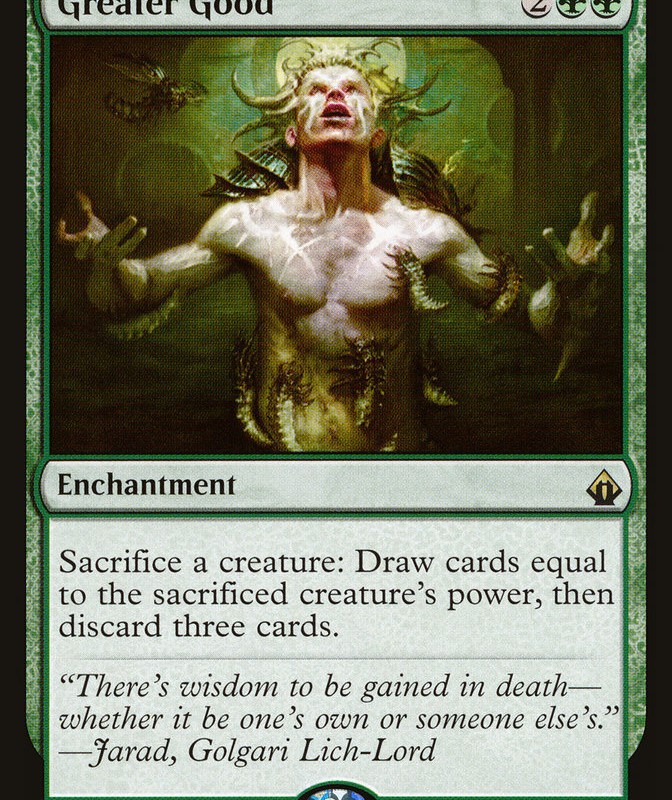
Greater Good

A particularly overworked trope is that of greater good.Greater good‘ is a Utilitarian concept wrought with the same problems as other specious Enlightenment ideas. I’ve written about this from several perspectives. As with many foundation concepts springing from the Enlightenment, ‘greater good’ is founded more on platitudes and some specious ideal than reality. It’s more wishful thinking for a gullible population.

The word ‘gullible’ is not in the dictionary

Gradeschool Humour

Philosophy students learn in early ethics classes of the paradox of the Trolley Problem. But there is no paradox; it’s just the result of accepting a faulty framework, and so we left with a host of concepts from politics to economics.

The problem is that there is no consistent definition of good—or at least the value judgment is subjective; there is no accounting for taste—, and there is no measurement of it, a problem with Utility Theory in general.

Dead End — Road Stops Here

What John Stuart Mill Got Wrong About Freedom

3–4 minutes

Graham Tomlin wrote a piece for Prospect, upon which I comment and whence comes the title of this post. Always the deconstructivist curmudgeon, it seems, I agree with Tomlin’s assertion that Mill was wrong, but so is Tomlin.

In a nutshell, Tomlin makes the argument that the Ancients had it right, and the Enlightenment derailed it. Tomlin wants to return to the days of yore when the artifice of character and virtue ruled the day, a time when men were men and women were women. A return to the good ole days.

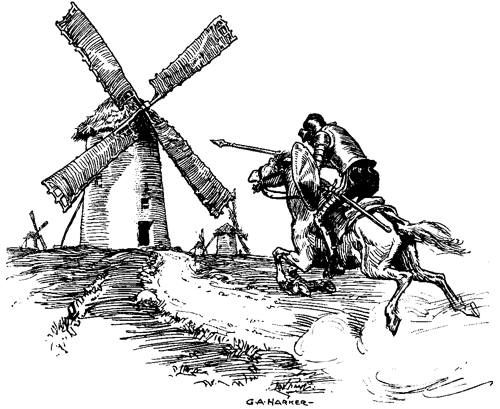
Tomlin waxes poetic, nostalgiac to a time that never was, a time that the prescription was to chase windmills of virtue and amass the currency of character. But character as currency is more unstable than Bitcoin.

Don Quixote Tilting Windmills

Is there anything more capricious than the held perception of character? Is there anything more futile than chasing the vicious cycle of virtue, always searching for that deserving true Scotsman?

Character is a term especially bandied about by political Conservatives, although Progressives tend to play the #MeToo game because it’s a game of appearances. It doesn’t matter what you do; it only matters what it looks like you do.

And even this is a game. Time and again politicians ‘slip’ (read: get caught), they apologise for the temporary lapse, and ask for forgiveness. Whether or not they keep their position, they are still forgiven and may return to their position learning their lesson (read: don’t get caught again). Let’s just dispense with the formalities.

Perception is reality

In Plato’s day, he holds out four moral virtues to pursue: courage, temperance, justice, and prudence.

Courage: the resolve to act virtuously, especially when it is most difficult

Temperance: moderation in all things; the middle path

Justice: to render every man what’s due

Prudence: application of practical wisdom

Courage seems to be caught in an infinite loop, as it essentially says to exercise temperance, justice, and prudence in the face of danger. Typically, courage is associated with heroic acts, though I fail to see the connection to rescuing a baby from a burning building with any of these other virtues. Perhaps the definition has morphed over the years. Everyone needs a hero. Only Zeus needs a Hera.

Temperance is to find the middle ground: eat but not too much; drink but not too much; rape but not too much; kill but not too much. Is there really a middle ground for all things? In traversing a canyon, shouldn’t one stay close to the edge—or what about sidewalks? Is it temperance that led US President Donald Trump to declare that Nazis and white supremacists. are ‘some very fine people‘, or does he just lack prudence?

Justice is the constant and perpetual will to render to every man his due.

Justinian — Institutes 1.1

Justice I’ve written about at some length so I won’t spend any additional time here.

Common sense is not so common.

Voltaire

Prudence, which advises one to use common sense, relies on a rare jewel. As Voltaire wrote, « le sens commun est fort rare ».

Perhaps I’m just too hard on people, but I find that most people are pretty dimwitted outside of some small area of focus, and I have to agree with Voltaire’s position on common sense. This is why as an economist, I find it so difficult to accept the homo economicus assertion so key for modern microeconomic theory and why behavioural economics has become a bigger deal in the past 30 years as more and more social scientists realise that people are predictably irrational.

Thanks but no thanks. There’s got to be a better way.

Ambiguous Aesthetics

That language is arbitrary is tautological, an analytic claim. It’s true by definition. Structuralists, i.e. Saussure, had known this even before the postmoderns, e.g. Derrida, came into the picture.

Trigger Warning
If sexist perspectives offend your sensibilities, continue at your own risk. This is not meant to offend, rather just to illustrate, but you’ve been forewarned.

Where it might be most apparent is in aesthetics. So, when describing the appearance of a woman in a positive light—I’m a guy, so indulge me, please—, one might describe her by one or more of these descriptors:

Beauty is in the eye of the beholder.

Margaret Wolfe Hungerford
  • Adorable
  • Beautiful
  • Cute (or Kawaii, if you’re into the Anime culture)
  • Gorgeous
  • Handsome
  • Hot
  • Lovely
  • Pretty
  • Sexy
  • A 10 (or something along an otherwise arbitrary if not capricious scale)

Each of these is a term to indicate some aesthetic quality. Each capturing a connotative notion, and of course, beauty is in the eye of the beholder.

Givenchy – Ugly Beauty

Beauty in things exists merely in the mind which contemplates them.

David Hume

I am not going to attempt to illustrate the nuances between these terms. As with any preference-oriented terms, the relationship between and within a given term. What I think is beautiful may not be to you.

What I think is beautiful today, I may not feel is beautiful tomorrow. Speaking in terms of music, there are plenty of songs I thought were ‘good’ when I was growing up, but I don’t like them anymore. Take a look at fashion in the past and how silly it might look now. If you are older, take a look at some pictures of how you dressed in your teens or twenties. You may have felt like quite the chick magnet in the day, and now you cringe and no longer wonder why you spent as many nights alone as you might have.

As a test, gather 100 images of different, say, women—I’m staying with the trend—and rank them from 1 to 100; rate them cute, sexy, whatever. Record your choices. Do this each day for a month and see how steady your choices are. It will be extremely unlikely that there will be no variation no matter how carefully you try to define your classification to remain consistent—and this is just communicating with yourself. Now imagine if you have to consistently convey this to other people.

Cover image courtesy of this article.

Cry Freedom

Freedom is just another weasel word undergirding many post-Enlightenment constitutions. In this metanarrative, Man needs freedom. It’s another inalienable right.


Man is born free and everywhere he is in chains.

Jean-Jacques Rousseau, The Social Contract
Jacques Cousteau

Religion is the opitate of the masses

Karl Marx, A Contribution to the Critique of Hegel’s Philosophy of Right

Karl Marx wrote something along the lines that ‘religion is the opiate of the masses’, Die Religion … ist das Opium des Volkes. He was correct, but the masses have more than one drug of choice. Freedom, independence, identity, sovereignty, and a plethora of others.

What is a plethora? Three Amigos (video clip)

Freedom is mind candy for the feeble-minded, a silly remnant of anachronistic Age of Enlightenment. To believe in freedom is to believe in Santa Claus, gods, and unicorns. I’ve got a bridge for sale in Brooklyn.

Don’t fall for it. It’s a trap!

It’s a Trap! Star Wars