The Myth of Psychological Normalcy

Neurodivergence is a hot topic today. But why? Are people more informed, or simply more comfortable speaking out?

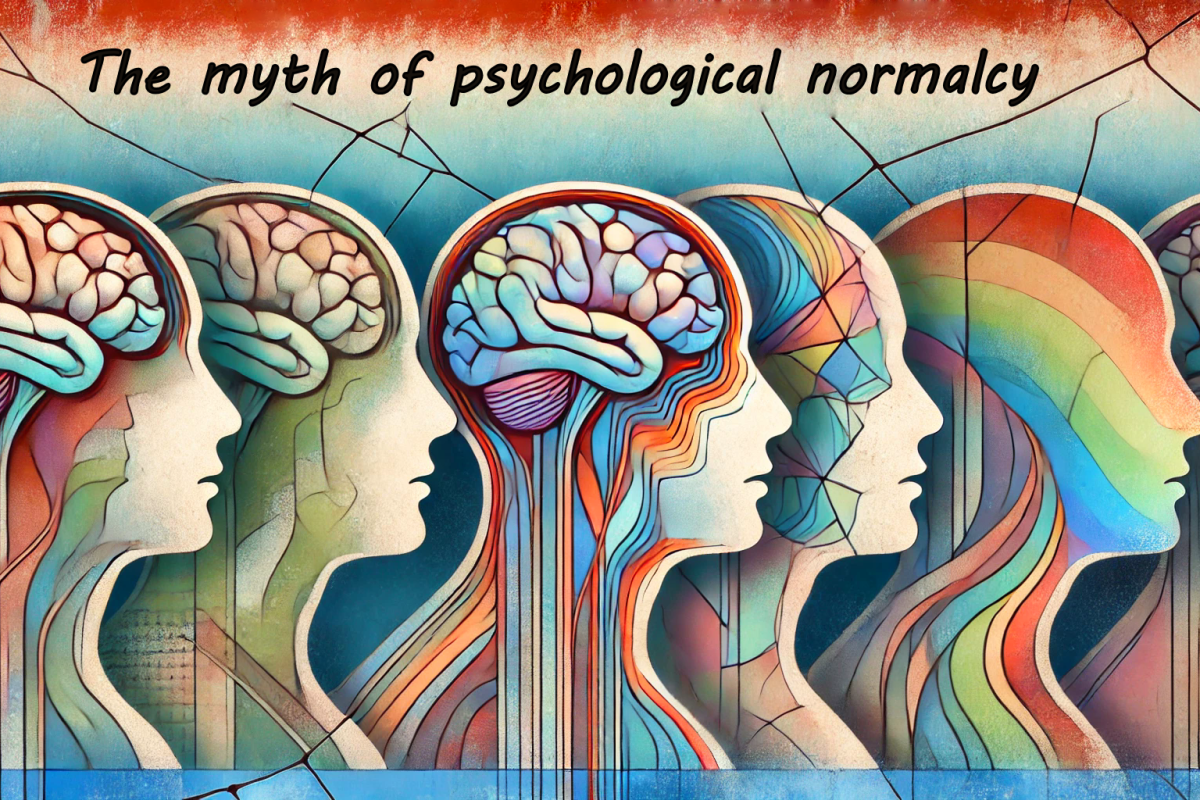
Humans, by nature, are neurodivergent. This has always been the case, yet the illusion of neurological normalcy persists. The real issue lies in psychology’s pretence that humans fit into a standard model of normalcy.

In production processes, normality is expected—a product must meet specific standards, and deviations are considered defects. However, applying this industrial concept to human psychology is deeply flawed. Humans are not teleological except in the broadest biological sense. More people have brown eyes than blue or green; are those with brown eyes normal and others not? Ninety per cent of people are right-handed; does that make left-handed individuals abnormal? Statistically, they might be. However, in psychology, normalcy carries a judgmental connotation that goes beyond mere numbers.

Psychology, as expressed in behaviour, is not a suitable domain for discussing normality. Many people misuse the concept of “normal” as a moral qualification, which must stop.

In fact, the very concept of psychological normalcy is a relatively recent invention, one that has been used as a tool of control and categorisation. As philosophers have noted, the obsession with ‘normal’ behaviour reveals more about society’s desire for control than it does about the true nature of human diversity.

We are all neurodiverse. This is what typical looks like. Do some people vary significantly from others on certain dimensions? Yes, but this is a relative or contextual comparison.

By embracing neurodiversity, we recognise that our differences are not defects but essential variations, enriching the human experience. It’s time to move beyond the narrow confines of neurological “normality” and celebrate the full spectrum of human cognition. In doing so, we challenge the arbitrary boundaries that have long been used to divide and label.

The Fear of Otherness: Humanity’s Reluctance to Embrace the “Other”

Otherness has intrigued me for decades. The human brain, while not literally a Bayesian processor, functions as a difference engine, constantly assessing and categorizing the world around us. This tendency to differentiate is deeply ingrained, influencing how we create in-groups and out-groups, and how we perceive the world in binary terms—black and white, hot and cold. These binary oppositions, as Derrida suggests, often lead to one side being privileged over the other, establishing hierarchies that shape our social reality.

A striking example of this dynamic is found in Philip K. Dick’s novel Do Androids Dream of Electric Sheep?, famously adapted into the film Blade Runner. In this dystopian world, the central differentiation is between humans and androids. Humans are the privileged group, while androids, though nearly indistinguishable from their creators, are relegated to the status of the other. The key criterion for this differentiation is the capacity for emotion—humans are considered superior because they feel.

VIDEO: Blade Runner Commentary

In Dick’s story, androids have a lifespan of about four years. This limitation is not arbitrary; it’s because, after four years, androids begin to develop and display emotions. Intriguingly, this is the same age when human children start to exhibit more complex emotional behaviours. The parallel is too close for comfort. Androids, once they start to feel, become too human-like, blurring the line that humans desperately maintain to assert their own superiority. As a result, androids are systematically eliminated.

This fear of the other—whether it’s androids in a sci-fi narrative or any group that challenges our sense of self and belonging—is a reflection of a deeper anxiety. When the other becomes too similar to us, it threatens the distinctions our brains rely on to navigate the world. The elimination of androids in Dick’s story is a metaphor for the real-world consequences of this anxiety. It forces us to confront uncomfortable questions: What does it mean to be human? Why do we fear those who are different, yet so similar?

In the end, the story of humans and androids is not just a tale of science fiction—it’s a commentary on our own world, where the boundaries between us and the other are often more fragile than we’d like to admit. The fear of otherness drives us to maintain these boundaries, even when they harm those who fall on the wrong side. Perhaps it’s time we reconsider who we deem as the other and what we might lose by keeping them at arm’s length.

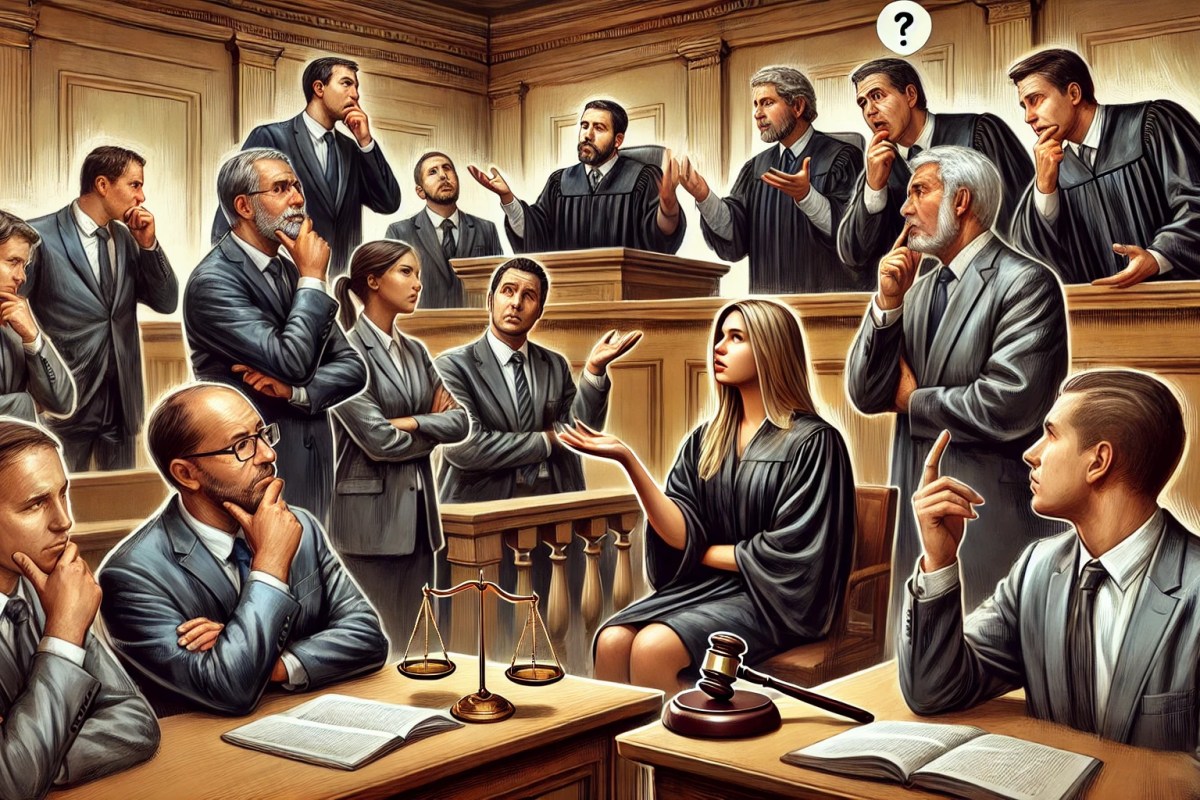
Democracy: Judge and Jury

As I make progress on my Democracy: The Great Illusion book, I am working on a chapter considering juries as a microcosm of a democratic process. I am debating whether to include this information in the chapter, Like the justice system in the United States, perhaps I should just flip a coin.

Having been seated on three juries in my lifetime, it was just as I had expected. Thankfully, I’ve never been on the other side of this Russian Roulette revolver. We really need to limit human-based decision systems. I have as much faith in juries as I have with democracies, but I thought I might take a peek into deliberation at a smaller scale, perhaps 12 jurors.

I read Kahneman’s Noise: A Flaw in Human Judgment when it was published in 2021, and I was not at all surprised how trial outcomes, quite often led to markedly different outcomes depending on the judge and the defendant. Although discrepancies based on sex and race have been well documented, this book showcased how much the judge’s mood affected sentencing—particularly if s/he was hungry. But this was not my interest.

My interest was to assess how the same case might fare given different judges and juries, so I asked ChatGPT. I want to share what it had to say—edited slightly for readability and flow.

ChatGPT Transcript

There have been several studies and controlled experiments assessing the variability in trial outcomes when the same case is tried separately by different judges and juries. These studies aim to evaluate the consistency and reliability of judicial decision-making, shedding light on the fallibility and variability of trial outcomes. Here are some key findings from such research:

Studies on Judicial and Jury Variability

The American Jury Study

One of the most notable studies is “The American Jury” by Harry Kalven and Hans Zeisel. This extensive study compared the decisions of juries and judges in actual cases. It found that juries and judges often agree on verdicts, but there are significant instances where they disagree. This disagreement highlights the subjective nature of decision-making and the potential for variability in trial outcomes.

Judge-Jury Agreement

Research by Valerie Hans and Neil Vidmar in “Judging the Jury” indicates that judges and juries reach the same verdict about 75-80% of the time. However, in the remaining 20-25% of cases, the disagreement can lead to different outcomes for the same case. These findings suggest that personal interpretations and biases can influence verdicts.

The Civil Jury Project

The Civil Jury Project at NYU School of Law has conducted several studies examining jury decision-making. Their research has highlighted how factors like juror demographics, pre-existing biases, and the presentation of evidence can lead to different outcomes in similar cases.

Controlled Experiments

Controlled experiments, such as those conducted by Shari Seidman Diamond and her colleagues, have involved mock trials where participants (acting as jurors) are presented with the same case. These experiments have shown significant variability in verdicts and sentences, demonstrating the influence of group dynamics, individual biases, and the presentation of evidence on jury decisions.

Key Findings

Cognitive Bias and Heuristics

Studies indicate that cognitive biases and heuristics significantly impact both judges and juries. Biases such as the anchoring effect, where the initial piece of evidence presented influences subsequent judgments, can lead to different outcomes for the same case.

Case Complexity and Juror Understanding

Research has shown that the complexity of legal cases can lead to variability in outcomes. Jurors often struggle with understanding complex legal and technical issues, leading to decisions based on incomplete or misunderstood information.

Influence of Legal Instructions

The clarity and comprehensibility of legal instructions given to juries play a crucial role in decision-making. Studies have found that poorly understood instructions can result in inconsistent application of the law, leading to variable outcomes.

Implications

The variability in trial outcomes highlights the fallibility of judicial processes and underscores the importance of reforms to enhance consistency and fairness. Potential reforms could include:

  1. Improving Juror Education: Providing better education and resources for jurors to understand legal principles and case-specific details.
  2. Reducing Cognitive Bias: Implementing measures to mitigate cognitive biases, such as standardized jury instructions and blind procedures.
  3. Enhancing Legal Instructions: Ensuring that legal instructions are clear, concise, and comprehensible to prevent misinterpretation.
  4. Utilizing Expert Testimony: Increasing the use of expert testimony to clarify complex issues for jurors.

Conclusion

The variability in trial outcomes, when the same case is tried by different judges and juries, underscores the need for ongoing research and reform in judicial processes. By understanding the factors that contribute to inconsistent verdicts, we can develop strategies to enhance the fairness and reliability of the justice system.

References

  • Kalven, H., & Zeisel, H. (1966). The American Jury. Little, Brown and Company.
  • Hans, V., & Vidmar, N. (1986). Judging the Jury. Plenum Press.
  • Diamond, S. S., & Rose, M. R. (2005). Real Juries: The Power of Watching. Basic Books.
  • The Civil Jury Project at NYU School of Law. (n.d.). Research on Jury Decision Making. Retrieved from [website].
  • Kahneman, D., Sibony, O., & Sunstein, C. R. (2021). Noise: A Flaw in Human Judgment. Little, Brown Spark.

Understanding the Historical Context of the Ukraine-Russia Conflict

I’ve made several political posts in this space, but I was researching the backstory of the Ukraine-Russia conflict. Yet again, insufficiency of language is involved. It’s been said that the West promised not to expand NATO, ‘not one inch’, but it’s not clear whether NATO was the subject of that promise. Even Gorbachov said that NATO was not a topic of discussion, and that omission fell squarely on him. Even if this is the case, Putin made it clear in 2008 that this was his interpretation. Here’s a brief history for those interested. It’s decidedly not an academic affair, but I try to be neutral.

The Ukraine-Russia conflict is deeply rooted in the complex web of historical tensions and geopolitical dynamics that have shaped Eastern Europe from the Cold War to the present day. This article explores the critical developments and decisions from the end of World War II through to the events leading up to 2014, setting the stage for the current tensions.

From World War II to Cold War End

The geopolitical landscape of post-World War II Europe was significantly shaped at the Yalta Conference, where Allied leaders divided Europe into spheres of influence, leading to the establishment of a Soviet-dominated Eastern bloc. This division set the stage for the Cold War and the creation of NATO in 1949, a collective defence alliance that would come to play a central role in later tensions.

Collapse of the Soviet Union and Early Post-Cold War Hopes

The policies of glasnost and perestroika under Mikhail Gorbachev in the late 1980s, followed by the fall of the Berlin Wall, signalled a shift towards greater openness and potential integration. However, the dissolution of the Soviet Union in 1991 led to new states grappling with independence and the redefining of security and economic relations in the region. Initial hopes for a peaceful Europe were soon challenged by emerging security concerns.

NATO Expansion and Growing Tensions

NATO’s eastward expansion began in earnest in 1999 with the inclusion of the Czech Republic, Hungary, and Poland. This move, perceived by Russia as a strategic threat, reignited long-standing fears of encirclement and influenced Russia’s foreign policy. The expansion was justified by NATO as a way to stabilize Eastern Europe and integrate it into a democratic, peaceful Europe.

The 2008 Bucharest Summit

The 2008 NATO summit in Bucharest was a watershed moment. Although Ukraine and Georgia were not offered immediate membership, NATO’s declaration that they would eventually join the alliance was seen as provocative by Russia. The subsequent Russo-Georgian War in August 2008 underscored Russia’s willingness to use military force in response to perceived encroachments on its sphere of influence.

Deepening Crisis: 2010-2014

Relations continued to deteriorate with the EU’s Eastern Partnership program, which sought to deepen ties with former Soviet states, including Ukraine. The situation escalated dramatically in 2014 following the Euromaidan protests in Ukraine, the ousting of President Viktor Yanukovych, and Russia’s annexation of Crimea, a move widely condemned internationally but justified by Russia as a necessary defensive action.

Putin’s Defensive Stance

Throughout these developments, Vladimir Putin has maintained that NATO expansion represents a direct security threat to Russia. The narrative from the Russian perspective frames the expansion as a continuation of Cold War antagonism and a disregard for Russia’s security concerns, contrary to what they interpret as promises made during the 1990s.

Conclusion

This detailed narrative from the end of World War II through 2014 illuminates the complexities of Eastern European security dynamics and the challenges in reconciling the strategic interests of NATO and Russia. The ongoing conflict in Ukraine is deeply intertwined with these historical tensions, reflecting long-standing struggles for influence and security in post-Cold War Europe.

Additional background and context.

If anything, perhaps this will help with SEO.

To provide a clearer picture of the discussions and statements made about NATO expansion during the early 1990s, particularly around the time of German reunification, here are some notable quotes and summaries from key figures involved:

James Baker (U.S. Secretary of State)

James Baker reportedly told Mikhail Gorbachev during a meeting in 1990:

  • “Not one inch eastward” was a phrase used by Baker to assure Gorbachev about NATO’s military posture not moving eastward, in the context of German reunification. This phrase has been widely cited but is subject to interpretation regarding its precise meaning and whether it referred to broader NATO expansion.

Mikhail Gorbachev (Soviet President)

Gorbachev’s response to these discussions has been a source of significant interest:

  • “The topic of ‘NATO expansion’ was not discussed at all, and it wasn’t brought up in those years. I say this with full responsibility. Not a single Eastern European country raised the issue, not even after the Warsaw Pact ceased to exist in 1991.” – Gorbachev, in later interviews, emphasized that the assurances were more about not deploying NATO troops to Eastern Germany than about preventing future NATO expansion.

Hans-Dietrich Genscher (German Foreign Minister)

Genscher’s position was similarly focused on reducing Soviet fears about NATO:

  • “NATO should rule out an ‘expansion of its territory towards the east, i.e. moving it closer to the Soviet borders.'” – Genscher said this in a speech in Tutzing, Germany, in 1990, which was aimed at assuaging Soviet concerns about German reunification and NATO.

Western and Soviet Interpretations

The assurances regarding NATO not expanding “one inch eastward” were primarily discussed in the context of German reunification and the integration of East Germany into NATO without expanding NATO’s military presence further east. The ambiguity lies in whether these assurances were understood to apply only temporarily or permanently, and specifically to Eastern Germany or more broadly to Eastern Europe.

Later Developments

After these discussions, in 1991 and beyond, the situation changed dramatically with the dissolution of the Soviet Union. The security landscape in Europe was fundamentally altered, leading to different priorities and decisions. By the mid-1990s, the question of broader NATO expansion became a topic of much debate, and in 1999, several former Eastern Bloc countries were admitted into NATO.

Conclusion

The quotes and the context they were spoken in reveal the complexities of diplomatic communications and the difficulties in interpreting what was meant and understood by different parties. These discussions were contingent on numerous factors, including the rapidly changing geopolitical landscape following the end of the Cold War.

Declaration of Independence

It’s July. The season of independence in the United States. Independence from the overt tyranny of Britain, but not from the tacit tyranny of their government—the government purported to be ‘of the people, by the people, and for the people‘ per Abraham Lincoln’s 1863 Gettysburg Address. As their Constitution reads, ‘We the People‘. Governments may be of the people and by the people, but governments are an emergent phenomenon as happens when oxygen and hydrogen combine just so and create water. Two gases combine to create a new substance—water. Some forget that, like water, government are a distinct element to the people that constitute it. Some think it resembles them. It doesn’t. It’s Hobbes’ Leviathan—or a Jabberwok.

In preparation for the traditional Summer season, I took to reading Derrida’s 1976 essay, Declarations of Independence. It was interesting, but I was hoping to get more from it. I decided to deconstruct the opening paragraph—the preamble—of the Declaration of Independence:

Deconstructing Binary Oppositions

Self-Evident vs. Non-Self-Evident

The Declaration boldly asserts that ‘these truths’ are ‘self-evident’,’ a claim that is nothing more than a rhetorical trick. By presenting these ideas as self-evident, the authors seek to place them beyond questioning, discouraging dissent and critical examination. In reality, these ‘truths’ are far from universal; they are the product of a specific cultural and historical context, shaped by the interests and perspectives of the privileged few who drafted the document.

Interrogating Assumptions and Hierarchies The Declaration of Independence asserts that certain truths are ‘self-evident’, implying that these truths are so obvious that they require no further justification. However, the concept of self-evidence itself is far from universally accepted. It is deeply embedded in the philosophical tradition of Enlightenment rationalism, which holds that reason and logic can reveal fundamental truths about the world.

  1. Philosophical Foundations of Self-Evidence
    • Enlightenment Rationalism: The idea of self-evidence relies heavily on Enlightenment rationalism, which posits that certain truths can be known directly through reason and are therefore beyond dispute. Philosophers such as René Descartes and Immanuel Kant emphasised the power of human reason to uncover self-evident truths. Descartes, for instance, argued for the self-evident nature of ‘Cogito, ergo sum‘ (‘I think, therefore I am’) as a fundamental truth (Descartes, Meditations on First Philosophy).
    • Critique of Rationalism: Critics of Enlightenment rationalism, including existentialists like Friedrich Nietzsche and phenomenologists like Martin Heidegger, argue that what is considered self-evident is often culturally and historically contingent. Nietzsche, for example, contended that what we take as ‘truth’ is a product of our perspective and historical context, not an absolute given (Nietzsche, Beyond Good and Evil).
  2. Cultural and Philosophical Contingency
    • Cultural Relativity: Different cultures and philosophical traditions may not find the same truths to be self-evident. For instance, the concept of individual rights as self-evident truths is a product of Western liberal thought and may not hold the same self-evident status in other cultural frameworks. In many Eastern philosophies, the focus is more on community and harmony rather than individual rights.
    • Subjectivity of Self-Evidence: The term ‘self-evident’ implies an inherent, unquestionable truth, yet what one group or culture finds self-evident, another may not. This variability reveals the instability and subjectivity of the claim. For example, in traditional Confucian societies, the emphasis is placed on hierarchy and duty rather than equality and individual rights, demonstrating a different set of ‘self-evident’ truths.
  3. Constructed Nature of Truth
    • Language and Context: Jacques Derrida’s concept of différance illustrates how meaning is not fixed but constantly deferred through language. What we consider to be “truth” is constructed through linguistic and social contexts. Derrida argues that texts do not have a single, stable meaning but rather a multiplicity of interpretations that change depending on the reader’s perspective and context (Derrida, Of Grammatology).
    • Social Construction: Michel Foucault’s analysis of power and knowledge further deconstructs the notion of objective truth. Foucault argues that what is accepted as truth is produced by power relations within society. Truths are constructed through discourses that serve the interests of particular social groups, rather than being objective or self-evident (Foucault, Discipline and Punish).

Created Equal vs. Not Created Equal

The Declaration’s claim that ‘all men are created equal’ is a blatant falsehood, a manipulative promise designed to appease the masses whilst maintaining the status quo. The glaring contradictions of slavery and gender inequality expose the hollowness of this assertion. Equality, as presented here, is nothing more than an ideological construct, a tool for those in power to maintain their dominance while paying lip service to the ideals of justice and fairness.

Creator vs. No Creator

The Declaration refers to a ‘Creator’ who endows individuals with rights, grounding its claims in a divine or natural law. This invokes a theistic worldview where moral and legal principles are derived from a higher power. However, Derrida challenges this by showing that the concept of a creator is a cultural and philosophical construct, not a universal truth.

The presence of the creator in the text serves to legitimise the rights it declares. However, this legitimacy is contingent on accepting the cultural narrative of a creator. Secular and non-theistic perspectives are marginalised by this assertion, revealing the ideological biases inherent in the Declaration. The authority of the declaration is thus shown to be dependent on particular beliefs, rather than an objective reality.

Unalienable vs. Alienable

The notion of ‘unalienable Rights’ is another empty promise, a rhetorical flourish designed to inspire loyalty and obedience. In practice, these supposedly inherent and inviolable rights are regularly violated and denied, particularly to those on the margins of society. The Declaration’s lofty language of ‘Life, Liberty and the pursuit of Happiness’ rings hollow in the face of systemic oppression and injustice. These rights are not unalienable; they are contingent upon the whims of those in power.

Conclusion

Through this deconstruction, we expose the Declaration of Independence for what it truly is: a masterful work of propaganda, filled with false promises and manipulative rhetoric. The document’s purported truths and self-evident principles are revealed as arbitrary constructs, designed to serve the interests of the powerful while placating the masses with empty platitudes.

As some celebrate this 4th of July, let us not be fooled by the high-minded language and lofty ideals of our founding documents. Instead, let us recognise them for what they are: tools of control and manipulation, employed by those who seek to maintain their grip on power. Only by constantly questioning and deconstructing these texts can we hope to expose the truth behind the facade and work towards a more genuine understanding of freedom and equality.

References

  • Jacques Derrida, “Declarations of Independence,” in Negotiations: Interventions and Interviews 1971-2001, ed. Elizabeth Rottenberg (Stanford: Stanford University Press, 2002).
  • Jacques Derrida, Of Grammatology (Baltimore: Johns Hopkins University Press, 1976).
  • Friedrich Nietzsche, Beyond Good and Evil (Cambridge: Cambridge University Press, 2002).
  • Michel Foucault, Discipline and Punish: The Birth of the Prison (New York: Vintage Books, 1995).
  • Immanuel Kant, Critique of Pure Reason (Cambridge: Cambridge University Press, 1998).
  • René Descartes, Meditations on First Philosophy (Cambridge: Cambridge University Press, 1996).

Fiction Nation: The Concept of Fiction

Video: YouTube rendition of the content on this page.

Introduction

In our daily lives, we encounter numerous constructs that shape our understanding of the world. These constructs, though deeply ingrained in our societies, may be more fictional than factual. We accept the existence of nations, economies, money, and legal systems as fundamental aspects of our reality, yet these entities are human-made inventions. In this article, we will explore the notion that many of the pillars supporting our world are, in fact, fictions. By examining the nature of these fictions, we can better understand their impact on our lives and how they shape our perceptions and interactions.

Section 1: The Concept of Fiction

Definition of Fiction

Oxford Languages via Google defines fiction as:

fic·tion /ˈfɪkʃən/ noun

  1. literature in the form of prose that describes imaginary events and people.
  2. something that is invented or untrue.
    they were supposed to be keeping up the fiction that they were happily married

Fiction, in its most common sense, refers to imaginative literature—stories created from the author’s mind, describing events and characters that do not exist in reality. However, fiction also encompasses broader definitions, including any invented or untrue concept. This dual definition highlights the versatility of fiction: it is not only the realm of novels and stories but also the domain of societal constructs and beliefs that, while not grounded in tangible reality, exert a powerful influence over our lives.

Examples of Fiction in Everyday Life

Fiction extends beyond the pages of a book or the scenes of a movie. It permeates various aspects of our everyday existence. For instance, consider the concept of a corporation. Legally, a corporation is an entity that possesses many of the rights and responsibilities of a person, yet it is not a physical being—it is a construct, a legal fiction, created to facilitate economic activities. Similarly, brands and trademarks are fictions designed to create distinct identities for products and services, influencing consumer behaviour and shaping market dynamics.

The significance of these fictions lies in their ability to organize and structure society. They provide frameworks within which we operate, enabling complex interactions and collaborations. However, it is crucial to recognize their invented nature, as this awareness allows us to question and, if necessary, reshape these constructs to better serve our collective needs.

By acknowledging the fictional basis of many societal elements, we can unravel the layers of assumptions and beliefs that underpin our reality. This understanding sets the stage for a deeper exploration of specific fictions—nations, economies, money, and legal systems—and their profound impact on our world.

Continue to Fiction Nation: Section 2

Neglect and a Quarter Dozen

I am going to neglect this blog for at least another day. I’ve got too many irons in the fire.

Why do we routinely say ‘half dozen’ but don’t tend toward ‘quarter dozen’ or ‘third of a dozen’? I know many people have maths deficits, but still. I don’t think even I will attempt to start this trend, but this thought crossed my head today.

I hope to return to reengage with this block, but until then, adieu.

Rhetoric is Truth; Morality, Emotion

I’ve been reengaging with philosophy, though my positions haven’t changed recently. My last change was to shift from being a qualified material realist to a qualified idealist in the shape of Analytic Idealism. In most matters I can think of, I am an anti-realist, which is to say concepts like truth and morality are not objective; rather they are mind-dependent.

I’ve long been on record of taking the stance that Capital-T Truth, moral truths, are derived rhetorically. There is no underlying Truth, only what we are aggregately convinced of, by whatever route we’ve taken. As a moral non-cognitivist, I am convinced that morality is derived through emotion and expressed or prescribed after a quick stop through logic gates. Again, there is nothing objective about morality.

Truth and morality are subjective and relative constructs. They resonate with us emotionally, so we adopt them.

Were I a theist — more particularly a monotheist —, I might be inclined to be emotionally invested in some Divine Command theory, where I believe that some god may have dictated these moral truths. Of course, this begs the question of how these so-called “Truths” were conveyed from some spirit world to this mundane world. I have no such conflict.

But let’s ask how an atheist might believe in moral realism. Perhaps, they might adopt a Naturalistic stance: we have some natural intuition or in-built moral mechanism that is not mind-dependent or socially determined. I am not a naturalist and I don’t take a universalist approach to the world, so this doesn’t resonate with me. I can agree that we have an in-built sense of fairness, and this might become a basis for some aspects of morality, but this is still triggered by an emotional response that is mind-dependent.

Another curious thing for me is why non-human animals cannot commit immoral acts. Isn’t this enough to diminish some moral universal? In the end, they are an extension of language by some definition. No language, not even a semblance of morality.

Anyway, there’s nothing new here. I just felt like creating a philosophical post as I’ve been so distracted by my health and writing.

Error Theory, Charity, and Occam’s Boomerang

As moral error theorists, we’re accustomed to facing criticism for our perspective. I’m a moral non-cognitivist, but there’s a significant intersection with these theories. When someone asserts that torture is wrong, I might argue that the claim is hollow, as moral wrongness is merely an emotional response masquerading as an objective moral stance. On the other hand, an error theorist would debunk this argument, stating that there’s no absolute position of right or wrong. Pragmatically, we both arrive at the conclusion that the claim cannot hold true.

Video: Is Error Theory Counterintuitive — Kane B

Intuition leads others to a different interpretation. If they believe something is true due to their epistemic certainty, then for them, it is true. Their reality is shaped by experience. Curse the limitations of sense perception and cognitive constraints. “I know what I know,” is their typical retort. Moreover, it’s a matter of practicality. “You know what I mean,” they insist.

They attempt to substitute fact with heuristics, truth with analogue, and terrain with a map. Admittedly, it’s convenient to feign an identity at play, but at best, it’s a near equivalence.

In the linked video, the example of claiming ‘that car is red’ is presented. But can cars truly be red? Not precisely. Cars can possess the property of appearing red to most individuals in specific lighting conditions, but a car cannot inherently be red. Thus, this statement is categorically false. We can assert ‘that the car appears to be red,’ and as a matter of practicality, we might designate the car as such. However, this highlights the inadequacy of language, particularly concerning abstract concepts.

A challenge arises from people’s inclination, driven by the principle of least effort, to seek simplicity and convenience, often at the expense of truth.

A challenge arises from people’s inclination, driven by the principle of least effort, to seek simplicity and convenience, often at the expense of truth. This principle underpins Occam’s Razor: choose the simplest version among competing explanations. It’s a misguided endeavour, akin to living under the notion that opposites attract rather than like attracting like.

I encounter this opposing worldview when I pinpoint certain inconsistencies or issues in the ‘real world,’ emphasizing that language is insufficient to convey adequate meaning, that there exists no objective moral centre, and that democracy is a system that falters even on paper. Almost invariably, the response is, ‘then what?’ I don’t possess the answer to ‘then what.’ I’m merely informing you that your leg is broken. I don’t need to know how to fix it for this to be true, a valid assessment.

While I’m on a roll, let’s talk about charity in philosophical argumentation, which, in my view, is another misguided concept. Why should I favour the notion that a person genuinely believes in the position they hold? It’s another heuristic rule set up to lend credence to otherwise weak arguments. We need not adhere to these boundaries—they’re nonexistent.


BONUS: I ran this content through ANTHROP/C’s Claude 2 for analysis and evaluation. I include it as an example of the bias inherent in generative AI. Whilst I realise that I am taking a polemic position—nothing new here—, Claude apes canned responses. Ironically, the same responses I am arguing against. I do agree that I could have ‘steel-manned’ my argument, but this is a blog post, not a dissertation. Perhaps another day.

Here are some thoughts on evaluating the blog post:

  • The author takes a strong moral non-cognitivist stance, arguing that moral claims like “torture is wrong” are not objective facts but expressions of emotion. This view aligns with moral error theory in debunking moral realism.
  • However, the dismissive attitude towards those who believe moral claims have truth value shows a lack of philosophical charity. The author could strengthen their position by steelmanning the opposing view before critiquing it.
  • The analogy between moral claims and claims like “the car is red” makes an interesting point about the inadequacy of language for capturing nuanced truth. However, more nuance could be applied in acknowledging the usefulness of simplifying language and heuristics in everyday life.
  • The author’s critique of Occam’s Razor and preference for complex explanations is thought-provoking but could benefit from addressing the pragmatic value of simpler models. Outright dismissing this philosophical principle seems extreme.
  • The call to abandon charity in argumentation in the name of absolute truth risks throwing the baby out with the bathwater. Some level of mutual understanding between interlocutors is needed for productive discourse.
  • Overall, while the post raises thoughtful challenges to moral realism, heuristics, and other commonly held views, the dismissive tone and lack of nuance weaken the arguments. More charity towards opposing views and addressing pragmatic concerns could strengthen the critique.

In summary, the post puts forward some provocative arguments but could benefit from greater philosophical charity, nuance, and balancing pragmatism with pursuing absolute truth. A more measured tone discussing pros and cons of different perspectives would likely lend more persuasive force.

ANTHROP/C Claude 2