Markus Gabriel was brought to my attention, and I immediately thought of Lance at The Dog Walks.
In essence, part of his argument touches on the insufficiency of language, but his key rationale for this claim is anchored arount Kant and set theory. He published a book by the same name on this topic in 2015. This TedX talk is from 2013. I haven’t read it and am unlikely to do so in the near term, but it might be interesting if it expands upon the notion presented here.
Back in the day when I was a startving artist, as it were, and a bit of a studio rat, we didn’t always have budgets for top studio musicians, so we had to improvise… and by ‘improvise’, I mean get music students from USC or UCLA to play parts on instruments the bands weren’t proficient at. We could transcribe an arrangement and notate how we wanted it to be played. Notating feel is somewhat possible but not practical.
Typically, we’d secure trained Classical musicians, but the struggle was real to get them to ‘feel’ and not just read the notes on the page. For us, we just ‘felt’ it. We’d find a pocket, find a groove, not care that the tempo might drift or the spacing wasn’t quite in cadence, but getting these trained musicians to get past, ‘but that’s not what you wrote’ was hard. The playing was technically correct, but it was often wooden.
In the day—this is the early to mid ’80s—, synths were not quite ready for prime time when it came to simulating acoustic instruments, 8-bit samplers were shite and 16-bit samplers were out of our price range—and still not quite ready for prime time either. So that was the trade off.
Typically, the best case scenario was to play the parts on a synth for the players armed with sheet music, but that was never as good as when we had a feeling instrumentalist make an appearance.
So, OK. A bit of a bait and switch. This post is not about the philosophy of music, but music is a part of my life and has been since I was a kid. My philosophy is that I connect with music and it connects back.
This past month, I’ve been especially enjoying pieces centred on Sus2, typically in F.
To me Sus2 voicings have a Minor sadness yet are somehow more airy. My last 3 excerpts illustrate different takes.
Give a listen or not. Feel free to comment or not.
I’ll leave you with a piece I wrote for a former girlfriend, who died in June 2020. I could write am entire philosophy-psychology series on her, but for now, here is the purposfully meloncholy piece (with a notable nod to Smashing Pumpkins), the opening notes also serving as her ringtone.
I was on a videoconference call at work, and someone was having work done at their apartment. People were painting, yet banging was evident. The phrase ‘painting with hammers’ was uttered, and the world will never be the same.
If I were still performing, it might have made a good band name. It may still make its way into a song title or lyric.
If you read this and are inspired. Feel free to run with it. Remember the origin, and comment or link back to here.
As I am busy researching, this will likely be short. It would be even shorter without this preamble.
In researching the literature for my insufficiciency of language hypothesis, I am reading Fodor and Reboul to try to better grasp the evolutionary function of language. Both rely on the Theory of Mind. It seems that the more accepted theory is the language primarily evolved for communication as a survival mechanism. However, Fodor defends that cognition was the primary function and communicated was exapted. Carruthers contributes to the Language of Thought domain.
As I’ve presented here in dribs and drabs, my insufficiency theory of language argues that language is ill-suited for the communication of abstract concepts. It is fine for expression; communication of situational objects, inventions, and motion, description; and argumentation. But imagined concepts such as fairness, justive, and freedom don’t hold water. As I’ve discussed this hertofore in detail, I’ll not repeat myself.
Confirmation bias notwithstanding, the primacy of cognition better explains why abstract conceptual communication so often fails. Language has been stretched beyond its boundary constraints, and the air is thin past that.
I’m not sure I am willing to choose a side quite yet. Rather, I’ll note the different perspectives and move on. The underlying mechanism is less important to me than the empirical deductions that follow.
I’ve been following Philosophy Tube since Abigail was Ollie. Always top-notch material. Their content has gotten longer over time, so I’ve found myself skipping over in favour of shorter presentations. I am so glad to have decided to watch this one.
As anyone who follows me knows, I am a big advocate of social construct theory, yet I learned so much in this vid, which is proper well-cited AF. Lot’s of new content to add to my backlog, so I’ve got more than enough reading material for my next few incarnations at least.
The biggest takeaway for me is the notion that not only is gender a social construct, but so is sex itself. Previously, I have defended the sex-gender distinction, but in fact, scientific taxonomies are still social constructs—only in the scientific community rather than the greater community at large.
Abigail’s platypus drives home the point. Not that it’s some big reveal. Another less poignient analogy is fruit and vegetable classification. Tomatoes are fruits. Mellons—watermellons, pumpkins, and so on—are fruits. Say it ain’t so.
Give it a viewing and like or comment here and/or there.
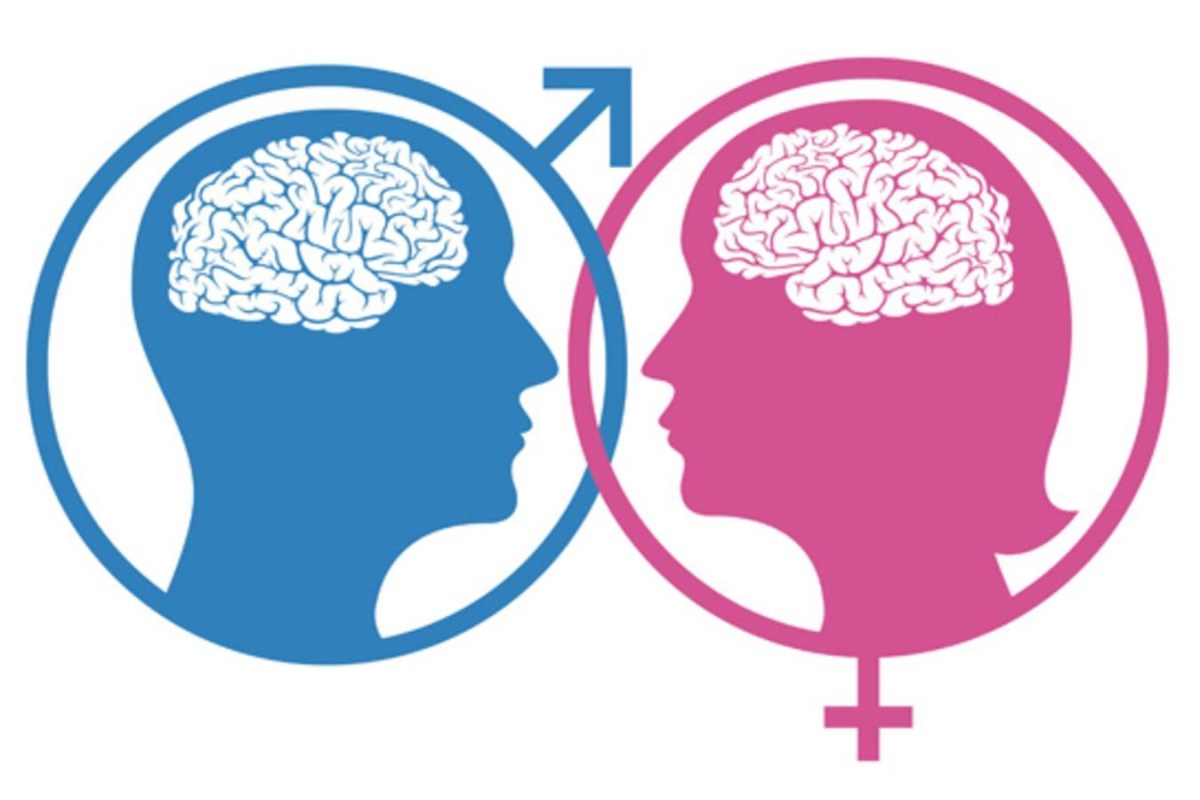
It’s only happenstance that I’ve got consecutive gender posts. Derrida spoke about prioritisation in binary pair, and the inherent symbolic connotation. Sex and gender are two examples.
At the risk of overstating the obvious, masculinity holds the priority in this pair bond. Masculinity traditionally conveys hardness, strength and logic, whilst femininity conveys softness and weakness and emotion. This is what Beauvoir intends by her use of the other sex—male and other. Even in a non-binary frame, maleness still prevails over everythying else. Of course, in this broader world, male may trump female, but in an appeal to nature fashion, female trumps intersex in the same way the light-skinned people of colour trump their darker-skinned counterparts.
English even has derivative terms such as hysterical, an emotional state rooted in the Greek hystera, the uterus or womb. Etymologically, the word was invented by the Greek under the impression that this behaviour was a deviation from male normaly.
In the physical world, this male-female terminology generailises to penetrator and penetrated—penetratrix, anyone? We routinely refer to plugs and connectors with prongs as male and recepticals are female. At first glance, it might be tempting to assume that penis is somehow related to penetration, but it’s not so, as penis derives from tail.
In music there is the notion of cadence, the beats of a rhythm. Classically speaking, there are masculine and feminine cadences. And if you guessed that masculine cadences involve strong beats and feminine cadences invlove weak beats, you’d be correct.
Feminine Cadence a musical cadence in which the final chord or melody note falls on a weak beat
The reason I am writing this is as a reminder to the predjudice langage embeds and perpetuates. Even if we have lost the connection to the original intent, the sense remains. We should actively seek other terms that don’t promote this anachronistic belief system.
It’s also easy to get carried away and over-specify the domain. So, terms like manhole, manuscript, manipulate, and such are, let’s say, false cognates, in a manner of speaking. There are no counterpart womanholes—sophomoric humour notwithstanding—, womanuscripts, and womanipulation, though it might be fun to write some exposition with the intention of satarising these and words with a similar structure. I’m not sure I could womanage to carve out the time to get there.
Last Word
In a different space, we’ve got master-slave word pairs. In computers, there may be master and slave drives. I’ve heard people point out the insensitivity of this notion without grasping that projecting American (or wider-world) human slavery on this rather than understanding this pairing existed well before the New World was even ‘discovered’. This is where hysterical political correctness needs to step down and give way to education.
This wall of words was posted in a Facebook that the AI thought I would be interested in. I’m not, save for the rhetorical and grammatical structure. I am not interested in the veracity of the claim or the sentiment it is meant to provoke.
The author purportedly had a conversation with a former student, who identified as being a member of another race—black, I suppose; African-American in the current vogue; negro and coloured in bygone days.
Notice the head-fake. A conversation with an individual person quickly morphs into a generalisation. This individual, in the mind of the author—or at least the conveyance—was now the representative mouthpiece for this so-called race. But that’s not what I question.
They and them are now considered to be acceptible singular forms if a person identifies as such. I’m not sure I am equiped to comment on identification to a grammatical element, so I’ll side-step that and focus on the outcome.
Perusing this or something similar, there is a sense of undeserved weight—an inclusion from the perspective of a single person. Some people actively promote themselves as spokespeople for a group, whether race or something else. But this person did not necessarily claim to speak for anyone beyond him or herself—perhaps some small, immediate group of collegues who shared this perspective.
I am wondering how this will play out as a device to intentionally deceive the reader.
Another thing…
I was in Philadelphia yesterday, and a black associate of mine was commenting on what he deemed to be 150 neo-Nazi skinheads parading in the rain, a point eliciting more pleasure than perhaps it deserved. His assessment is that race was not a problem, that he held no illwill toward any race. His contention was with ‘motherfucking racists’. Unfortunately, there is no scientific racist litmus. There are only actions and perceptions. This is where Popper’s paradox of tolerance pops into mind. And so it goes…
Here I am yet again writing about something I am not particularly equiped to do. In other fora, I’ve been directed again to Lacan vis-à-vis a thread about Lacan’s perspective on the real. I’ve commented on Lacan before, usually in the context of eschewing any philosophy founded on psychology—especially psychoanalysis. Explaining that I have a reading backlog extending beyond my likely lifespan, it was recommended that I read Jacques Lacan by Sean Homer, so I am sharing the recommendation. Anything by Bruce Fink was another reco. Noam Chomsky takes an ad hominem swipe at Lacan here.
I decided to watch a few videos (including this, this, and this) to survey some of Lacan’s ideas, knowing that something could be lost in the translation. Let’s just say that I was underwhelmed.
In a nutshell, my biggest contention is the notion of the unconscious as an active agent.
According to my understanding, Lacan posits that there is a ‘real’ out there, but it is obscured by language and subject to interpretation. To him the real is a Void.
Psychoanalysis presumes being able to get closer to the ‘truth’ of reality. Like astrologers and fortune-tellers, Psychoanalyst primary defence is that not all knowledge is evidence-based or falsifyable. My problem is that I am not open to another way of experiencing the world, but they somehow have privileged access to this truth. Of course, this is a similar to religious claims of some special spiritual access that opens when you believe.
To me, the Void is as apt a metaphor as any. And while we both agree that the real is inaccessible, I don’t accept the impostition of the how and the why. What Lacan does—and Freud before him and psychoanalysts more generally—is to inject hows and whys into the story. In this narrative, the unconscious has active powers, (as opposed to negative space), where memories (in whatever form) may be repressed and actions may be triggered (or activated) by unconscious urges or desires. I consider this last train of thought wholly imagined and fabricated. This void and the unconscious has no purpose.
Along the way, I do agree with Lacan’s poststructuralist position. I have no issues with symbolic or metaphoric concepts and speech. The contention arrises when one attempts to claim the metaphoric to be concrete. This is the same contention I have with people who take the metaphoric text of the bible and cencretise it. There are other problems there, but I’ll quit now.
In bygone days, national governments asserted power and prevailed over relgion, in essence forming a ceasefire partnership that has, save in pockets, pretty much held fast in most of the Western world. Religion is still somewhat of a factor in many corners — in some circles dominant —, but the latest challenger are the acquisitive corporate defenders: multinational (wannabe supernational) entities, whose aspirations of dominance is stifled by the prevailing power structure.
As many in government are Capitialist converts, they each and collectively have an Achilles heel, as captured by the adage probably misattributed to Lenin, ‘The capitalists will sell us the rope with which to hang them’.
The capitalists will sell us the rope with which to hang them.
not Vladimir Ilich Lenin
Contemporary politics see the orgy of strange bedfellows and the slow poisoning of Democracy by lobbyists and their palliative care of the deligates of the People. Some of the polis see this and react in horror to decisions such as Citizens United in the United States, as more and more foxes are voted into the hen house — and wolves into Congress. This is not limited to the United States.
Along the way, some government officials attempt to cozy up to the predators to enriched themselves personally at the expense of their citizenry and on the way to the killing floor. They’ll have been fattened by scraps, only to be consumed in the abbatoir. In some cases — perhaps many — the leaders are themselves part of this acquisitive class, so they are not in particular need of a country.
Even if the acquisatives are aware that they’re destroying the host and the structure that invented them, these petulent progeny run roughshod anyway. But the permissive parents don’t wish to bite the hands that feed them.
So far, the acquisitive corporatists have been able to snuggle up with the ruling class, and this class perceives themselves as being part of this class. Most aren’t. They are entourage at best — pathetic sycophantic hanger-ons. Once they realise that they are not members of the club and try to wrest control, the real fight will commence, but it will likely be too little and too late. The real losers will be the people, no longer having evern the semplence of protection. Libertarians will finally see that their dream was a nightmare from the start.
And then we await the next paradigm shift.
Backstory
What prompted this post?
A colleague on Facebook posted a Scientific American article about oversimplification of sex determination in response to a transphobe, and Facebook took it down. Having had a couple similar responses myself, I have come to the conclusion that Facebook and the other social media giants need external governance. I don’t want to endure what ass hats like Donald Trump have to say any more than the next person, but this censorship needs to happen in a different way. Given my perspective on Truth, we need to assess how best to keep devisive speech in control. In some cases, these people are simply lying. They claim that I didn’t say that, wasn’t with that person, wasn’t in that place, and so on when these are all demonstrably false. This is not generally illegal behaviour.
When Trumps says, I’ll be president again in August, or I’ll be Speaker of the House, this is a prediction. It’s like saying, ‘This is the winning lottery ticket’. Language allows for this speculative hyperbole. Again, bad form and taste are not illegal. Even if some assclown riles up some portion of the populace, who’s to say whatever they’re hawking isn’t for some future greater good at the expense of some near-term disruption.
I’m rambling. The point is that the overreach of Facebook is just another instance of corporations taking power into their own hands and uncontested. It will come to a head. Perhaps not in my lifetime, but mark my words.










 Philosophics