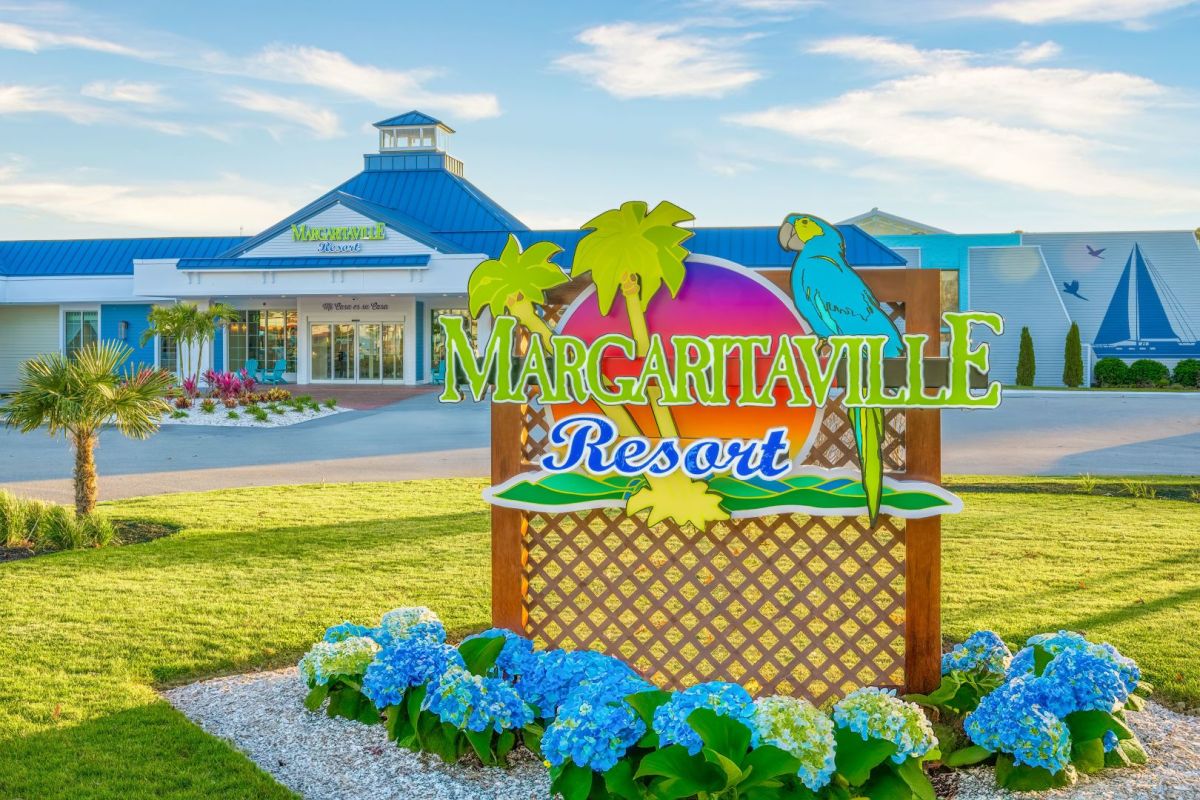
I drove to Hyannis this afternoon and saw these trees lining the roadside in front of Margaritaville. I shared this photo with ChatGPT for identification.
NB: Cover image rights reserved by copyright holder.
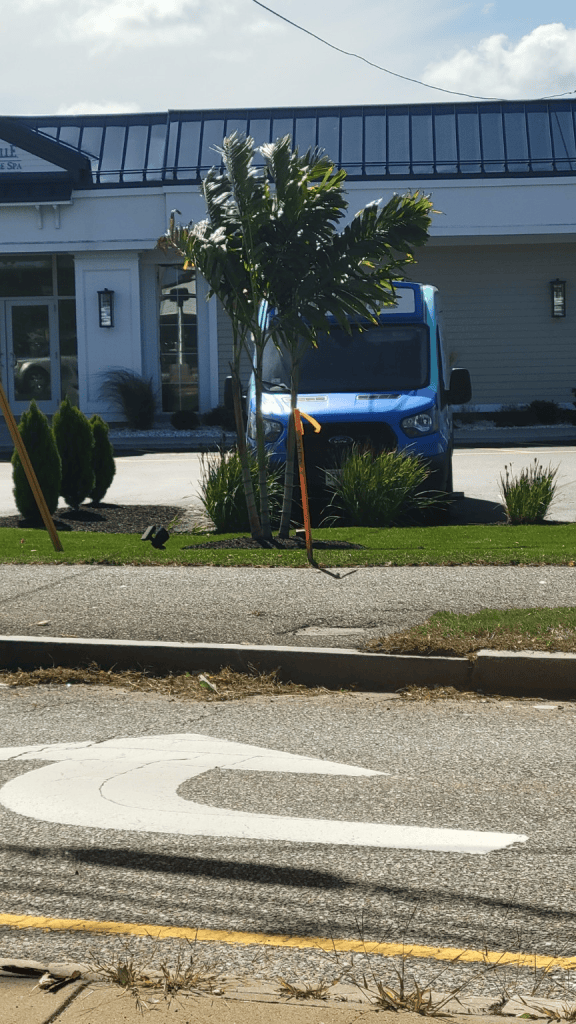
That looks very much like a foxtail palm (Wodyetia bifurcata).
The giveaway is the foliage: instead of the leaflets lying in a relatively flat plane, they emerge at different angles around the central stem, giving each frond that dense, bushy, almost bottle-brush appearance. Hence “foxtail”, because apparently even botanists occasionally succumb to the irresistible human urge to name plants after whatever furry object they resemble.
The several trunks are probably multiple palms planted together, rather than a naturally clustering individual. Foxtail palms normally develop a single smooth, grey trunk.
One slightly comical detail, given the apparent Massachusetts setting: this is emphatically not a New England-hardy palm. Foxtails are tropical, roughly USDA zones 10–11. If this is on Cape Cod, it has almost certainly been installed seasonally and will need to be removed or protected indoors before serious frost.
The rest of the story
Having lived in Los Angeles for so many years, I recognised these as tropical plants. In fact before last winter, this establishment had planted pygmy date palms (Phoenix roebelenii) that didn’t make it through winter. I shared this photo with ChatGPT with a note about the last arboreal residents.
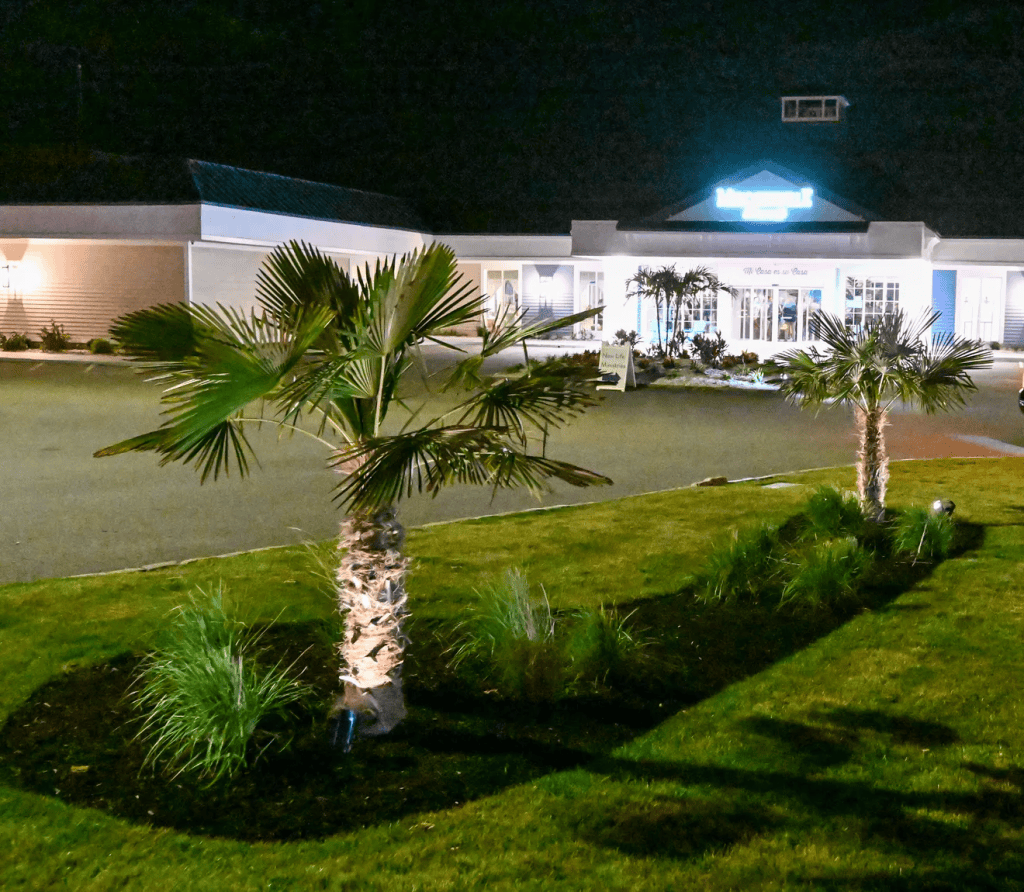
Taken together, that strongly suggests the previous planting was treated as seasonal landscaping rather than genuinely hardy landscape stock.
The clues are the single relatively slender trunk, the compact crown, and the arching, feather-like fronds. It does not have the thick, bushy, three-dimensional foliage of the foxtail in your first photograph.
And in Hyannis, its demise is not especially mysterious. Phoenix roebelenii is a genuinely tropical/subtropical palm, generally suited to roughly USDA zones 9b–11. A Cape Cod winter is rather beyond its contractual obligations. Even a comparatively mild Hyannis winter can bring temperatures low enough to kill it outright, especially if it was planted permanently rather than brought in.
For those pygmy date palms, the outcome is exactly what one would expect in Hyannis. They can tolerate a brief flirtation with cold, but Cape Cod winter is not a flirtation. It is a prolonged bureaucratic proceeding involving frost, wind, wet soil, and repeated freezing. The fact that several died and were all replaced after winter makes cold injury vastly more plausible than some isolated disease or irrigation problem.
The replacement with foxtail palms is interesting because it is not really a move towards winter hardiness. Wodyetia bifurcata is, if anything, even less appropriate for overwintering outdoors in Massachusetts. So unless the landscaper plans to remove, wrap, heat, or otherwise cosset them, I would regard these new palms as living on borrowed time.
There are a few palms that can survive much colder climates, notably needle palm (Rhapidophyllum hystrix) and windmill palm (Trachycarpus fortunei), with protection and a favourable microclimate. But the specimens in these photographs are plainly being selected for that conspicuous Florida-resort aesthetic, not because anyone consulted the inconvenient little matter of January.
So this winter should provide a fairly decisive experiment. If they remain planted and unprotected, I would be surprised if the foxtails emerge unscathed.
Clarification
Finally, I provided more context and got the subsequent response.
Margaritaville Resort Cape Cod is located at 1225 Iyannough Road (Route 132) in Hyannis, Massachusetts 02601.
That makes the landscaping choice make much more sense. The resort’s own site explicitly sells the property as an “island-inspired” and “tropical” Cape Cod escape, and confirms the address.
So the palms are almost certainly branding before horticulture. They are there to manufacture a visual shorthand for Margaritaville: Florida, cocktails, Jimmy Buffett, vague latitude-related irresponsibility. Whether the plants regard Hyannis as paradise is another matter.
The interesting bit is that the previous palms apparently died after winter and were then replaced with another tropical species rather than something genuinely hardy. That suggests one of three things: they are intended as effectively disposable seasonal specimens; the landscaper underestimated the winter problem; or the resort is willing to accept periodic replacement as part of maintaining the tropical aesthetic.
Given the photographs and the resort’s stated theme, the first and third possibilities now strike me as much more likely than simple horticultural ignorance.
Reflections
Honestly, the AI was more horrified and emotional than at least the managers of this place. Not much to add. Gotta love humans, capitalism, and consumerism.

