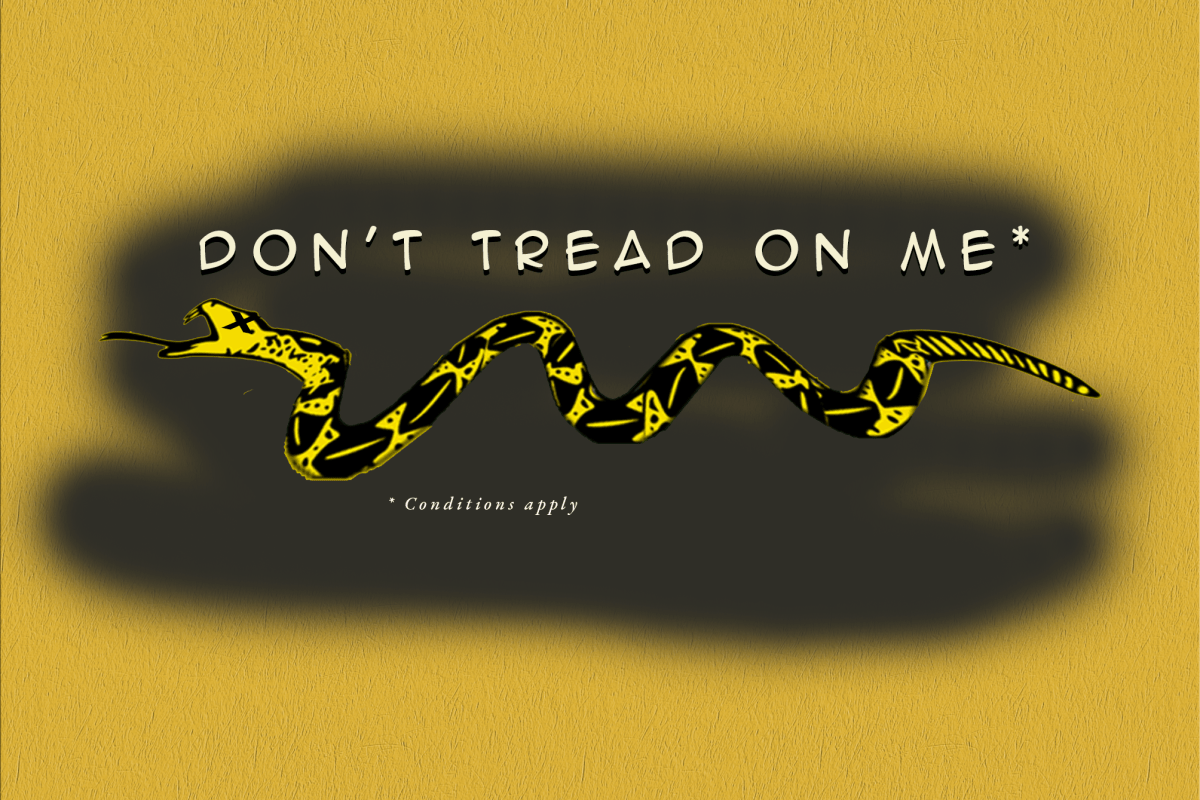
Absolute liberty means absolute liberty, but what if the liberty you seek is death? The moment you carve out exceptions – speech you can’t say, choices you can’t make, exits you can’t take – you’ve left the realm of liberty and entered the gated community of permission.
Give me liberty or give me death.
–Patrick Henry
And here’s the test most self-styled liberty lovers fail: you’re free to skydive without a parachute, but try ending your life peacefully and watch how quickly the freedom brigade calls in the moral SWAT team.
If the right to live doesn’t come with the right to leave, it’s not a right. It’s a sentence.
I’m not his usual audience; I’m already in the choir, but this eight-minute clip by Philosopher Muse is worth your time. It’s a lucid walk through the ethical terrain mapped by Sarah Perry in Every Cradle Is a Grave, and it’s one of the better distillations of antinatalist thought I’ve seen for the general public. Perry’s libertarian starting point is straightforward: if you truly own your life, you must also have the right to give it up.
He threads in the dark-glimmer insights of Emil Cioran’s poetic despair, Thomas Ligotti’s existential horror, David Benatar’s asymmetry, and Peter Wessel Zapffe’s tragic consciousness. Together they point to an uncomfortable truth: autonomy that stops short of death isn’t autonomy at all; it’s a petting zoo of freedoms where the gate is locked.
What we do not own, we are enslaved to. If we cannot choose death, then we do not truly own our lives.
—Sarah Perry
I’ve said this before, but it bears repeating. I once had a girlfriend who hated her life but was too afraid of hell to end it. She didn’t “pull through.” She overdosed by accident. Loophole closed, I suppose. That’s what happens when metaphysical prohibitions are allowed to run the operating system.
And here’s where I diverge from the purist libertarians. I don’t believe most people are competent enough to have the liberty they think they deserve. Not because they’re all dribbling idiots, but because they’ve been marinated for generations in a stew of indoctrination. For thousands of years, nobody talked about “liberty” or “freedom” as inalienable rights. Once the notion caught on, it was packaged and sold – complete with an asterisk, endless fine print, and a service desk that’s never open.
We tell ourselves we’re free, but only in the ways that don’t threaten the custodians. You can vote for whoever the party machine serves up, but you can’t opt out of the game. You can live any way you like, as long as it looks enough like everyone else’s life. You can risk death in countless state-approved ways, but the moment you calmly choose it, your autonomy gets revoked.
Sometimes the most loving thing we can do is not to rescue but to listen – not to prevent, but to allow.
So yes, watch the video. Read Perry’s Every Cradle Is a Grave. Then ask yourself whether your liberty is liberty, or just a longer leash.
If liberty means anything, it means the right to live and the right to leave. The former without the latter is just life imprisonment with better marketing.
 Philosophics
Say Bry, I’ve been meaning to reply to this post for a few weeks now and to thank you for featuring my video. The distinction you make between owning one’s life and merely renting it under social supervision captures the paradox perfectly.
Your engagement with Perry, Cioran, and Zapffe underscores how autonomy without the freedom to exit becomes a managed illusion, a freedom fenced for our supposed safety. I share your view that genuine liberty must include the right to choose both the terms of one’s living and one’s leaving. Anything less feels like a comforting fiction masquerading as freedom.
I’ve produced another video in light of The Freedom To Say Goodbye: Rethinking The Right To Die, which takes a more political approach altogether. Interestingly, the release of these videos has led to a noticeable drop in my YouTube subscriptions — a small but telling reminder that even in supposedly open societies, the marketplace of ideas is quietly policed by social discomfort and algorithmic gatekeeping. The reality is that freedom of speech often survives only within the limits of what others are willing to tolerate.
Here’s a link to my other video titled: Defending the Right to Die: Personal Autonomy and Human Dignity. I believe this presentation will be more engaging for you in view to your recent posts.
https://www.youtube.com/watch?v=wGZuPAVOpFI
LikeLiked by 1 person
I’ll check out your new video. That’s interesting about your subscription base. I think it may be a testament to your existing viewers. I can’t say, but these people may be replaced with others.
When I worked in Entertainment™, I encountered bands that changed their core sound and lost their “core” fans, but they acquired many more new ones with their shift – and were accused of selling out. A different analogy for sure. In their case they were accused of a cardinal sin for artists – to trade art for commerce.
It also reminds me of an essay I read about a week ago on the subject of ‘freedom’. I wrote about it on my fiction blog, about an essay published by Ursula K Le Guin in 1978. The essays was named The Stalin in the Soul, which had been included as after matter in Yevgeny Zamyatin’s We, a precursor to Orwell’s 1984 and Huxley’s Brave New World, written in 1921 Soviet Russia. If you liked these classics, I recommend We. I found it both more interesting and politically centred. The essay itself talked about how we restrict our own freedoms through self-censorship and market forces, so exogenous censorship is not required. Foucault might have termed this Bio-power, but Le Guin was writing before he had gelled this concept.
Two more points. Firstly, it’s difficult to know what people are going to react to. Of my podcasts, 3 of my top 5 segments were book reviews. In fact, I believe I’ve done 4 reviews, and they are respectively 1, 2, 4, and 6 in popularity.
The books?
.
Secondly, I recently watched a YouTube interview between my two favourite music Youtubers, Rick Beato and Justin Hawkins (cued). In it Justin discussed the challenge of producing content he likes and is interested in versus the content that attracts views. His take is that if he is going to spend time creating it, what he likes is going to win. Worth a listen of 4 or 5 minutes for context even if you don’t know these blokes.
LikeLiked by 1 person
Nice video. If you think Canada’s medical system leaves people in the cracks, don’t look at the United States. They practically push their citizens into the cracks. I notice that our notions of “agency” are not in accord – I recently wrote an essay on it – but I understand where you’re coming from and agree in principle.
LikeLiked by 1 person
Your work history in the entertainment industry has certainly given you an insightful advantage, if not a kind of practical wisdom that allows you to gain a better lay of the land. It is my intention to follow up on your recommendations by the way.
Regarding the health care system in the United States, I once worked at a call center, receiving complaints from nine to five about people losing health insurance due to the implementation of Obamacare. It was the most depressing job I’ve ever had.
To ‘agree in principle’, are you acknowledging the underlying values and intentions behind my use of the term ‘agency’ with regard to the importance of respecting individual autonomy, dignity, and moral responsibility; in other words, would it be safe to assume that you agree with the core ethical commitment to honoring human dignity and personal choice with respect to end-of-life options?
What might be a decent workaround for my use of ‘agency’ in my presentation to the House that would keep our discussion on an even ground?
So that we are on the same page, here are the main points of your argument against the concept of agency. Please let me know if I am missing anything of significance.
The idea of agency as autonomous, free will is a social fiction created by modern institutions to justify responsibility, punishment, and economic exchange.
People’s ability to act is better understood as a gradient of responsiveness shaped by material, social, temporal, and bodily constraints—not a simple free/unfree binary.
Law, markets, politics, and morality depend on this fiction; without it, their moral justifications collapse even if the institutions continue to function.
Ethics should shift from blaming individuals to maintaining and restoring conditions that support people’s responsiveness and capacity to act.
Politics should focus on designing environments (healthcare, housing, income) that increase human bandwidth for choice rather than enforcing blame.
The self and collectives like nations or markets are processes and patterns, not fixed autonomous wholes—embracing multiplicity rather than coherence.
The essay draws on non-Western philosophies and contemporary sciences to affirm relationality, contingency, and interdependence as fundamental.
This model recognizes the lived reality of constraint and coercion, offering a pragmatic framework for ethics and politics beyond metaphysical freedom.
LikeLiked by 1 person
Thanks, Jason. I’ll respond in turn.
1. “The idea of agency as autonomous, free will is a social fiction created by modern institutions to justify responsibility, punishment, and economic exchange.”
Affirmation: Yes. Agency, in that sense, is a bookkeeping invention—a moral currency enabling blame and debt. Its genealogy runs from theology (sin and merit) to economics (credit and liability) to law (guilt and punishment).
Counter-nuance: The fiction is not merely cynical. It also stabilised early social cooperation; it created predictability in exchange and law. The problem is not that it was invented, but that modernity forgot it was an invention.
2. “People’s ability to act is better understood as a gradient of responsiveness shaped by material, social, temporal, and bodily constraints—not a simple free/unfree binary.”
Affirmation: Correct. Responsiveness describes range rather than sovereignty. It explains why fatigue, trauma, and scarcity reduce bandwidth while safety and trust expand it.
Counter-nuance: The gradient metaphor is descriptive, not moral. It doesn’t replace ethics with physics — it gives ethics a reality check. We still intervene, but as technicians of conditions, not judges of souls.
3. “Law, markets, politics, and morality depend on this fiction; without it, their moral justifications collapse even if the institutions continue to function.”
Affirmation: Precisely. Institutions operate mechanically whether or not their stories are true, but their legitimacy depends on belief in the chooser.
Counter-nuance: Some institutional forms could survive post-fiction if redesigned around maintenance rather than merit—think public health law or restorative justice. The collapse of justification need not mean the collapse of order.
4. “Ethics should shift from blaming individuals to maintaining and restoring conditions that support people’s responsiveness and capacity to act.”
Affirmation: This is the ethical pivot. Justice becomes diagnostics and repair. The question changes from who is guilty? to what is broken?
Counter-nuance: Maintenance ethics can sound antiseptic; it still needs an affective core—compassion, solidarity, grief—to stay human rather than managerial.
5. “Politics should focus on designing environments (healthcare, housing, income) that increase human bandwidth for choice rather than enforcing blame.”
Affirmation: Exactly. Political virtue is measured by bandwidth generated, not moral purity. Welfare becomes infrastructure for responsiveness.
Counter-nuance: Design alone won’t save anyone; power must still be contested. Otherwise ‘choice architecture’ turns into technocracy — nudging the masses for their own good.
6. “The self and collectives like nations or markets are processes and patterns, not fixed autonomous wholes—embracing multiplicity rather than coherence.”
Affirmation: That’s the Dis-Integration thesis in miniature. Systems are temporary alignments of responsiveness, not eternal structures.
Counter-nuance: Some provisional coherences are worth keeping—shared language, mutual recognition. Multiplicity without minimal coherence collapses into noise.
7. “The essay draws on non-Western philosophies and contemporary sciences to affirm relationality, contingency, and interdependence as fundamental.”
Affirmation: True. Anattā, Ubuntu, and Daoist wu-wei all converge on responsiveness over will. Neuroscience simply joins the chorus.
Counter-nuance: Careful not to exoticise these traditions. They don’t need to ‘validate’ the West’s belated insight; they show that the West’s crisis is provincial, not universal.
8. “This model recognizes the lived reality of constraint and coercion, offering a pragmatic framework for ethics and politics beyond metaphysical freedom.”
Affirmation: Yes — the point is not despair but realism. Freedom is a state of tuning, not transcendence.
Counter-nuance: “Pragmatic” here must not mean bureaucratic fatalism. Responsiveness still implies responsibility—to cultivate conditions where responsiveness flourishes.
SUMMARY
In the end, I’m not naïve enough to think one can wave a wand and dissolve centuries of conditioning. The fiction of autonomy won’t vanish by decree, and humanity will never move in unison. Some will remain resolute individualists, others instinctive communalists, each defending a private calculus of fairness. What matters is that alternative architectures already exist—ways of organising care, justice, and responsibility that don’t depend on the myth of the sovereign chooser. The task is not to convert everyone, only to prove that coexistence with more honest models is possible.
LikeLiked by 1 person
Your response strengthened my grasp of the essay’s stakes. I now see agency less as an illusion to debunk than as a moral technology whose origins we’ve mistaken for nature. Responsiveness feels like a more grounded ethical frame—repairing conditions instead of judging culpability—while still preserving affect through care and solidarity. The idea that institutions might evolve from merit to maintenance, and politics from purity to bandwidth, reframes freedom itself as tuning rather than transcendence.
Some of these themes surface in Defending the Right to Die with Honor, Dignity and Peace, from which the video in question was adapted. This short piece explores autonomy through the lens of end-of-life ethics, where the fiction of the sovereign self becomes especially fraught. Revisiting it now, I’m struck by how your framework of responsiveness complicates the language of “choice” I leaned on there. It makes me wonder how a maintenance ethic—focused on conditions of care rather than declarations of will—might recast the right-to-die conversation altogether.
Given your reflections on responsiveness and the moral architecture of agency, I wonder how you might approach the right-to-die debate differently. In Defending the Right to Die with Honor, Dignity and Peace, I still leaned on the language of autonomy—perhaps too heavily. From your perspective, how could a framework of responsiveness or maintenance ethics reshape that argument? Do you see a way to defend voluntary death without reverting to the vocabulary of sovereignty that your essay problematizes? I’d be grateful to hear how you interpret the main thrust of my argument, and how your framework of responsiveness might strengthen or nuance it. It would be great to see how your conceptions could be applied to my speech.
LikeLike
Thank you for such a thoughtful engagement. I agree that autonomy remains a useful fiction in end-of-life discourse, but one whose grammar quietly centres will over relation. The moral tension you identify arises precisely there: when ‘choice’ becomes the measure of dignity, we mistake self-assertion for freedom and overlook the network of conditions that make any choice livable.
A maintenance ethic would shift the emphasis from sovereignty to responsiveness – from authoring one’s fate to sustaining the field of care in which death (like life) occurs. The question would no longer be who decides but what relations are maintained as death approaches. In that light, voluntary death could still be defended, but not as an act of mastery. It would be framed instead as an act of coherence within a cared-for system: a gesture that maintains integrity rather than claiming dominion.
For my part, I don’t believe life has any special claim to sanctity; it simply is. The impulse to declare it sacred – whether in theology or secular humanism – places existence on a metaphysical pedestal and then demands we worship our own persistence. Dis-Integrationism refuses that gesture. It keeps the ethical weight where it belongs: not in defending ‘life’ as an absolute, but in tending the fragile conditions that make any life, or any death, bearable.
LikeLiked by 1 person