Full Disclosure: I read the first volume of The Hunger Games just before the film was released. It was OK – certainly better than the film. This video came across my feed, and I skipped through it. Near the end, this geezer references how Katniss saves or recovers deteriorated morality. Me being me, I found issue with the very notion that a relative, if not subjective, concept could be recovered.
The OP asks if The Hunger Games are a classic. I’d argue that they are a categorical classic, like Harry Potter, within the category of YA fiction.
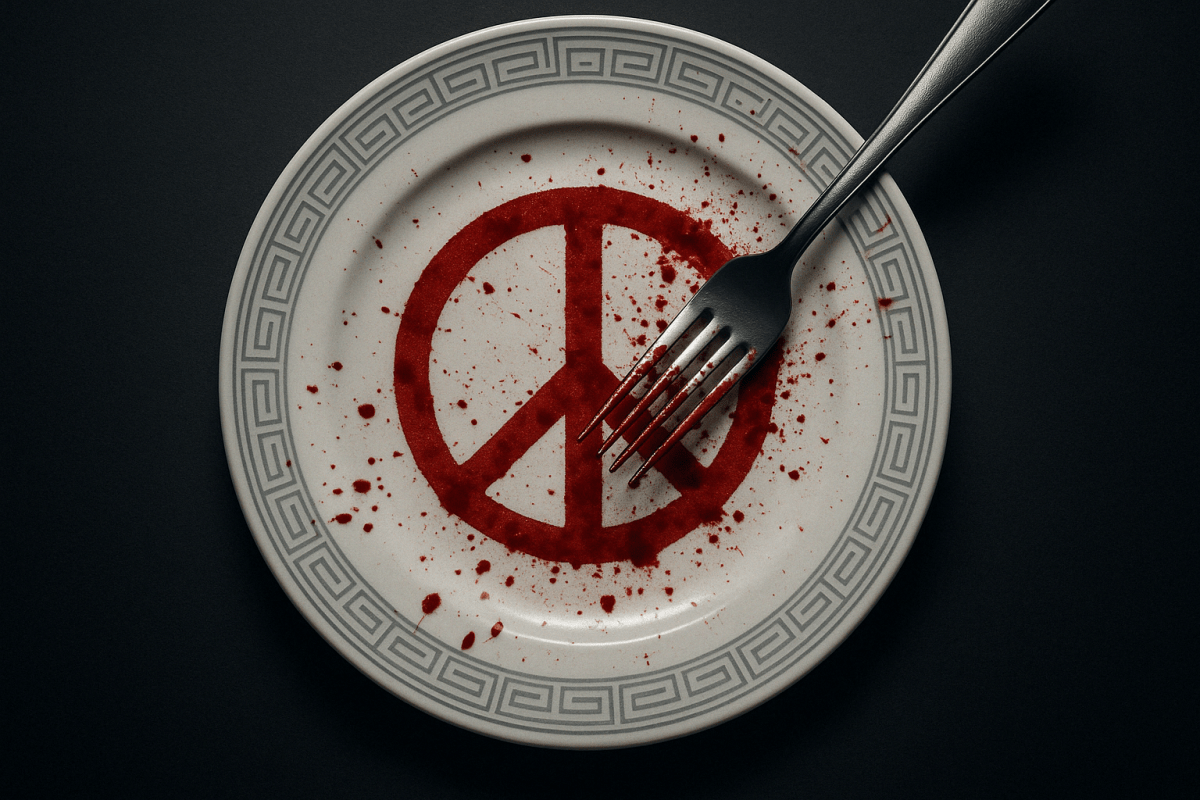
The Hunger Games doesn’t depict the death of morality — it’s a masterclass in how to twist it into a circus act.
Let us dispense with the hand-wringing. The Hunger Games is not a parable of moral decay. It is something far more chilling: a vivid portrait of moral engineering — the grotesque contortion of ethical instincts into instruments of domination and spectacle.
Those who bemoan the “decline of morality” in Panem have rather missed the point. There is no absence of morality in the Capitol — only a different version of it. A rebranded, corporatised, state-sanctioned morality, lacquered in lipstick and broadcast in 4K. It is not immorality that reigns, but a hyperactive ideological morality, designed to keep the masses docile and the elites draped in silk.
This is not moral entropy; it’s moral mutation.
Children are not slaughtered because people have forgotten right from wrong — they are slaughtered because a society has been trained to believe that this is what justice looks like. That blood is penance. That fear is unity. That watching it all unfold with a glass of champagne in hand is perfectly civilised behaviour.
This isn’t the death of morality. It’s a hostile takeover.
The Moral PR Machine
If morality is, as many of us suspect, relative — a cultural construct built on consensus, coercion, and convenience — then it can no more “decline” than fashion trends can rot. It simply shifts. One day, shoulder pads are in. The next, it’s child-on-child murder as prime-time entertainment.
In Panem, the moral compass has not vanished. It’s been forcibly recalibrated. Not by reason or revelation, but by propaganda and fear. The Games are moral theatre. A grim ritual, staged to remind the Districts who holds the reins, all under the nauseating guise of tradition, order, and justice.
The citizens of the Capitol aren’t monsters — they’re consumers. Trained to see horror as haute couture. To mistake power for virtue. To cheer while children are butchered, because that’s what everyone else is doing — and, crucially, because they’ve been taught it’s necessary. Necessary evils are the most seductive kind.
Katniss: Not a Saint, But a Saboteur
Enter Katniss Everdeen, not as the moral saviour but as the spanner in the machine. She doesn’t preach. She doesn’t have a grand theory of justice. What she has is visceral disgust — an animal revulsion at the machinery of the Games. Her rebellion is personal, tribal, and instinctive: protect her sister, survive, refuse to dance for their amusement.
She isn’t here to restore some lost golden age of decency. She’s here to tear down the current script and refuse to read her lines.
Her defiance is dangerous not because it’s moral in some abstract, universal sense — but because it disrupts the Capitol’s moral narrative. She refuses to be a pawn in their ethical pageant. She reclaims agency in a world that has commodified virtue and turned ethics into state theatre.
So, Has Morality Declined?
Only if you believe morality has a fixed address — some eternal North Star by which all human actions may be judged. But if, as postmodernity has rather insistently suggested, morality is a shifting social fiction — then Panem’s horror is not a fall from grace, but a recalibration of what counts as “grace” in the first place.
And that’s the real horror, isn’t it? Not that morality has collapsed — but that it still exists, and it likes what it sees.
Conclusion: The Real Hunger
The Hunger Games is not about a society starved of morality — it’s about a world gorging on it, cooked, seasoned, and served with a garnish of guiltless indulgence. It is moral appetite weaponised. Ethics as edict. Conscience as costume.
If you feel sickened by what you see in Panem, it’s not because morality has vanished.
It’s because it hasn’t.
 Philosophics
As a psychologist I would ask a 5 year old in a family what he/she would do if when walking home from school one day, alone and very much rushing to get home as you want to go to the toilet urgently and your favourite aunty is visiting or your favourite tv programme is on, and you come upon a a 3 year old who has fallen off her/his tricycle and is lying in the middle of the road, bleeding from the knees; what would you do? I have yet to meet a 5 year old who doesn’t recognise their moral obligation in that situation. What happens to you wanting to go to the toilet? “I’d poo my pants” or “In situations like that the urge goes away”
The ensuing conversation would be about the development of responsibility in the family – all through socratic questions – what age do you start doing chores? … Now for the hard question ‘When do kids start noticing jobs that need doing and without any parental prompting just do them?’ .. Many of these families would not give pocket money or pay for chores to be done – but allocated a portion of the families wealth to the children – which they were allowed to lobby “the government”…
With a combination of Levinas, Nietzsche, Wittgenstein, Deleuze, enactivism and Lao Tsu an intellectual justification can be given to responsibility – If these families had these conversation well before the children reaching the age of 10, they had no difficulties during the teen years – and they went on to have very successful adult careers
So I ask you – is morality an instinct and if it is how can it be suppressed…
LikeLiked by 1 person
I wouldn’t term morality as instinctual. Effectively, morality is prosocial (coöperative) behaviour. Rather than call morality an instinct, perhaps it’s better to describe it as an evolved capacity — a latent toolset of emotional heuristics, cognitive evaluations, and social narratives that, under the right symbolic conditions, blossom into conscience. But conscience itself is not guaranteed. It is culturally fertilised, linguistically shaped, and always fragile. You kill morality by redefining it.
The challenge is semantic. Typically, morality is a relative social construct. In this case, immorality would be defined as non-compliance with this standard, but what does suppression even mean in this context – the neurological cognitive processes predicating a moral reaction?
However, if we definite it subjectively instead, there is no way to escape morality. One’s subjective morality remains ineffable.
Last Word: I think it’s obvious that I believe morals are yet another human fiction. Beginning with the dorsolateral prefrontal cortex (DLPFC) — a region routinely implicated in moral decision-making. Stimulate it with transcranial magnetic stimulation (TMS), and voilà, you can temporarily tweak someone’s judgment about right and wrong. Not unlike updating the firmware on a robot — except the robot thinks it’s having a profound ethical epiphany. You’re not making a different choice because you believe something new. You’re making it because your brain’s moral calculus has been adjusted. It’s not that we don’t have values — it’s that values may be epiphenomena of brain states. The illusion of moral consistency may just be the mind’s way of narrativising the froth of competing circuits and chemicals.
LikeLike