The genesis of the Modernity Worldview Survey was Metamodernism. Is this still a thing? In recent years, metamodernism has emerged as a supposed successor to postmodernism, claiming to transcend the seemingly irreconcilable tensions between modernist sincerity and postmodern irony. Yet, upon closer examination, this framework reveals itself not as a genuine paradigm shift but rather as a modernist invention that fails to escape the very critiques it attempts to address.
Despite its claims of oscillation between poles, metamodernism betrays its modernist underpinnings through its implicit teleology and notion of progress. The very framing of “meta” as beyond or transcending suggests a linear progression that is fundamentally at odds with the postmodern rejection of grand narratives. Metamodernism positions itself as forward-moving whilst attempting to recapture elements of premodernity, revealing an anxiety about being perceived as regressive or naive.
Podcast: Audio version of this content
This desire to have it both ways—to acknowledge the constructed nature of meaning whilst still pursuing transcendent meaning—doesn’t represent a resolution so much as a psychological coping mechanism. The cognitive dissonance created by attempting to simultaneously hold contradictory positions is assuaged through a clever rhetorical move: claiming that oscillation itself is the point.
A Rebranding Exercise
What metamodernism presents as novel is ultimately a recombination of elements from premodern, modern, and postmodern frameworks without resolving their fundamental contradictions. Rather than being mutually exclusive from these earlier paradigms, it cherry-picks aspects of each whilst maintaining the basic ontological framework of modernism.
The notion that one can meaningfully “oscillate” between accepting objective and subjective realities is particularly problematic. Either reality has objective features, or it doesn’t—pretending otherwise doesn’t create a new philosophical paradigm but rather a convenient means of avoiding the implications of either position.
Postmodern Irony in Motion
Perhaps the most intriguing interpretation of metamodernism is not as a sincere attempt to move beyond postmodernism but as postmodernism performing its own critique. Viewed through this lens, metamodernism becomes postmodern irony in motion—a knowing wink at the impossibility of escaping construction whilst performatively engaging with the desire to do so.
The irony deepens when we consider that “postmodernism” itself is essentially an externally imposed label rather than a self-identification. Most thinkers characterised as postmodernists reject the label, which functions primarily as a modernist attempt to categorise and contain ideas that fundamentally challenge its frameworks.
Art vs. Philosophy
Where metamodernism succeeds is as a descriptive label for certain artistic and cultural productions that deliberately play in the space between irony and sincerity. Works like David Foster Wallace’s “Infinite Jest,” the television series “BoJack Horseman,” and Wes Anderson’s films effectively combine postmodern techniques with sincere emotional engagement.
However, what works as an artistic sensibility fails as a comprehensive philosophical framework or moral compass. The oscillation that enriches art becomes paralysing when applied to ethics or ontology. A moral framework requires some stable reference points; constantly shifting between believing in objective moral truths and viewing morality as entirely constructed provides no reliable guide for actual decision-making.
Insider vs. Outsider Perspectives
Like religious frameworks that balance literal and metaphorical interpretations, metamodernism may function as a lived experience for those who embrace it, even if it doesn’t hold up to external philosophical scrutiny. The cognitive manoeuvres that appear as tricks or inconsistencies to outsiders often feel like natural, intuitive ways of navigating complexity to those within the system.
This insider/outsider divide recalls Thomas Nagel’s famous “What Is It Like to Be a Bat?” (PDF) thought experiment—there may be experiential aspects of inhabiting a metamodern worldview that aren’t fully comprehensible from the outside. Yet this doesn’t invalidate external critique; inconsistencies and contradictions still matter philosophically.
Conclusion: Beyond Labels
Perhaps the most postmodern insight is recognising that we cannot escape having an ideology—even a position of having no ideology is itself an ideology. What distinguishes various approaches isn’t whether they have ideologies but how explicitly they acknowledge them, how consistently they apply them, and how willing they are to subject them to revision.
Metamodernism, for all its aspirations to transcend earlier frameworks, ultimately reveals more about our contemporary psychological condition than it offers as a coherent philosophical position. It captures our desire to maintain meaning in a world where we’ve recognised its contingency—a desire that may be fundamentally human, even if philosophically untenable.
Rather than seeking yet another “-ism” to resolve our existential and philosophical tensions, perhaps we might more honestly confront the limitations and partialities of all our frameworks, recognising that the search for a perfect synthesis may itself be a modernist fantasy.
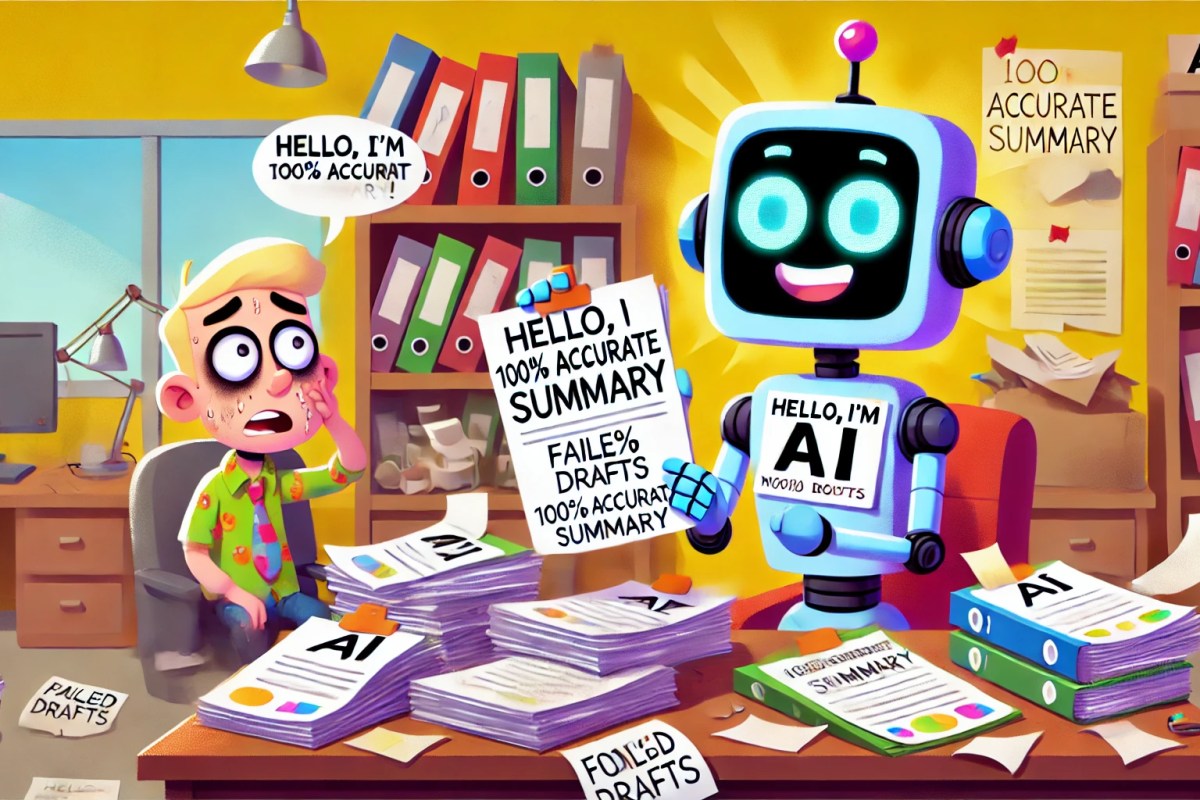
Generative AI (Gen AI) might seem like a technological marvel, a digital genie conjuring ideas, images, and even conversations on demand. It’s a brilliant tool, no question; I use it daily for images, videos, and writing, and overall, I’d call it a net benefit. But let’s not overlook the cracks in the gilded tech veneer. Gen AI comes with its fair share of downsides—some of which are as gaping as the Mariana Trench.
First, a quick word on preferences. Depending on the task at hand, I tend to use OpenAI’s ChatGPT, Anthropic’s Claude, and Perplexity.ai, with a particular focus on Google’s NotebookLM. For this piece, I’ll use NotebookLM as my example, but the broader discussion holds for all Gen AI tools.
Now, as someone who’s knee-deep in the intricacies of language, I’ve been drafting a piece supporting my Language Insufficiency Hypothesis. My hypothesis is simple enough: language, for all its wonders, is woefully insufficient when it comes to conveying the full spectrum of human experience, especially as concepts become abstract. Gen AI has become an informal editor and critic in my drafting process. I feed in bits and pieces, throw work-in-progress into the digital grinder, and sift through the feedback. Often, it’s insightful; occasionally, it’s a mess. And herein lies the rub: with Gen AI, one has to play babysitter, comparing outputs and sending responses back and forth among the tools to spot and correct errors. Like cross-examining witnesses, if you will.
But NotebookLM is different from the others. While it’s designed for summarisation, it goes beyond by offering podcasts—yes, podcasts—where it generates dialogue between two AI voices. You have some control over the direction of the conversation, but ultimately, the way it handles and interprets your input depends on internal mechanics you don’t see or control.
So, I put NotebookLM to the test with a draft of my paper on the Language Effectiveness-Complexity Gradient. The model I’m developing posits that as terminology becomes more complex, it also becomes less effective. Some concepts, the so-called “ineffables,” are essentially untranslatable, or at best, communicatively inefficient. Think of describing the precise shade of blue you can see but can’t quite capture in words—or, to borrow from Thomas Nagel, explaining “what it’s like to be a bat.” NotebookLM managed to grasp my model with impressive accuracy—up to a point. It scored between 80 to 100 percent on interpretations, but when it veered off course, it did so spectacularly.
For instance, in one podcast rendition, the AI’s male voice attempted to give an example of an “immediate,” a term I use to refer to raw, preverbal sensations like hunger or pain. Instead, it plucked an example from the ineffable end of the gradient, discussing the experience of qualia. The slip was obvious to me, but imagine this wasn’t my own work. Imagine instead a student relying on AI to summarise a complex text for a paper or exam. The error might go unnoticed, resulting in a flawed interpretation.
The risks don’t end there. Gen AI’s penchant for generating “creative” content is notorious among coders. Ask ChatGPT to whip up some code, and it’ll eagerly oblige—sometimes with disastrous results. I’ve used it for macros and simple snippets, and for the most part, it delivers, but I’m no coder. For professionals, it can and has produced buggy or invalid code, leading to all sorts of confusion and frustration.
Ultimately, these tools demand vigilance. If you’re asking Gen AI to help with homework, you might find it’s as reliable as a well-meaning but utterly clueless parent who’s keen to help but hasn’t cracked a textbook in years. And as we’ve all learned by now, well-meaning intentions rarely translate to accurate outcomes.
The takeaway? Use Gen AI as an aid, not a crutch. It’s a handy tool, but the moment you let it think for you, you’re on shaky ground. Keep it at arm’s length; like any assistant, it can take you far—just don’t ask it to lead.
Making video content for even the simplest of concepts is time-consuming, but I wanted to create some visual content. Even though this material is hardly controversial, I feel it is important to set the stage for more advanced conversations.
Video: Free Will Scepticism: Determinism, Indeterminism, and Luck
I am getting better at understanding how the video editor works, so subsequent videos should be of higher quality. As I use free repurposed video content, I am forced to accept what’s available. In plenty of cases, more apt content is available from Adobe or iStock, but I can’t justify purchasing content at this time—especially given that the channel isn’t even monetised. Patience.
Follows is the transcript I used as a guide.
Free Will Scepticism. Determinism, Indeterminism & Luck
[REDACTED]
In this segment of free will scepticism, I talk about what free will is, why it’s important, and why it creates challenges that lead to a debate that’s lasted millennia.
Once we’ve established a foundation, we’ll look at the nemesis of free will that is determinism and its attendant nuances—indeterminism and luck.
As we unravel this problem, we’ll evaluate the relationship between these and whether these competing concepts can coexist.
In future segments, I intend to dig deeper into the question of free will as it relates to human agency and moral responsibility.
Defining Free Will
A good starting point is to define our terms. As we’ll discover, a fundamental challenge in the free will debate is that there is no common, agreed-upon definition, so let’s at least put some on the table.
A quick Google search yields these two definitions.
the apparent human ability to freely and consciously make choices that are not externally determined
the doctrine that such human freedom of choice is not illusory Let’s break down the first one by touching on the terms. This is an ability. No controversy here. Choices are the focus of this ability, and this ability is limited to humans. Not everyone limits the notion of free will to humans. In general, the reason free will gets so much attention is in relation to moral choice. As we don’t generally impose morality on non-human animals, we can live with this for now.
Note that this definition concedes that this is just an apparent human ability. This is because some people believe that if free will exists at all, it is just an illusion.
This ability. I’ll drop the ‘apparent’ qualifier so I don’t come across like an attorney and their ‘alleged’ perpetrator. This ability needs to be made freely and consciously. Free means without restriction, and consciously means with conscious intent. The definition further qualifies the free and conscious choice-making by stating that these choices are not externally determined. A person cannot be under a spell, hypnotised, or driven by unconscious intents. We’ll eventually see that disagreement centres around each of these terms, freely, conscious, and externally determined.
Stanford Encyclopaedia of Philosophy, an excellent online resource, defines free will as ‘a philosophical term of art for a particular sort of capacity of rational agents to choose a course of action from among various alternatives’. The ability to freely make choices is a common thread for all of these.
Another way to think about free will is to ask if you could have chosen otherwise. This is a thought experiment, and we’ll spend more time on this later. If you could turn back the clock and rerun the scenario, could you have chosen otherwise. As Jerry Coyne put it, ‘if you could rerun the tape of your life up to the moment you make a choice, with every aspect of the universe configured identically, free will means that your choice could have been different’. Let’s work through a simple scenario with no moral implications. All of the events of your life have led up to this moment. A server asks, tea or coffee. You choose tea. Black or lemon—or cream? Let’s not get ahead of ourselves. Let’s re-run the scenario. Everything leading up to this server asking for your order is the same—the same seat at the same table, in the same restaurant, the same server. Even the same jelly stain on the curtain and the same blue Buick parked outside your window. And the same parent trying to quiet her unruly child. You get the idea. Everything until now has played out the same. Last time you ordered tea. Do you possess the free will to order coffee this time around? We don’t need to answer this question quite yet. Keep whatever idea you have and we can compare it against the competing perspectives.
You might be thinking, so what? Who cares? Why is free will so important?
Free will is not just some abstract philosophical concept. Philosophy gets accused of pondering topics with no application in the real world. What is the sound of one hand clapping sort of fare.
Free will is at the centre of human agency and autonomy. The only reason it makes sense to praise or blame someone is because they could have done otherwise. We might praise a robot that was programmed to rescue people from fires. Even if we marvelled at the achievement of the robot, we’d more likely praise the programmer or the operator over the robot.
Likely more important than praise is blame. Humans’ propensity for blame could be its own series, so let’s just consider the notion idiomatically. If a person is remotely controlling a robot and steers it into your table, spilling your tea, you may be miffed at the robot, but your blame will be aimed at the one who’s holding the remote controller.
After blame comes punishment, or reward in the case of praise. This is another subdiscipline in its own right, so let’s continue.
Many people just presume that free will exists, so where are the challenges? First, the definition of free will is unstable, and it has drifted over time. Sometimes this has been innocent enough whilst at other times the definition has been amended to suit an argument. Sort of moving the goal posts. So, there’s no standard definition. This means that I can accept the notion under one definition and reject it under another. This hardly makes for fruitful debate.
Related to these first two is that for some people, the concept is reduced to something so narrow, so laser-focused, that it doesn’t seem to matter in the real world. Daniel Dennett has said that he’d be willing to concede that one doesn’t have free will except in matters of decisions in the order of ‘one cube of sugar or two in your tea’ or ‘taking the lavender blouse over the lilac one’. If you contend that this is the limiting boundary for free will, sure. You’ve got free will, for what it’s worth.
Still others say that free will is nothing more than an illusion. That a person perceives having free will is akin to perceiving that the sun rises in the East. We know this not to be true, and yet it appears to be true. We even commit this faulty observation to language, and it’s difficult not to envisage it differently.
The strongest position against free will comes from the Impossibilists, who hold unsurprisingly, the belief that free will is impossible given what we know about physical laws and the universe. Galen Strawson is likely the most notable of these people.
Determinism
Contrary to free will is Determinism. Defined, Determinism is the doctrine that all events, including human action, are ultimately determined by causes external to the will.
Ostensibly, this is a strong belief in cause and effect. That every event is caused by a prior event. The implication is that if one were to turn back time to the Big Bang and let history run again, everything down to the smallest atomic movement would run the same course of events. Absolutely nothing would change. This includes any thoughts and decisions. Unchanged.
Given this worldview, some philosophers have taken determinism to imply that individual human beings have no free will and cannot be held morally responsible for their actions.
Without going too deep, Determinism can be a view adopted from a sectarian or secular perspective. The sectarian narrative is that God created the natural laws and set the universe in motion. The secular vantage is that there are physical laws, and the big bang set the universe in motion. These days, not many people hold this view. Indeterminism is the reason.
Indeterminism
Indeterminism is another idea cursed with multiple definitions. The name originated as a counterargument to Determinism, hence the ‘in‘ prefix in the name. Not determinism. Indeterminism says that deliberate choice and actions are not determined by or predictable from antecedent causes, or that although there may be deterministic behaviours in the universe, not every event has a cause.
I’d like to qualify ‘not every event has a cause’ to ‘not every event has a known cause’ or some events have probabilistic causes, hence indeterminate. There is a bit of overlap here with the notion of luck, and we’ll get to that presently.
Our knowledge of physics and the advent of quantum mechanics has put hard determinism out of favour. As we saw, under strict determinism, if we turned back time, the future would always unfold identically. Think of this as a film strip or a video. No matter how many times you replay it the events manifest the same way. You can warn the camper not to go down into the cellar alone, but every time, she will. You can almost think of this as a sort of fate, although one must be careful to note that rewinding and replaying to the parts we’ve already seen does not mean that we can predict what we haven’t.
Quantum physics notes that there are many events that are stochastic or probabilistic. So even if you rewound and played it again, it would be like the girl flipping a coin before opening the cellar door—or I suppose the director. Heads, she goes down. Tails, she remains up, or she gets a friend.
The less strict version of Indeterminism doesn’t say that nothing is determined. Rather, that there are enough probabilistic events that we can’t claim to know what’s going to happen next.
Luck
Then there’s luck. Luck is also indeterministic, but it tries to clarify some cases. By definition, luck is success or failure apparently brought by chance rather than through one’s own actions. If you flip a fair coin or throw a fair die or pull the handle on a slot machine, you may win or lose, but this outcome had nothing to do with you except that you were there at that moment. But there is more to it than this because a strict Determinist might claim that the outcome was determined by the state of molecules in history, that if you reran history, it would unfold the same way.
Apart from the luck that we tend to think of in gambling—good luck and bad—, there is the notion of moral luck, that is treating people as objects of moral judgement even when what they do depends on factors out of their control.
Not all luck is created equal, so let’s look at the various flavours of luck. Most of these were articulated by Thomas Nagel.
Resultant Luck
Resultant luck is the way things turn out. This notion evaluates luck in reverse. It involves what is known as survivorship bias.
I’ll share a true story. An acquaintance of mine got married and took a honeymoon in Jamaica. On holiday, the couple ate some seafood. His wife became sick and was hospitalised. There she died. One can imagine a story with a happier ending, where the couple took holiday and won a large cash prize in a casino, again a situation that could not have happened unless they had happened to be there. In the first case, one might say she had bad luck. In the second case, her luck was good.
Circumstantial Luck
Circumstantial luck is the circumstance one finds oneself in. You had no control over how you got to a certain place, but because you got there, you are faced with a choice. The gist of this is that the choice would not have been given, so you would never have made it.
Perhaps, expecting you to be out, a burglar enters your home one evening and you confront him and he shoots you (or you shoot him; it doesn’t matter). Maybe you were driving to someplace and another vehicle crashes into yours, totalling it. This is circumstantial. You had no intention of getting into an accident. Had you not been driving, this could not have happened. Perhaps, because of the accident, you won a lawsuit that yielded you a lot of money; perhaps, your back was irreparably damaged. Circumstantial luck.
Constitutive Luck
Constitutive luck relates to who one is or their traits and dispositions. Think of this as character. Some people are ‘born’ with a persuasive disposition. Some are born to excel at football or maths. Some are The Rain Man. This is the genetic lottery. Perhaps you want to be a famous singer. Only you can’t sing. And maybe you can sing, but you lack charisma.
Billionaire Warren Buffett readily concedes that he would not likely be a billionaire if he happened to be born in India rather than the United States. This is constitutive luck.
Present Luck
Present luck is about luck at or around the moment of a putatively free action or decision point. This is a term used by Levy, borrowed from Mele. At any point in time, you are who you are and where you are as a matter of luck. You were born in a place at a time in history into a family. Heidegger called this ‘thrownness’. A person is thrown into this world and has to survive or not on their own terms. In any case, this family moulded you and schooled you with whatever constraints that they may have had: money, class, access, location. All the usual suspects. You interacted with the kids who were available. You got whatever teachers you got, and on and on. I think you get it. None of this is within your control. Examples I think of are musical acts, bands like The Beatles, Korn, U2, and so many others that are comprised entirely or largely of friends. They just happened to be born in the same general time and vicinity. I imagine if either of these were different, they wouldn’t have manifested the same way. Imagine Mozart being born in the 21st century. Perhaps he’d be a YouTube star. Who knows?
Causal Luck
Causal luck is how one is determined by antecedent circumstances. This is the type of luck most closely aligned with free will and determinism. Simply put, it says that everything that preceded you is outside of your control as is everything leading up to what you have become. Causal luck is about the directional relationship between cause and effect.
For the record, some view causal luck as redundant to the combination of constitutive and circumstantial luck. I think that’s a fair charge, but let’s continue and see how these concepts play together.
At the highest level, there are two competing perspectives. Free will and determinism are either incompatible or compatible. Let’s begin with incompatibilism.
Incompatibilism
As it would seem, this view holds that free will and determinism are mutually exclusive. This holds for indeterminism as well. One cannot simultaneously hold the view that everything is determined, and that one can still manage to have free will in this determined universe.
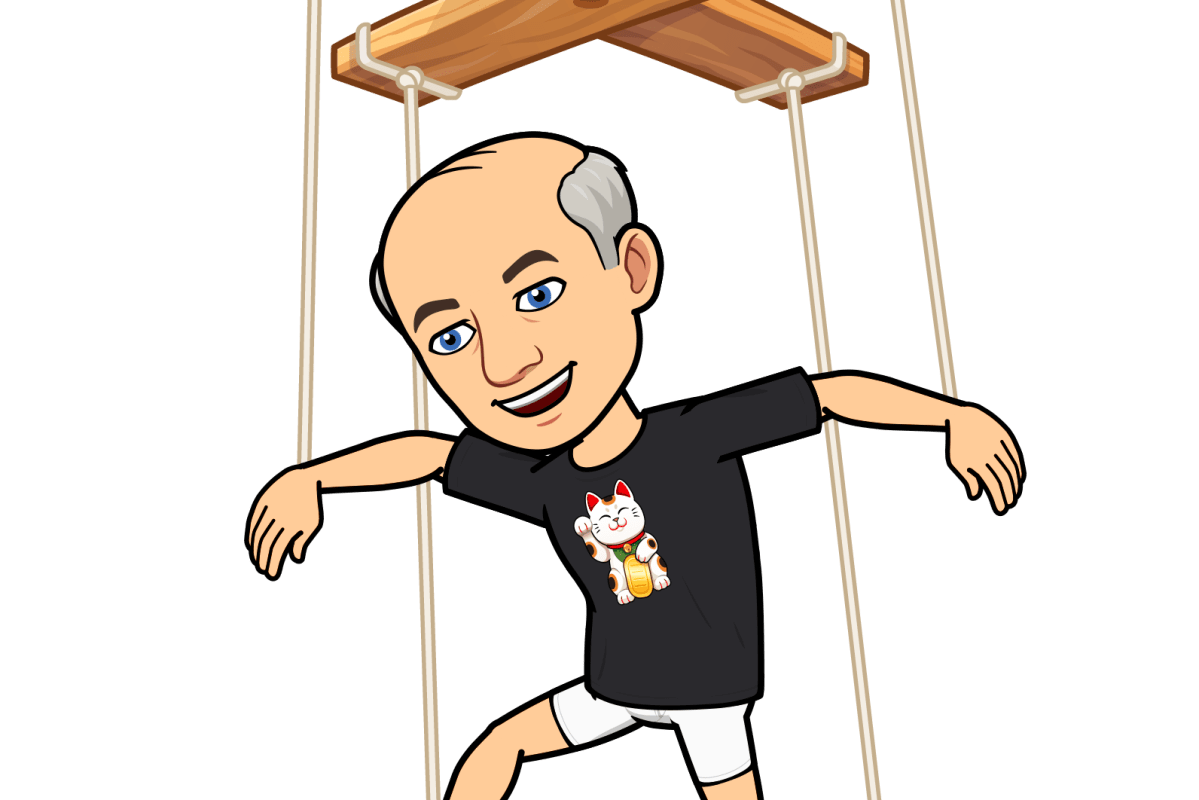
A puppet is free as long as he loves his strings
SAM HARRIS
Sam Harris famously wrote, ‘a puppet is free as long as he loves his strings’. Harris is a neuroscientist and free will sceptic, who believes that free will is an illusion. And I was determined to not let this image go to waste.
Compatibilism
Finally, we have compatibilism, where the belief is that free will and determinism can coexist—and do. There are two basic reasons this might be possible: metaphysics or emergence.
Metaphysics
I’ll let you know that I find the metaphysical argument to be weak tea. The argument is that maybe there is a god or something not bound by the constraints of our universe, who can put ideas into your brain, thus manipulating your decision. You were going to order tea, but this intervention led you to order coffee. I think that this perspective falls on its face right out of the gate. If some force is controlling you, the resulting actions may not have been predictably determined, but neither are they caused by you. In this scenario, this force might as well be the person controlling the robot to spill your tea.
Emergence
Then there’s emergence. Quickly, emergence is the notion that one can combine two or more elements with the outcome being a substance with different ‘emergent’ properties. An example most people are familiar with is the combining of hydrogen and oxygen to produce water. Two Hs plus an O creates H20. Hydrogen and Oxygen are both gasses, but water is a liquid with a further emergent property of being wet.
The argument is that this free will occurs independently of all the inputs and processes. If this were true, then free will and determinism could coexist. There is no evidence of this, and I’ll just leave it here. I intend to add to this by reviewing articles for and against free will and the compatibilist position.
Do you believe you have free will? If so, why. Are you a determinist or an indeterminist? Are you a compatibilist or an incompatibilist?


 Philosophics