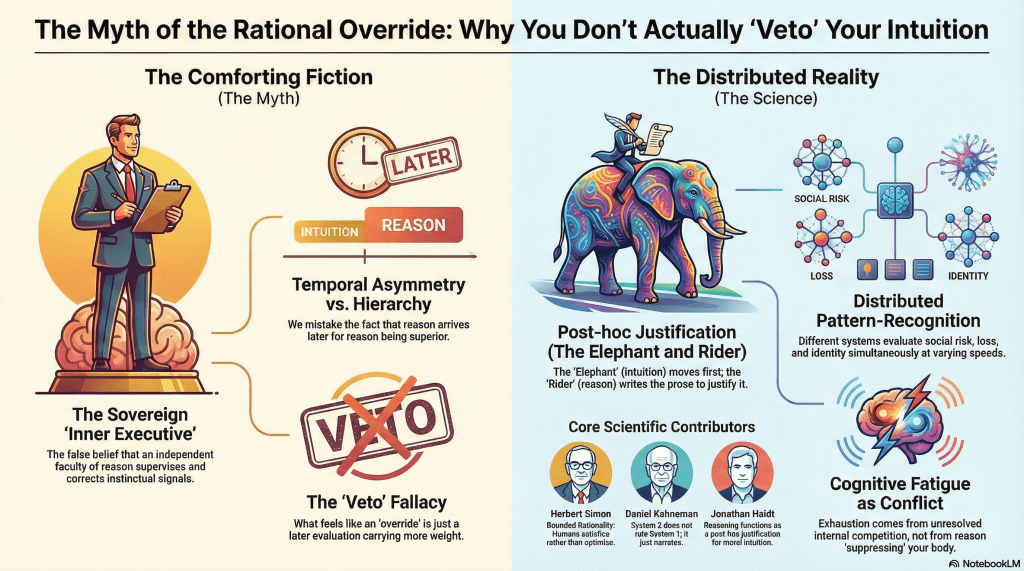
The Great Substitution: From Metaphysics to Metaphysics

1–2 minutes

(Now archived on Zenodo and PhilPapers)

Video: “Maintenance” Midjourney render of the cover image for no reason in particular.

As many have been before me, I find metaphysical claims to be incredulous. I read these people tear down edifices, yet they seem to have a habit of replacing one for another – as if renaming it makes it disappear. Perhaps Lacan would be curious how this persists at this stage of our supposed development.

Audio: NotebookLM podcast discussing the underlying essay, The Great Substitution: From Metaphysics to Metaphysics

Because of this, I performed a survey – and then a genealogy – to trace the history of substitution. It began as a side note in The Discipline of Dis-Integration, but the pattern grew too large to ignore. Every time someone proclaims the end of metaphysics, a new one quietly takes its place. Theology becomes Reason. Reason becomes History. History becomes Structure. Structure becomes Data. The names change; the grammar doesn’t.

This essay, The Great Substitution: From Metaphysics to Metaphysics, tracks that recursion. It argues that modern thought has never killed its gods – it has merely rebranded them. Kant, Nietzsche, Heidegger, Derrida, Harari – each announced emancipation, and each built a new altar. We like to imagine that progress freed us from metaphysics, but what it really did was automate it. The temples are gone, but the servers hum.

The argument unfolds across ten short sections: from the limits of knowing, through the linguistic machinery of belief, to the modern cults of scientism, economics, psychology, and dataism. The closing sections introduce Dis-Integration – not a cure but a posture. Maintenance, not mastery. Thinking without kneeling.

If the Enlightenment promised illumination, we’ve spent the past three centuries staring directly into the light and calling it truth. This essay is my attempt to look away long enough to see what the glare has been hiding.

The Great Substitution: From Metaphysics to Metaphysics

A part of the Anti-Enlightenment Project corpus. More here.

The full text is archived here:

šŸ“„ Zenodo DOI: https://doi.org/10.5281/zenodo.17576457
šŸ“˜ PhilPapers entry: Under review

The Seduction of the Spreadsheet

1–2 minutes

Whilst researching ā€œThe Will to Be Ruled: Totalitarianism and the Fantasy of Freedomā€, I stumbled across Mattias Desmet’s The Psychology of Totalitarianism. The title alone was bait enough. I expected the usual reheated liberal anxiety about dictators; instead, I found a critique of data worship and mechanistic reason that hits the nerve of our statistical age.

Besmet, a Belgian psychologist with a background in statistics, begins not with tyranny but with epistemology – with how the Enlightenment’s dream of objectivity curdled into the managerial nightmare we now inhabit. The first half of the book reads like a slow unmasking of Scientism: how numbers became our gods, and graphs, our catechisms.

Written before COVID-19 but finished during it, his argument turns pandemic data into theatre – a performance of certainty masking deep confusion. The daily tally became ritual sacrifice to the idol of ‘evidence-based’ policy. His point, and mine, is that totalitarianism no longer needs gulags; it thrives in dashboards and KPIs.

Desmet’s frame intersects beautifully with my own thesis: that obedience today is internalised as reasonableness. Freedom has been recast as compliance with ‘the data’. We surrender willingly, provided the orders come in statistical form.

This is why even Agileā„¢ management and its fetish of ‘velocity’ reek of the same mechanistic faith. Every sprint promises deliverance through quantification; every retrospective is a bureaucratic confession of inefficiency. The cult of metrics is not merely a managerial fad – it is the metaphysics of our time. The problem is at once ontological and epistemological: we mistake the measure for the thing itself, and in doing so, become measurable.

It’s a rare pleasure to encounter a fellow dissident of the numerical faith – a man who sees that the spreadsheet has replaced the sceptre.

What’s Missing? Trust or Influence

Post-COVID, we’re told trust in science is eroding. But perhaps the real autopsy should be performed on the institution of public discourse itself.

Since the COVID-19 crisis detonated across our global stage—part plague, part PR disaster—the phrase ā€œtrust in scienceā€ has become the most abused slogan since ā€œthoughts and prayers.ā€ Every public official with a podium and a pulse declared they were ā€œfollowing the science,ā€ as if ā€œscienceā€ were a kindly oracle whispering unambiguous truths into the ears of the righteous. But what happened when those pronouncements proved contradictory, politically convenient, or flat-out wrong? Was it science that failed, or was it simply a hostage to an incoherent performance of authority?

Audio: NotebookLM podcast discussing this topic.

Two recent Nature pieces dig into the supposed ā€œdeclineā€ of scientific credibility in the post-pandemic world, offering the expected hand-wringing about public opinion and populist mistrust. But let’s not be so credulous. This isn’t merely a crisis of trust—it’s a crisis of theatre.

ā€œThe Scienceā€ as Ventriloquism

Let’s begin by skewering the central absurdity: there is no such thing as ā€œThe Science.ā€ Science is not a monolith. It’s not a holy writ passed down by lab-coated Levites. It’s a process—a messy, iterative, and perpetually provisional mode of inquiry. But during the pandemic, politicians, pundits, and even some scientists began to weaponise the term, turning it into a rhetorical cudgel. ā€œThe Science saysā€ became code for ā€œshut up and comply.ā€ Any dissent—even from within the scientific community—was cast as heresy. Galileo would be proud.

In Nature Human Behaviour paper (van der Linden et al., 2025) identifies four archetypes of distrust: distrust in the message, the messenger, the medium, and the motivation. What they fail to ask is: what if all four were compromised simultaneously? What if the medium (mainstream media) served more as a stenographer to power than a check upon it? What if the message was oversimplified into PR slogans, the messengers were party apparatchiks in lab coats, and the motivations were opaque at best?

Trust didn’t just erode. It was actively incinerated in a bonfire of institutional vanity.

A Crisis of Influence, Not Integrity

The second Nature commentary (2025) wrings its hands over ā€œwhy trust in science is declining,ā€ as if the populace has suddenly turned flat-Earth overnight. But the real story isn’t a decline in trust per se; it’s a redistribution of epistemic authority. Scientists no longer have the stage to themselves. Influencers, conspiracy theorists, rogue PhDs, and yes—exhausted citizens armed with Wi-Fi and anxiety—have joined the fray.

Science hasn’t lost truth—it’s lost control. And frankly, perhaps it shouldn’t have had that control in the first place. Democracy is messy. Information democracies doubly so. And in that mess, the epistemic pedestal of elite scientific consensus was bound to topple—especially when its public face was filtered through press conferences, inconsistent policies, and authoritarian instincts.

Technocracy’s Fatal Hubris

What we saw wasn’t science failing—it was technocracy failing in real time, trying to manage public behaviour with a veneer of empirical certainty. But when predictions shifted, guidelines reversed, and public health policy began to resemble a mood ring, the lay public was expected to pretend nothing happened. Orwell would have a field day.

This wasn’t a failure of scientific method. It was a failure of scientific messaging—an inability (or unwillingness) to communicate uncertainty, probability, and risk in adult terms. Instead, the public was infantilised. And then pathologised for rebelling.

Toward a Post-Scientistic Public Sphere

So where does that leave us? Perhaps we need to kill the idol of ā€œThe Scienceā€ to resurrect a more mature relationship with scientific discourse—one that tolerates ambiguity, embraces dissent, and admits when the data isn’t in. Science, done properly, is the art of saying ā€œwe don’t know… yet.ā€

The pandemic didn’t erode trust in science. It exposed how fragile our institutional credibility scaffolding really is—how easily truth is blurred when science is fed through the meat grinder of media, politics, and fear.

The answer isn’t more science communication—it’s less scientism, more honesty, and above all, fewer bureaucrats playing ventriloquist with the language of discovery.

Conclusion

Trust in science isn’t dead. But trust in those who claim to speak for science? That’s another matter. Perhaps it’s time to separate the two.

The Matter with Things: Chapter Eleven Summary:Ā Science’s Claims on Truth

Chapter eleven is the first of three chapters discussing truth from the perspective of science. These chapters are followed by truth as seen from other perspectives, namely, reason and intuition.

Check out the table of contents for this series of summaries. I continue to render interstitial commentaries in grey boxes with red text, so the reader can skip over and just focus on the chapter summary.

The author posits that in the West, most of us trust science to deliver the truth of the matter, as “science alone holds out the promise of stable knowledge on which we can rely to build our picture of the world“. He admits that it does have value, but it has inherent limitations and yet draws us in like moths to a flame. Here, he distinguishes between the discipline and practice of science and Scientism as it is practised by laypeople. Science understands its place and domain boundaries. Scientism is omnipotent with delusions of grandeur that will never be realised.

Some philosophically naĆÆve individuals become very exercised if they sense that the status of science as sole purveyor of truth is challenged

— Iain McGilchrist, The Matter with Things, chapter 10

Politicians who promote science as a bully pulpit prey on the public in a manner similar to bludgeoning them with religious notions.

Science is heavily dependent on the exercise of what the left hemisphere offers.

ibid.

The point the book makes is that like the turtles that go all the way down, science doesn’t have a grasp on what’s beyond the last turtle. Like trying to answer the toddler who can ask an infinite number of ‘why‘ questions, the scientist gets to a point of replying ‘that’s just the way things are’, or the equivalent of ‘it’s bedtime’.

Scientific models are simply extended metaphors. A challenge arises when a model seems to be a good fit and we forget about alternative possibilities getting locked into Maslow’s law of the instrument problem, where ‘to a man with a hammer, everything begins to look like a nail’. Moreover, the left hemisphere is fixated on instrumentation, so it’s always trying to presume a purpose behind everything. Nothing can just be.

This is likely where Scientism begins to trump science.

He quotes:

Dogmatism inevitably obscures the nature of truth.

— Alfred Whitehead

McGilchrist points out that a goal or promise of science is to be objective and take the subject out of the picture. Unfortunately, this is not possible as the necessity for metaphor ensures we cannot be extricated. Objectivity is legerdemain. We create a scenario and claim it to be objective, but there is always some subject even if unstated. He goes into length illuminating with historical characters.

The sciences do not try to explain, they hardly even try to interpret, they mainly make models … The justification of such a mathematical construct is solely and precisely that it is expected to work.

— John von Neumann

In fact, science itself is predicated on assumptions that have not and can not be validated through science.

In conclusion, McGilchrists wants to emphasise ‘that just because what we rightly take to be scientific truths are not ā€˜objective’ in the sense that nothing human, contingent and fallible enters into them, this does not mean they have no legitimate claim to be called true.’ ‘The scientific process cannot be free from assumptions, or values.’

Following this chapter are several pages containing dozens of plates of images.

Peer Review Poo

I’ve been a longstanding fan of science. I’ve never been a fan of Scientismā„¢, which is the dogmatic belief that science is the gate to all knowledge and that the discipline is incorruptible. I’ve even complained in the past about the self-correcting aspect that has sometimes taken centuries and millennia.

In the case of the article that spawned this post, peer review has always felt a bit specious to me. Just getting picked to get into the review queue is political at the start, and few people are actually equipped to perform the review with any material degree of diligence.

Science being peer-reviewed was like a knee-jerk credibility play. Of course, this also reeked of the police department or CIA reviewing their own misdeeds. On the other hand, who else is going to review it? The problem is there is no downside for the shoddy reviewer. There might be three referees who review your work and provide commentary—and so what if they miss some things?

As shoddy as soft sciences are, even hard sciences had reproducibility challenges—and that’s if the domain is reproducible. Models about climate change are not exactly suitable for laboratory reproduction.

Science is getting less and less credible these days. Besides being coopted by moneyed interests, you’ve got the politicos subverting it for their own purposes. Of course, the mismanagement and propagandising of the Covid debacle is still a fresh wound. And as we watch many of the conspiracy claims being shown to be correct and the official message shown to be wrong and intentionally disinformative, it’s hard not to become a jaded cynic. What’s a sceptic to do?

Seven Types of Atheism

Some geezer, John Gray, wrote a book having this title. It was, let us say, ‘suggested’ that I watch it in video format—over an hour-long at that. I decided to search for a summary instead.

It’s not particularly up my street. The bloke who suggested the vid posted a statement:

Atheism is a narcissistic apostasy; the adoration of the things humans do & make; the worship of the golden calves of science & technology.

When I responded thusly Ā« This quip reduced and conflates, almost creating a strawman. I suppose some atheists might be narcissists, though I don’t see that they would significantly differ from a sample of the general population. I’m guessing the second clause is intended to connect from the first, which is to claim that an atheist is a human who chooses STEM over gods as if there are no other alternatives, which creates a false dichotomy. But to treat atheism as some monolith is to treat all religions as ostensibly identical Ā», his response was

What is atheism?.

To which I replied, Ā« Atheism is the absence of belief in gods (or supernatural beings, if that’s a more generalisable concept). Ā»

well, that is not enlightening at all. Explain atheism clearly.

That is all there is to it. There are different reasons why people are atheists, but that’s the definition. Etymologically, ‘theism’ is ‘belief in a deity or deities’. Atheism, applying the Greek prefix ‘a-‘, is the negative state of ‘theism, so the absence of ‘belief in a deity or deities’.

Atheism is not science. A large number of scientists believe in God. They see no contradiction between God and science, in fact they find the order behind everything reinforces their belief.

And so here the conversation, as it was, went off the rails. At no point did I invoke science. And then he promotes the John Gray video.

Interview with John Gray on Does God Exist

And we’ve been there before.

  1. New Atheism: the debate between science and religion was a result of confusing myths with theories. Religion is no more a primitive type of science than is art or poetry; scientific inquiry answers a demand for an explanation; the practice of religion expresses a need for meaning.
  2. Secular Humanism: a hollowed-out version of the Christian belief in salvation in history; the widespread belief that humans are gradually improving is the central article of faith of modern humanism
  3. Science-Religion: Gray reflects on the twentieth century’s strange faith in science – a faith that produced the false equation of evolution with progress and the racist ideologies that infect our social arrangements and political institutions
  4. Political Religion: Modern political ideologies are de facto religions; the belief that we live in a secular age is an illusion
  5. God-hatred: absorbed by the problem of evil; suffering, if inevitable, is at least infused with moral significance
  6. The Unsentimental Atheisms of George Santayana and Joseph Conrad: Santayana dismisses any idea that civilization is improving; everything in this world is a progress towards death. Conrad wrote that man is a wicked animal; his wickedness has to be organized; society is essentially criminal – otherwise, it would not exist
  7. Mystical Atheism: Schopenhauer was deeply and articulately antagonistic to religion in general; he rejects the notion that history has any metaphysical meaning, or that human beings are somehow advancing

Disclaimer 1: This summary list is copy-pasted from the linked source and edited ever so slightly to fit here.

Disclaimer 2: Neither did I watch the video nor read his book, so the summary might be off-kilter.

Still, I offer my reaction/reflection.

Firstly, this comes off not as an attack on atheism; rather, it’s an attack more particularly on Enlightenment and post-Enlightenment thinkers, predominantly Scientists—as in those who practice Scientism religiously.

Secondly, this limited attack garners the same critique as I give Dawkins’ God Delusion. I liked this book, but whereas Gray limits his attack on a thin slice of atheists—despite offering up 7 flavours—, Dawkins limits his attack to Christians; perhaps, some Abrahamic denominations. This is a particular God and particular disciples.

I address these in turn.

  1. New Atheism: I agree that Scientism simply switched faith from God to Science or it deified Science, whichever vantage you prefer. This ilk simply swapped God for Naturalism. These are the same lot who offer up ‘Self-evident truths’ and Natural Law. Please. I agree with neither.
  2. Secular Humanism: Whilst admittedly secular, I am not quite a Humanist and decidedly not a Secular Humanistā„¢. Here, I disagree with the underlying teleological notion of both.
  3. Science-Religion: The only nod I am willing to give to science is the evidence-based, falsifiability over faith, but much of science is still faith-based. It just operates from a different metanarrative. Again, Scientism is no one’s friend.
  4. Political Religion: I agree that this is as much a scourge as organised religion. By now, one might notice a trend—a healthy does of whataboutism: We can’t suck because we’re no different to this other thing that you might be attached to. Except they are all bollox through and through. Political ideology is religion without the blatant metaphysical nod—though it is still there beneath the surface.
  5. God-hatred: Even having not read the book, this makes no sense whatsoever. How can one hate what one doesn’t believe exists? I suppose I could hate unicorns, faeries, and Harry Potter, but I don’t think that’s the same thing. The summary suggests that it’s more about an obsession with evil, but I don’t have enough context to respond meaningfully. Do atheists actually believe in evil? I don’t. And, except idiomatically, I don’t personally know of others who do. Feels like a red herring.
  6. Unsentimental Atheisms: Satayana refutes the Secular Humanists. I’m buying what he’s selling. Conrad is taking a spin on evil but opting to label it wicked—a bit of a drama llama. I’m not buying it.
  7. Mystical Atheism: I like Schopenhauer—probably because he’s such an underdog. He did glean a bit from Buddhist philosophy. So have I. But Buddhism ranges from the secular to the sacred. I don’t tend to stray too far from the secular. I fully agree that history has no metaphysical meaning and human beings are not objectively advancing.

If anything, this is one of the longer posts I’ve made in a while. Thanks to the Copy-Paste Gods. Allahu Akbar, Oh Mighty. In the end, Santayana and Schopenhauer notwithstanding, I am still left with a why not neither.

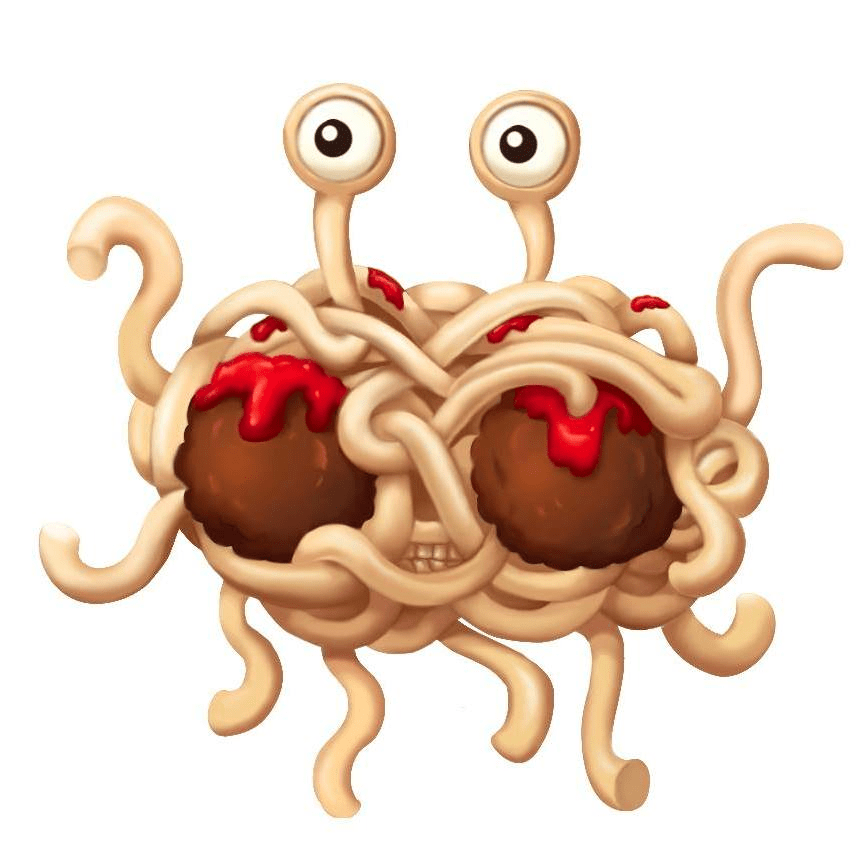
FSM

The Rhetoric of Truth

I’ve shared a new video on YouTube discussing the rhetorical nature of truth.

Before the Classical Hellenes, Mesopotamians recognised the power of rhetoric as the art of using language to convince or persuade.
The term itself derives from the Greek įæ„Ī·Ļ„ĪæĻĪ¹ĪŗĻŒĻ‚, rhētorikós.

As with any human construct such as language, truth and rhetoric are confined by limitations of the system and its logical structure.

In “Gorgias”, one of his Socratic Dialogues, Plato defines rhetoric as the persuasion of ignorant masses within the courts and assemblies.

Rhetoric, in Plato’s opinion, is merely a form of flattery and functions similarly to cookery, which masks the undesirability of unhealthy food by making it taste good.

Rhetoric typically provides heuristics for understanding, discovering, and developing arguments for particular situations, such as Aristotle’s three persuasive audience appeals: logos, pathos, and ethos.

But it’s more insidious than all of this. The notion of truth—or whatever we believe to be true—is nothing more than rhetoric.

If one is aptly convinced that something is true, it is. The physical world—the world of objects—contains facts—attributes of these objects, but these facts are tautological descriptors: a red car, une voiture rouge, ou quelque chose. In the conceptual domain of abstractions such as truth, justice, gods, and love, all bets are off.

As Geuss aptly suggests, most of society and civilisation don’t care about philosophical thought at this level. This is privileged activity. It’s not about level of intellect, per se; rather, it’s the privilege of free time to devote to abstract thinking.

Most people are more concerned with getting to the next day to earn a paycheque, and they accept sloganeering for any deeper meaning.

Humans are said to be rational beings. In fact, this predicates entire disciplines such as economics…

…and jurisprudence. Legal systems are founded on the concept that humans are at least rational enough to make fundamental decisions about right and wrong—and this, of course, presumes that the notions of right and wrong in and of themselves are meaningful.

For the sake of argument, let’s presume that humans are at least rational enough for our purposes, and whilst right and wrong may not be objectively validated, that within the context of a society—presuming that not to be mired in its own identity problem—, it can be defined in the manner of a social compact envisaged by the likes of Hobbes, Locke, Rousseau, et alii. As the saying goes, ā€˜if it’s good enough for the government… well.

Language is a human construct, yet it’s an apparition. Like a physical object, it appears solid, but there’s more space than not. What’s there is exiguous. Echoing Heisenberg’s observations at the atomic level, one cannot be fully certain of a particular meaning. This is what Derrida (via Barthes) meant by ā€˜the death of the author’, though there is nothing to guarantee that the author could fully articulate the meaning or intent even if they were present to defend it.

About the same time, Saussure was finding promise in the structure of language, Russell was creating a new language of logic to obviate its deficiencies. Structuralists and logical positivists were a natural extension of the scientism of the 20th Century, the prevailing wave since the Enlightenment, but as with the demise of gods, religious belief, and other things metaphysical, this faith in structure was also specious.

Historically speaking, there is progress (another illusion), and there are paradigm shifts. When a paradigm shifts, an old truth is replaced by a new one. This is typically credited to a progression of knowledge, but it’s actually just that, on balance, people have accepted a new frame, chalking it up to scientific method rather than some rhetorical sleight of hand.

Even so, scientific discovery is different to archetypal notions such as truth or justice. At least we can empirically test and verify a scientific notion, even if what we are observing is later revised because of some previously unknown factor or removed constraint. For example, until Einstein’s day, Newton would not have known that his theory of gravity would break down as it approached the speed of light. But truth is just an opinion—even if widely held. Enter the ā€˜appeal to tradition’ flavour of logical fallacy—I’ll not dwell on the fact that systems of government are based on this quaint notion of precedents. #JustSaying

“Truth is simply a culmination of the rhetorical power to persuade the ignorant masses.”

Plato

I’ve arrived at my philosophical position as an autodidact. I am not a conventional scholar, and my exposure to philosophy derives from books, videos, and online sources including Wikipedia, blogs, Reddit, and the such.

I consider myself to be a non-cognitivist in the realm of Ayers’ Emotivism, and I fully realise that society as we know it relies on some notion of ascertainable truth. Of course, Nietzsche was vilified for observing that ā€˜God is dead’ and unceremoniously subjected to the ad hominem attacks afforded to the likes of Marx.

I’ve got a certain amount of respect for Existentialists (and Absurdists), but I find the teleological component a bit at odds with the central tenet. To that extent, I am more of a Nihilist.

I am more comfortable with what’s been called ā€˜Post-Modernism’, despite admiring the effort of some Structuralists and Logical Positivists. Where this love affair ends is where the permeation of science fetishists begin. Scientific Method and Logic are the gods of the New Age.

As a post-Enlightenment child, I’ve been steeped in all of its unfound glory, and it’s harder still for me to escape the pull of my Western indoctrination. So, to argue, one is forced to comply with the rules of logic within the limitations of human language—even the limitations of Russell’s language of Logic. And like arguing with a proponent of religion who points out that you can’t disprove his Ethereal Unicorn, one is forced into positions of arguing against Quixotic figments introduced as metaphysical elements.