Book Review: Conspiracy Against the Human Race

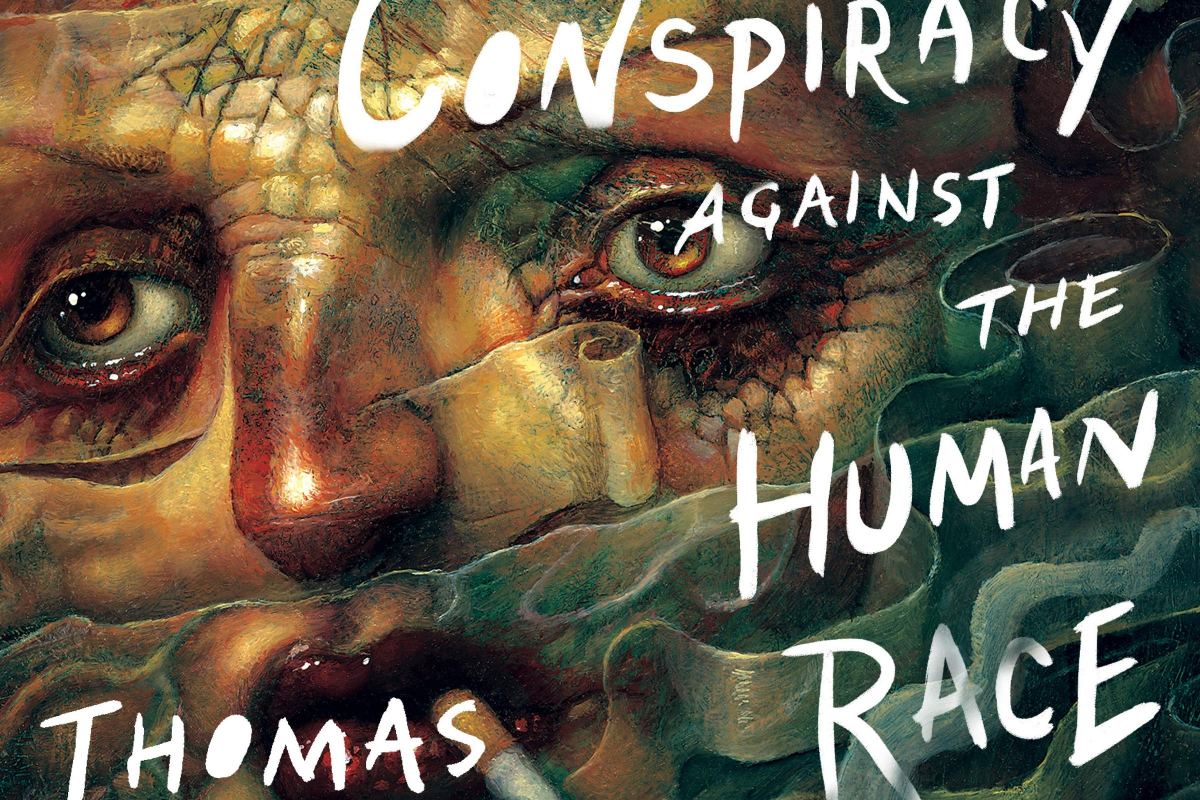
The Conspiracy against the Human Race is a work of non-fiction by horror author Thomas Ligotti. There is an audio podcast version and a YouTube video version. Feel free to leave comments in the space below or on YouTube.

Transcript

In this segment, I’ll be reviewing a book by Thomas Ligotti, The Conspiracy Against the Human Race, A Contrivance of Horror.

I haven’t done any book reviews, but since I tend to read a lot of books, I figure why not share my take and see how it’s received? If you like these reviews, click the like button and I’ll consider creating more.

Let’s get started.

First, I’ll be providing a little background, and then I’ll summarise some of the content and main themes. I’ll close with my review and perspective.

The author is Thomas Ligotti. He is a published writer in the horror genre in the vein of Lovecraft’s atmospheric horror. I’ve not read any of his work and haven’t read much fiction in ages.

The Conspiracy Against the Human Race is Ligotti’s first work of non-fiction. The book was originally published in 2010. I read the 2018 paperback version published by Penguin Books.

Conspiracy Against the Human Race falls into the category of Ethics and Moral Philosophy in a subcategory of pessimism. The main thesis of this book is that humans ought never to have been born. Following in the footsteps of anti-natalist David Benatar, who published Better Never to Have Been Born in 2007, Ligotti doubles down on Benatar’s position on the harm of coming into existence and argues that humans should just become extinct. Moreover, we should take out life in general.

In the book, Ligotti posits that consciousness was a blunder of nature and is the root of all suffering. He argues the derived Buddhist position of dukkha, which translates as Life is suffering. He establishes that most people are aware of this fact, but that we are nonetheless wired to be biased toward optimism through delusion and what a psychoanalyst might call repressed memories. Moreover, pessimists are a cohort not tolerated by society, who don’t want their delusions shattered.

Philosophically, Ligotti is a determinist. I’ve created content on this topic, but in a nutshell, determinism is the belief that all events are caused by antecedent events, leading to a chain of causes and effects stretching back to the beginning of time and bringing us to where we are now. If we were able to rewind time and restart the process, we would necessarily end up in the same place, and all future processes will unfold in a like manner.

Ligotti likes the metaphor of puppets. He employs puppets in two manners. Firstly, being the determinist he is, he reminds us that we are meat puppets with no free will. Our strings are controlled by something that is not us. This something ends up being Schopenhauer’s Will, reminding us that one can want what we will, but we can’t will what we will. This Will is the puppeteer. Secondly, puppets are soulless, lifeless homunculi that are employed in the horror genre to create unease by means of an uncanny association.
He cites the work and philosophy of Norwegian author Peter Zapffe, who also elucidates human existence as a tragedy. Humans are born with one and only one right—the right to die. And death is the only certainty. The knowledge of this causes unnecessary suffering.

Quoting Ligotti,

Stringently considered, then, our only natural birthright is a right to die. No other right has ever been allocated to anyone except as a fabrication, whether in modern times or days past. The divine right of kings may now be acknowledged as a fabrication, a falsified permit for prideful dementia and impulsive mayhem. The inalienable rights of certain people, on the other hand, seemingly remain current: somehow we believe they are not fabrications because hallowed documents declare they are real.

Ligotti reminds us that consciousness is a mystery. We don’t really know what it is or what causes it other than it exists and we seem to have it, to be cursed with it. He adopts Zapffe’s position that consciousness is also responsible for the false notion of the self.

As all life is, humans are the result of an evolutionary process. Consciousness was just the result of an evolutionary blunder. He cites Zapffe and conveys that “mutations must be considered blind. They work, are thrown forth, without any contact of interest with their environment.”

Whilst pessimists view consciousness as a curse, optimists such as Nicholas Humphry think of it as a marvellous endowment.

He summarises the reason humans have it worse than the rest of nature:

For the rest of the earth’s organisms, existence is relatively uncomplicated. Their lives are about three things: survival, reproduction, death—and nothing else. But we know too much to content ourselves with surviving, reproducing, dying—and nothing else. We know we are alive and know we will die. We also know we will suffer during our lives before suffering—slowly or quickly—as we draw near to death. This is the knowledge we “enjoy” as the most intelligent organisms to gush from the womb of nature. And being so, we feel shortchanged if there is nothing else for us than to survive, reproduce, and die. We want there to be more to it than that, or to think there is. This is the tragedy: Consciousness has forced us into the paradoxical position of striving to be unself-conscious of what we are—hunks of spoiling flesh on disintegrating bones.”

I’ll repeat that: Consciousness has forced us into the paradoxical position of striving to be unself-conscious.

He cites Zapffe’s four principal strategies to minimise our consciousness, isolation, anchoring, distraction, and sublimation

  1. Isolation is compartmentalising the dire facts of being alive. So, he argues, that a coping mechanism is to push our suffering out of sight, out of mind, shoved back into the unconscious so we don’t have to deal with it.
  2. Anchoring is a stabilisation strategy by adopting fictions as truth. We conspire to anchor our lives in metaphysical and institutional “verities”—God, Morality, Natural Law, Country, Family—that inebriate us with a sense of being official, authentic, and safe in our beds.
  3. Distraction falls into the realm of manufactured consent. People lose themselves in their television sets, their government’s foreign policy, their science projects, their careers, their place in society or the universe, et cetera. Anything not to think about the human condition.
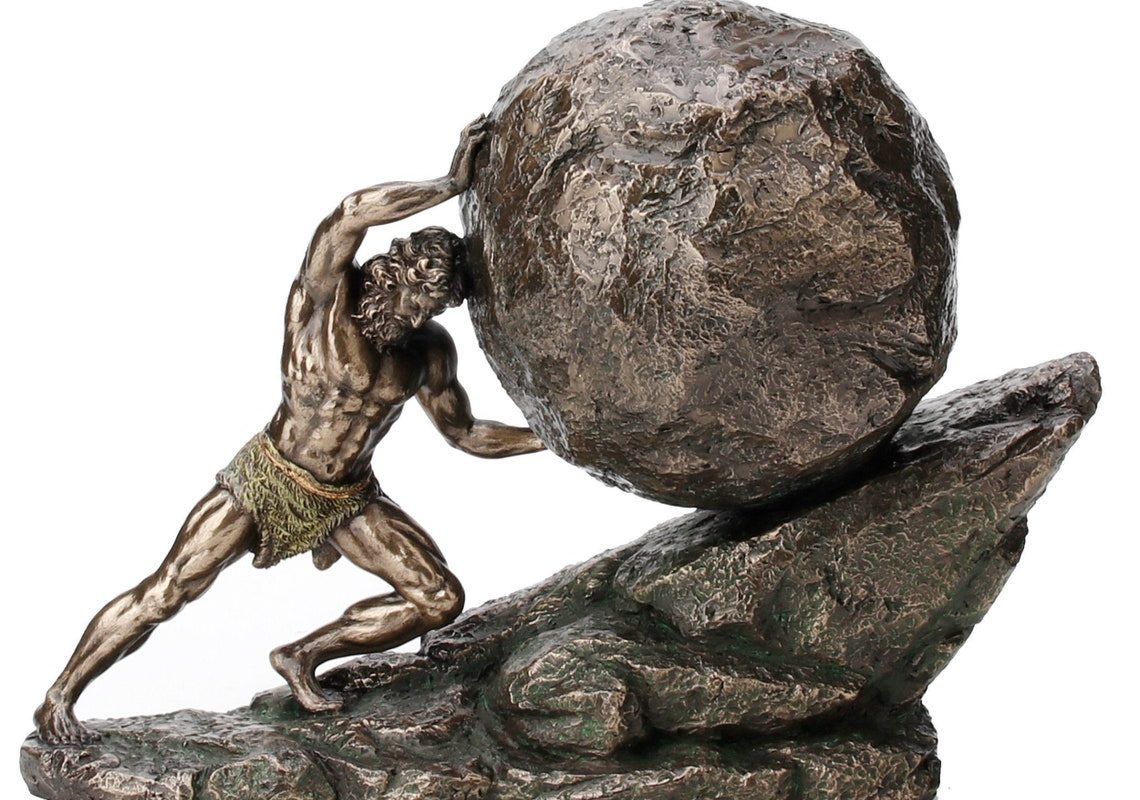
  4. Sublimation. This reminds me of Camus’ take on the Absurd. Just accept it. Embrace it and incorporate it into your routine. Pour it into your art or music. Ligotti invokes Camus’ directive that we must imagine Sisyphus happy, but he dismisses the quip as folly.

Ligotti underscores his thesis by referencing the works of other authors from David Benatar to William James.

Interestingly, he suggests that people who experience depression are actually in touch with reality and that psychology intervenes to mask it again with the preferred veil of delusion and delf-deception. Society can’t operate if people aren’t in tune with the masquerade. Citing David Livingstone Smith in his 2007 publication, Why We Lie: The Evolution of Deception and the Unconscious Mind, Ligotti writes:
“Psychiatry even works on the assumption that the “healthy” and viable is at one with the highest in personal terms. Depression, “fear of life,” refusal of nourishment and so on are invariably taken as signs of a pathological state and treated thereafter.”

Ligotti returns to the constructed notion of the self and presents examples of how a lack of self is an effective horror trope, citing John Carpenter’s The Thing and Invasion of the Body Snatchers.

He spends a good amount of time on ego-death and the illusion of self, a topic I’ve covered previously. He mentions Thomas Metzinger and his writings in several places including his Being No One, published in 2004, ostensibly reinforcing a position described as naïve realism, that things not being knowable as they really are in themselves, something every scientist and philosopher knows.

He delves into Buddhism as a gateway to near-death experiences, where people have dissociated their sense of self, illustrating the enlightenment by accident of U. G. Krishnamurti, who after some calamity “was no longer the person he once was, for now he was someone whose ego had been erased. In this state, he had all the self-awareness of a tree frog. To his good fortune, he had no problem with his new way of functioning. He did not need to accept it, since by his report he had lost all sense of having an ego that needed to accept or reject anything.” Krishnamurti had become a veritable zombie. He also cited the examples of Tem Horwitz, John Wren-Lewis, and Suzanne Segal, but I won’t elaborate here.

Russian Romantic author, Leo Tolstoy, famous for War and Peace and Anna Karenina, was another pessimist. He noticed a coping approach his associates had employed to deal with their morality.

  1. Ignorance is the first. As the saying goes, ignorance is bliss. For whatever reason, these people are simply blind to the inevitability of their mortal lives. As Tolstoy said these people just did not know or understand that “life is an evil and an absurdity”.
  2. Epicureanism comes next. The tactic here is to understand that we are all in here and no one gets out alive, so we might as well make the best of it and adopt a hedonistic lifestyle.
  3. Following Camus’ cue, or rather Camus following Tolstoy and Schopenhauer, he suggests the approach of strength and energy, by which he means the strength and energy to suicide.
  4. Finally, one can adopt the path of weakness. This is the category Tolstoy finds himself in, writing “People of this kind know that death is better than life, but not having the strength to act rationally—to end the deception quickly and kill themselves—they seem to wait for something.”

The last section of the book feels a bit orthogonal to the rest. I won’t bother with details, but essentially he provides the reader with examples of how horror works by exploring some passages, notably Radcliffe’s, The Mysteries of Udolpho; Conrad’s Heart of Darkness; Poe’s Fall of the House of Usher; Lovecraft’s Call of Cthulhu; and contrasting Shakespeare’s Macbeth and Hamlet.

This has been a summary of Thomas Logotti’s Conspiracy against the human race. Here’s my take. But first some background, as it might be important to understand where I am coming from.

I am a Nihilist. I feel that life has no inherent meaning, but people employ existentialist strategies to create a semblance of meaning, much akin to Zapffe’s distraction theme or perhaps anchoring.
This said I feel that, similar to anarchism, people don’t understand nihilism. Technically, it’s considered to be a pessimistic philosophy because they are acculturated to expect meaning, but I find it liberating. People feel that without some constraints of meaning, that chaos will ensue as everyone will adopt Tolstoy’s Epicureanism or to fall into despair and suicide. What they don’t know is they’ve already fabricated some narrative and have adopted one of Zappfe’s first three offerings: isolation, which is to say repression); anchoring on God or country; or distracting themselves with work, sports, politics, social media, or reading horror stories.

Because of my background, I identify with Ligotti’s position. I do feel the suffering and anguish that he mentions, and perhaps I am weak and rationalising, but I don’t feel that things are so bad. I may be more sympathetic to Benatar’s anti-natalism than to advocate for a mass extinction event, though I feel that humans are already heading down that path. Perhaps this could be psychoanalysed as collective guilt, but I won’t go there.

I recommend reading this. I knocked it out in a few hours, and you could shorten this by skipping the last section altogether. If you are on the fence, I’d suggest reading David Benatar’s Better Never to Have Been. Perhaps I’ll review that if there seems to be interest. If you’ve got the time, read both.

So there you have it. That’s my summary and review of Thomas Ligotti’s The Conspiracy against the Human Race.

Before I end this, I’ll share a personal story about an ex-girlfriend of mine. Although she experienced some moments of happiness and joy, she saw life as a burden. Because she had been raised Catholic and embodied the teachings, she was afraid that committing suicide would relegate her to hell. In fact, on one occasion, she and her mum had been robbed at gunpoint, and her mum stepped between my girlfriend and the gun. They gave the gunmen what they wanted, so the situation came to an end.

My girlfriend laid into her mother that if she ever did something like that again and took a bullet that was her ticket out, she would never forgive her. As it turned out, my girlfriend died as collateral damage during the Covid debacle. She became ill, but because she was living with her elderly mum, she didn’t want to go to hospital and bring something back. One early morning, she was writhing in pain and her mum called the ambulance. She died later that morning in hospital, having waited too long.

For me, I saw the mercy in it all. She got her ticket out and didn’t have to face the hell eventuality. Not that I believe in any of that, but she was able to exit in peace. Were it not for the poison of religion, she could have exited sooner. She was not, in Tolstoy’s words, weak, so much as she had been a victim of indoctrination. I feel this indoctrination borders on child abuse, but I’ll spare you the elaboration.
So, what are your thoughts on this book? Is there a conspiracy against humanity? Are optimists ruining it for the pessimists? What do you think about anti-natalism or even extinction of all conscious beings or the extreme case of all life on earth? Is Ligotti on to something or just on something?

Share your thoughts in the comments below.

Sovereign Persons

I do not wish to be either ruler or ruled

Pierre-Joseph Proudhon

I have agreed with this sentiment for as long as I can remember, at least stretching back to age 10 or 12 and long before I had ever heard of the likes of Proudhon. I don’t believe that Proudhon is a big focus in the United States. I never encountered him in all of my studies from kindergarten to grad school—and I was an economics major.

In the US, disparaging Marx was always in vogue, with the off-hand remark along the lines of “Communism works on paper, but because of human nature, it can’t work in practice. And by the way, look at the Soviet Union. That’s all the proof you need.” Of course, I was left thinking that at least it worked on paper, something I can’t say with a straight face for Democracy.

For those who are familiar with Proudhon, he is likely remembered for his quote, “Property is theft!” I’ve discussed this before.

La propriété, c’est le vol!

Property is theft!

But this is a different quote: “I do not wish to be either ruler or ruled.” When I was in high school, there was a saying, lead, follow, or get out of the way. As imperfect of a metaphor as it is, I just wanted out of the way. In the world of leaders and followers, I wanted to be an advisor. In a manner—given the false dichotomy of followers and leaders—, this relegated me a de facto follower. Only I am not a follower. I not only question authority and authority figures, I question the legitimacy of their power. Not a great follower, to be sure.

I feel I am the peasant in Monty Python’s Holy Grail who tells King Arthur upon encountering him, “Well, I didn’t vote for you.” Not that voting yields some source of legitimacy. What options does one have?

Philosophically speaking, there is no justification for personal bodily autonomy. Someone just made this claim, and some others agreed. Sounds good to me, but there is no real reason to support the idea save for selfish rationale.

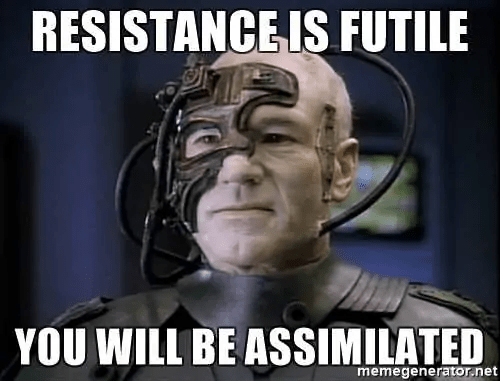
The science fiction staple, Star Trek, famously created a Borg where autonomy was futile. Because of our acculturation, we find this idea perhaps silly or perhaps appalling or absurd, but one is not more justifiable than another except by rhetorical devices. Yet neither is right.

Resistance is futile!

In the West, we tend to prefer a rather middle path, and perception doesn’t actually comply with reality. I think that people believe that they are more autonomous than they are. I’d be willing to argue that this is the same delusion underlying a sense of free will. Sartre might have argued that we each retain a sort of nuclear option as a last resort, but a choice between two options is hardly freedom. It sounds a lot like Sophie’s Choice (spoiler alert).

Not so come across like Hobbes, but I do feel that violence (subject to semantic distinction), or at least the potential for it, is inherent in any living system. With political and legal systems, violence just shifts from explicit to implicit, and so out of sight, out of mind.

In any case, I do not wish to be either ruler or ruled. I just want to advise. I’m an introvert. I want to be left alone. I value the benefits of society and I participate at the margins, and that’s where I prefer to remain. If the direction of the train I am on seems to be running off the tracks I’d presume it should be on, then I’ll get vocal. Otherwise, I’ll take the privilege to concentrate on cerebral and philosophical interests.

I’ll advise you to do the same.

Blame On TikTok

A woman blames another for stealing her headphones. This viral video has been circulating in circles of mental health awareness and Karen syndrome.

My attention is otherwise occupied, so I won’t take time for a longer post, but I feel this illustrates my point that people just need to blame. It’s a knee-jerk response, and target accuracy is unnecessary, as this demonstrates.

tl;dr – Karen misplaced her headphones in her bag

From an evolutionary perspective, this also highlights theories supporting fitness over truth—fitness beats truth, FBT. Were that a rival stealing hard-earned food, better to apprehend or remediate than gather all the facts only to allow the culprit to escape. Of course, in cases like this, one gets false positives.

The Meaning of Life for Sisyphus

In pursuit of my travail intellectuel, I stumbled on a thought experiment proposed by Richard Taylor regarding an old crowd favourite, Sisyphus.

Of course, Albert Camus had famously published his Myth of Sisyphus essay (PDF), portraying his life as analogous to the workaday human, absurdly plodding through existence like rinse and repeat clockwork—same gig on a different day.

Given my perspective on human agency and the causa sui argument, I felt commenting on Taylor’s essay, The Meaning of Life (PDF) would be apt.

The story of Sisyphus finds the namesake character, fated by the gods to each day push a stone up a hill only for it to roll back down for him to push it back up every day ad infinitum. Camus leaves us with the prompt, ‘One must imagine Sisyphus happy’. But must we.?

As Taylor puts it,

Sisyphus, it will be remembered, betrayed divine secrets to mortals, and for this he was condemned by the gods to roll a stone to the top of a hill, the stone then immediately to roll back down, again to be pushed to the top by Sisyphus, to roll down once more, and so on again and again, forever. Now in this we have the picture of meaningless, pointless toil, of a meaningless existence that is absolutely never redeemed.

Taylor wants us to consider an amended Sisyphus. He writes,

Let us suppose that the gods, while condemning Sisyphus to the fate just described, at the same time, as an afterthought, waxed perversely merciful by implanting in him a strange and irrational impulse; namely, a compulsive impulse to roll stones.

This significantly alters the dynamic. In the scenario, Sisyphus is not toiling; rather, he is pursuing his passion—following his heart. This is the athlete, artist, politician, or mass murderer following their passion. In fact, one might say that he is being his authentic self. He has no control over his self or his desire to roll stones, but he is in his element.

Taylor’s ultimate point is that in either case, the life of Sisyphus is just as devoid of meaning. Ostensibly, nothing can provide meaning. The best one can do is to have the perception of meaning. He writes,

Sisyphus’ existence would have meaning if there were some point to his labors, if his efforts ever culminated in something that was not just an occasion for fresh labors of the same kind. But that is precisely the meaning it lacks.

Although we cannot control what is within, contentment and happiness derive from perception. As we might be reminded by the quip attributed to Schopenhauer,

We can want what we will,
but we can’t will what we will.

In the end, Taylor wants us to know that nothing out there can make us happy.

The meaning of life is from within us, it is not bestowed from without, and it far exceeds in both its beauty and permanence any heaven of which men have ever dreamed or yearned for.


I’ve subsequently read some critiques of Taylor’s position, but I don’t want to take the time to rejoin them. Suffice it to say that I find them to be weak and wanting.

Freud and Moral Responsibility

Morality is a social construct, but so are notions of identity and self. Upon reflection, psychology, a discipline I already hold in the lowest regard, is only the minutest subset of sociology. Without society, psychology would have nothing to study.

Sociology is more focused on structure and interrelationships whilst psychology concerns itself with the individual agent’s psyche. Sigmund Freud did recognise this by the taxonomy of id, ego and superego. It seems that by Freud’s reckoning, the id is a stand-in for volition, rather unconscious reactions, whereby the ego is more reflexive and tempered by the external world. Employing this model, in at least one way of thinking, the id represents the bare and authentic self whilst the ego is the accumulation of inputs.

Put in causa sui terms, the id is the result of inherited genetic temperament and the ego is the result of societal forces as interpreted by the id and any antecedent ego.

Remember, one function of the brain is as a Bayesian prediction engine that evaluates new inputs and forms a new sense of perceptual reality and fitness to operate in this universe.

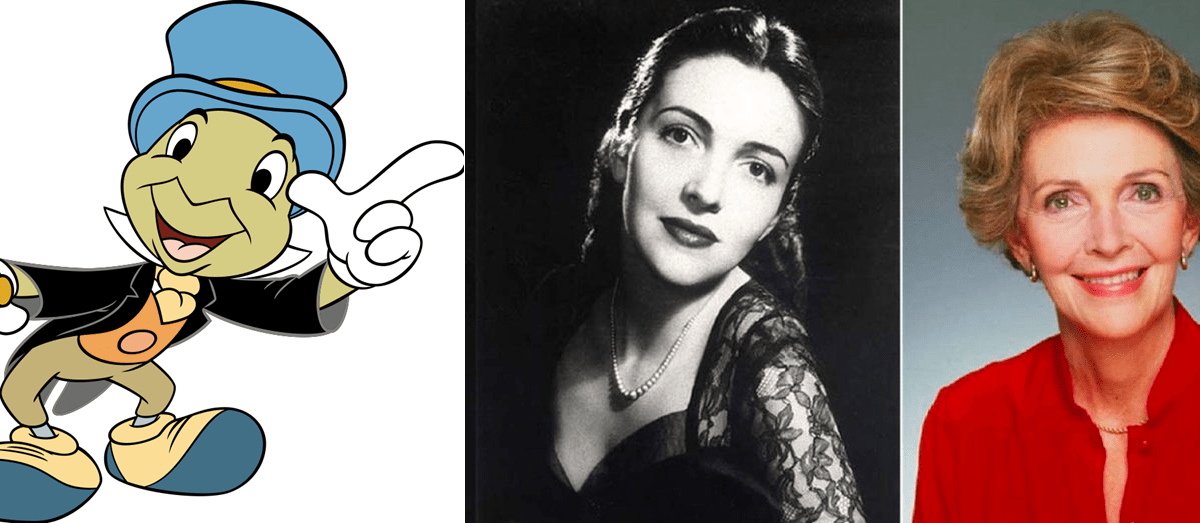
Freud’s superego is ostensibly a part of the ego gone underground—, most of it operating beneath the surface. It’s what I’ll consider being the Nancy Reagan of the psyche—just say no*. It’s Jiminy Cricket. Apologies for not having more contemporary conscience references. I suppose my age is showing.

According to Freud, most of who we are is a social construct, save for the kernel of the id, the proto-self. The ego is the part almost—but not all—above the surface, manifest in consciousness. Conversely, the superego has the reverse configuration, existing almost entirely below the surface. One might even be tempted to argue that the portion of the superego above the surface has actually already been assimilated into the ego.

So, we’re animated sausages, skins stuffed with social cues. Some of these social cues are also moral codes, but many moral codes are inherently unstable and vary by context. And there are local and global morality sources. For example, most religious doctrine is local, so a text authored by a venerated leader in one area may not be venerated outside of that context. In some cases, the directive contains no moral content—don’t eat pork or shellfish or take Saturdays off—whilst others do—love thy neighbour as thyself. Still, they are all social constructs.

If one has no interactions with the other culture, these societies can coexist without challenge, but when a ‘take off on Saturday’ group intersects with a ‘take off Sunday group’, there may be friction, each chiding the other for their nonsensical belief in the manner of Dr Seuss’ Sneetches.

Given this, when discussing morality, we are forced into a structure built on shifting sand. The challenge is that some people believe this ground is bedrock, and power structures insist it is in order to leverage a more solid foundation to maintain power and control.

If we are in some milieu, we are then forced to comply with their norms and morés or be cast out or marginalised, perhaps even scapegoated as Girard might suggest.

Meantime, just take morality with a grain of salt and remember that as will all things human, there are flaws in the logic and outcomes. Also understand that even if these outcomes are flawed and you need to participate in that society, you probably need to remain under the radar—easier for some than others—, conform, play the eccentric, or perish.

* Apparently, Nancy could say no to just about anything except for giving blowjobs. Perhaps this is what saved Ron from the same fate as Bill Clinton, but who am I to say? No shame in that is my position.

Elbow Room

Daniel Dennet is quite the prolific writer. He first published Elbow Room back in 1984. He published an updated version in 2015. I like Dan. He is a master storyteller and has a mind like a trap, archiving decades (and centuries) of information. The approach he takes is thoughtful and methodical, and I tend to agree with most of his positions. This isn’t one of them. Interestingly, I recently reviewed John Martin Fischer’s contribution to Four Views on Free Will, which is sympathetic to his position.

Dennett is a compatibilist. I am an incompatibilist—an impossibility, really—, but I wanted to understand his line of argumentation. Like Fischer, Dennett wants to claim that an agent does possess enough elbow room—wiggle room—to be able to be granted free will or moral responsibility, depending on where you prefer to draw the line.

Dennett tends to agree with my position that free will is a semantic pseudo-problem, but he doesn’t mind calling enough ‘good enough’. Given a situation and circumstances, we have enough latitude to consider any actions to be free—with the usual exemptions for non compos mentis situations, cognitive deficits, and duress. He minimises the impact of genetics and upbringing as insignificant.

Basically, he argues that what latitude we do have is sufficient and what more could one want? Anything more would be unnecessary and excessive. Of course, this is just him drawing an arbitrary line at a point he feels comfortable, claiming that anyone asking for more is being unrealistically unreasonable. This feels a bit like a preemptive ad hominem defence. If you want this, then you are just foolish and selfish.

Dennett does agree with the notion that the world might be deterministic, but even so, we are proximately special. He also leans on the observation that people seem hardwired for blame, so there must be something behind this—instead of considering that humans seem hardwired for many things, not all of which are socially beneficial.

We want to hold people responsible, so by extension, we need to consider ourselves to be responsible.

P1: All agents are responsible

P2: I am an agent

C: Therefore, I am responsible

But the problem is in the definition of agency (as well as the scope and meaning of responsibility and the assignment of responsibility to agents.

In the end, I remain unconvinced, primarily that he fails to overcome the Causa Sui argument.

Hierarchies and Meritocracy

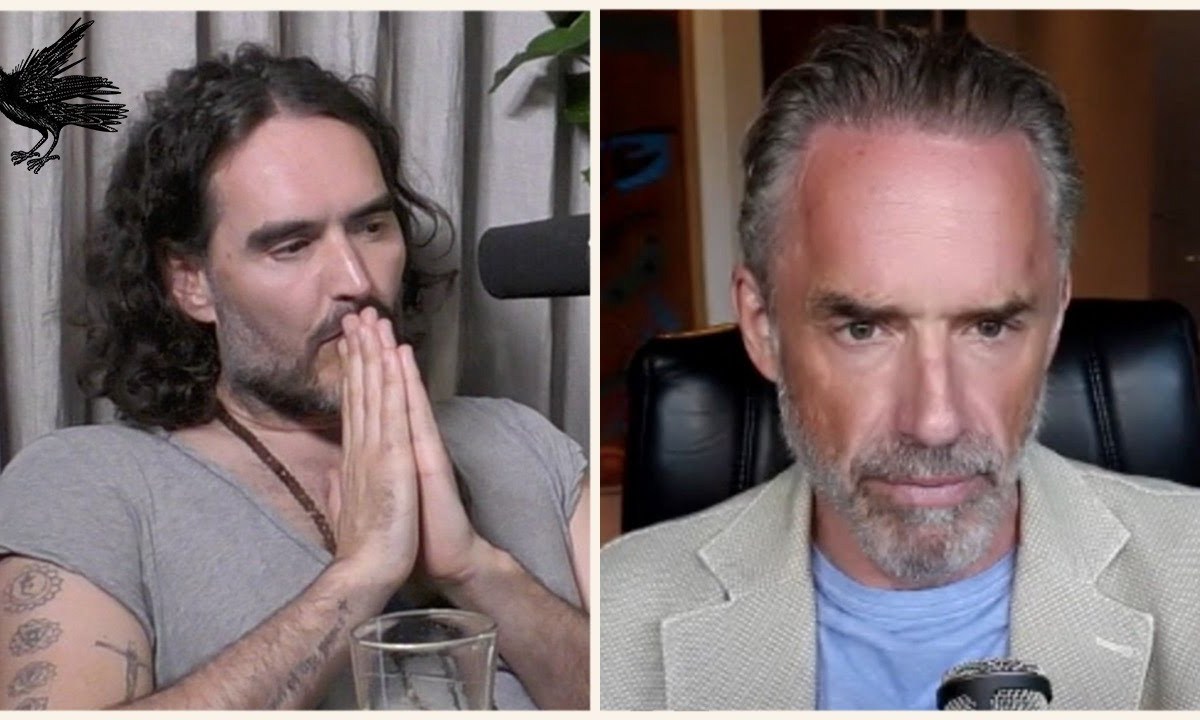
Jordan Peterson and Russell Brand chat for about 12 minutes on sex differences and personality, but that’s not where I want to focus commentary. What I will say is that Peterson continually conflates sex and gender, and I find that disconcerting for a research psychologist.

I’ve queued this video near the end, where Peterson delineates his conception of how the political right and left (as defined by him and the US media-industrial complex).

I feel he does a good job of defining the right, and he may have even captured whatever he means by left—radical left even—, but he doesn’t capture my concerns, hence I write.

To recap his positions,

Premises

  • We need to pursue things of value
  • Hierarchies are inevitable
  • [One has] to value things in order to move forward in life
  • [One has] to value things in order to have something valuable to produce
  • [One has] to value some things more than others or [they] don’t have anything like beauty or strength or…competence or…whatever…
  • If [one] value[s] [some domain] then [one is] going to value some [things in that domain] more than others because some are better
  • If [one] play[s] out the value in a social landscape, a hierarchy [will result]
  • A small number of people are going to be more successful than the majority
  • A very large number of people aren’t going to be successful at all

Conservative (Right)

  • Hierarchies are justifiable and necessary

Left

  • Hierarchies … stack [people] up at the bottom
  • [Hierarchies] tilt towards tyranny across time

Critique

I feel I’ve captured his position from the video transcript, but feel free to watch the clip to determine if I’ve mischaracterised his position. I have reordered some of his points for readability and for a more ordered response on my part.

To be fair, I feel his delivery is confused and the message becomes ambiguous, so I may end up addressing the ‘wrong’ portion of his ambiguous statement.

We need to pursue things of value

This is sloganeering. The question is how are we defining value? Is it a shared definition? How is this value measured? How are we attributing contribution to value? And do we really need to pursue these things?

Hierarchies are inevitable

Hierarchies may be inevitable, but they are also constructed. They are not natural. They are a taxonomical function of human language. Being constructed, they can be managed. Peterson will suggest meritocracy as an organising principle, so we’ll return to that presently.

[One has] to value things in order to move forward in life

This is a particular worldview predicated on the teleological notion of progress. I’ve discussed elsewhere that all movement is not progress, and perceived progress is not necessarily progress on a global scale.

Moreover, what one values may not conform with what another values. In practice, what one values can be to the detriment of another, so how is this arbitrated or mediated?

[One has] to value things in order to have something valuable to produce

I think he is trying to put this into an economic lens, but I don’t know where he was going with this line. Perhaps it was meant to emphasise the previous point. I’ll just leave it here.

[One has] to value some things more than others or [they] don’t have anything like beauty or strength or…competence or…whatever…

This one is particularly interesting. Ostensibly, I believe he is making the claim that we force rank individual preferences, then he provides examples of items he values: beauty, strength, competence, and whatever. Telling here is that he chooses aesthetic and unmeasurable items that are not comparable across group members and are not even stable for a particular individual. I won’t fall down the rabbit hole of preference theory, but this is a known limitation of that theory.

If [one] value[s] [some domain] then [one is] going to value some [things in that domain] more than others because some are better

We’ve already touched on most of this concept. The key term here is ‘better‘. Better is typically subjective. Even in sports, where output and stats are fairly well dimensionalised, one might have to evaluate the contributions of a single athlete versus another with lower ‘output’ but who serves as a catalyst for others. In my mental model, I am thinking of a person who has higher arbitrary stats than another on all levels versus another with (necessarily) lower stats but who elevates the performance (hence) stats of teammates. This person would likely be undervalued (hence under-compensated) relative to the ‘star’ performer.

In other domains, such as art, academics, or even accounting and all measurement bets are off.

If [one] play[s] out the value in a social landscape, a hierarchy [will result]

Agreed, but the outcome will be based on rules—written and unwritten.

A small number of people are going to be more successful than the majority

Agreed.

A very large number of people aren’t going to be successful at all

Agreed

Conclusion

The notion of meritocracy is fraught with errors, most notably that merit can be meaningfully assessed in all but the most simple and controlled circumstances. But societies and cultures are neither simple nor controlled. They are complex organisms. And as Daniel Kahneman notes, most merit can likely be chalked up to luck, so it’s all bullshit at the start.

In the end, Peterson and people like him believe that the world works in a way that it doesn’t. They believe that thinking makes it so and that you can get an is from an ought. Almost no amount of argument will convince them otherwise. It reminds me of the time Alan Greenspan finally admitted to the US Congress that his long-held adopted worldview was patently wrong.

Video: CSPAN: Oversight and Government Reform Committee Chairman, Rep. Henry Waxman and Former Fed Chairman Alan Greenspan Testimony

WAXMAN: “You found a flaw…”

GREENSPAN: “In the reality—more in the model—that I perceived is the critical functioning structure that defines how the world works, so to speak.”

WAXMAN: “In other words, you found that your your view of the world—your ideology—was not right. It was not what it had it…”

GREENSPAN: “Precisely. No, I… That’s precisely the reason I was shocked because I have been going for 40 years or more with very considerable evidence that it was working exceptionally well.”

To paraphrase musically

Video: Social Distortion, I Was Wrong

Unknown Dimensions

I mentioned in my last post about how Artificial Intelligence discovered a new variable—or, as the claim suggests, a new physics. This was a tie-in to the possible missing dimensions of human perception models.

Without delving too deep, the idea is that we can predict activity within dynamic systems. For example, we are all likely at least familiar with Newtonian physics—postulates such as F = ma [Force equals mass times acceleration or d = vt [distance equals velocity times time] and so on. In these cases, there are three variables that appear to capture everything we need to predict one thing given the other two that need to remain constant. Of course, we’d need to employ calculus instead of algebra if these are not constant. A dynamic system may require linear algebra instead.

When scientists represent the world, they tend to use maths. As such, they need to associate variables as proxies for physical properties and interactions in the world. Prominent statistician, George Box reminds us that all models are wrong, but some are useful. He repeated this sentiment many times, instructing us to ‘remember that models are wrong: the practical question is how wrong do they have to be to not be useful‘. But no matter how hard we try, a model will never be the real thing. The map cannot become the terrain, no matter how much we might expect it to be. By definition, a model is always an approximation.

All models are wrong but some are useful

George Box

In the Material Idealism post, the embedded video featuring Bernardo Kastrup equated human perception to the instrumentation panels of an aeroplane. Like the purported observer in a brain, the pilot can view the instruments and perform all matters of actions to manipulate the plane, including taking off, navigating through the environment, avoiding obstacles, and then landing. But this instrumentation provides only a representation of what’s ‘really’ outside.

Like mechanisms in the body, instrumentation can be ‘wired’ to trigger all sorts of warnings and alerts, whether breached thresholds or predictions. The brain serves the function of a predictive difference engine. It’s a veritable Bayesian inference calculator. Anil Seth provides an accessible summary in Being You. It relies on the senses to deliver input. Without these sense organs, the brain would be otherwise unaware and blinded from external goings on.

The brain cannot see or hear. It interprets inputs from eyes and ears to do so. Eyes capture light-oriented events, which are transmitted to the brain via optic nerves, and brain functions interpret this information into colour and shape, polarisation and hue, depth and distance, and so on. It also differentiates these data into friend or foe signals, relative beauty, approximate texture, and such. Ears provide a similar function within their scope of perception.

As mentioned, some animals have different sense perception capabilities and limitations, but none of these captures data not also accessible to humans via external mechanisms.

Some humans experience synesthesia, where they interpret certain stimuli differently, perhaps hearing colours or smelling music. We tend to presume that they are the odd ones out, but this assumption does not make it so. Perhaps these people are actually ahead of the rest of us on an evolutionary scale. I suppose time might sort that one out.

But here’s the point. Like the pilot, we can only experience what we are instrumented to experience, as limited to our sense perception and cognition faculties. If there are events not instrumented, it will be as if they don’t exist to the pilot. Can the pilot hear what’s happening outside?

This is the point of the AI experiment referenced above. Humans modelled some dynamic process that was presumed to be ‘good enough’, with the difference written off as an error factor. Artificial Intelligence, not limited to human cognitive biases, found another variable to significantly reduce the error factor.

According to the theory of evolution, humans are fitness machines. Adapt or perish. This is over-indexed on hereditary transmission and reproduction, but we are more vigilant for things that may make us thrive or perish versus aspects irrelevant to survival. Of course, some of these may be benign and ignored now but become maleficent in future. Others may not yet exist in our realm.

In either case, we can’t experience what we can’t perceive. And as Kastrup notes, some things not only evade perception but cannot even be conceived of.

I am not any more privileged than the next person to what these missing factors are nor the ramifications, but I tend to agree that there may be unknown unknowns forever unknowable. I just can’t conceive what and where.


I can’t wait to get back to my Agency focus.

Material Idealism

Synchronicity is in full force and effect. I’ve been on holiday for the past week and a half during which time I’ve read twice over Being You by neuroscientist Anil Seth, who also competently narrates an audio version. I enjoyed it, though it was on one hand too general and on the other hand oddly specific. I expect to summarise it presently.

Meantime, I just watched this interview with Bernardo Kastrup, of whom I’ve only recently become aware, and he makes some of the points Anil makes, but I feel his logical leap to the spiritual realm is a bit premature and wishful thinking on his part—sort of a God of the gaps approach.

Bernardo is the author of Why Materialism Is Boloney.

Russell Brand interviews philosopher and author Bernardo Kastrup

I find his analogy equating human perception and an aeroplane cockpit on instrument control is apt, and I fully agree that humans are limited by their sense organs and limited cognitive faculties. so there exists more than we can measure or even perceive.

I recently read an article about a recent discovery where artificial intelligence identified a new dynamic variable in physics.

It stands to reason that there are a great many things about nature that are flat out not only NOT PERCEIVABLE by us but INCONCEIVABLE by us

Bernardo Kastrup

Aristotle is responsible for the notion that humans are limited to 5 senses, a myth still propagated by education systems. We are all familiar with the five basic senses:

SensePerceptionSensory Organ
VisionVisionEye
HearingAuditoryEar
TouchTactileSkin
TasteGustatoryMouth
SmellOlfactoryNose

Touch limits the scope of the somatosensory system that extends tactile mechanoreception perception with thermoception, which not only perceives the temperature of external objects and environments but includes receptors necessary to regulate internal body temperatures.

SensePerceptionSensory Organ
VestibularEquilibrioceptionInner Ear

Equilibrium or balance is yet another sense.

Perhaps it’s that vestibular sensation feels different to the rest, and so it gets marginalised.

Apart from the senses in and of themselves, we know that different life forms with analogous sense receptors perceive the world with different levels of acuity and resolution as well as range.

Dogs hear sounds at higher frequencies. Whales hear lower frequencies.

Birds see at a faster ‘frame rate’ than humans. In fact, a bird watching a film would not see the contiguous frames as fluid motion but would likely perceive the frames like a flip book progressing too slowly. Their visual acuity is also sharper, effectively giving them a higher DPI resolution. Thankfully, our visual system doesn’t provide a dithered or pixelated representation.

Some animals also ‘see’ images on infrared or ultraviolet frequencies.

Human eyes are front-mounted and provide binocular vision and depth perception. Internal mechanisms give the appearance of a continuous view. In fact, our eyes have a very small focal width, but they flit and flitter to capture snippets that are stitched together to give the impression of a scene. This is a Gestalt consideration.

Side-mounted eyes operate at a different level. For example, a pigeon needs to continually bob its head to render a stereoscopic view. Similarly, internal mechanisms stitch these images into a cogent environment.

And then there are compound eyes. Despite the manner these are depicted in movies, it’s likely that the visual system composites the facets into a single view.

Where humans can sense depth, distance, and direction with their eyes and ears, sharks can sense direction with their ‘nose’s.

Whilst humans have some ‘awareness’ of pheromones, this awareness is heightened in other animals via vomeronasal organ perception.

The notion of time is another perception, but we don’t even have a decent definition or understanding of time, so we’ve got a while before we figure this one out.

In addition to these human faculties, we understand that animals have others we had discovered.

SensePerceptionExample Species
MagnetoceptionMagnetic fieldsbirds, cattle, bacteria
EcholocationSpatialbats, cetaceans
ElectroceptionElectric fieldsfish
HygroreceptionMoisture levelsinsects

The addition of these other senses is borderline trivial insomuch as they each sense known phenomena. The question is whether some animals sense phenomena yet unknown.

I had more I wanted to say, but my time was occupied gathering these lists. Perhaps when I return to comment on Being You, I’ll share more.

Institutionalised

Jordan Peterson is decidedly not my cup of tea. I can tolerate Pinker and Haidt. I agree with much of what they have to say, but in this video, the dissonance finally dawns on me. Interestingly, I can tolerate Peterson within the scope of this discussion.

I don’t agree with much of what these three are saying, but it is refreshing to hear Peterson outside of a philosophical domain, a place where he has no place. And although I don’t agree with him here, it is on the basis of his argumentation rather than his abject ineptitude.

I disagree with this trio. This video reveals these three people as Institutionalists. Peterson may be a political Conservative versus Pinker’s and Haidt’s enlightened Liberalism, but this is a common core value they defend with escalating commitment. Typically, we find these to be polar opposites, but here they have a common enemy that is not necessarily anti-institutionalists or anarchists but people who don’t understand venerable institutions and thereby risk tipping the apple cart or toppling the Jenga tower because they just don’t understand. Not like them. Besides constitutionalism, the common thread is Paternalism. They may disagree on the specifics, but one thing is true: We know more than you, and this knowledge is embedded in the sacred institutions. If only the others understood.

In this video, we hear these three commiserate about the diversity and inclusion forces in University today, and where this movement is off base.