The system is broken. It’s not just broken in the United States. It’s the entirety of Western Civilisation. It’s not time for a reboot. The virus is still inherent in the system. It’s time for a new system.
The reaction to this line of reasoning does something along the lines of, ‘It’s easy to criticise. What’s your solution?’ So let’s begin by parsing this enquiry.
Firstly, not all problems have solutions.
Humans, it seems, need resolution and closure. And they seem to gravitate towards easy answers, specious or otherwise. But humans have an abysmal track record of solving complex problems—political issues, social issues, economic issues, and so on. It’s not as much as there is no solution, per se, but that the interactions within the complexities are too many to consider. The system has a temporal dimension, which means even if I solve the problem at time-nought, the solution may not hold at time-prime.
Secondly, that one can recognise a problem does not mean one can fix it.
This was the denouement of Occupy Wall Street a few years back. They shed light on the problems, but those in charge—hawking ‘solutions’—established a frame wherein a problem without a solution is worse than a problem ‘remedied’ with the wrong solution. You don’t have to be a mechanic or body shop guy to recognise a smashed car even if you can’t fix it.
Auto smash
What then?
Harry Potter’s Hermione’s Magic Wand
If I had a magic wand, for a start, I’d abolish Capitalism, private property, and religion and go from there.
What’s wrong with private property?
‘Do you live on the street?’ is a typical response I hear when I suggest abolishing private property. ‘Give me your address. I suppose you wouldn’t mind if I moved in’ is another. I’ve discussed eliminating private property elsewhere, but the underlying problems remain:
Why accept the usurpation of the commons to private property?
Why accept the premise that one can own what one doesn’t possess?
Why accept the premise of a first-come, first-served principle?
Why accept, given the notion of property rights, that distribution must occur within the domain of economics?
If one accepts that property should fall into the domain of economics, why not apply a ‘best use’ litmus instead of a ‘first come’ or ‘ability to purchase’ litmus?
Usurpation of the Commons
I don’t accept this usurpation. In nature, where conflict exists, violence or the threat of violence is the arbiter. As humans in nature, it’s no different. Like the meat one purchases behind the veil of a grocery mart, we are shielded from the inherent violence,
In many jurisdictions, property owners are justified in homicide if another person encroaches on their property. Many homeless or indigent people have tried to squat on unoccupied property only to be forcibly removed.
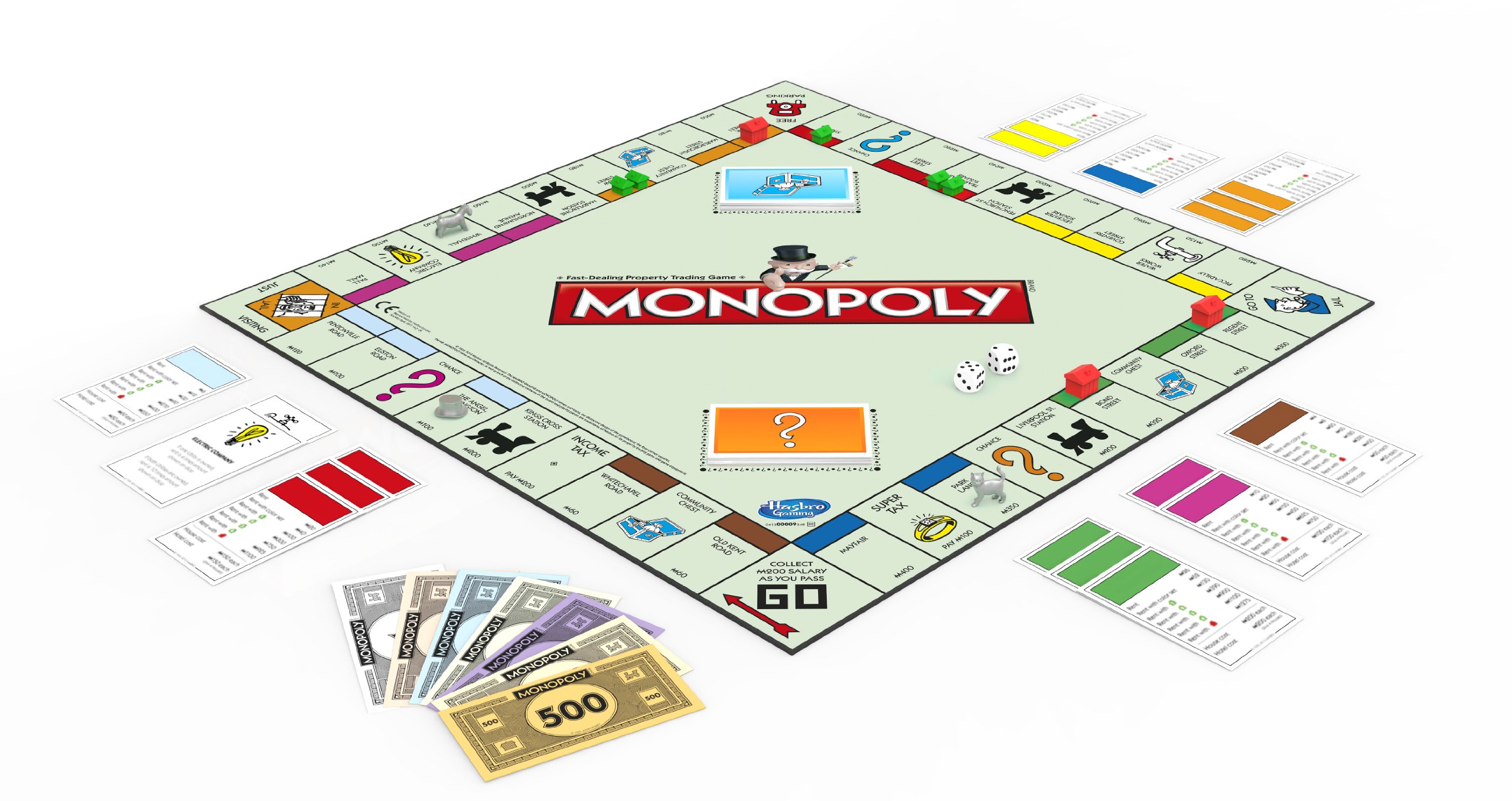
Monopoly Game Board
Property is like the game of musical chairs. And if you are late to the game, the chairs may already be taken. Imagine joining a game of monopoly late in the game and ownership of all the property has already been distributed. How do you think you might fare?
Possession is 9/10 of the Law
Possession is different to property. That I possess a place offers a different justification for my occupancy of it than a place that I own in absentia. Sure a philosophical argument could be made against any right to possess, but I’m not going there—at least not today.
This becomes a situation where usage is a determining factor. Can this ownership be justified if you’ve got a dozen places scattered around the globe?
First Come, First Served
It’s easy to see why this is in place: It’s simple. And at the start, there were few people and a seemingly infinite amount of land, but this was not sustainable. Land is ostensibly a fixed resource whilst humans multiply somewhat geometrically. So, given enough time, this allocation problem was predictable and inevitable.
But, given that property is something we insist on, what are the alternatives? Do we have a lottery periodically to redistribute property? Do we reset ownership whenever a new potentially qualifying owner emerges? Do we establish duration of ownership with some expiry? Do we not allow property to pass to forward generations? Or do we simply disallow ownership because this solution is too cumbersome to implement?
Disclaimer: In an attempt to economise my time yet still contribute content, this is a post dredged from Drafts (from May 2020) and posted with touchups in the manner of applying lipstick on a pig. Sadly, it’s still relevant.
Surfing the Web, I happened upon a blog wherein Wintery Knight riffed on a conversation about morality with an atheist millennial man. My interest was piqued, so I scanned it and then read it. I scanned the About page, and it’s apparent that we hold diametrically opposed worldviews, and that’s OK.
As a result of the encounter with this millennial man, the post intends to answer the question: How could I show him that happy feelings are not a good basis for morality? But let’s step back a bit.
In the words of the author, ‘I asked him to define morality, and he said that morality was feeling good, and helping other people to feel good.’ Here’s the first problem: Although a conversation about morality may have occurred between the author and an atheist millennial man, the post is not in fact a reaction to Millennial morality. Rather, it’s of the respondent’s dim characterisation of what morality is (whether for a theist or an atheist). His reply that morality is ‘feeling good, and helping other people to feel good’ sounds more like hedonism and compassion. The author does pick up on the Utilitarian bent of the response but fails to disconnect this response from the question. The result is a strawman response to one person’s hamfisted rendition of morality. The author provides no additional context for the conversation nor whether an attempt to correct the foundational definition.
A quick Google search yields what should by now be a familiar definition of morality: principles concerning the distinction between right and wrong or good and bad behaviour.
morality (noun) : principles concerning the distinction between right and wrong or good and bad behaviour
Oxford Languages
Clearly, conflating utility with rightness and wrongness, with goodness and badness, is an obvious dead-end at the start. This said, I could just stop typing. Yet, I’ll continue—at least for a while longer.
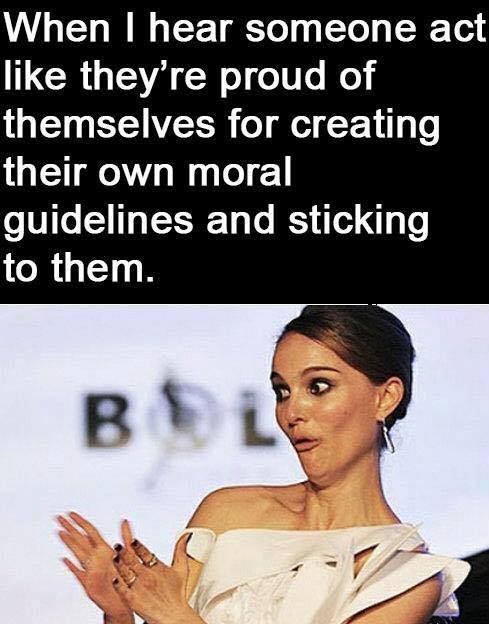
At the top of the article is a meme image that reads ‘When I hear someone act like they’re proud of themselves for creating their own moral guidelines and sticking to them’.
Natalie Portman sports an awkward facial expression and a sarcastic clap. Under the image is a line of copy: If you define morality as “whatever I want to do” then you’ll always be “moral”, which is tautological, but a bit of a non-sequitur to the rest, so I’ll leave it alone.
Let’s stop to regard this copy for a few moments but without going too deep. Let’s ignore the loose grammar and the concept of pride. I presume the focus of the author to be on the individually fabricated morals (read: ethical guidelines or rules) and that the fabricator follows through with them.
That this person follows through on their own rules is more impressive than the broken New Year’s resolutions of so many and is a certainly better track record than most people with supposed religious convictions.
New Years’ Resolutions
First, all morals are fabricated—his morals or your morals. And you can believe that these goods came from God or gods or nature or were just always present awaiting humans to embody them, but that doesn’t change the point.
Let’s presume that at least some of his morals don’t comport with the authors because they are borne out of compassion. Since we’ve already established precedence for cherry-picking, allow me to side-step the hedonistic aspects and instead focus on the compassionate aspects. Would this be offensive to the author? Isn’t, in fact, in Matthew 7:12 and Luke 6:31, the do unto others Golden Rule edict, is a call for compassion—at least sympathy if not empathy?
After a quick jab at abortion (tl; dr: abortion is bad) taking the scenic route to articulate the point that atheists typically don’t think of unborn children as people, apparently without fully grasping the concept of zygotes and gametes. The author then confuses the neutral notion of a probabilistic outcome with accidents, having negative connotations—as if I flip a coin, the result is an accident. Let’s ignore this passive-aggressive hostility and move on. Let’s also forgive the flippant—or at least facile—articulation of biological evolutionary processes as ‘the strong survive while the weak die’. We can let it slide since what is meant by strong in this context is wide open.
child (noun) : a young human being below the age of puberty or below the legal age of majority
Oxford Languages
The author continues with a claim that ‘you aren’t going to be able to generate a moral standard that includes compassion for weak unborn children on that scenario’. This feels like an unsubstantiated claim. Is this true? Who knows. Some people have compassion for all sorts of things from puppies to pandas without having some belief in rights. Some people like Peter Singer argues that rights should be extended to all species, and all humans should be vegans. I wonder if the author can live up to this moral high watermark. Maybe so. Probably doesn’t mix linen and wool because it’s the right thing to do.
“If the rule is “let’s do what makes us happy”, and the unborn child can’t voice her opinion, then the selfish grown-ups win.” This is our next stop. This is a true statement, so let’s tease it a bit. Animals are slaughtered and eaten, having no voice. Pet’s are kept captive, having no voice. Trees are felled, having no voice. Land is absconded from vegetation and Animalia—even other humans. Stolen from unborn humans for generations to come. Lots of people have no voice.
People are into countries and time and space. What about the converse situation? Where is the responsibility for having the child who gains a voice and doesn’t want this life? Does it matter that two consenting adults choose to have a child, so it’s OK? Doesn’t the world have enough people? What if two consenting adults choose to rob a bank? I know I don’t have to explicitly make the point that once the child is thrown into this world, the voice is told to shut up if it asks to exit or even tries to exit without permission. Unless circumstances arise to snuff out the little bugger as an adult.
Finally, the author is warmed up and decides to focus first on fatherhood. The question posed was whether the interlocutor thought that fatherlessness harmed children, to which the response was no.
Spoiler alert: The author is toting a lot of baggage on this fatherhood trip. Before we even get to the father, the child, or the family, there is a presumption of a Capitalist, income-based, market economy. Father means the adult male at the head of a nuclear family with a mum (or perhaps a mother; mum may be too informal), likely with 2 kids and half a pet. The child is expected to also participate in this constructed economy—the imagined ‘right’ social arrangement. It goes without saying that I feel this is a bum deal and shit arrangement, but I’ll defer to pieces already and yet to be written here. But if fathers are the cause of this ‘Modern’ society, fuck ’em and the horses they rode in on.
She asks him, if a system of sexual rules based on “me feeling good, and other people around me feeling good”, was likely to protect children. Evidently, he was silent, but here you can already determine that she unnecessarily links sex to procreation. And reflecting on a few paragraphs back, how is forcing a child (without asking) to be born and then told to become a wage slave or perish not violent and cruel?
(Self-guidance: Calm down, man. You can get through this.)
So the question is surreptitiously about procreative sex. By extension, if the couple can’t procreate for whatever myriad reasons, it’s OK? Sounds like it? Premenstrual, menopausal, oral, anal, same-sex coupling is all OK in this book. Perhaps, the author is more open-minded than I am given credit for. Not all humans are fertile, sex with plants and animals won’t result in procreation. A lot of folks would call this author kinky or freaky. Not my cup of tea, but I’m not judging. Besides, I’ve read that book—though shalt not judge. I’m gonna play it safe. And they couldn’t print it if it wasn’t true.
Spoiler Alert: Jesus dies at the end.
Seeking credibility, the author cites Bloomberg, as Centre to Centre-Left organisation as Far-Left. Clearly another red flag. Excuse me, your bias is showing. This piece is likely written for choir preaching, so we’ll take the penalty and move along.
A quick jab at the bête noire of ‘Big Government’ facilitating idle hands and, presumably genitals, to play. The idle rich as Croesus folks are idols to behold. At least I can presume she opposes military spending and armed aggression on the grounds of harm, so we’ve got common ground there. They’re probably an advocate of defunding the police, though by another name. so there’s another common platform. It just goes to show: all you need to do is talk to ameliorate differences. We’re making good headway. Let’s keep up the momentum.
Wait, what? We need to preserve a Western Way? I was shooting for something more Zen. Jesus was a Westerner—being from Bethlehem and all. (That’s in Israel—probably on the Westside.)
White Jesus from the Middle East
No worries. Just a minor setback—a speedbump. It’s just a flesh wound. But we’ve pretty much reached the end. A little banter about some other studies. There’s an impartial citation from the Institute for Family Studies on cohabitation they beg the question and employs circular logic. And another from the non-partisan Heritage Foundation finds that dads who live with their children spend more time with them. How profound. I’d fund that study.
And it’s over. What happened? In the end, all I got out of it is ‘I don’t like it when you make up morals’. You need to adopt the same moral code I’ve adopted.
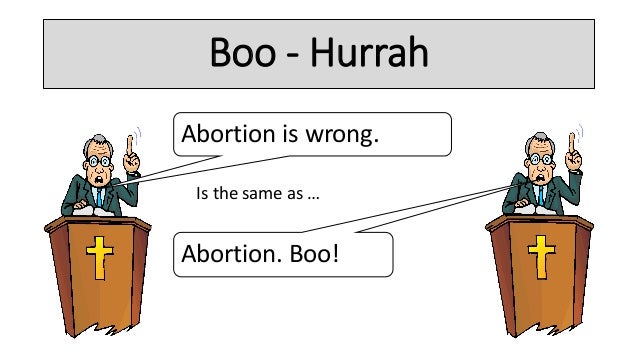
AJ Ayer – Emotivism
Where was I? Oh yeah. Fathers. So these people don’t mean generic fathers. They mean fathers who subscribe to their worldview. In their magical realm, these fathers are not abusive to their mothers or children; these fathers are not rip-roaring alcoholics; these fathers are the dads you see on the telly.
Suspiciously absent is the plotline where the fathers are ripped from their families through systematic racism and incarcerated as if they didn’t want to be there for their children. And this isn’t discussing whether it’s an issue of fathers or an issue of money. It isn’t discussing whether someone else might serve as a proxy for this role. Indeed, there is nothing magical about fathers unless you live in a fantasy world.
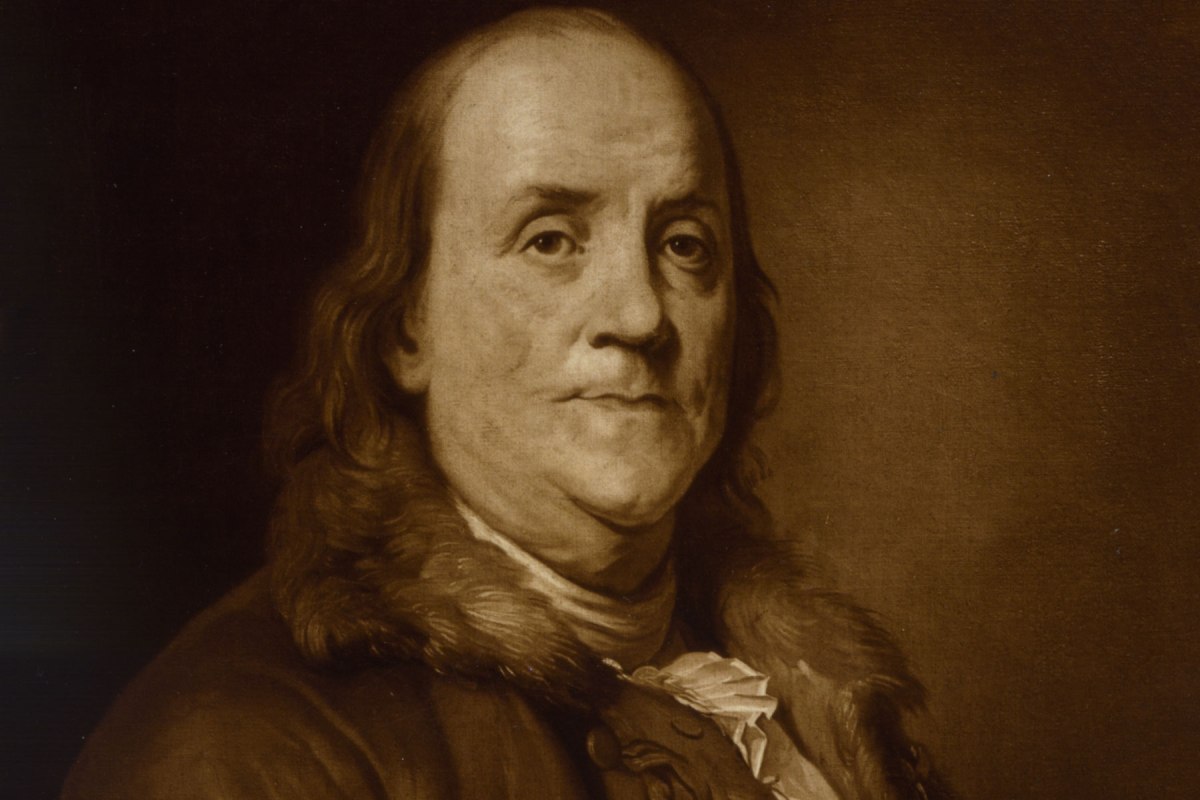
Interestingly, I started this blog exploring property, a concept that makes no sense to me, and continued on a Postmodern journey to discount rights and truth. And then Enlightenment thinking in and of itself. I think of these still, most recently turning onto the concept of Democracy. Whilst researching de Tocqueville, I happened upon this letter by Ben Franklin. What on? Property. And taxation.
Property
CHAPTER 16|Document 12
Benjamin Franklin to Robert Morris
25 Dec. 1783
Writings 9:138
The Remissness of our People in Paying Taxes is highly blameable;
the Unwillingness to pay them is still more so.
Benjamin Franklin
The Remissness of our People in Paying Taxes is highly blameable; the Unwillingness to pay them is still more so. I see, in some Resolutions of Town Meetings, a Remonstrance against giving Congress a Power to take, as they call it, the People’s Money out of their Pockets, tho’ only to pay the Interest and Principal of Debts duly contracted. They seem to mistake the Point. Money, justly due from the People, is their Creditors’ Money, and no longer the Money of the People, who, if they withold it, should be compell’d to pay by some Law.
Franklin calls out those citizens unwilling to contribute their fair share to the commonwealth.
Property superfluous to [the Conservation of the Individual and the Propagation of the Species] is the Property of the Publick
Benjamin Franklin
All Property, indeed, except the Savage’s temporary Cabin, his Bow, his Matchcoat, and other little Acquisitions, absolutely necessary for his Subsistence, seems to me to be the Creature of public Convention. Hence the Public has the Right of Regulating Descents, and all other Conveyances of Property, and even of limiting the Quantity and the Uses of it. All the Property that is necessary to a Man, for the Conservation of the Individual and the Propagation of the Species, is his natural Right, which none can justly deprive him of: But all Property superfluous to such purposes is the Property of the Publick, who, by their Laws, have created it, and who may therefore by other Laws dispose of it, whenever the Welfare of the Publick shall demand such Disposition. He that does not like civil Society on these Terms, let him retire and live among Savages. He can have no right to the benefits of Society, who will not pay his Club towards the Support of it.
Franklin is supportive of Locke’s property of ‘life, liberty, and property’ fame, but he is decidedly not a fan of passing along excess generational wealth. In fact, he feels that such excess property should accrue to the public.
To those unwilling to play by these rules, banishment to the wolves is not too good for them. Stripping them of citizenship is not too harsh a punishment.
He that does not like civil Society on these Terms, let him retire and live among Savages
I happened upon an entry in Current Anthropology: Is It Good to Cooperate? [PDF] (Volume 60, Number 1, February 2019), wherein the authors claim there are 7 universal moral codes. The universality is suspect insomuch as they found a preponderance of observations, so unanimity was not always found. I am also concerned with the specificity of the definition of property.
The group studied ethnographic accounts of ethics from 60 societies, across over 600 sources. The universal rules of morality are:
Help your family
Help your group
Return favours
Be brave
Defer to superiors
Divide resources fairly
Respect others’ property
It’s well past my bedtime, and I should be sleeping, so I just want to pick out one of these universals: property rights.
La propriété, c’est le vol!
What is Property? — PIERRE-JOSEPH PROUDHON
Property can mean several things: In the description of methodology, it appears that these authors are referring to property rather than possession, as a key identifier is the ability to transfer property intergenerationally. What is the scope of the definition of property. There is a difference between passing along a family home and passing along vacant property a world away. Is rent-seeking property ownership universal? Would all societies subscribe to the notion held by Western Capitalism, wherein one can own property that, theoretically, one may never have seen? In the United States, they have concepts like intellectual property, which is at best a subversion of the notion.
»» »» »» »» »» »» EDIT »» »» »» »» »» »»
There may be a problem with reading (or at least posting) at 2AM—and property is a hot button item for me. I may have been hyper-focused on the intergenerational wealth transfer. I’d like to read more about how other societies view this as well as which ones do and don’t. Of course, I’d like to understand how the interviewers couched the questions.
In the end, the summary was about possession and not property:
Private property, in some form or other, appears to be a cross-cultural universal (Herskovits 1952). Morality-as-cooperation leads us to expect that this type of cooperative behavior—deferring to prior possession—will be regarded as morally good .
Op. cit.
As an anti-Capitalist, I notice that no claims are being made into the morality of competition. I may may a few posts on my observations of the remaining 6 list items.
I haven’t done any film reviews, and I’m not about to start now. I’ve just watched What Still Remains on Netflix.
People become their own kind of monster.
What Still Remains Film Trailer
This is decent post-apocalyptic fare, some catalyst, societies, competing factions, good versus evil, at least in the eyes of the devout. But that’s not what I am going to be writing about.
What still remains contains good writing and strong character development. It does over-employ tropes, but this seems to be the norm these days: modular writing; rearranging the Lego pieces to make something that appears fresh. So what do I have to say?
Spoiler Alert: Proceed with caution…
This is a perfect depiction of the problems with property rights and social contract theory. There are apparently 3 factions—4 if you count independents.
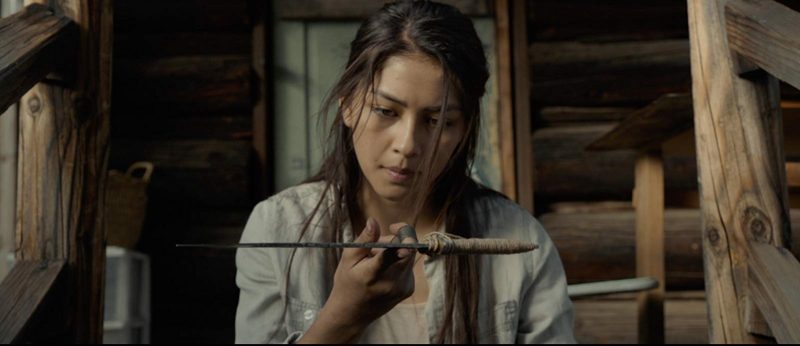
Anna
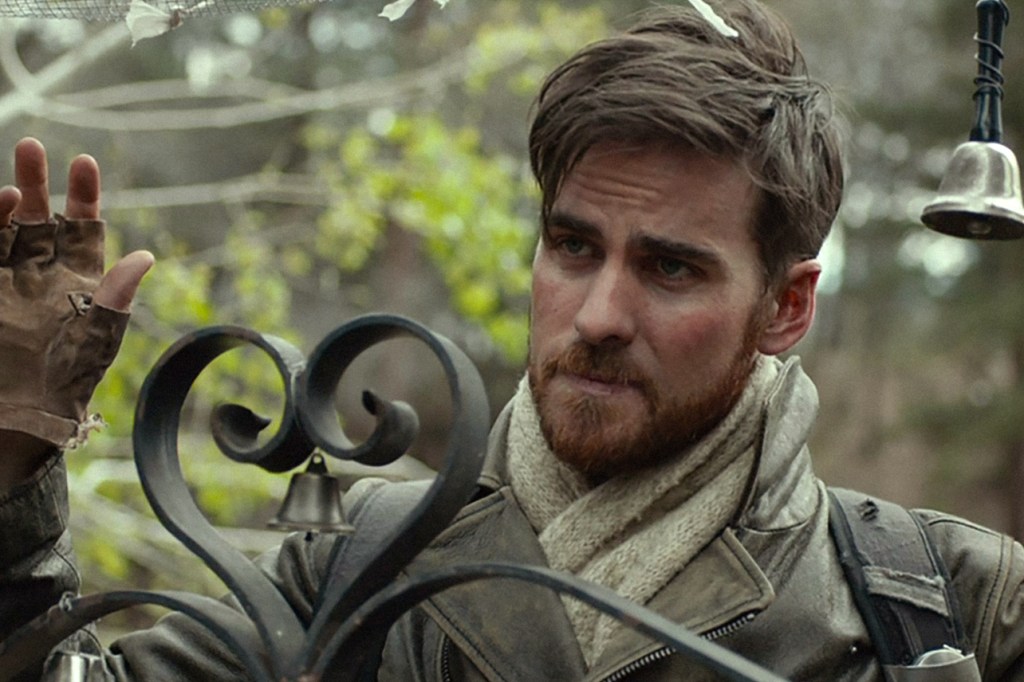
Initially, there were the Changed, never seen on screen and perhaps not even contemporaneous to the current period, though they may reside in the unseen cities. Anna, the protagonist, and her family are among the independent. Peter, a preacher from the ordained, holier than thou faction. In the realm of ‘if you’re not with me (and our God), you’re against me, thence evil’, they are the arbiters of all that is good. And then there are the Berserkers, as named by the Ordained. To the Ordained, Berserkers aspire to be Changed, but the Berserkers view themselves more along the line of Spartans: Pain is good.
Peter
All scenes are shot in the wilderness, but the various factions have staked property claims with wide perimeters. The penalty for trespass appears to usually involve death of the offending party—or at least a hefty fee. This is Hobbes’ ‘solitary, poor, nasty, brutish, and short’ life outside of society quip, though he didn’t exactly account for a class of societies despite this being common in his day.
Berserker
So, these factions don’t actually have property rights; what they have is a notion of property, and they defend it with violence, as is a necessary condition for all property. In so-called modern societies, the violence is obfuscated much in the same manner that supermarkets obscure the carnage behind the meat. It’s still there; it’s just at arm’s length. Violate one of these ‘rights’, and you’ll see the violence inherent in the system.
And then there’s social contract theory—or the gaping flaw in the logic. Anna is an independent, but one can only be as independent as the ability to defend their independence. It’s sort of like contract law. If you can afford to defend a contract, you are entitled to having it enforced.
Redact intellectual property rant.
Anna doesn’t particularly want to belong to either faction, who have divided their world into two pieces in the same manner that, say, Britain and Scotland might have. If you happen to be born there through some loin lottery, you pretty much have to choose a side. Given Sartre’s no excuses policy, you can choose neither; it just won’t bode well for you. You’ve got no real choice.
Social Choice Theory
In Anna’s eyes, upon the death of her mother and brother, she is persuaded with reluctance to return with Peter to his community, a God-fearing bunch. Her mum had indoctrinated her into this cult of God through bible readings, so she was primed for the eventuality. Some independent interlopers attempted to block their return journey by claiming trespass, so Peter summarily offed them rather than paying their ransom—a fee Anna has been willing to tender.
When the two finally reached the sanctuary, Anna quickly realised that she had no say in the matter: she was either a (good) member or (an evil) dead. To reiterate, this is an underlying problem with social contract theory. There is no exit clause.
Side Bar: Some have argued that the cost of coerced—though they’d never use this term—participation and compliance is owed to the greater good. There is no reason given why this is preferred or across which dimensions better is being assessed—or good for that matter—, so don’t ask. Long live Jeremy Bentham and John Stuart Mill with a hat tip to David Hume.
“The first man who, having fenced in a piece of land, said “This is mine,” and found people naïve enough to believe him, that man was the true founder of civil society.
From how many crimes, wars, and murders, from how many horrors and misfortunes might not any one have saved mankind, by pulling up the stakes, or filling up the ditch, and crying to his fellows: Beware of listening to this impostor; you are undone if you once forget that the fruits of the earth belong to us all, and the earth itself to nobody.”
Hobbes, Locke, and Rousseau each approached social contracts from their own perspectives, but it may be interesting to note that each was a privileged white male of his day. Sure, Hobbes was a monarchist, and Rousseau was the Thoreau of his day, a nostalgist, but he like the others were beneficiaries of the status quo, save perhaps at the margins.
Anna thought she had sovereignty over her choices. In the end, the plot line prevailed, but then again, this was just a movie, so even her choices were scripted.
We take property for granted. John Locke espoused life, liberty, and property. Rousseau observed that “The first man who, having fenced in a piece of land, said “This is mine”, and found people naïve enough to believe him, that man was the true founder of civil society. From how many crimes, wars, and murders, from how many horrors and misfortunes might not any one have saved mankind, by pulling up the stakes, or filling up the ditch, and crying to his fellows: Beware of listening to this impostor; you are undone if you once forget that the fruits of the earth belong to us all, and the earth itself to nobody.”
The first man who, having fenced in a piece of land, said “This is mine,” and found people naïve enough to believe him, that man was the true founder of civil society.
But property and its defence is nothing more than some accepted rhetoric. Libertarians presume this to be some inviolable right, and Anarchists and Socialists believe that property—well, private property anyway; real property—is a common good.
I have an issue with ownership of real property, though I don’t have such a strong opinion on possession. In reality, this is more of a practical matter than a defensible philosophical position. It has emotivist roots. As Hobbes noted (or I’ll paraphrase liberally), even animals in his state of nature have possessions, but there is no right to these possessions (which belong to the monarch anyway in society); there is only the ability to try to retain ownership through force.
In practice, this is what society does. Insomuch as the force is more potential than kinetic, allowing the state or community to exercise this force by proxy, it is not dissimilar to our consumption of meat products at arm’s length by sheltering the violent reality by intermediary grocers.
And we shelter ourselves through language. We don’t eat cows and pigs, we eat beef and pork, chateaubriand and bacon.
Returning to property, real property, it’s yours as long as you possess it, but it is not yours from a distance, and it’s not yours to bequeath. If we are to embrace capitalism—which I don’t, but for the sake of argument—, we should allow the property to go to the purpose that will provide the greatest utility. History as a judge demonstrates that it is unlikely to happen to be the someone’s heirs.
Philip Goff presents a strong argument published on Aeon as to why taxation is not theft, primarily because it is based on false assumptions about the morality of property ownership.
I have written a lot of short pieces addressing this question (the answer is always no). But this piece for Aeon magazine is the most extensive thing I’ve written so far, and goes into much more detail about the nature of ownership. I’m always amazed at how much this stuff angers people. I’ve been enjoying […]
Episode 8 of The Moral Foundations of Politics with Ian Shapiro was another difficult lesson to watch—rather to listen to—the student responses. Evident is the degree of indoctrination or brainwashing these students have been through. I want to document some pieces I feel are relevant to my position.
The fact that morality is perniciously imposed and infused on the unsuspecting
The fact that property rights change over time
The fact that legal interpretation changes over time
The responses were primarily knee-jerk responses anchored on institutional indoctrination. Whilst it makes sense to indoctrinate a group, I am opposed to imposing an obvious relative morality but passing it off as absolute.
Asking how prostitution could be illegal when sex and commerce are both legal, the responses—to be fair, only a couple people responded—were about how it might somehow ‘harms’ women or society as a sort of negative externality, be violent, have been coercive or a form of slavery, have involved a married or otherwise committed spouse, or have involved an under-aged person. These were poor man’s strawman arguments at best, each potentially with merit, but each a separate issue from the question.
In fact, we can likely find evidence of each of these in a ‘typical’ employment situation: coercion, under-age, a threat of violence, implied or expressed; the spousal issue doesn’t fit these situations, but even if we want to legislate keeping people safe from their own actions, it is as illegal for unmarried persons, so the rationale is insufficient.
The point I hold is that prostitution in and of itself is no more exploitative than any other source of employment, a source income. Given that Western society imposes income as the primary means to support one’s self, the wrong here is that artificial barrier. Were income not a veritable necessity, prostitution to earn money (or use as a barter) would also be unnecessary. This is not to say that the other aforementioned objections would be resolved; this because, as I mentioned, they are different issues.
Next, we are told that marital rape originally not considered a crime because a woman was considered to be chattel property transferred patriarchally from her father to her husband. As I’ve written previously, I do not subscribe to the notion of property in the first place, but taken that as given, it is obvious that property is determined through whimsy. Property rights change over time, whether receding as just noted or expanding to include intellectual property and the expanse of patentable ideas. It’s disconcerting that application of the law can be so arbitrary and, though perhaps not capricious, frivolous. And given it is all open to interpretation, the pendulum can swing in the other direction, as the women of Iran and other fundamentalist theocracies has experienced.
Apparently, I’m done ranting. Basic income has been mentioned as a solution to some prostitution, as some women participate out of desperation. Though I feel that this might kerb some prostitution, some women would still seek to supplement this base income, if only to advance their personal standard of living.
Who else loses sleep over how property rights can be derived legitimately?
I don’t need to argue the existence of God or gods or goddesses—not here anyway—, but I am willing to posit that if there were these deities, no human in privy to their word or desires in a sort of biblical way. Therefore any basis for scriptural law is illegitimate.
In the beginning…
I think it is useful to distinguish between the concepts of possession and property, so I’ll begin there. In the beginning, there was the earth—the land—; and there were people. (I’m taking liberties here, and skipping leaps and bounds.)
In the beginning, there was the earth—the land—; and there were people. (I’m taking liberties here, and skipping leaps and bounds.) Nature, which is to say ‘bounties of the earth’, ‘produces’ natural resources, raw materials: rocks, trees, chemicals, what have you. These belong to the earth and are inherently social goods.
The first people sustained themselves with these goods. Taking, say, a stick, I might fashion a makeshift club, and I might then possess this club. I have no inherent right to keep this stick. I may discard it of my own volition (or lose it) or it may be taken from me.
I understand the desire to claim ownership. Territorial animals lay claim to, well, territory; but this claim is defended through violence or the threat thereof and, to some extent, agency, for other allied animals to defend the claim (for myriad reasons). And territorial claims extend only to what one can actively monitor, so if I am a lion, I might possess a territory on the Savannah, but I do not coincidently also possess territory in London. Property rights attempt to extend this relationship, to possess something at arm’s length.
What is missing is the right to possess something. We can go back to Locke and—ignoring that nature and other living entities cannot participate in this system—enter into an accord, a social contract, one where if I possess a good not otherwise claimed by another, it’s mine to possess. As all potential parties have no say, one could argue that there is no legitimate manner to transfer from nature to person. The only defence is one of violence, as noted previously. We can define this transfer as legitimate, but simply saying something does not make it necessarily so. Nonetheless, let’s go from here, from a Hobbesian state of nature, where I can defend myself and possessions through a mechanism described by Rousseau: a social compact: I found it first—and it is useful and potentially this use or utility may be desired by others—, so I get to keep it—in exchange to ceding this privilege to others in my group. To extend this privilege is to extend the accord to other groups.
This is all well and good, but if one’s ability to maintain use of an item is limited by, say, distance or quantity, do I still have a right to possess it? If I possess 20 clubs and my clan has none, what is my claim? The claim of primacy—that I was there first—is weak. It would likely be in my interest (if not in communal interest) to share and give up possession, but having not established a right to that possession as property, how do I lay claim to these? Should I be able to? Should it be a right?
Let’s use a less simple example: a plot of land to farm. I’ve cleared the land, tilled the soil, sowed and tended seeds, and I plan to harvest the fruits of my labour. Many people might say that I am entitled to the fruits. This is debatable, but what if I possess more land than I can cultivate? Do I have a right to let the land lay fallow or otherwise uncultivated?
So current paradigms contest that, having applied labour to modify this natural good, I can hold it, possess it. Presuming that no one else has claimed ownership—a concept not yet introduced—, how does one extend possession? This should also address whether one can possess something at arm’s length.
Bedtime. Posting an incomplete, unedited draft with no citations or links…because it’s past 4 AM. Updates and extensions to follow. Hopefully, I’ll fall asleep and get some rest.













 Philosophics