Seven Types of Atheism

Some geezer, John Gray, wrote a book having this title. It was, let us say, ‘suggested’ that I watch it in video format—over an hour-long at that. I decided to search for a summary instead.

It’s not particularly up my street. The bloke who suggested the vid posted a statement:

Atheism is a narcissistic apostasy; the adoration of the things humans do & make; the worship of the golden calves of science & technology.

When I responded thusly « This quip reduced and conflates, almost creating a strawman. I suppose some atheists might be narcissists, though I don’t see that they would significantly differ from a sample of the general population. I’m guessing the second clause is intended to connect from the first, which is to claim that an atheist is a human who chooses STEM over gods as if there are no other alternatives, which creates a false dichotomy. But to treat atheism as some monolith is to treat all religions as ostensibly identical », his response was

What is atheism?.

To which I replied, « Atheism is the absence of belief in gods (or supernatural beings, if that’s a more generalisable concept). »

well, that is not enlightening at all. Explain atheism clearly.

That is all there is to it. There are different reasons why people are atheists, but that’s the definition. Etymologically, ‘theism’ is ‘belief in a deity or deities’. Atheism, applying the Greek prefix ‘a-‘, is the negative state of ‘theism, so the absence of ‘belief in a deity or deities’.

Atheism is not science. A large number of scientists believe in God. They see no contradiction between God and science, in fact they find the order behind everything reinforces their belief.

And so here the conversation, as it was, went off the rails. At no point did I invoke science. And then he promotes the John Gray video.

Interview with John Gray on Does God Exist

And we’ve been there before.

  1. New Atheism: the debate between science and religion was a result of confusing myths with theories. Religion is no more a primitive type of science than is art or poetry; scientific inquiry answers a demand for an explanation; the practice of religion expresses a need for meaning.
  2. Secular Humanism: a hollowed-out version of the Christian belief in salvation in history; the widespread belief that humans are gradually improving is the central article of faith of modern humanism
  3. Science-Religion: Gray reflects on the twentieth century’s strange faith in science – a faith that produced the false equation of evolution with progress and the racist ideologies that infect our social arrangements and political institutions
  4. Political Religion: Modern political ideologies are de facto religions; the belief that we live in a secular age is an illusion
  5. God-hatred: absorbed by the problem of evil; suffering, if inevitable, is at least infused with moral significance
  6. The Unsentimental Atheisms of George Santayana and Joseph Conrad: Santayana dismisses any idea that civilization is improving; everything in this world is a progress towards death. Conrad wrote that man is a wicked animal; his wickedness has to be organized; society is essentially criminal – otherwise, it would not exist
  7. Mystical Atheism: Schopenhauer was deeply and articulately antagonistic to religion in general; he rejects the notion that history has any metaphysical meaning, or that human beings are somehow advancing

Disclaimer 1: This summary list is copy-pasted from the linked source and edited ever so slightly to fit here.

Disclaimer 2: Neither did I watch the video nor read his book, so the summary might be off-kilter.

Still, I offer my reaction/reflection.

Firstly, this comes off not as an attack on atheism; rather, it’s an attack more particularly on Enlightenment and post-Enlightenment thinkers, predominantly Scientists—as in those who practice Scientism religiously.

Secondly, this limited attack garners the same critique as I give Dawkins’ God Delusion. I liked this book, but whereas Gray limits his attack on a thin slice of atheists—despite offering up 7 flavours—, Dawkins limits his attack to Christians; perhaps, some Abrahamic denominations. This is a particular God and particular disciples.

I address these in turn.

  1. New Atheism: I agree that Scientism simply switched faith from God to Science or it deified Science, whichever vantage you prefer. This ilk simply swapped God for Naturalism. These are the same lot who offer up ‘Self-evident truths’ and Natural Law. Please. I agree with neither.
  2. Secular Humanism: Whilst admittedly secular, I am not quite a Humanist and decidedly not a Secular Humanist™. Here, I disagree with the underlying teleological notion of both.
  3. Science-Religion: The only nod I am willing to give to science is the evidence-based, falsifiability over faith, but much of science is still faith-based. It just operates from a different metanarrative. Again, Scientism is no one’s friend.
  4. Political Religion: I agree that this is as much a scourge as organised religion. By now, one might notice a trend—a healthy does of whataboutism: We can’t suck because we’re no different to this other thing that you might be attached to. Except they are all bollox through and through. Political ideology is religion without the blatant metaphysical nod—though it is still there beneath the surface.
  5. God-hatred: Even having not read the book, this makes no sense whatsoever. How can one hate what one doesn’t believe exists? I suppose I could hate unicorns, faeries, and Harry Potter, but I don’t think that’s the same thing. The summary suggests that it’s more about an obsession with evil, but I don’t have enough context to respond meaningfully. Do atheists actually believe in evil? I don’t. And, except idiomatically, I don’t personally know of others who do. Feels like a red herring.
  6. Unsentimental Atheisms: Satayana refutes the Secular Humanists. I’m buying what he’s selling. Conrad is taking a spin on evil but opting to label it wicked—a bit of a drama llama. I’m not buying it.
  7. Mystical Atheism: I like Schopenhauer—probably because he’s such an underdog. He did glean a bit from Buddhist philosophy. So have I. But Buddhism ranges from the secular to the sacred. I don’t tend to stray too far from the secular. I fully agree that history has no metaphysical meaning and human beings are not objectively advancing.

If anything, this is one of the longer posts I’ve made in a while. Thanks to the Copy-Paste Gods. Allahu Akbar, Oh Mighty. In the end, Santayana and Schopenhauer notwithstanding, I am still left with a why not neither.
FSM

Superinstitutional Heros

I’ve never been a comic book guy or into heroes or superheroes. In fact, I have always had a thing for the underdog. This article points out The Batman’s Privilege Problem. I’ve skimmed a few comic books and graphic novels, and I’ve seen a few movies, but I am not really steeped in this space to speak to the nuance—and there is probably a difference between comics and graphic novels, but like I said: not inters. I just don’t identify with most of it. Not the violence. Not the Truth, Justice, and the American way of legacy Superman. But I do sense a privilege problem. Defenders of the status quo. I wonder if comic book aficionados tend to be more politically Conservative.

A quick Google search, and I’m mostly correct. Evidently, Marvel authors trend toward the Right. This article ranks some figures Conservative, Centrist, and Left, although the Left feel more Liberal than Left, and they are all constitutionalists. Apparently, X-Men were born of the Civil Rights movement in America in the 1960s. Still not my bag. Where are the Anarchists? At this rate, I’d settle for a Marxist.

One last mention: this piece points out that even where there are prominent social justice issues raised in one or another comic, the subtext (or overarching meta) is Conservative. This likely creates tension in a manner of speaking, but it creates dissonance for me.

I don’t have much more to add, but the article caught my fancy. It resonated for me, and having not posted for a while, I figured what the hell.

The Violence of Bureaucracy

Right. So another rabbit hole. Several things I have come across recently have mentioned the concept of bureaucracy as violence. There was a reference by David Graeber and some journal articles I happened upon. I have so much going on that I don’t have time to give the topic justice, but I wanted to employ this post as a reminder—along with the host of other reminders to which I need to attend.

Let’s start with some definitions.

Violence

The intentional use of physical force or power, threatened or actual, against oneself, another person, or against a group or community, that either results in or has a high likelihood of resulting in injury, death, psychological harm, maldevelopment or deprivation.

Parsing the salient parts, I distil the meaning for my intents and purposes to be the intentional use of physical force or power, threatened or actual, against oneself, another person, or against a group or community, that either results in or has a high likelihood of resulting in injury, death, psychological harm, maldevelopment or deprivation.

For further clarity, we arrive at a

Violence is the intentional use of power, against another person that results in psychological harm or deprivation

Bureaucracy

Management or administration marked by hierarchical authority among numerous offices and by fixed procedures.

Ostensibly, my train of thought is that bureaucracy is a deontological structure meant to standardise and normalise a process. Problems arise by the facts that (1) one size doesn’t fit all and (2) it’s a system thinking challenge likely missing dimensions—if the domain is even appropriately defined and accounted for at the start. This is where bureaucracy intersects violence.

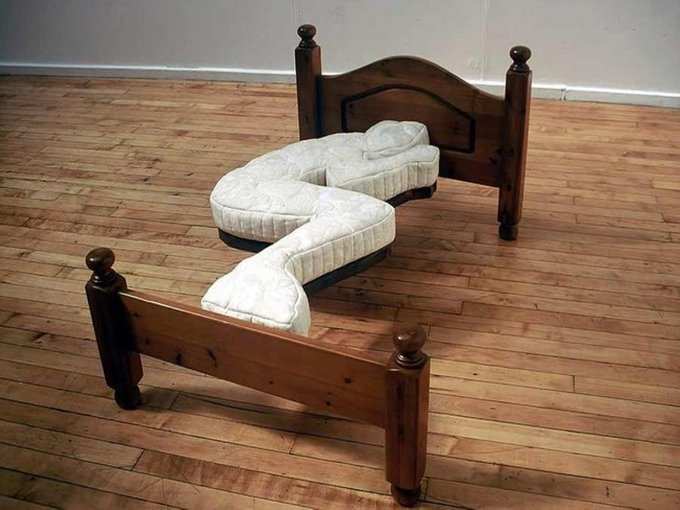
bureaucracy becomes a Procrustean bed

In my mind, bureaucracy becomes a Procrustean bed. Speaking of bed… Fais dodo.

EDIT: In a manner of speaking, I might suggest that normalisation, as a rule, is violence, but I haven’t exactly thought it through. I am not particularly comfortable with the notion of self, so against whom would this violence be perpetrated? Nonetheless, this Procrustean notion still springs to mind—as a moulding. Some might consider it to be character-building. But his lot would either deny the violence or consider it to be a worthwhile crucible. But it’s only a crucible when this character outcome comports with their accepted ideal. The only leeway given is in consideration of those with poor childhoods leading to delinquency. This does not diminish the bloodlust for justice, but it allows for blame to be cast, if not on the perpetrator then on the parents or guardians. I digress.

Hannah Arendt spoke of the Banality of Evil. In a manner, the violence that is bureaucracy is just this sort of metaphoric evil. This 7-minute summary (that could have been 4 if not for the stammering and pauses) is about just this point. In my experience, most bureaucracy is of the sort Arendt write about. I feel that this presenter is a bit more conservative about where he might draw this line.

I’ll exit this post with an observation/rant. I was shopping the other day, and I had one item. There was a short queue situated between a cashier and a self-checkout kiosk. We customers seemed to be dequeuing fine when a frontend supervisor appeared to instruct us to choose a register. I was second in the queue so his interaction with the person ahead of me went something like this:

Employee: Are you going to use the self-checkout?

Customer: Yes

Employee: [Looks at the kiosk]

Customer: Unless this register becomes available first.

Customer: [Cocks head incredulously]

Employee: You need to choose one.

At that moment, the cashier freed, and she took the vacancy. Thankfully—as my mind pondered how illogical this policy was (if indeed there was a policy) and how poorly the maths skills of whoever created it—, the self-service registered became available. Crisis averted.

The takeaway in the story is that blood pressure was unnecessarily elevated because of this bureaucratic rule. This is trivial. I won’t bore you with more anecdotes. Besides, I’m pretty sure, you’ve experienced this violence to one degree or another—whether at work, in commerce, interacting with government workers, or who knows what.

Monopoly on Reparations

Many places have histories of exploiting a group or groups to the advantage of others. Although this scenario applies to these people in a similar manner, I am thinking specifically of the exploitation and reparations due to the black and indigenous people of colour, BIPOC, in the United States.

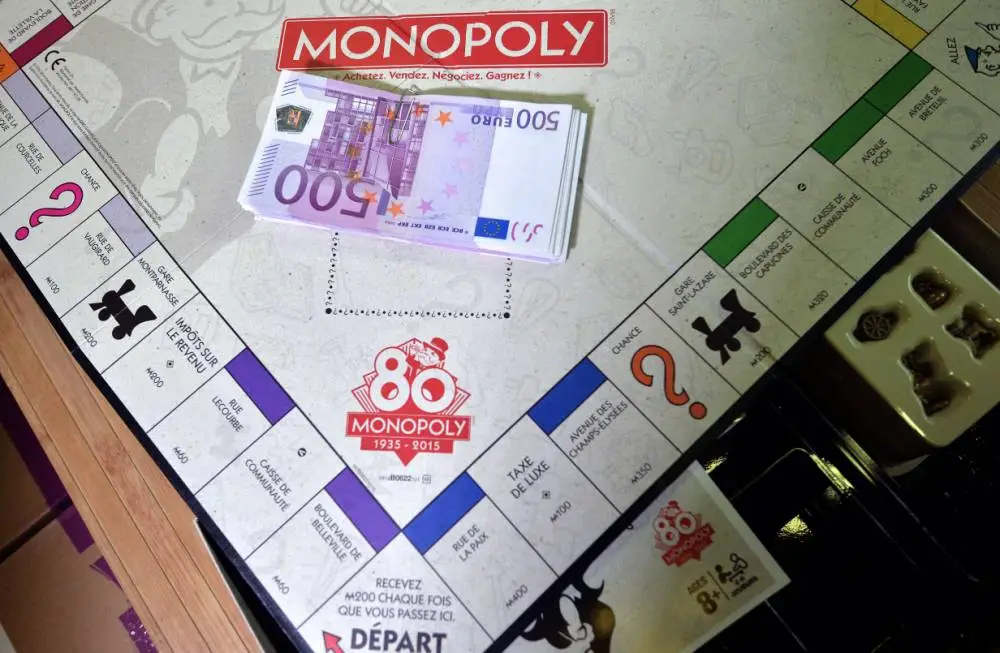
I believe that many people are familiar with Monopoly, the board game where, among other things, one accumulates properties and extracts rents from the other players. My intent is to illustrate with Monopoly the need for reparations, to illustrate why reparations are necessary to restore justice. This is a twist on John Rawls’ veil of ignorance thought experiment.

Slave auction advertisement

I have heard some people say that the past is the past, or if there were injustices in the past, that was ages ago, and now everyone has an equal chance. No special accommodations or affirmative actions are necessary. I don’t agree that this is true, but let’s just say for the sake of this exposition that opportunities are equal for everyone in a given society.

There are parallels between a game of Monopoly and the way we are thrown into this world. No one differs in this regard. We are all subject to a loin lottery.

Imagine that I already own all of the properties. You own none. Irrespective of how the game came to this condition, your chances of winning are nil to none. Now imagine that the reason for the disparate ownership was the result of a system of injustice perpetrated by the player I inherited my position from on the player you inherited yours.

No matter how fairly the game is from now until the end, if your starting place leaves me with all of the property and you without, your chances of winning are slim to none. Favouring tradition and inheritance already benefits some people over others, but when the benefit is the result of a pattern of injustices, it feels more egregious. Worse yet, even if I ‘give’ you Whitechapel Road, Baltic Avenue, or Rue Lecourbe and keep the rest, your chances have only slightly improved.

With the end of US Civil War and the emancipation proclamation, affected blacks were promised 40 acres and a mule. For most, this never happened. This remains an outstanding debt. And whilst 40 acres in some places would be a boon, not many today really need a mule, so descendants of slaves need to be made whole. Reparations are a way to accomplish this.

Reparations are payments in arrears to attempt to compensate for the centuries of an unbalanced playing field. And reparations should allow you to recover more than Whitechapel, Baltic, or Rue Lecourbe properties. At least get Bond Street, Pennsylvania Avenue, or Boulevard des Capucines. If you’ve played Monopoly, you’ll understand that this is still not enough.


Nontonomy

Being critical of freedom, liberty, and autonomy is likely to make one the subject of scorn and derision. Most people tend to feel these things are self-evident attributes and goals, but they are all simply rhetorical functions. I was reading a passage in Mills’ On Liberty, where he posits

That the only purpose for which power can be rightfully exercised over any member of a civilized community, against his will, is to prevent harm to others. His own good, either physical or moral, is not a sufficient warrant … Over himself, over his body and mind, the individual is sovereign.

On Liberty, John Stuart Mill

It should come as no surprise that I question a position adopted by the Enlightenment Age. These geezers posited that many things were self-evident, but all of this is self-serving magical thinking, and there is no reason to have truck with any of it. These are all normative claims being dressed as positive, non-normative, ones, hoping to skirt scrutiny by employing a position of self-evidence.

I am generally critical of any notions of identity and self from the start, so affixing some attribute of power to it seems just silly.

It seems that I again am distilling this notion to a power equation. As a person, I want to claim power, if anything, over my self however that might be defined. And though, I would like this, too, it is nothing more than some emotional reaction.

Without delving into the depths of autonomy quite yet, on a proverbial desert island—as necessarily the case with any social constructs, where these notions are meaningless without a social context—adding a second person creates friction. Person A seemed to have full autonomy on this island—notwithstanding the other life forms on this island that are somehow never granted autonomy—now has had this autonomy reduced by the presence of Person B.

Firstly, Person A may have claimed this island to be their own. Given this, Person B is infringing on this autonomous decision, having arrived sequentially. Is Person B tresspassing? Does their presence harm Person B, be limiting their autonomy however slightly?

Mills’ concept is one of no harm: one is free to do what one chooses as so long as it doesn’t harm another. Accordingly, it says one is free to harm one’s self—essentially treating the self, the corpus, as personal property. Just as one could damage a piece of personal furniture, one could damage themself. I am not sure if Mills intend this to extend to suicide, but that’s not an important distinction here, so I’ll move on.

Let’s return to Person A on the island—only Person A is a woman and Person B is a fetus. What rights and autonomy does Person B now possess? For some, it has full autonomy; full personhood. Still, Person B is ostensibly trespassing, so does this autonomy even matter if it exists?

If you are Person X and own a house, and I, as Person Y, enter into it, how does this differ from A and B? Can you justify disallowing Person Y from exercising autonomy whilst supporting Person B? I don’t want to make this about abortion, so I’ll keep stop here.

Covid Casualties

I’ve got several things on my mind, but they are ostensibly unrelated. I’ll post separately as time allows, but this is a personal story.

My sister has been visiting a dialysis centre three times a week for the past 5 years awaiting a matching kidney donor. She rang me the other day to tell me she was en route to hospital as they had found a donor. Found is probably a poor word choice. Some person had died, rendering the kidney superfluous for all intents and purposes.

My sister was excited to regain some control over her life. She was told that the host of this kidney had been diagnosed with Hepatitis C and was informed of the risks. The official cause of death was Covid—perhaps owing to a compromised immune system. No matter. My sister accepted the risk. It was evening, and the transplant was scheduled for the morning after running some test panels.

That morning, she was devastated by the news that she had tested positive for Covid, so she was no longer a candidate for a transplant. This is a reminder that Covid is not just about the effects of having caught it. She’d go back on the list and wait. Perhaps it wouldn’t take 5 years this next time, though there are no guarantees.

This is not my first experience with Covid. My 20-something-year-old daughter was hospitalised for over a week due to Covid. I’ve had friends and acquaintances get it, but they all survive–long-Covid effects notwithstanding.

I thought I’d written about the death of my last girlfriend who was another Covid casualty of the indirect variety. She died in June 2020. Her plight was sealed by deferring treatment of an infection for fear that hospitalisation would increase the probability of her contracting Coronavirus. This decision turned out to be fatal.

To be fair, there is a lot of information, misinformation, and disinformation abound, and it’s a challenge to sift out the relevant material. And neither is the ambient fear helpful. And so it goes…

Still a Slave

“Wage slavery is not the same as slavery, and this diminishes the experience of plantation slaves in the antebellum Southern US states” is a sentiment I’ve heard repeated over the years.

I’ll argue that it is the same. Saying wage slavery is like when the then-president of the United States, Bill Clinton, denied that oral sex was sex despite it being an obvious part of the name. When one says wage slavery is still slavery, s/he is making a commentary on the lack of agency, a lack of personal control. That the worker has a choice over which master to slave under is hardly a consolation. That a plantation slave has a choice of picking cotton or tobacco is of no consequence.

To disqualify wage slavery as slavery is to disqualify a 3-month pregnant woman as being not as pregnant as a 6-month pregnant woman. One might be closer to term, but they are equally pregnant.

That a plantation slave may have had less freedom and run the risk of physical beatings, torture, or even death is a sad commentary. That they may have separated from their families and have no autonomy is a matter of degree.

The slavery connexion occurs where the human needs to comply. Sure, a wage slave can opt out and live as a transient—ostensibly homeless; perhaps s/he can home-surf. Perhaps s/he can beg or live off the land.

Wage slavery is not the same as slavery

To me, the common missing element is to be able to operate as a functioning society, that as communities, we might contribute however we see fit. Of course, that narrative will quickly provoke an appeal to Tragedy of the Commons. People are selfish and act only in their own self-interests. And this is accepted uncritically as fact rather than evaluating whether this worldview is a consequence of Modernity or Capitalism, whichever nomenclature one has opted to adopt.

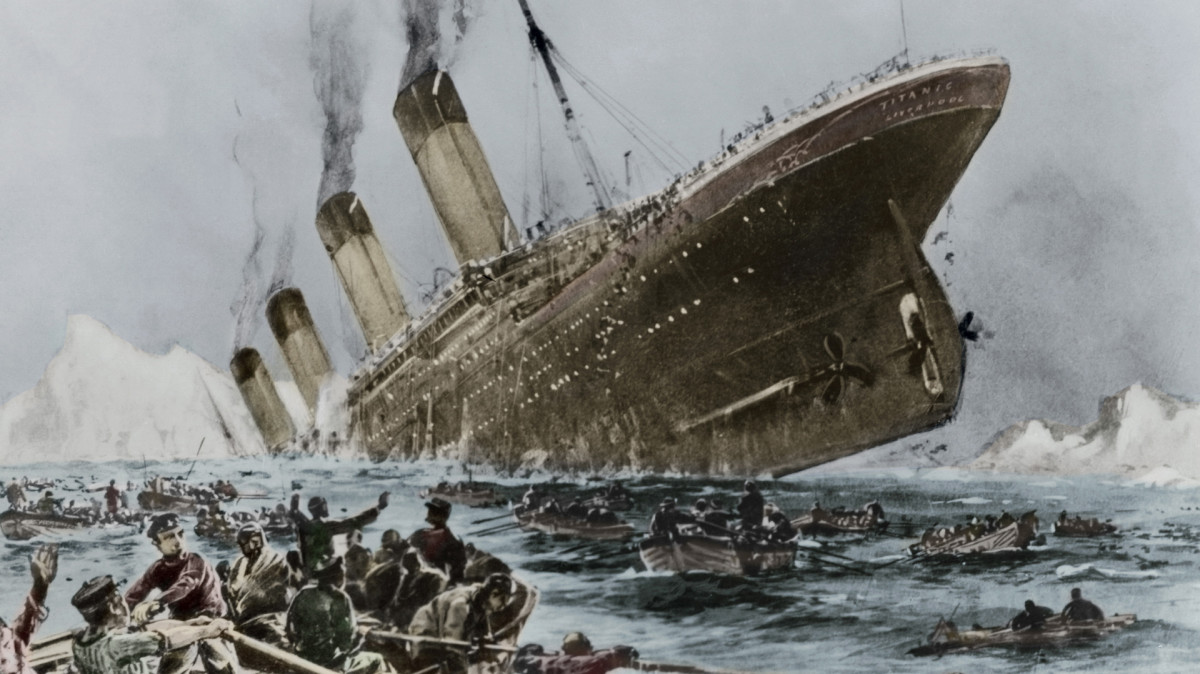
Wage slavery is slavery. Depending on the information source bout 50 per cent of Americans are a paycheque away from needing to deplete savings to survive; some have assessed a single paycheque from homelessness without intervention. One paycheque from poverty. Over two-thirds of Americans have been living paycheque-to-paycheque since the Covid-19 pandemic hit. If this describes you, it likely provides little solace that you are not alone. Who on the Titanic was relieved to know that other people shared their plight? Is there a silver lining for those who are paid fortnightly or monthly? And God forbid the ones whose paycheque arrive daily—perhaps in cash from the till.

Research from the Federal Reserve found that 4 in 10 Americans couldn’t afford a $400 emergency, and 22 per cent say they expect to forgo payments on some of their bills. It’s not much better in the UK, where the runway appears to end at 2.5 months rather than 1, although about two-thirds of renters would expect to make it more than a month.

Slavery, like turtles, all the way down. Just be thankful the worst that can happen is that one starves to death or pursues the life of Valjean. Dissociating wage slavery from plantation slavery is like separating the abbatoire from the butcher’s shop. When you’re the chattel it makes little difference.

Note to Self #2

Hopefully, I get past these self-notes, but for now, I’m busy…

I don’t know if this is a good thing or not, but as I was structuring my thoughts critical to democracy, I discovered (recovered?) a structure I created several years ago. The structure was centred on the premise that democracy is a specious concept that retains life through the illusion of control. My latest concept is that people are just too dumb for democracy—not that it would matter if they weren’t.

I still question why I expend the effort. Who wants to read a piece whose premise is that the reader is likely too stupid to merit participating in a democratic process? Even worse, who wants to read a piece that claims the weakest link in any political process is people. I’m a sad panda.

On the upside, there’s some content crossover. And now I need to settle on a new centre. Please stand by.

Neo-Feudalism

It seems that Capitalism took a wrong turn and is retracing The Road to Serfdom. Hayek worried about government intervention in business, but he did not imagine a world where corporate leaders would grow large enough to not only be able to control government power through money and influence, but it could actually ignore governments altogether—or at least to a large extent.

The last time government was challenged at this level was by the Church. In the end, it resolved into a tenuous stalemate. But this next conflict will be ostensibly bloodless, opting to be fought with political weaponry.

serf master cap

To the workaday people, it doesn’t change much. Denial is an interesting bed partner anyway. As most deny being wage slaves, they now just deny being serfs. In their minds, they are free, just inches from the goal line. I’m not the one to break it to them that the goal line away from in inches is the wrong one. They’re an entire field’s length to reach their goal. Thank goodness for denial and mechanisms that assuage cognitive dissonance. Ignorance is indeed bliss.

For some, the COVID response doubled down on the transition from Capitalism to Communism. For others, it was a reinforcement of the strength of Capitalism—and if in the milieu of fighting between authoritarians and Libertarians. But the phoenix rising from the dust—hardly flames—seems to rather be a sort of neo-feudalism. This seems to be a more likely future than Capitalism in a nation-state world. I assume that Nation-states will continue to exist, but they will serve only to contain the commoners, the ones who can’t afford to escape the fetters.

I don’t have much to add to the discussion at this time, but this article sums up some of my perspectives. My question is how the Capital aspect is extricated from the system. The serf part is easy.

Slotrocket

Being in a band is hard. It’s like being married to a bunch of partners, and if you are a band and not just some cat with some supporting characters, you’ve got artistic differences to consider. This is where I soured on direct democracy.

Slotrocket is the name of one of the bands I performed with. We played under this name exactly once, but let’s rewind to the democracy bits.

Skipping a lot of the details, I played bass in this line-up. It was a 3-piece with a focus on alt-post-grunge-nu-metal, but we all came from different places musically. The drummer came from speed metal, death metal, and maths rock. The guitarist-vocalist came from Classic Rock, Grunge and Nu-Metal. I came from all sorts of places, but I wanted to focus this project on the post-grunge thing. For the uninitiated, this is the likes of Seether, Three Days Grace, Breaking Benjamin and so on.

We didn’t have a name. Since we only played with friends and at parties and sometimes provided the backing for live karaoke, it was just us. We did arrive at the name of Breached, but it turned out that a Canadian band was already calling dibs on that, so we just let it slide—especially when they released an EP in the vein of early Incubus.

But then the guitarist-vocalist didn’t want to hold both roles. Too much effort. He didn’t care which. In the end, they found a female singer who was interested. It seems that there was a mixup in communication. They asked if I minded if she joined us during our next rehearsal. I figured it was just another live karaoke session, so when I said yes, it turns out that she was now a member of the band. Truth be told, I didn’t think a female would cop the vibe I was seeking. She was no Lacy Sturm or Amy Lee. She didn’t know any grunge material as she was more of a Country gal. But that’s not the story.

The story is the name. We deliberated for well over a month to settle on a name. We decided to create a spreadsheet. We’d all force rank the entries. And each of us had infinite veto votes to kill an offending entry from the list.

Skipping ahead a few chapters, I liked Rapeseed. It was a benign word that sounded edgy. The boys were fine with it. Notsomuch, the girl. There was no particular rush until we booked a gig—the gig. We’d need a name to promote.

I came up with Slotrocket. Again the boys were fine with it; her notsomuch. However, she didn’t veto—later claiming that she didn’t think we could possibly be serious. Since I booked the date and created the adverts, everything seemed to go under the radar—or under the rug.

A bit before the show, I was distributing material and advertising on our media outlets (as it were) and she caught a glimpse of the promo mats. Let’s just say that she was not amused. Still, when the time came, we performed.

OK, so I skipped over some stuff—the months of pouring over a spreadsheet. Our goal was unanimity. The name didn’t have to be everyone’s top pick, but we did need to attain a consensus view. As it happened, two of the biggest decisions came about by accident, and they both resulted in hard feelings.

It’s not that the 3 or 4 of us couldn’t have eventually come to a unanimous decision amounting to all of our first choices, but this would have taken time—and who knows how much.

One may feel justified accusing me of allowing perfection to be the enemy of the good, but that’s just something apologists tend to say, as they defend their preference for democracy.