This may end up being a shorter post, but in the realm of free will and agency, ask yourself about conspiracy theorists. Not a particular theory—or maybe some safe target like flat earthers. I think one would be hard-pressed to say that these people choose to believe this. They are convinced for whatever reasons. In principle, people who tend to believe in conspiracies have other determining factors—not the sort of ‘determined’ as Determinism suggests, but still beyond their conscious choices. We can agree with them or mock them, but they’ve got a predisposition toward these beliefs.
Social psychologists often argue that beliefs in conspiracy theories are connected with broader social and intergroup conflicts where conspiracy theories are used to justify and maintain conflict or to attribute blame to an unjust social system (Crocker et al., 1999). Other research has sought to explain the appeal of conspiracy theories by focusing on personality characteristics of conspiracy theorists. Among other factors, a sense of powerlessness and anomie—an inability to affect change and feelings of insignificance within society—have been found to correlate positively with high levels of beliefs in conspiracy theories (Hamsher et al., 1968; Whitson and Galinsky, 2008; Bruder et al., 2013).
Of course, people truly guilty of the conspiracy being accused tend to push the notion that their accusers are nutters, and this redirect tends to work on those not prone to conspiracies. This is problematic relative to getting to the facts of the matter, but for our purposes, yet again agency has been subverted.
“When people feel threatened and out of control, it’s natural to want to feel more control and bring order to the randomness by resorting to conspiracy theories,” says John Cook, PhD, founder of the website Skeptical Science and co-author of “The Conspiracy Theory Handbook.”
This is pretty much the same cognitive deficit behind the blaming that agency serves as an unwitting proxy.
Americans are a particularly gullible lot, with some 80 per cent of them believing in at least one unsubstantiated conspiracy theory. Of course, it could prove that at least one of these becomes substantiated. In fact, perhaps it already has. I don’t know if the United States government is particularly mendacious or if that is a conspiracy belief in its own right.
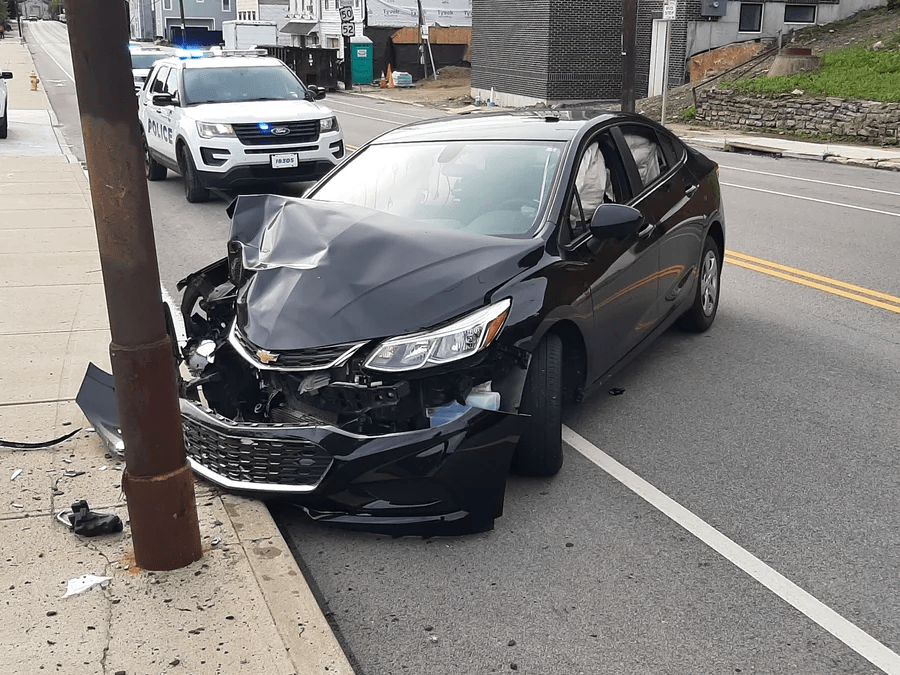
Robert Kane argues that ultimate responsibility (UR) should guide us in determining whether someone is responsible for their actions. He gives the example of a drunk driver who gets into an automobile accident. If the actor tries to skirt responsibility because s/he was intoxicated, hence incapacitated, then [1] we can still rewind to an action taken that caused this intoxicated state and then [2] choosing to drive—a causal relationship articulated by Aristotle. This seems fine, but it’s a specious defence.
According to Kane
According to Kane—noting an issue raised by some—, it doesn’t require an assessment that a person could have done otherwise. This condition has numerous implications for free will.
For example, it doesn’t require that we could have done otherwise for every act done of our own will. But it does require that we could have done otherwise with respect to some acts in our past life histories by which we formed our present characters. Kane calls these self-forming actions (SFAs). According to Kane, [3] we act from a will that’s already formed, but [4] it’s our own free will by virtue of the fact that [5] we formed it by other choices or actions in the past—self-forming actions—, [6] for which we could have done otherwise.
Consider the drunk driver. If this were not the case, there’s nothing we could have ever done differently in our entire lifetimes to make ourselves different than we are—a consequence that’s incompatible with our being, at least to some degree, ultimately responsible for what we are. And that’s what I think free will requires.
Kane’s Challenge
I marked passages in brackets [n], to serve as a reference for my commentary here. Some of my responses may be repetitive, so I’ll try to make any redundancies recursive.
[1] Kane suggests that even if the person is incapacitated at the time of the accident—hence not responsible in the moment—, we can trace events back through time and pinpoint an event that caused the incapacitation. In fact, we can trace it back to the decision to imbibe in the first place. I have two objections here, but I’ll defer the second one to my next reaction.
Kane says we can rewind to some causal event. We are in agreement on this point, but I have a question: why stop there?
In engineering, there exists a concept called root cause analysis, and there is a concomitant heuristic called the 5 Whys. Essentially, using the DUI example as a discussion point, we can refer to the accident as event T0. Then we can trace back.
For the sake of brevity, I’ll ignore trivial or immaterial events such as s/he encountered a detour and so took an unfamiliar route or s/he fell asleep at the wheel, missing a green light, which caused a delay, which meant that she was in a place to happen to hit another vehicle—presuming that if s/he had been a minute ahead of her fateful schedule, there would have been no other vehicle to hit. This might be a logical line of inquiry, but let’s shelf it.
So, tracing back, at T-1, we find our actor already intoxicated and starting the car. At T-2, we find our actor drinking the last of multiple rounds of alcohol. We could trace back all the way back to, say, T-5, where our actor made the decision to take the first drink.
We may have difficulty pinning down where the impairment kicked in. Was it the drink at event T-2 or was it earlier, say, ay T-4, where all subsequent drinks were not assessed rationally? In any case, even if we stop at the last lucid state, T-5, then everything that follows can be said to be related to that event. But I have a problem.
[2] Firstly, if s/he was mentally incapacitated, how could s/he make a rational decision to drive or not? Secondly, even if we say that s/he became mentally incapacitated at event T-4, then the decision at that juncture was not rationally deliberated.
We could introduce a twist here, which is to assign culpability to the drink server. Some local statutes exploit this by making the barkeep culpable for serving a drink to an already intoxicated patron. Of course, this has the same issue noted above because we can’t say with any reliability whether the actor was intoxicated at T-2 or T-4. Let’s not get mired in this. This is not my biggest concern.
My key concern is in stopping there at T-5. Why not go back to why s/he even had the first drink? Why not go back to why she drinks in the first place? Why not keep going back. More on this ahead. Let’s continue.
[3] Kane says that the actor, the decider, already has a formed will. In this, he is introducing another concept—one of the self or the individual. Let’s continue, and I’ll get to that, too.
[4] Echoing the self, Kane doubles down and says that this self has a will, and the actor owns it. As such s/he is responsible for these willed actions, these caused actions. So, let’s dig in.
[5] Kane asserts that we formed this self by other choices or actions in the past that he calls self-forming actions. This is where in my mind this skein of logic unwinds.
Ignoring whether the self is anything but narrative convenience, why should one accept that the actor has any agency in this so-called self-forming? What proof do we have that this actor is just a victim of circumstances—from geworfen until event T0? Even without invoking determinism, I think it’s safe to assume that this actor is a consequence of, at least, hereditary and (monomorphic and polymorphic) genetic traits including temperament. Then we have structural influences, such as family, peers, institutions, and authority figures, societies and cultural norms.
It might be difficult to determine what percentage of the self are formed by this, but it would be disingenuous to defend this as self-forming rather than formed by some crucible.
[6] Kane’s final point is about whether one might have done otherwise. He downplays this point, and so shall I. If someone insists that this is important, I’ll address it at that time.
Enfin
I left out some key points that I’ll likely return to in future. Essentially, Kane is a traditionalist who pines for virtue and character, two concepts I feel of figments intended to act as tools of power maintenance. I feel this will get us down a rabbit hole, and I am rabbitted out, so let’s end here.
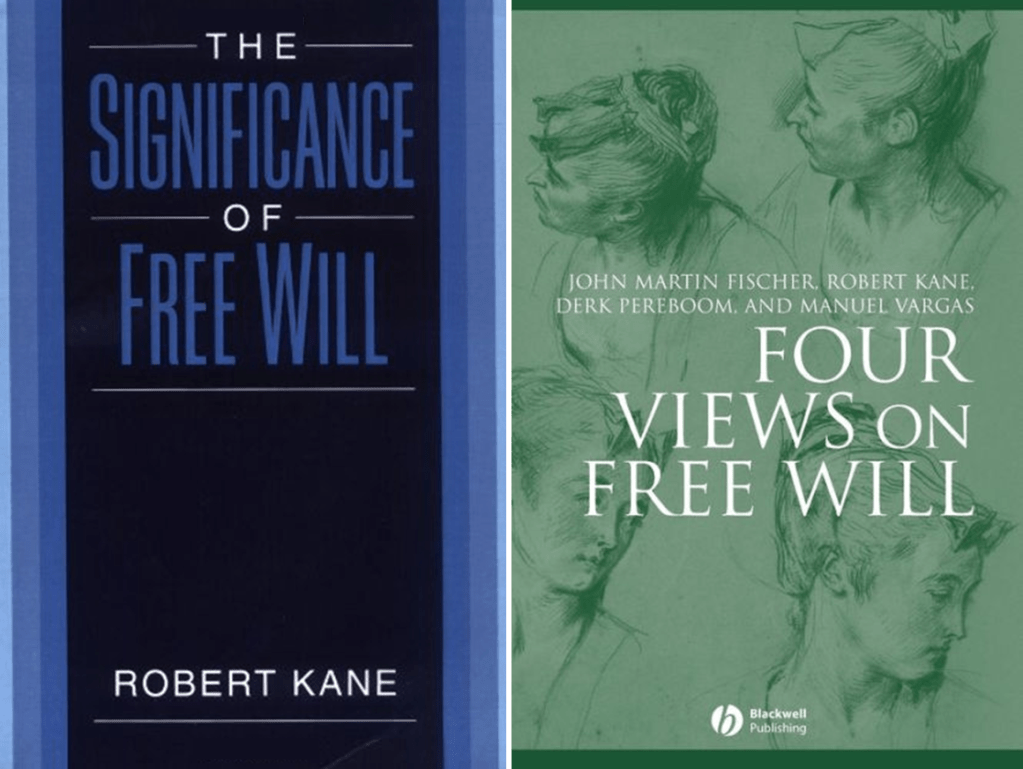
I’ll probably read the Four Views on Free Will content first. Meantime, Derk Pereboom, who also contributed to Four Views, presents Kane’s position in a video, so I’ll illustrate Perebooms perspective as well as how my own thoughts might dovetail.
Meaning in Life & the Illusion of Free Will (Derk Pereboom)
…a lot of prominent advocates perhaps most notably Immanuel Kant didn’t think that he could show that we have libertarian freedom, but he did think that we should believe that we have it for the sake of morality…
The libertarian perspective is that we look at all causation in terms is events, and some people believe that all causation is by way of events so, in the case of agents, they can be the cause of events.
Freedom consists in the fact that when decisions are caused, they’re caused indeterministically by other events.
Pereboom coveying Kane’s libertarian concept of freedom
This is the idea of indeterministic causation. Not all causations in deterministic, but yet all causation is by way of events so events indeterministically cause decisions, and this is what allows them to be free.
Pereboom explaining indeterministic causation
Borrowing Pereboom’s rendition of Kane’s account, Anne is on her way to work, and she sees a woman being accosted.
Choices
At this moment, she has a choice of taking one of two possible options:
Prudential Choice: Continue going to her office (desire to please her boss) [p = 50%]
Moral Choice: Intervene in the molestation (desire to help the victim) [p = 50%]
Pereboom’s Critique
What settles whether Anne stops to help or continues to the office?
the agent can’t have enough control for freedom in the event-causal picture
Derk Pereboom
Whether she stops or not is not up to these agent-involving events to settle whether she stops or not; after all the agent involving events render the two decisions equally probable, fifty-fifty, in our simplified example. So the answer, Pereboom thinks, has to be nothing; there isn’t anything that settles which way the decision goes because the only causation involving the agent consists in events evolving the involving the agent. and by hypothesis, all the events involving the agent conspire to render each of the two possible decisions equally probable. So, Pereboom wants to say that in the event-causal picture nothing settles which decision occurs—and in particular, the agent doesn’t settle which of the decisions occurs, so he believes that the agent can’t have enough control for freedom in the event-causal picture. There’s not any event-causal picture that solves this problem.
The problem with this event-causal libertarian view is that the agent disappears at the crucial time. We want the agent to settle which way the decision goes, but the event causal picture doesn’t allow this. So, we should reintroduce the agent in a different guise. And as agent—or as agent cause—we’re gonna say look not all causation is by way of events some causation is by way of agent, so as a substance not just as involved in events causes the decision. So, we’re going to give Anne, as agent-cause, the power to settle which way this decision goes; and we’re going to give her this power in the following guise: we’re going to say she’s got the power to settle which way the agent—which way the decision—goes. By what? By causing a decision; and by causing a decision without being causally determined to cause it. This is what Immanuel Kant calls transcendental freedom, and he thinks that this is the only kind of freedom that’s going to get us moral responsibility. It’s giving to the agent qua agent—not as involved in events but giving the agent qua agent—the power to cause an action without being causally determined to cause it. Now this is a very special sort of power.
Do we have this kind of power? Kant said, ‘Well, we have no evidence that we have this kind of power. We can’t even show that it’s possible that we have this kind of power, but we can show that it doesn’t contradict anything we believe, so we should believe it for moral reasons.’ He thought, It’s really important for us to believe that we’re morally responsible. And he also thought that the moral law kind of falls away unless we’re free in this sense. Kant thinks we have ample practical reason to believe that we’re agent-causes.
Pereboom (simplified), op. sit. ( cue @ 21:30 )
But there are certain kind of empirical worries that Kant was well aware of for the hypothesis that we’re agent-causes.
Kant says the physical world is governed by deterministic laws. So, suppose we believe that we as agents have this power of transcendental freedom— the power to cause an action without being causally determined to cause it. At some point there’s going to be an interaction between the agent as cause and the deterministic world—maybe at the juncture between the agent and the agent’s brain. Maybe you can think of agent-causes as non-physical things that can affect the physical world. Suppose we think of it that way. Kant says the physical world is governed by deterministic laws.
Suppose this free agent causes the decision to raise her hand without being causally determined to cause it. Kant says it has to be reconciled with the following fact that we know from Newtonian physics—the physical world is governed by deterministic laws. How can this be? It would seem that if the free agent freely, in Kant’s sense, causes the decision to raise their hand that the hand raising isn’t going to be causally determined. But Kant said that physics shows that the laws are deterministic and that all physical events are governed by deterministic laws.
Pereboom (simplified), op. sit.
One thing you can say is that it just so happens that every free decision ever made just happens to dovetail nicely with a determined physical world so each of the how many free decisions have been made in human history according to, say, 17 trillion. Each of the 17 trillion decisions happens to dovetail with the way that physical bodies have been causally determined since the beginning of the universe
Pereboom (simplified), op. sit.
Pereboom says this involves coincidences too wild to be believed. It’s not really credible. Kant at a certain point says well this problem can be solved because when an agent—a free agent—makes a decision, that free agent changes the universe back to the beginning of time. Kant says that in his The Critique of Practical Reason. I say that’s a pretty high price to pay for a belief in transcendental freedom. It seems implausible.
Quantum Physics
At 26:26 Pereboom turns his attention to indeterminism and quantum physics—the main premise being that quantum mechanics replaced the mechanistic certainty of determinism with probability.
If I don’t expand this copy past here, you’ll just have to watch the vid.
Next, I want to pick up on criminal punishment and retributive justification. Pereboom suggests that we can adopt a sort of quarantine approach to criminals even if we can’t assert that they deserve it, but I have serious concerns of the lack of justification here. (cued for me @ 30:15)
Wrong-doing, indignatio, and emotion. Emotion: Non-reactive. Problem with Love.
At the beginning, of course. As I’ve embarked on this anti-agency (working title) endeavour, I am uncovering people and ideas previously unknown. In a way, this is good because people have been here before. In another way, I am left wondering what’s left unsaid.
For one thing, some of these people are highly credentialled scholars, more well-read with substantial head starts. And intelligent, qualified experts stake out their own respective turf. The more I read, the more I see the path has already been cut. Untamed areas still exist—at least for now. My goal from the start is to ignore the larger pseudo-problem anyway, so let them have their territory.
As I see it, my obstacle is one of rhetoric. My foundation is hardly a crowd-pleaser.
This isn’t going to be attractive to the warm and fuzzy crowd, and it comes across as a pretentious elitist and condescending irrespective of the validity of the observation. And people don’t like to be told that their baby is ugly—let alone themselves.
Ostensibly, my claim is that humans are veritable automatons too dim to be bounded to any moral code. We’re all just pawns, and any semblance of autonomy is either an illusion or not materially significant.
You are 0.00001% responsible for your actions, so you deserve 100% of the blame or credit
You are 0.00001% responsible for your actions, so you deserve 100% of the blame or credit. Maybe this has no legs and will go nowhere. Time will tell. Meantime, I need to focus on the rhetoric and packaging and position it like a Trojan horse.
In the debate between free will and determinism, we have a second layer, perhaps better characterised as a meta-dimension we tend to label compatibilism and incompatibilism.
Saving any technical definitions of free will and determinism, these things are generally seen as mutually exclusive situations, which is to say that if we have free will, then the happenings of the universe and of us by extension are not determined. If the universe is deterministic, then we have no free will. This is incompatibilism.
Compatibilism is the belief that free will and determinism can simultaneously coexist. I’ll spare the details for now.
Free will and moral responsibility — Derk Pereboom (11:42)
Cornell philosopher Derk Pereboom presents his position here. I’ve only recently been exposed to Pereboom by a colleague, who recommended Pereboom’s Free Will, Agency, and Meaning in Life when I told him about my Anti-Agency pursuits. Pereboom’s name began to crop up more and more frequently as I dug deeper, but I want to give credit where credit’s due.
Ostensibly, Pereboom defends Spinoza’s position ‘that due to very general facts about the nature of the universe we human beings lack the sort of free will required for moral responsibility in the sense at issue.’*
Compatibilism is a synonym for hard determinism, but Pereboom calls ‘the resulting variety of scepticism about free will ‘hard incompatibilism’. Naming it ‘hard determinism’ would be inaccurate, since [he’s] not committed to determinism, so a new term is needed.’* He also informs us in a footnote that the ‘term ‘hard determinism’ originates in William James (1884).‘*
In closing, Pereboom lists some prominent free will sceptics that I share here:
Baruch Spinoza (1677/1985)
Paul d’Holbach (1770);
Joseph Priestley (1788/1965)
John Hospers (1950, 1958)
Paul Edwards (1958)
Galen Strawson (1986)
Bruce Waller (1990, 2011)
Derk Pereboom (1995, 2001, 2007)
Daniel Wegner (2002);
Shaun Nichols (2007)
Stephen Morris (2009)
Neil Levy (2011)
Thomas Nadelhoffer (2011)
Tamler Sommers (2012)
Gregg Caruso (2012)
Benjamin Vilhauer (2012)
I would add Daniel Dennett and perhaps Sam Harris to this list.
* Pereboom, Free Will, Agency, and Meaning in Life, 2014
I like David Guignion’s channel, and I’ve been taking in several perspectives on Kant’s article, ‘What is Enlightenment?‘
Feel free to watch from the start, but I’ve cued it to the place where David shares my thoughts around Agency. He brings up the point that absent official authority such as a political or religious structure, we are still influenced—subconsciously—to some degree by mass media and culture. These are the embodied norms and customs that most people just take for granted without question.
As David suggests, we can’t just slough off this inherited skin. First, because we do not even question it, and, two, it’s ingrained, one would likely deny the influence or be subject to escalating commitment under so-called critical inspection.
This is akin to asking a person of a certain religious persuasion if they would have the same religious beliefs if they had not been indoctrinated with them. I feel that a vast majority would defend their religion and the underlying or resultant morality as being obvious, so at the very least they are kept in the lane with guide rails. The extent of this influence and the degree it subtracts from autonomy is my question. I believe if pressed, the individual would defend the prescribed morality to be self-evident and they would have acted the same way even without religious instruction.
I am a racist. Well, to the extent that there is only one extant human race but some choose to construct races out of ethnicities, skin colour, and other allele expressions, I am a racist. It’s difficult to escape the distinction that the perpetrators and targets or victims of these fabricated races.
The haters need to create a target group to feel superior over. The do-gooders need to be able to identify groups who have been harmed or historically underserved. Of course, there is a right way and then there’s this wrong way. In a manner of speaking, it’s an easier effort to broad-brush people into race categories. No mind that they have no basis in biology or in science more broadly. These people have issues with science, mainly because they don’t feel fully included in their designation as soft scient and social science. They get pretty defensive when they get called out as pseudoscience, but if the shoe fits. Playing these race games only underscores the pseudoscience charge.
All of this said—or by this tepid definition—, I am a racist. Here’s why.
I am a racist
When I see a person from a designated group, I consciously reflect: that’s a human who’s been identified as an other—sort of like an endangered species, they need to be protected. Sure they can protect themselves, but they need assistance. Besides, they deserve extra attention because of so many centuries of not only neglect but of malice. Perhaps not that person in particular, but since we’re broad-brushing.
Where my racism comes into play is that I’ll smile and nod; I’ll engage in phatic exchange; I’ll hold a door; I’ll recognise them as a person—as a human; I’ll feel a slight boost of empathy and compassion. I’ll see this person as different, whereas without this constructed designation, I’d only see another person. But I’ve been instructed to see them as different.
Growing up around Boston in the 1970s, a time of desegregation and forced bussing, my best friend was a negro. That’s how we labelled blacks or African-Americans or whatever the latest label is. He was very aware of his colour. We’d joke about it as kids tend to do. He was coloured. I was a cracker. To us, his colour (or race, if you prefer) meant nothing to us.
My family were racist, though they’d deny it. To them, Lenny, my friend, wasn’t an individual. He was a part of that larger race construct. Sure, he was an individual, too. He was my friend who played baseball with me and shot hoops in the driveway. But to me as a child, race didn’t yet exist. I hadn’t yet been indoctrinated into the race nonsense. Lenny may have experienced things differently.
Don’t get me wrong, looking back, Lenny did conform to racial stereotypes. His dad was an absent parent, an alcoholic shipworker, who spent more time at the shipyard and in bars. I barely even saw him. His mum was a large woman, who was very nice to me but was frustrated with her lot in life and the lack of emotional support from her husband.
Lenny was the youngest of three brothers, but he had a younger sister, Karen. His brothers were high school basketball stars, as it were, in a suburb. Tookey was the oldest and tallest. His given name was Raymond, but only his parents called him Ray. Steve* was also a football star, who went on to play at Boston University during the Doug Flutie years.
It wasn’t until I joined the military that I learned about race. This was mainly about the people of colour who had joined the military owning to economic necessity and the promise of a better life. This outlook was not unique to what we now refer to as BIPOC. The majority of enlisted personnel were victims of the system they at least tacitly believed in. If I were to be so bold, I’d say there were two flavours, the bitter and the hopeful. I won’t elaborate further.
Eventually, I moved to Los Angeles and was steeped in Hispanic/Latino culture—primarily from Mexico and Central America. Again, I was an observer. I participated with people connected to this culture. I don’t particularly abide by any culture. I don’t view it as important, but this also means that I have no culture to defend either. Maybe that’s a significant difference. If I’ve got no cultural ego to defend, then I am not threatened by other cultures that I might feel as encroaching.
Don’t get me wrong. Whilst I tolerate cultural expression and say ‘to each their own‘, I do find traditional clothing and rituals to be silly or quaint. But so do I find some of this silly in what would be said to be my cultural heritage, whether ethnically to Norway or nationally to the United States. I’ll spare the commentary.
I picked up enough conversational Spanish to get by—mostly phatic speech and politesse—, so if I am interacting with a Spanish speaker, I will use what words I know: gracias, de nada, compromiso, desculpa, por favor, and even pendejo doesn’t go to waste. I’ve also been known to utter merci, danke, spasibo, xièxiè nǐ, or domo arrigato (mister roboto, cuz let’s be honest here).
This is my racism or my sensitivity to culture. To be honest—and why not be honest, am I right?—, this has not always been without controversy. Arbitrarily, I might spam gracias, merci, or domo to a whitebread American. In most instances, they’ll nod and acknowledge the intent and accept it or respond with no problem, you’re welcome, or even de nada or de rien. I’ve even gotten a German bitte in response to a domo, so I suppose I am not alone.
I think it’s safe to say that most Americans know what grazie or merci mean. Perhaps not domo. In one encounter, I said domo to a non-Japanese Asian and was immediately derided with an I’m not Japanese. From her perspective, she may have felt that she had been homogenised into being Asian and she wanted to be identified as whatever her heritage was. She never shared this information with me. Perhaps she was Korean or Cambodian, Vietnamese or Laotian, Chinese or whatever. But she did communicate that she wasn’t Japanese. She might have been under the impression that from my perspective, I saw that all Asians look alike.
From my perspective, I could have as alternatively exchanged a merci. This would not have likely triggered the same emotional response—I’m not French. On the one hand, I felt bad for triggering her—despite that not having been my intent. On the other hand, I didn’t feel I needed to engage her free-floating rage. So I’m a racist.
In my own defence, studies show that people are more able to discern people within their own ethnicity. I’ve shared this story before. When I lived in Tokyo, I was dating a woman whose dad was Japanese and her mum was Chinese. I had met her once, and I was to meet her at a train station. I’d be lying if I told you I had no trepidation about not being able to recognise her in a crowd. My, perhaps narcissistic, consolation was that she’d recognise me being taller and ‘Caucasian’. I can’t really say ‘whiter’ because although I was brought up to identify Asians as yellow (and Indigenous Americans as red), most Japanese were a lighter shade of pale than I (or most so-called ‘white’ Americans) were. I’ve always been suspicious of these colour attributes, but I won’t go even further down this rabbit hole.
In the end, I see colour. I see the history.
In the end, I see colour. I see the history. Even though my family didn’t even move to the United States until World War II, somewhat exempting me from culpability, I still recognise the injustice that still prevails. With empathy, I want things to be better—to be more inclusive—, but cultural homogenisation is not the approach I support. I support tolerance.
If I feel that a certain costume is silly, so be it. I don’t have to wear it. When I was growing up in the 1970s, I felt that my own clothing options were silly—polyester and bellbottoms? No thank you. This is just a preference thing. I don’t like to wear headcovers—hats or caps. Do I care if you wear a headcover? No. Might I think you look silly? Sometimes. Do you want to know what else I think looks silly? Beards? What’s even worse? Moustaches—or as I am more apt to call them, pornstaches. Am I going to judge you are being less of a person because of any of these? No. I could go on and on about my reaction to certain accoutrements, but I’ll let you in on a secret: I have worked and interacted with people who prefer to present themselves in these ways, and these people have risen to the occasion and disappointed in the same ratio as people who dressed like me or looked more like me, so clearly it’s not a factor.
In summary—and despite the fact that there is only one human race—, I admit to being a racist. I do recognise that negative and positive stereotypes exist, as well as I know that these are vague generalisations. I know white people who can dance and Asians who suck at maths. I know Mexicans who aren’t gardeners and Italians who couldn’t cook to save their lives. I even know black people who can swim—but not my friend Lenny; he can’t swim. Sometimes stereotypes happen to encapture a person.
* As I was writing this, I decided to perform a Google search for Lenny. We lost contact decades ago because he adopted Jehova’s Witness religious beliefs that didn’t allow him to socialise with persons outside of his religion, so we parted ways. But I did locate Steve. I reached out to Steve on LinkedIn. Unless I’m mistaken, we probably haven’t communicated with each other since 1978—that’s 44 years— when he went off to college. I always admired Steve, the way we sometimes admire our big brothers. Steve was Lenny’s big brother, and Lenny looked up to both of his big brothers.
Steve responded on LinkedIn. We exchanged best wishes. Maybe one day I’ll ask him about his experience with race. It doesn’t seem to be a topic one can engage in because of the lack of shared perspective and the hot button triggers just waiting to be tripped.
I’ve never really liked the concept of normal being applied to behaviour, whether individually or societally. At a micro level, it might be fine, and one can assess a deviation from a norm, but at a macro level, we have averages of averages, so how many dimensions need to be out of calibration and for how long to be considered abnormal.
Moreover, statistically speaking, where we have a normal (Gaussian) distribution, we might consider a mean and a certain variance or standard deviation from that mean to be normal, but the reaction to deviance is asymmetrical.
An example that comes to mind is that of cheating. It is well documented that humans are predictably cheaters (and liars). Nonetheless, there are two measures of normalcy. There is a fundamental attribution bias in play.
We view ourselves as basically honest and justify occasions when we act the same way. Regarding the chart below, we like to believe that cheating is uncommon. In fact, we chastise or otherwise punish cheaters.
Descriptive versus Prescriptive Normalcy
Full disclosure this is not to scale nor representative of actual data. It’s merely an illustrative tool for conversation.
Prescriptive Normalcy
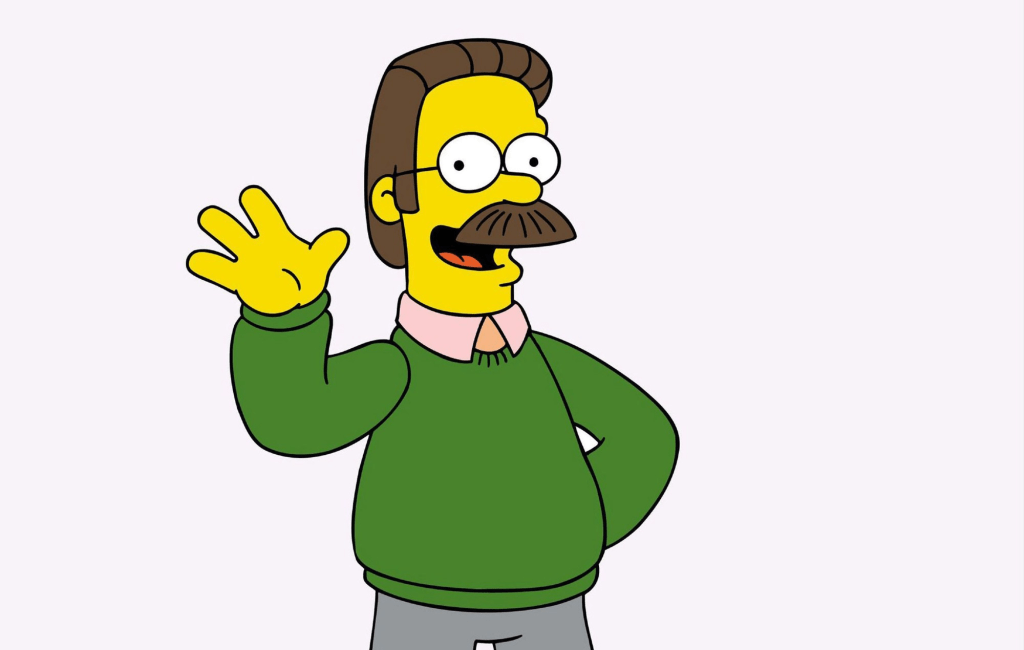
The bottom range in green represents the accepted and prescribed normal range of cheating. In this example, it might be anticipated that an average person might cheat on things like their taxes, their diets, not returning extra change at a vendor, and so on, about a third of the time, give or take. Anything more would be considered abnormal and unacceptable. Anything less and the person might be considered to be uptight or a goody-two-shoes, perhaps like Ned Flanders of the Simpsons franchise.
Ned Flanders – Hokily Dokily
Descriptive Normalcy
In practice, people operate well outside of this range. As illustrated by the top red range, people tend to cheat closer to two-thirds of the time. If a person is caught cheating, they are treated as being well outside of the prescribed range, society will look upon them harshly despite this actually being normal behaviour for those judging, those who know that they are guilty of the same activity.
One reason for the overreaction may be to signal that they are among the righteous. Here, it’s good to remember Jung’s quip: The brighter the light, the darker the shadow.
The brighter the light, the darker the shadow
Carl Jung
Intelligence Quotient
If I use IQ* for a reference, normal is the mean plus or minus a standard deviation (or sigma [σ]) of 16 points, so between 84 and 116. In the early to mid-20th century, clinical psychology nomenclature grouped IQs by bands:
Later moron was replaced by moderate mental retardation or moderate mental subnormality with an IQ of between 35 and 49. As with many things, and in the case of IQ, an observation above the norm is associated as better with an observation below the norm being considered as worse.
* IQ has many problems. At first, an IQ of 100 is supposed to represent the average (mean) of a population, yet the average IQ of the world population is just over 82, a number outside and below the 1σ threshold. In the United States, the average IQ is an unremarkable 97% (ranking 26 among 199 countries). Japan and Taiwan top the list at over 106. In fact, Asian countries comprise the top 6 slots. Canada, Australia, and the United Kingdom are almost an even 100, falling ever so short. at 99 and change. Guatemala, Liberia, Sierra Leone, and Nepal fall at the bottom of the ranking, each with average IQs under 50.
As Cicero noted in his On Divination, Stoics were determinists who believed in an all-knowing God. This allowed them to be indifferent or resigned to their fate because they felt they couldn’t change it. Like watching a horror suspense movie that has already been recorded, one might be tempted to believe that there is some probability operator determining if a monster is behind a closed door, but in fact, there is no probability. Whether the monster is there or not has already been determined. It’s a certainty, as a viewer of a prior showing can attest. It only appears to be chance.
Stoics believed that, since everything happens by fate, if someone could observe the interconnection of all causes, then s/he could know the future because s/he necessarily knows how everything will unfold cause by cause, frame by frame.
Stoicism an ancient Greek school of philosophy founded at Athens by Zeno of Citium. The school taught that virtue, the highest good, is based on knowledge; the wise live in harmony with the divine Reason (also identified with Fate and Providence) that governs nature, and are indifferent to the vicissitudes of fortune and to pleasure and pain.
This intersects with my research on determinism. I capture this because I find there are a lot of people I encounter on Facebook who are self-proclaimed Stoics, yet they are not necessarily religious or determinists. They simply feel they can will their emotions.
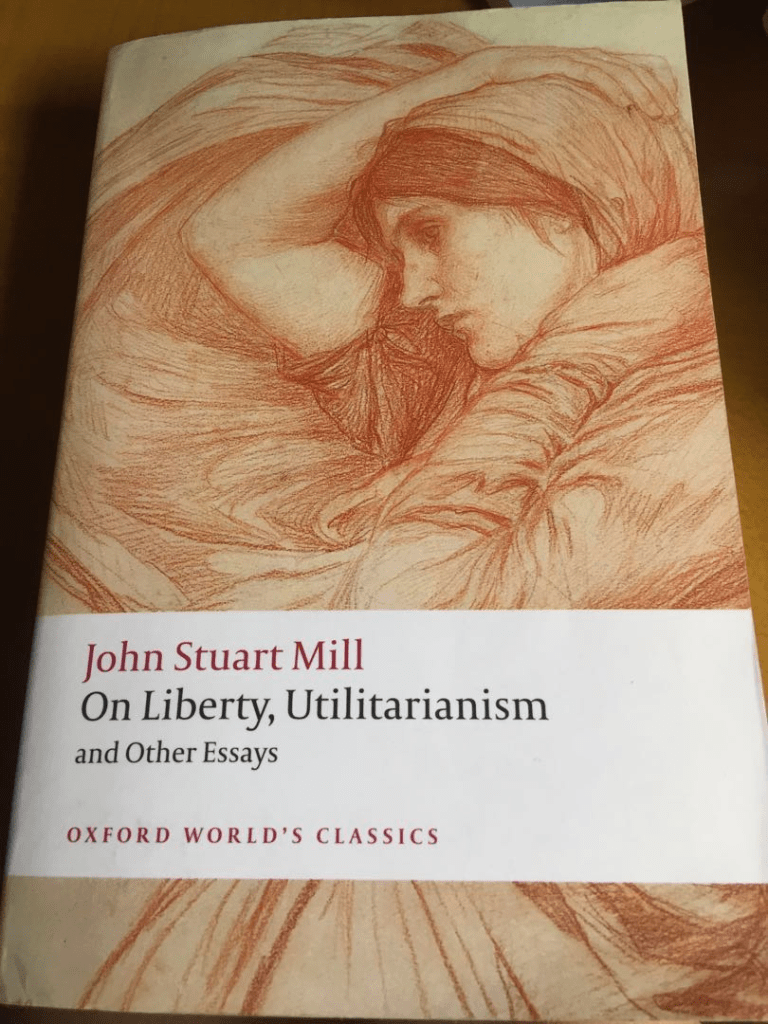
The maxims are, first, that the individual is not accountable to society for his actions, in so far as these concern the interests of no person but himself.
…
Secondly, that for such actions as are prejudicial to the interests of others, the individual is accountable, and may be subjected either to social or to legal punishment, if society is of opinion that the one or the other is requisite for its protection.
John Stuart Mill, On Liberty, Utilitarianism, and Other Essays (Oxford University Press, 2015, p. 91)
John Stuart Mill, On Liberty, Utilitarianism, and Other Essays (Oxford University Press, 2015)









 Philosophics