Philip Goff presents a strong argument published on Aeon as to why taxation is not theft, primarily because it is based on false assumptions about the morality of property ownership.
I have written a lot of short pieces addressing this question (the answer is always no). But this piece for Aeon magazine is the most extensive thing I’ve written so far, and goes into much more detail about the nature of ownership. I’m always amazed at how much this stuff angers people. I’ve been enjoying […]
Listening to the Robert Wright’s audiobook, Moral Animal, it’s become even more apparent that ethics and morality are the results of a later stage of an evolutionary strategy. Not that he’s saying that.
After cognitive abilities came language and then, presumably, ethics then moral proto-structures. Subsequently, gods and God came into fashion.
That morality is the result of evolutionary progression is not particularly controversial, but sociobiologists seem to view the evolutionary development of morals as a parallel to Chomsky’s theory of innate language and universal grammar. My modification is that morality (as distinct from mores, customs, and such) necessarily requires language and cannot exist independent of language.
Given the evolutionary perspective, it is obvious that this concept will not be popular for those who do not support this base position, but it should not much of a stretch for those who do.
Many people are pragmatists, so when I submit that there is no objective morality, the response is that this is unworkable, so I need to find another system. It’s akin to running out of petrol in the desert, and your travel partner responds similarly:
“There has to be petrol; otherwise, we can’t get to where we need to go.”
Hat tip to Captain Obvious, but unlike ethics and morality, one can’t just conjure fuel. This is why we have created normative ethics—the operative being normative.
“How can anyone work with a system without objective morality?”
I get this reaction often when I broach the topic of ethical subjectivism.
“Ethical subjectivism [or moral subjectivism] is a philosophical theory that suggests moral truths are determined on an individual level. It holds that there are no objective moral properties and that ethical statements are illogical because they do not express immutable truths.”
For me, as a moral anti-realist (vacillating at times toward non-cognitive emotivism, if not outright moral nihilism), it’s been relatively easy to hold this subjective meta-ethical position whilst simultaneously adopting a pragmatic ethical theory, though I have always found the prevailing frameworks to be lacking—whether consequentialism, deontology, or virtue ethics. In fact, this is why I decided to go deeper into philosophy, to see what others had to say about the matter. Fortunately, David Hume had trodden this ground before in An Enquiry Concerning Human Understanding.
Subjectivism allows one to have a preference for a given moral framework, it just simultaneously claims that one cannot objectively be judged as better.
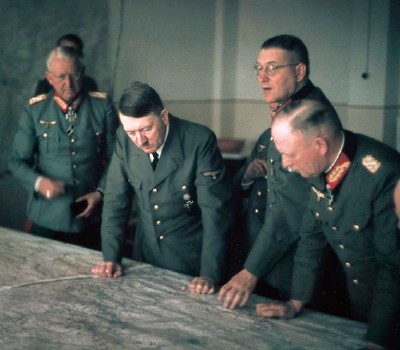
This is about where people’s Hitler and rape fantasies are introduced into the argument, and always with an air of checkmate, so let’s explore this. We’ll take historical, evil, bad person, Adolf Hitler and his ill-treatment of Jews in the years leading up to and through World War II.
The reasoning usually follows these lines: Of course there is good and evil, right and wrong. Don’t (won’t) you agree that what he did was immoral? Sidestepping, that personally, in my opinion, Hitler was not cool, it doesn’t answer to the morality. In the subjectivist domain, there is no good and evil, but I tend to reserve that response, as it falls on deaf ears.
Instead, let’s follow through and reflect on the speculative outcome represented by Phillip K. Dick’s The Man in the High Castle. In this world, the Nazis won the war and conquered the free world, but in the vein of “history is written by the victors”, society found a new equilibrium. That’s what people do. Sure, there are always dissenters, as there are today in any government, but this evil moniker is applied by the glorious and victorious Allied Forces over the Axis (of Evil). Had the Nazi’s prevailed, it would have been but a footnote in history—if that. Morality is just perspective. From a societal perspective, it may take the form of ethnocentrism. But in the end, morality and ethics distil down to an individual vantage, even if the individual adopts a package off the rack, as most do in the form of religions and community guidelines.
The Man in the High Castle (AmazonVideo) – Life goes on.Nietzsche’s Nihilism (and Heidegger) captured this in his subjective authenticity, which is being true to one’s self. In this view, it is irrelevant what moral systems others impose upon you. If you resolve to go to the gym at least once a week yet don’t, you are not being authentic.
Camus noted in his Myth of Sisyphus that one has the option upon realising the Absurd, that there is no inherent meaning to life. Aside from suicide and acceptance, one could adopt a worldview, whether religious or spiritual to Capitalism, Socialism (his preference), or Pastafarian, essentially denying the Absurd.
Ignorance is Bliss™
In a way, the religiously devout have it simpler. They are indoctrinated with a pre-packaged belief system, and they don’t really question it. But other people have political and jurisprudence systems prêt-à-porter, and they are willing to defend them, seemingly to the death.
Some stated arguments against ethical subjectivism are as follows:
“Ethical Relativism has implications such as moral infallibility and moral equivalence. It does not offer a way for parties engaged in ethical debate to resolve their disagreements because each side is required to acknowledge that the opinion of their opponent is equally as factual as their own. Individuals can never have a moral disagreement if both sides are morally ideal. As well, blame cannot be placed in a conflict if moral truths are always objective [sic].”
Let’s look at each of these in turn:
no way for parties engaged in an ethical debate to resolve their disagreements
True. If you can’t turn a screw with a sledgehammer, perhaps you need to question whether you’re are using the appropriate tool instead of cursing the sledgehammer for not being a screwdriver. If a tool isn’t suitable for a task, perhaps you are using the wrong tool.
one can’t have a moral disagreement if both sides are morally ideal
True. Again, perhaps you need a different instrument.
Blame cannot be placed in a conflict if moral truths are always subjective
True. I’ll sidestep the question of why blame is necessary, but yet again, this may not be the right instrument.
On balance, people seem to need pragmatism, so they seek a workable moral framework. Assuaging cognitive dissonance is as natural as breathing. Ah, the joy of delusion. Humans fabricate moral systems in an attempt to address issues such as these, but all of these systems are, in fact, human constructs, and none are objectively better than another. Subjectively, one may prefer one over another.
Morality is a human construct. More specifically, it is a normative construct of language. It is used as a tool to maintain power and promote normalcy, but so what?
People are indoctrinated with this normative perspective, but accept it as some self-evident truth. But there is no absolute truth. This, too, is a contextual function of language.
Since the dawn of civilisation—and perhaps longer—, humans have been constructing moral codes of behaviour. From attributing moral origins to supernatural gods, they’ve attempted to move to a secular humanist vantage, ascribing these powers attributed to nature, but this is little more than a metaphysical euphemism in order to appear to be more scientific as a result of Enlightenment.
Clinging to absolute morality is like clinging to religion and gods.
As Marx said, ‘religion is the opiate of the masses.’ Clinging to a sense of absolute morality is not much different to clinging onto religion and gods. There’s a sense of security. It’s comforting and weaved into the fabric of most societies.
Still, so what? As long as the masses prefer to believe that morals somehow exist in the wild, and people, being story-lovers, are exploited by persuasive storytellers, we are resigned to this situation.
Episode 8 of The Moral Foundations of Politics with Ian Shapiro was another difficult lesson to watch—rather to listen to—the student responses. Evident is the degree of indoctrination or brainwashing these students have been through. I want to document some pieces I feel are relevant to my position.
The fact that morality is perniciously imposed and infused on the unsuspecting
The fact that property rights change over time
The fact that legal interpretation changes over time
The responses were primarily knee-jerk responses anchored on institutional indoctrination. Whilst it makes sense to indoctrinate a group, I am opposed to imposing an obvious relative morality but passing it off as absolute.
Asking how prostitution could be illegal when sex and commerce are both legal, the responses—to be fair, only a couple people responded—were about how it might somehow ‘harms’ women or society as a sort of negative externality, be violent, have been coercive or a form of slavery, have involved a married or otherwise committed spouse, or have involved an under-aged person. These were poor man’s strawman arguments at best, each potentially with merit, but each a separate issue from the question.
In fact, we can likely find evidence of each of these in a ‘typical’ employment situation: coercion, under-age, a threat of violence, implied or expressed; the spousal issue doesn’t fit these situations, but even if we want to legislate keeping people safe from their own actions, it is as illegal for unmarried persons, so the rationale is insufficient.
The point I hold is that prostitution in and of itself is no more exploitative than any other source of employment, a source income. Given that Western society imposes income as the primary means to support one’s self, the wrong here is that artificial barrier. Were income not a veritable necessity, prostitution to earn money (or use as a barter) would also be unnecessary. This is not to say that the other aforementioned objections would be resolved; this because, as I mentioned, they are different issues.
Next, we are told that marital rape originally not considered a crime because a woman was considered to be chattel property transferred patriarchally from her father to her husband. As I’ve written previously, I do not subscribe to the notion of property in the first place, but taken that as given, it is obvious that property is determined through whimsy. Property rights change over time, whether receding as just noted or expanding to include intellectual property and the expanse of patentable ideas. It’s disconcerting that application of the law can be so arbitrary and, though perhaps not capricious, frivolous. And given it is all open to interpretation, the pendulum can swing in the other direction, as the women of Iran and other fundamentalist theocracies has experienced.
Apparently, I’m done ranting. Basic income has been mentioned as a solution to some prostitution, as some women participate out of desperation. Though I feel that this might kerb some prostitution, some women would still seek to supplement this base income, if only to advance their personal standard of living.
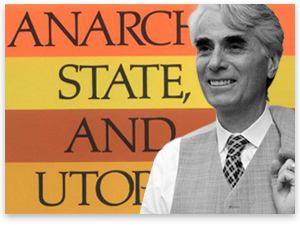
I am still reading, having just finished chapter 5 of Nozick‘s Anarchy, State, and Utopia, and I am still concerned that he invokes normative morality and the invisible hand (even ignoring the religious implications of this) as de facto premises and without justification. He eviscerates so much, parsing so much finely, and he hamfistedly adopts these concepts without pause or discussion.