Monetary Fentynal: The Dirtiest Addiction of All

So sad, really. Not tragic in the noble Greek sense, just pathetically engineered. Our collective addiction to money isn’t even organic – it’s fabricated, extruded like a synthetically flavoured cheese product. At least fentanyl has the decency to offer a high. Money promises only more money, like a Ponzi scheme played out on the global stage, with no exit strategy but death – or worse, a lifestyle brand.

Audio: NotepadLM podcast on this topic.

We’re told money is a tool. Sure. So’s a knife. But when you start sleeping with it under your pillow, stroking it for comfort, or stabbing strangers for your next fix, you’re not using it as a “tool” – you’re a junkie. And the worst part? It’s socially sanctioned. Applauded, even. We don’t shame the addict – we give him equity and a TED Talk.

The Chemical Romance of Currency

Unlike drugs, money doesn’t scramble your neurons – it rewires your worldview. You don’t feel high. You feel normal. Which is exactly what makes it so diabolical. Cocaine users might have delusions of grandeur, but capitalists have Excel sheets to prove theirs. It’s the only addiction where hoarding is a virtue and empathy is an obstacle to growth.

The dopamine hit of a pay rise. The serotonin levels swell when your bank app shows four digits instead of three. These are chemical kicks masquerading as success. It’s not money itself – it’s the psychic sugar rush of “having” it, and the spiritual rot of needing it just to exist.

And oh, how they’ve gamified that need. You want to eat? Pay. You want shelter? Pay. You want healthcare? Pay – and while you’re at it, pay for the privilege of existing inside a system that turns your own exhaustion into a business model. You are the product. The addict. The asset. The mark.

The Fabrication of Need

Nobody needs money in the abstract. You need food. You need air. You need dignity, love, and maybe the occasional lie-in. Money only enters the picture because we’ve designed a world where nothing gets through the gates without it. Imagine locking the pantry, then charging your children rent for their own sandwiches. That’s civilisation.

They say money is freedom. That’s cute. Tell that to the nurse working double shifts while Jeff Bezos experiments with zero-gravity feudalism. In reality, money is a filtering device—who gets to be human, and who stays stuck being labour.

Crypto was supposed to be liberation. Instead, it became a libertarian renaissance fair for the hyper-online, still pegged to the same logic: hoard, pump, dump, repeat. The medium changed, but the pathology remained the same.

Worshipping the Golden Needle

Let’s be honest: we’ve built temples to this thing. Literal towers. Financial cathedrals made of mirrored glass, each reflecting our collective narcotic fantasy of “more.” We measure our worth in net worth. We rank our lives by percentile. A person’s death is tragic unless they were poor, in which case it becomes a morality tale about poor decisions and not grinding hard enough.

We no longer have citizens; we have consumers. No neighbours – just co-targeted demographics. Every life reduced to its purchasing power, its brand affiliations, its potential for monetisation. The gig economy is just Dickensian poverty with a better UI.

Cold Turkey for the Soul

The worst part? There is no rehab. No twelve-step programme for economic dependency. You can’t detox from money. Try living without it and see how enlightened your detachment feels on an empty stomach. You’ll find that society doesn’t reward transcendence – it punishes it. Try opting out and watch how quickly your saintliness turns into homelessness.

So we cope. We moralise the hustle. We aestheticise the grind. We perform productivity like good little addicts, jonesing for a dopamine hit in the shape of a direct deposit.

Exit Through the Gift Shop?

So what’s the answer? I’m not offering one. This isn’t a TEDx talk. There’s no keynote, no downloadable worksheet, no LinkedIn carousel with three bullet points and an aspirational sunset. The first step is admitting the addiction – and maybe laughing bitterly at the absurdity of it all.

Money, that sweet illusion. The fiction we’ve all agreed to hallucinate together. The god we invented, then forgot was a puppet. And now we kneel, transfixed, as it bleeds us dry one tap at a time.

Epilogue: The Omission That Says It All

If you need proof that psychology is a pseudoscience operating as a control mechanism, ask yourself this:

Why isn’t this in the DSM?

This rabid, irrational, identity-consuming dependency on money – why is it not listed under pathological behaviour? Why isn’t chronic monetisation disorder a clinical diagnosis? Because it’s not a bug in the system. It is the system. You can be obsessed with wealth, hoard it like a dragon, destroy families and ecosystems in pursuit of it, and not only will you escape treatment, you’ll be featured on a podcast as a “thought leader.”

We don’t pathologise the addiction to money because it’s the operating principle of the culture. And psychology – like any well-trained cleric of the secular age – knows not to bite the gilded hand that feeds it.

And so it remains omitted. Undiagnosed. Unquestioned. The dirtiest addiction of all, hidden in plain sight, wearing a suit and handing out business cards.

Value of Life

Captain Bonespurs now has a flesh wound. Former president-elect Donald J Trump was the target of a not-so-sharpshooter yesterday. Immediately resorting to Godwin’s Law, I wondered if this was like the philosophical hypothetical asking, ‘Would you kill baby Hitler to prevent the eventualities that unfolded?’ Was Hitler the symptom or the disease? What about Donald J? Whatever the cause or motivation, not unlike the fire at the Reichstag, this event has galvanised his supporters. Let’s hope that the outcome doesn’t follow the same path. There is a fear that he’ll take a path similar to Hitler or Ceasar before him in a quest for power.

What is a life worth? The average US-American life is valued at around $7 million, give or take a few million. The number ranges between $1 MM and $10 MM depending on which agency you see. That they equate lives to dollars is curious enough, but that they can’t agree on a single figure is priceless.

For background, this value is used to determine intervention. For FEMA (Federal Emergency Management Agency), a human life is worth about $7.5 MM For the EPA (Environmental Protection Agency) it’s slightly more than $10 MM. Are these cats playing Monopoly? Nah.

The human life calculus considers factors like lifetime earnings potential and discounts it to Present Value. In action, assume there is a disaster. Let’s not use COVID-19. Instead, there is an island with 1,000 inhabitants. Using the $10 MM per person figure to simplify the maths, we would be justified in spending up to $10,000,000,000 to intervene in some potential disaster – $10 MMM or $1e10.

Human lifetime value is an average. Mr Trump has already shown himself to be worth more than $10 MM. I suppose this means that not all humans are created equal. No matter. Another logical question might be what is the cost of a person’s detriment to society. This is a question for a Modernist or someone who feels that a given configuration of society is preferred to all others – or at least some others. How much damage might one human do?

Trump enriched himself and his family and entourage in his first term. In Ukraine, Zelenskyy and his lot bilked the country out of billions. It’s nothing new, but do we subtract the costs from the benefits or is this a gross calculation?

Irrespective of the costs, the next four years ahead are expected to be tumultuous no matter which corporate-sponsored party prevails. Heads, they win; tails, the country – if not the world – loses.

Fiction Nation: Economies and Money

Section 3: Economies and Money as Fictions

The Concept of Money

Money is one of the most pervasive fictions in human society. Traditionally, it is thought that money evolved from barter systems, where goods and services were directly exchanged. However, anthropologist David Graeber, in his book “Debt: The First 5,000 Years” (2011), argues that this narrative is largely a myth. According to Graeber, there is little historical evidence to support the idea that societies primarily relied on barter before the advent of money. Instead, he suggests that credit systems were more prevalent, where people kept track of debts and credits in the absence of physical currency.

Graeber’s perspective challenges the conventional economic narrative by emphasizing the role of social relationships and trust in early economic transactions. Rather than evolving from barter to commodity money (like gold and silver coins) and then to fiat money, economies often operated on the basis of mutual obligations and social bonds long before the invention of physical currency. This underscores the idea that money, in all its forms, is a social construct—a fiction agreed upon by the members of a society.

Fiat money, which is currency that a government has declared to be legal tender but is not backed by a physical commodity, relies entirely on trust and belief in its value rather than any intrinsic worth. Its value comes from the collective agreement that money can be used for transactions, illustrating how deeply embedded fictions can shape our economic reality.

Economies as Constructs

Economies, much like money, are constructed systems designed to organize and facilitate the production, distribution, and consumption of goods and services. The idea of a market economy, where supply and demand determine prices and allocation of resources, is a theoretical construct that has been widely adopted and adapted across the globe. Economic theories and models, while rooted in empirical observations, are also shaped by human assumptions and values.

For example, capitalism, the dominant economic system in much of the world, is built on the principles of private property, free markets, and competition. These principles are human-made constructs that have been institutionalized through laws, regulations, and cultural norms. The notion of “economic growth” itself is a concept that has been prioritized and pursued, shaping policies and societal goals.

Implications of Economic Fictions

Understanding economies and money as fictions highlights their dependence on collective belief and participation. This perspective allows us to critically examine the assumptions underlying economic systems and consider alternative models. For instance, the rise of digital currencies like Bitcoin challenges traditional notions of money by introducing decentralized and peer-to-peer forms of exchange.

Moreover, recognizing the fictional nature of economies can lead to more flexible and adaptive economic policies. It encourages innovation and experimentation with new economic frameworks that may better address contemporary challenges such as inequality, environmental sustainability, and technological disruption.

By exploring the fictions of economies and money, we gain insight into the powerful influence of human-made constructs on our daily lives. This awareness can inspire us to question and potentially reshape these constructs to create more equitable and resilient economic systems for the future.

References

  1. Graeber, David. Debt: The First 5,000 Years (2011).
  2. Giddens, Anthony. The Consequences of Modernity (1990).
  3. Beck, Ulrich. Cosmopolitan Vision (2006).
  4. Anderson, Benedict. Imagined Communities: Reflections on the Origin and Spread of Nationalism (1983).

⬅ Fiction Nation: Nations as Fictions (part 2)

➡ Fiction Nation: Legal and Jurisprudence Systems (part 4)

Your Morals – Part 3 of 3

Continuing my responses to Johnathan Haidt’s Morality survey…

25. I believe the strength of a sports team comes from the loyalty of its members to each other

Who TF cares about a sports team or where their loyalty comes from, whatever that even means. And the strength of what exactly? Players move from team to team with ease, and they are obliged to win in order to advance their own interests and personal glory. Weaker players can coattail by association to their team or their league.

26. I think children should be taught to be loyal to their country

Smh. No. I think that countries should be abolished. Children should be taught how arbitrary countries are and how they divide more than they unite.

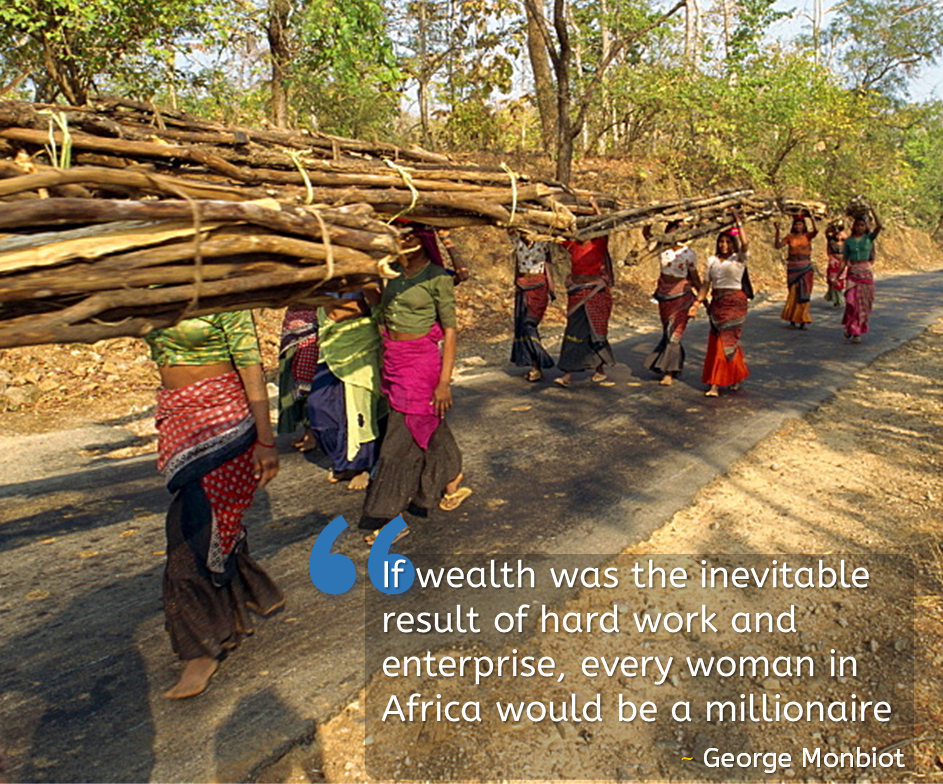
27. In a fair society, those who work hard should live with higher standards of living

Weasel words—fair, hard, work, higher, and living standards. Perhaps the answer can be found in the definitions, like divining with tea leaves.

Hard Work & Enterprise

28. I believe that everyone should be given the same quantity of resources in life

What resources? A family with no children doesn’t need children’s shoes and clothing. A vegan doesn’t need a side of beef. What is this asking?

29. The world would be a better place if everyone made the same amount of money

I agree. And the amount should be zero. Didn’t I already answer this one?

30. I believe it would be ideal if everyone in society wound up with roughly the same amount of money

What is this obsession with money? I guess this is a reflection on Harvard. Get over it.

31. People should try to use natural medicines rather than chemically identical human-made ones

What? Sure. Maybe. I suppose if they are identical. Are they cheaper or free? Are they dosage- and quality-controlled? What is the function of the infinitive try to?

32. I believe chastity is an important virtue

Not more virtue. Make it stop. Chastity is defined as the state or practice of refraining from extramarital, or especially from all, sexual intercourse. This would be important why? And how would it be a virtue by any measure?

33. I think obedience to parents is an important virtue

Just why?

34. I admire people who keep their virginity until marriage

How would I know? Why would I admire them? I understand the traditional and statutory function of marriage, but this anachronistic chattel arrangement doesn’t need to exist.

35. Everyone should defend their country, if called upon

Perhaps we should abolish countries and property. What are the defending—their unique way of life? Their awesome achievements or prospects thereof? The dirt and natural resources? The buildings? Some mythos? Just no. If politicos want to fight for imaginary boundaries, let them fight it out in an old school cage match.

36. If I found out that an acquaintance had an unusual but harmless sexual fetish I would feel uneasy about them

Define harmless. Does this fetish involve me? If not, I don’t care. Might I roll my eyes? Perhaps. Might I laugh? Sure.

Summary

Having commented in some form or fashion on each of these questions, I can remain unmoral. Morality is an exercise in mental masturbation and power. As should be obvious by now, morality presumes that one subscribes to some underlying and supposed metanarratives.

In the end, reflecting upon other sources, a certain sense of what might be considered to be a moral compass may be present in infants and children, but these can be (and are) manipulated through education, books, entertainment from TV and movies to sports to civic instruction and all sorts of propaganda. So, the point that wee folk have propensities for certain behaviours is all well and good, but this feels an awful like confirmation bias in full view. Of course, it might be considered to be immoral to raise classless, less judgmental children especially if they make choices different to the leaders.

Your Morals

I was commenting elsewhere on morals and was directed to Jonathan Haidt and his work. Notably, the questionnaire at YourMorals.org, where you can get your own assessment and contribute data points to the body of work.

Full disclosure: I am not a fan of this type of survey, as I’ve mentioned previously. Still, I made an attempt. Better still, I’ve copied the questions to critique. There are 36 all tolled. Perhaps, I’ll respond to a dozen at a time. The next dozen responses are here. Generally speaking, they present each question and provide a Likert scale as follows:

  1. Does not describe me at all
  2. Slightly describes me
  3. Moderately describes me
  4. Describes me fairly well
  5. Describes me extremely well

Standard fare. It starts off bad:

1. Caring for people who have suffered is an important virtue.

Why include an abstract concept like virtue? I don’t ascribe to the notion of virtue, so it’s an empty set. Given that, my response would be a 1. If I ignore the offensive nomenclature and assume it translates idiomatically into ‘beneficial for some target society’, then I still have to question what is meant by suffering, and how far does caring extend. Is it enough to feel bad about the homeless person, or does one have to care enough to provide sustenance and shelter? Talk is cheap.

2. The effort a worker puts into a job ought to be reflected in the size of a raise they receive.

This is fraught with all sorts of problems. In fact, it’s a reason why I consider myself to be a Postmodern. The inherent metanarrative is that societies are effectively money-based. I don’t happen to believe that, so I am again faced with responding to an empty set. Even if I attempt to abstract the ‘raise’ aspect to mean that effort represents input and output is a direct and (perhaps) proportional function, I am still left to wrestle with how this effort is measured and what could have been achieved had the others not been present.

Using a sports analogy—always a dangerous domain for me to play in—, what if LeBron James was to play an opposing team by himself? He needs the other team members. Of course, his teammates are compensated, too. But in his case, his salary is not only based on his athletic talent but on his celebrity power—rent in economic parlance. Perhaps LeBron makes a lot of baskets, but without the assists, he’d have fewer. And because he is the go-to guy, some other teammates might be sacrificing baskets as part of their winning strategy.

Finally, how do you measure the effort of an accountant, a janitor, and an executive? The question is fundamentally bollox.

3. I think people who are more hard-working should end up with more money.

On a related note, I can abbreviate my commentary here. Again, what is harder? Are we asking if construction workers should earn more than CEOs? More bollox.

4. Everyone should feel proud when a person in their community wins in an international competition.

Yet, again, an empty set and a sort of mixed metaphor. I don’t agree with the notion of identity and even less at scale—states, countries, and nationalities. Putting that aside, why should I derive pride (that cometh before the fall) because someone succeeds at some event anywhere? It’s facile. If the question was focused on whether I would be happy for that person, the answer might shift up the scale, but where would I have derived pride for that person’s achievements?

5. I think it is important for societies to cherish their traditional values.

First off, why? What values? Not to beat a dead horse, but what if my tradition is slavery? Should I cherish that? This is really asking should I cherish the traditions of my society. Clearly, it’s not asking if other societies should enjoy the privilege of cherishing theirs? From the standard Western vantage, many want to cherish their own, but not Eastern values of eating dogs or Middle Eastern values of burqaed women and turbans. Is this asking should the world subscribe to my society’s values? I’m not sure.

6. I feel that most traditions serve a valuable function in keeping society orderly

Speaking of tradition… We are not only dealing with the vague notion of tradition, we are discussing another vague concept, order, and elevating order over (presumably) disorder. Order connotes a status quo. And why is the superlative most present? Has someone inventoried traditions? I believe I am supposed to translate this as ‘I feel that the traditions I am familiar with and agree with help to create a society that I am content with’. Again, this betrays the privileged perspective of the observers. Perhaps those disenfranchised would prefer traditions like Capitalism and private property to be relics of the past–or traditions of two-party rule, partisan high court judges, or money-influenced politics, or politicians serving themselves and their donors over the people or Christmas.

7. We all need to learn from our elders

Learn what exactly from our elders? Which elders? The bloke down the block? That elderly Christian woman at the grocery mart? The cat who fought in some illegal and immoral war? The dude who hordes houses, cars, and cash at the expense of the rest of society? Or the guy who tried to blow up Parliament. I believe this is asking should we learn how to remain in place as taught by the privileged wishing to maintain their places.

8. Everyone should try to comfort people who are going through something hard

Define hard, and define comfort? This harkens back to the first question. Enough said. As far as lying is concerned, we should by now all be familiar with the adage trying is lying. Or as Yoda would restate it, do or do not, there is no try.

9. I think the human body should be treated like a temple, housing something sacred within

Obviously, this one is total rubbish. Here, I don’t have a structure that makes it difficult to answer. I may have sprained my eye rolling it, though. This said, what is a temple treated like?

10. I get upset when some people have a lot more money than others in my country

This one is interesting. Whilst I don’t believe that countries or money should exist. In practice, they do. So on its face, I can say that I get upset when we are thrown into a bordered region and told we need to exchange paper, metal, plastic, and bits for goods and services–that some people have more and others have less primarily through chance.

11. I feel good when I see cheaters get caught and punished

Which cheaters? Cheating requires perspective and a cultural code. It can privilege the individualist over the communalist. This reminds me of the cultures that are more interested in ensuring that all of their members finish a contest than having any one win.

Academically, it is considered to be cheating to work together on an exam because the individual is being tested. Of course, the exam is on certain content rather than on the contribution of the human being.

Again, the question feels targeted at cheaters getting caught circumventing something we value. If someone cheats becoming assimilated into some military-industrial society, I will encourage and support them. If they get caught and punished, my ire would more likely be directed toward the power structure that created the need to cheat.

12. When people work together toward a common goal, they should share the rewards equally, even if some worked harder on it

I’ll end this segment here on another question of meritocracy. I think it’s fair to judge the authors as defenders of meritocracy, though I could be wrong. This feels very similar to some other questions already addressed. The extension here is about sharing the rewards, whatever that means. Are we baking a cake? Did we build a house for a new couple? Did we plant trees in a public park? Did we clean up litter on a parkway? Did we volunteer to feed the homeless? And what was the work? Again, how are we measuring disparate work? Did the chicken farmer work harder than the cow farmer? Did the carpenter work harder than the organiser?

If the remainder of these questions is different enough, I’ll comment on them as well. Meantime, at least know you know more why I have little faith in the field of morals. This does nothing to change my opinion that morals are nothing more than emotional reactions and subsequent prescriptions. I don’t mean to diminish emotions, and perhaps that might be a good central pillar to a vibrant society. I’ll need more convincing.