
The Rise of AI: Why the Rote Professions Are on the Chopping Block

Medical doctors, lawyers, and judges have been the undisputed titans of professional authority for centuries. Their expertise, we are told, is sacrosanct, earned through gruelling education, prodigious memory, and painstaking application of established knowledge. But peel back the robes and white coats, and you’ll find something unsettling: a deep reliance on rote learning—an intellectual treadmill prioritising recall over reasoning. In an age where artificial intelligence can memorise and synthesise at scale, this dependence on predictable, replicable processes makes these professions ripe for automation.

Rote Professions in AI’s Crosshairs

AI thrives in environments that value pattern recognition, procedural consistency, and brute-force memory—the hallmarks of medical and legal practice.

  1. Medicine: The Diagnosis Factory
    Despite its life-saving veneer, medicine is largely a game of matching symptoms to diagnoses, dosing regimens, and protocols. Enter an AI with access to the sum of human medical knowledge: not only does it diagnose faster, but it also skips the inefficiencies of human memory, emotional bias, and fatigue. Sure, we still need trauma surgeons and such, but diagnosticians are so yesterday’s news.
    Why pay a six-figure salary to someone recalling pharmacology tables when AI can recall them perfectly every time? Future healthcare models are likely to see Medical Technicians replacing high-cost doctors. These techs, trained to gather patient data and operate alongside AI diagnostic systems, will be cheaper, faster, and—ironically—more consistent.
  2. Law: The Precedent Machine
    Lawyers, too, sit precariously on the rote-learning precipice. Case law is a glorified memory game: citing the right precedent, drafting contracts based on templates, and arguing within frameworks so well-trodden that they resemble legal Mad Libs. AI, with its infinite recall and ability to synthesise case law across jurisdictions, makes human attorneys seem quaintly inefficient. The future isn’t lawyers furiously flipping through books—it’s Legal Technicians trained to upload case facts, cross-check statutes, and act as intermediaries between clients and the system. The $500-per-hour billable rate? A relic of a pre-algorithmic era.
  3. Judges: Justice, Blind and Algorithmic
    The bench isn’t safe, either. Judicial reasoning, at its core, is rule-based logic applied with varying degrees of bias. Once AI can reliably parse case law, evidence, and statutes while factoring in safeguards for fairness, why retain expensive and potentially biased judges? An AI judge, governed by a logic verification layer and monitored for compliance with established legal frameworks, could render verdicts untainted by ego or prejudice.
    Wouldn’t justice be more blind without a human in the equation?

The Techs Will Rise

Replacing professionals with AI doesn’t mean removing the human element entirely. Instead, it redefines roles, creating new, lower-cost positions such as Medical and Legal Technicians. These workers will:

  • Collect and input data into AI systems.
  • Act as liaisons between AI outputs and human clients or patients.
  • Provide emotional support—something AI still struggles to deliver effectively.

The shift also democratises expertise. Why restrict life-saving diagnostics or legal advice to those who can afford traditional professionals when AI-driven systems make these services cheaper and more accessible?

But Can AI Handle This? A Call for Logic Layers

AI critics often point to hallucinations and errors as proof of its limitations, but this objection is shortsighted. What’s needed is a logic layer: a system that verifies whether the AI’s conclusions follow rationally from its inputs.

  • In law, this could ensure AI judgments align with precedent and statute.
  • In medicine, it could cross-check diagnoses against the DSM, treatment protocols, and patient data.

A second fact-verification layer could further bolster reliability, scanning conclusions for factual inconsistencies. Together, these layers would mitigate the risks of automation while enabling AI to confidently replace rote professionals.

Resistance and the Real Battle Ahead

Predictably, the entrenched elites of medicine, law, and the judiciary will resist these changes. After all, their prestige and salaries are predicated on the illusion that their roles are irreplaceable. But history isn’t on their side. Industries driven by memorisation and routine application—think bank tellers, travel agents, and factory workers—have already been disrupted by technology. Why should these professions be exempt?

The real challenge lies not in whether AI can replace these roles but in public trust and regulatory inertia. The transformation will be swift and irreversible once safeguards are implemented and AI earns confidence.

Critical Thinking: The Human Stronghold

Professions that thrive on unstructured problem-solving, creativity, and emotional intelligence—artists, philosophers, innovators—will remain AI-resistant, at least for now. But the rote professions, with their dependency on standardisation and precedent, have no such immunity. And that is precisely why they are AI’s lowest-hanging fruit.

It’s time to stop pretending that memorisation is intelligence, that precedent is innovation, or that authority lies in a gown or white coat. AI isn’t here to make humans obsolete; it’s here to liberate us from the tyranny of rote. For those willing to adapt, the future looks bright. For the rest? The machines are coming—and they’re cheaper, faster, and better at your job.
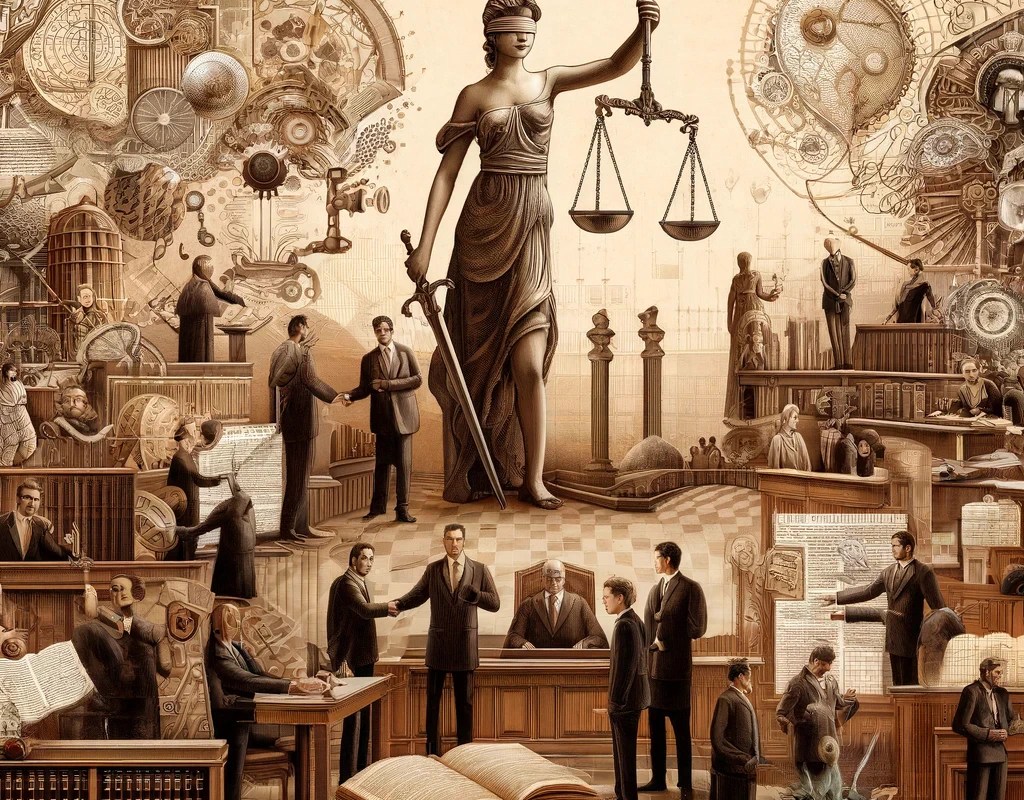
Fiction Nation: Legal and Jurisprudence Systems


Section 4: Legal and Jurisprudence Systems as Fictions

The Nature of Legal Systems

Legal and jurisprudence systems are among the most complex and entrenched fictions in society. Laws are human-made rules that govern behaviour, established by governments and enforced by judicial institutions. While laws aim to create order and justice, they are ultimately constructs, products of human agreement and cultural evolution.

The concept of law varies significantly across cultures and historical periods. Ancient legal codes, such as the Code of Hammurabi or Roman law, illustrate the long-standing tradition of codifying rules to govern society. However, these codes, like modern laws, are not natural phenomena but rather inventions designed to regulate human interactions and maintain social cohesion.

The Evolution of Legal Fictions

Legal systems have evolved alongside societies, adapting to changes in cultural norms, technological advancements, and political landscapes. The development of common law, for example, is a testament to the adaptive nature of legal systems. Common law, which originated in medieval England, is based on judicial precedents and case law rather than written statutes. This system relies heavily on the interpretation and application of past decisions, demonstrating how legal principles are constructed and reconstructed over time.

Moreover, legal fictions are often used within these systems to achieve practical outcomes. For instance, the concept of corporate personhood, where a corporation is treated as a legal person with rights and responsibilities, is a legal fiction designed to facilitate business operations and protect individual shareholders from certain liabilities. This illustrates how legal constructs can shape economic activities and social relations.

Implications of Legal Fictions

The recognition that legal systems are fictions has profound implications for how we understand and engage with the law. It highlights the role of human agency in creating and modifying legal norms, suggesting that laws are not immutable truths but rather adaptable tools for governance.

Legal systems are often seen as impartial and objective, but they are deeply influenced by the values, beliefs, and power dynamics of the societies that create them. This can lead to biases and inequalities being embedded within legal frameworks. For example, historical laws that discriminated based on race, gender, or class demonstrate how legal fictions can perpetuate social injustices.

Understanding the fictional nature of legal systems also opens the door to questioning and reforming these systems. It encourages us to consider alternative approaches to justice and governance that may better reflect contemporary values and address the needs of diverse populations.

The Role of Legal Narratives

Legal narratives, the stories told through laws and legal decisions, play a crucial role in shaping public perceptions and societal norms. These narratives construct realities that influence how individuals and communities understand their rights, responsibilities, and relationships with the state.

The work of scholars like Robert Cover, who in “Nomos and Narrative” (1983) argued that law is a system of meaning-making through narratives, underscores the importance of storytelling in the legal realm. By examining these narratives critically, we can uncover the underlying assumptions and power structures that they reinforce.

Future of Legal Systems

As societies continue to evolve, so too will their legal systems. The rise of international law, human rights conventions, and transnational legal frameworks reflects the growing interconnectedness of the world. These developments challenge traditional notions of state sovereignty and domestic legal autonomy, suggesting a future where legal systems may become even more complex and intertwined.

By recognizing legal systems as fictions, we are better equipped to navigate and influence these changes. This awareness can lead to more inclusive and equitable legal frameworks that serve the broader goals of justice and human flourishing.

References

  1. Cover, Robert. “Nomos and Narrative” (1983).
  2. Graeber, David. Debt: The First 5,000 Years (2011).
  3. Anderson, Benedict. Imagined Communities: Reflections on the Origin and Spread of Nationalism (1983).
  4. Giddens, Anthony. The Consequences of Modernity (1990).
  5. Beck, Ulrich. Cosmopolitan Vision (2006).

Fiction Nation: Economies & Money (part 3)

➡ Fiction Nation: Living in a World of Fictions (section 5)

Video: Blame and Causa Sui

In this segment, I ponder the interplay between blame and Causa Sui. I’ll discuss the implications for moral responsibility as well as legal responsibility, which are not as in sync as one might imagine they might be.

Video: Blame & Causa Sui

To the uninitiated, Western legal systems have no pretensions about being about morality or justice. Legal systems are designed to maintain power structures and the status quo. They are deontological machines, making them prime targets for automation by the machine learning associated with artificial intelligence. This would also diminish the power of rhetoric over facts to some extent. But, I am no legal scholar, and all of this will have to wait for another segment.

I recently shared a video on causa sui and the basics of blame and blameworthiness, so I want to intersect those topics here.

Peter Strawson suggested that for humans, blame is a reactive response. It’s reflexive like having your knee jerk when tapped. Essentially, his position is that if blame didn’t naturally exist, we’d have to invent it, mirroring Voltaire’s quip, ‘If God did not exist, it would be necessary to invent Him’. Of course, this is because they serve the same power control purpose.

If God did not exist, it would be necessary to invent Him

Voltaire

To be fair, blame is closer to real than God, but the point remains. Strawson’s point is also that humans are saddled with blame and it’s not going anywhere no matter how nebulous it becomes in execution. It’s natural.

To me, this starts to sound suspiciously like a naturalistic fallacy. Humans seem to selectively cherry-pick which so-called natural tendencies they choose to defend. One might use nature to argue that female sexual availability begins at menstruation, and yet we have decided to ignore this and defer this on the grounds of civility. It’s obvious that we could consider blame to be an animal instinct we want to domesticate away, but because it serves other purposes, per Strawson’s perspective, it’s a useful tool.
But what’s the causa sui challenge. Let’s quickly recapitulate.

Causa sui argues that one cannot be the cause of oneself, ex nihilo. Being full products of nature and nurture to adopt the lay parlance, any blameworthiness lies with the sources or creators. Since we are concerned with moral responsibility, we can eliminate nature forthrightly. Nature may be responsible—by many estimations approximately 40 per cent responsible—, it possesses no moral agency. And if the individual is not responsible, then we are left with the environment and society, including the social environment. Of course, the environment gets off the hook in the same manner as the genetic and hereditary factors of nature.

Before we consider society, let’s regard the individual.

Albeit the brain-as-computer is a bit facile, it’s still good enough for illustrative purposes. When you are born, your cognitive hardware is installed, as are your edge peripherals and update protocols. Any of these can become damaged through some degenerative processes, or external environmental factors, but since my interest is in optimistic rather than pessimistic scenarios, I’ll ignore these instances. Given that blameworthiness is directly related to presumed cognitive processing, factors that diminish these faculties, mitigate blameworthiness and factors than increase it, ameliorate it.

As a—quote—’normal’ child becomes an adolescent and then an adult, the probability it will become blameworthy, increases with age, ceteris paribus. A person with cognitive deficits or conditions such as aphasia or dementia decreases the probability of blame assignment. Even temporary impairment mitigates judgment—oh, she was drunk.

So, following the brain-as-computer analogy, your brain is a CPU with a self-updating cognitive operating system and instruction set. Essentially, there is also short and long-term memory.
In the case of cognitive deficits, one of these components might be effectively broken. The CPU might process too slowly; it might misinterpret what it receives; there may be issues with the sense organs or the nerves that transport signals.

I’ve got a mate who, due to medical malpractice at birth, experienced nerve damage. Although his eyes and brain are normal, his optic nerve cannot carry signals very well, effectively leaving him blind. Neither can he taste nor smell. So there’s that.

But assuming that this processing and storage hardware are intact, the causa sui constraint still applies, but let’s spend some time evaluating societal interactions.

All inputs come from society—cultures and subcultures. Apart from misinterpreted processing scenarios, if a person doesn’t receive a particular moral instruction set, that person should surely be considered to be exempt from moral blame. It may be difficult to assess whether an instruction has been input. This is a reason why children are categorically exempted: they may not have received all of the expected moral codes, they may not have been stored or effectively indexed, and their processing hardware is still in development—alpha code if you will. Brain plasticity is another attribute I won’t spend much time on, but the current state of science says that the brain is still not fully developed even by age 30, so this is certainly a mitigating factor, even if we allow leeway for the causa sui argument.

I mention subculture explicitly because the predominant culture is not the only signal source. A child raised by, I don’t know, say pirates, would have an amended moral code. I am sure we can all think of different subcultures that might undermine or come at cross odds with the dominant culture, whether hippies, religious cultists, militia groups, racial purist groups, and so on.

So, a commonly held moral in the subdominant group may counter that of the prevailing one. An example that comes to mind is some religious organisations that do not agree with human medical intervention. There have been cases where parents have allowed a child to die from an otherwise curable condition. Although in the United States, there is a claim of freedom of religion—a claim that is spotty at best—, parents or guardians in situations like these have been convicted and sentenced for following their own moral codes. But as with all people, these people are as susceptible to the limitations of causa sui as the rest of us. They are not responsible for creating themselves, but moral responsibility was asserted based on the beliefs of the prevailing culture. Even besides the legal context, persons in the larger society would likely blame the parents for their neglect—though they may be praised for being resolute in their righteousness by their in-group. This just underscores that morality is a collection of socially constructed conventions rather than something more objective.

Returning to causa sui, let’s say a person commits an act that society would typically assign blame. Rather than exercise some act of retributive justice—a concept with no foundation in a causa sui universe—the course of action was remediation. In this case, the desired moral instruction would be delivered thereby seemingly making the moral offender blameworthy. But would they be?

Presumably, (for what it’s worth) psychologists would evaluate the subject for competency in maintaining the programming. In the case of the aforementioned religious parents, they may be threatened with retribution for not abiding by the superseding rules of the prevailing power structure.

Although I might personally allow some leeway even with the causa sui in full force and effect, but I can’t say that I have much faith in the ability of humans to make a correct assessment. My impression is that any assessment would be one of convenience than something sounder.

Perhaps I’ll produce a more robust segment on retributive justice, but my feeling is that retributive justice is an area that legal systems should avoid altogether. If necessary, focus on restorative justice, rehabilitation (or ‘habilitation’ as the case might be) and quarantine models to ensure any bad actors are contained away from society. Again, this puts individuals at the mercy of cultures they find themselves a part of. I am not going to delve into this any further save to remind the listener of gang initiation schemes where a person needs to kill a member of a rival gang to become a trusted member. This is their moral code—quite at odds with the mainstream.

So there you have it. Owing to causa sui constraints, a person cannot be ultimately responsible for their actions. My primary thesis is—apart from metaphorical equipment failures—that any moral responsibility falls wholly on the society or culture. Full stop. And this isn’t as foreign as one might first feel. Although for most people blame is natural, in an individualistic society, people are interested in finding the culprit. In collectivist cultures, any culprit might do. Perhaps I’ll share some stories in a future segment.
Meantime, what are your thoughts on moral responsibility? Can someone be ultimately responsible? Some have said the ‘ultimate responsibility’ is a philosophical red herring and that we can still hold someone responsible, even if not in the ultimate sense, which causa sui disallows. Are you more in this camp? Is this enough to mete out so-called retributive justice? For me, retributive justice is a euphemism for vengeance, and justice is a weasel word. But that’s just me, and perhaps a topic for another segment.

Are there any topics you’d like me to cover? Leave a comment below.

Arguing against Prostitution

TRIGGER WARNING: This post is about sex and prostitution and includes words and images not necessarily appropriate for the self-righteous.

If this describes you, avert your eyes.

The Holy Water, It Burns

I stumbled across another blog site advocating the Nordic (anti-prostitution) Model, which in a nutshell makes it illegal to buy but not ‘sell’ sex.

On the positive side, the advocates of this model pretty much all adhere to the same talking points. On the negative side, there are only weak strawman arguments , moralising, and anecdotes. Any studies referenced are limited in scope and with dubious rigour.

In this case, I (again) pointed out that the core of the argument was one against Capitalism, and (again) the response was that it is (somehow) more than this—because, well, things…moral things.

Interestingly, the site is named Your Social Construct Is Showing, but it seems her complaint is not about social constructs in general; rather, she doesn’t appear to like any social construct she doesn’t agree with—and without recognising the irony in claiming to understand the constructed nature of society whilst also claiming that her construction is somehow better—because, well, things…just things. She’s got some subcultural metanarrative running through her head, and, by God, it’s got to be the only valid one.

I’ve written on this before, but the primary argument is that sex work is not work—otherwise, they wouldn’t have to label it as work. It sort of employs the same logic that oral sex is not sex for the same reason—because reasons.

The next angle is to conflate prostitution with sex trafficking, just hoping no one will notice the redirection. Then they try to muddy the waters with other issues such as exploited, underage subjects as if there is some parallel between these cohorts and women who choose this line of work.

Example of an advertisement by a sex worker

So, to be fair and not fight strawmen like Cammy, I’ll comment on a Logos blog she posted in a response to me. She seemed to be impressed with it. After a rambling preamble, the post gets to its points:

Worker safety: Sex Work does not comply with OSHA rules.

Sexual Harassment: ‘unwelcome sexual conduct that is a term or condition of employment’

Civil Rights: Slavery used to be illegal, and now it isn’t. Prostitution is like slavery.

Without devoting more than a passing moment to remind the reader that workplace safety and sexual harassment rules are social constructs that vary by place and time. OSHA is relevant in the United States of America and nowhere else. Let’s address these in turn:

The Logos post cites various OSHA rules and attempts to rationalise how sex work would be non-compliant.

1

Worker Safety

Mouth pipetting/suctioning of blood or other potentially infectious materials is prohibited

The author (attributed as Lori Watson) points out that ‘this doesn’t say is permitted with protective gear. It says prohibited.’ The line of argumentation here is seemingly that semen is a potentially infectious material and so is prohibited. What she fails to note is that suctioning is not the purpose of oral sex, and with a condom, no suctioning could happen anyway.

Gloves shall be worn when it can be reasonably anticipated that the employee may have hand contact with blood, other potentially infectious materials…

If the punter is wearing a condom, it cannot be reasonably anticipated that the employee would be in contact with [semen].

Masks, Eye Protection, and Face Shields. Masks in combination with eye protection devices, such as goggles or glasses with solid side shields, or chin-length face shields, shall be worn whenever splashes, spray, spatter, or droplets of blood or other potentially infectious materials may be generated…

Again: Condoms obviate this need.

Gowns, Aprons, and Other Protective Body Clothing. Appropriate protective clothing such as, but not limited to, gowns, aprons, lab coats, clinic jackets, or similar outer garments shall be worn in occupational exposure situations. The type and characteristics will depend upon the task and degree of exposure anticipated.

Ditto: Condoms

In the event of exposure, OHSA requires: “The source individual’s blood shall be tested as soon as feasible…

OK

This part of the post closes with a comment that many [note: weasel word] punters do not prefer condoms.

2

Sexual HARASSMENT

Since the definition and expressed purpose of prostitution is ultimately an exchange of sexual services for remuneration, it seems that a person waives this protection. There is much precedence of this occurrence.

Case in point. In the United States, citizens are protected by the Constitution and its Amendments. These documents contain inalienable rights (as established by the Declaration of Independence), yet these rights are abridged (waived) in many instances—military service being the most notable, where members do not have the right to free speech, peaceable assembly, to carry a weapon (except as specifically allowed), due process, and on and on.

3

Civil Rights

The response here is a deluxe word salad, so I’ll break it down slowly.

If sexual autonomy is to mean anything, it has to mean the right to refuse sex with anyone, at any time, for any reason. 

Indeed. And the woman can refuse service and refund the fee. If I am a fast food worker, I can forego my wages and my job if I no longer wish to do it. Try to do that in the military. Indentured servitude, you ask? Why, yes. I do believe you’d be correct.

[As] a regulated commercial exchange, the “providers” are cannot be legally free to refuse clients in protected classes on grounds of their membership in the protected class.

Indeed. If I were a lawyer and refused to service a member of a protected class, I would likely be disbarred. This said, the sex worker could choose another profession. In my experience, many sex workers exclude various classes of people they do not prefer to service.

Below are some images I found whilst performing a Google search. Notice that the provider advertises her boundaries and limitations.

This one makes it clear that she does not provide unprotected services or anal sex and does not accept African-American (AA) customers under 35 years of age.

No BB – No Greek – No AA

This ad makes it clear that she only practices safe sex (No BB (bareback), including no BB oral sex) and will not provide Girl Friend Experience (GFE).

No BBBJ

Again, this provider does not service African American men of any age and does not require protection for oral sex, but she only services from her own location.

BBBJ Friendly – No AA

So at the end of all this, I stand by my original position that there is no argument to have beyond ‘boo hoo. I don’t like prostitution and neither should you. I can’t come up with a cogent argument, so I’ll shout into an echo chamber where my friends and allies will cheer me on, but critical thinking need not apply because reasons and things…lots of them.