🤔 If liberation now feels indistinguishable from exhaustion, what exactly have we been freed from?
Image: Exhaustion means you’re working hard, and working hard means you’re good.
Han’s slender essay reads like a diagnosis of our psychic economy. The disciplinary society of ‘thou shalt’ has dissolved into the achievement society of ‘yes, I can’. We no longer rebel against authority; we internalise it, polishing our exhaustion until it gleams like ambition. Productivity replaces purpose. Rest becomes guilt. The subject, stripped of exterior constraint, now self-flagellates in the name of freedom.
We exploit ourselves and think we are free.
What Han captures is not mere fatigue but a civilisational pathology: the compulsion to optimise the self as though it were capital. Burnout is not the collapse of will but the logical conclusion of unlimited permission.
If liberation now feels indistinguishable from exhaustion, what exactly have we been freed from?
From the series Readings in Late Exhaustion – a Philosophics reflection on the maladies of modernity.
About the Series — Readings in Late Exhaustion
These cards belong to Readings in Late Exhaustion, a Philosophics project tracing the psychic and cultural costs of late capitalism.
Each card interprets a contemporary work of critical theory through the language of collectable gameplay, where identity, labour, and value become quantified acts.
The format itself is the critique: a system of self-expenditure disguised as achievement, reflection rendered as performance.
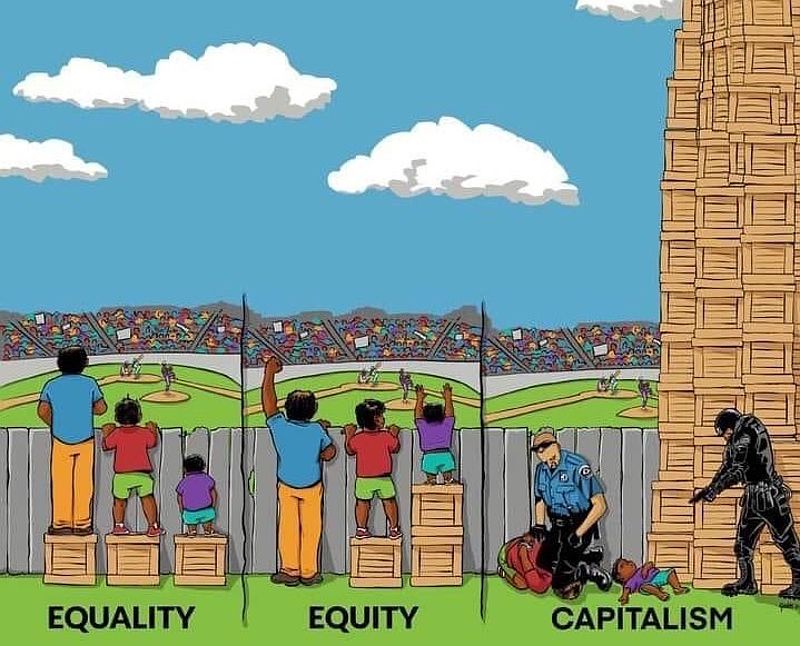
Capitalism, often celebrated for its ability to generate wealth and innovation, also brings with it a darker legacy: the untold millions of lives prematurely lost due to its systemic failures. Capitalism can be attributed to more than 10 million excess deaths per year, and these numbers will continue to increase. These deaths are not simply unfortunate byproducts but are structurally baked into the system itself. Whether through poverty, healthcare inequality, environmental destruction, or war, capitalism’s logic of profit maximisation places human life at the mercy of market forces, with devastating consequences.
Audio: NotebookLM podcast on this topic.
Friedrich Engels famously referred to these preventable deaths as social murder, a term that highlights how capitalism creates conditions in which certain populations are systematically neglected, deprived, and ultimately destroyed. Today, Engels’ critique is more relevant than ever as we examine the staggering human toll that capitalism has left in its wake, often invisible in the glow of GDP figures and economic growth.
Poverty and Hunger: The Silent Killers
One of the most pervasive ways capitalism generates excess deaths is through poverty and hunger. Despite the extraordinary wealth produced by capitalist economies, millions still die from hunger-related causes every year. According to the World Health Organization (WHO), around 9 million people die annually from hunger and malnutrition, mostly in regions where capitalist-driven global inequality has made basic necessities unaffordable or inaccessible.[1]
Capitalism’s defenders often point to rising standards of living as evidence of the system’s success, but this narrative suffers from survivorship bias. The success stories of those who have benefited from capitalist growth obscure the countless lives that have been lost to the system’s structural inequalities. As Engels noted, these deaths are not natural or inevitable—they are preventable. They occur because the capitalist system concentrates wealth in the hands of a few while leaving vast populations to suffer without access to food, healthcare, or basic resources.
“For the dead, there is no measure of progress or rising standards; they are simply erased from the narrative.”
This disparity in wealth and access to resources creates a global system of social murder, where the deaths of the poor are written off as collateral damage in the pursuit of profit. These deaths are not merely unfortunate consequences; they are inherent to the capitalist system’s prioritisation of wealth accumulation over human life.
Healthcare Inequality and Preventable Deaths
The lack of access to adequate healthcare is another major driver of deaths attributable to capitalism. In the United States, the richest nation in the world, an estimated 500,000 deaths between 1990 and 2010 were linked to healthcare inequality, according to a Lancet study.[2] Globally, millions die each year from preventable causes—such as pneumonia, diarrhoea, and malaria—because market-driven healthcare systems fail to provide for those without the means to pay.
In a for-profit healthcare system, those without money are often denied life-saving treatment. Healthcare becomes a commodity, rather than a human right. This commodification of care creates deadly disparities, where a wealthy few receive world-class medical attention while millions die from treatable conditions. Engels’ notion of social murder is evident here as well: the system does not kill through direct violence but by neglecting the vulnerable.
“Capitalism’s market-driven healthcare system perpetuates a structural violence where the poor die from treatable conditions simply because they cannot pay.”
This situation is exacerbated by the ongoing commodification of healthcare through privatisation and austerity measures, which strip public systems of resources and force them to operate on capitalist principles. The result is a world where profit motives dictate who lives and who dies.
Environmental Destruction and Climate Change: Capitalism’s Long-Term Death Toll
Capitalism’s unrelenting focus on short-term profit also drives environmental destruction, contributing to a growing death toll linked to climate change. The WHO estimates that by 2030, climate change will cause approximately 250,000 additional deaths each year, driven by heat stress, malnutrition, and the spread of diseases like malaria and diarrhoea.[3] These figures are conservative, as the cascading effects of climate-induced migration and conflict are difficult to quantify.
David Harvey’s concept of accumulation by dispossession is central to understanding how capitalism contributes to environmental devastation. Capitalist economies extract and commodify natural resources, often at the expense of local populations who bear the brunt of environmental degradation. Deforestation, mining, and fossil fuel extraction displace communities and destroy ecosystems, creating conditions that lead to death, displacement, and disease.
“The victims of capitalism’s environmental destruction are not accidental casualties; they are the inevitable outcomes of a system that prioritises short-term profit over long-term sustainability.”
This environmental violence is compounded by disaster capitalism, a term coined by Naomi Klein to describe how capitalist interests exploit crises like natural disasters or financial collapses for profit.[4] The destruction of vulnerable communities by climate change is not simply a tragedy—it is a consequence of capitalist expansion into every corner of the planet, sacrificing human and ecological health for economic gain.
War and Imperialism: Capitalism’s Violent Expansion
The human toll of capitalism extends beyond poverty and environmental degradation to include the millions of lives lost to wars driven by capitalist interests. The illegal invasion of Iraq in 2003, for example, led to hundreds of thousands of deaths, many of which were tied to the geopolitical aims of securing control over oil reserves. Wars like Iraq are not isolated failures of policy but integral to the functioning of a global capitalist system that seeks to dominate resources and expand markets through military force.
David Harvey’s theory of new imperialism explains how capitalist economies rely on the expansion of markets and the extraction of resources from other nations, often through military means.[5] The military-industrial complex, as described by President Dwight D. Eisenhower, thrives under capitalism, profiting from perpetual war and the destruction of human life.
“Wars driven by capitalist interests are not just geopolitical strategies; they are extensions of capitalism’s relentless drive to dominate resources and secure markets.”
The death toll of wars driven by capitalist expansion is staggering. From the millions killed in conflicts over resources to the long-term destabilisation of regions like the Middle East, these deaths are directly tied to capitalism’s global ambitions. The victims of these wars—like those who suffer from poverty and environmental destruction—are casualties of a system that prioritises wealth and power over human life.
Conclusion: Reckoning with Capitalism’s Death Toll
The deaths attributable to capitalism are not abstract or incidental; they are the direct consequences of a system that places profit above all else. From hunger and poverty to healthcare inequality, environmental destruction, and war, the capitalist system has claimed millions of lives—lives that could have been saved under a more just and equitable economic model.
“Capitalism’s greatest violence is not its wars, but its everyday acts of neglect, where millions die not from bombs but from lack of food, water, and care.”
The true success of capitalism, then, is not in its ability to generate wealth for the few, but in its capacity to obscure the structural violence that sustains it. By framing poverty, healthcare inequality, and environmental destruction as unfortunate consequences of “market forces,” capitalism avoids accountability for the millions it leaves behind.
It is time to reckon with this hidden death toll. Only by facing the human cost of capitalism can we begin to imagine a future where economic systems prioritise human life over profit. The victims of capitalism are not just numbers—they are the casualties of a system that, as Engels pointed out, murders through neglect, exploitation, and greed.
Endnotes:
[1]: World Health Organization, “Hunger and Malnutrition: Key Facts,” 2022. [2]: “The Lancet Public Health,” Study on healthcare inequality in the U.S., 2010. [3]: World Health Organization, “Climate Change and Health,” 2022. [4]: Naomi Klein, The Shock Doctrine: The Rise of Disaster Capitalism (Picador, 2007), pp. 9-10. [5]: David Harvey, The New Imperialism (Oxford University Press, 2005), pp. 145-147.
In the contemporary world of deepening inequality and environmental degradation, capitalism continues to hold a powerful ideological grip on much of the global population. Yet the irony is that many of its staunchest defenders are not the elites or the true beneficiaries of the system, but the very workers and middle-class individuals whose lives it exploits and controls. These defenders are not capitalists themselves; they are, in fact, cogs in the machinery of a system they imagine will eventually reward their loyalty. This illusion is strikingly captured in a quote often misattributed to John Steinbeck: “Socialism never took root in America because the poor see themselves not as an exploited proletariat but as temporarily embarrassed millionaires.”[1]
This phenomenon, which we might call the temporarily embarrassed millionaire syndrome, reflects not only a profound misunderstanding of capitalism but also the effectiveness of the system in controlling its participants through hope and aspiration. Capitalism promises upward mobility, convincing even those at the bottom of the economic ladder that their current misfortunes are temporary. But as Karl Marx and Friedrich Engels observed, this is a system of exploitation that not only alienates workers but effectively destroys them.
Survivorship Bias and the Myth of the “Rising Tide”
Capitalism’s defenders frequently invoke the idea that “a rising tide lifts all boats.” The metaphor suggests that when capitalism prospers, everyone benefits. However, this vision of progress masks the reality of capitalism’s winners and losers. As economist David Harvey has pointed out, capitalism is not a neutral system of wealth creation—it is a system of accumulation by dispossession, constantly expropriating wealth from others, often through privatisation and the commodification of public goods.[2] The rising tide does lift some boats, but it simultaneously leaves others stranded, or worse, sinking.
Survivorship bias is essential to understanding how capitalism maintains its legitimacy. The success stories—the wealthy entrepreneurs, the individuals who “made it”—are lauded as proof that the system works. But the vast numbers of people left behind, those who toil in exploitative conditions or who die from poverty and neglect, are erased from the narrative. In Engels’ terms, these are victims of social murder—individuals who die prematurely not by direct violence, but through the structural forces of deprivation imposed by capitalism.[3] Their deaths are rendered invisible, falling out of the metrics of rising living standards and growth.
“The system’s victims are not accidental casualties but inevitable outcomes of capitalism’s relentless focus on profit over life.”
Friedrich Engels, The Condition of the Working Class in England
Engels’ critique of industrial capitalism is as relevant today as it was in the 19th century. The modern mechanisms of exploitation may be more complex, but they are no less deadly. In a late capitalist world, the poor and marginalised are still being “murdered” through the structural violence of inadequate healthcare, poor working conditions, and environmental degradation. The millions left out of the capitalist success story are not anomalies but integral to the system’s operation.
Alienation and the Tragedy of Defending the System
Marx’s theory of alienation provides another crucial lens through which to understand why capitalism’s defenders often remain blind to their own exploitation. Under capitalism, workers are alienated from the products of their labour, the process of production, their own humanity, and from each other.[4] The worker becomes a cog in a machine, detached from the value they create, and unable to control their working life. Yet, even in this state of alienation, many still defend the system, believing that their hard work will eventually lead them to wealth and freedom.
This defence of capitalism, often articulated by those whose lives it degrades, reflects Antonio Gramsci’s concept of cultural hegemony. Gramsci argued that the ruling class maintains power not just through economic domination, but by shaping the cultural and ideological landscape.[5] Capitalism’s defenders are, in part, products of this hegemony, believing in the very values—individualism, competition, the ‘American Dream’—that bind them to a system of exploitation.
“The most effective form of domination is one that is not felt as domination, but rather as a form of freedom.”
Antonio Gramsci, Selections from the Prison Notebooks
This illusion of freedom under capitalism is deepened by what Herbert Marcuse calls repressive desublimation. Capitalism offers false freedoms in the form of consumer choice and superficial pleasures, giving individuals the illusion that they are exercising autonomy, even as the system remains unchallenged.[6] Workers may identify themselves in their commodities—luxury goods, tech gadgets, cars—but these objects only serve to reinforce their alienation and dependence on the capitalist system. The temporarily embarrassed millionaire clings to the dream of eventual success, all the while contributing to a system that offers only superficial rewards in return.
Social Murder and the Structural Violence of Late Capitalism
The notion of social murder offers a stark framework for understanding capitalism’s indirect, yet pervasive, violence. As Engels explained, this form of violence is not inflicted through overt means, but through the systematic neglect of basic human needs. Whether it’s the millions who die due to lack of access to healthcare or the global poor displaced by climate-induced disasters, capitalism perpetuates a form of structural violence that is invisible to those who benefit from the system’s success.[7]
The American political theorist Naomi Klein extends this analysis through her concept of disaster capitalism, where crises are exploited for profit. Whether it’s natural disasters or financial crises, capitalism uses these events as opportunities to privatise public resources, dismantle social safety nets, and deepen inequality.[8] The victims of these disasters—often the poor and vulnerable—are, in Engels’ terms, socially murdered by a system that thrives on their dispossession.
“Extreme violence has a way of preventing us from seeing the interests it serves.”
Naomi Klein, Shock Doctrine
The Temporarily Embarrassed Millionaire as a Tool of Control
The illusion that one’s current position is only temporary—that any individual can rise to capitalist wealth if they work hard enough—is central to maintaining the capitalist system. This aspiration prevents individuals from seeing their exploitation for what it is. They do not identify as part of an exploited class but instead believe they are merely waiting for their turn at wealth. Zygmunt Bauman’s concept of liquid modernity—the perpetual state of instability and insecurity produced by late capitalism—helps explain this phenomenon.[9] Individuals are constantly told that their position is fluid, changeable, and that their big break is just around the corner.
But for most, this “big break” never comes. The dream of becoming a millionaire is a powerful form of social control, one that keeps individuals invested in a system that benefits only a small fraction of its participants. As Marx reminds us, “the worker becomes all the poorer the more wealth he produces, the more his production increases in power and range.”[10] Capitalism does not reward the many; it exploits the many for the benefit of the few.
Conclusion: Facing the Irony and Imagining a Post-Capitalist Future
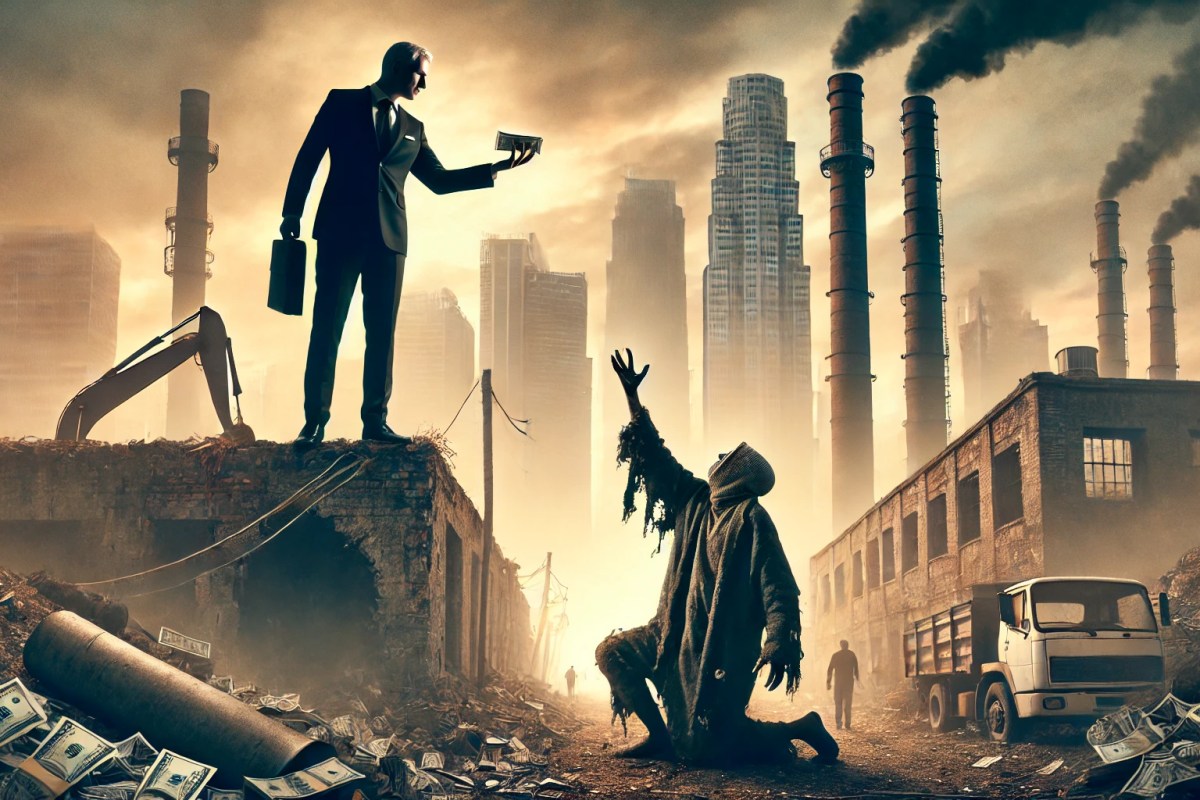
The greatest irony of capitalism is that those who defend it most fervently are often those who will never realise its promises. These are not the capitalists of the system, but its workers, its underclass, and its exploited. They see themselves not as oppressed, but as temporarily embarrassed millionaires—an illusion that keeps them bound to a system that offers them no real future.
In this light, the true success of capitalism is not in its creation of wealth, but in its ability to mask the conditions of exploitation, alienation, and social murder that underpin it. The path forward requires a dismantling of these illusions and a recognition that the system’s failures are not accidental but integral to its design.
“Capitalism’s greatest trick is convincing the exploited that their suffering is temporary, that their turn at wealth is inevitable.”
Naomi Klein, The Shock Doctrine
Only by facing these uncomfortable truths can we begin to imagine a future beyond the constraints of capitalist ideology, a world where human flourishing is no longer measured by wealth accumulation but by the collective well-being of all.
Endnotes:
[1]: Misattributed to John Steinbeck, this quote encapsulates a critical observation about American capitalism’s appeal to aspiration rather than solidarity. [2]: David Harvey, The New Imperialism (Oxford University Press, 2005), pp. 145-147. [3]: Friedrich Engels, The Condition of the Working Class in England (Oxford University Press, 1845), p. 112. [4]: Karl Marx, Economic and Philosophic Manuscripts of 1844 (Progress Publishers, 1959). [5]: Antonio Gramsci, Selections from the Prison Notebooks (International Publishers, 1971), p. 12. [6]: Herbert Marcuse, One-Dimensional Man (Beacon Press, 1964), p. 10. [7]: Friedrich Engels, The Condition of the Working Class in England, p. 114. [8]: Naomi Klein, The Shock Doctrine: The Rise of Disaster Capitalism (Picador, 2007), pp. 9-10. [9]: Zygmunt Bauman, Liquid Modernity (Polity, 2000), p. 14. [10]: Karl Marx, Economic and Philosophic Manuscripts of 1844, p. 68.




 Philosophics