Philosophic Influences

I just finished the writing and editorial parts of my Language Insufficiency Hypothesis. It still needs cover art and some administrative odds and ends, but I’m taking a day for a breather to share something about myself and my worldview. For this, I share my philosophical influences and how they support my core insights. For dramatic effect, I’ll even try to weight them to 100 per cent, leaving an ‘others’ bucket for the unaccounted ones.

Audio: NotebookLM summary podcast of this topic.

Obviously, this highly scientific accounting is about as useful as a Facebook survey or a fortune cookie, but it should reveal something. I have influences outside of philosophy, but I’ll limit this list at the start. The numbers don’t exactly add to 100% because there is a bit of cross-pollination, say, between Foucault and Nietzsche or ĆœiĆŸek and Hegel – or perhaps I’m just not good at maths. You decide.

Nietzsche (≈18)

Nietzsche is likely the uranium core. Haters and detractors like to diminish his contribution – and he didn’t play by the old rules – but they are wrong. He contributes value-creation, anti-moralism, perspectivism, the critique of ressentiment, the demolition of universals.

Nietzsche sits at the centre of the blast radius. Everything else is shrapnel. If there’s a thinker who detonated the Enlightenment’s pretensions more elegantly, I’ve not met them. He showed us that values are forged, not found; that morality is a genealogy of grievances; that certainty is the last refuge of the timid. In other words, he cleared the ground so the rest of us could get to work without tripping over Kantian furniture. But after Nietzsche’s uranium core, the next concentric ring becomes murkier.

Foucault (≈20%)

Foucault supplies the schematics. Where Nietzsche swung a hammer at the idols, Foucault identified the building codes. He mapped power as a set of subtle, everyday enchantments. He showed how ‘knowledge’ is simply what a society rewards with credibility. He is the patron saint of anyone who suspects normality is an instrument, not a neutral state of affairs. The world looks different once you see the disciplinary fingerprints on everything.

Derrida (≈10%)

Derrida gives me language as mischief. Meaning wobbles, slides, cracks; binaries betray themselves; every conceptual edifice contains its own trapdoor. Derrida isn’t a system; he’s an escape artist. And frankly, you can’t write anything about the insufficiency of language without genuflecting in his general direction.

Late Wittgenstein (≈15%)

The quiet structural pillar. If Derrida is the saboteur, Wittgenstein is the carpenter who informs you that the house was never stable anyway. Meaning-as-use, language-games, the dissolution of philosophical pseudo-problems: his later work underwrites virtually every modern suspicion about fixed categories and timeless essences. He doesn’t shout; he shrugs – and everything collapses neatly.

Rorty (≈5%)

Rorty replaces metaphysical longing with cultural pragmatism. He teaches you to stop hunting for capital-T Truth and instead track the vocabularies we actually live in. He’s the friendly voice whispering, ‘You don’t need foundations. You need better conversations’. His influence is felt mostly in the tone of my epistemic cynicism: relaxed rather than tragic. Besides, we disagree on the better conversations bit.

Geuss (≈4%)

If Rorty makes you light-footed, Geuss reminds you not to float off into abstraction entirely. He is the critic of moralism par excellence, the man who drags philosophy kicking and screaming back into politics. Geuss is the voice that asks, ‘Yes, but who benefits?’ A worldview without him would be a soufflĂ©.

Heidegger (≈6%)

Selective extraction only. Being-in-the-world, thrownness, worldhood – the existential scaffolding. His political judgment was catastrophic, of course, but the ontological move away from detached subjectivity remains invaluable. He gives the metaphysics a certain grain.

Existentialists: Beauvoir, Sartre, Camus (≈6%)

They provide the atmospheric weather: choice, finitude, absurdity, revolt, the sheer mess of human freedom. They don’t define the system; they give it blood pressure. Besides, I met them before I switched to Team Nietzsche-Foucault.

ĆœiĆŸek, Latour, Baudrillard (≈2% combined)

These three are my licensed provocateurs.

  • ĆœiĆŸek exposes how ideology infiltrates desire.
  • Latour dismantles the Nature/Society binary with glee.
  • Baudrillard whispers that representation ate reality while we were looking at our phones.

They’re trickster figures, not architects.

Hume, Putnam, Dennett, and the Ancillaries (≈1% combined)

These are the seasonings.

  • Hume is the Scottish acid bath under every epistemic claim.
  • Putnam gives internal realism its analytic passport.
  • Dennett offers mechanistic metaphors you can steal even when you disagree.
  • Kant and Hegel hover like compulsory ghosts.
  • Rawls remains decorative parsley: included for completeness, consumed by none.

The Others Bucket (≈5%)

The unallocated mass: writers, anthropologists, theorists, stray thinkers you absorb without noticing. The ‘residuals’ category for the philosophical inventory – the bit fortune cookies never warn you about.

Enfin

Obviously, these ratios are more for humour than substance, but these are the thinkers I return to — the ones whose fingerprints I keep discovering on my own pages, no matter how many years or detours intervene.

Perhaps more revealing are those who didn’t make the guest list. Socrates, Plato, and Aristotle remain outside, smoking in the cold. The Stoics, Marcus Aurelius and his well-meaning self-help descendants, also failed to RSVP. In truth, I admire the posture but have little patience for the consolations – especially when they become the emotional training wheels of neoliberalism.

And then, of course, the Enlightenment patriarchs: Hobbes, Locke, Montesquieu and the rest of the constitutional furniture. I acknowledge their historical necessity the way one acknowledges plumbing – grateful it exists, uninterested in climbing inside the pipes. Rousseau, admittedly, I tolerate with something approaching affection, but only because he never pretended to be tidy.

I forgot Descartes, Voltaire, and Pascal, but it’s too late to scroll back and adjust the ledger. Consider them rounding errors – casualties of the margins, lost to the tyranny of percentages.

If anyone mentions another one – Spinoza comes to mind – I’ll try to figure out where they fit in my pantheon. Were I to render this tomorrow, the results may vary.

The Dubious Art of Reasoning: Why Thinking Is Harder Than It Looks

The Illusion of Clarity in a World of Cognitive Fog

Apologies in advance for this Logic 101 posting. Reason—our once-proud torch in the darkness, now more like a flickering lighter in a hurricane of hot takes and LinkedIn thought-leadership. The modern mind, bloated on TED Talks and half-digested Wikipedia articles, tosses around terms like “inductive” and “deductive” as if they’re interchangeable IKEA tools. So let us pause, sober up, and properly inspect these three venerable pillars of human inference: deduction, induction, and abduction—each noble, each flawed, each liable to betray you like a Greco-Roman tragedy.

Video: This post was prompted by this short by MiniPhilosophy.
Audio: NotebookLM podcast on this topic.

Deduction: The Tyrant of Certainty

Deduction is the purest of the lot, the high priest of logic. It begins with a general premise and guarantees a specific conclusion, as long as you don’t cock up the syllogism. Think Euclid in a toga, laying down axioms like gospel.

Example:

Perfect. Crisp. Unassailable. Unless, of course, your premise is bollocks. Deduction doesn’t check its ingredients—it just cooks with whatever it’s given. Garbage in, garbage out.

Strength: Valid conclusions from valid premises.
Weakness: Blind to empirical falsity. You can deduce nonsense from nonsense and still be logically sound.

Induction: The Gambler’s Gospel

Induction is the philosopher’s lottery ticket: generalising from particulars. Every swan I’ve seen is white, ergo all swans must be white. Until, of course, Australia coughs up a black one and wrecks your little Enlightenment fantasy.

Example:

Touching, isn’t it? Unfortunately, induction doesn’t prove anything—it suggests probability. David Hume had an existential breakdown over this. Entire centuries of Western philosophy spiralled into metaphysical despair. And yet, we still rely on it to predict weather, markets, and whether that dodgy lasagna will give us food poisoning.

Strength: Empirically rich and adaptive.
Weakness: One exception detonates the generalisation. Induction is only ever as good as the sample size and your luck.

Abduction: Sherlock Holmes’ Drug of Choice

Abduction is the inference to the best explanation. The intellectual equivalent of guessing what made the dog bark at midnight while half-drunk and barefoot in the garden.

Example:

It could be a garden sprinkler. Or a hose. Or divine intervention. But we bet on rain because it’s the simplest, most plausible explanation. Pragmatic, yes. But not immune to deception.

Strength: Useful in messy, real-world contexts.
Weakness: Often rests on a subjective idea of “best,” which tends to mean “most convenient to my prejudices.”

The Modern Reasoning Crisis: Why We’re All Probably Wrong

Our contemporary landscape has added new layers of complexity to these already dubious tools. Social media algorithms function as induction machines on steroids, drawing connections between your click on a pasta recipe and your supposed interest in Italian real estate. Meanwhile, partisan echo chambers have perfected the art of deductive reasoning from absolutely bonkers premises.

Consider how we navigate information today:

And thus, the modern reasoning loop is complete—a perfect system for being confidently incorrect while feeling intellectually superior.

Weakness by Analogy: The Reasoning Café

Imagine a café.

All three are trying to reason. Only one might get lunch.

The Meta-Problem: Reasoning About Reasoning

The true joke is this: we’re using these flawed reasoning tools to evaluate our reasoning tools. It’s like asking a drunk person to judge their own sobriety test. The very mechanisms we use to detect faulty reasoning are themselves subject to the same faults.

This explains why debates about critical thinking skills typically devolve into demonstrations of their absence. We’re all standing on intellectual quicksand while insisting we’ve found solid ground.

Conclusion: Reason Is Not a Guarantee, It’s a Wager

None of these modalities offer omniscience. Deduction only shines when your axioms aren’t ridiculous. Induction is forever haunted by Hume’s skepticism and the next black swan. Abduction is basically educated guessing dressed up in tweed.

Yet we must reason. We must argue. We must infer—despite the metaphysical vertigo.

The tragedy isn’t that these methods fail. The tragedy is when people believe they don’t.

Perhaps the wisest reasoners are those who understand the limitations of their cognitive tools, who approach conclusions with both confidence and humility. Who recognize that even our most cherished beliefs are, at best, sophisticated approximations of a reality we can never fully grasp.

So reason on, fellow thinkers. Just don’t be too smug about it.

Whence Morality?

Where does morality come from? I believe that there exists three possible vectors for morality in one of two categories—objective and subjective. Absolute objective morality derives from some single source outside of the subjective experience. Monotheistic religions have the propensity to adopt this ontology. Subjective morality is a human social construct and may be subdivided into logical and emotional subcategories. As a non-cognitivist, I feel that I am biased toward the emotional vector.

Podcast: Audio rendition of this page content

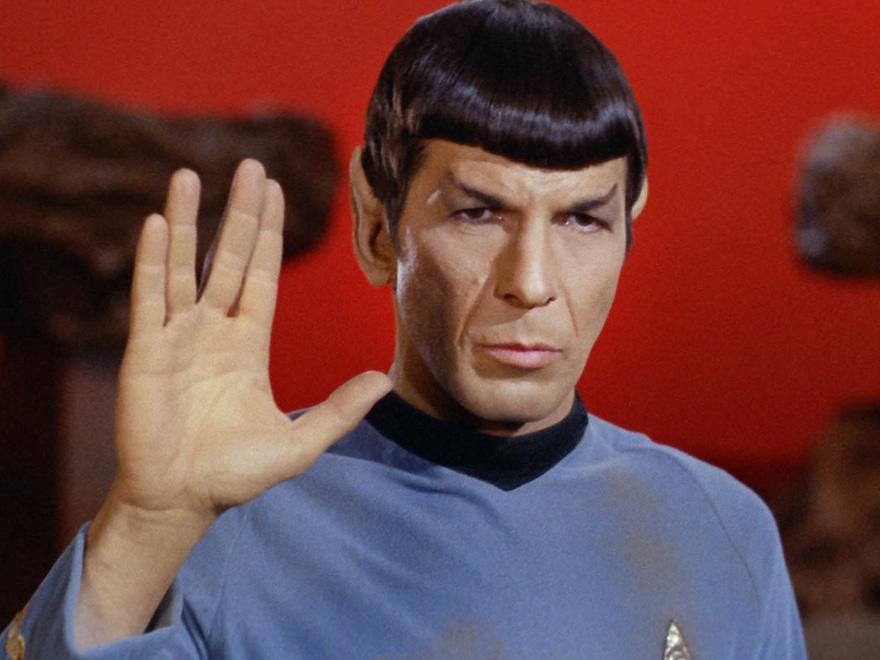
In my view, emotion always proceeds logic. I’ve been told for as long as I remember that I am hyper-logical and can be as dispassionate as Mr Spock or the Data character from the Star Trek franchise. As an economist, I was trained to stand back and objectify problems. However, the impetus for attention in the first place is always emotional. Or at least I can claim it to be alogical or prelogical. Even so, there would be a chain of events that moved from prelogical to emotional to logical. One may claim that applying logic to 2 + 3 requires no emotional content, but this has been habituated. Neither is there emotion nor logic. It’s a simple rote recitation.

I am going to take literary licence and dismiss objective reality out of hand as excessively unlikely. I think it’s fair to categorise the logical view as Kantian. In this view, humans employed reason and I suppose a consequentialist framework to arrive at the notion that it just made sense to construct moral underpinnings. Of course, by the time of Kant, the Enlightenment was firmly afoot, so we could just borrow and advance the same moral notions. I feel he’d be OK accepting the claim that some classes, say religious, if we follow the money and power trail, and realised that they could exert control and manipulate the playing field if they were the arbiters of morality. I am neither a deeply-read Kant scholar nor an anthropologist, but this is how I see it.

I feel that the emotional impetus for morality might best be characterised by David Hume. In his view, morals would have been made on sentiment and empathy. Then they were interpreted and amended by different cultures and societies. I feel this adjustment is actually the logical element in play.

Fundamentally, animals want a sense of fairness. This is well-documented even in monkeys, so morals are an attempt to codify fairness and fair outcomes. Of course, fairness means different things to different people, so that makes for an unstable foundation. I think Nietzsche takes a more instrumental stance but would side more with Kant with the addition of the power plays that caught Foucault’s attention in the last century.

I’ve shared my perspective here several times. As a non-cognitivist—in the manner of Ayer, Stephenson, and Hare—, morals are entirely emotive responses that then become prescriptive as a template for a civil society. However, as Nietzsche points out in Genealogy of Morals, this template is on the one hand not neutral and, on the other hand, applied differently to different cohorts.

This is not an attempt to provide a deep discourse on morality. Rather, it is just documenting my current perspective on a yet unresolved topic. I’m not sure there that the Kantian or Humean perspective will be the definitive answer. Evolutionary biologists have been tossing their proposals in the hat, but I don’t think we’ll ever get beyond speculation and opinion. This reflects mine.

Related Video Content

Under the Influence

Galen Strawson is my latest male crush. With almost everything I read or hear from him, I say, ‘that’s what I think’, over and over and over again. So I thought I’d share some of my journey to now. I made a post about female influences not too long ago. This is a bit different.

My first obsession, let’s say was the Beatles. I can’t pinpoint precisely when, but when I was a child, it’s been said that I would sing ‘she’s got a chicken to ride’ when it came on to AM radio. I asked for or bought all of their albums, and read everything about them that a kid could get his hands on back in the day. This obsession lasted for years and overlaps some of my next interests. My interests were in John Lennon’s political interests and George Harrison’s spiritual interests. I didn’t really find Paul McCartney or Ringo Starr very interesting beyond their musical abilities. And to be honest, I also got all of the Stones, Led Zeppelin, Pink Floyd, and so on. At my peak, I had over a thousand vinyl records—all lost in a house fire because vinyl and heat are generally incompatible. Paper didn’t fare much better, as I lost hundreds of books, too. A lesson in impermanence.

I am a bit of a nonconformist, a contrarian, and a polemicist

In grades 5 to 8, National Socialism and World War II were fascinating to me. Not Hitler, per se, though I do recall reading Mein Kampf at the time. There was just something about the sense of unity. Upon reflection, I realised that this meant me conforming to some other trend, and that was no longer interesting, as I am a bit of a nonconformist, a contrarian, and a polemicist, so there was that.

At some point, I came across Voltaire’s Candide and it just struck me. This may have commenced me on my path to becoming somewhat of a francophile. I extended my interest into the language and culture. My WWII phase has already primed that pump. I remember reading Dumas, Hugo, and some Descartes.

After I graduated, I was a recording engineer and musician. I remember reading Schoenberg’s Structural Function of Harmony and being enamoured with Dvoƙák and Stravinsky. I was influenced by many musicians, engineers, and producers, but there was just something about Schoenberg.

I went through a Kafka phase—that eventually included Donald Barthelme. His Absurdism was a nice foundation for my subsequent interest in Camus. It was something that just resonated with me. After Kafka, I discovered Dostoyevsky and consumed everything of his I could get my hands on.

I took from Jung and Campbell the importance of metaphor

In the 1990s, I discovered Carl Jung and eventually Joseph Campbell and a few years I spent reading Jung’s Complete Works and peripheral material related to Archetypal and Depth Psychology. I absorbed the material. I took from Jung and Campbell the importance of metaphor, but it never really resonnated beyond this.

Somehow, this experience led me to the Existentialism of Sartre (and Camus and Beauvoir). At the same time something clicked with me, I was always put off by the teleological imperative these guys seemed to insist upon—Sartre’s political involvement and Camus’ insistence on Art. These were their paths—and I certainly had an interest in Art and Politics—, but I felt this was too prescriptive.

For a brief time, I really liked Hume (and Spinoza), but then I discovered Nietzche and felt compelled to read his major works. It all made sense to me. It still does. Nietsche set me up for Foucault with his power relationships and the sense that morality, good, and evil are all socially constructed and contextual.

And Nietzsche brought me to Foucault and his lens of Power. These two still resonate with me. I investigated a lot of postmodern thinkers after this.

Nietzsche brought me to Foucault and his lens of Power

Daniel Dennett came next. He seems brilliant, and I tend to agree with most of what he says. I was still absorbing. Where biologist Robert Sapolsky gets philosophical, it’s about the same.

But Galen Strawson is different. And I have a lot of catching up to do in my reading of his direct work. The difference is that with these prior influences, I was absorbing and synthesising—creating my own perspectives and worldview. By the time I am finding Strawson, with every encounter, I am ticking off boxes.

  • That’s what I think
  • That’s what I think
  • That’s what I think
  • That’s what I think

Only, he started publishing in the 1960s. I could have been reading his work all along. Since I agree with 99.999 per cent of what I get from him and he is such a deep thinker, I am looking for two things:

  1. Something that expands rather than confirms
  2. Some spaces to operate that he has missed or ignored

As I continue on my Anti-Agency project and gather more inputs and perspectives, I’ll be considering a lot of Strawson. Here’s a clip I really enjoyed. I am thinking of doing a sort of reaction piece, but whether or not that happens, here’s the source.

[Video] Galen Strawson — Is Free Will a Necessary Illusion?

Spoiler Alert: I believe that free will is a cognitive bias related to apophenia. It’s a Gestalt heuristic.

Emotion Trumps Reason

“Reason is, and ought only to be, the slave of the passions, and can never pretend to any other office than to serve and obey them,” said David Hume said in his Treatise of Human Nature.

Reason is, and ought only to be, the slave of the passions, and can never pretend to any other office than to serve and obey them.

David Hume, A Treatise of Human Nature

Hume claims that “reason alone can never be a motive to any action of the will,” and that reason alone “can never oppose passion in the direction of the will.”

In the United States, forces on the Left have still not learnt this lesson. They are still trying to fight emotion and irrationality with reason. It’s like trying to coöpt the insane with rationality. It’s not going to happen.

And despite protestations, even the most supposedly logical of us are still motivated by some emotion or passion, as much as we can try to deny it. One can claim to have become an accountant or an engineer or a physicist because it was a calculated, logical thing to do, but in the end, even the brightest of these are driven by passion, by emotion.

As long as we are fighting emotion with reason, the battle is already over before it starts. We need to fight emotion with empathy. This is where the story of the oak and the willow comes in handy. Reason is the oak. Reason is the hare, but emotion is the supple willow of the tenacious tortoise.

Wage this fight and escalating commitment will prevail, as the emotional response will trigger a sort of fight or flight, but your opponent’s reason will form a hard shell to fend off any attacks.

But don’t feel too smug. It’s only your emotions that give you the passion to fight the good fight. Reason has convinced you that this is the logical route.

Irrationality

1–2 minutes

I’ve not read nearly at a pace as I’ve done in prior years, and I’ve got a million excuses. I did recently start and stop Quine’s Pursuit of Truth, but I’ve just picked up Irrationality: A History of the Dark Side of Reason.

EDIT: I’ve since finished this book and posted a review on Goodreads.

As a former behavioural economist, it’s good to see the expansion of the position that the Enlightenment brought the Western world an Age of Reason, but it failed to see how little capacity most humans have for reason even regarding mundane affairs.

Have you ever stopped to consider that literally half of the population has less than average intelligence?

Some guy

Fundamental attribution bias is clearly at play, as the authors of these Enlightenment works were high-intellect individuals. I respect greatly the likes of Locke, Hume, Montesquieu, Rousseau, and their near contemporaries, but the world they envisaged was based on an invalid premise.

In the realm of governance, one might try to argue that Plato was trying to address this in his admonishment of democracy in favour of The Republic, but he, too, was incorrect, essentially not seeing principle-agent problems as well as predicating a system on the notion of virtue—naive, to say the least.

I’ve been tremendously busy in my day job, so I haven’t been able to contribute here as much as I’d like, but I’ve taken time to jot down this.

Ethical Subjectivism

Many people are pragmatists, so when I submit that there is no objective morality, the response is that this is unworkable, so I need to find another system. It’s akin to running out of petrol in the desert, and your travel partner responds similarly:

“There has to be petrol; otherwise, we can’t get to where we need to go.”

Hat tip to Captain Obvious, but unlike ethics and morality, one can’t just conjure fuel. This is why we have created normative ethics—the operative being normative.

“How can anyone work with a system without objective morality?”

I get this reaction often when I broach the topic of ethical subjectivism.

Ethical subjectivism [or moral subjectivism] is a philosophical theory that suggests moral truths are determined on an individual level. It holds that there are no objective moral properties and that ethical statements are illogical because they do not express immutable truths.”

For me, as a moral anti-realist (vacillating at times toward non-cognitive emotivism, if not outright moral nihilism), it’s been relatively easy to hold this subjective meta-ethical position whilst simultaneously adopting a pragmatic ethical theory, though I have always found the prevailing frameworks to be lacking—whether consequentialism, deontology, or virtue ethics. In fact, this is why I decided to go deeper into philosophy, to see what others had to say about the matter. Fortunately, David Hume had trodden this ground before in An Enquiry Concerning Human Understanding.

Subjectivism allows one to have a preference for a given moral framework, it just simultaneously claims that one cannot objectively be judged as better.

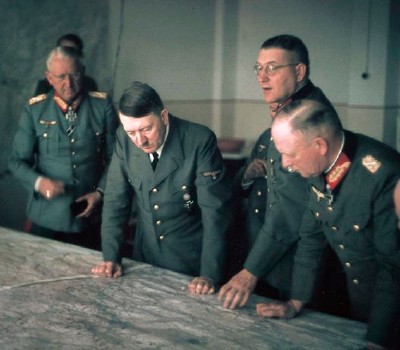
This is about where people’s Hitler and rape fantasies are introduced into the argument, and always with an air of checkmate, so let’s explore this. We’ll take historical, evil, bad person, Adolf Hitler and his ill-treatment of Jews in the years leading up to and through World War II.Adolf Hitler, Politiker, NSDAP, D - Lagebesprechung im Hauptquartier des Heeresgruppe S¸

The reasoning usually follows these lines: Of course there is good and evil, right and wrong. Don’t (won’t) you agree that what he did was immoral? Sidestepping, that personally, in my opinion, Hitler was not cool, it doesn’t answer to the morality. In the subjectivist domain, there is no good and evil, but I tend to reserve that response, as it falls on deaf ears.

Instead, let’s follow through and reflect on the speculative outcome represented by Phillip K. Dick’s The Man in the High Castle. In this world, the Nazis won the war and conquered the free world, but in the vein of  “history is written by the victors”, society found a new equilibrium. That’s what people do. Sure, there are always dissenters, as there are today in any government, but this evil moniker is applied by the glorious and victorious Allied Forces over the Axis (of Evil). Had the Nazi’s prevailed, it would have been but a footnote in history—if that. Morality is just perspective. From a societal perspective, it may take the form of ethnocentrism. But in the end, morality and ethics distil down to an individual vantage, even if the individual adopts a package off the rack, as most do in the form of religions and community guidelines.

man-high-castle-clip-pic[1]
The Man in the High Castle (AmazonVideo) – Life goes on.
Nietzsche’s Nihilism (and Heidegger) captured this in his subjective authenticity, which is being true to one’s self. In this view, it is irrelevant what moral systems others impose upon you. If you resolve to go to the gym at least once a week yet don’t, you are not being authentic.

Camus noted in his Myth of Sisyphus that one has the option upon realising the Absurd, that there is no inherent meaning to life. Aside from suicide and acceptance, one could adopt a worldview, whether religious or spiritual to Capitalism, Socialism (his preference), or Pastafarian, essentially denying the Absurd.

Ignorance is Blissℱ

In a way, the religiously devout have it simpler. They are indoctrinated with a pre-packaged belief system, and they don’t really question it. But other people have political and jurisprudence systems prĂȘt-Ă -porter, and they are willing to defend them, seemingly to the death.

Some stated arguments against ethical subjectivism are as follows:

“Ethical Relativism has implications such as moral infallibility and moral equivalence. It does not offer a way for parties engaged in ethical debate to resolve their disagreements because each side is required to acknowledge that the opinion of their opponent is equally as factual as their own. Individuals can never have a moral disagreement if both sides are morally ideal. As well, blame cannot be placed in a conflict if moral truths are always objective [sic].”

Let’s look at each of these in turn:

no way for parties engaged in an ethical debate to resolve their disagreements

True. If you can’t turn a screw with a sledgehammer, perhaps you need to question whether you’re are using the appropriate tool instead of cursing the sledgehammer for not being a screwdriver. If a tool isn’t suitable for a task, perhaps you are using the wrong tool.

one can’t have a moral disagreement if both sides are morally ideal

True. Again, perhaps you need a different instrument.

Blame cannot be placed in a conflict if moral truths are always subjective

True. I’ll sidestep the question of why blame is necessary, but yet again, this may not be the right instrument.

On balance, people seem to need pragmatism, so they seek a workable moral framework. Assuaging cognitive dissonance is as natural as breathing. Ah, the joy of delusion. Humans fabricate moral systems in an attempt to address issues such as these, but all of these systems are, in fact, human constructs, and none are objectively better than another. Subjectively, one may prefer one over another.

Don’t blame me. I’m just the messenger.