Monetary Fentynal: The Dirtiest Addiction of All

So sad, really. Not tragic in the noble Greek sense, just pathetically engineered. Our collective addiction to money isn’t even organic – it’s fabricated, extruded like a synthetically flavoured cheese product. At least fentanyl has the decency to offer a high. Money promises only more money, like a Ponzi scheme played out on the global stage, with no exit strategy but death – or worse, a lifestyle brand.

Audio: NotepadLM podcast on this topic.

We’re told money is a tool. Sure. So’s a knife. But when you start sleeping with it under your pillow, stroking it for comfort, or stabbing strangers for your next fix, you’re not using it as a “tool” – you’re a junkie. And the worst part? It’s socially sanctioned. Applauded, even. We don’t shame the addict – we give him equity and a TED Talk.

The Chemical Romance of Currency

Unlike drugs, money doesn’t scramble your neurons – it rewires your worldview. You don’t feel high. You feel normal. Which is exactly what makes it so diabolical. Cocaine users might have delusions of grandeur, but capitalists have Excel sheets to prove theirs. It’s the only addiction where hoarding is a virtue and empathy is an obstacle to growth.

The dopamine hit of a pay rise. The serotonin levels swell when your bank app shows four digits instead of three. These are chemical kicks masquerading as success. It’s not money itself – it’s the psychic sugar rush of “having” it, and the spiritual rot of needing it just to exist.

And oh, how they’ve gamified that need. You want to eat? Pay. You want shelter? Pay. You want healthcare? Pay – and while you’re at it, pay for the privilege of existing inside a system that turns your own exhaustion into a business model. You are the product. The addict. The asset. The mark.

The Fabrication of Need

Nobody needs money in the abstract. You need food. You need air. You need dignity, love, and maybe the occasional lie-in. Money only enters the picture because we’ve designed a world where nothing gets through the gates without it. Imagine locking the pantry, then charging your children rent for their own sandwiches. That’s civilisation.

They say money is freedom. That’s cute. Tell that to the nurse working double shifts while Jeff Bezos experiments with zero-gravity feudalism. In reality, money is a filtering device—who gets to be human, and who stays stuck being labour.

Crypto was supposed to be liberation. Instead, it became a libertarian renaissance fair for the hyper-online, still pegged to the same logic: hoard, pump, dump, repeat. The medium changed, but the pathology remained the same.

Worshipping the Golden Needle

Let’s be honest: we’ve built temples to this thing. Literal towers. Financial cathedrals made of mirrored glass, each reflecting our collective narcotic fantasy of “more.” We measure our worth in net worth. We rank our lives by percentile. A person’s death is tragic unless they were poor, in which case it becomes a morality tale about poor decisions and not grinding hard enough.

We no longer have citizens; we have consumers. No neighbours – just co-targeted demographics. Every life reduced to its purchasing power, its brand affiliations, its potential for monetisation. The gig economy is just Dickensian poverty with a better UI.

Cold Turkey for the Soul

The worst part? There is no rehab. No twelve-step programme for economic dependency. You can’t detox from money. Try living without it and see how enlightened your detachment feels on an empty stomach. You’ll find that society doesn’t reward transcendence – it punishes it. Try opting out and watch how quickly your saintliness turns into homelessness.

So we cope. We moralise the hustle. We aestheticise the grind. We perform productivity like good little addicts, jonesing for a dopamine hit in the shape of a direct deposit.

Exit Through the Gift Shop?

So what’s the answer? I’m not offering one. This isn’t a TEDx talk. There’s no keynote, no downloadable worksheet, no LinkedIn carousel with three bullet points and an aspirational sunset. The first step is admitting the addiction – and maybe laughing bitterly at the absurdity of it all.

Money, that sweet illusion. The fiction we’ve all agreed to hallucinate together. The god we invented, then forgot was a puppet. And now we kneel, transfixed, as it bleeds us dry one tap at a time.

Epilogue: The Omission That Says It All

If you need proof that psychology is a pseudoscience operating as a control mechanism, ask yourself this:

Why isn’t this in the DSM?

This rabid, irrational, identity-consuming dependency on money – why is it not listed under pathological behaviour? Why isn’t chronic monetisation disorder a clinical diagnosis? Because it’s not a bug in the system. It is the system. You can be obsessed with wealth, hoard it like a dragon, destroy families and ecosystems in pursuit of it, and not only will you escape treatment, you’ll be featured on a podcast as a “thought leader.”

We don’t pathologise the addiction to money because it’s the operating principle of the culture. And psychology – like any well-trained cleric of the secular age – knows not to bite the gilded hand that feeds it.

And so it remains omitted. Undiagnosed. Unquestioned. The dirtiest addiction of all, hidden in plain sight, wearing a suit and handing out business cards.

Twenty Nineteen

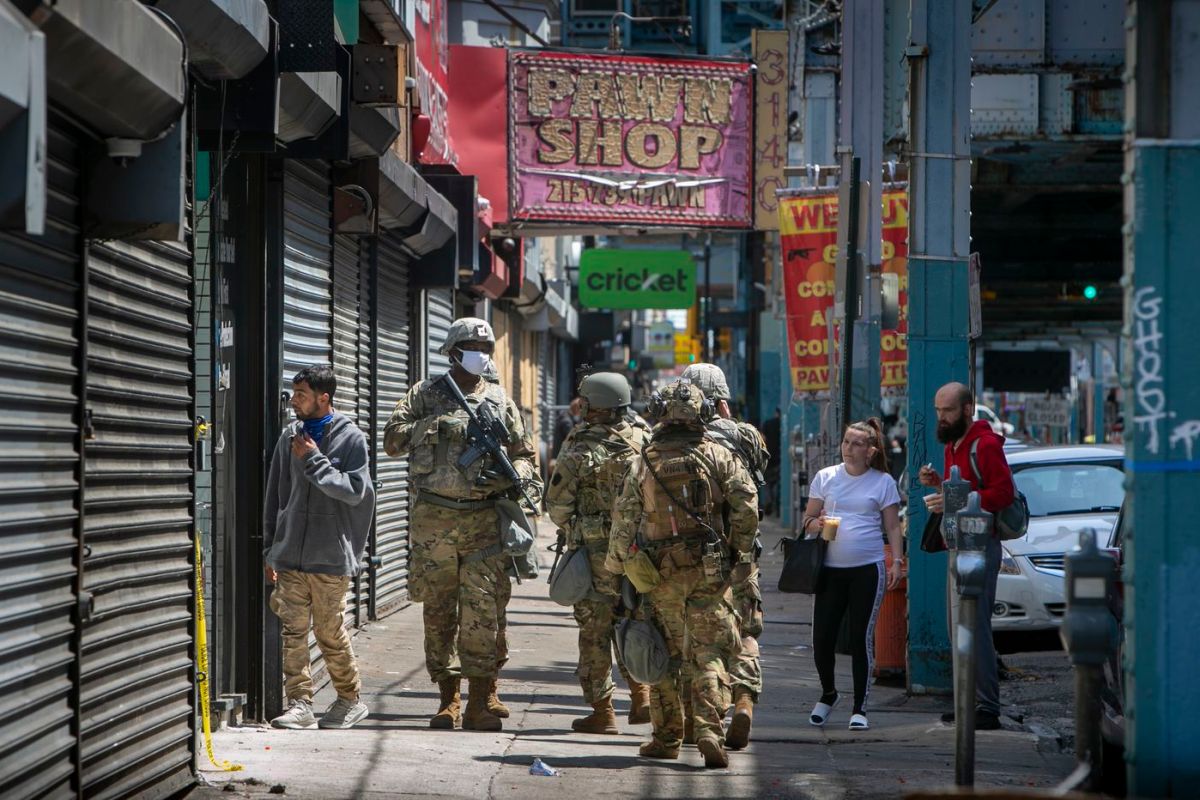
Many lives were changed in 2019 as fentanyl replaced heroin as the opiate of the masses on the streets of Philadelphia. Ten times more potent than heroin, fentanyl lasts half the time between fixes. It cost many lives.

But look deeper. Look away from the streets and towards the medical-industrial complex. The state of pain management is in its infancy. In some hundred years we’ll look back on this period and cringe in the same manner as when we regard bloodletting and humours. We have myriad solutions, but as many cases have none. Opiates fill some of this void, whether by prescription or on the streets, but even this only masks the symptoms. 

The goal is not always to obviate physical pain, but for some mental torment feels as real. Those with mental anguish are marginalised whilst the rest are accused of  overreacting. It all in their heads, too. Drug-seekers. Mental illness. Bollox. 

Medical science in this arena is in its Infancy. Not quite yet toddlers, but they won’t admit it. Better to blame the patients and victims.  Better to make it a moral issue. Public health regulations are in the same state of maturity. Hubris kills. Capitalism kills. Calvinistis protestant work ethic kills. Fetanyl kills, too.

Ninety per cent of fetanyl is cut with Xylazine, tranq, a veterinary tranquiliser. This makes fetanyl cheaper and is reported by some to extend the euphoric effects, but it’s not an opioid, so interventions are different to opiate-induced overdose. 

Xylazine renders the user to sleep, but it doesn’t stop withdrawal symptoms. Addicts awaken to  need another fix. If there isn’t enough opiate, one may awaken already in withdrawal. 

Whilst heroin might last eight hours between fixes, fentanyl lasts closer to four. The addict needs to seek twice as often.

But I’m rambling. I’ve been in hospital since 9 March. It’s still difficult to focus. My girlfriend died the next day, on the 10th. She overdosed on a chemical cocktail of fentanyl, alcohol, and who knows what. 

Her pain was psychological, but that’s a topic for another day. She was in recovery. This is where some are most susceptible to overdose. 

I’m tired. More to follow…

Defence of Capitalism

Product markets don’t function the way we’re taught.

Wearing my economist’s hat, I have issues with arguments advanced attempting to defend Capitalism. Technically, Capitalism is a system of production and not one of distribution, but idiomatically, people conflate it with a market system. Ignoring that modern economic systems use markets, I am commenting in this idiomatic sense. 

I’m not sure why some of us economists are intrigued with how the market works for drugs and prostitution, I have this in common with Steven Levitt’s Freakonomics, still a decent book.

Rather than focus on prostitution‘s service market, I prefer to attend to drugs and the product market. I’ll showcase how unregulated markets don’t work per textbook and Libertarian lore. Heroin and fentanyl make for a perfect use case.

BACKGROUND 

Fentanyl (AKA fetty) is sold retail through independent distributors. As is typical, each link in the chain takes a cut, selling for a higher unit price to capture margin. All of this is textbook behaviour. 

On the city streets, dealers sell to caseworkers, who sell to block boys. There are also watchers, an overhead expense that we’ll ignore. They represent a typical SG&A function. I’ll return to the distribution chain in a moment. 

Product is sold to dealers as weight. This might be kilos or ounces. I’m not sure they are so concerned with whether they use the metric or imperial system of measure.

Weight is a wholesale activity. Retail units are bags and bundles. Maybe logs. Bags are the smallest unit. It’s around 10mcg to 30mcg.1 A person is likely to consider a bag or even a half a dose. Some people will purchase a bag or two at a time. Heroin and fentanyl bags are the same size. They are waxed paper bags about 30mm wide by 3cm tall. These are typically folded in thirds an inserted into little zipper locked bags—like tiny sandwich bags.

Tiny Sandwich Bags

If you are buying irregularly or up to maybe 4 or 5 bundles at a time, you are most likely buying from the block—block boys. This is a cash and carry business. First come, first serve. A block is a small city block—a territory on one street from one cross-street to the next. Cross the street, and you are in a new territory. Turn the corner, and you’re in a new territory. And territories serve particular brands. More on this later, but you don’t go to the Gucci block to buy Chanel.

As a buyer, you have some freedom to select a block where you are trusted (mostly just not to be a cop or a snitch), but there is some rivalry, so if a seller on block A sees you buying from block B, it may pose problems if you later try to buy from A. Although these block boys are competing for your business, by and large they know each other. It’s like if the Kellogg’s guy runs into the General Mills guy whilst stocking in the cereal aisle. As long as you aren’t using the other’s allocated shelf space, you’re fine. No knives. No gunfights. It’s all good.

Bag of Heroin Compared with a US Penny

The price of fentanyl varies wildly by location. As of now, a bag of powder retails at between $5 and $10. The closer one is to a distribution hub, the cheaper. In Philadelphia, $5 is the norm. In Wilmington, Delaware, $10 is typical. Further south in Dover, one might pay as high as $20. The supply chain takes its toll. Supply and demand are at work as advertised, so we’re still operating in textbook territory. 

Bags are aggregated into bundles, which may range between 14 and 16 bags.2 Ten bundles compromise a log. 

Whilst for some users a bag or a portion is sufficient, tolerance is an issue. In order to feel the same effects, users need to increase their doses. Some users need to dose 7 or more bags.

Bags of Fentanyl Representing Various Stamps

For entry-level users, fentanyl is a relatively cheap high. A dose lasts about 4 hours. Heroin lasts about 8. For addicts, there’s a notable downside: withdrawal. Withdrawal symptoms are flu-like. They get worse before they get better, addicts prefer to remain dosed prior to they become symptomatic.  For the typical addict, the struggle is real.

For a person using half a bag every hour a day, the cost would be a manageable $30 a day. For the 7 to 8 bag user, they are looking at about 3 bundles a day, which might cost between $70 to $120 apiece, so between $210 and $360 a day. Putting 2 + 2 together,  you might realise how addiction and prostitutes arrive hand in hand. This is not an activity for minimum wage workers, especially when the dose ratchets up.

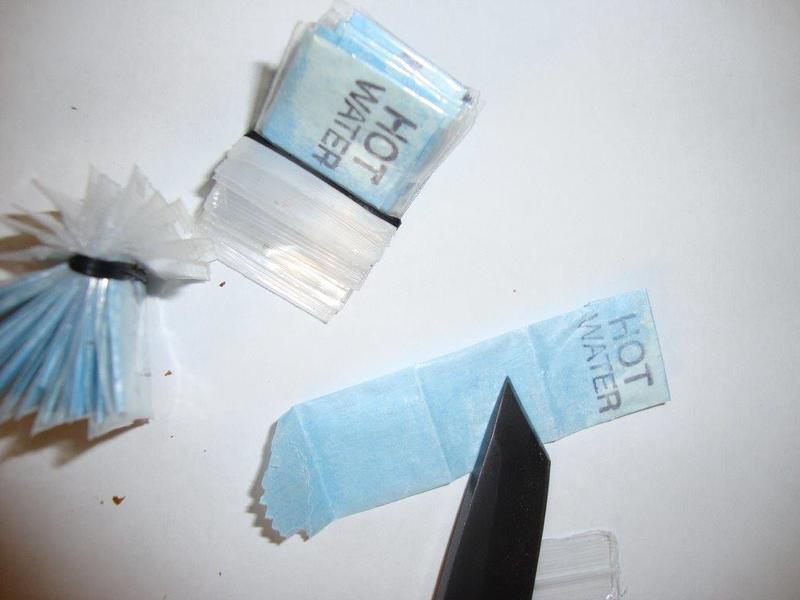
A Couple Bundles and a Bag of Fentanyl with Hot Water Stamp

What happened to the economic angle? It turns out that there are several product issues. On the street, brand matters…sort of. Fentanyl brands are known as stamps. Bags are stamped to indicate the source. And this is the first deviation from textbook theory. 

Brand names became prominent in the 19th century with bulk goods. When purchasing oatmeal from the general store, the consumer would gain confidence in the product based on the brand. Brand marketing has become fundamental to modern commerce.

Quaker Oats Brand Label circa 1906

A problem with brand stamps is that they are not reliable product indicators. They are more indicative of the retail seller than the source. It would be like visiting Walmart and buying Walmart oatmeal, but it reveals nothing of the quality. As street fetty is cut with tranquilisers (tranq) or other cheaper ingredients and fetty actually relates to a class of drugs as opposed to a specific chemical formula, the quality varies from 0 per cent fetty to something less than 100 per cent, as 100 per cent would not be typically found on the streets, primarily owing to margin requirements. Most users I’ve encountered are fine with the tranq admixture. In practice, people have their preferred tranq and ratio. Of course, this quality is subject to variation, too. Because of the aforementioned withdrawal issues, if there is not an adequate dose of fetty, the batch will not stop or reverse the withdrawal symptoms.

Unlike a brand label that a box of Raisin Bran cereal you just purchased contains Raisin Bran, a common analogy might be that one day you buy a box of Raisin Bran but discover when you consume it that you’ve been served Captain Crunch instead. Alternatively, when you arrive to make your purchase, your boy tells you that no one has Raisin Bran, but Captain Crunch is the same thing (I swear). 

A Tale of Two Cereals

Apart from quality, there is no weights and measures oversight. I’ve read that a bag of fetty weighs around 100mg to 300mg, but I can’t substantiate this. However, I have it by a trusted account that the weight ranges wildly from 0mg to something more—let’s say 300mg to be generous.

If this occurred in the regulated world, a person might return the product for a refund or exchange. This is not an option on the block.

Unlike a brand label that the 400g  box of Raisin Bran cereal you just purchased contains 400g of Raisin Bran, a common analogy might be that on one day you buy a 400g box of Raisin Bran, but instead of getting this quantity of Raisin Bran, you discover you’ve only got 350g of Raisin Bran—or maybe 350g box of Captain Crunch. If this occurred in the regulated world, a person might return the product for a refund or exchange. This is not an option on the block. And with the various dilution schemes, you might end up with salted Raisin Bran. No returns. No refunds.

In the regulated world, if Walmart is unreliable, you can go to go to Safeway instead. But in this unregulated world, Safeway is just as unreliable. The street can only sell what it has access to, and if they receive a batch of something unexpected, they still need to unload it. The TV and movies make it seem like these guys are quality control freaks, but they are all bottom feeders.

Punchline

The Libertarian wet dream is that markets are self-regulating and bad actors will be forced out of business. The drug trade demonstrates this not to be true.


1 I am not sure of the actual weights, as I’ve never weighed any. The information available on the Internet conflicts.

2 I’ve read that in some places, a bundle is 10 and the next larger portion is a brick, but this is not the case in the greater Philadelphia area. Much I’ve read on law enforcement sites does not reflect my experience, not does the information on official medical sites, so I question the veracity of the information being fed to the public. It feels like there is more morality shaming than science. More on this in a separate post.