Testudineous Agency

In chapter 71, Ultimate Responsibility, in Intuition Pumps and Other Tools for Thinking, author and philosopher, Daniel Dennett presents a counterargument to the notion that an agent, a person, is not absolutely responsible for their actions. He questions some premises in the ‘the way you are’ line of argumentation, but I question some of his questions.

Here is a nice clear version of what some thinkers take to be the decisive argument. It is due in this form to the philosopher Galen Strawson (2010):
1. You do what you do, in any given situation, because of the way you are.
2. So in order to be ultimately responsible for what you do, you have to be ultimately responsible for the way you are—at least in certain crucial mental respects.
3. But you cannot be ultimately responsible for the way you are in any respect at all.
4. So you cannot be ultimately responsible for what you do.

Dennett, Daniel C.. Intuition Pumps And Other Tools for Thinking (p. 395). W. W. Norton & Company. Kindle Edition.

Dennett continues.

The first premise is undeniable: “the way you are” is meant to include your total state at the time, however you got into it. Whatever state it is, your action flows from it non-miraculously.

Dennett and I are in agreement with Strawson. There is not much to see here. It’s akin to saying the now is the result of all past events until now. This is “the way you are”.

The second premise observes that you couldn’t be “ultimately” responsible for what you do unless you were “ultimately” responsible for getting yourself into that state—at least in some regards.

This second premise asserts that one cannot be responsible for any action that one had no part in performing. Two scenarios come immediately to mind.

First, you are not responsible for being born. As Heidegger notes, we are all thrown into this world. We have no say in when or where—what country or family—or what circumstances.

Second, if one is hypnotised or otherwise incapacitated, and then involved in a crime, one is merely a cog and not an agent, so not responsible in any material sense.

But according to step (3) this is impossible.

Whilst Dennett fixates on the absolute aspect of the assertion, I’d like to be more charitable and suggest that we still end up with a sorites paradox. Dennett will return to this one, and so shall I.

So step (4), the conclusion, does seem to follow logically. Several thinkers have found this argument decisive and important. But is it really?

As Dennett invalidates step (3), he insists that the conclusion is also invalid. He asserts that the notion of absolute responsibility is a red herring, and I argue that Dennett doesn’t get us much further, perhaps redirecting us with a pink herring.

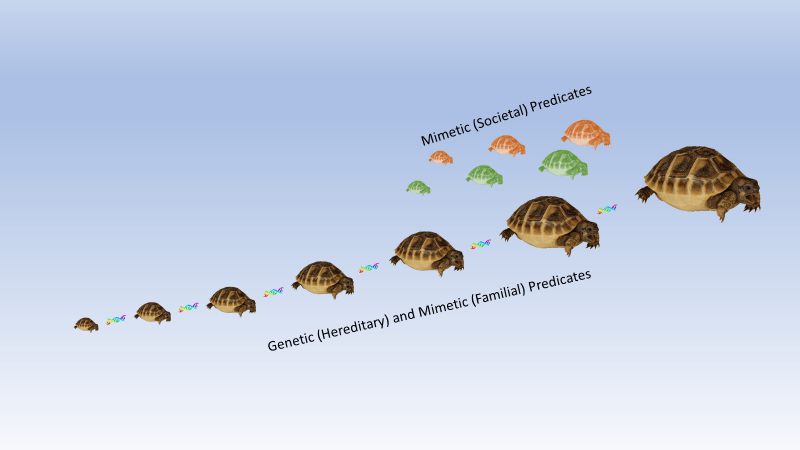
I’ve created an image with tortoises to make my point. There are actually two points I wish to make. The first point is to determine where the responsibility is inherited. This point is meant to articulate that the world can not be strictly deterministic and yet one can still not have significant agency. The second point is that culpability is asserted as a need, and acceptance of this assertion is the problem.
This image has an empty alt attribute; its file name is image-14.png
Testuditude

The image depicts an evolution of an agent, with time progressing from left to right. The tortoise on the right is a product of each of the recursive tortoises to its left. The image means to convey that each subsequent tortoise is a genetic and social and social product of each tortoise prior. Of course, this is obviously simplified, because tortoises require pairs, so feel free to imagine each precedent tortoise to represent a pair or feel free to add that level of diagrammatic complexity.

This is not meant to distinguish between nature and nurture. Instead, the claim is that one is a product of both of these. Moreover, as genetic, epigenetic, and mimetic influences are transmitted in family units, they also occur through social interaction and the environment, as represented by the orange and green tortoises.

…if one is a product of genetic and mimetic forces, how much agency remains for culpability?

The point here is that if one is a product of genetic and mimetic forces, how much agency remains for culpability? Each person is an emergent unit—autonomous, yes, and yet highly programmed.

If I programme a boobytrap to kill or maim any intruder, the boobytrap has no agency. I assert further, that the maker of that boobytrap has no more responsibility than the killing device.

The old hand grenade wired to a doorknob boobytrap trick

But who do we blame? you ask, and that’s precisely the problem. Asking questions doesn’t presume answers. This is a logical fallacy and cognitive bias. This heuristic leaves us with faulty jurisprudence systems. Humans seem hardwired, as it were, to blame. Humans need to believe in the notion of free will because they need to blame because they need to punish because vengeance is part of human nature to the extent there is human nature. There seems to be a propensity to frame everything as a causal relationship. Dennett calls this the Intentional stance. To borrow a from Dennett…

This instinctual response is the source in evolution of the invention of all the invisible elves, goblins, leprechauns, fairies, ogres, and gods that eventually evolve into God, the ultimate invisible intentional system.

Dennett, Daniel C.. Intuition Pumps And Other Tools for Thinking (p. 374). W. W. Norton & Company. Kindle Edition.
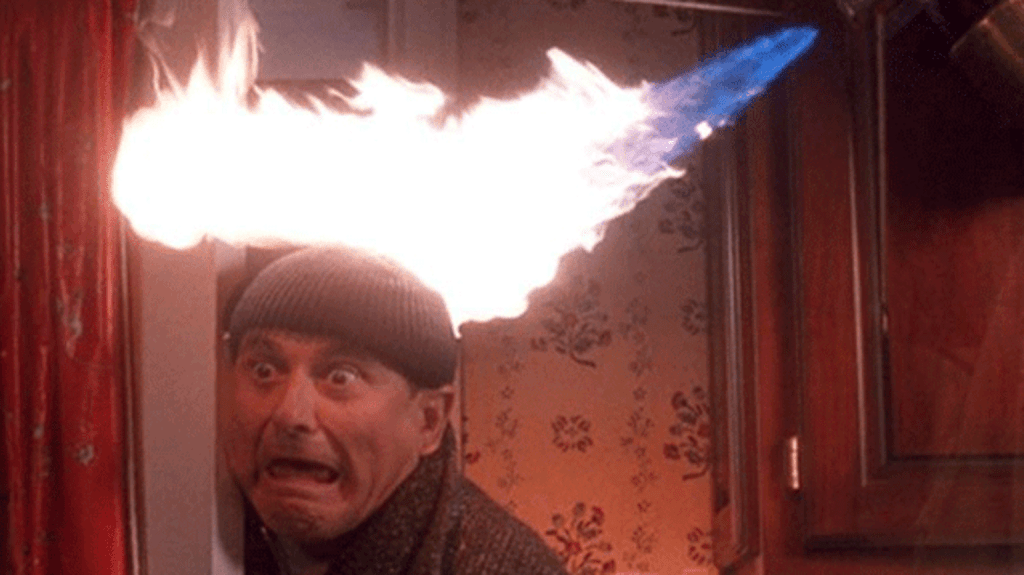
Fire Trap in Home Alone

Sins of the Fathers (and Mothers)

Let’s wrap this up with a sorites paradox. As I’ve already said, I agree with Dennett that the absolute aspect is unnecessary and undesired. The question remains how much agency™ does a person have once we account for the other factors? Is it closer to 90 per cent or 10 per cent? Apart from this, what is the threshold for culpability? Legal systems already have arbitrary (if not capricious) thresholds for this, whether mental capacity or age, which basically distils back to the realm of capacity.

I have no basis to even venture a guess, but that’s never stopped me before. I’d argue that the agency is closer to zero than to one hundred per cent of the total, and I’d propose that 70 per cent feels like a reasonable threshold.

I could have sworn I’d posted a position on this after I read Robert Sapolsky’s Behave. Perhaps it’s never made it out of drafts.

In closing, I don’t think we need to settle the question of determinism versus free will to recognise that even without strict determinism, personal agency is still severely limited, and yet as our political systems presume a level of rationality that is not apparent, so do legal systems presume a level of agency not present.

Free Will?

As I wrote earlier, free will is a vestige of bygone days—an anachronism. Even though though I’ve got a very low opinion of psychology as a discipline, if we introduce behaviourism into the equation, we can see how little agency a person really has.

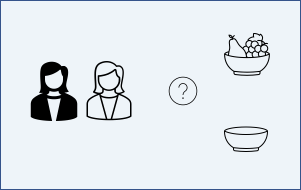
Mary’s parents have fed her porridge for breakfast her entire life. She loves porridge.

When Mary is away, she freely chooses porridge.

Even as she ages, she chooses porridge.

One day, she is dating someone who she knows prefers fruit to porridge, so Mary chooses fruit instead.

Is this free will? At first, Mary is conditioned to eat porridge, and she develops a preference for it. Given choice, she chooses porridge. But is this a choice? Yes, she can break the cycle and choose something else. Still is that her choiced, or an act of rebellion against her upbringing?

When dating, she chooses fruit—perhaps even going against her own preference, her preference to make a good impression taking priority.

If we rewind we can see that her parents fed her porridge because that’s what they chose.

Another more charged choice is religion. Most people with a religion share the same religion as their parents. In some cases, they choose a different religion or no religion, but these are minority cases. And some of these instances are to differentiate from their parents, to assert their individuality. But is this a choice, or is this pathology? How can you determine the difference?

Thisis not meant to serve as some exaustive treatment. I am merely jotting down thoughts as I continue to distract myself from higher-value outpout. 😉

Je m’accuse

I’ve been an absent owner. I’ve not been fertilising this blog as I’ve been attending to my professional blog and many other things IRL. But my brain doesn’t stop thinking, and I don’t stop reading just because my fingers stop typing contributions here. Today, I type.

No Free Will

The topic is the absence of free will debate. To be fair, I believe the notion of free will is a holdover from religious belief. And, like religion, it is used to control people and to formulate social cohesion and serve as the basis of legal systems. Free will and agency are core to any justice system. There is a system of laws. Conforming is good. Nonconformance is bad. People have agency to decide whether to conform. Relative to the system, a person is either conformant or not. Justice prevails. Nonconformance is punished, as it were. Society wins.

But let’s say there is no free will. I’m going to skip the entire argument and present this piece as a hypothetical. There is no free will. The universe is entirely deterministic. Now what?

Does anything happen? Does anyone notice?

If there is no free will, the universe already has embedded ‘code’ that will either reveal or conceal this information. If we are destined to know this, we’ll know it. If not, our future will unfold all the same.

If people have no real agency, can we punish them? Sure. We do it already. We inadvertently punish the innocent. We even punish those known to be innocent. But if history is pre-written and you are destined to be punished, the script has not only been written, but it’s already been recorded indelibly on film. We’re just waiting for the scene to come into view.

Given this, the so-called knowledge that there is no free will is useless. What’s the goal—to break the fourth wall and and liberate ourselves from the script? Wouldn’t that have already been scripted? What do you get—a director’s cut?

No Agency

What if it’s not so strict but that people don’t have agency? If people are all automatons, is it still ethical to punish them? Can rehabilitation be a goal if people are ostensibly wind-up dolls? If a person is a wind-up doll run amok, are we justified for separating them from the population at large?

I can see an argument for removing axe-wielding automatons from the public. And I’m sorry if they have no agency over their actions—like zombies. We all know what happens to zombies—and unmanaged zombies.

This scenario is different to that of a person who robs a store for food to eat—think Valjean in Les Misérables. This is an indictment of the system. If something needs fixing in this situation, it’s the system not the thief. But that’s not what generally happens. It’s easier to scapegoat a person than a system—even if that system is comprised of other people.

Why Sexual Morality Doesn’t Exist

His words, not mine.

Whilst I agree that all morality is contrived, Alan H. Goldman, Kenan Professor Emeritus of Philosophy at the College of William and Mary, presents his position that sexual morality is not divorced from any morality. It’s not particularly a special case. I agree in principle, but his argument is lacking.


Sexual desire aims directly at the pleasure derived from physical contact

Alan H. Goldman

He states that ‘As other philosophers point out, pleasure is normally a byproduct of successfully doing things not aimed at pleasure directly, but this is not the case with sex. Sexual desire aims directly at the pleasure derived from physical contact. [The] desire for physical contact in other contexts, for example, contact sports, is not sexual because it has other motives (winning, exhibiting dominance, etc.), but sexual desire in itself has no other motive. It is not a desire to reproduce or to express love or other emotions, although sexual activity, like other activities, can express various emotions including love.’

Pleasure is normally a byproduct. 

Sure.

This is not the case with sex.

OK. Elaborate.

Sexual desire aims directly at … pleasure.

I'm still following.

Sexual desire in itself has no other motive, which is pleasure.

Damn. You lost me.

I might agree that pleasure (let’s ignore the fact that this is another weasel word) may be the motivation behind sexual desire, but we don’t really have means to determine motivation or intent, and we certainly can’t assess one attribute over another.

Power is everywhere because it comes from everywhere — Michel Foucault

Foucault may have argued that the motivation is power—perhaps each side is making their own power calculus. Given the state of current knowledge, this is not ascertainable. Prof Goldman may feel that pleasure is the motive; one may even argue that power yields pleasure. I’ll not traverse that rabbit hole.

Later, he asserts that ‘More controversial is whether any consensual sex between willing partners is wrong’. I won’t debate this position, but there is no good way to full assess consent.

I’ll outline a fairly stereotypical scenario—excuse me for opting for a heterosexual situation, but the pronouns are easier to track. Say a man and a woman have met in a social setting—perhaps they’ve been dating for some period—, and they ‘mutually’ decide to engage in sex. We’d call this exercising agency, two consenting adults.

But what of ulterior motives? Following the stereotype, perhaps he feels that he is conquering her, and she feels she is securing a stable mate; or perhaps they don’t feel this at all. What is the actual intent? Not to go full-on Freud, but are they playing out some latent urge? Is this just some deterministic eventuality. There’s really no way to tell. Any story I tell is as speculative as the next.

So, to end on a tangent, a significant problem underlying philosophy, psychology, and jurisprudence is the issue of intent. The term is bandied about on most cop shows and legal dramas, but it is another just another vapid notion that we accept as valid. Of course, if we dispense of the notion, our legal systems would just unravel.

Yet again we’ve reached a point where the only truth is rhetoric.