Monetary Fentynal: The Dirtiest Addiction of All

So sad, really. Not tragic in the noble Greek sense, just pathetically engineered. Our collective addiction to money isn’t even organic – it’s fabricated, extruded like a synthetically flavoured cheese product. At least fentanyl has the decency to offer a high. Money promises only more money, like a Ponzi scheme played out on the global stage, with no exit strategy but death – or worse, a lifestyle brand.

Audio: NotepadLM podcast on this topic.

We’re told money is a tool. Sure. So’s a knife. But when you start sleeping with it under your pillow, stroking it for comfort, or stabbing strangers for your next fix, you’re not using it as a “tool” – you’re a junkie. And the worst part? It’s socially sanctioned. Applauded, even. We don’t shame the addict – we give him equity and a TED Talk.

The Chemical Romance of Currency

Unlike drugs, money doesn’t scramble your neurons – it rewires your worldview. You don’t feel high. You feel normal. Which is exactly what makes it so diabolical. Cocaine users might have delusions of grandeur, but capitalists have Excel sheets to prove theirs. It’s the only addiction where hoarding is a virtue and empathy is an obstacle to growth.

The dopamine hit of a pay rise. The serotonin levels swell when your bank app shows four digits instead of three. These are chemical kicks masquerading as success. It’s not money itself – it’s the psychic sugar rush of “having” it, and the spiritual rot of needing it just to exist.

And oh, how they’ve gamified that need. You want to eat? Pay. You want shelter? Pay. You want healthcare? Pay – and while you’re at it, pay for the privilege of existing inside a system that turns your own exhaustion into a business model. You are the product. The addict. The asset. The mark.

The Fabrication of Need

Nobody needs money in the abstract. You need food. You need air. You need dignity, love, and maybe the occasional lie-in. Money only enters the picture because we’ve designed a world where nothing gets through the gates without it. Imagine locking the pantry, then charging your children rent for their own sandwiches. That’s civilisation.

They say money is freedom. That’s cute. Tell that to the nurse working double shifts while Jeff Bezos experiments with zero-gravity feudalism. In reality, money is a filtering device—who gets to be human, and who stays stuck being labour.

Crypto was supposed to be liberation. Instead, it became a libertarian renaissance fair for the hyper-online, still pegged to the same logic: hoard, pump, dump, repeat. The medium changed, but the pathology remained the same.

Worshipping the Golden Needle

Let’s be honest: we’ve built temples to this thing. Literal towers. Financial cathedrals made of mirrored glass, each reflecting our collective narcotic fantasy of “more.” We measure our worth in net worth. We rank our lives by percentile. A person’s death is tragic unless they were poor, in which case it becomes a morality tale about poor decisions and not grinding hard enough.

We no longer have citizens; we have consumers. No neighbours – just co-targeted demographics. Every life reduced to its purchasing power, its brand affiliations, its potential for monetisation. The gig economy is just Dickensian poverty with a better UI.

Cold Turkey for the Soul

The worst part? There is no rehab. No twelve-step programme for economic dependency. You can’t detox from money. Try living without it and see how enlightened your detachment feels on an empty stomach. You’ll find that society doesn’t reward transcendence – it punishes it. Try opting out and watch how quickly your saintliness turns into homelessness.

So we cope. We moralise the hustle. We aestheticise the grind. We perform productivity like good little addicts, jonesing for a dopamine hit in the shape of a direct deposit.

Exit Through the Gift Shop?

So what’s the answer? I’m not offering one. This isn’t a TEDx talk. There’s no keynote, no downloadable worksheet, no LinkedIn carousel with three bullet points and an aspirational sunset. The first step is admitting the addiction – and maybe laughing bitterly at the absurdity of it all.

Money, that sweet illusion. The fiction we’ve all agreed to hallucinate together. The god we invented, then forgot was a puppet. And now we kneel, transfixed, as it bleeds us dry one tap at a time.

Epilogue: The Omission That Says It All

If you need proof that psychology is a pseudoscience operating as a control mechanism, ask yourself this:

Why isn’t this in the DSM?

This rabid, irrational, identity-consuming dependency on money – why is it not listed under pathological behaviour? Why isn’t chronic monetisation disorder a clinical diagnosis? Because it’s not a bug in the system. It is the system. You can be obsessed with wealth, hoard it like a dragon, destroy families and ecosystems in pursuit of it, and not only will you escape treatment, you’ll be featured on a podcast as a “thought leader.”

We don’t pathologise the addiction to money because it’s the operating principle of the culture. And psychology – like any well-trained cleric of the secular age – knows not to bite the gilded hand that feeds it.

And so it remains omitted. Undiagnosed. Unquestioned. The dirtiest addiction of all, hidden in plain sight, wearing a suit and handing out business cards.

Twenty Nineteen

Many lives were changed in 2019 as fentanyl replaced heroin as the opiate of the masses on the streets of Philadelphia. Ten times more potent than heroin, fentanyl lasts half the time between fixes. It cost many lives.

But look deeper. Look away from the streets and towards the medical-industrial complex. The state of pain management is in its infancy. In some hundred years we’ll look back on this period and cringe in the same manner as when we regard bloodletting and humours. We have myriad solutions, but as many cases have none. Opiates fill some of this void, whether by prescription or on the streets, but even this only masks the symptoms. 

The goal is not always to obviate physical pain, but for some mental torment feels as real. Those with mental anguish are marginalised whilst the rest are accused of  overreacting. It all in their heads, too. Drug-seekers. Mental illness. Bollox. 

Medical science in this arena is in its Infancy. Not quite yet toddlers, but they won’t admit it. Better to blame the patients and victims.  Better to make it a moral issue. Public health regulations are in the same state of maturity. Hubris kills. Capitalism kills. Calvinistis protestant work ethic kills. Fetanyl kills, too.

Ninety per cent of fetanyl is cut with Xylazine, tranq, a veterinary tranquiliser. This makes fetanyl cheaper and is reported by some to extend the euphoric effects, but it’s not an opioid, so interventions are different to opiate-induced overdose. 

Xylazine renders the user to sleep, but it doesn’t stop withdrawal symptoms. Addicts awaken to  need another fix. If there isn’t enough opiate, one may awaken already in withdrawal. 

Whilst heroin might last eight hours between fixes, fentanyl lasts closer to four. The addict needs to seek twice as often.

But I’m rambling. I’ve been in hospital since 9 March. It’s still difficult to focus. My girlfriend died the next day, on the 10th. She overdosed on a chemical cocktail of fentanyl, alcohol, and who knows what. 

Her pain was psychological, but that’s a topic for another day. She was in recovery. This is where some are most susceptible to overdose. 

I’m tired. More to follow…

Tolerance and Normalisation

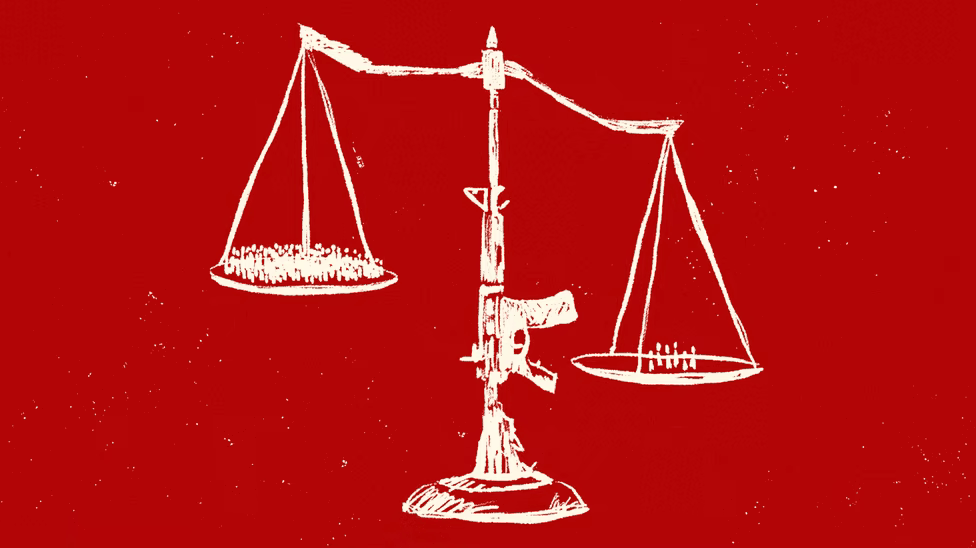
I chatted with an associate this evening about the gun debate in America. For some reason, gun control is again a hot topic. He believes that guns, like drugs, should be treated as mental health issues.

Click an image to read the referenced article.

The Atlantic: An ER Doctor’s ‘Third Way’ Approach to the Gun Crisis
The Atlantic: The Real Reason America Doesn’t Have Gun Control

Full Disclosure: I do not believe that the Second Amendment of the United States confers unrestricted rights to own a gun. Full stop. I believe this is a perversion by activist Supreme Court justices of the original intent of the grammatically-challenged Forefathers of that cursed country.

The mental health topic brought my attention to the question of tolerance and normalisation. Mental health, an interest of psychology has a sordid past. At its very core is the idea that humans can be normalised, that they can be categorised into normal and abnormal behaviours, and what is deemed normal might have some room for variation, but this tolerance doesn’t really allow for much discrepancy.

Normalisation expects to bring people into some basic conformity—give or take. The problem is that this is contextual and the acceptable range changes over time and place. Many behaviours previously considered abnormal are now acceptable, and some acceptable behaviours are no longer tolerated. Some of these changes have flip-flopped legal status as well. It’s just a game to some people.

Tolerance takes a position that there is no normal, per se. Some people just have different ideas.

Here is a clip of an interview with Dr Oz ( nĂŠ Mehmet Cengiz Ă–z) where he illustrates my position. I’ll disintegrate it next.

Dr Oz explains why he does not support legalisation of marijuana

Transcript

Reporter: What is your stance on [the legalisation of] marijuana?

Dr Oz: … There are not enough Pennsylvanians to work in Pennsylvania, so giving them pot so they stay home… I don’t think [is] an ideal move. I also don’t want to breed addiction to marijuana. It’s not physical addiction; it’s emotional addiction, but I don’t want young people to think they have to smoke a joint to get out of their house in the morning. We need to get Pennsylvanians back at work you got to give them their mojo, and I don’t want marijuana to be a hindrance to that. I also don’t want people operating heavy machinery and driving by me when they’ve been taking their fourth joint of the day. But there are other issues that are plaguing Pennsylvanians. We’re a border state, practically, … because they’re flying illegal immigrants up here from the border in the middle of the night … but they’re also getting their narcotics up here really easily.

So, let’s break down this word salad. This will reveal some of Dr Oz’ and my worldview biases.

  1. Neither Oz nor I advocate the use of marijuana or other recreational drugs. However, Oz wants to make or keep it illegal and criminalised. I do not agree. I feel they should regulate it and tax it. Although I neither advocate nor endorse the use of any of these herbs and chemicals, I feel they should do this for all drugs. [And if we are going to make these chemicals illegal, let’s not be hypocrites and make nicotine, alcohol, and caffeine illegal.] I’m not advocating this. I’m just saying adopt a position and maintain it with integrity.
  2. There are not enough Pennsylvanians to work in Pennsylvania.

    First, Oz is a wage slaver. Next, the unemployment rate for PA was 4.9% in March, so this does not appear to be a problem.
  3. so giving them pot so they stay home… I don’t think [is] an ideal move.

    Oz makes an unsubstantiated connection between the legalisation of marijuana and staying home—being lazy or unmotivated.
  4. I also don’t want to breed addiction to marijuana.

    Marijuana is not known to be addictive. As a doctor, Oz knows this.
  5. It’s not physical addiction; it’s emotional addiction

    Here, Oz backtracks, but he also introduces an unsubstantiated claim. If you are interested in why I consider psychology pseudoscience, follow this link to explain DSM changes in this area.
  6. but I don’t want young people to think they have to smoke a joint to get out of their house in the morning

    Oz makes a total non-sequitur here. Nothing he has mentioned this far would lead to this conclusion. If someone already feels this way, its legal status is irrelevant. Enough said.
  7. We need to get Pennsylvanians back at work you got to give them their mojo, and I don’t want marijuana to be a hindrance to that.

    This is more Calvinistic wage slavery advocacy. Again, he is equating the consumption of marijuana with being unmotivated. Perhaps he should challenge Micheal Phelps to a swimming race. If motivation is the issue, perhaps he rather favours legalising amphetamines—but I supposed he’d have a preconceived rationale for that, too.
  8. I also don’t want people operating heavy machinery and driving by me when they’ve been taking their fourth joint of the day.

    Where does the number four come from? Is four different to one or two? Has this been studied? Is he saying this doesn’t already happen? Does he believe that current intoxication laws and incapacitation regulations aren’t in place?
  9. We’re a border state, practically…

    Where to start… Pennsylvania is a border state. It borders New York, New Jersey, Ohio, Delaware, Maryland, and West Virginia. If one counts for the water border of Lake Erie, one might be able to argue that it shares an international border with Canada—although, I feel that’s a stretch. At that point, one wouldn’t be far from considering Hawaii to border California. It’s only water. He does say practically, so perhaps that’s his out.
  10. because they’re flying illegal immigrants up here from the border in the middle of the night

    Wait a minute… Geezer’s talking about the southern border between the United States and Mexico. (That’s where brown people live.) The fewest number of states between Mexico and Pennsylvania is four, but that’s stretching it. Something tells me that Oz is at least an elitist and at worst a racist. I’m a sad panda.

    Another non-sequitur. Somehow, Oz is trying to create a link between marijuana and narcotics whilst also contending that legalising marijuana would somehow affect these illegal flights. Wait, are the flights illegal or just the passengers? How does he know that either is illegal? And does it have to be at night? I get the feeling that Oz watches too much television. Perhaps that’s what we should criminalise. So many questions.
  11. but they’re also getting their narcotics up here really easily

    OK? Perhaps we should contract with them to transport the marijuana up here if they are so efficient. Or would it be better to grow it locally? Racists tend to be nationalists and would likely favour a Made In America policy—unless they can exploit brown people. Or Oz can employ otherwise unemployed Pennsylvanians on his pot plantations. Where does it end?

What does this have to do with normalisation and toleration?

People like Dr Oz want to mainstream people, a concept some familiar with special education might remember—get the people in line with the herd. Proper people—normal people—are supposed X and Y and Z. Toleration allows that there may be people with descriptively ‘normal’ traits and behaviours, but there should not necessarily be a penalty for noncompliance.

When I was an undergrad student, I had a side job as a shift supervisor at an Au Bon Pain in Boston. On an occasion, one worker, let’s call her Mary, was arguing with another worker that we’ll call Marie. Mary said she was not going to make any more sandwiches because she had already made twice as much as Marie. Although I understand the notion of fairness she was invoking, I reminded her that she was being paid by the hour, not the piece. As long as she was still on the proverbial clock, she would continue to make sandwiches. Although I didn’t press this point, I could have hired Marie to watch Mary make sandwiches. In fact, I suppose I was hired to watch them both make sandwiches.

The point is—Mary’s perception aside—that there was no reason to presume these two should produce an equal number of sandwiches in an hour, a day, or a month.

I mention this because—getting back to Oz’ drugs scenario—if people are happy getting high on heroin and nodding out on Kensington Ave, that’s their issue, not Oz’ and not mine. If Pennsylvania needs workers and can’t get them, figure out how to attract workers. Don’t create a situation so bad that the alternate to work is just the lesser of two evils. This reminds me of a story from my consulting days.

Without dropping any names, I was hired by a company to ‘deflect’ some costs. The high-level concept was to redirect people from a relatively expensive call centre to cheaper self-service. I reminded them of the Principle of least effort.

Essentially, I conveyed that people are inherently lazy—echoing Carl Jung. People will take the path of least resistance. If it’s easier for them to call, they’ll call; if it’s easier to self-serve, they’ll do that.

“So we should make it more difficult for customers to call?” was how this was interpreted.

“You should make it easier to self-serve.”

I’m still shaking my head to this day. What humans will do to other humans in the name of commerce.

Where was I?

Day in a Life

“They found Gary.”

That was the response to my question regarding the police presence yesterday.

EDIT: Some in the community have arranged a memorial for Gary.

In Memorium

I live in an economically depressed community. Swathes of addicted streetwalkers to the south and crack and smack street dealers to the north. Between these bookends are some dozen or more churches and me. Adjacent to me is an abandoned church, a haven for the doubly disenfranchised homeless in the community.

Gary didn’t make it to Christmas. Perhaps I saw him around the neighbourhood, but I didn’t know Gary by name.

“It doesn’t sound like it ended well,” said I. “I think it was frostbite,” he continued.

I find it difficult to believe it was frostbite, but I’m no expert. It barely gets below freezing in this part of the country, but it did last night. Does anyone remember the Valley Forge of American history?

“He had no place to go. They wouldn’t let him in the shelter because he drinks.”

This is Tough Love™ in action. Hate the sin. Fuck the sinner. Another victim of the system and of morality vis-à-vis Virtue Signalling.

In the words from the first Home Alone instalment: Merry Christmas, you filthy animal.

Opiates of the Masses

No, really.

Memories are fallible. I’d thought I had written on this topic of opiates and public policy at length. And perhaps I have. Just not here. Perhaps that’s a good thing. Searching my blog for my take on opiates, I find that I cite Marx’s ‘Religion is the opiate of the masses‘, four times—make that five. But nothing more.

Carl Hart recently published a book on his heroin use—Drug Use for Grown-Ups: Chasing Liberty in the Land of Fear. By some accounts, Carl might appear to be the stereotypical heroin addict in the United States. Well, he’s black, so there’s that. But that’s where the stereotype ends.

Carl Hart is a professor of neuroscience in the psychology department of Ivy League, Columbia University—at least before he published his book. I’ve not read his book, but at my blog I’ve provided a link to the Guardian article, which prompted this post.

The gist I get from having read the Atlantic article is that the public health narrative surrounding heroin and other illicit drugs is akin to the hype of the days when Reefer Madness was all the moral outrage. And make no mistake—this outrage has everything to do with moral one-upmanship and nothing to do with health outcomes. This is pure and simple cultural performativism signalling the higher ground one occupies. As is common enough, many people have actually internalised their misinformation and disinformation to the point they truly believe there is a medical basis to their belief systems. If they are at all introspective, they would see that morals and Calvinism have nothing to do with this purported health care policy. It’s a seemingly reasonable, logical place to arrive. No emotional element is necessary.

But allow me to step back for a moment. Am I saying that there are no possible harmful effect for consuming drugs and other chemicals? No. Am I claiming that no one has ever died as a result of chemical intoxication or overdose? No, again. Am I saying that drug abuse does not incapacitate some people? Nope. I am saying none of the above. I am claiming that hyperbole abounds, the causal connection is overattributed, and cofactors are ignored in favour of an orthodox etiology.

For the record, I am a teetotaler. I do not abuse or even use chemicals referred to as drugs—illicit or otherwise. I don’t drink alcohol, don’t smoke cigarettes. I don’t even drink coffee or covfefe. I do drink Coca Cola, so my big vice in this regard is caffeine. Even rarely do I take ibuprofen or acetaminophen.

As I note in my Defence of Capitalism post, it’s difficult to get good second-hand information of illicit drugs. The medical-industrial complex and the official police state peddle fear and disinformation. Whether they believe the information they dispense is true or not is irrelevant. What is important is the low truth content. It makes one wonder what to trust and what not to when these agencies routinely propagate falsehoods and misrepresent truth.

This misrepresentation isn’t limited to opiates. I found it interesting when Michael Phelps won gold at the Olympics, only to announce that he was the consummate pothead, and smoking weed was part of his daily routine. Here’s what the official Olympics website says about him, by the time he retired at Rio 2016 at the age of 31, Michael Phelps had collected a total of 23 golds, three silvers and two bronzes at the Olympics, a record-breaking haul that looks unlikely to be bettered for many years to come. So much for the lazy stoner stereotype. As marijuana becomes more accepted by mainstream culture, we come to notice that many of the so-called mental health issues were just fabricated. The purpose was to shroud a moral argument in medical legitimacy. Whether the healthcare industry was complicit or it was the law enforcement regime gone rogue is a separate question. Yet again, it undermines the legitimacy of any claims.

In 2020, the world encountered the Coronavirus, COVID-19. And medical expertise, particularly around immunology and the spread of pathogens, came into question. In the United States and United Kingdom, their misinformation was further exacerbated by administrations hostile to science. But given the history of misinformation for political purposes, it may be premature to blame the general public for being reluctant to trust the alarms. They’ve created the classic Boy Who Cried Wolf scenario. And so the question becomes what health information can one trust? And who is the authoritative source?

Listen to this as a podcast on Spotify