Agency is going through the same fits as religion. When Nietzsche regarded society around him at the time, he declared that God is dead and asked now what? This is precisely the same challenge in different clothes.
Preserving “law and order” without a concept of real responsibility is a daunting task.
Dan Dennett
Without a God to use as a bully pulpit and mechanism of fear, how could we keep people in line in cohesive societies? Without the notion of human agency to allow for responsibility and blame, how can we keep people in line in cohesive societies? Only the predicate has changed, but the question remains, do we persist in lying for the so-called greater good? This is similar to the Santa Claus myth to keep young children in line.
If nobody is responsible, not really, then not only should the prisons be emptied, but no contract is valid, mortgages should be abolished, and we can never hold anybody to account for anything they do. Preserving “law and order” without a concept of real responsibility is a daunting task.
—Dan Dennett, “Reflections on Free Will” (naturalism.org)
One might like to think that lying is psychologically pathological, but it seems to be a significant part of the human condition. The fundamental question doesn’t appear to be ‘should I tell the truth’, but rather ‘Can I get away with lying?’ Despite all the talk of Truth and integrity, this seems to be the default state of humans. This renders integrity just another lie. But you knew that already, but let’s not fall into another Foucauldian rabbit hole.
We no longer have any sympathy today with the concept of ‘free will’: we know only too well what is is — the most infamous of all the arts of the theologian for making mankind ‘accountable’. . . Everywhere accountability is sought, it is usually the instinct for punishing and judging which seeks it… the doctrine of will has been invented essentially for the purpose of punishment, that is of finding guilty.
— Twilight of the Idols: ‘The Four Great Errors’, 7
EDIT: Since I first posted this, I’ve discovered that computer algorithms and maths are not playing well together in the sandbox. Those naughty computer geeks are running rogue from the maths geeks.
In grade school, we typically learn a form of PEMDAS as a mnemonic heuristic for mathematical order of operations. It’s a stand-in for Parentheses, Exponents, Multiplication, Division, Addition, and Subtraction. This may be interpreted in different ways, but I’ve got bigger fish to fry. It turns out that many (if not most) programming languages don’t implement around a PEMDAS schema. Instead, they opt for BODMAS, where the B and O represent Brackets and Orders—analogous to Parentheses and Exponents. The important thing to note is the inversion of MD to DM, as this creates discrepancies.
And it doesn’t end here. HP calculators interject a new factor, multiplication by juxtaposition, that mathematician and YouTuber, Jenni Gorham, notates as J resulting in PEJMDAS. This juxtaposition represents the implied multiplication as exemplified by another challenge;
1 ÷ 2✓3 =
In this instance, multiplication by juxtaposition instructs us to resolve 2✓3 before performing the division. Absent the J, the calculation results in ½✓3 rather than the intended 1/(2✓3). As with this next example, simply adding parentheses fixes the problem. Here’s a link to her video:
And now we return to our originally scheduled programming…
Simplifying concepts has its place. The question is where and when. This social media war brings this back to my attention.
As depicted in the meme, there is a difference of opinion as to what the answer is to this maths problem.
6 ÷ 2 ( 1 + 2 ) =
In grade school, children are taught some variation of PEMDAS, BOMDAS, BEDMAS, BIDMAS, or whatever. What they are not taught is that this is a regimented shortcut, but it doesn’t necessarily apply to real-world applications. The ones defending PEMDAS are those who have not taken maths beyond primary school and don’t use maths beyond some basic addition and subtraction. Luckily, the engineers and physicists who need to understand the difference, generally, do.
Mathematicians, scientists, and engineers have learned to transform the equation into the form on the left, yielding an answer of 1. If your answer is 9, you’ve been left behind.
Why is this such a big deal?
When I taught undergraduate economics, I, too, had to present simplifications of models. In practice, the approach was to tell the students that the simplification was like that in physics. At first, you assume factors like gravity and friction don’t exist—fewer variables, fewer complexities. The problem, as I discovered in my advanced studies, is that in economics you can’t actually relax the assumptions. And when you do, the models fail to function. So they only work under assumptions that cannot exist in the real world—things like infinite suppliers and demanders. Even moving from infinite to a lot, breaks the model. Economists know this, and yet they teach it anyway.
When I transitioned from undergrad to grad school, I was taken aback by the number of stated assumptions that were flat out wrong.
When I transitioned from undergrad to grad school, I was taken aback by the number of stated assumptions that were flat out wrong. Not only were these simplifications flat out wrong, but they also led to the wrong conclusion—the conclusion that aligned with the prevailing narratives.
This led me to wonder about a couple of things
Firstly, if I had graduated with an English degree and then became a PhD candidate in English, would I have also learnt it had mostly been a lie for the purpose of indoctrination?
Secondly, what other disciplines would have taught so much disinformation?
Thirdly, how many executives with degrees and finance and management only got the fake version?
Fourthly, how many executives hadn’t even gotten that? Perhaps they’d have had taken a class or two in each of finance and economics and nothing more. How many finance and economics courses does one need to take to get an MBA? This worries me greatly.
To be honest, I wonder how many other disciplines have this challenge. I’d almost expect it from so-called soft sciences, but from maths? Get outta here.
Half-life of knowledge
This also reminds me of the notion of the half-life of knowledge. What you knew as true may eventually no longer be. In this case, you were just taught a lie because it was easier to digest than the truth. In other cases, an Einstein comes along to change Newtonian physics into Oldtonian physics, or some wisenheimer like Copernicus determines that the cosmic model is heliocentric and not geocentric.
If you’ve been keeping up with my latest endeavour, you may be surprised that free will, human agency, identity, and the self are all human social constructs in need of remediation. Get ready to get out of your comfort zone or to entrench yourself in a fortress of escalating commitment.
Judith Thomson published an essay named ‘A Defense of Abortion‘ in 1971 where she uses a house and invaders as an analogy to defend the right to abortion. Her defence resonates with David Guignion, and David’s approach to summarising philosophy resonates with me.
Disclaimer: I listen to most of David’s work, which should be a testament to the interest I have in the material he covers as well as the accord I have for his positions—content and vehicle. In this case, he feels that Thomson employs a solid argument in defence of abortion, but I’m not sure I agree. I also freely admit that—given I feel that all morality is socially constructed—I am not likely among the intended cohort for this nuanced argument.
Firstly, I’m no misanthrope, but I don’t feel humans deserve some privileged position over other lifeforms simply because they have some limited sense of awareness.
Secondly, I’m not a strong anti-natalist, I feel this is a defensible position to adopt, so I could rely on this position to defend abortion.
Thirdly, I don’t believe that bodily autonomy is anything more than a social construct. Foreshadowing David’s line of argumentation, It’s not a matter of Liberal autonomy over dictatorial oppression. I feel that this is first a false dichotomy and second a competition between social constructs.
Whilst I do understand that Thomson’s position is intended to counter Americans who do subscribe to the myths of autonomy, sovereignty, agency, rights, and property, this is also why I feel the entire argument depends on rhetoric and emotion. Perhaps, the rest of us aren’t going to be anti-abortion in the first place, so why expend energy trying to formulate a deeper argument to convince us.
I had previously heard of the model Thomson employed that drew an analogy between an accomplished violinist and a fetus. I hadn’t read the source essay and didn’t know that Thomson had authored it. I wasn’t familiar with her extended arguments either.
I had originally planned to regard each proposed scenario separately, but I’m going to exercise the principle of least effort and just share some general observations, leaving the door open to revisit these when time and interest align. In general, I don’t feel that Thomson makes a strong logical argument. Her approach relies on emotion and rhetorical tactics.
Thomson frames a Consequentialist argument and colours it with a dash of Virtue ethics. By establishing the accomplished musician, she establishes a frame that taps into elitism. She takes a high art versus low art approach, an approach often adopted by virtue ethicists. For me, this always triggers a red flag.
Next, she triggers the home invasion reflex for people who believe in private property as an extension of bodily autonomy, so she is relying on fear as legerdemain, even if unintentionally.
In each case, the autonomous actor is given a privileged position in the story. In the first case, the tethered musician is unconscious and has no voice—like a fetus or a pet. She is generous enough to afford the musician full human status and bodily autonomy, yet without agency.
Thomson creates a false dichotomy that she expects one to adopt uncritically. Is she a reliable narrator? Are there no intermediate options available? Let’s ignore this, as she hopes one does. It’s you or the musician in a zero-sum game of life and death. In a scenario where the musician or fetus has no agency, it’s easy to take the self-righteous high road and claim decision authority.
Allow me to take a detour for a moment. Let’s say that you and the musician were both tethered without consent and that each of you came to and your inextricable plights were conveyed to you. In this case, each of you may wish to exercise autonomy and in this deathmatch, only one would prevail; the other would die. Given this elitist setup, you are the underdog—some shlub versus Paganini in his prime. Even a fetus might have this privilege. Perhaps you are carrying the proto-progeny of Einstein or a king with no heirs? Handmaid’s Tale, yes. But I digress.
The next sleight of hand is introducing an emotional self-defence trope. The setup is that given the choice of the other person being an existential threat, who wouldn’t agree that you have a right to defend yourself?—not delving into the fiction of rights.
David jumps right onto Thomson’s bandwagon, which was her intent, but it is not obvious that self-defence is some inalienable right. In practice, the right is abridged by the state often. This is true in the United States as well as Canada. I’m imagining David overloading the meter on a connected galvanic skin testing device. Pure emotion.
I fully sympathise with David’s position, but this doesn’t change the fact whether a person has autonomy or not is an arbitrary decision. Many cultures now and even Western cultures in the past had little notion of personal autonomy. Trepidation aside, there is little reason to presume this will continue to persist.
EDITORIAL NOTE: I was writing this near the end of April 2022 when I got distracted by my anti-agency interest. This was left unfinished, but I feel it’s complete enough to post. I am not sure where my mind was headed at the time.
I chatted with an associate this evening about the gun debate in America. For some reason, gun control is again a hot topic. He believes that guns, like drugs, should be treated as mental health issues.
Click an image to read the referenced article.
The Atlantic: An ER Doctor’s ‘Third Way’ Approach to the Gun CrisisThe Atlantic: The Real Reason America Doesn’t Have Gun Control
Full Disclosure: I do not believe that the Second Amendment of the United States confers unrestricted rights to own a gun. Full stop. I believe this is a perversion by activist Supreme Court justices of the original intent of the grammatically-challenged Forefathers of that cursed country.
The mental health topic brought my attention to the question of tolerance and normalisation. Mental health, an interest of psychology has a sordid past. At its very core is the idea that humans can be normalised, that they can be categorised into normal and abnormal behaviours, and what is deemed normal might have some room for variation, but this tolerance doesn’t really allow for much discrepancy.
Normalisation expects to bring people into some basic conformity—give or take. The problem is that this is contextual and the acceptable range changes over time and place. Many behaviours previously considered abnormal are now acceptable, and some acceptable behaviours are no longer tolerated. Some of these changes have flip-flopped legal status as well. It’s just a game to some people.
Tolerance takes a position that there is no normal, per se. Some people just have different ideas.
Here is a clip of an interview with Dr Oz ( né Mehmet Cengiz Öz) where he illustrates my position. I’ll disintegrate it next.
Dr Oz explains why he does not support legalisation of marijuana
Transcript
Reporter: What is your stance on [the legalisation of] marijuana?
Dr Oz: … There are not enough Pennsylvanians to work in Pennsylvania, so giving them pot so they stay home… I don’t think [is] an ideal move. I also don’t want to breed addiction to marijuana. It’s not physical addiction; it’s emotional addiction, but I don’t want young people to think they have to smoke a joint to get out of their house in the morning. We need to get Pennsylvanians back at work you got to give them their mojo, and I don’t want marijuana to be a hindrance to that. I also don’t want people operating heavy machinery and driving by me when they’ve been taking their fourth joint of the day. But there are other issues that are plaguing Pennsylvanians. We’re a border state, practically, … because they’re flying illegal immigrants up here from the border in the middle of the night … but they’re also getting their narcotics up here really easily.
So, let’s break down this word salad. This will reveal some of Dr Oz’ and my worldview biases.
Neither Oz nor I advocate the use of marijuana or other recreational drugs. However, Oz wants to make or keep it illegal and criminalised. I do not agree. I feel they should regulate it and tax it. Although I neither advocate nor endorse the use of any of these herbs and chemicals, I feel they should do this for all drugs. [And if we are going to make these chemicals illegal, let’s not be hypocrites and make nicotine, alcohol, and caffeine illegal.] I’m not advocating this. I’m just saying adopt a position and maintain it with integrity.
There are not enough Pennsylvanians to work in Pennsylvania.
First, Oz is a wage slaver. Next, the unemployment rate for PA was 4.9% in March, so this does not appear to be a problem.
so giving them pot so they stay home… I don’t think [is] an ideal move.
Oz makes an unsubstantiated connection between the legalisation of marijuana and staying home—being lazy or unmotivated.
I also don’t want to breed addiction to marijuana.
Marijuana is not known to be addictive. As a doctor, Oz knows this.
It’s not physical addiction; it’s emotional addiction
Here, Oz backtracks, but he also introduces an unsubstantiated claim. If you are interested in why I consider psychology pseudoscience, follow this link to explain DSM changes in this area.
but I don’t want young people to think they have to smoke a joint to get out of their house in the morning
Oz makes a total non-sequitur here. Nothing he has mentioned this far would lead to this conclusion. If someone already feels this way, its legal status is irrelevant. Enough said.
We need to get Pennsylvanians back at work you got to give them their mojo, and I don’t want marijuana to be a hindrance to that.
This is more Calvinistic wage slavery advocacy. Again, he is equating the consumption of marijuana with being unmotivated. Perhaps he should challenge Micheal Phelps to a swimming race. If motivation is the issue, perhaps he rather favours legalising amphetamines—but I supposed he’d have a preconceived rationale for that, too.
I also don’t want people operating heavy machinery and driving by me when they’ve been taking their fourth joint of the day.
Where does the number four come from? Is four different to one or two? Has this been studied? Is he saying this doesn’t already happen? Does he believe that current intoxication laws and incapacitation regulations aren’t in place?
We’re a border state, practically…
Where to start… Pennsylvania is a border state. It borders New York, New Jersey, Ohio, Delaware, Maryland, and West Virginia. If one counts for the water border of Lake Erie, one might be able to argue that it shares an international border with Canada—although, I feel that’s a stretch. At that point, one wouldn’t be far from considering Hawaii to border California. It’s only water. He does say practically, so perhaps that’s his out.
because they’re flying illegal immigrants up here from the border in the middle of the night
Wait a minute… Geezer’s talking about the southern border between the United States and Mexico. (That’s where brown people live.) The fewest number of states between Mexico and Pennsylvania is four, but that’s stretching it. Something tells me that Oz is at least an elitist and at worst a racist. I’m a sad panda.
Another non-sequitur. Somehow, Oz is trying to create a link between marijuana and narcotics whilst also contending that legalising marijuana would somehow affect these illegal flights. Wait, are the flights illegal or just the passengers? How does he know that either is illegal? And does it have to be at night? I get the feeling that Oz watches too much television. Perhaps that’s what we should criminalise. So many questions.
but they’re also getting their narcotics up here really easily
OK? Perhaps we should contract with them to transport the marijuana up here if they are so efficient. Or would it be better to grow it locally? Racists tend to be nationalists and would likely favour a Made In America policy—unless they can exploit brown people. Or Oz can employ otherwise unemployed Pennsylvanians on his pot plantations. Where does it end?
What does this have to do with normalisation and toleration?
People like Dr Oz want to mainstream people, a concept some familiar with special education might remember—get the people in line with the herd. Proper people—normal people—are supposed X and Y and Z. Toleration allows that there may be people with descriptively ‘normal’ traits and behaviours, but there should not necessarily be a penalty for noncompliance.
When I was an undergrad student, I had a side job as a shift supervisor at an Au Bon Pain in Boston. On an occasion, one worker, let’s call her Mary, was arguing with another worker that we’ll call Marie. Mary said she was not going to make any more sandwiches because she had already made twice as much as Marie. Although I understand the notion of fairness she was invoking, I reminded her that she was being paid by the hour, not the piece. As long as she was still on the proverbial clock, she would continue to make sandwiches. Although I didn’t press this point, I could have hired Marie to watch Mary make sandwiches. In fact, I suppose I was hired to watch them both make sandwiches.
The point is—Mary’s perception aside—that there was no reason to presume these two should produce an equal number of sandwiches in an hour, a day, or a month.
I mention this because—getting back to Oz’ drugs scenario—if people are happy getting high on heroin and nodding out on Kensington Ave, that’s their issue, not Oz’ and not mine. If Pennsylvania needs workers and can’t get them, figure out how to attract workers. Don’t create a situation so bad that the alternate to work is just the lesser of two evils. This reminds me of a story from my consulting days.
Without dropping any names, I was hired by a company to ‘deflect’ some costs. The high-level concept was to redirect people from a relatively expensive call centre to cheaper self-service. I reminded them of the Principle of least effort.
Essentially, I conveyed that people are inherently lazy—echoing Carl Jung. People will take the path of least resistance. If it’s easier for them to call, they’ll call; if it’s easier to self-serve, they’ll do that.
“So we should make it more difficult for customers to call?” was how this was interpreted.
“You should make it easier to self-serve.”
I’m still shaking my head to this day. What humans will do to other humans in the name of commerce.
I just published a video on YouTube—just over 7 minutes long. I’ll be publishing the audio as a podcast and will share the script here as well.
Human Agency is an illusion. This is the end of the story. If you listen for a while, you’ll hear as I rewind and pull back the curtains.
[Redacted]
Let’s get started.
Human Agency is an illusion.
Think of life as a motion picture that’s already been filmed. The ending is already known. The script has been written and performed by actors already chosen and hired.
I like this visual, but it’s not quite right. The end is not known in the same sense as that of the movie. It’s just as inevitable, just unknown.
Some might prefer to use the metaphor of cascading dominos. And this might even play better into the illusion. Some unforeseen force might intervene and stop the otherwise inevitable. But even this is beyond our control. Like an action-adventure story, we’re strapped into a runaway train and just along for the ride. This train might someday stop, but we’ll have had nothing to do with it. Enough of metaphors. What am I saying? Why am I saying it? And what does it mean?
Allow me to set up the scene. From there, I’ll elaborate.
For millennia, there’s been a debate over free will and determinism. These terms have been defined in different ways in an attempt to sway the argument for or against, one way or another. It turns out that for the human agency illusion, it doesn’t much matter, but it might still help to set the stage, so let’s establish some foundation. I like to consider free will and determinism as bookends.
free will is the ability to make a choice and have had the ability to have chosen otherwise
Commonly, free will is the ability to make a choice and have had the ability to have chosen otherwise. That one can make this choice of their own accord or volition, is typically added for good measure. On the other hand, determinism says that everything that happens is determined by everything that has happened prior in a chain of cause and effect. Like dominoes falling one after another, so some event has caused another event since the dawn of time. Perhaps before time.
Some have argued that random events occur in our universe. Quantum theory suggests this. But that these events happen, doesn’t mean that we as humans have any say in the matter. This is what is known as indeterminism. Causes and effects are not so cut and dry. Some stochastic event serving as an exogenous factor manifesting as a pigeon, can swoop down and break the causal domino chain, but that doesn’t afford us human agency. A little more background. Some hold that free will and these alternatives are either mutually exclusive, or they’re compatible with each other. Not surprisingly, those who believe that these can coexist are called compatibilists, whilst the others are incompatibilists.
What I am saying is that if we allow that this wide shot might have validity, we can zoom in for a tight shot on the agent and notice that it doesn’t really matter. Some have said that the freewill versus alternatives challenge is a pseudo-problem. I am going to agree for the time being, if only for expedience. Before getting to the illusion of agency, let’s see why this situation creates problems.
Without getting too deep, humans seem to be wired to view their reality in a manner of cause and effect. Moreover, they seem wired to attribute blame based on this presumed causal relationship. Oksana hit a homerun. We should praise her. Raj robbed a store. We should blame him. Western society is constructed with this worldview, so we create rules and laws. We may even choose to codify how to rehabilitate or punish him. Or to reward her.
Without agency, there is no cause to praise or blame
Without agency, there is no cause to praise or blame. Whilst I consider it a pathology, for better or for worse, given the human propensity to blame concomitant with the agency illusion, I don’t see this changing any time soon.
There are arguments around quarantining bad actors independent of their agency or lack thereof on the grounds of public safety. Even this logic has serious holes, but we’ll save that for another time. And now the big reveal. With a reminder that my intent is to not go deep, how can I say that human agency is an illusion? Let’s start with the science.
As a lifeform, humans are a product of heredity, genetics, and epigenetics. Essentially, DNA passes information from generation to generation. Besides determining our physical attributes—head, shoulders, knees, and toes, potential height and weight, pigmentation, sex, and so on, it also establishes our temperament—our base attitude and way we perceive and interpret the world. This doesn’t make us clones or robots or automatons, but it does comprise some percentage of what we are. Identity politics aside, we don’t have much control of our sex, finger count, or eye colour. Clearly, we aren’t talking about trans-humans and cyborgs here.
Genetics and so on aren’t the only factor. Behaviourists will remind us that the environment and circumstances mould us, too. Each of us is taught mores and moral codes; how to behave and act. We are raised in a structure comprised of family, school, church, peers, larger society, authority figures, and whatever else—ostensibly like a sausage being stuffed into a skin.
Beyond the genetics that we have no control over, we are products of our environment
Beyond the genetics that we have no control over, we are products of our environment. These things interact, but there is nothing of us that we are responsible for creating. Despite the motivational tripe, we cannot create ourselves. This, too, is an illusion—delusion if I am being less charitable.
I’ll reserve elaboration for future content. In a nutshell, you’ve got no agency. Every choice you make is based on prior events. Even something as simple as choosing to order a chocolate or vanilla ice cream in a cup or a cone, sugar cone or waffle cone is predicated on some prior events, and you had nothing to do with them. You were a passive vessel.
I’ll leave with two relevant quotes.
A man can do what he wants, but not want what he wants.
Arthur Schopenhauer
And as Galen Strawson puts it,
You do what you do, in any given situation, because of the way you are.
So in order to be ultimately responsible for what you do, you have to be ultimately responsible for the way you are—at least in certain crucial mental respects.
But you cannot be ultimately responsible for the way you are in any respect at all.
So you cannot be ultimately responsible for what you do.
So there you have it. I hope you found this cursory treatment interesting and informative if not provocative.
[Redacted]
I’m interested in hearing what you think. Do you think you have agency? Do we have free will, or is everything determined at the start? I didn’t even mention religion. Does that throw a spanner in the works? Let me know.
My love affair with Foucault goes way back. Joseph Campbell is said to have spent five years (1929–1934) living in a shack, engaged in intensive and rigorous independent study. In my dreams, I’d spend five years with Foucault, Galen Strawson, and David Guignion.
Michel Foucault is likely the most well-known of these three, and I’ve written a few Galen Strawson-related posts lately, but who the hell is David Guignion? I’ll tell you. David is a PhD philosophy student studying conspiracy theories if his bio is up to date and otherwise relevant. I’ve shared some of his content and insights over the years.
The reason I love David is that he introduces me to contemporary philosophers I had not been aware of as well as material or perspectives on classical philosophers to broaden my horizons. I think it’s safe to say that David and I are both Foucault fanboys. Hell, I don’t even have a tee shirt with Foucault’s likeness, so he’s even ahead of me in that game.
So, where’s this all leading, you ask. And I’m glad you did. A couple of days ago David posted a clip on YouTube called Michel Foucault’s “The Subject and Power”. I was drawn to the mention of Foucault, but I decided not to visit. I get so many distractions on my anti-agency endeavour—and that’s not even accounting for the sheer quantity of research—, and I didn’t need yet another. But the synchronicity was determined.
Last night, as I was getting ready for bed, I decided that I’d just let the video play as I fell into slumber. Spoiler Alert: That never happened. Topic after topic caught my ear, and it took all of my will to not get out of bed and start reading and writing. But it was almost 4 am, so that worked in favour of remaining supine—though alternately prostrate.
Kumi Yamashita, Building Blocks (2014)
My thesis is that the free will versus determinism or indeterminism debate is not inherently critical to the agency versus structure debate. My position is that agency has little breathing room and no material degrees of freedom to matter. Foucault’s subjectification or subjectivation makes the same argument. In effect, this is an argument about structure over agency. It’s about conscious and unconscious forces to conform. Full disclosure, I identify most as an indeterminist, but in the end, I don’t think it much matters. I disclose this being it may provide a clue as to how I ended up here—of my own free will, it goes without saying.
I’m not going to summarise David’s summary because you can just watch his clip for yourself. But the gist of it is that we are all subjectivised or moulded. Foucault tries to convince us that this is the crux of his decades of teaching, but to me, it still comes down to power—to the pressure that creates these diamonds. Diamonds have no free will; they just become diamonds. And so it goes for humans cum subjects.
Not to come across like Rousseau, but I am still interested in understanding what happens to those outside of this sphere of influence.
Cover Image Credit
Kumi Yamashita
BUILDING BLOCKS 2014 H200, W300, D10 cm Carved wood, single light source, shadow Permanent Collection Otsuma Women’s University, Tokyo, Japan
The more I read about free will the more I feel that it is a modern invention. I don’t mean to claim that this is cut and dry, but as the image accompanying this post suggests, Sophocles’ story of Œdipus Rex is precisely about a man attempting to escape his fate. Without getting mired in a discussion about the distinction between fate and determinism, we understand that the plight of Œdipus is set in stone.
As I said, I am simplifying as I know there are authors debating free will before this, but it is also known that many people simply believed that their lives were governed. I suspect that in certain slave societies this might be a source of comfort. If Buddhist thought that life is suffering holds true, what better consolation than it was just meant to be, I might as well just make the best of it.
Enter Christianity and Aquinus. Their god may have set things up, but there can be no notion of growth or responsibility without free will, so we’d better create a narrative around this. How an omniscient creator can not know every possible plotline and twist remains a question, though rationale akin to retrograde motion has been suggested to accommodate it. Now, it seems that we’ve got a little less determined and a little freer if I think of it as a zero-sum game.
Si Dieu n’existait pas, il faudrait l’inventer
Voltaire, Épître à l’Auteur du Livre des Trois Imposteurs (1769)
By the time Kant enters the picture, he rather spills the beans on the whole narrative. Perhaps riffing on Voltaire’s quip, ‘If God did not exist, it would be necessary to invent Him‘. Kant tells us that if we need to blame people and presume responsibility, then we need to assume free will. And so we did.
In this day and age, most people have been marinated in this worldview, so it’s difficult to see outside of this frame. The rhetoric of free will has been particularly effective. Though we have evidence of free will not being dominant in some cultural conversations, we have little idea in preliterate societies. I’d be interested to gain additional perspective from historians or anthropologists. Some may have already been published. I’ve already been so overwhelmed with the deluge of information and opinions to date. I’ve learned much and have been introduced to many new scholars. As I wrote the other day, this is somewhat daunting. I wish I were a grad student and could justify spending so much time trying to justify my position.
The Appointment in Samarra*
There was a merchant in Bagdad who sent his servant to market to buy provisions and in a little while the servant came back, white and trembling, and said, Master, just now when I was in the marketplace I was jostled by a woman in the crowd and when I turned I saw it was Death that jostled me. She looked at me and made a threatening gesture, now, lend me your horse, and I will ride away from this city and avoid my fate. I will go to Samarra and there Death will not find me. The merchant lent him his horse, and the servant mounted it, and he dug his spurs in its flanks and as fast as the horse could gallop he went. Then the merchant went down to the marketplace and he saw me standing in the crowd and he came to me and said, why did you make a threatening gesture to my servant when you saw him this morning? That was not a threatening gesture, I said, it was only a start of surprise. I was astonished to see him in Bagdad, for I had an appointment with him tonight in Samarra.
I was astonished to see him in Bagdad, for I had an appointment with him tonight in Samarra.
Death
I love this story of fatalism. Originally from the Babylonian Talmud, Sukkah 53a, it’s a story about one attempting to alter their determined fate. An interesting side-comment on the original version. The last line attributes fate to the servant’s feet.
A man’s feet are responsible for him; they lead him to the place where he is wanted
Babylonian Talmud, Sukkah 53a
This interpretation would allow for the feet to be determined but in conflict with the intellect and reason of the head, much as is said about the conflict between the head and the heart. It could be argued that the only fate this accounts for is that of death, but that’s well beyond my scope of inquiry.
Final Note
Some people seem to not quite grasp the distinction between constructed and unreal. Many things are human social constructs, from money to states and countries, to nations, to governments, to ethnicities, and to gender. Even sex. All of my favourite weasel words are constructs.
But there’s a difference between money and unicorns. No amount of money can buy you a unicorn. This is the difference between fiction and figment. We can say that money is ‘real’ insomuch as it affects our everyday lives. We transact. We buy things. We sell things. It’s an agreed-upon medium of exchange. Without going into details, long before cryptocurrency, most money is in the form of computer bits and bytes—rather it has no form. The currency and coins we can touch are a small fraction of the money that exists. The money behind your credit card or debit card is not banknotes—and it’s not gold. When a central bank wants to create money, it simply has to type a number in a computer register and press enter, and it exists.
So whilst each of these is pretend, some things are manifest in our ‘real’ world and have real-world implications. Not so much for unicorns and fairies.
* The Appointment in Samarra as retold by W Somerset Maugham (1933)
My first academic love was linguistics, and I am still very interested in language. Besides philosophy, I spend a lot of time researching, reviewing, and enjoying content on linguistics and music.
I’ve listened to several episodes of Jade Joddle, and she’s become disheartened with the decline of the English language—in particular, the demise of British English. In this clip, she shares her perspective on what she feels are the causes.
One of her peeves is American English. I know, right? Specifically, the bollox known as Netflix. Although it’s difficult to disagree with tripe that passes as content on Netflix, I’ll have to disagree with the notion of declining. It’s obvious that Jade is a prescriptivist—a characteristic more evident in women than in men for some reason—and a nostalgic conservative. She sees change as negative or dangerous, so she resists.
What’s interesting to me is that as a language teacher she doesn’t have a strong grasp of the fluidity of language. I’d love to see her in dialogue with John McWhorter or someone of this nature.
Jade has an episode from perhaps 2020 where she explains why she doesn’t smile much—because she’s serious. She is genuinely put off by a supposed lack of literacy and decay of standards. In her earlier videos, she was more playful and even performed what might be considered to be skits. She went on location, but then something changed.
Meantime, I do my part in maintaining proper British English—or World English, as I prefer to call it.
The first person who says she sounds like one of the teachers on Peppa Pig gets a demerit.
Robert Kane’s chapter in Four Views on Free Will is titled Libertarianism, and I’ve just finished it. I’ve been writing in the margins, and I’ll summarise my thoughts here.
TL;DR
As I wrote in my last post, I don’t find the Libertarian position on free will and agency compelling. Kane made some interesting points, but none persuaded me to buy what he was selling. The biggest challenge I had was to maintain focus because I think he was chasing red herrings—at least given my focus on agency. He spent a lot of time tearing down determinism and indeterminism instead of building up his own position. I feel the debate centres around agency. I waited for him to explain how this agency operated, but he just assumes agency—or at least a self to possess agency—from the start. I am not convinced. If you are interested, my more detailed commentary follows.
The Rest of the Story
My intent at the start is to approach this chronologically as I retrace my marginalia, hoping to recall whatever prompted my notes in the first place. I’ll be quoting or paraphrasing Kane’s positions to serve as a reference in the event you don’t have access to the book.
1, Determinism and the Garden of Forking Paths
Kane starts off by mentioning that determinism implies that ‘given the past and the laws of nature at any given time, there is only one possible future‘. Within this unvarying environment, he writes, ‘We believe we have free will when we view ourselves as agents‘. I don’t disagree with either of these points, and, as agents, we are ‘capable of influencing the world in various ways‘.
Kane introduces a garden of forking paths illustration, which I’ve recreated here.
Garden of Forking Paths
He uses this as a visual decision tree, where an actor traverses the branches and makes decisions at the various vertices. To breathe life into this tree, he gives us one of several forthcoming examples. He introduces us to Jane.
In his scenario, Jane is faced with a decision with one of two possible outcomes, and ‘she believes there is more than one possible path into the future available to her and it is “up to her” which of these paths will be taken‘. He continues, ‘This picture of different possible paths into the future is also essential, I believe, to what it means to be a person and to live a human life‘.
And herein lies the rub. Jane is not making these decisions in a vacuum. She is a puppet to forces beyond her control. I shouldn’t be so hard on psychology and Freud, but as Luke 23:34 of the Christian Bible relates, ‘Forgive them, for they know not what they do’.
Then Kane reinforces that if determinism were true that Jane would not have free will before bringing up the idea of responsibility, that ‘free will is … intimately related to notions of accountability, blameworthiness, and praiseworthiness for actions‘. I agree with Kane here.
Next, he invokes an emotional appeal-to-nature argument, asking us to imagine a ‘young man [who] is on trial for an assault and robbery in which his victim was beaten to death.’ He suggests that our tendency to blame this man is natural, but that we might search for mitigating circumstances that might account for his actions. He leaves us with a question, Did these influences entirely determine his actions, or did they “leave anything over” for him to be responsible for?
I have this question, too, but as I said, this is an appeal to emotion in the way Westerners have been conditioned to believe. There is little reason to accept this as some sort of universal law or principle.
2. Modern Challenges to Libertarian Free Will
He starts this section as follows, ‘I will be defending the libertarian view of free will in this volume. We libertarians typically believe that a free will that is incompatible with determinism is required for us to be truly morally responsible for our actions, so that genuine moral responsibility, as well as free will, is incompatible with determinism.’
He continues his setup, ‘A goal of this essay is therefore to consider this modern attack on the traditional libertarian view of free will and to ask how, and whether, it can be answered. Much is at stake, it seems to me, in knowing whether we do or do not have a freedom of the will of the ultimate kind that libertarians defend. The modern attack on it has two parts‘.
‘Part 1: The first prong of the modern attack on libertarian free will comes from compatibilists, who argue that, despite appearances to the contrary, determinism does not really conflict with free will at all.‘
‘[A]ccording to compatibilists, esoteric questions about whether determinism is true or not – in the physical or psychological sciences – are irrelevant to the freedoms we really care about in everyday life. All the varieties of free will “worth wanting” (as a modern compatibilist, Daniel Dennett, has put it) do not require the falsity of determinism for us to possess them, as the traditional libertarian view of free will suggests.‘
He informs the reader, ‘Influential philosophers of the modern era, such as Thomas Hobbes, John Locke, David Hume and John Stuart Mill, were all compatibilists‘.
Kane ends part 1 with, ‘If compatibilists are right, we can have both free will and determinism; and we need not worry that increasing scientific knowledge about nature and human beings will somehow undermine our ordinary convictions that we are free and responsible agents.’
I agree with this statement. It’s also why I consider agency to be the pivotal target, not determinism.
In part 2, he writes ‘The second prong goes further, arguing that libertarian free will itself is impossible or unintelligible and has no place in the modern scientific picture of the world.‘
He conveys that ‘modern defenders of libertarianism, such as Immanuel Kant, have argued that we need to believe in libertarian free will to make sense of morality and genuine responsibility, but we can never completely understand such a free will in theoretical and scientific terms.’
This is a good point, and Kant is correct. As a moral non-cognitivist, I feel that morality is a non-sensical human social construct. Inventing free will to make sense of another invention doesn’t get much sympathy from me. Kant finishes with an appeal to noumenism, yet another concept I’ve got no time for.
Next, Kane introduces us to another foe of free will, indeterminism. ‘Events that are undetermined, such as quantum jumps in atoms, happen merely by chance. So if free actions were undetermined, as libertarians claim, it seems that they too would happen by chance.’
He ends this section with two issues a libertarian must address:
The Compatibility Problem: free will really is incompatible with determinism
The Intelligibility Problem: indeterminism can be made intelligible and how, if at all, such a free will can be reconciled with modern scientific views
3. Is Free Will Incompatible with Determinism?: The Consequence Argument
Kane opens with a plea, ‘[L]ibertarians who believe free will is incompatible with determinism can no longer merely rely on intuitions about “forking paths” into the future to support their view that determinism conflicts with free will. These intuitions must be backed up with arguments that show why free will must be incompatible with determinism.‘
If determinism is true, then our acts are the consequences of the laws of nature and events in the remote past. But it is not up to us what went on before we were born; and neither is it up to us what the laws of nature are. Therefore the consequences of these things (including our own acts) are not up to us.
Peter van Inwagen, An Essay on Free Will, Oxford: Clarendon Press, 1983, p. 16
Then he sets up The Consequence Argument:
There is nothing we can now do to change the past.
There is nothing we can now do to change the laws of nature.
There is nothing we can now do to change the past and the laws of nature.
If determinism is true, our present actions are necessary consequences of the past and the laws of nature.
Therefore, there is nothing we can now do to change the fact that our present actions occur.
In other words, we cannot now do otherwise than we actually do.
Indeed, I agree in principle with the logic, but I’ll reiterate that I feel that the entire determinism angle is a red herring. Next, Kane goes into a discussion about the Transfer of Powerlessness Principle.
In essence, TP ‘says in effect that if you are powerless to change something X, and something else Y is necessarily going to occur if X does, then you are also powerless to change Y.‘
As I don’t think it’s’ important to my ends and I agree with Kane’s critique of this tailing logic, if you are powerless to change something X, and something else Y is necessarily going to occur if X does, then you are also powerless to change Y.
Finally, he argues that there is a likely insurmountable semantic challenge that accepting one meaning of ‘can’ and ‘power’ (and some other terms) will determine [pun intended] if one is a compatibilist or not.
4. Ultimate Responsibility
Carrying over from the previous section, Kane reminds us that ‘as a result of this impasse, philosophical debates have multiplied about just what “can” and “power” (and related expressions, such as “could have done otherwise”) really mean‘. But he also concedes that ‘The problem is that focusing on “alternative possibilities” (or “forking paths” into the future) or the “power to do otherwise” alone, as the Consequence Argument does, is too thin a basis on which to rest the case for the incompatibility of free will and determinism.’
He sets up his position.
Free will seems to require that open alternatives or alternative possibilities [AP] lie before us – a garden of forking paths – and it is “up to us” which of these alternatives we choose.
Free will also seems to require that the sources or origins of our actions lie “in us” rather than in something else.
This second point he terms ultimate responsibility [UR].
‘The basic idea of UR is this: To be ultimately responsible for an action, an agent must be responsible for anything that is a sufficient cause or motive for the action’s occurring.‘
‘To be ultimately responsible for the choice, the agent must be at least in part responsible by virtue of choices or actions voluntarily performed in the past for having the character and motives he or she now has.‘
This is what I am waiting for him to resolve. A red flag that has me on alert is the term character. This is on my list of weasel words. He also cites Aristotle as a reference—also relative to character—, so that’s a double red flag in my book.
He returns to his post that free will ‘does require that we could have done otherwise with respect to some acts in our past life histories by which we formed our present characters. I call these earlier acts by which we formed our present characters “self-forming actions,” or SFAs‘.
My causa sui post already illustrates that Kane doesn’t actually answer the question of how the self forms the so-called self-forming actions. He just invents the term, appeals to idiomatic notions of self and declares victory. I recent post discussed the challenges with self.
In the sense that the enemy of my enemy is my friend, he name-drops Daniel Dennett and a story Dennett had cited involving Martin Luther initiation of the Protestant Reformation. Luther said, “Here I stand, I can do no other.”
Kane then argues that Dennett’s deterministic interpretation is incorrect, but given that Dennett is a compatibilist, he doesn’t care if Luther was free or determined in a deterministic universe.
So the ability to do otherwise (“could have done otherwise”) or AP, says Dennett, is not required for moral responsibility or free will.
In the end, we are back into a language game—a semantic pissing match.
Continuing with Luther, Kane concedes, ‘We can grant that Luther could have been responsible for this act, even though he could not have done otherwise then and there and even if his act was determined. But this would be so, if UR is required, only to the extent that Luther was responsible for his present motives and character by virtue of some earlier struggles and self-forming actions.‘
I’m still left wondering how and when Kane is going to prove this argument.
Kane provides more context by telling us that an agent requires sufficient cause of motive, but he never does define sufficient. He is also aware that a causal chain can lead us back to the dawn of time, so he’s devised an angle:
‘The only way to stop this regress is to suppose that some acts in our life histories must lack sufficient causes altogether.’
Perfect. Let’s see how this works.
Now he’s bringing in his SFAs and character. No thank you, please.
‘UR makes explicit something that is often hidden in free will debates, namely that free will – as opposed to mere freedom of action – is about the forming and shaping of character and motives which are the sources or origins of praiseworthy or blameworthy, virtuous or vicious, actions.’
This is where the psychobabble word salad comes in full force. It feels that Kane is employing circular reasoning and claiming that free will is necessary to shape the character necessary to have free will. Perhaps I am missing something.
‘If persons are responsible for the wicked (or noble, shameful, heroic, generous, treacherous, kind or cruel) acts that flow from their wills (characters and motives), they must at some point be responsible for forming the wills from which these acts flow
This ‘forming’ argument feels like a non-sequitur. Let’s keep going.
5. Ultimate Responsibility and Alternative Possibilities
‘When one argues about the incompatibility of free will and determinism from alternative possibilities or AP (as in the Consequence Argument), the focus is on notions of “necessity,” “possibility,” “power,” “ability,” “can,” and “could have done otherwise.” By contrast, the argument from UR focuses on a different set of concerns about the “sources,” “grounds,” “reasons,” and “explanations” of our wills, characters, and purposes. Where did our motives and purposes come from, who produced them, who is responsible for them?’
These are my questions as well. He provides his answers to his own question:
‘To understand the connection between AP and UR, alternative possibilities and ultimate responsibility, we must first note that having alternative possibilities for one’s action – though it may be necessary for free will – is not sufficient for free will, even if the alternative possibilities should also be un-determined. This can be shown by noting that there are examples in which agents may have alternative possibilities and their actions are undetermined, and yet the agents lack free will.’
I can’t wait.
Next, he witters on about God and determinism and leaves us with the conclusion that ‘persons in such a world lack free will‘. Whew! Good thing.
I haven’t really addressed the issue here, but the very concept of will doesn’t sit right with me. It feels a bit magical, but let’s just leave that here.
This assertion relies on volition, cause, and motive—volition and motive feeling pretty weaselly.
Around here, he conveys a story about an assassin that I feel totally misses the mark. Pun intended because in this story, the assassin intent on shooting the Prime Minister gets an involuntary twitch and kills the aide instead.
‘UR captures this additional requirement of being the ultimate source of one’s will that is lacking in this imagined world. For UR says that we must be responsible by virtue of our voluntary actions for anything that is a sufficient cause or a sufficient motive (or reason) for our acting as we do.’
Kane says that the will of the assassin is sufficient motive and reason. I disagree. I’ll circle back to this in a moment with a robot assassin analogy. Kane goes on to say ‘Anything else he might do (miss the prime minister, kill the aide) would be done only by accident or mistake, unintentionally or unwillingly‘.
This second part is particularly interesting to me. If his intent was to kill the Prime Minister and failed but killed the aide without intention, does this mean he’s not culpable?
Kane tells us that ‘we are interested in whether they could have acted in more than one way voluntarily, intentionally, and rationally, rather than only in one way voluntarily, intentionally, and rationally and in other ways merely by accident or mistake, unintentionally or irrationally.‘
Kane revisits UR: If (i) free will requires (ii) ultimate responsibility for our wills as well as for our actions, then it requires (iii) will-setting actions at some points in our lives; and will-setting actions require (iv) the plurality conditions, the ability to act in more than one way voluntarily, intentionally and rationally.
I’m feeling strongly that a person agreeing with this line of argumentation has to already agree with the underlying conditions. In fact, one cannot will oneself to believe in free will if one doesn’t and vice versa. I’m not inclined to agree.
Kane injects pangs of conscience into the equation. I’ll ignore it, as conscience in this context is wholly constructed. I understand that Kane wants to say that conscience is an impetus for free. I’ll disagree and level it at that.
‘If we are to be ultimately responsible for our own wills, some of our actions must be such that we could have done otherwise, because some of them must have been such that we could have done otherwise voluntarily, intentionally, and rationally.‘
We are still in agreement. Now what?
He closes with a dual regress of free will. We need to be ultimate sources of our actions and ultimate sources of our actions wills.
6. The Intelligibility Problem: Is Libertarian Free Will Possible?
‘Can we make sense of a free will that requires Ultimate Responsibility of the kind described in the previous section? Can we really be the ultimate designers of our own ends and purposes? There are many skeptics about free will who think not. They argue that being the ultimate source of one’s will and actions is an incoherent and impossible ideal…‘
Please. Are we there yet?
The “Intelligibility Problem” says that incompatibilist free will requires that ultimate responsibility is intelligible or possible and can be reconciled with modern scientific views of human beings.
Kane articulates how indeterminism and probability might affect free will and how, given the ‘exactly same past’, can possibly arrive at different outcomes on our forking paths. He provides an example. I’ll relate it, but mostly to critique his narrative.
Recalling the forking paths we have two scenarios. The premise is that, in the first scenario, John has to decide whether to travel to Hawaii or Colorado. Based on the state of his person, he chose Hawaii.
This can be illustrated about be following the green line from point T0 to T4b. At decision point T3a, John had to choose between Hawaii and Colorado. T4a represents his Hawaii preference.
Still looking at the same chart (above), under the second scenario, something ever so slightly changed and John could have chosen the top branch rather than the lower branch, thus choosing Colorado instead.
‘“If the past had been just a tiny bit different, then John might have sensibly and rationally chosen differently (chosen Colorado instead).” Determinists and compatibilists can say this.’
The problem (referring to the chart below) is that a different choice at T2, no matter how small or seemingly insignificant, would have put him on a different path, choosing T3b on the lower branch over T3a on the upper branch. Therefore, the T4b option stemming from the upper T3a branch is not the same T4c option on the lower branch. Instead of a choice of travelling to Hawaii or Colorado, the choice may have between chicken or steak for dinner.
Whilst it is conceivable that the Colorado versus Hawaii decision might still occur, the person at T3 is not the same person.
Kane reintroduces Kant’s noumenal self by name, but he quickly discounts it on the grounds of obscurantism or mystery or “panicky metaphysics”. He’s right in doing so.
As Kane also admits creating the external actors tend to render supporters of these notions as nutters. Besides, if the external actor is the agent, it’s no different than a god doing it.
Before we move to the next section, I want to return to the assassin. My argument is that anyone, including the assassin, is a product of their environment. Full stop. Therefore, one cannot be responsible for anything. To illustrate this, let’s replace the human assassin with a robot assassin. We want to be sure the robot doesn’t twitch and miss.
The robot gets into place and does the assassination task as designed without a hitch (or a twitch). Is the robot in any way responsible for its actions? Not many would argue that it was. It was a victim of its own circumstances. Here, one might argue that the robot has no conscience, and so has no ability to do otherwise. The robot has been programmed. Even if this robot could acquire new information, it could only interpret it relative to the information and processes it already had. The human is no different. The human cannot transcend itself to invoke a different outcome. And any new input would. by definition, be an external influence.
7. Indeterminism and Responsibility
Kane wants to set the stage, so he conveys that ‘The first step in this rethinking about the Intelligibility Problem is to note that indeterminism does not have to be involved in all acts done “of our own free wills” for which we are ultimately responsible … only those acts by which we made ourselves into the kinds of persons we are, namely the “will-setting” or “self-forming actions” (SFAs) that are required for ultimate responsibility.’
Kane believes that ‘believe these undetermined self-forming actions or SFAs occur at those difficult times of life when we are torn between competing visions of what we should do or become.’ Thus, he reintroduces character.
Next, he makes an assertion that I disagree with: ‘The uncertainty and inner tension we feel at such soul-searching moments of self-formation is thus reflected in the indeterminacy of our neural processes themselves.’ It should be obvious that I object to the notion of soul-searching from the start.
Kane advances another assertion: ‘Just as indeterminism need not undermine rationality and voluntariness of choices, so indeterminism in and of itself need not undermine control and responsibility.’ I suppose it may ‘need not’, but let’s see if it does.
Then he introduces an example from communications theory, suggesting that a person can willfully concentrate on the signal to overcome noise: ‘Whether you are going to succeed in solving the problem is uncertain and undetermined because of the distracting neural noise. Yet, if you concentrate and solve the problem nonetheless, we have reason to say you did it and are responsible for it, even though it was undetermined whether you would succeed. The indeterministic noise would have been an obstacle that you overcame by your effort’. My margin note reads ‘silly’. I’ll just leave it at that.
8. Parallel Processing
I’ll admit at the start, that this section was just an annoyance, adding little to Kane’s position. My commentary will be brief.
Kane brings in his SFAs and suggests that if we are at a decision point with two (or multiple) options, each option is processed on its own thread. Reflecting on a woman faced with a decision, he tells us that ‘the choice the woman might make either way will not be “inadvertent,” “accidental,” “capricious,” or “merely random” (as critics of indeterminism say) because the choice will be willed by the woman either way when it is made, and it will be done for reasons either way – reasons that she then and there endorses.‘
NB: Underlined words in the paragraph above represent Kane’s italicised words in the chapter text.
Here, Kane continues down a rabbit hole wintering on about SFAs. I’m not convinced. It’s getting late. I’m getting cranky. I’ll will myself to continue. [Yes, that’s a joke.]
9. Responsibility, Luck, and Chance
Kane now wants to remind us that although one might ‘still find it hard to shake the intuition that if choices are undetermined, they must happen merely by chance – and so must be “random,” “capricious,” “uncontrolled,” “irrational,” and all the other things usually charged‘, and that ‘such intuitions are deeply ingrained‘.
Fair enough. Also interesting is how ingrained the sense of self and soul is, but never mind that for now.
Kane continues to unwind the bias he notes. His punchline is this:
‘(Imagine the assassin’s lawyer arguing in the courtroom that his client is not guilty because his killing the prime minister was undetermined and might therefore have failed by chance. Would such a defense succeed?)’
The ‘law’ is not seeking this truth. it is seeking blame and will go to great lengths to do so. Law is about closure. This feels like a strawman on a non-sequitur. Nothing to see here. Let’s keep on.
Kane’s final blow is that if ‘they endorsed the outcomes as something they were trying and wanting to do all along, knowingly and purposefully, not by mistake or accident‘, then they are responsible.
This reminds me of something that may or may not have been uttered by the Dalai Lama explaining the mechanics or scoring system that karma operates by. There are effectively three dimensions of karma:
Intent
Action
Reaction
Intent is the desire to do something, whether to give a gift or assassinate a Prime Minister.
Action is the activity itself: giving a gift or killing a Prime Minister.
Reaction is your emotional response: giving a gift or killing a Prime Minister.
Exploring this, say a person gains or loses a karmic point for each good or bad thing and receives no point where an event did not happen.
Let’s start with the assassin.
If your intent is to kill someone, you lose a karma point. Sort of a thought crime, I guess. [-1]
If you do kill the Prime Minister, you’ve lost another point. [-1]
Now, if you feel good about your success in this case, you lose yet another point [-1], netting you with minus 3 [-3] all tolled. However, if you feel remorse, you gain a point [+1], netting you with a minus 2 [-2].
Let’s say you have no intent to kill the Prime Minister, yet you lose control of your vehicle and smash into them. S/he dies instantly.
You get no intent point—positive or negative. [0]
You lose a point for the action. Sorry, Charlie. [-1]
Now, if you feel remorse about this event, you gain another point [+1], netting you with zero [0] all tolled. However, if you didn’t really like the Prime Minister and start singing—even in your head—Ding, Dong, the witch is dead, you lose another point [-1], netting you with a minus 2 [-2].
Let’s try gift-giving.
If you want to give a gift, you gain a karma point. [+1]
If you don’t follow through, you lose a karma point [-1], leaving you with zero [0]. There is no cause for reaction, so you remain at zero.
Let’s up the game a bit and instead of just wanting to buy a gift, you promise to buy one.
If you promise to give a gift, you gain a karma point. [+1]
If you don’t follow through, you lose a point [-1], leaving you with zero [0].
If you feel good about the ensuing disappointment, you lose another point. [-1]
If you feel bad about it, you regain a karma point [+1], so you are ahead of the game. And this, boys and girls, is how you game karma. But karma is ahead of your sorry ass, and it takes back the point. And then it takes away a penalty point if you don’t feel sorry about being a jerk.
But I digress. What were we talking about? Oh yeah, I do not endorse Kane’s endorsement idea.
10. Choice, Agency, Efforts, and Causes: Further Objections Considered
‘If indeterminism is involved in a process (such as the woman’s deliberation) so that its outcome is undetermined, one might argue that the outcome must merely happen and therefore cannot be somebody’s choice. But there is no reason to assume such a claim is true‘, Kane relates. More subterfuge.
‘Self-forming choices are undetermined, but not uncaused‘, Kane says. Tell me more.
‘They are caused by the agent’s efforts.’ Them’s fighting words.
He continues, ‘Perhaps indeterminism does not undermine the idea that something is a choice simply, but rather that it is the agent’s choice. This objection raises important questions about agency. What makes the woman’s choice her own on the above account is that it results from her efforts and deliberation, which in turn are causally influenced by her reasons and her intentions (for example, her intention to resolve indecision in one way or another). And what makes these efforts, deliberation, reasons, and intentions hers is that they are embedded in a larger motivational system realized in her brain…
‘A choice is the agent’s when it is produced intentionally by efforts, by deliberation and by reasons that are part of this self-defining motivational system and when, in addition, the agent endorses the new intention or purpose created by the choice into that motivational system as a further purpose to guide future practical reasoning and action.’
My reaction is that this so-called agent is just an invention.
‘Since those causally relevant features of the agent, which can be counted among the causes of the woman’s choice, are her reasons or motives, her conscious awareness and her deliberative efforts, we can also say that she is the cause of the choice by virtue of making the efforts for the reasons and succeeding.’
Just no.
Next, Kane conveys a situation where a guy smashes a glass table and blames it on chance events, ending with this argument.
‘We tend to reason that if an outcome (breaking a table or making a choice) depends on whether certain neurons fire or not (in the arm or in the brain), then the agent must be able to make those neurons fire or not, if the agent is to be responsible for the outcome.’
Let’s see if he comes up from this rabbit hole in the next section.
11. Responsibility and Control: Three Assassins
Watch out. Kane is doubling down—nay, tripling down—on the assassins. His primary argument appeals to emotion and indoctrination—the social programming of the reader.
‘Is the assassin less guilty of killing the prime minister, if he did not have complete control over whether he would succeed because of the indeterminism in his neural processes?’
Robert Kane, Four views on Free Will
Kane recalls the dilemma that I discussed in my Citizen Kane post of a woman to continue to the office or to help someone being mugged, and asserts (without evidence) that this is volitional and ‘is coming from her own will‘.
‘There must be hindrances and obstacles to our choices and resistance in our own wills to be overcome, if we are to be capable of genuine self-formation and free will. Compare Evodius’s question to St Augustine (in Augustine’s classic work On the Free Choice of the Will).‘
This seems like plausible logic, I suppose. But it doesn’t follow from this definition that self-formation—genuine or otherwise—or free will exists.
I tuned out at the God talk.
12 Conclusion: Complexity and “Being an Author of One’s Own Story”
Finally. The last section of this chapter before I turn to John Martin Fischer’s chapter on Compatibilism.
Kane introduces the complexity of chaotic systems next.
‘Agents, according to this modern conception with ancient roots, are to be conceived as information-responsive complex dynamical systems. Complex dynamical systems are the subject of “dynamical systems theory” and also of what is sometimes popularly called “complexity theory.” They are systems (which are now known to be ubiquitous in nature) in which new emergent capacities arise as a result of greater complexity or as the result of movement away from thermodynamic equilibrium toward the edge of chaos.’
‘Only when creatures attain the kind of inner complexity capable of giving rise to conflicts in their wills, or motivational systems, between incommensurable values does the capacity for self-formation characteristic of free will arise.’
Supposing a reaction by critics, he asks himself, ‘Even if one granted that persons, such as the businesswoman, could make genuine self-forming choices that were undetermined, isn’t there something to the charge that such choices would be arbitrary?‘
His response is that we can’t really answer this question and tries to redirect the reader’s attention to the semantics of the word arbitrary. In the end, his final position is that this is the right approach because he can feel it in his bones.
I am a racist. Well, to the extent that there is only one extant human race but some choose to construct races out of ethnicities, skin colour, and other allele expressions, I am a racist. It’s difficult to escape the distinction that the perpetrators and targets or victims of these fabricated races.
The haters need to create a target group to feel superior over. The do-gooders need to be able to identify groups who have been harmed or historically underserved. Of course, there is a right way and then there’s this wrong way. In a manner of speaking, it’s an easier effort to broad-brush people into race categories. No mind that they have no basis in biology or in science more broadly. These people have issues with science, mainly because they don’t feel fully included in their designation as soft scient and social science. They get pretty defensive when they get called out as pseudoscience, but if the shoe fits. Playing these race games only underscores the pseudoscience charge.
All of this said—or by this tepid definition—, I am a racist. Here’s why.
I am a racist
When I see a person from a designated group, I consciously reflect: that’s a human who’s been identified as an other—sort of like an endangered species, they need to be protected. Sure they can protect themselves, but they need assistance. Besides, they deserve extra attention because of so many centuries of not only neglect but of malice. Perhaps not that person in particular, but since we’re broad-brushing.
Where my racism comes into play is that I’ll smile and nod; I’ll engage in phatic exchange; I’ll hold a door; I’ll recognise them as a person—as a human; I’ll feel a slight boost of empathy and compassion. I’ll see this person as different, whereas without this constructed designation, I’d only see another person. But I’ve been instructed to see them as different.
Growing up around Boston in the 1970s, a time of desegregation and forced bussing, my best friend was a negro. That’s how we labelled blacks or African-Americans or whatever the latest label is. He was very aware of his colour. We’d joke about it as kids tend to do. He was coloured. I was a cracker. To us, his colour (or race, if you prefer) meant nothing to us.
My family were racist, though they’d deny it. To them, Lenny, my friend, wasn’t an individual. He was a part of that larger race construct. Sure, he was an individual, too. He was my friend who played baseball with me and shot hoops in the driveway. But to me as a child, race didn’t yet exist. I hadn’t yet been indoctrinated into the race nonsense. Lenny may have experienced things differently.
Don’t get me wrong, looking back, Lenny did conform to racial stereotypes. His dad was an absent parent, an alcoholic shipworker, who spent more time at the shipyard and in bars. I barely even saw him. His mum was a large woman, who was very nice to me but was frustrated with her lot in life and the lack of emotional support from her husband.
Lenny was the youngest of three brothers, but he had a younger sister, Karen. His brothers were high school basketball stars, as it were, in a suburb. Tookey was the oldest and tallest. His given name was Raymond, but only his parents called him Ray. Steve* was also a football star, who went on to play at Boston University during the Doug Flutie years.
It wasn’t until I joined the military that I learned about race. This was mainly about the people of colour who had joined the military owning to economic necessity and the promise of a better life. This outlook was not unique to what we now refer to as BIPOC. The majority of enlisted personnel were victims of the system they at least tacitly believed in. If I were to be so bold, I’d say there were two flavours, the bitter and the hopeful. I won’t elaborate further.
Eventually, I moved to Los Angeles and was steeped in Hispanic/Latino culture—primarily from Mexico and Central America. Again, I was an observer. I participated with people connected to this culture. I don’t particularly abide by any culture. I don’t view it as important, but this also means that I have no culture to defend either. Maybe that’s a significant difference. If I’ve got no cultural ego to defend, then I am not threatened by other cultures that I might feel as encroaching.
Don’t get me wrong. Whilst I tolerate cultural expression and say ‘to each their own‘, I do find traditional clothing and rituals to be silly or quaint. But so do I find some of this silly in what would be said to be my cultural heritage, whether ethnically to Norway or nationally to the United States. I’ll spare the commentary.
I picked up enough conversational Spanish to get by—mostly phatic speech and politesse—, so if I am interacting with a Spanish speaker, I will use what words I know: gracias, de nada, compromiso, desculpa, por favor, and even pendejo doesn’t go to waste. I’ve also been known to utter merci, danke, spasibo, xièxiè nǐ, or domo arrigato (mister roboto, cuz let’s be honest here).
This is my racism or my sensitivity to culture. To be honest—and why not be honest, am I right?—, this has not always been without controversy. Arbitrarily, I might spam gracias, merci, or domo to a whitebread American. In most instances, they’ll nod and acknowledge the intent and accept it or respond with no problem, you’re welcome, or even de nada or de rien. I’ve even gotten a German bitte in response to a domo, so I suppose I am not alone.
I think it’s safe to say that most Americans know what grazie or merci mean. Perhaps not domo. In one encounter, I said domo to a non-Japanese Asian and was immediately derided with an I’m not Japanese. From her perspective, she may have felt that she had been homogenised into being Asian and she wanted to be identified as whatever her heritage was. She never shared this information with me. Perhaps she was Korean or Cambodian, Vietnamese or Laotian, Chinese or whatever. But she did communicate that she wasn’t Japanese. She might have been under the impression that from my perspective, I saw that all Asians look alike.
From my perspective, I could have as alternatively exchanged a merci. This would not have likely triggered the same emotional response—I’m not French. On the one hand, I felt bad for triggering her—despite that not having been my intent. On the other hand, I didn’t feel I needed to engage her free-floating rage. So I’m a racist.
In my own defence, studies show that people are more able to discern people within their own ethnicity. I’ve shared this story before. When I lived in Tokyo, I was dating a woman whose dad was Japanese and her mum was Chinese. I had met her once, and I was to meet her at a train station. I’d be lying if I told you I had no trepidation about not being able to recognise her in a crowd. My, perhaps narcissistic, consolation was that she’d recognise me being taller and ‘Caucasian’. I can’t really say ‘whiter’ because although I was brought up to identify Asians as yellow (and Indigenous Americans as red), most Japanese were a lighter shade of pale than I (or most so-called ‘white’ Americans) were. I’ve always been suspicious of these colour attributes, but I won’t go even further down this rabbit hole.
In the end, I see colour. I see the history.
In the end, I see colour. I see the history. Even though my family didn’t even move to the United States until World War II, somewhat exempting me from culpability, I still recognise the injustice that still prevails. With empathy, I want things to be better—to be more inclusive—, but cultural homogenisation is not the approach I support. I support tolerance.
If I feel that a certain costume is silly, so be it. I don’t have to wear it. When I was growing up in the 1970s, I felt that my own clothing options were silly—polyester and bellbottoms? No thank you. This is just a preference thing. I don’t like to wear headcovers—hats or caps. Do I care if you wear a headcover? No. Might I think you look silly? Sometimes. Do you want to know what else I think looks silly? Beards? What’s even worse? Moustaches—or as I am more apt to call them, pornstaches. Am I going to judge you are being less of a person because of any of these? No. I could go on and on about my reaction to certain accoutrements, but I’ll let you in on a secret: I have worked and interacted with people who prefer to present themselves in these ways, and these people have risen to the occasion and disappointed in the same ratio as people who dressed like me or looked more like me, so clearly it’s not a factor.
In summary—and despite the fact that there is only one human race—, I admit to being a racist. I do recognise that negative and positive stereotypes exist, as well as I know that these are vague generalisations. I know white people who can dance and Asians who suck at maths. I know Mexicans who aren’t gardeners and Italians who couldn’t cook to save their lives. I even know black people who can swim—but not my friend Lenny; he can’t swim. Sometimes stereotypes happen to encapture a person.
* As I was writing this, I decided to perform a Google search for Lenny. We lost contact decades ago because he adopted Jehova’s Witness religious beliefs that didn’t allow him to socialise with persons outside of his religion, so we parted ways. But I did locate Steve. I reached out to Steve on LinkedIn. Unless I’m mistaken, we probably haven’t communicated with each other since 1978—that’s 44 years— when he went off to college. I always admired Steve, the way we sometimes admire our big brothers. Steve was Lenny’s big brother, and Lenny looked up to both of his big brothers.
Steve responded on LinkedIn. We exchanged best wishes. Maybe one day I’ll ask him about his experience with race. It doesn’t seem to be a topic one can engage in because of the lack of shared perspective and the hot button triggers just waiting to be tripped.

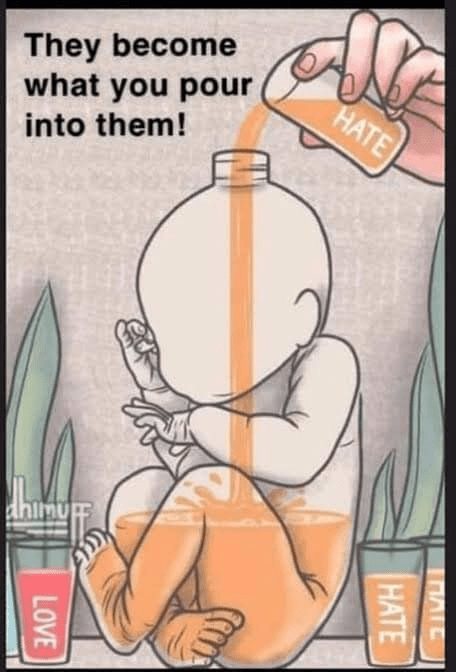








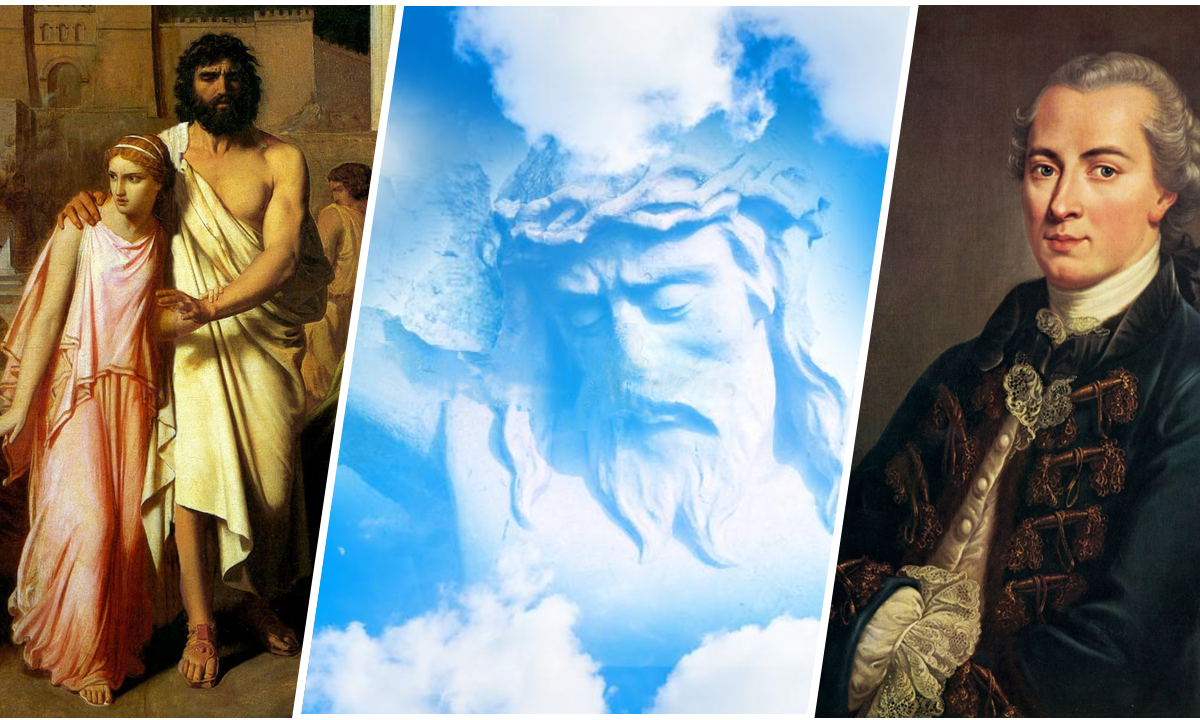


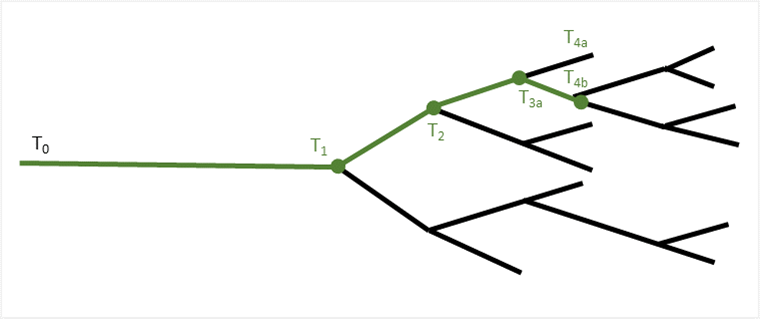
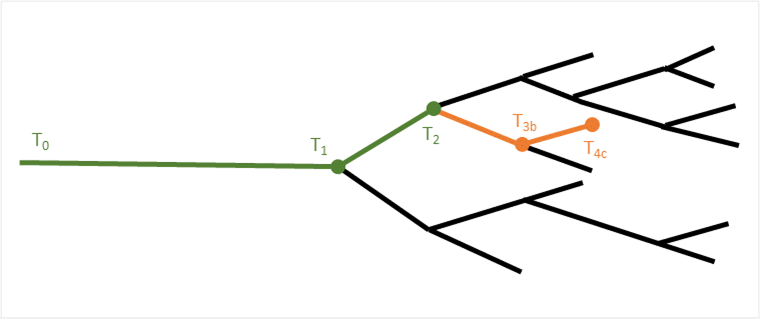

 Philosophics