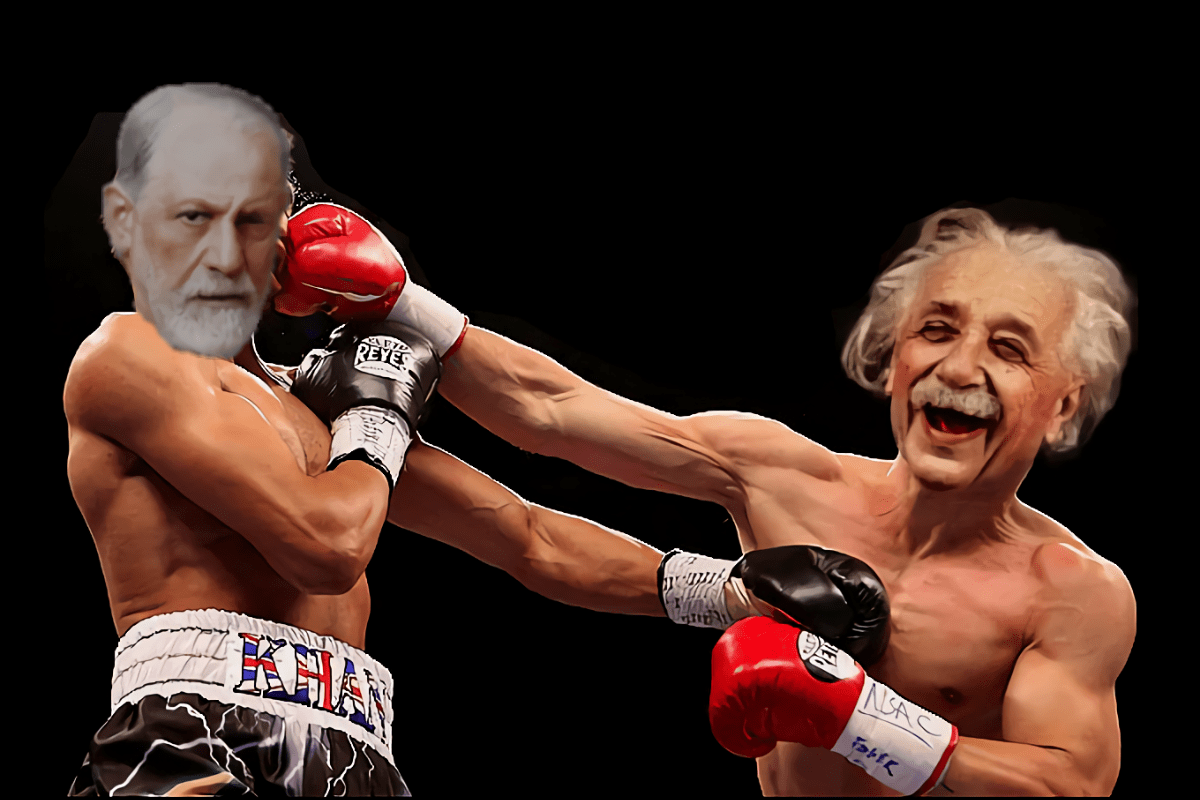
Intuition Showdown

Two different colleagues have independently recommended The Matter With Things by Dr Iain McGilchrist, who is also known for The Master and His Emissary, published in 2009.

As a result of these recommendations, I’ve watched some 6 or more hours of video interviews with Iain, some of which are hosted on his own site, Channel McGilchrist, including this one. Before I get to the topic promised by the title of this post, I’ll say that I like Iain. I respect his intellect, his demeanour, and his approach. If you are a credentialist, his an Oxford-educated psychiatrist—so he’s no slouch.

Iain’s positions are well researched, informed, and articulated. I could listen to him for hours. In fact, I have. And yet I disagree with a fundamental position he takes on intuition. Allow me to build up to that.

My first recommendation was due to a reaction I shared that depicting left-right brain hemisphere as analytic-creative was overly reductionist and quaint. McGilchrist was recommended because he disagreed. But it turns out his disagreement was more in the way it was being portrayed. The answer was wrong because the question was wrong. In a nutshell, his contention is that we shouldn’t be asking what each hemisphere processes, but how it goes about processing. I agree with this.

we shouldn’t be asking what each hemisphere processes, but how it goes about processing

His point is that in cases where an experience (inputs) might be processed on one side versus another, the interpretation (outputs) would necessarily differ. To make a false analogy, the left brain might be performing an exponential function whilst the right brain might be performing an arithmetic function. So, if ƒ(left) = xx and ƒ(right) = x+x, then an input of 3 would yield 27 and 6, respectively. There is nothing wrong with either side, they just produce different results. In context, this difference might matter: How many feet across is that chasm I must leap. I say, ‘Oops’, as I am falling to my demise having underestimated the difference, having used the right rather than the left function.
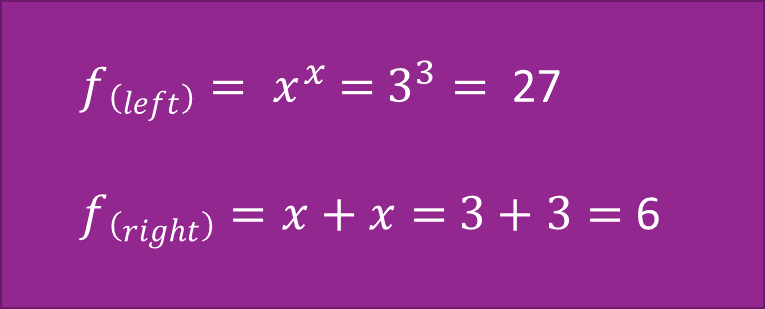
False Analogy by the Numbers

So where is this showdown you are wittering on about? A little more setup.

Science is stereotypically an analytic function, which is the say it requires a lot of left hemisphere processing. Psychology—and keep in mind that I cast psychology as pseudoscience, or para-science when I am being more charitable—elevates the notion of intuition as not only having value but of being largely ignored by science.

Those who have been following me for a while, know that I am also critical of Scientistm™, the blind-faith devotion to the current state of science as being some infallible truth. But neither am I an advocate for metaphysical claims. This is what I feel Psychology™ is trying to do with intuition. It feels like they are not only trying to inject a metaphysical claim; they are simultaneously making a normative claim that you should have (and trust) intuition; further, they are staking out the territory to be able to say an absence of this acceptance is pathological, so this is a power play. We’ve got the tea leaf readers taking up arms against science.

Of course, I am being hyperbolic and polemic for effect, but this division exists. Iain is not the first to attempt to elevate intuition. A central idea that Jonathan Haidt tries to sell the reader on in his book, The Righteous Mind, is that we need to be more accepting and trusting of intuition. Even Malcolm Gladwell pushed this point in Blink: The Power of Thinking Without Thinking.

I do think that this will escalate. Even if it doesn’t materialise into a full-scale war, people will take sides—they already have—, and we’ll see more us versus them fingerpointing. Whilst I am not fully on the side of science, my propensity is to lean in that direction.

UPDATE: Even before I post this, I discover that I am behind the times with this prediction. In searching for a suitable image for this post, I find the book Science and Pseudoscience in Clinical Psychology, which calls out pseudoscience presented as fact not only in the obvious realm of pop psychology but in the offices of practising psychologists. I have not read it, so I am not in a position to recommend it. I may get a copy for myself, if only just to have it on hand.

Before I end this, I also wish to anticipate a point of disagreement. I’ve encountered practitioners of ‘scientific psychology’ who vehemently defend their vocation as science. Without addressing this directly, let’s just raise the point that applying the scientific method and maths to a discipline doesn’t graduate it to become a science. I can apply this to Tarot or haruspicy. If fact, this is how, in general, social sciences became so-called soft sciences: ‘Look at me, mum. I’m using numbers’.

Where do you fall on the topic of intuition? Am I exaggerating and making mountains out of molehills?

Small Print (enlarged for texture): I’ve been approved as an Amazon.com Affiliate, so any links to Amazon are monetised. The purchase price to you remains unaffected, but I may be compensated for these purchases. If a purchase does not accrue to an affiliate, Amazon keeps the difference.

PSA: If you know of an affiliate you want to support—whether me or another—, purchaser through the affiliate. It costs you nothing and benefits the little guy.

Revisiting Time Reborn

I’ve just finished with Time Reborn. I wasn’t expecting to be converted to Smolin’s proposition that time is real rather than constructed. I enjoyed the book, and he provided a solid foundational understanding of the conventional scientific perspective (circa 2013, when the book was published).

I understand that Smolin is a professional physicist with a PhD and his grasp of the fundamentals is solid, and I am a peripheral scientist at best. I fully grant that I may be on the left of the Dunning-Kruger curve and making rookie mistakes.

The biggest contention I have is that he insists that everything needs to have a reason, citing Leibnitz. His argument is based on the question of why is our universe so perfectly structured, that it would be improbable to have happened purely by chance.

Whilst I agree that everything has a cause, reasons are an artifice imposed by humans. In practice, where reasons don’t exist, we make them up. This is how we get false theories and gods. Smolin does discuss false theories of the past and attempts to claim that the prevailing theories occupy this space whilst his theory should replace it.

Any universe created without the ability to sustain life would not have us asking why it did not support life.

My reaction is that it just is. Whether Roger Penrose is correct in saying that the universe is continually recreated and destroyed, rinse and repeat, the reason the universe is constructed in such an (improbably) ordered fashion that can sustain life is that there is no reason. Any universe created without the ability to sustain life would not have us asking why it did not support life. It does. We are here to question, and so we do. End of story.

We can make up all sorts of stories, whether through science, religion, or some other origin myth. None of them is provable. As Smolin notes, this is a one-time event. If it is destroyed, so are we and our memories. If life is sustainable in a future—or even parallel—configuration, we’re sent back to start where we can fabricate new stories.

Perhaps in another universe, it will be configured so differently that some other sort of life is created, perhaps this life will not be DNA-based and be anaerobic? Who knows?

It seems that he has an interest in reserving a place for human agency, which has little room for movement in current scientific models. His model provides this room. Moreover, he further thinks that even in current models, human agency should be injected into the models. I suppose he is not familiar with Keynes’ animal spirits.

For some reason, he decided to devote the final chapter to the hard problem of consciousness. This was a particularly hot topic around that time, so he didn’t want to miss the boat. The long and the short of it, he didn’t think the qualia-consciousness answer would be found through physics—though he reserved that there was a non-zero probability that it could be. He posits this as an existential, experiential challenge, and science is not designed to address such affairs.

Supernatural

There is a battle being waged in the United States today, but it is not centred on the lack of separation of Church and State. I suppose this may be a uniquely American issue given its Constitutional roots, but the root cause is rather a lack of separation between Natural and Supernatural, not between Church and State.

Tomorrow America is celebrating Independence Day [sic], but until we are independent of religion, we cannot be independent. The only real independence is for the politicians who are independent of British control. There is nothing more substantial than this, and nothing for the ordinary citizen, who might as well be taking orders from England. Canada doesn’t look any worse for the wear and tear. I’m not a Monarchist, but it’s no less ridiculous than the Oligarchy or Plutarchy in play today.

I’ve got nothing again churches, per se. I don’t prefer the brainwashing that passes as organised religion, but neither am I fond of the brainwashing that is organised politics. And why is it called ‘brainwashing’? It’s clearly mind-muddling. I digress.

I do believe that it’s in the best interest to separate Church and State, not least because I need freedom from religion. It is already force-fed down my throat and codified into laws. We need less, not more.

Of course, a key topical debate is the abortion issue. This is strictly a religious issue. Even if you want to argue that it’s a moral rather than religious issue, it is still the result of supernatural beliefs. This is where the separation needs to happen.

Why won’t it happen? It won’t happen because people who believe in supernatural forces—especially active supernatural forces—are easy to manipulate. This has been true historically as well as contemporaneously. It’s too convenient for politicians to pull the old Santa Claus trick—if you aren’t good, Santa won’t give you any presents; and if you’re bad, he’s going to bring you coal instead.

I’ve said my peace. In the end, I don’t really even care if you believe in the supernatural, but if you believe that you (or anyone) can interpret these forces, I claim foul and out of bounds. This belief is not different to believing that you can understand what your dog or cat is ‘saying’—or your pet unicorn in the garden. It’s certifiable.

I know that other countries have to contend with this interference. Some even don’t mind the union. Is this a problem in other countries? Is it a problem in yours? Or do you consider it to be a necessary solution?

DISCLAIMER: This post has absolutely nothing to do with the Supernatural television series.

The Infertility Trap

A colleague who happens to be a professor in New South Wales shared this video with me. I am tempted to just recapture the presented content here, but I feel everyone should just watch it for full impact. I intentionally used a cover image that is counter to the narrative. The challenge is not overpopulation. Rather, it’s the opposite. Find out why.

Video: RSNSW Clarke Memorial Lecture 2021: The changing tide of human populations: an infertility trap

I’ve cued the video beyond the introduction—feel free to rewind for context, but there is no material content to be missed—, and there are a couple of minutes of additional material at the end, making the content closer to 50 minutes (48.5) than an hour.

The Infertility Trap was published last month as a book. I’ve not read it, but it was referenced. Countdown, by Shanna Swan is also referenced.

Some highlights follow:

The Rise and Rise of Humankind

Geometric growth commenced after the Black Plague was driven by the discovery of how to harness fossil fuel. As with Malthusian predictions, The Population Bomb missed the mark—but not for all of the reasons you might be thinking.

Changing Pace of Population Growth

Population growth rates were already on the decline when The Population Bomb was published in 1968. This trend was a result of the fertility trend that became precipitous circa 1963.

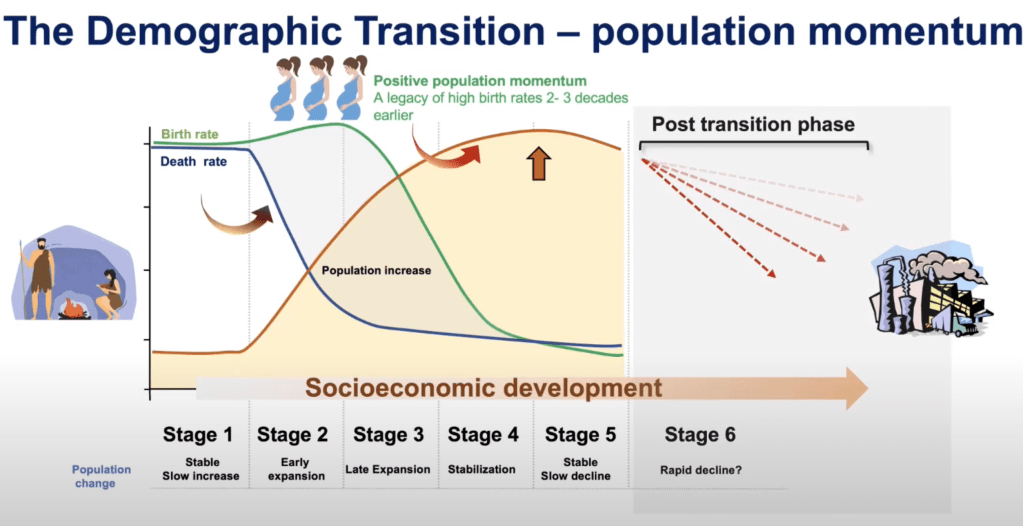
The Demographic Transition: Population Momentum

Though birth rates may seem to be increasing, this is merely optics as this is a legacy of positive population momentum stemming from high birth rates a few decades prior to the impending decline in fertility.

The Malthusian Paradox

Thomas Malthus didn’t grasp the paradigmatic shift technology would provide nor the relationship between fertility and prosperity.

Charts: Prosperity, infant mortality, child mortality, and fertility rate

As prosperity (as measured by GDP) increases, infant and child mortality as well as total fertility rate, each decrease. (I’m calling out the poor statistical representation of the non-zero-based Y-axis, but I don’t believe this was done to exaggerate the slope. It’s apparently just out of index.)

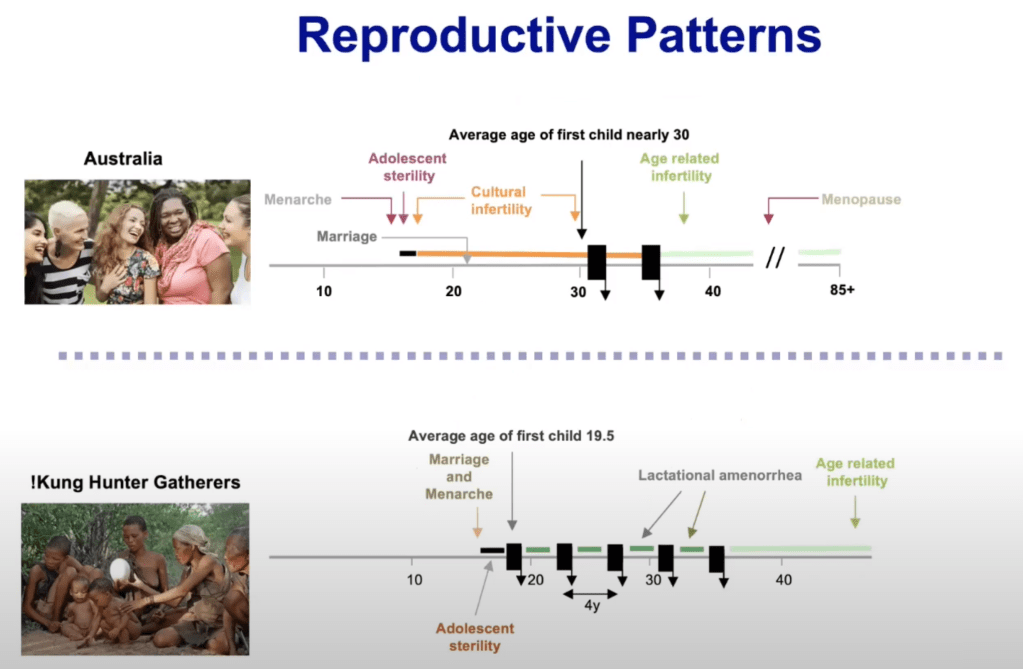
Reproductive Patterns: Australia vs !Kung Hunter-Gatherers

Notable in the charts above, are the delays in reproduction by the average Australian woman to around 30 years effectively limits the delivery to about 2 (1.7) whereas the hunter-gatherers commence closer to 20 years, yielding them an average of 5 children.

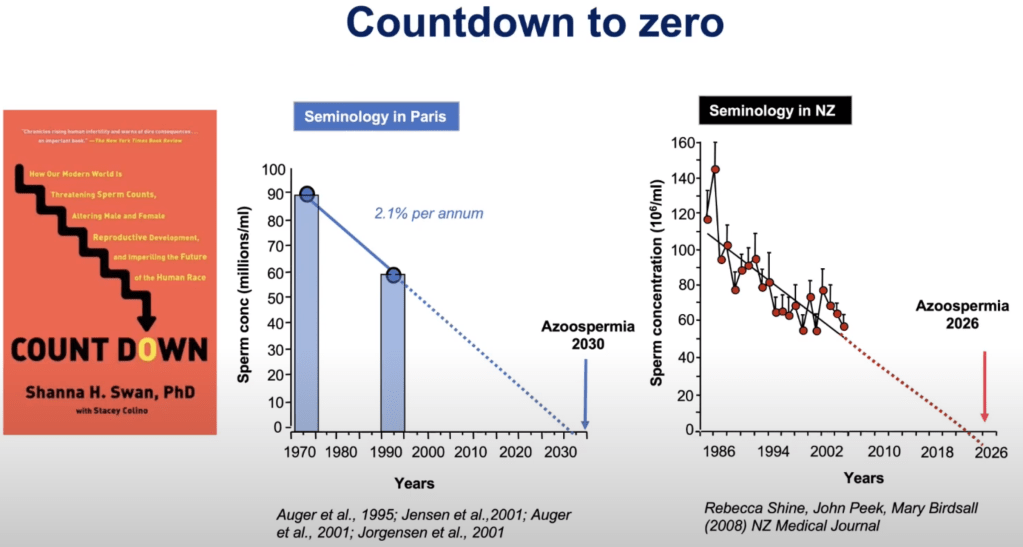
Rapid decline in semen quality

Semen quality (motility) and count are down.

Projections: Countdown to sperm count of zero in Paris and New Zealand

If declining semen count trends remain unabated or unaltered, one might anticipate a point where male fertility (potency?) reaches zero. This is characterised as azoopermia and projects this on Parisian males just past 2030 and by 2026 for New Zealanders.

Secular trend in declining testosterone levels

This downward trend is not constrained by region.

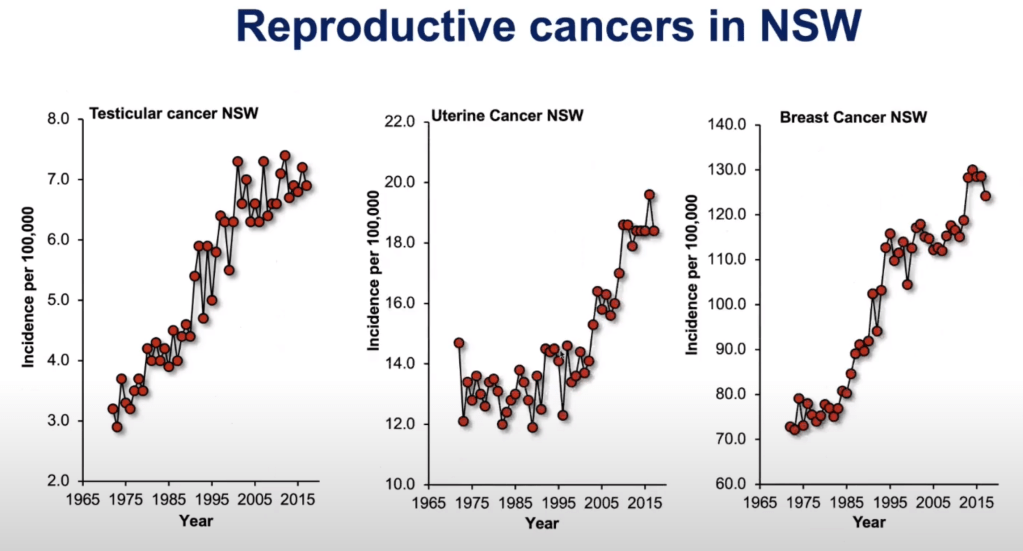
Trends in Testicular Cancer (NSW)

A correlated trend in fertility rate is an increase in testicular cancer, as shown with NSW data, even as ovarian cancer remains steady and cervical cancers are decreasing.

Reproductive Cancers in New South Wales

Conversely, other reproductive cancers (in NSW)—uterine and breast cancers—are on the rise in sync with testicular cancers and the drop in fertility.

My intent with this post is to share rather than editorialise. The video speaks for itself. I’ve provided some excerpted content for those who can’t spare the time to view the source.

Small Print: I’ve been approved to offer books through Amazon.com. Any books purchased by having clicked a link will yield me a small commission. This commission is not added to the price of the book to you. If you purchase the book through Amazon directly, bypassing an affiliate programme, they will keep the difference. So, if you intend to buy a book, stick it to the man and purchase it through me.