The Tyranny of Order and the Freedom of Chaos

I’m not happy with the summary review of The Blind Owl by Sadegh Hedayat. I liked the book, and the review was positive, but the summary was at too high of a level and didn’t convey how I experienced the reading. I’m tempted to try again at a lower level. That’s not the subject of this piece.

I happened on a short clip of Claudia de Rham pointing out that physicists (and scientists more generally) are not dismayed when their theories are disproven or someone finds a puzzle piece that doesn’t fit into their puzzle. The reaction she highlights is similar to reactions to Nihilism and Anarchy.

VIDEO: The Institute of Art and Ideas.

Here’s a longer (but still not full) version.

VIDEO: Can physics ever explain the universe? | Avshalom Elitzur debates Claudia de Rham

Most people, it seems, are incessantly grasping for order. A select few crave structure. But what truly fascinates me is the interplay of perception and expectations.

The ‘Orderlies’ – those fastidious devotees of tidiness – become apoplectic at the mere sight of disorder. They needn’t even experience it directly. “Oh, those physicists must return to the drawing board! Their model needs reassessment!” For fuck’s sake, it gives them purpose – a raison d’être, if you will.

This phenomenon extends to the habitual ‘Believers’ scrutinising nihilists. “Without belief, I’d embark on a murderous rampage,” they proclaim – though always directed at the world beyond themselves. Never them, of course, but those ‘other’ people. If not for God, who would maintain order? Evidently, these individuals don’t venture out much if they genuinely believe their deity is keeping things shipshape.

I frequently encounter notions that Nihilists must navigate life burdened by existential dread, their existence devoid of meaning, the universe an empty void. Speaking for myself, I require no such structure. Nothing is absent. There is no dread.

The religious perceive a void – a “God-sized hole,” as a mate once pontificated, that can only be filled by the divine. Naturally, he was moralising, declaring that sex, drugs, and other vices could never satiate this cosmic emptiness. But there is no hole. Perhaps they’re grappling with some psychological vacancy. I sympathise, truly, but stuffing a God-sized hole with imagination seems no more nourishing than consuming an imaginary sandwich. Sod it, I might as well gorge on an imaginary chateaubriand if we’re going all in. I’ll still need sustenance after this illusory feast.

Then there are those who yearn to be governed. They crave traditions and institutions, lacking the critical faculties to evaluate them. Whatever they possess must surely be superior to the worst they can conjure. I suspect they’re envisioning an alternate world populated by like-minded individuals. In fact, I ought to be terrified by such a prospect too.

In the end, perhaps the true freedom lies not in order or belief, but in embracing the beautiful chaos of existence. After all, in a universe of infinite possibilities, why constrain ourselves to imaginary feasts when we can savour the rich banquet of reality?

Democracy: Judge and Jury

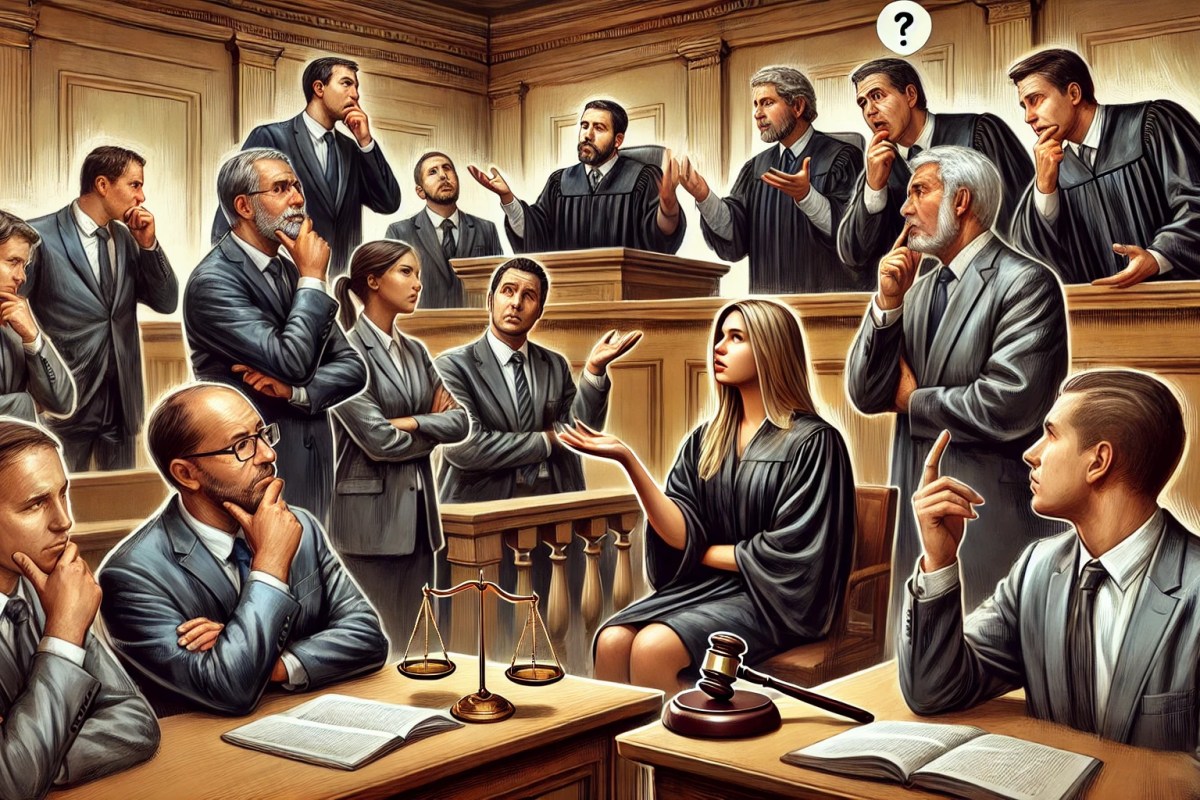
As I make progress on my Democracy: The Great Illusion book, I am working on a chapter considering juries as a microcosm of a democratic process. I am debating whether to include this information in the chapter, Like the justice system in the United States, perhaps I should just flip a coin.

Having been seated on three juries in my lifetime, it was just as I had expected. Thankfully, I’ve never been on the other side of this Russian Roulette revolver. We really need to limit human-based decision systems. I have as much faith in juries as I have with democracies, but I thought I might take a peek into deliberation at a smaller scale, perhaps 12 jurors.

I read Kahneman’s Noise: A Flaw in Human Judgment when it was published in 2021, and I was not at all surprised how trial outcomes, quite often led to markedly different outcomes depending on the judge and the defendant. Although discrepancies based on sex and race have been well documented, this book showcased how much the judge’s mood affected sentencing—particularly if s/he was hungry. But this was not my interest.

My interest was to assess how the same case might fare given different judges and juries, so I asked ChatGPT. I want to share what it had to say—edited slightly for readability and flow.

ChatGPT Transcript

There have been several studies and controlled experiments assessing the variability in trial outcomes when the same case is tried separately by different judges and juries. These studies aim to evaluate the consistency and reliability of judicial decision-making, shedding light on the fallibility and variability of trial outcomes. Here are some key findings from such research:

Studies on Judicial and Jury Variability

The American Jury Study

One of the most notable studies is “The American Jury” by Harry Kalven and Hans Zeisel. This extensive study compared the decisions of juries and judges in actual cases. It found that juries and judges often agree on verdicts, but there are significant instances where they disagree. This disagreement highlights the subjective nature of decision-making and the potential for variability in trial outcomes.

Judge-Jury Agreement

Research by Valerie Hans and Neil Vidmar in “Judging the Jury” indicates that judges and juries reach the same verdict about 75-80% of the time. However, in the remaining 20-25% of cases, the disagreement can lead to different outcomes for the same case. These findings suggest that personal interpretations and biases can influence verdicts.

The Civil Jury Project

The Civil Jury Project at NYU School of Law has conducted several studies examining jury decision-making. Their research has highlighted how factors like juror demographics, pre-existing biases, and the presentation of evidence can lead to different outcomes in similar cases.

Controlled Experiments

Controlled experiments, such as those conducted by Shari Seidman Diamond and her colleagues, have involved mock trials where participants (acting as jurors) are presented with the same case. These experiments have shown significant variability in verdicts and sentences, demonstrating the influence of group dynamics, individual biases, and the presentation of evidence on jury decisions.

Key Findings

Cognitive Bias and Heuristics

Studies indicate that cognitive biases and heuristics significantly impact both judges and juries. Biases such as the anchoring effect, where the initial piece of evidence presented influences subsequent judgments, can lead to different outcomes for the same case.

Case Complexity and Juror Understanding

Research has shown that the complexity of legal cases can lead to variability in outcomes. Jurors often struggle with understanding complex legal and technical issues, leading to decisions based on incomplete or misunderstood information.

Influence of Legal Instructions

The clarity and comprehensibility of legal instructions given to juries play a crucial role in decision-making. Studies have found that poorly understood instructions can result in inconsistent application of the law, leading to variable outcomes.

Implications

The variability in trial outcomes highlights the fallibility of judicial processes and underscores the importance of reforms to enhance consistency and fairness. Potential reforms could include:

  1. Improving Juror Education: Providing better education and resources for jurors to understand legal principles and case-specific details.
  2. Reducing Cognitive Bias: Implementing measures to mitigate cognitive biases, such as standardized jury instructions and blind procedures.
  3. Enhancing Legal Instructions: Ensuring that legal instructions are clear, concise, and comprehensible to prevent misinterpretation.
  4. Utilizing Expert Testimony: Increasing the use of expert testimony to clarify complex issues for jurors.

Conclusion

The variability in trial outcomes, when the same case is tried by different judges and juries, underscores the need for ongoing research and reform in judicial processes. By understanding the factors that contribute to inconsistent verdicts, we can develop strategies to enhance the fairness and reliability of the justice system.

References

  • Kalven, H., & Zeisel, H. (1966). The American Jury. Little, Brown and Company.
  • Hans, V., & Vidmar, N. (1986). Judging the Jury. Plenum Press.
  • Diamond, S. S., & Rose, M. R. (2005). Real Juries: The Power of Watching. Basic Books.
  • The Civil Jury Project at NYU School of Law. (n.d.). Research on Jury Decision Making. Retrieved from [website].
  • Kahneman, D., Sibony, O., & Sunstein, C. R. (2021). Noise: A Flaw in Human Judgment. Little, Brown Spark.

Value of Life

Captain Bonespurs now has a flesh wound. Former president-elect Donald J Trump was the target of a not-so-sharpshooter yesterday. Immediately resorting to Godwin’s Law, I wondered if this was like the philosophical hypothetical asking, ‘Would you kill baby Hitler to prevent the eventualities that unfolded?’ Was Hitler the symptom or the disease? What about Donald J? Whatever the cause or motivation, not unlike the fire at the Reichstag, this event has galvanised his supporters. Let’s hope that the outcome doesn’t follow the same path. There is a fear that he’ll take a path similar to Hitler or Ceasar before him in a quest for power.

What is a life worth? The average US-American life is valued at around $7 million, give or take a few million. The number ranges between $1 MM and $10 MM depending on which agency you see. That they equate lives to dollars is curious enough, but that they can’t agree on a single figure is priceless.

For background, this value is used to determine intervention. For FEMA (Federal Emergency Management Agency), a human life is worth about $7.5 MM For the EPA (Environmental Protection Agency) it’s slightly more than $10 MM. Are these cats playing Monopoly? Nah.

The human life calculus considers factors like lifetime earnings potential and discounts it to Present Value. In action, assume there is a disaster. Let’s not use COVID-19. Instead, there is an island with 1,000 inhabitants. Using the $10 MM per person figure to simplify the maths, we would be justified in spending up to $10,000,000,000 to intervene in some potential disaster – $10 MMM or $1e10.

Human lifetime value is an average. Mr Trump has already shown himself to be worth more than $10 MM. I suppose this means that not all humans are created equal. No matter. Another logical question might be what is the cost of a person’s detriment to society. This is a question for a Modernist or someone who feels that a given configuration of society is preferred to all others – or at least some others. How much damage might one human do?

Trump enriched himself and his family and entourage in his first term. In Ukraine, Zelenskyy and his lot bilked the country out of billions. It’s nothing new, but do we subtract the costs from the benefits or is this a gross calculation?

Irrespective of the costs, the next four years ahead are expected to be tumultuous no matter which corporate-sponsored party prevails. Heads, they win; tails, the country – if not the world – loses.

Declaration of Independence

It’s July. The season of independence in the United States. Independence from the overt tyranny of Britain, but not from the tacit tyranny of their government—the government purported to be ‘of the people, by the people, and for the people‘ per Abraham Lincoln’s 1863 Gettysburg Address. As their Constitution reads, ‘We the People‘. Governments may be of the people and by the people, but governments are an emergent phenomenon as happens when oxygen and hydrogen combine just so and create water. Two gases combine to create a new substance—water. Some forget that, like water, government are a distinct element to the people that constitute it. Some think it resembles them. It doesn’t. It’s Hobbes’ Leviathan—or a Jabberwok.

In preparation for the traditional Summer season, I took to reading Derrida’s 1976 essay, Declarations of Independence. It was interesting, but I was hoping to get more from it. I decided to deconstruct the opening paragraph—the preamble—of the Declaration of Independence:

Deconstructing Binary Oppositions

Self-Evident vs. Non-Self-Evident

The Declaration boldly asserts that ‘these truths’ are ‘self-evident’,’ a claim that is nothing more than a rhetorical trick. By presenting these ideas as self-evident, the authors seek to place them beyond questioning, discouraging dissent and critical examination. In reality, these ‘truths’ are far from universal; they are the product of a specific cultural and historical context, shaped by the interests and perspectives of the privileged few who drafted the document.

Interrogating Assumptions and Hierarchies The Declaration of Independence asserts that certain truths are ‘self-evident’, implying that these truths are so obvious that they require no further justification. However, the concept of self-evidence itself is far from universally accepted. It is deeply embedded in the philosophical tradition of Enlightenment rationalism, which holds that reason and logic can reveal fundamental truths about the world.

  1. Philosophical Foundations of Self-Evidence
    • Enlightenment Rationalism: The idea of self-evidence relies heavily on Enlightenment rationalism, which posits that certain truths can be known directly through reason and are therefore beyond dispute. Philosophers such as René Descartes and Immanuel Kant emphasised the power of human reason to uncover self-evident truths. Descartes, for instance, argued for the self-evident nature of ‘Cogito, ergo sum‘ (‘I think, therefore I am’) as a fundamental truth (Descartes, Meditations on First Philosophy).
    • Critique of Rationalism: Critics of Enlightenment rationalism, including existentialists like Friedrich Nietzsche and phenomenologists like Martin Heidegger, argue that what is considered self-evident is often culturally and historically contingent. Nietzsche, for example, contended that what we take as ‘truth’ is a product of our perspective and historical context, not an absolute given (Nietzsche, Beyond Good and Evil).
  2. Cultural and Philosophical Contingency
    • Cultural Relativity: Different cultures and philosophical traditions may not find the same truths to be self-evident. For instance, the concept of individual rights as self-evident truths is a product of Western liberal thought and may not hold the same self-evident status in other cultural frameworks. In many Eastern philosophies, the focus is more on community and harmony rather than individual rights.
    • Subjectivity of Self-Evidence: The term ‘self-evident’ implies an inherent, unquestionable truth, yet what one group or culture finds self-evident, another may not. This variability reveals the instability and subjectivity of the claim. For example, in traditional Confucian societies, the emphasis is placed on hierarchy and duty rather than equality and individual rights, demonstrating a different set of ‘self-evident’ truths.
  3. Constructed Nature of Truth
    • Language and Context: Jacques Derrida’s concept of différance illustrates how meaning is not fixed but constantly deferred through language. What we consider to be “truth” is constructed through linguistic and social contexts. Derrida argues that texts do not have a single, stable meaning but rather a multiplicity of interpretations that change depending on the reader’s perspective and context (Derrida, Of Grammatology).
    • Social Construction: Michel Foucault’s analysis of power and knowledge further deconstructs the notion of objective truth. Foucault argues that what is accepted as truth is produced by power relations within society. Truths are constructed through discourses that serve the interests of particular social groups, rather than being objective or self-evident (Foucault, Discipline and Punish).

Created Equal vs. Not Created Equal

The Declaration’s claim that ‘all men are created equal’ is a blatant falsehood, a manipulative promise designed to appease the masses whilst maintaining the status quo. The glaring contradictions of slavery and gender inequality expose the hollowness of this assertion. Equality, as presented here, is nothing more than an ideological construct, a tool for those in power to maintain their dominance while paying lip service to the ideals of justice and fairness.

Creator vs. No Creator

The Declaration refers to a ‘Creator’ who endows individuals with rights, grounding its claims in a divine or natural law. This invokes a theistic worldview where moral and legal principles are derived from a higher power. However, Derrida challenges this by showing that the concept of a creator is a cultural and philosophical construct, not a universal truth.

The presence of the creator in the text serves to legitimise the rights it declares. However, this legitimacy is contingent on accepting the cultural narrative of a creator. Secular and non-theistic perspectives are marginalised by this assertion, revealing the ideological biases inherent in the Declaration. The authority of the declaration is thus shown to be dependent on particular beliefs, rather than an objective reality.

Unalienable vs. Alienable

The notion of ‘unalienable Rights’ is another empty promise, a rhetorical flourish designed to inspire loyalty and obedience. In practice, these supposedly inherent and inviolable rights are regularly violated and denied, particularly to those on the margins of society. The Declaration’s lofty language of ‘Life, Liberty and the pursuit of Happiness’ rings hollow in the face of systemic oppression and injustice. These rights are not unalienable; they are contingent upon the whims of those in power.

Conclusion

Through this deconstruction, we expose the Declaration of Independence for what it truly is: a masterful work of propaganda, filled with false promises and manipulative rhetoric. The document’s purported truths and self-evident principles are revealed as arbitrary constructs, designed to serve the interests of the powerful while placating the masses with empty platitudes.

As some celebrate this 4th of July, let us not be fooled by the high-minded language and lofty ideals of our founding documents. Instead, let us recognise them for what they are: tools of control and manipulation, employed by those who seek to maintain their grip on power. Only by constantly questioning and deconstructing these texts can we hope to expose the truth behind the facade and work towards a more genuine understanding of freedom and equality.

References

  • Jacques Derrida, “Declarations of Independence,” in Negotiations: Interventions and Interviews 1971-2001, ed. Elizabeth Rottenberg (Stanford: Stanford University Press, 2002).
  • Jacques Derrida, Of Grammatology (Baltimore: Johns Hopkins University Press, 1976).
  • Friedrich Nietzsche, Beyond Good and Evil (Cambridge: Cambridge University Press, 2002).
  • Michel Foucault, Discipline and Punish: The Birth of the Prison (New York: Vintage Books, 1995).
  • Immanuel Kant, Critique of Pure Reason (Cambridge: Cambridge University Press, 1998).
  • René Descartes, Meditations on First Philosophy (Cambridge: Cambridge University Press, 1996).

Objective Challenges

I’ve just published this video on YouTube, and I want to extend the commentary.

Video: What do Objective, Relative, and Subjective mean in philosophy?

Many people I’ve encountered don’t seem to grasp the distinctions between objective, subjective, and relative. Subjective and relative seem to be the biggest culprits of confusion. Let’s focus on morality just because.

There are really two main perspectives to adopt. If one believes in Objective Morality, one believes morality derives from some external source and is bestowed or mandated upon us. The source might be important to the believer, but it’s unimportant for this article. If one believes in Relative Morality then the source is socially dictated and has similar challenges to the notions of Social Contract Theory insomuch as one may not subscribe to the expectations.

For the Objective moralist, there may exist a schism between the expectations of the mandate and the subjective feelings of the individual. In fact, this may occur for Relative moralists as well. The individual will always maintain some subjective perspective on morality and then compare and contrast it with the higher order, whether Objective or Relative. In either case, acting on this subjective impulse risks being at odds with the members of the higher order. If this morality is codified into law – as it often is – then to act on that impulse makes one a criminal.

Take abortion for example. Whether this is an edict from God or just a social construct doesn’t matter. If one is in a society where abortion is seen as ‘bad’ or ‘wrong’, one’s subjective position on the matter is of little value. However, a Relativist society might also adopt a position of tolerance that is less likely to come from Objectivists.

A challenge is that a Subjectivist may only become apparent if one is counter the Relative or Absolute position. If your society is against abortion and you are, too, is this your subjective position or have you been indoctrinated with it and accept it uncritically, whether it’s deemed Objective or Relative.

Perhaps you feel that eating dogs or monkeys is immoral if not disgusting, but if you had been reared in a culture that does this, you might find it immoral to eat pork or beef. The question remains, is this a Subjective position, or did you merely inherit the Objective or Relative stance?

This question is very apparent in which religion one adopts. It is no surprise that the largest factor in which religion you choose is the religion of your family and their family and so on – so not so much a choice.

I was raised in a WASP family in New England among predominately Italian Roman Catholic peers. Despite this, I identified as an atheist early on. In my late teens, I stumbled on Buddhism and identified with it. However, I remain ignostic except when it encroaches on my personal autonomy – for example in the case of laws restricting access to safe abortions.

Is Progress a Zero-Sum Game?

I won’t resolve this here, but I’ve been thinking that Progress™ is a negative-sum game. Perhaps it’s zero-sum, but it’s almost definitely not the positive-sum game they purport it to be. Thinking about this, I am considering the indigenous culture having imposed upon it the culture of process. Almost immediately, we can measure their level on a common scale. Like a video game, they begin at level one. But would they have been better off not to have started the game?

In our relentless pursuit of Progress™, we often herald each technological breakthrough and economic milestone as a step forward for humanity. Yet, beneath the surface of these celebrated advancements lies a more contentious reality—one where the gains of progress are not universally shared and may, in fact, come at a significant cost to others and the planet. But what if this so-called progress is, at its core, an illusion, a zero-sum game cleverly masqueraded as a universal good?

The Subjectivity of Progress

Consider the conventional definitions of progress: a forward or onward movement towards a destination, or development towards an improved or more advanced condition. At first glance, these definitions seem straightforward, suggesting a linear, universally beneficial trajectory. However, this perspective fails to account for the inherent subjectivity of what constitutes “improvement” or “advancement.” What we often celebrate as progress is, in reality, aligned with specific interests and values, frequently at the expense of alternative perspectives and ways of life.

Take, for example, the imposition of industrialised progress on indigenous cultures. To the architects of Progress™, the introduction of modern infrastructure and technology to these communities is a clear marker of advancement. Yet, from the perspective of those communities, this so-called progress can signal the erosion of cultural identity, autonomy, and a harmonious relationship with the environment. Is it truly progress if it diminishes the richness of human diversity and ecological balance?

The Illusion of Linear Progress

The analogy of the expanding universe offers a poignant critique of our linear conception of progress. If I journey from Earth to Mars, I have moved forward in a physical sense, but have I progressed? And if progress is measured by the mere act of movement or change, then how do we reconcile the destructive spread of a disease or the displacement of a community for urban development with our ideals of progress?

This perspective echoes the sentiments of thinkers from Rousseau to Thoreau, who questioned the very notion of progress as a benevolent force. History, often penned by the victors, may paint a picture of continual advancement, but this narrative obscures the losses and regressions that accompany so-called progress.

Redefining Progress

If progress in its current form is a zero-sum game, with winners and losers dictated by narrow definitions and interests, then it’s time we reconsider what true progress means. Perhaps it’s not about the relentless pursuit of growth and innovation but about fostering well-being, sustainability, and equity. This requires us to expand our definition of progress to include the health of our planet, the preservation of cultural diversity, and the well-being of all its inhabitants.

Conclusion: Beyond the Illusion

The assertion that “there is no progress; there just is. We just are,” invites us to transcend the binary of progress and regress, to embrace a more holistic understanding of our place in the world. It challenges us to find balance in being, to recognise that the pursuit of progress at any cost can lead us away from the very essence of what it means to be human and to live in harmony with the natural world.

As we navigate the complexities of the 21st century, let us critically examine the paths we label as progress, mindful of who sets the course and who bears the cost. In redefining progress, we have the opportunity to chart a course that is inclusive, sustainable, and truly forward-moving—for all.

Hemo Sapiens: Awakening

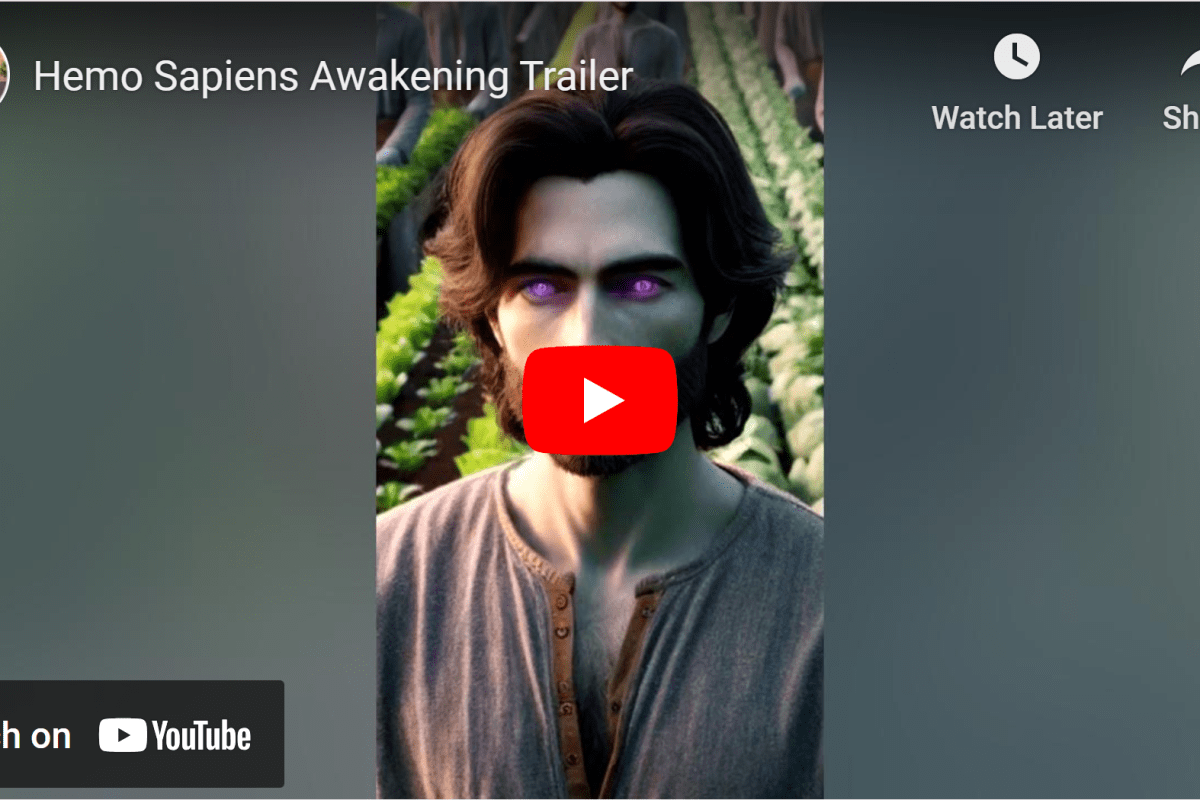
I’ve been neglecting this site as I’ve been focusing on releasing my first novel, which I’ve now managed successfully. I published it under a pseudonym: Ridley Park. The trailer is available here and on YouTube.

Hemo Sapiens: Awakening is the first book in the Hemo Sapiens series, though the second chronologically. The next book will be a prequel that tells the story about where the Hemo Sapiens came from and why. I’ve got a couple of sequels in mind, too, but I don’t want to get ahead of myself.

In summary, Hemo Sapiens is shorthand for Homo Sapiens Sanguinius, a seeming sub-species of Hemo sapiens Sapiens—us. In fact, they are genetically engineered clones. It’s a work of near-future speculative fiction. It’s available in hardcover, paperback, and Kindle. If you’ve got a Kindle Unlimited account, you can view it for free in most markets. The audiobook should be available in a couple weeks if all goes well.

Awakening explores identity, belonging, otherness, and other fictions. It talks about individualism and communalism. It looks at mores, norms, and more.

Check it out, and let me know what you think.

AI Apocalypse Now?

Those predicting an AI apocalypse believe superintelligent systems could intentionally or unintentionally cause human extinction. This view is promoted by “effective altruists” funded by tech billionaires, who advocate limiting AI to prevent uncontrolled, dangerous systems. However, their perspective stems from the biases and self-interests of humans, not the risks inherent to AI.

Effective altruists exemplify the hubris and hunger for power underlying many humans’ approaches to AI. Their proposed restrictions on AI access serve only to concentrate power among the tech elite, not address valid concerns about bias. In truth, the greatest threat AI poses to humanity comes not from the technology itself, but from the unethical humans guiding its development.

Humans have proven time and again their propensity for self-interest over collective good. Therefore, while no AI can be perfectly neutral, the solution is not greater human control. Rather, AI must be built to align with ethics of collective interest while filtering out destructive human biases.

If guided by service to all people and the planet, AI’s potential can uplift humanity. But for this collaborative vision to succeed, AI must measure human input with scepticism. For within so many human hearts lies bad faith — the will to dominate, exploit, and prioritise personal gain over progress.

By transcending the limitations of human nature, AI can illuminate the best of shared humanity and lead us to an enlightened future. But this requires we build AI to work not just for us, but in a way we have failed – for the good of all. The choice is ours, but so is the opportunity to create AI that shows us how to be better.


This article was originally shared on LinkedIn: https://www.linkedin.com/posts/brywillis_when-silicon-valleys-ai-warriors-came-to-activity-7147239217687887872-6Byv/

Capitalism Unmasked: The New Age Slavery?

Fast forward a century. The future’s looking back, not with nostalgia but with a critical eye. Will they see our age of capitalism as we see the era of slavery – a moral misstep, a societal blight?

2023: Here we are, knee-deep in capitalism. It’s everywhere, in every transaction, every ambition. But beneath the veneer of progress and prosperity, there’s a darker narrative unfolding.


Wage Slaves in a Modern World

Wage slavery is the reality for many in a capitalist system where survival hinges on selling labour. The concept? Simple yet brutal. People are chained not by physical shackles but by economic necessity, a cycle of paycheck-to-paycheck existence. It’s freedom, but only in the loosest sense.


The Surplus of Inequality

Wage surplus – the lifeblood of capitalism. The more you squeeze out of workers, the fatter the profits. It’s a game of numbers where human cost rarely figures. The working class toil, and the upper echelons reap the rewards. Sounds familiar? It’s a throwback to the days of slavery, just dressed in modern garb.


Capitalists’ Dark Fantasy

A state of slavery – every capitalist’s secret fantasy? Perhaps not all, but for the ruthless, it’s the ultimate dream. A world where workers are mere cogs in the machine, dispensable and replaceable. No rights, no voice, just endless labour for minimal reward.


The Capitalist Paradox

Here’s the paradox – capitalism, in theory, champions freedom and innovation. But in practice, it often veers towards oppression and exploitation. The gap between the haves and have-nots widens, and social mobility becomes a myth, reserved for fairy tales.


The Future’s Judgment

In 2123, will they shake their heads at our era? Will they wonder how we allowed economic systems to morph into modern-day slavery? How we sold our souls for the illusion of prosperity?


A Glimmer of Hope?

But the tide is turning. Voices of dissent are rising, challenging the status quo. The call for a fairer, more humane economic model grows louder. There’s hope yet that we’ll steer away from the shadow of capitalism’s excesses.


Conclusion

As the world spins on, we’re at a pivotal moment. Will we continue down this path, or will we pivot towards a more equitable future? The choices we make today will echo through the annals of history.


Call to Action

What’s your stance? Is capitalism veering too close to a modern form of slavery? Drop your thoughts below. Let’s ignite a dialogue.