In this video, Veritacium discusses why democracy is mathematically impossible, invoking Arrow’s Impossibility Theorem which I’ve mentioned many times here and in other writings. I won’t summarise or comment further save to recommend the video. Let me know what you think if you’re so inclined.
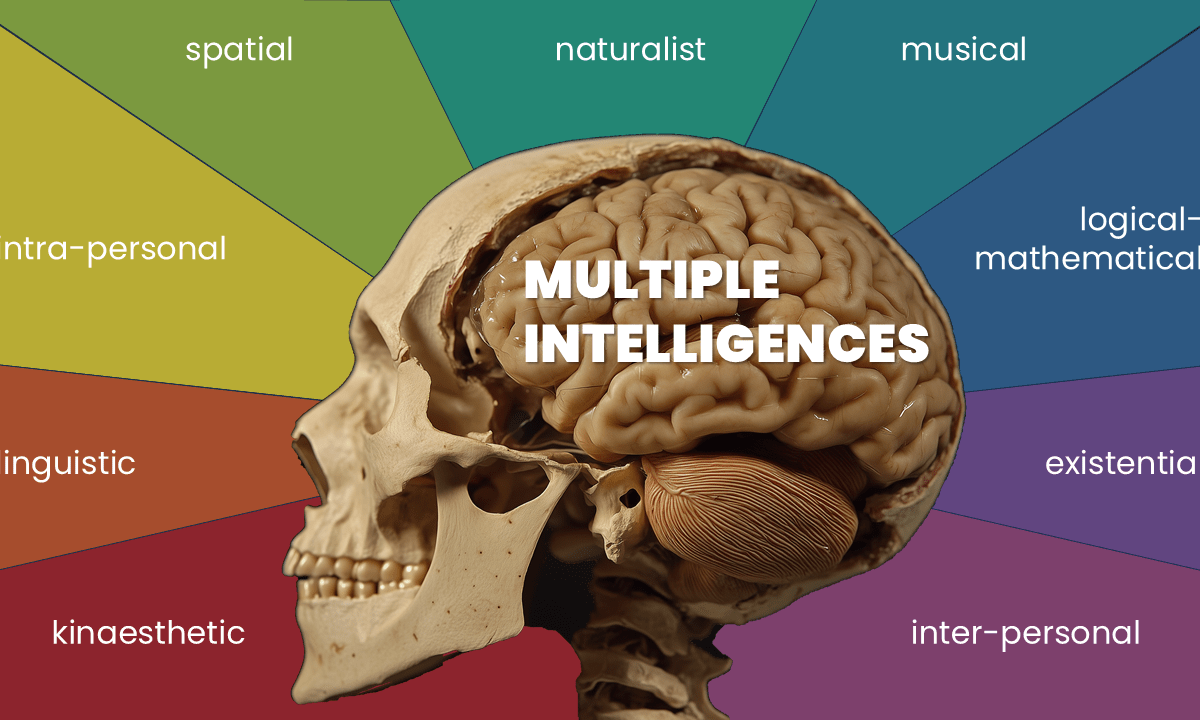
I engaged in a nice debate recently. Someone suggested that because some executives are smart, they can figure things out. Specifically, she posited that a CTO, Chief Technology Officer, should understand communication and diplomatic skills when interacting with a corporate board because they have the technical skills to get into their current C-level position. I disagreed based on the multiple intelligence theory.
Here’s the rub: a CTO with off-the-charts technical skills might be rubbish at diplomacy (interpersonal) or communication (linguistic). It’s like expecting every pro athlete to be a concert pianist – it’s not on.
Assuming every “intelligent” person can max out all intelligence dimensions is bollocks. It’s as likely as training every smart CTO to be the next Shakespeare or Machiavelli. Language and diplomacy are distinct skills, mate.
While we all love a Renaissance man (or woman), peaking in all these dimensions in one lifetime is a pipe dream. It’s not inherently bad, though. When building teams – be it a corporate board or an exploration party – ensure you’ve got a good mix of skills. I’m not saying you need a bard, a philosopher, and LeBron James on every team, but make sure you’ve covered the bases necessary for success.
If you think you don’t need a particular dimension, ask yourself: is it because you’re weak in that area and can’t see its importance? Don’t let your blind spots become your downfall.
In the end, it’s about recognising and respecting diverse intelligences. So, next time you’re tempted to think your brilliant CTO should just “learn to be diplomatic”, remember: they might be better off focusing on their strengths and leaving the smooth talking to someone else on the team.
The debate over free will often distils down to a question of determinism—indeterminism, hard or soft determinism, or something else. Poincare’s approach to the three-body problem is an apt metaphor to strengthen the deterministic side of the argument.
Quantum theory introduces aspects of indeterminism, but that doesn’t support the free will argument. Moreover, between quantum events, the universe is again deterministic. It’s simply been reset with the last exogenous quantum event.
Prima facia, Determinism and Chaos might seem strange bedfellows. And therein lies the rub. Chaos theory essentially tells us that even in a scenario of chaos, all possible outcomes can be calculated. They just must be calculated stepwise via numerical integration. Even this leaves us with estimations, as owing to Heisenberg’s Uncertainty Principle and the infinitude of slicing space, we can’t actually calculate the precise answer, although one exists.
My point is that not knowing what is being determined doesn’t invalidate the deterministic nature or process.
Captain Bonespurs now has a flesh wound. Former president-elect Donald J Trump was the target of a not-so-sharpshooter yesterday. Immediately resorting to Godwin’s Law, I wondered if this was like the philosophical hypothetical asking, ‘Would you kill baby Hitler to prevent the eventualities that unfolded?’ Was Hitler the symptom or the disease? What about Donald J? Whatever the cause or motivation, not unlike the fire at the Reichstag, this event has galvanised his supporters. Let’s hope that the outcome doesn’t follow the same path. There is a fear that he’ll take a path similar to Hitler or Ceasar before him in a quest for power.
What is a life worth? The average US-American life is valued at around $7 million, give or take a few million. The number ranges between $1 MM and $10 MM depending on which agency you see. That they equate lives to dollars is curious enough, but that they can’t agree on a single figure is priceless.
For background, this value is used to determine intervention. For FEMA (Federal Emergency Management Agency), a human life is worth about $7.5 MM For the EPA (Environmental Protection Agency) it’s slightly more than $10 MM. Are these cats playing Monopoly? Nah.
The human life calculus considers factors like lifetime earnings potential and discounts it to Present Value. In action, assume there is a disaster. Let’s not use COVID-19. Instead, there is an island with 1,000 inhabitants. Using the $10 MM per person figure to simplify the maths, we would be justified in spending up to $10,000,000,000 to intervene in some potential disaster – $10 MMM or $1e10.
Human lifetime value is an average. Mr Trump has already shown himself to be worth more than $10 MM. I suppose this means that not all humans are created equal. No matter. Another logical question might be what is the cost of a person’s detriment to society. This is a question for a Modernist or someone who feels that a given configuration of society is preferred to all others – or at least some others. How much damage might one human do?
Trump enriched himself and his family and entourage in his first term. In Ukraine, Zelenskyy and his lot bilked the country out of billions. It’s nothing new, but do we subtract the costs from the benefits or is this a gross calculation?
Irrespective of the costs, the next four years ahead are expected to be tumultuous no matter which corporate-sponsored party prevails. Heads, they win; tails, the country – if not the world – loses.
I am going to neglect this blog for at least another day. I’ve got too many irons in the fire.
Why do we routinely say ‘half dozen’ but don’t tend toward ‘quarter dozen’ or ‘third of a dozen’? I know many people have maths deficits, but still. I don’t think even I will attempt to start this trend, but this thought crossed my head today.
I hope to return to reengage with this block, but until then, adieu.




 Philosophics