Insufficiency Theory of Language

I’m not an ethical subjectivist. The truth* is that I am a non-cognitivist. I gravitate more toward Ayer‘s Emotivism. Stevenson‘s Expressivism and Hare‘s Prescriptivism add the element of intention. This may seem like hair-splitting, but the distinction lies in the taxonomy of meta-ethics.

Emotivism and the rest are categorised under the non-cognitivist branch whilst ethical subjectivism falls into the cognitivist bucket. Intuitively, humans appear to have an innate bias toward accepting cognitivism, much in the same way as they seem to be wired to believe in supernatural concepts and see images of Jesus in toast. Whether these are vestiges of some successful evolutionary strategy is beside the point, but the problem it creates is that, in contrast, non-cognitivism is perceived as counterintuitive.

In its essence, cognitivism can be distilled down to the belief that moral statements are truth-apt, which is to say that they can be evaluated as true or false. Because of the current created by intuitionists, I lead with my fallback position, which is one of ethical subjectivism or more likely error theory.

Heads I win; Tails you lose

Although for reasons I’ll articulate later, entering a conversation assuming truth-aptness, the conversation can at least focus on the compositionality and universality components because whether I believe that moral statements cannot be evaluated as true or false, the default cognitive position of the general population is that they can be. This is not to say that I identify as a quasi-realist, which is to believe that there is no truth-aptness but to behave (pretend) that they do.

coin-flip - Captioned
Image: Deciding the truth-aptness of a moral claim

God Is Dead

In his critique of Enlightenment beliefs, Nietzsche declared that ‘God is dead’ as he understood the implications of a society absent a justification for not only believing that morality claims are truth-apt but that they are true, divinated from some metaphysical, supernatural, and universal power. In practice, the Enlightenment replaced God with a rather animated and interactive concept of Nature, hence were born all sorts of natural rights. You may get a sense of some déjà vu, as humans, not being particularly creative, just reappropriated and rebranded the same tropes Theists use prior to that. They just performed a search-and-replace of God with Nature in a manner similar to the Christian appropriation of pagan holidays.

Goddead
Image: God is dead

Non-cognitivism has generally fallen out of favour primarily because it was sort of painted into a corner by the Frege-Geach (embedding) problem, but this issue is only intractable if you accept the given frame.

I should probably just link out to a different source to explain the Frege-Geach problem because I feel it’s a red herring, which only presents a problem if you accept the frame established by the Structuralist

The problem here is that language is a complex, socially constructed communication system. Even if we accept Chomsky’s theory of the innate ability to parse language, the syntax, lexicon, and grammar are still arbitrary human constructs. I can’t likely repeat this point often enough: humans have a poor track record of creating and comprehending complex systems, examples of which are the various half-cocked socio-political, economic, jurisprudent, and philosophical systems. Hubris is evidently a successful evolutionary selection factor, as it persists everywhere and certainly in people of power.

The logical positivists ran into a similar problem when they proposed the verification principle that asserted that a statement is only truth-apt if it is either an ANALYTICAL statement or a SYNTHETIC statement, and yet this assertion with neither analytical nor synthetic, so it itself does not meet the verification principle. It’s simply a normative prescription.

Fundamentally, this quandary underscores the deficiencies of the constructed language system more than anything else, what I am developing with a working title of Insufficiency Theory. A tangent to this theory is my concept that the only moral truth (and many social truths) are simply rhetorical victories—situations where one agent employing rhetorical devices has convinced others as the truth of some condition.

Intermission

intermission

A problem with writing an unstructured stream of consciousness is that you look up and realise your post is getting pretty lengthy, and there is a lot more depth than you expected. Due to this, I am going to unpack this over several posts over several days.

Disclaimer

DISCLAIMER: I am not a professionally-trained philosopher, linguist, psychologist, or gynaecologist for that matter. I had considered studying Linguistics at uni as well as Philosophy, but I opted instead to study Economics and Finance, as these appeared to be more pragmatic. As relates to philosophy and language, I am an autodidact. This said, this particular area is new to me, so I am certain that I am missing key elements and may have large gaps in my understanding. In some cases, I’ve read more excerpts and others’ perspective on these people and their work than their actual work product. I am trying to catch up, but that leads me to a place fraught with selection and affirmation bias—though I do try to comprehend counter arguments as well. Moreover, I am painfully well aware of the Dunning-Kruger effect, and I am trying to allow for enough time to elapse to move further along this curve.

dunning-kruger-graph[1]
Chart: Dunning-Kruger Effect

Article head  image cropped from here: http://existentialcomics.com/comic/80


* Truth: (n) an opinion or held belief

All equalities are not equal

I have long been interested in notions of social justice and equality, but somehow it all felt a bit loosey-goosey and amorphic. To be honest, I feel this way about the entire composition of government, politics, and jurisprudence, and other power structures, but those are topics for some other days. Also, I won’t endeavour to speak to the artificial income-market construct, so for the purposes of this post, I’ll take this as given, as anachronistic and quaint as it might otherwise be. Nor will I discuss whether the system itself, apart from the equality question, is optimal or even makes any sense from a broader vantage, or whether competition has a role in an otherwise coöperative society.

Along with empty virtue notions as freedom, liberty, and justice, (topics for another day) equality is a post-Enlightenment Age catchphrase. As with its counterparts, it sounds nice; it has a nice ring to it, but it is just as specious. These are words invoked to raise emotions, but as with a pointillist’s painting, if you attempt to scrutinise them too closely, they become unintelligible.

hb_51.112.6[1]
A Sunday on La Grande Jatte, Georges Seurat

Aside from maths, equality is an issue for sociology as well as political philosophy. In maths, the concept is tautological.

“In sociology, the study of the causes and consequences of inequality in its various forms – class, race, gender, power, status, knowledge, wealth, income – is one of the most pervasive themes of the discipline. In philosophy, theories of justice and rights are centrally concerned with the problem of justifying and criticising different kinds of inequality.” [1]

Sociologist, Bryan Turner, identified four flavours of equality:

  1. Ontological Equality

  2. Equality of Condition

  3. Equality of Opportunity

  4. Equality of Outcome

Political Philosophy is more concerned with accepting the sociological definition as given and discussing it in the negative sense of inequality.

Tautological Equality

In maths, we have likely been made accustomed with equalities since grade school. In fact, that’s what makes the other notions so compelling. It all appears to be so tidy and scientific.

1 = 1

2 = 2

1 + 1 = 2

Amazing, right? Two values balanced on either side of an equals sign. The problem is that these equations—these equalities—are logical tautologies. They are equal because this is in fact how they are defined, defined in the same manner as we define a red lorry as red. Equal in this context is not useful for us, save as a familiar reference.

Ontological Equality

The Declaration of Independence of the United States of America employs ontological equality, where ontological is defined as “relating to the branch of metaphysics dealing with the nature of being”.

“We hold these truths to be self-evident, that all men are created equal, that they are endowed by their Creator with certain unalienable Rights, that among these are Life, Liberty and the pursuit of Happiness.”

Aside from an unsubstantiable claim that these so-called “truths” are somehow “self-evident”, this weakest form of equality is a claim “that all men (read: people) are created equal” at birth because “their Creator” (read: God, an obvious metaphysical nod) “endowed” them with this  aspect.

Translating this into common parlance, this states that we are all equal in the eyes of God [sic]. In essence, to commence a racing metaphor, this means that we all get to participate in the race, and that sounds good, right?

The problem with ontological equality is that it outright ignores existing inequalities, so whilst you may be equal in God’s eyes, that’s where it ends. Essentially, you get an empty promise. If you’ve got something to say about, say a prayer; God’s got operators standing by. At least you get to play the game.

Man U
Manchester United football club players

Equality of Condition

Where ontological equality leaves off, equality of condition steps up. Beyond the metaphysical promise, it claims that all people get to start at the same position, that we each get to start at the same starting line. That sounds fair, right?

The problem with equality of condition is that whilst you may get a place at the starting line, you still face any systematic or structural adversity in play, whether that be discrimination, wealth disparities, access to quality education or other public services, and so on, at least you get to play the start at the same place.

Starting Line
High school girls at a starting line

Equality of Opportunity

My Libertarian associates seem to love this one. In fact, in their world, the only conversation is about equality of opportunity (also known as formal equality of opportunity) versus opportunity of outcome. It’s a cage match to the death, and opportunity is their champion.

Cage Match
Cage Match Fight

This flavour of equality doesn’t claim that a person has the right to start in the same place—only that the rules will be the same.

The problem with equality of opportunity is that it makes a specious claim. Besides ignoring the condition and situation and any past infractions—letting bygones be bygones (especially when they have given you the advantage that you wish to retain).

A parallel would be to allow a steroid-pumping athlete to compete by rationalising that, well, the race has started, so let’s just keep playing. Afterall, we’re playing by the same rules, so that makes it fair. Forgive and forget, right?.

The privileged live in better neighbourhoods, have access to better schools, can afford tutors and summer programmes. Many live in more stable family environments growing up, and they have access to networking benefits. This is further reinforced in university, and, like compound interest, the earlier one starts, the greater the effects of compounding.

Future-value-of-a-present-value-or-principal-using-compound-interest-(given-nominal-annual-interest-rate)-234[1]

Again, equality of opportunity might sound good on the surface, but, yet again, it disintegrates on scrutiny. Its main purpose is a feel-good head fake to keep one’s eyes off the prize.

Substantive Equality of Opportunity

A subset of equality of opportunity is substantive equality or fair equality of opportunity. Under this model, additional remediation is asserted to the disadvantaged person. This might be a familiar concept to golfers, who have handicaps. The goal is to—whilst also enforcing a similar rule set—accomodate those with some head start advantage. In the everyday context, it could be providing additional funding or resources to underprivileged children.

The problem with substantive equality of opportunity is that the deficiencies are multifaceted, the system itself is too complex to account for all material dimensions and measures, and most assessments are normative in nature.

Equality of Outcome

Equality of outcome is particularly pernicious. It claims that in the end, everybody wins, and everyone gets the same prizes.

Image of Alice taking with a dodo bird
‘At last the Dodo said, everybody has won, and all must have prizes.’

This is a potential result of Communism, that is if the definition is taken to the absurd. This is a common criticism by some when every participant receives a participation prize—a manifestation of the notion that everybody is special.

The problem with equality of outcome is that, among other things, not everybody wants the same thing, so this logic basically boils down to I want what I want if what you have is what I want as long as everyone else who also wants what I want has it, too. Of course, we could reduce this down from actual equality—apples for apples and oranges for oranges—into value equality, where everyone has access to some comparably equivalent value (whatever that might mean, especially insomuch as different people assign different values to the same goods and services).

Kurt Vonnegut depicted this in his short story, Harrison Bergeron (PDF), where, not being able to raise certain persons, people were instead reduced to the lowest common denominator, so rather than elevate the cognitive ability of low IQ people, the solution was to diminish the capacity of higher IQ people, so as to produce the same—albeit lower—results.

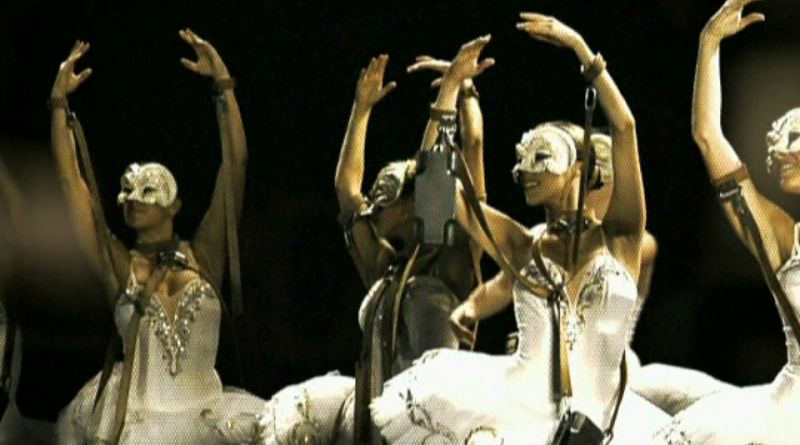
Dancers
Dancers represented in Harrison Bergeron

Closure

In the end, ontological equality is nothing more than vapour; equality of condition fails to account for material differences among people and their situations; equality of opportunity also fails to account for disparities of condition; and equality of outcome is an unrealistic pipe dream that would be too complicated and complex to implement.

In order to further communication, if that is indeed even the purpose (rather than obfuscation, which I feel may be the prime motive), we need to use different concepts, to find new terminology.

End Notes

[1] Equality: Sociological & Philosophical Perspectives, Brighouse & Wright, 2009 (https://www.ssc.wisc.edu/~wright/Sociology%20915%20&%20Philosophy%20955%202009%20syllabus.pdf, retrieved 5-9-2017)

Also note, that I reserve the right to make inline edits to this post in an attempt to extend, clarify, and otherwise elucidate this topic on equality.

Image

So What?

Morality is a human construct. More specifically, it is a normative construct of language. It is used as a tool to maintain power and promote normalcy, but so what?

People are indoctrinated with this normative perspective, but accept it as some self-evident truth. But there is no absolute truth. This, too, is a contextual function of language.

Since the dawn of civilisation—and perhaps longer—, humans have been constructing moral codes of behaviour. From attributing moral origins to supernatural gods, they’ve attempted to move to a secular humanist vantage, ascribing these powers attributed to nature, but this is little more than a metaphysical euphemism in order to appear to be more scientific as a result of Enlightenment.

Clinging to absolute morality is like clinging to religion and gods.

As Marx said, ‘religion is the opiate of the masses.’ Clinging to a sense of absolute morality is not much different to clinging onto religion and gods. There’s a sense of security. It’s comforting and weaved into the fabric of most societies.

Still, so what? As long as the masses prefer to believe that morals somehow exist in the wild, and people, being story-lovers, are exploited by persuasive storytellers, we are resigned to this situation.