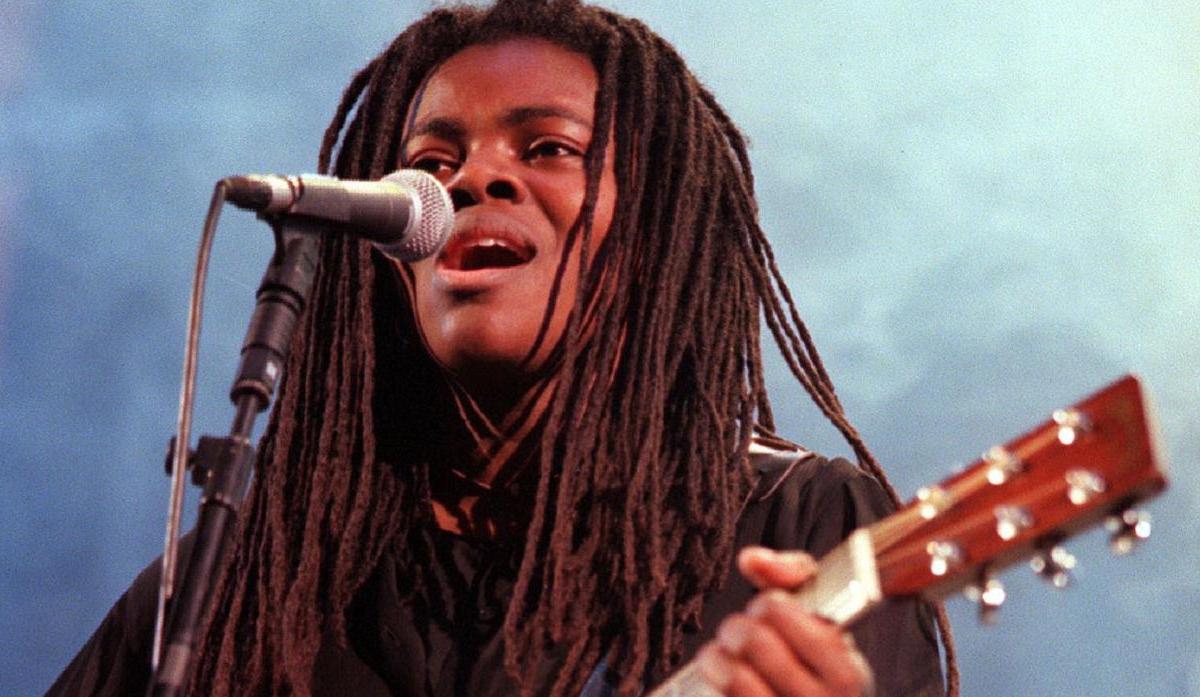
I enjoy listening to music reaction videos on YouTube. The other day, I came across Tracy Chapman’s Fast Car. I’ve loved this song since it first came out. Musically, it’s a simple repetitive chord progression—finger-picked D, A, F#m, E. In a manner, repetition is a metaphor for the lyrical narrative. In this live performance version, the treatment is more simplified than the original album version—until the last bar.
Tracy Chapman – Fast Car
The protagonist is in a place where any place is better, and she’s got a fast car she can use to get away. The situation she finds herself in is a family relationship where alcoholism is a problem; her father is an alcoholic. Her old man’s got a problem. He lives with the bottle, that’s the way it is. But she’s got a friend, and she’s got hope. She tells her friend, ‘maybe we make a deal. Maybe together we can get somewhere. They are starting from zero and have got nothing to lose. They can follow her ‘plan to get us out of here‘.
And so she left to create a new life, but in this new place, she recreated her prior experience with her friend proxying her father. Like her dad, she loved her friend, but she knew that the relationship wouldn’t work out.
And so she left to create a new life. Rather, she remains in place and asks her friend to make a decision, to take a fast car and keep on driving, to leave tonight or live and die this way.
Perhaps this new life would be better without the remnant from the previous life. Did she learn from her experience, or would she seek the same type of partner? Would she fall into the same pattern because it was her comfort zone? The song doesn’t tell us, but the underlying music hasn’t changed. It’s easy to imagine the next verse to be the same as the first—although one could argue that it does end on the G, not repeating the Em and D they run out the phrase. That’s for you to decide.
Returning to the song, there is the chorus. She’s retelling this story. She’s looking back—remembering. She had wanted to belong. She wanted to be something. In the end, we don’t know where she ended up. It seems to me that she’s in a place where she can reflect. Perhaps it’s the calm before the storm, or perhaps this challenge has been resolved, and the chain has been broken. Perhaps, that’s the effect of the added notes in the final bars.
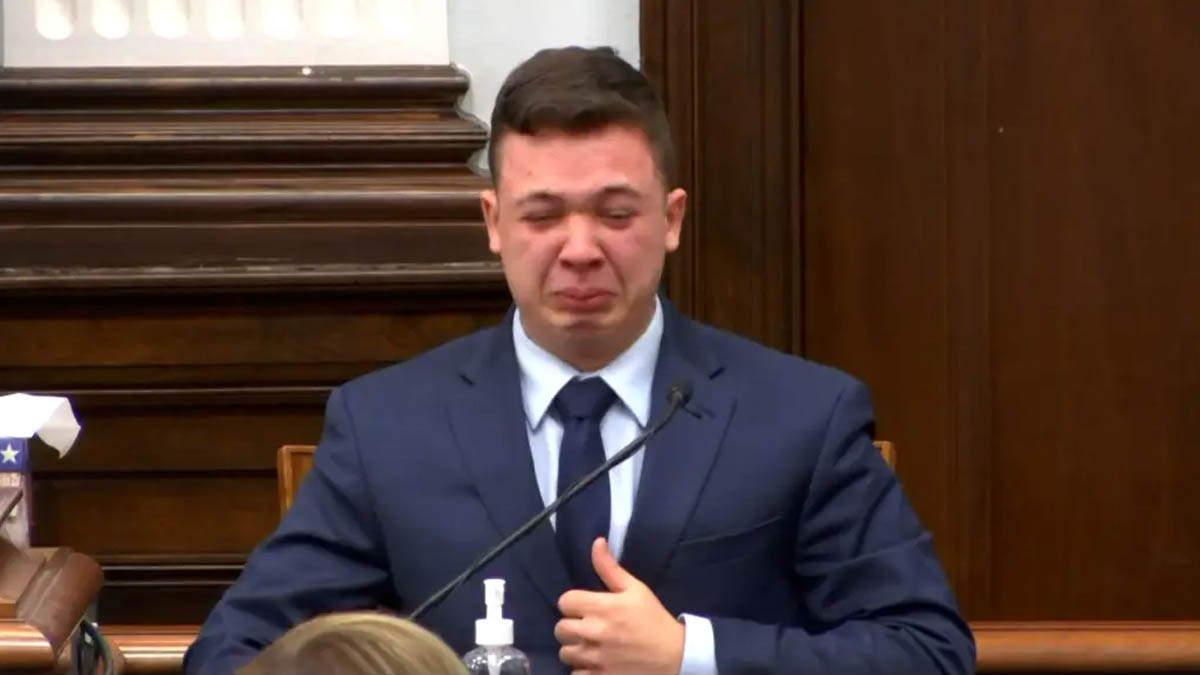
If anything showcases how nonsensical the concept of justice is, just look at the Rittenhouse trial in the United States. Ultimately, justice is about perception. In a textbook, a bad person does something bad, and a process ritual is performed by judges and juries to divine the otherwise obvious badness, and the bad person is brought to justice. In the extended version, they learn the error of their ways and reintegrate into society and live happily ever after.
In reality, this is all bollox. Good and bad are subjective and contextual. But this post isn’t about that. It’s about the charade of justice. In the case of the Rittenhouse trial-slash-debacle, Kyle Rittenhouse shot some people and killed them. Whilst he is being charged with murder, some people view him as a hero—the good man with a gun rather than a vigilante.
Given these perspectives, whether justice is served is a matter of your starting perspective. People in the United States are generally divided on some fundamental political stands, and this predictably colours individual perspectives.
In the Bible, Christians are taught the story of King Solomon, wherein two women each claim a child as their own. Solomon suggests that they cut the child in half and by doing so, he reveals the true mother by judging their responses.
Spoiler Alert: I am only pretty sure that Solomon wouldn’t have followed through on his twisted joke.
This Bible story is part of the Western legal canon and teaches the impartiality of judges and some practical wisdom, but then we remember that it’s just a story.
Returning to Rittenhouse, irrespective of whether justice ends up being served is basically a coin toss. If you have been following the proceedings, you’ll notice that the pack is being stacked in his favour and the dice are weighted and the coin is biased.
Personally, I think the guy is an ass-hat. I feel that anyone who carries a weapon has anger and compensation issues. And if he wasn’t there in the first place, none of this would have unfolded as it did. I am a conscientious objector and believe this is precisely why the Second Amendment of the US Constitution relates to a well-regulated militia and not some pizza-faced wanker.
If he is judged not guilty, people like me will viscerally feel that justice is a sham. Obviously, I already maintain that opinion, but other people still believe in justice and Santa Claus. If he is judged guilty and gets a suitable sentence—another subjective constituent of justice—, then the other cohort feels that justice was not served.
One could argue, as Christians do, that God is the final arbiter of justice. Someone has to be, right? It also reminds us not to judge—probably because we’re not very good at it—, so there’s that, too.
I hold my original stance: justice is just another vapid weasel word.
Although I have written about authenticity in the past, I’ve been wanting to delve deeper for a while. I’ve been engaged in a discussion thread, which has motivated me to accelerate. This acceleration has forced some trade-offs, but I feel I can present a cogent position nonetheless. This segment will be more editorialising than academic, and I expect to short-shrift the historical perspective. Perhaps I’ll expand on these aspects in future.
I expect this graphic to serve as a visual reference to abbreviate some typing. Below, I reference the captions of the cards in order.
Self-Oriented Authenticity
Let’s commence with some definition and exposition.
Self
This is the unadulterated core of a person’s existence. The religious might term this as a soul. For those who favour reincarnation, this is the bit that travels from time to time, body to body.
Identity
Identity is a shell formed around the Self based on environmental inputs such as social cues. It’s about perception. Essentially, the goal would be to mimic the Self. There are several challenges to this notion. I’ll return to this, but one of these is identity composition.
Identity Composition
The notion of identity is that it is a composite of various dimensions, each of which is a social reflection if not actively socially generated. Combined, these dimensions constitute identity. Does one self-identify as athletic, intelligent, witty, gregarious, quick-tempered, altruistic, and on and on. Does one have a certain gender identity? What about sexual orientation? Occupational identity? Identities around affiliations of religion or philosophy? Identities related to personae—a worker, an entrepreneur, a day-trader? Mother, father, sibling, coworker, student…
In the end, the picture illustrates that identity is a bundle of particular identities. Presumably, these identities can shift or reprioritise by time or place. You may choose to hide your Furry identity from your mum and coworkers—or your preference to identify as a CIS male with a sexual orientation toward women and yet prefer to wear dresses.
This brings us to authenticity.
Authenticity
Facile authenticity might be thought of as how well aligned your behaviours are with your identity and your Self. According to the mythos, the perfect trifecta is that these are all in perfect alignment—like Babushkas, Russian stacking dolls, neatly nested. This notion has some practical problems already hinted at.
Authenticity Composition
The first challenge is an extension of the identity composition problem. As Identity is multidimensional, so must authenticity be. If one dimensionalises identity into some array from 0 to 6, then in a perfect arrangement, each of the expressions of these particular identities needs to have a corresponding authenticity pairing. Yet this is unlikely.
Performance
In practice, we need to look at how a person performs and compare that to their self-identity. This creates a challenge. How another person identifies a person may not align with their self-identity. We may have no insights into how a person sees themself. This is the reaction we have when someone we ‘know’ commits suicide. S/he seems so happy. S/he had everything. We see smiling depression.
Assuming we have some magic identity lens, we are left with a self-alignment challenge. A person has no access to their own Self, and others have less access still. This is where psychoanalysis fails practically and succeeds economically. They get paid to divine the Self, but that pseudoscience is for another day.
Regarding the illustration, we see a derangement of performances. This is in a lesser state of disarray because the Self is sublimated, but we notice that dimensions 1 and 3 are aligned, whatever they might be. Dimension 0 is off centre, but it somehow remains within the bounds of identity. But dimensions 2, 4, and 6 are ostensibly inauthentic. This person claims to be a vegan, yet is eating Wagyu beef in a teppanyaki house.
And dimension 5 is absent. This person identifies, say, as a musician, and yet plays no instrument efficiently. Whether s/he claims to be a musician or just feels that s/he is a musician seems beside the point. There is no performance. There is no expression.
Summary
Not even a summary. This was a concise download of my current perspective. I hope that it at least provides something to react to. If you have any perspective to lend, feel free to comment below.
This season-appropriate meme crossed my path—or did I cross its? No matter. It’s a clever instantiation of Baudrillard’s simulacrum, and it really demonstrates the path to simulacrum in 4 stages. I don’t know who rendered this, but it arrived to me via Philosophy Matters. Although it’s self-explanatory, I’ll editorialise nonetheless.
At Stage Zero, the thing in and of itself exists—out there. This is the signified. It’s the thing represented by the symbol depicted in Stage One—a so-called pumpkin, la citrouille, la calabaza, der Kürbis, and so on—the signifier.
At Stage Two, the essence of the signified remains intact, but it’s lost its form. We can make a mental connexion between this and the signified, but we are a step further removed. In this case, the pie likely started as the signified but was transformed into a pie, a new signified and signifer.
At Stage Three, we may or may not have any remnants of the Stage Zero signified, but we still invoke the essence of the pumpkin. More probably, we invoke the essence of the pumpkin pie by way of the pumpkin spice.
By the time we arrive at Stage Four, we’re left with a claim of ‘pumpkin-ness’ and a visual cue to remind us of the path through pumpkin pie and the trace of spice, the marketing angling toward the pie over the fruit.
Keep in mind that the claim of natural flavours does not presume that pumpkin is one of those flavours.
Ingredients (Coffeemate Pumpkin Spice Creamer)
Water, Sugar, Coconut Oil, and Less Than 2% Of Sodium Caseinate (A Milk Derivative)**, Dipotassium Phosphate, Mono- And Diglycerides, Natural And Artificial Flavors, Sucralose (Non-Nutritive Sweetener).
I’m not entirely sure I agree with the distinction between Stage Three and Four in this meme, but it’s just a meme, so I’ll leave it here.
Telles seraient les phases successives de l’image :
– elle est le reflet d’une réalité profonde
– elle masque et dénature une réalité profonde
– elle masque l’absence de réalité profonde
– elle est sans rapport à quelque réalité que ce soit : elle est son propre simulacre pur.
I’ve been pondering how to effectively dimensionalise the spectrum that illustrates the relationship among premodern, modern, and postmodern—and potentially, metamodern. I was researching and happened upon a YouTube video from a few years back by Rick Durst, a Conservative Evangelical professor. He was diagramming the chronological path from pre to post.
I think at this point it’s important to distinguish between Modern and Modernity and PostModern and PostModernity1. I feel that the noun form, Modernity, can be used to describe the chronology whilst the adjective form, Modern, describes the philosophy. I’m not sure that this is a standard distinction. If I adhere to this difference, then Rick is discussing Modernity rather than Modern. Perhaps I’m being pedantic.
I’ve taken liberties to rerender Rick’s model.
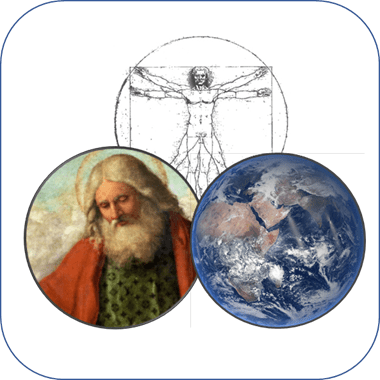
In his view, the stages are from God to Man to Earth. I don’t fully agree with the transition from Man to Earth, but the God to Man or Humanism doesn’t feel very controversial. Although Rick is describing modernity against a temporal backdrop, this doesn’t invalidate the God-Man-Earth aspect—leaving open the possibility that it may be invalid for other reasons.
Following the chronology, Rick points out that the overlapping periods between PreModern and Modern and Modern and PostModern are not clean breaks. As I’ve suggested before, in illustration B, some people today retain PreModern beliefs and others hold PostModern beliefs. On balance, I feel that the Western world today remains substantially Modern, philosophically speaking. I am not sure that I am qualified to assess this relative to contemporary Eastern cultures.
Again, without otherwise critically evaluating Rick’s model, belief and God and in particular, Catholocism was the hallmark of the PreModern, PreEnlightenment world—the supernatural and superstition ruled the day.
Many consider Modernity to have commenced with the Renaissance, roughly from the 14th to the 17th century—describing it as early modern. Given the prevalence of superstitious beliefs, I’d be more comfortable with something more along the lines of proto-modern rather than modern. Scientific discoveries were evident, but this was reserved for the elite.
Given the Protestant Reformation that occupied the 15th century, it’s clear that a declaration of Modern should be considered to be premature. One might even argue that even with the advent of the Age of Enlightenment, which spanned the 17th and 18th centuries, Secular Humanism become the theme for the empowered elites, but the masses never relinquished their PreModern belief systems. If we are to start the Modern clock at all, this seems to be as good a place as any.
Although Modernism is marked by Humanism, in the United States, federal and state government is still predicated on PreModern principles, so it is not unfair, twisting Lyotard’s phrase, to question, Have We Ever Been Modern? It is somewhat interesting how—at least anecdotally—how many people do not find it inconsistent to have faith in humanity to solve the ills of the world through technology whilst simultaneously believing in gods, angels, tarot, and homoeopathic and other anachronistic healing modalities.
Chronologically, Rick demarcates Modern and PostModern with the ecological crises of the 1970s, which turned the focus from Man to the Earth. Seeds of postmodernism were sewn post-WWII and even post-WWI with the devastation and realisation of the limits of human capacity.
For the purpose of the ternary plot, it seems easy enough to assess where a person might feel relative to gods versus humans. And whilst I could argue that the belief in gods and the supernatural is a discrete binary state rather than on a continuous scale, I could argue as well that someone could feel that their gods are in control but they retain some degree of what’s known as free will. As a matter of degree, one could be a Deist—believing in some Prime Mover—but feel that now humans are on their own. God is like a crocodile slithering into the darkness having enabled the next generations. On a 1 to 10 spectrum, they might get 90% Modern and 10% PreModern. A believer in astrology, tarot, and the like, might also have faith in Man, yet they may reside more on the 60%-40% in favour of Modernity—or vice versa.
The question is how to get past Man to Earth. I am not sure how to frame this. Perhaps this wasn’t the right avenue to pursue.
For the record, I chose to render the terms PreModern and PostModern in camel case for no particular reason, save to think that it seems to make the prefix more readily distinguishable.
A mate of mine since grade four recently shared an article with me. We’ve been acquainted since the early ’70s and have remained in touch on and off along the way. He ended up attending university with a degree in Political Science whilst I took the Economics route. Not only are our world views are different, but they were also different then, and they are differently different today. Still, we respect each other’s differences and know where we converge—our love of music and the socio-political sphere—and diverge—which music and what aspects of the socio-political sphere. This has no material impact on this post, but he is more of a pragmatic optimist whilst I lean toward pragmatic realism—whatever that even means. Perhaps I’ll share our political courses in future.
This friend shared with me an article on the five universal laws of human stupidity. I gave him a short response, but even as I was responded, I had more I wanted to articulate, and this place is reserved for musings of just this sort.
The article establishes a premise that people generally underestimate human stupidity. I am pretty sure I don’t underestimate human stupidity. Yet I question whether this perspective is misanthropic or good old fashioned realism. To voice it is to be accused of being a misanthrope. Within the perspective of the ternary chart I’ve been developing, the answer differs if one is Modern versus Postmodern. And to be clear, Moderns at one time claim to be abject Humanists, and yet I hear often how stupid this or that person is—or even people are in general—, and yet they counterbalance that with some hope for humanity—humans as a viable species.
Before tackling the issue of stupidity, let’s establish a frame. I tend to accept the theory of multiple intelligences. Perhaps, I don’t wholly agree or even feel the model captures the domain entirely, but conceptually, I feel that what we term intelligence can be dimensionalised. Whether these dimensions can be measured is a separate story—and my answer is a no—, but it can be conceptualised. Some have argued that all the theory of multiple intelligences does is to name the dimensions already accounted for in a grand intelligence model. Although I agree that these dimensions can be aggregated to capture weighted measures, I disagree that this is occurring. I am also sceptical as to whether this can be accomplished meaningfully.
However, one couches it, if we believe that intelligence is a thing and we can dimensionalise it, this also leaves open the door to the absent position. If we have a rating scale between 0 and 100 representing intelligence, where at some point an entity is considered to be functionally intelligent and then gradations of increasing degrees of superior intelligence, then we can also run the scale in the other direction—100 minus the intelligence value.
In practice, this is how the old IQ system worked. On the upside, we get average to genius; on the downside, we’ve got imbeciles, morons, and idiots—and of course, we’ve got the more general category of stupid. And if we allow for multiple intelligences, we get the contrary situation of multiple stupidities.
Standard multiple intelligence theory proposes that intelligence can be assessed along nine dimensions. Even if we excel on a few of the 9 proposed dimensions, we are still left deficient in the rest.
There have been studies performed where the multiple intelligences of medical professionals were assessed. Aggregated, these people typically marginally excel in rote learning and (believe it or not) interpersonal skills but can’t necessarily balance a chequebook. And they are notably deficient in the rest. To add insult to injury, many of these people overcompensate by feigning interest in matters of culture.
I am fully aware that this is a sweeping generalisation, but the point remains that one can excel in 2 or 3 dimensions, yet still be stupid in the remaining 6 or 7. If you consider the so-called progress of human civilisation, it has ‘advanced’ because of the intellectual contributions of very few: There are only so many Newtons and Einsteins among us—and Rembrandts and Picassos or Beethovens and Mozarts. We debate when AI will reach singularity and defend that AI can never be a Shakespeare, but fail to note that even qualitatively, the best we can amass is some homoeopathic quantity of these people. But when I point out that given the opportunity I wouldn’t have hired some 90+ per cent of my university or grad school classmates, who graduated with me because although they technically passed the course material, they were, as is the topic at hand, stupid. These are normal, ordinary people. They have jobs, families and relationships, and have hobbies and activities they excel at. Still, on balance, stupid sums up their totalities. On LinkedIn, every now and again I read posts on the Imposter Syndrome, how you are not an imposter. Not to be politically incorrect, but you are an imposter. But take comfort, so is everyone else. This is what Judith Butler means by performativism. This is Sartre’s waiter. Stay in your lane, and you’ll be fine. This is the Modern world. It’s also why Moderns have such a problem with Postmoderns who point out these things. In short and in sum: people are ostensibly stupid. Get over it. It could be worse.
Omnipotence and hubris are strong cognitive defences against cognitive dissonances. We may be familiar with Dunning-Kruger‘s chart that depicts how people over-estimate their topical knowledge, but we may not be aware that this overestimation is not limited to the scope of neophytes.
I don’t have a strong grasp of Metamodernism, but at first glance, it doesn’t seem to be a place I wish to reside, and I don’t have the motivation to look deeper. Instead, I’ll rely on proponants and advocates to fill that void. They are already ahead of me on that curve and far more qualified to lead that charge. Moreover, I believe there are at least two paths to follow.
Metamodernism attempts to synthesise Modernism and Postmodernism, but from my perspective, it’s a Modern belief that simply preferences Premodern mysticism over Postmodernism. From what I understand about Metamodernism, all of it’s dimensions can be measured on the planar ternary plot I am architecting. From what I read by Metamodernists is that it is either operates to sublate or is a paradigm shift that transcends these worldviews.
If my characterisation is correct, Metamodernism is captured by the model and simply shifts the dot to the left. If one of the other persectives is correct, it either changes the shape of the plane itself, alters the pathing of the movement of the dot, or creates a need for a Z-axis to capture this Z-dimentional movement. To assess this, I’ll need more information. For now, I will adopt my perspective and see where I end up.
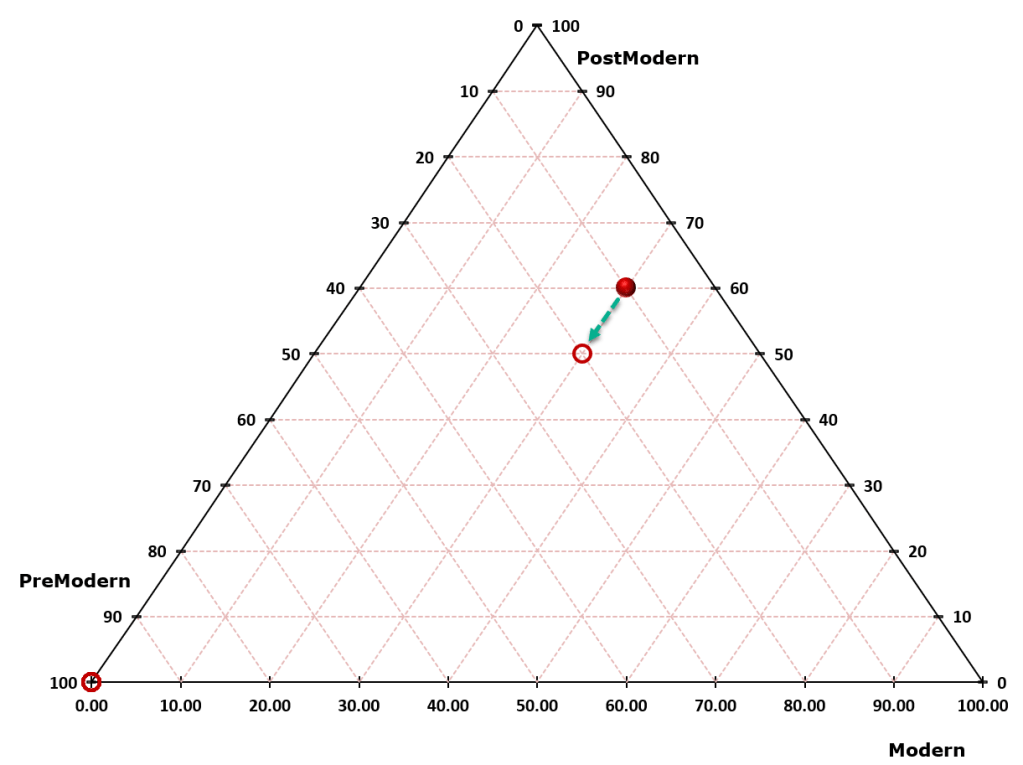
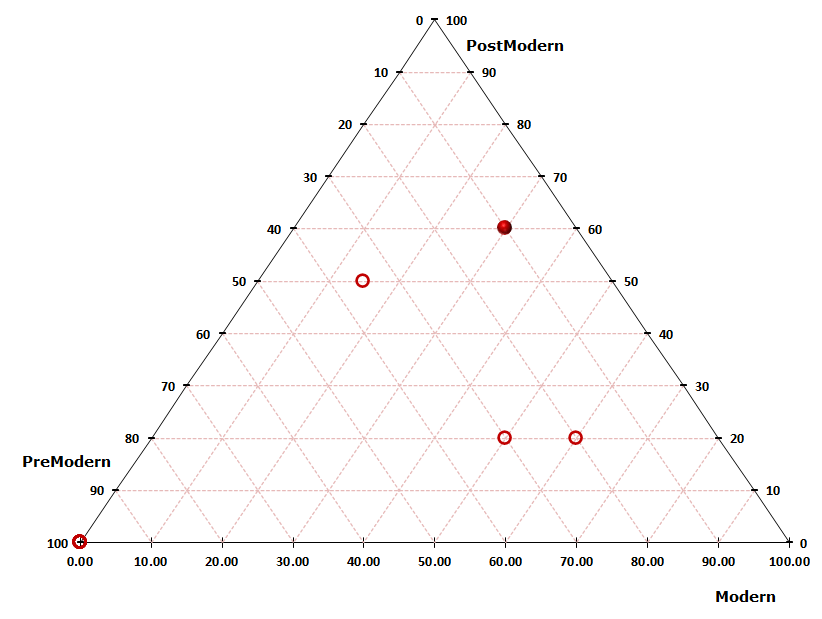
Usign this ternary chart as a reference, if I am the solid red dot at time-1, and adopt some Metamodern world views, my place at time-2 moves in the direction of PreModern, which is to say down and to the left.
To be clear, the direction of this shift is not inevitable. It depends on the initial orientation and the dimension under consideration. If I were lower on the chart (more Modern than PostModern), then the movement would more likely be from right to left horizontally and not angular as depicted. Moreover, even from the starting position shown, the movement might simply go left. What it won’t do is go up or to the right, the area shaded in red on the chart below.
My next step is still to dimentionalise this. Altought I have some canditates already in mind, I suspect this will be an emergant process. Feel free to come along for the ride.
I am working toward fleshing out my Modernity Triangle. Since I want to illustrate placement graphically, I’ve settled on using a ternary plot—at least for now. I’ve borrowed an existing Excel template, which already contained the simple maths and charting. This is really just the tip of the iceberg as creating appropriate dimensions, measures, and weights is the heavy lifting.
I may work on the aesthetics, but this is the underlying framework. I’ve already commenced a scoping conversation in a previous post. In a nutshell, there are three primative movements—the spectra are Premodern to Modern, Modern to Postmodern, and Postmodern to Premodern.
This chart is meant to be discriptive. As the adage goes, there is no correct placement. If you identify as a Modern, you may wish the dots to bias in that direction, but the same is true if you occupy one of the other corners. For those who prefer moderation as a stance—the Middle Path—, you may be tempted to find comfort in a dot occupying the centre. That’s fine. I’m not judging your worldview.
Taking a moment to mention prescription, the best I can offer at this point is that if you feel you should or want to occupy a particular place. Feel free to create a vector from where you are to where you aspire to be. My only caveat at this point is that sometimes it is hard to reverse tack once the genie’s been let out of the bottle. An example might be agriculture. Humans progressed from Hunter-Gatherers to Aggrarians. Some have ‘progressed’ to Industrial and Postindustrial worldviews. However, not all humans have taken these paths. But due to encroachment of Premodern humans by Moderns, the habitat of Premoderns has made hunting and gethering an untenable lifestyle, so in the contemporary world, only Hunter-Horticulturalist remain.
In the accompanying ternary chart, I clumsily place myself where I self-identify, though I could be way off base. As a matter of example, this dot could represent a single dimension as well as some aggregation of dimensions. At the most abstract level, the view should interpret as a person espousing a tendency toward Postmodernism over Modernism fairly far removed from Premodernism. The lower leftmost dot on the Premodern corner could represent a typical pre-Enlightenment peasant as well as a member of some contemporary indigenous tribe such as the Sentinelese.
In the contemporary Western world, I’d image that they might be represented by the 2 dots on the second horizontal, fairly Modern, a smidgeon of PostModern, and more PreModern than they’d likely be comfortable to admit.
Political Compass
I was inspired by the Political Compass conceived by Libertarians attempting to differentiate themselves from a strict Left-Right political frame. My intent is to create something similar. I don’t feel that I have four points to work with, so I settled for three. I discuss how Metamodernism fits into this model elsewhere. Here is how the Political Compass situated the UK parties in the 2019 general election.
I’ve been thinking, but I haven’t had a lot of free time, so I may be fleshing this post out over time.
I participate in several online groups centred around Postmodernism. There are some fellow Postmoderns, and there are some Moderns, some who want to find out what all the hubbub is about, and some detractors. Invariably, the conversation turns to one of definition. This post will not attempt to answer that question. I’ve made that attempt elsewhere and elsewhen.
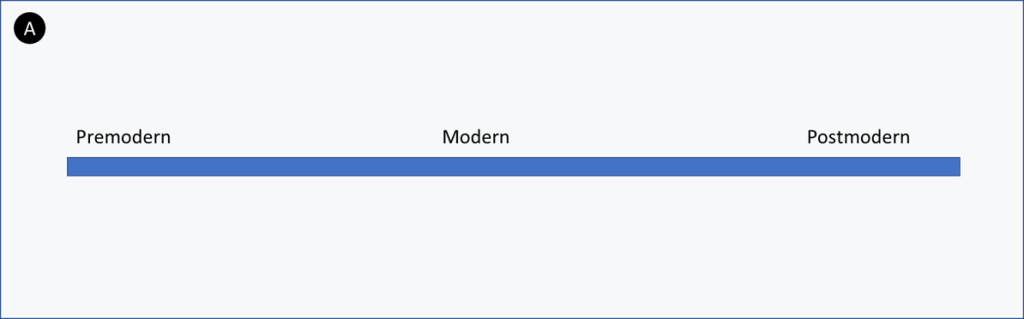
This post is meant to orient the relationship between premodern, modern, and postmodern. Image A depicts a strict linear chronology. I don’t suspect anyone views this progression where at some point Modern philosophy superseded Premodern and was itself superseded by Postmodern thought. In my own experience, this does not ring as valid, and it doesn’t feel like this will unfold in any future.
Image B is a more plausible chronology, though some might prefer a permutation where Premodern eventually fades away and where Modern fades away at another point. Again, experience doesn’t bear out this scenario.
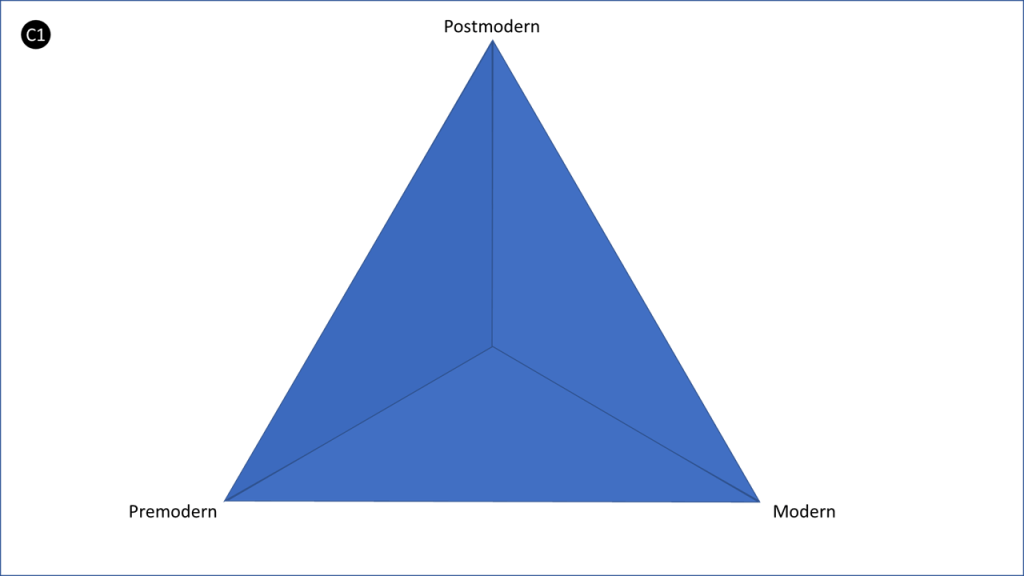
In fact, this is how I came to conceptualise the relationship as a triangle—rather a radial chart limted to three points. This is represented by image C1, where there is a triangular relationship, with each of the schools of thought represented at the angles. The placement of the labels is arbitrary. That Postmodern is rendered at the top should not suggest that it is elevated or better than the others. Neither is Modern better because it resides on the right side. The triangle doesn’t indicate and time dimension.
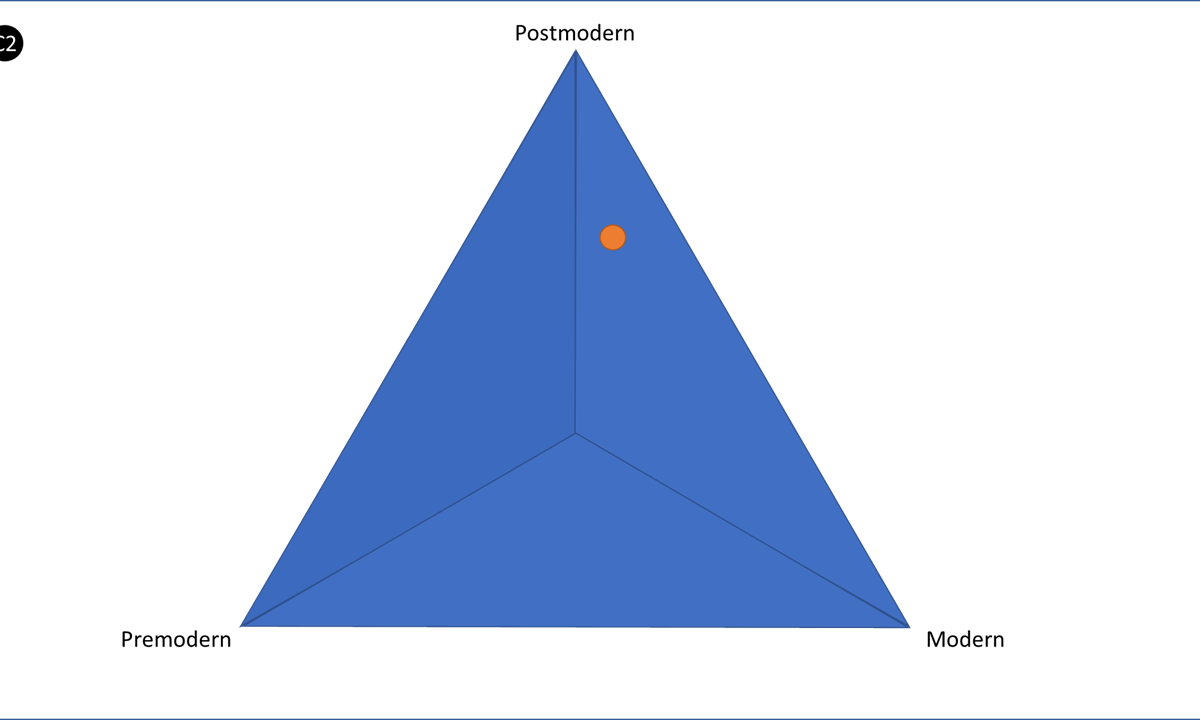
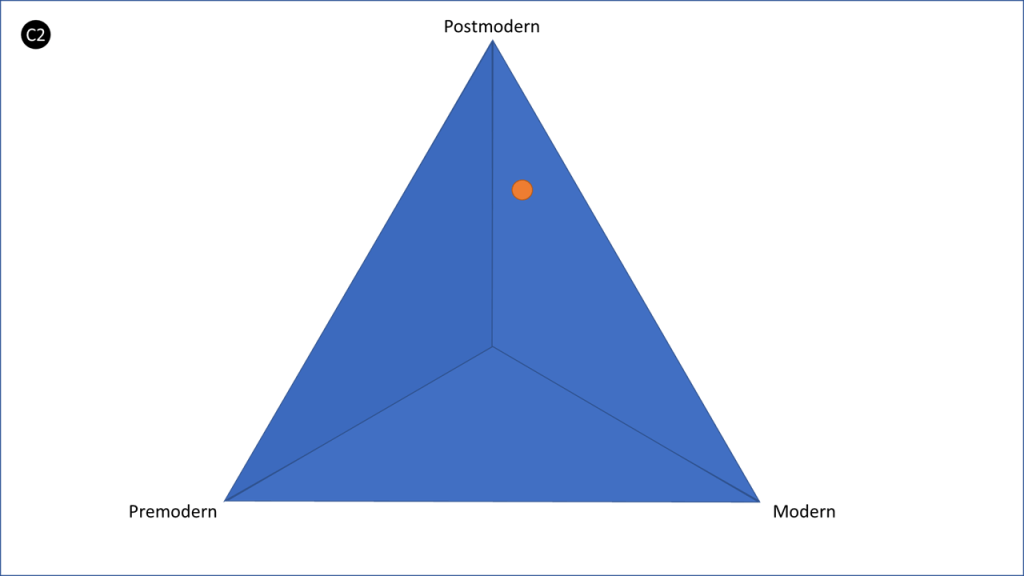
Image C2 is merely a representation of C1 with a dot to indicate placement on the plane.
Ostensibly, each angle contains dimensions and measures. I haven’t sussed out fully what these dimensions might be, but a triangle might represent individuals or aggregations of individuals. An individual or a group might place differently at different times.
Regarding the triangular plane, the concept is that an entity may hold belief sets of any or all of these worldviews simultaneously. A bit of self-reflection might place be on the orange dot in C2, though the chart is arbitrary and not to scale. No animals were harmed, and so on.
Moreover, it’s important to distinguish between the system of belief and the pragmatic life of an entity. In my case, I feel that I am intellectually a Postmodern. I have an incredulity toward metanarratives, don’t believe in objective truths, and feel that every system requires context to evaluate. This said, I am quite strategic and analytical. Also, although I’ve been called many times a Stoic and Spock from Star Trek, my emotions and cognitive biases and sense perception deficits still allow me to favour the underdog as a Social Justice Warrior.
socialism never took root in America because the poor see themselves not as an exploited proletariat but as temporarily embarrassed millionaires
— No one in particular
It’s been pointed out that many Postmoderns are simultaneously Marxists or otherwise Leftists. Personally, I feel these are simple covariances, that a Conservative has to give more weight to history and teleological arguments, thereby qualifying as a Modern, whereas a Postmodern is more likely to dismiss these are metanarrative-laden. I consider myself a Leftist, but again, this is an emotional rather than intellectual decision. As a Postmodern, intellectually speaking, I believe there is no way to determine whether Anarchosyndicalism is better or worse than Republicanism or Oligarchy, but I know how I feel about these. And without going down some political rabbit hole, it’s plain to see that many people are predictably irrational and vote against their own interests time and again as they believe some narrative where they see themselves in another position where this self-deprecation will pay off in the end. This is embodied in the meme that “socialism never took root in America because the poor see themselves not as an exploited proletariat but as temporarily embarrassed millionaires.” This is usually misattributed to John Steinbeck, but the sentiment remains—don’t tax the rich—because I am just a stone-throw away from that—if only I paid less in taxes.
Finally, there are the Premoderns. These people are not only nostalgics, but they retain superstitious beliefs, favour natural remedies, and Ayurvedic treatments. They retain religious beliefs—some even preferring pre-Judeo-Christian paradigms. And yet they may also be scientists and otherwise structured thinkers. It’s harder for me to conjure scenarios where an entity might simultaneously hold Premodern and Postmodern beliefs. Off the cuff, it seems that one might believe in some sort of cultural relativity and at the same time believe in some shamanic healing or Ayahuasca retreat for cleansing or getting in touch with the universe. I wouldn’t presume it’s that unusual for people to hold antithetical and mutually exclusive beliefs. I am not superstitious, but I carry a lucky penny or some such.
My next step in this journey is to dimensionalise the model. I already have got some ideas, many of which have already been captured here, but my familiarity with Premoderns is limited and probably contains a lot of stereotypes and caricatures.
I watched the video, What Makes us Postmodern, and its predecesor, What Makes Us Modern, and I immediately discounted any attempts to synthesise Modernism and Postmodernism in some Hegelian manner, Hegel’s approach being somewhat Modern at the start. One can pair the essential dimensions and perhaps arrive at some moderate position, but, firstly, this is a Modern perspective; secondly, Moderns are not likey to abandon their position.
There may be a resolution, but it seems that it will require a paradigm shift—a different perspective still.
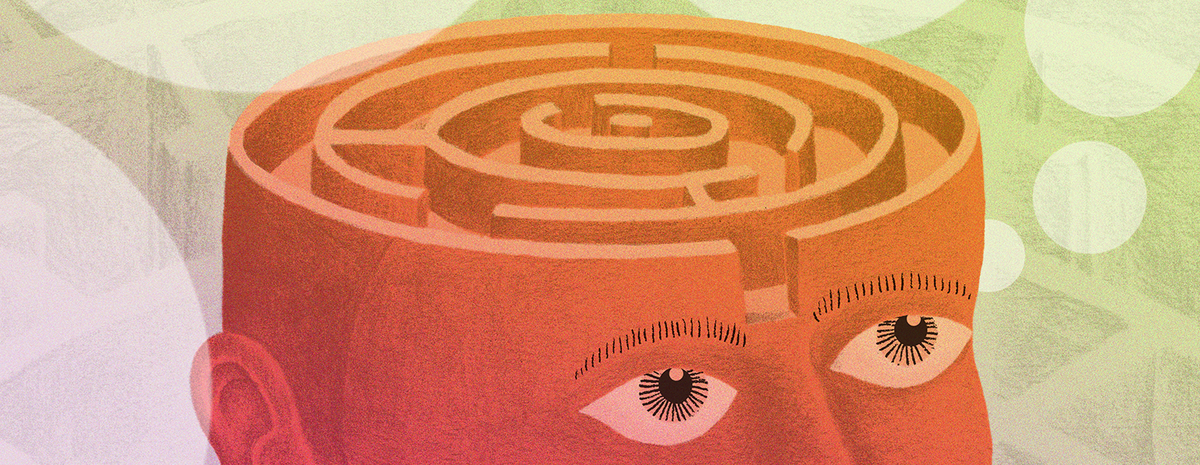
Ancient Greek mythology gives us the story of the Labyrinth. As I am not interested in analysing this from a Jungian perspective, we can safely ignore the Minotaur. The story of the labryrinth is a story for Moderns. It’s a teleological story based on the metanarrative that suggests that one can find order in disorder, if only they have the key.
As the story goes, the labyrinth is an unsolvable puzzle. However, at least one person knows how to solve it, or at least knows how to beat the system. Depending on the source version, Ariadne either assisted Theseus with a thread or jewels.
In a tl;dr version of the story, Theseus is tasked with killing the Minotaur. I’ve recently discussed his ship. Exposition informs us that the Minotaur is mortal, thus killable, but there is no escaping the maze—for reasons. However, Daedalus, the architect of the labyrinth, told Ariadne that there was one way out. If someone were to record their ingress, with say, a thread or jewels, they could then follow these to egress. Definitely not a plot device. Hansel and Gretel took this to heart and marked their ingress with breadcrumbs—or stones, depending upon which version you’re reading.
What Makes this Modern
Though the story of the labyrinth and the Minotaur comes from a pre-modern era, it remains an apt metaphor for modernity.
There is a deliberate underlying structure. In fact, it has been architected by Daedalus. This mirrors the Intelligent Design narrative favoured by Christians.
There is a definitive solution to the puzzle. The story is teleological. If one follows the plan, stays on the path, they will prevail. Go off-script, and perish.
This is a story about structure, about order, about adopting and conforming to the rules. Even though it’s also about gaming the system with cheat codes in more modern parlance. Nowadays, I’d turn off clipping and collision detection, but Ariadne didn’t know these codes. I digress.
Postmodern Reaction
This is not a story for Postmoderns because it starts with a design. For moderns, there is a design. It’s either a vestigial god or science. The belief is that everything has structure. Even if that structure is yet unknown to us. If only we had enough time, we could suss it out. Perhaps it’s past time to re-task Shakespeare’s infinite monkeys.
Reconciliation of this teleological belief is intractable. Rather, it can likely only be solved with rhetoric. Moderns love rhetoric, which explains why they have so much faith in Aristotle and classical philosophers, who still provide a foundation to much philosophy of the Moderns. It’s intractable in the same way that converting someone with some religious conviction to no longer have that conviction.
Modernism is about faith. It may have shifted from faith in gods to faith in logic and reason, science and technology, or organisation and progress. Postmodernism points out that whilst these are possible solutions, they are not the only solutions. Moreover, these have unintended consequences and create collateral damage. They also rely on a privileged perspective. Perhaps I’ll create a segment to illustrate this point using the disruption of COVID-19 as a backdrop.
In the end, Modernism relies on teleologies. The end may not be known, but we can divine a vision and lead people in that direction anyway by employing rhetorical devices. Postmodernism knows that any such narrative is fiction. A postmodern may emotionally buy into the narrative, but they never forget that it’s still fiction.
Modernism relies on order and control to maintain that order. This doesn’t mean that all Moderns are top-down authoritarians. But it does mean that they need crowd control and compliance. The United States are probably mostly Moderns. They like to claim they are individualists, but they are more typically either keeping up with the Joneses or competing with them. Most individuality is trivial at best. “I’m an individual because my BMW is purple.” Quite. And Moderns don’t like much non-compliance. They may want change, but if someone expresses this need for change through civil disobedience, the Modern may viscerally agree, but they will also rationalise that the civil disobedients should have used the admittedly broken system. Moderns like what they call progress, but they can only accept change in small doses at a slow pace, so there’s a friction.
Finally, there’s power. I am not going to rehash Nietzsche or Foucault, but this is a schism. Moderns want order and control. Power structures assist this, but then they don’t like the current actors. If only there were better actors. Nietzsche noted that the masters and the herd had different interests and moralities. Moderns know this on one level but think they can remediate this dichotomy. Because of course, they think they can bring order to everything—Second Law of Thermodynamics notwithstanding.
In the end, these schools will likely attempt to coexist. As for me, I’m a nihilist and somewhat of an existentialist. Yet, I am also a pragmatist as I still have to operate within the world I’ve been thrown into, as noted by Heidegger.