I find the notion of authenticity interesting. I believe that Heidegger was the first philosopher to promote the issue. As I have a contention with matters of identity in general, the notion of authenticity has no foundation in my eyes. As I don’t believe that the notion of identity is valid, it follows that I don’t ascribe to notions of authenticity either—the question is: authentic to what?
Essentially authenticity can be described as ‘being true to one’s own essence or true self’—whatever that might be. Heidegger presents authenticity as a response to our place in the world. An inauthentic person conforms to society and in the loses their own identity in the process to become assimilated into the society.
Carl Jung had a related concept, individuation. This is where a person strips off all of the ego and superego to get to the core of their being, to unpeel the onion, but to find a centre—and to become that true unadulterated self. This is not what Heidegger means by authentic.
To Heidegger, an authentic person remains true to themself within the constraints of society. As with Camus’ acceptance of the Absurd, Heidegger’ authenticity accepts the ‘real world’ as is it whilst retaining with awareness one’s self, even if this is more limiting than Jung’s individuation or Sartre’s freedom with no excuses.
Sartre’s vein of Existentialism contained within it the notion of authenticity. This is in common with other Continental philosophies. According to Sartre, when people hyper-constrain their identities to preclude their larger humanity, they are operating in bad faith, mauvaise foi (eidétique de la mauvaise foi). A while back, a story from an incident in 2013 was circulating on social media, where a Spanish runner, Ivan Fernandez Anaya, assisted another runner, Kenyan athlete, Abel Mutai, who errantly believed that he had already passed the finish line, so he stopped with another 10 metres to go.
The reaction was split—some praising Anaya for his humanity and other chastising him for not following the rules of the competition. These critics are guilty of mauvaise foi, of prioritising the minuscule for the larger picture. In fact, all sports do this. One might argue that all competition does this, but this is a matter of perspective. I think that Sartre’s scope was a bit narrower than this, but I believe it’s not off-point.
Evidently, I am just typing stream of consciousness, and the stream has come to an end.
I was engaged in a conversation in a Facebook Philosophy group for Pragmatists. I feel that these groups take me as adversarial because I question their system of belief. To the extent that I accept any categorical distinction, I consider myself to be a Postmodernist first and foremost and a Pragmatist second. In a similar fashion, I am at once an atheist first, but I operate as a Buddhist. I am a nihilist first, but I operate as an Existentialist. In any case, in explaining this, I hit upon an analogy that I hadn’t considered before.
everything just ‘is’
Pragmatism is Samsara. In Buddhism, there is the concept of Samsara, which contains the realms we reside in before we reach Enlightenment, the state of realising that everything just ‘is’, is , and is undifferentiated, at which case we either exit the system or remain as aware (woke anyone?) Bodhisattvas.
everything is a constructed illusion
The ‘just is’ is the postmodern condition. Nothing is as it seems and everything is a constructed illusion. There is no good, no bad, no right or wrong—not even black or white. This is all perception of difference, but there is no difference.
I am a Buddhist in the same way I am a Pragmatist. I know that this is all a cognitive construct—or constructs—, but I am still stuck in the middle of it, ‘thrown in’ (Geworfenheit) to echo Heidegger, and I attempt to make the best of it. None of it is real, but, as with people of the Matrix, I can’t perceive my way out of it.
The risk for Pragmatists is that they are empiricists. They trust that the past will ostensibly operate the same as the future. It’s been generally that way thus far, and we’ve misinterpreted how things operate in the past, but we’ve corrected this interpretation, and we’ll correct and refine these interpretations in future. That’s the employed logic. I’ve not got a better plan, so as shoddy or rickety as it might be, it’s my life raft replete with holes, but I’ll patch them as swiftly as I can and hope my history of having not encountered any sharks or tidal disruptions or undertows persists.
none of this exists
All the while, my core beliefs are that none of this exists—not in a solipsistic way, just not as we imagine it does. It’s the wall constructed of atoms and molecules that is more space than not, and yet we can’t pass through it. If only we could all be Neo and overcome this misperception.
I’ve been pondering the notion of democracy. This is not new for me. I’ve looked around and asked myself, ‘If democracy is so great, why is it not more widely adopted’. I don’t mean why don’t other countries try it? And I don’t mean to confound the issue by arguing that a republic is not a democracy, the last refuge of the desperate.
Democracy is a pathetic belief in the collective wisdom of individual ignorance.
What I wonder is why, if it’s so good, why don’t companies structure democratically? Why not the military? I’ve always found this particularly humorous: An autocratic, socialised structure defending democracy. Some of the biggest democratic flag-wavers are military and ex-military.
I know that most military members in the US would be lucky to work flipping burgers at McDonald’s. Some speak of the mental illness and homelessness of military veterans, but this misses the direction of the arrow of causation. These people had a free ride, room, and board on Uncle Sam’s dime in the States—some other denomination elsewhere. It’s really no wonder that one wouldn’t want to give these people a voice in military affairs, and yet they do get a voice in civilian affairs. It’s a good thing almost half of Americans eligible to vote don’t.
The best argument against democracy is a five-minute conversation with the average voter.
Winston Churchill
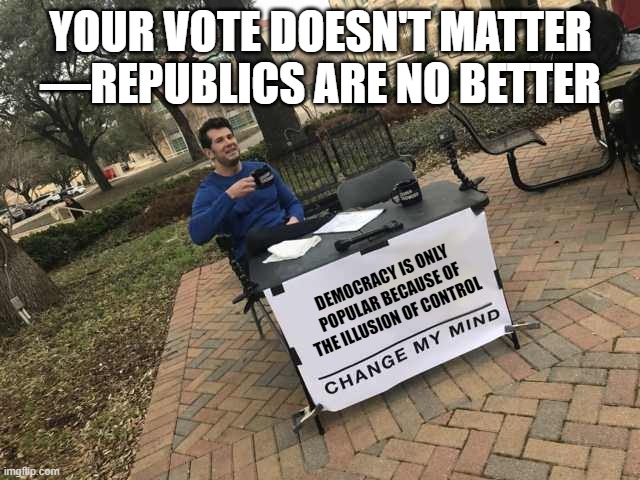
I’ve already mentioned that democracy is a sham and its best feature is the illusion of control. I suppose if I come up with something better, I might write about it. Until then, it’s just one of many mediocre options.
Interestingly, some people’s options are asinine. Frank Karsten hawking his book and ideology on Beyond Democracy thinks that downsizing is the answer. Hans-Hermann Hoppe agrees, as he posits in several essays in Democracy: The God that Failed. I don’t disagree, but his basic point seems to be that 300MM people deciding is too much, so perhaps 10MM or 20MM might work better. What’s the limit? Why not 150? How is conflict among this smaller political units adjudicated? With this downsizing, how does the system control the urge for upsizing? In the end, this feels like more Libertarian, anarcho-capitalistic mental masturbation, which as I type this feels redundant. Unfortunately, the common denominator is people, and that’s Achilles’ heel.
As part of my indictment against language and its insufficiency to facilitate precise and accurate transmission of abstract concepts, I happened upon a quote by Karl Popper:
It is impossible to speak in such a way that you cannot be misunderstood.
—Karl Popper
“However, the problem still remains: what should we do in order to make our meaning clearer, if greater clarity is needed, or to make it more precise, if greater precision is needed? In the light of my exhortation the main answer to this question is: any move to increase clarity or precision must be ad hoc or ‘piecemeal’. If because of lack of clarity a misunderstanding arises, do not try to lay new and more solid foundations on which to build a more precise ‘conceptual framework’, but reformulate your formulations ad hoc, with a view to avoiding those misunderstandings which have arisen or which you can foresee. And always remember that it is impossible to speak in such a way that you cannot be misunderstood: there will always be some who misunderstand you. If greater precision is needed, it is needed because the problem to be solved demands it. Simply try your best to solve your problems and do not try in advance to make your concepts or formulations more precise in the fond hope that this will provide you with an arsenal for future use in tackling problems which have not yet arisen.
— Unended Quest: An Intellectual Autobiography, Karl Popper
Popper’s point here is more that some people won’t understand what you are saying, which differs from my concept that some ideas just can’t be conveyed. Some people will assume their interpretation is the true meaning, but this assumption may be incorrect. Even more problematic is when different people assume to know the true meaning, yet their definitions differ materially.
Charles makes another point commenting on this quote on his Thing Finder blog.
And there will be even more who deliberately choose to misunderstand you. The man in search of truth will always be at risk from the man of conviction.
Charles Bayless, Thing Finder blog
Some if not most of this deliberate misunderstanding is captured in Upton Sinclair’s quip:
It is difficult to get a man to understand something, when his salary depends upon his not understanding it!
—Upton Sinclair
But this still doesn’t capture the point the some concepts are actually nebulous; there is nothing there there.
I’ll leave this post with a quote from Le Petite Prince:
Language is the source of misunderstandings.
—Antoine de Saint-Exupéry
Indeed, language is simultaneously expanding and limiting, but like faith in technology, faith in language may lead to an untimely end.
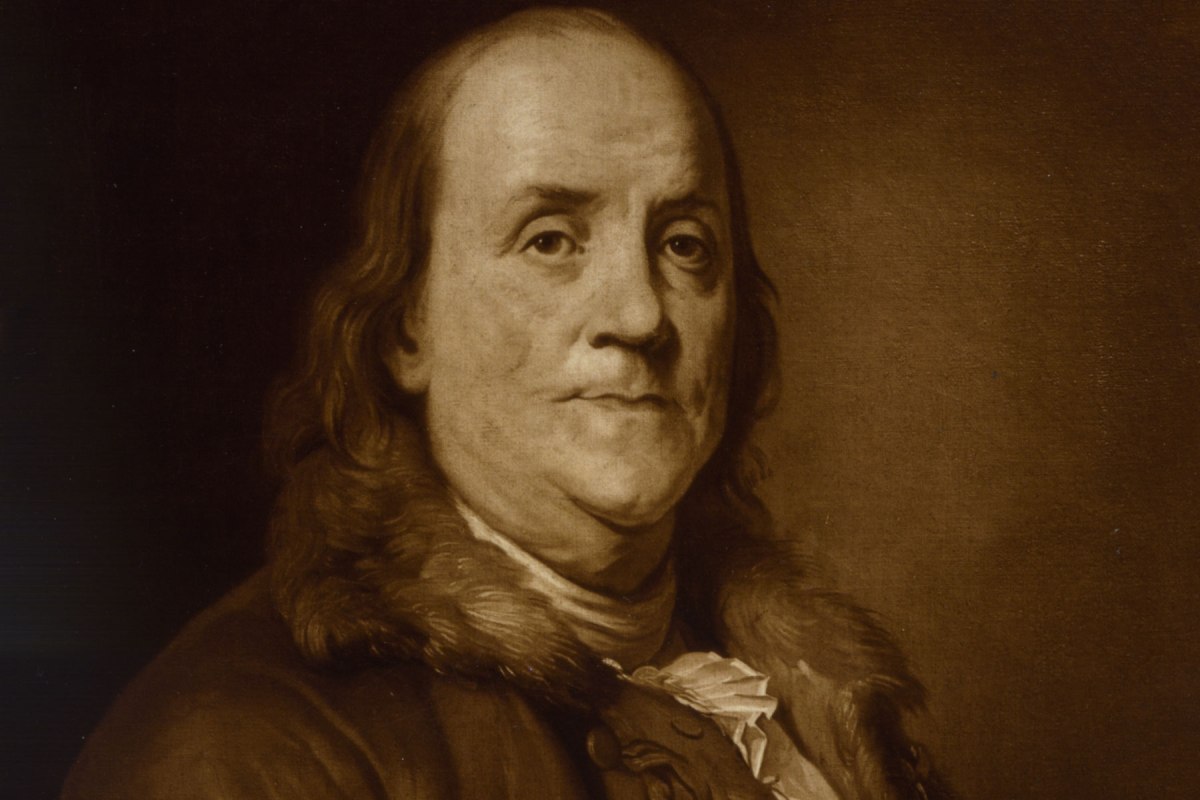
Interestingly, I started this blog exploring property, a concept that makes no sense to me, and continued on a Postmodern journey to discount rights and truth. And then Enlightenment thinking in and of itself. I think of these still, most recently turning onto the concept of Democracy. Whilst researching de Tocqueville, I happened upon this letter by Ben Franklin. What on? Property. And taxation.
Property
CHAPTER 16|Document 12
Benjamin Franklin to Robert Morris
25 Dec. 1783
Writings 9:138
The Remissness of our People in Paying Taxes is highly blameable;
the Unwillingness to pay them is still more so.
Benjamin Franklin
The Remissness of our People in Paying Taxes is highly blameable; the Unwillingness to pay them is still more so. I see, in some Resolutions of Town Meetings, a Remonstrance against giving Congress a Power to take, as they call it, the People’s Money out of their Pockets, tho’ only to pay the Interest and Principal of Debts duly contracted. They seem to mistake the Point. Money, justly due from the People, is their Creditors’ Money, and no longer the Money of the People, who, if they withold it, should be compell’d to pay by some Law.
Franklin calls out those citizens unwilling to contribute their fair share to the commonwealth.
Property superfluous to [the Conservation of the Individual and the Propagation of the Species] is the Property of the Publick
Benjamin Franklin
All Property, indeed, except the Savage’s temporary Cabin, his Bow, his Matchcoat, and other little Acquisitions, absolutely necessary for his Subsistence, seems to me to be the Creature of public Convention. Hence the Public has the Right of Regulating Descents, and all other Conveyances of Property, and even of limiting the Quantity and the Uses of it. All the Property that is necessary to a Man, for the Conservation of the Individual and the Propagation of the Species, is his natural Right, which none can justly deprive him of: But all Property superfluous to such purposes is the Property of the Publick, who, by their Laws, have created it, and who may therefore by other Laws dispose of it, whenever the Welfare of the Publick shall demand such Disposition. He that does not like civil Society on these Terms, let him retire and live among Savages. He can have no right to the benefits of Society, who will not pay his Club towards the Support of it.
Franklin is supportive of Locke’s property of ‘life, liberty, and property’ fame, but he is decidedly not a fan of passing along excess generational wealth. In fact, he feels that such excess property should accrue to the public.
To those unwilling to play by these rules, banishment to the wolves is not too good for them. Stripping them of citizenship is not too harsh a punishment.
He that does not like civil Society on these Terms, let him retire and live among Savages
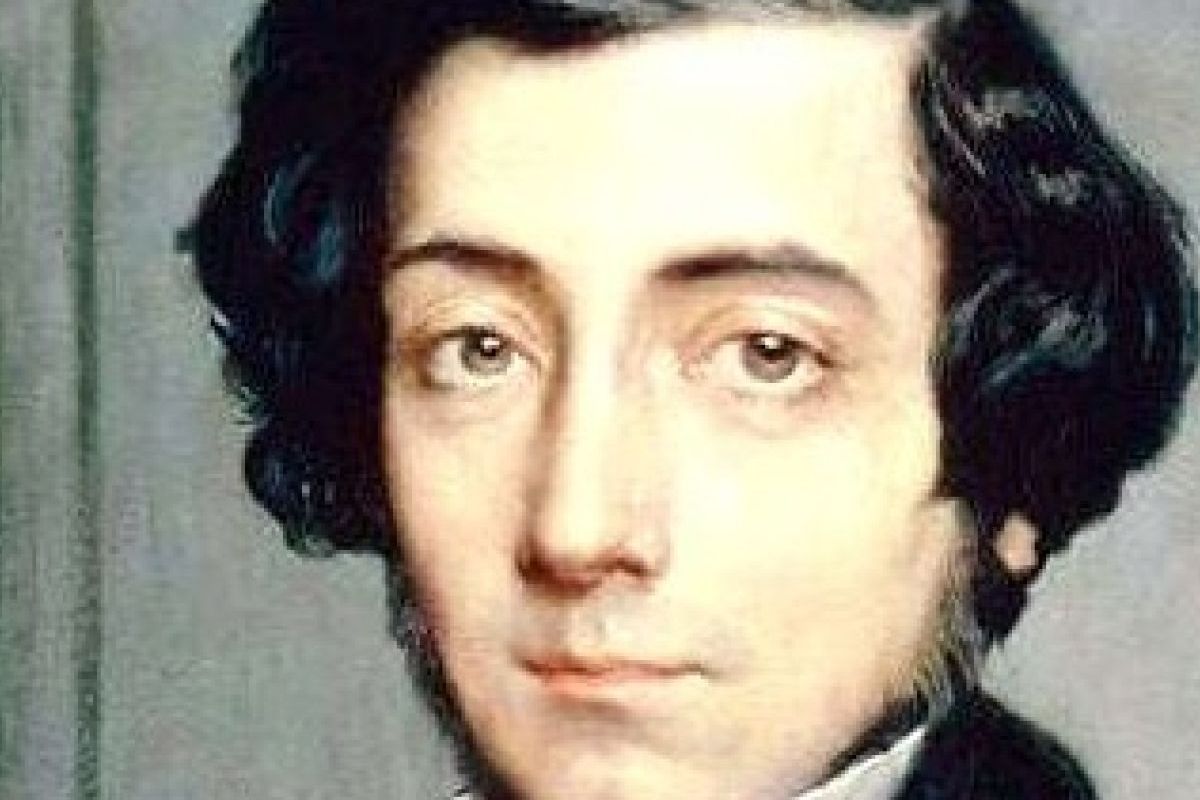
In the furtherance of my critique of Democracy, I’ve gone back to re-read de Tocqueville’s Democracy in America, an original critique, though with much promise at the time.
In the introductory chapter, de Tocqueville notes the tradeoffs democracy makes. Essentially, he recognises the mediocrity, but he senses it’s somehow worth it. I break up his paragraphs and italicise for emphasis.
I admit that, in a democratic State thus constituted, society will not be stationary; but the impulses of the social body may be regulated and directed forwards;
Here de Tocqueville presumes the metanarrative of progress and all it entails.
if there be less splendor than in the halls of an aristocracy, the contrast of misery will be less frequent also;
The middle class served this purpose, but this benefit is being eroded as the acquisitive classes have learnt how to game the system and pillage the public coffers.
the pleasures of enjoyment may be less excessive, but those of comfort will be more general;
Here he considers the masses, but he fails to distinguish them from the aristocracy, now manifest as the 1%.
the sciences may be less perfectly cultivated, but ignorance will be less common;
Literacy may be elevated under this system, perhaps owing as much to the needs of Capitalism than of Democracy. In the US, the pair are inextricable.
Here, de Tocqueville is spot on. I won’t defend science or progress, but if this is a goal, the post-truth era is testament to the need for cultivation. Science is like investing: there is a compounding effect. Failing to progress effects downstream advancements, not linearly, but geometrically.
the impetuosity of the feelings will be repressed, and the habits of the nation softened;
there will be more vices and fewer crimes.
Interesting point, but I won’t linger; vices are morality plays, and crimes are tautological—though I suppose he is hinting that the demos will consider fewer situations to qualify as crimes, and so they’ll be relinquished to the realm of vices.
In the absence of enthusiasm and of an ardent faith, great sacrifices may be obtained from the members of a commonwealth by an appeal to their understandings and their experience;
each individual will feel the same necessity for uniting with his fellow-citizens to protect his own weakness; and as he knows that if they are to assist he must coöperate, he will readily perceive that his personal interest is identified with the interest of the community.
The nation, taken as a whole, will be less brilliant, less glorious, and perhaps less strong
Alexis de Tocqueville
The nation, taken as a whole, will be less brilliant, less glorious, and perhaps less strong;
Indeed.
but the majority of the citizens will enjoy a greater degree of prosperity, and the people will remain quiet, not because it despairs of amelioration, but because it is conscious of the advantages of its condition.
Tocqueville gets partial credit for this insight.
If all the consequences of this state of things were not good or useful, society would at least have appropriated all such as were useful and good;
Tocqueville misses the mark a bit here, tripping himself up on a somewhat Utilitarian—if not Pollyanna—worldview.
and having once and for ever renounced the social advantages of aristocracy, mankind would enter into possession of all the benefits which democracy can afford.
But here it may be asked what we have adopted in the place of those institutions, those ideas, and those customs of our forefathers which we have abandoned.
The spell of royalty is broken, but it has not been succeeded by the majesty of the laws;
the people has learned to despise all authority, but fear now extorts a larger tribute of obedience than that which was formerly paid by reverence and by love.
Here de Tocqueville appears to suggest a citizenry that fears rather than reveres its government in classic Machiavellian splendour.
I perceive that we have destroyed those independent beings which were able to cope with tyranny single-handed;
the weakness of the whole community has therefore succeeded that influence of a small body of citizens, which, if it was sometimes oppressive, was often conservative.
the Government that has inherited the privileges of which families, corporations, and individuals have been deprived
Alexis de Tocqueville
but it is the Government that has inherited the privileges of which families, corporations, and individuals have been deprived;
Ever the Madisonian, de Tocqueville shows concern of the consolidation of power.
the weakness of the whole community has therefore succeeded that influence of a small body of citizens, which, if it was sometimes oppressive, was often conservative.
The division of property has lessened the distance which separated the rich from the poor;
Although there was more egality…
but it would seem that the nearer they draw to each other, the greater is their mutual hatred, and the more vehement the envy and the dread with which they resist each other’s claims to power;
…and Tocqueville was prescient here—, the enmity of the haves of the moneyed classes crashes full-force into the have nots as the fabric of separation becomes more and more threadbare, as with Samhain this weekend.
the notion of Right is alike insensible to both classes, and Force affords to both the only argument for the present, and the only guarantee for the future.
The poor man retains the prejudices of his forefathers without their faith, and their ignorance without their virtues;
he has adopted the doctrine of self-interest as the rule of his actions, without understanding the science which controls it, and his egotism is no less blind than his devotedness was formerly.
If society is tranquil, it is not because it relies upon its strength and its well-being, but because it knows its weakness and its infirmities;
a single effort may cost it its life;
everybody feels the evil, but no one has courage or energy enough to seek the cure;
Alexis de Tocqueville
everybody feels the evil, but no one has courage or energy enough to seek the cure;
the desires, the regret, the sorrows, and the joys of the time produce nothing that is visible or permanent, like the passions of old men which terminate in impotence.
I’ve been thinking a lot lately about Democracy and thinking that the emperor is wearing no clothes, but in dialogue, I am having difficulty getting people to understand that I am talking about democracy as a concept—the very essence of democracy—, not how some place or another has implemented it. My point is that democracy is a silly system built on false hope, smoke, and mirrors.
Some get it, and they fall back to the Churchill quote:
‘Many forms of Government have been tried, and will be tried in this world of sin and woe. No one pretends that democracy is perfect or all-wise. Indeed it has been said that democracy is the worst form of Government except for all those other forms that have been tried from time to time…’
—Winston S Churchill, 11 November 1947
But this misses the point.
First, Churchill’s logic is limited to ‘forms that have been tried‘, a minuscule set to be sure.
Next, perhaps he is talking a position of not letting perfection be the enemy of the good. Except there is no one seeking perfection. The question is: what is good enough? Is Democracy in and of itself good enough? And it doesn’t end there, are there systems—even theoretically—better than democracy? And then, how might these systems fair when humans populate the model?
The problem is a systems thinking optimisation problem—and then there’s the question of what democracy is attempting to optimise. Clearly, this is a multifactor model, so what outputs are being optimised? It’s not likely that this would be a steady state model, and much of this relies on an unstable preference theory, so what is optimal today might no longer be optimal tomorrow—or in ten minutes.
how does one optimise a heterogeneous model?
As anyone who follows me know, I have a problem with the notion of progress as well, so participants can vote on various definitions of progress and various initiates toward that end, and, of course, other participants would prefer the comfort zone of the nostalgic and familiar instead. So, how does one optimise a heterogeneous model?
In the business world or entertainment, we are all familiar with the concept of death by committee, the slow deliberative process that mostly yields diluted results—results that might make the participants feel that they had a voice (perhaps), but—that would be ineffectual.
I am not eschewing coöperation.
I am not eschewing coöperation. I’m of the age where the Beatles were a big influence on me—and the Rolling Stones—, so I cherish the partnerships of Lennon-McCartney and Jagger-Richards. Their solo material paled miserably. The collaboration was synergetic. But there is a reason Ringo and Charlie were not asked to participate in the song-writing process. Their inputs would not have improved the output. Even imagine listening to an album of Ringo tunes: Act Naturally, Yellow Submarine, Octopuses Garden, What Goes On, Don’t Pass Me By, and Boys? Really? Right? And he only contributed to two of these anyway, save for lending his vocal instrument.
consider the concept of diminishing marginal returns
As I continue down this stream of consciousness, I consider the concept of diminishing marginal returns. So, even if there were a democratic system that could theoretically be optimised, it would have to face the human factor—and that would be subject to the diminishing marginal return of knowledge and information—, as we’d go down the participation pool from highly knowledgeable to low-information voters. And this doesn’t even address vested interests and conflicts of interest. It doesn’t even touch on the point that people are predictably irrational.
Plato’s Republic, in all of its elitist glory, offered a solution for this—aside from the philosopher-leader: a republic of the meritorious and virtuous (as if these were meaningful or measurable concepts). At least we wouldn’t be scraping the bottom of the barrel—or would we be?
merit being honed is how to gain and exert powerand political competency
The problem with Plato’s meritocratic approach is that the merit being honed is how to gain and exert power and political competency—how to play the game of politics. And notion of virtue was nothing more than a façade, so rhetoric and the decorum of appearance is all that matters in this model.
Clearly, this stream is coming to an end, so I’ll disembark here and reembark later.
As I research notions of democracy during this election cycle, I found several flavours of order by people, a core tenet of democracy.
As it happens, most people assume ‘order by people’ to mean order by the masses or the public-at-large, but there is not such magnitude provision for democracy. Ostensibly, it’s just people ruling people.
Historically, it is used to differentiate between anarchy, monarchy, oligarchy, and so on—though to be fair, save for anarchy, all of these involve people ruling people. And even anarchy is people exercising individual sovereignty.
Democracy’s Athenian origins had citizen-people ruling in a direct democracy. The catch, is that the definition of citizen excluded the majority of people—women, slaves, persons younger than 20, and so on—, so clearly it was not intended to be all-inclusive.
Another people-oriented order is demarchy—rule by the randomly selected. No modern country has ever adopted this form of government, but it should be noted that randomness has been used as part of selecting leaders in the past. Sortition, another term for random selection, was used for a hundred years in ancient Athens to choose members of the legislative council.
To be honest, given the political climate—at least in the United States —, random selection feels like a better alternative to the current system of meritocracy [sic].
Let’s face it and be honest: Democracy is not a great system of governance. In fact, it’s as mediocre as the outcomes it generates.
Plato hated it. He preferred a Republic, but all that does is kick the can down the proverbial kerb. A mob of demos voting for self-interested politicos with the gift of gab and self-promotion.
Alexis de Tocqueville noted that Democracy requires an education populace, but that’s the least of its shortcomings, and, man, was he spot on.
Democracy is the worst form of government, except for all the others.
— Winston Churchill
Winston Churchill is to have said, “Democracy is the worst form of government, except for all the others.” Except he didn’t get out much and probably hadn’t survey all the others he demeaned. I don’t reckon he was very imaginative at the start.
Kenneth Arrow demonstrated with his Impossibility Theorem that no voting system would work even if the concept was otherwise solid, so that’s just adding insult to injury.
to what extent is democracy simply playing on the cognitive illusion of control?
Democracy sounds good on paper, but to what extent is democracy simply playing on the cognitive illusion of control? I’d imagine that the more one feels able to control outcomes (or happen to be in sync with the decided outcomes), the more favourable one feels towards it. But as much one might assume the disenfranchised to be disillusioned by it—and against all logic—, many still defend it.
The problem, is course, is people, so what are the alternatives? Besides Democracy, some people are easily enamoured by the Beneficent Dictator, but the shortcomings of that have been debated for centuries. For the most part, monarchies have run their historical course—at least as far as to demonstrate that they are not a solution either.
Some have raised Artificial Intelligence as a solution, but unless AI can unlearn the human elements, it’s not much of an improvement. It’s just faster and more efficient within a sub-optimal system. And humans are fearful of how another superior entity might treat them—especially given how poorly humans treat encountered ‘inferior’ entities.
To be fair, I don’t have an answer, but any system that outputs Vladimir Putin, Boris Johnson, or Donald Trump is in serious need of an overhaul—especially simultaneously.
* I included the Democracy Now!’s logo in this post. Democracy Now! is neither affiliated with this blog or this post. Still, I suggest you check it out.









 Philosophics