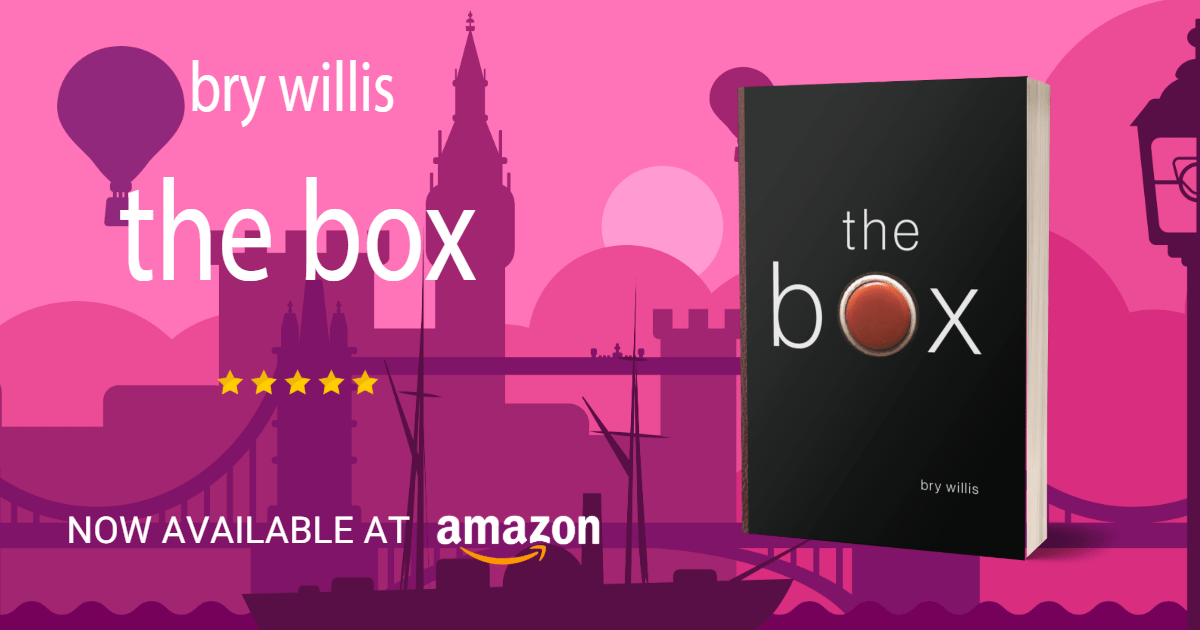
My novella, The Box, is now available. At 96 pages, it’s a short read. It’s only available in paperback. I haven’t made a Kindle or eBook version yet. I won’t publish a hardcover version, which seems like a silly format for a novella. Did I mention that an assistant might help? 🧐
Marketing
Borrowing the marketing blurb:
After his father’s death, Freddy returns to the family home in southeast London to sort through the remnants of a life reduced to tools, paperwork, and silence. In the basement workshop he finds a cedar box, apparently nothing more than a modified sauna left behind by a grieving old man who had never quite learned how to let go.
But the box is not what it seems.
What begins as an act of curiosity becomes something stranger and far more dangerous: a way of stepping into encounters with the past. Not memories exactly. Not dreams. Something more immediate, more convincing, and more unstable. As Freddy begins testing the device, first alone and then with his old friend Charles, the two men find themselves drawn back into moments shaped by loss, resentment, and regret, hoping not only to revisit what has been lost but, perhaps, to change it.
At first the stakes are intimate. A dead mother. A half-remembered grievance. A friendship warped by years of misunderstanding. But when the box appears to offer access to larger, public tragedies, grief gives way to obsession, and the question is no longer whether the past can be reached, but what it means to interfere with it at all.
Set in ordinary rooms, pubs, offices, corridors, and basements, The Box is a literary speculative novella about mourning, fathers and sons, memory, and the human need to believe that what is gone might still be recovered.
Quietly uncanny and emotionally precise, it asks what we are really seeking when we turn back toward the past: truth, forgiveness, or simply another version of the story we can bear to live with.
Philosophy
Following the advice of a publisher, I wanted to share the core ideas of The Architecture of Encounter as fiction. He told me that, for the most part, no one reads nonfiction. I suggested that, from what I’ve read, reading itself is a dying breed. Moreover, novellas don’t sell well – write a novel.
Sell or not, I wasn’t about to contrive a novel, and I feel the tide is turning. People can’t justify the time to read long novels anymore. In a time of TikTok, more than 30 seconds of engagement is a bit much to ask from an audience. But not all audiences are entranced by the likes of TikTok – and especially certain genres, like philosophy, as if philosophy were a genre.
Philosophically, it’s an enquiry into the nature of time and memory, but through the lens of The Architecture of Encounter. Sure, you won’t get the entire story or the nuance, but the core message provides the answer to the mystery – of sorts.
Meantime, I’m trying to finalise my monograph, The Architecture of Willing – and yes, I admit I may need to consider another naming convention, The Architecture of Naming. Just not today.
 Philosophics