Lessons from Keats on the Art of Self-Creation
I don’t believe in the notions of ‘self’ or identities, but it makes for a nice thought experiment.
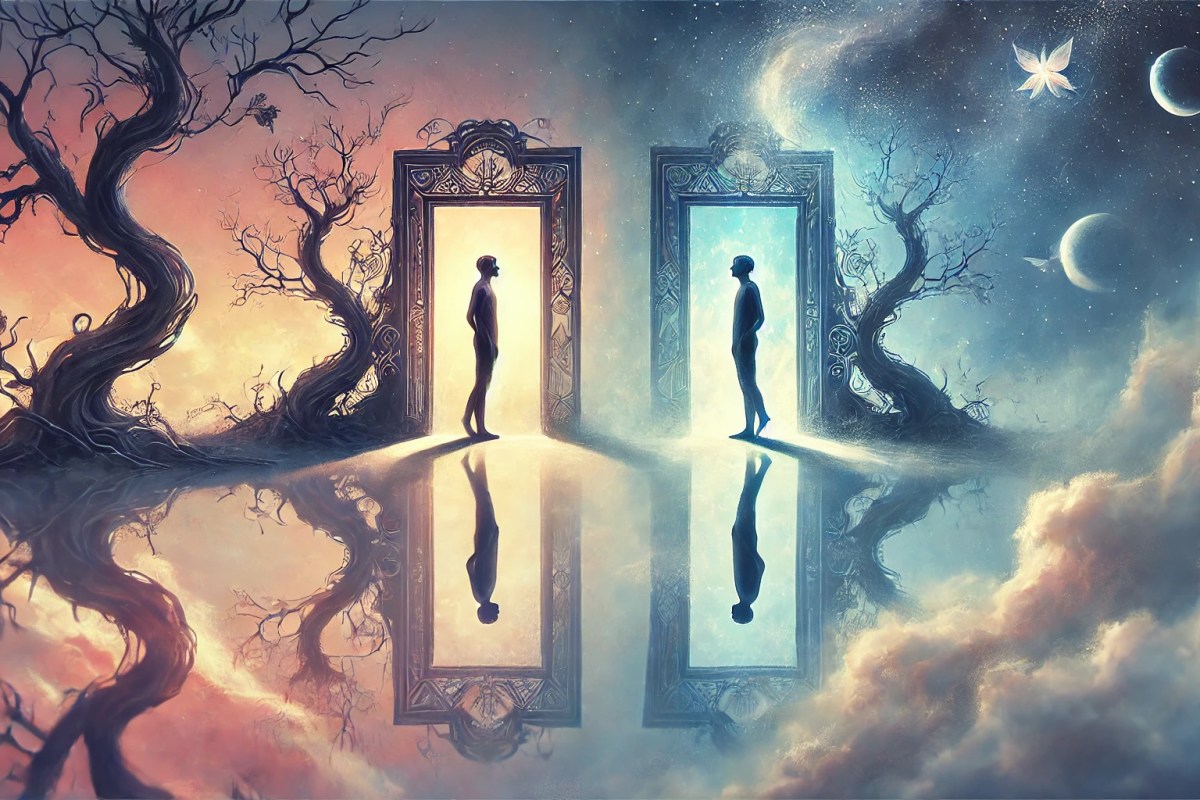
Imagine, just for a moment, that somewhere on this planet, there is someone who is your opposite in every conceivable way. They live as you do not. If you are kind, they are cruel. If you revel in the thrill of running through a rainstorm, they are the kind who sit comfortably by the fire, dreading the mere thought of a brisk step outdoors. If you drink to toast life’s joys, they abstain, unwilling to let a drop pass their lips. They are your anti-self—an inversion of who you are, lacking everything that you have and yet possessing everything that you do not.
To truly grow, we must encounter the other
As strange as it seems, this image is more than idle speculation. According to the Romantic poet John Keats, holding such an image of your anti-self is an essential part of the process of creating your own identity. The elusive art of true self-creation lies, paradoxically, in our capacity to hold in our minds those lives and feelings that are utterly different from our own. To truly grow, we must encounter the other—whether that other is someone we know or a shadowy, imagined version of who we could have been if only we’d chosen differently. This exercise is more than an intellectual indulgence; it is at the core of what Keats called ‘soul-making.’
Keats believed in the concept of the ‘chameleon poet’—the idea that writers, and indeed all human beings, must cultivate the ability to lose themselves in the perspectives of others. It is not enough to gaze upon the world through the singular lens of our own experience; to truly create, we must dissolve our egos and embrace a kaleidoscope of possibilities. A woman might explore the life of a soldier, writing deeply about a battle she’s never fought. A contented parent might dare to delve into the unimaginable grief of losing a child. Fiction writers, poets, artists—they all do this: they shed their own skin, assume another’s, and, in doing so, broaden the horizons of their own soul.
But Keats’ lesson here isn’t limited to the domain of poets and storytellers; it’s a practice that should extend to all of us. In what he evocatively called ‘the vale of soul-making,’ Keats posited that life offers each of us the raw materials to forge a soul, but we must engage imaginatively with all the lives we might lead, all the people we could be. We must dare to envision every possible road before us, not as a commitment but as an act of creation—enriching ourselves with the essence of each path before deciding which one we wish to tread.
We must set ablaze all our imagined lives just to make room for the one we decide to live.
And therein lies the heartbreak of it all. When we choose one possible life, we necessarily burn the others. In the very act of committing, we close other doors. We must set ablaze all our imagined lives just to make room for the one we decide to live. This thought is thrilling but also terrifying. Unlike a poet, who can glide into and out of fictional worlds, we must choose where we stand and stay there. We are not chameleons. We cannot flit endlessly between possibilities. We cannot write a library of books. We must write the one, and we must write it well.
Keats understood that the art of imagining one’s anti-self wasn’t about living vicariously forever in a land of could-have-beens. The exercise is in acknowledging these spectres of other lives, learning from them, and then committing, knowing full well what is lost in the process. Self-creation means being both the builder of one’s house and the one who tears down all the others, brick by potential brick. It means knowing who you could have been and yet, resolutely stepping into who you choose to be.
Embrace the anti-self
In a world obsessed with keeping every option open, Keats offers us the wisdom of finality. Burn off your possible lives and focus on writing the best version of the one that remains. Embrace the anti-self, learn from it, and commit once you have glimpsed all the possible worlds you might inhabit.
That is the paradoxical art of soul-making—of becoming whole while knowing you could have been anyone else. The beauty lies in the commitment, not in the drifting dream of endless potentiality. There is a deep satisfaction in choosing, in writing your own story, in saying, ‘This is who I am,’ even though you could have been another. And for that, we have John Keats to thank, the poet who understood that our anti-selves are not merely an idle game of imagination but the fuel for becoming fully human—the forge in which the soul is made.
 Philosophics