
Every American knows that George Washington cannot tell a lie, so he confesses to chopping down a cherry tree. Much of American (and pretty much any) history is rife with lies. Sure, some myths, fables, and legends contain some kernel of truth, but they’re ostensibly propaganda and lies. But what is it about humans and lying? Moreover, if you don’t lie appropriately, you’re marginalised.
‘Yes, those jeans do make you look fat. To be honest, they don’t have much of a chance of doing otherwise.’
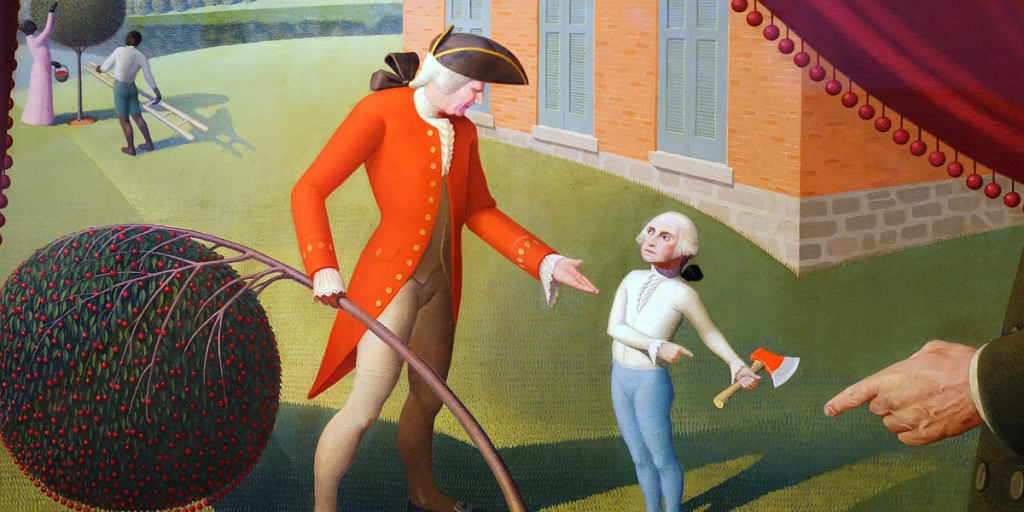
Why Honesty Gets You Shunned
Ah, truth. That elusive, glittering ideal we claim to cherish above all else. The thing we teach our children to uphold, weave into our national anthems, and plaster across inspirational posters. Yet, scratch the surface of human interaction, and you’ll find a murky, convoluted relationship with truth—one that oscillates between romantic obsession and outright disdain. If truth were a person, it would be the friend we invite to parties but spend the whole night avoiding.
we don’t just tolerate lying; we expect it
It’s not just that we lie—we excel at it. We lie casually, reflexively, like it’s part of our evolutionary DNA. And here’s the kicker: we don’t just tolerate lying; we expect it. Worse still, they are promptly shunned when someone dares to buck the trend and embrace honesty—unapologetically refusing to engage in the ritualistic deception that greases the wheels of society. It’s a paradox so rich it deserves its own soap opera.
Lying: The Social Glue That Binds Us
lying is essential to civilisation
Let’s start with the uncomfortable truth: lying is essential to civilisation. Yes, the thing your kindergarten teacher told you was bad is the same thing that keeps society from collapsing into chaos. Without lies, polite society would implode under the weight of raw honesty.
- The Politeness Lie: “Do these trousers make me look fat?” Imagine answering this question truthfully. You’d be ostracised by lunchtime.
- The Collective Myth: From national pride to religious dogma, our shared lies—”We’re the greatest country on Earth!” or “Our side never starts wars!”—are the glue that holds nations, ideologies, and social hierarchies together.
Without these lies, the façade crumbles, and we’re left staring into the abyss of our inadequacies. Lies make the unbearable palatable. They provide comfort where truth would leave only discomfort and despair.
The Paradox of the Honest Outsider
Now here’s where it gets juicy: we claim to value honesty, yet we loathe the honest person. The unapologetic truth-teller is viewed not as virtuous but as insufferable. Why? Because they threaten the delicate equilibrium of our collective deceptions.
- Social Disruption: Truth-tellers force us to confront realities we’d rather ignore. Like that co-worker who insists the team-building exercises are pointless, they upset the carefully curated fiction we’ve all agreed to believe.
- Untrustworthy Honesty: Ironically, we often trust liars more than truth-tellers. The liar plays by the unspoken rules of the game, while the honest person seems unpredictable and even dangerous.

Lies as Power Plays
From a Foucauldian perspective (because who doesn’t love a bit of Foucault?), lies are more than social lubricants—they are tools of power. Governments lie to maintain control, institutions lie to justify their existence, and individuals lie to navigate these systems without losing their minds.
Honesty is a destabilising force. It’s a rebellion against the status quo.
But honesty? Honesty is a destabilising force. It’s a rebellion against the status quo. Those who reject lies challenge the structures of power that depend on them. This is why whistleblowers, truth-tellers, and sceptics are often ostracised. They expose the game, and in doing so, they risk collapsing the entire house of cards.
Cognitive Dissonance and Escalating Commitment
The real kicker is how we defend these lies. Once we’ve told or accepted a lie, we become invested in it. The psychological discomfort of admitting we’ve been duped—cognitive dissonance—leads us to double down.
- Escalating Commitment: From minor fibs (“I’ll just hit snooze once”) to societal delusions (“This war is for freedom”), we defend lies because admitting the truth feels like self-destruction.
Meanwhile, the honest person, standing on the sidelines of this elaborate charade, becomes a threat. Their refusal to participate makes them a mirror, reflecting the absurdity of our commitment to the lie. And we hate them for it.
The Ostracism of Honesty
Shunning the truth-teller isn’t just a quirk of human behaviour—it’s a survival mechanism. Lies are the foundation of the social contract. Refusing to lie or to accept lies is tantamount to breaking that contract.
- The Group Protects Itself: Honest individuals are scapegoated to preserve cohesion. They’re labelled as rude, arrogant, or untrustworthy to justify their exclusion.
- The Emotional Toll: Truth-tellers aren’t just rejected—they’re actively punished. This social cost ensures that most people choose compliance over honesty.
Is There Hope for Honesty?
lies may be the glue that binds us…
So, where does this leave us? Are we doomed to live in a world where lies are rewarded and honesty is punished? Not necessarily. Here’s the silver lining: lies may be the glue that binds us, but truth is the solvent that cleanses.
- Building Bridges: Truth-tellers who approach honesty with empathy—rather than confrontation—can foster change without alienating others.
- Cultural Shifts: Societal norms around lying are not fixed. Movements like radical transparency in organisations or calls for accountability in politics show that change is possible.
The challenge is navigating the paradox: to live truthfully in a world that prizes deception without becoming a martyr for the cause.
Conclusion: The Truth Hurts, But Lies Hurt More
Our love-hate relationship with truth is as old as humanity itself. Lies comfort us, unite us, and shield us from the harshness of reality—but they also entrap us. The truth-teller, though ostracised, holds a mirror to our collective delusions, forcing us to confront the uncomfortable question: what kind of world do we want to live in?
For now, it seems, we’d rather lie than answer honestly.
References
- Ariely, D. (2012). The Honest Truth About Dishonesty: How We Lie to Everyone—Especially Ourselves. Harper.
- Explores everyday lies, self-deception, and the psychological mechanisms behind dishonesty.
- Raden, A. (2021). The Truth About Lies: The Illusion of Honesty and the Evolution of Deceit. St. Martin’s Press.
- Examines the evolutionary and cultural roots of deception and its role in shaping human behaviour.
- Foucault, M. (1977). Discipline and Punish: The Birth of the Prison. Vintage Books.
- A foundational text for understanding power dynamics, including how truth and lies are used to control and normalise behaviour.
- Foucault, M. (1980). Power/Knowledge: Selected Interviews and Other Writings, 1972–1977. Pantheon Books.
- Delves into the relationship between power and the production of truth in society.
- Bok, S. (1999). Lying: Moral Choice in Public and Private Life. Vintage Books.
- A comprehensive analysis of the ethical dimensions of lying and its societal implications.
- Smith, D. L. (2004). Why We Lie: The Evolutionary Roots of Deception and the Unconscious Mind. St. Martin’s Press.
- Explores how deception is hardwired into the human psyche and its evolutionary advantages.
- Orwell, G. (1946). Politics and the English Language. Horizon.
- A classic essay on how language—including lies—is used as a tool of manipulation in politics.
- Arendt, H. (1972). Crises of the Republic. Harcourt Brace Jovanovich.
- Particularly the essay “Lying in Politics,” which critiques the use of deception in public affairs.
- Trivers, R. (2011). The Folly of Fools: The Logic of Deceit and Self-Deception in Human Life. Basic Books.
- Examines self-deception and its evolutionary benefits, shedding light on how lies operate at individual and societal levels.
- Nietzsche, F. (1873). On Truth and Lie in an Extra-Moral Sense (translated in Philosophy and Truth, 1979). Harper & Row.
- A philosophical exploration of truth as a construct and the utility of lies.
 Philosophics