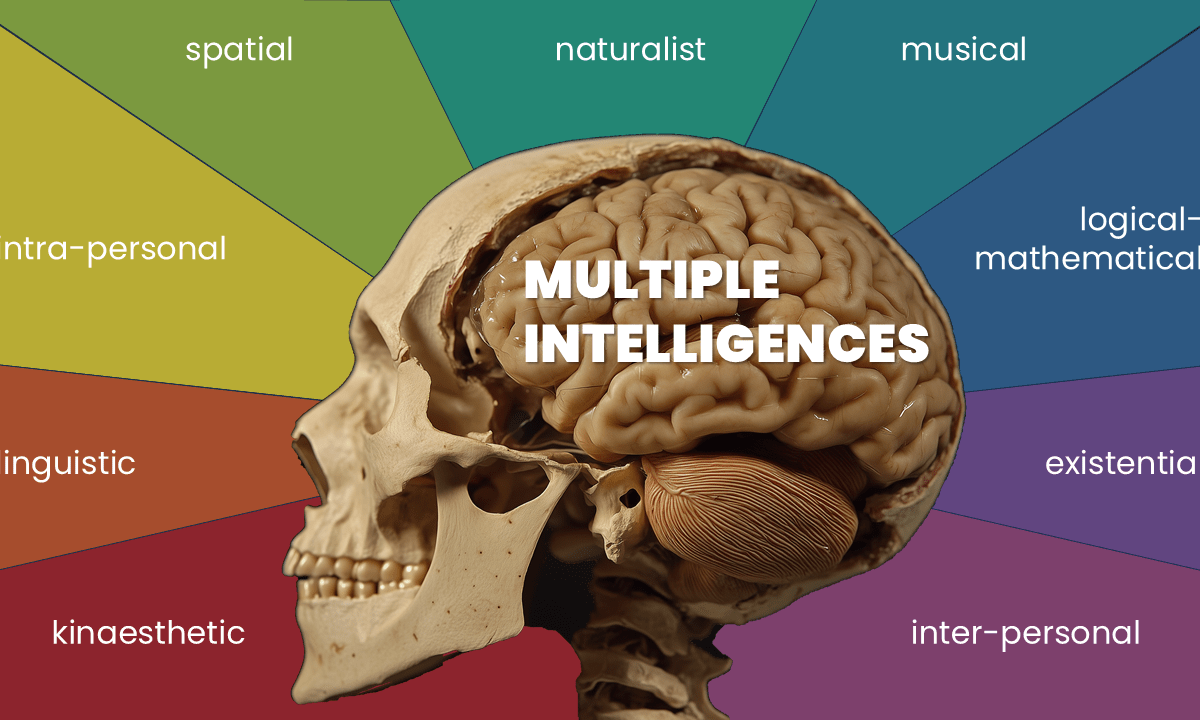
I engaged in a nice debate recently. Someone suggested that because some executives are smart, they can figure things out. Specifically, she posited that a CTO, Chief Technology Officer, should understand communication and diplomatic skills when interacting with a corporate board because they have the technical skills to get into their current C-level position. I disagreed based on the multiple intelligence theory.
Howard Gardner’s Multiple Intelligences theory posits that intelligence isn’t a monolith, but rather a nine-dimensional construct:
1. Existential (philosophical pondering; questioning the questions of why we live and why we die)
2. Inter-personal (reading people; sensing people’s feelings and motives)
3. Intra-personal (self-awareness; understanding yourself, what you feel, and what you want)
4. Kinaesthetic (mind-body coordination; coordinating your mind with your body)
5. Linguistic (wordsmithing; finding the right word(s) to express what you mean)
6. Logical-Mathematical (quantifying and proving; quantifying things, making hypotheses, and proving them)
7. Musical (discerning sounds; their pitch, tone, rhythm, and timbre)
8. Naturalist (understanding nature; understanding living things and reading nature)
9. Spatial (3D/4D visualisation)
For a deep dive, check out Gardner’s Frames of Mind: The Theory of Multiple Intelligences.

Here’s the rub: a CTO with off-the-charts technical skills might be rubbish at diplomacy (interpersonal) or communication (linguistic). It’s like expecting every pro athlete to be a concert pianist – it’s not on.
Assuming every “intelligent” person can max out all intelligence dimensions is bollocks. It’s as likely as training every smart CTO to be the next Shakespeare or Machiavelli. Language and diplomacy are distinct skills, mate.
While we all love a Renaissance man (or woman), peaking in all these dimensions in one lifetime is a pipe dream. It’s not inherently bad, though. When building teams – be it a corporate board or an exploration party – ensure you’ve got a good mix of skills. I’m not saying you need a bard, a philosopher, and LeBron James on every team, but make sure you’ve covered the bases necessary for success.
If you think you don’t need a particular dimension, ask yourself: is it because you’re weak in that area and can’t see its importance? Don’t let your blind spots become your downfall.
In the end, it’s about recognising and respecting diverse intelligences. So, next time you’re tempted to think your brilliant CTO should just “learn to be diplomatic”, remember: they might be better off focusing on their strengths and leaving the smooth talking to someone else on the team.
 Philosophics