The Rhetoric of Foucault

OK, so this isn’t at all about Foucault’s rhetoric. My main riff this year is the assertion that there is no Truth, only rhetoric—or should I rather say Rhetoric. I created a Reddit post asking for references to other philosophers (or whomever) who had made a similar claim, to which I was offered Vico and Rorty. Unfortunately, there were only two responders, and their assistance was superficial.

What I did encounter by one of the responders was a criticism similar to that levelled at Foucault, hence the inspired title of this post. This critique at its essence is that having proposed no positive solutions to the issues I point to, I cannot defend my position. In fact, as with Habermas‘ fault with Foucault, evidently, I have disarmed myself.

I find this line of argumentation weak tea at best. To argue that one has no claim to declare something incorrect if they don’t have a correct replacement for it is absurd. For example, I don’t know what 13,297 á 1,492 equals arithmetically; but I can assert with confidence that it does not equal 2. Moreover, to criticise, one doesn’t need the ‘ability to generate positive alternatives’.

“There is no truth but rhetoric.”

So when I say there is no Truth but rhetoric (for non-ontic concepts), I am making a Truth statement. As such, this assertion—by my own admission—is only as strong as the rhetoric I can muster to its defence. Alas, my defences are weak, and so the argument fails. Were I to make a stronger argument—a more convincing argument—, it might be accepted as Truth.

Evidently, my first mistake was to separate ontic and non-ontic, which is to say things existing apart from their given names and those whose existence is entirely fabricated. An ontic thing might be a stone, a tree, a planet, a star, or the sensation of pain. These things exist even without language, a label, or an observer. As Saussure and other structuralists have noted, in semiotics, there is the signified (or referent) and the signifier—the object and the identifier. In the context of language, these are tautological.

There_is_no_Spoon[1]
There is no spoon.
Non-ontic things are conceptual, freedom, truth,  justice, rights, gods, and so on. I may opt to replace non-ontic with language-contextual or some such to sidestep the taxonomical quagmire. Or perhaps I’ll adopt the dichotomy of concrete versus abstract. These concepts do not exist outside of language. They are wholly constructed in a complex system created by humans—and humans whilst humans have done OK with complicated systems, they have an abysmal track record when it comes to complex systems. By analogue to the physics of solids, there is more space than atoms, and the atoms and their constituent particles are in constant motion—zero-degrees Kelvin, be damned. Our senses perceive something to be there, but as in that scene in The Matrix, ‘there is no spoon‘.

In my mind, leveraging Saussure’s ideas are useful to depict the differences in the concrete versus the abstract.

1bb[1]

The famous painting depicted above illustrates explains the difference between a signifier and a referent. In this image, there is only the signifier. Magritte makes clear the distinction with the text, Ceci, n’est pas une pipe: This is not a pipe. It is merely a depiction of one. To be even more arcane, the image is a signifier to another signifier that in turn refers to the referent.

A sign is the device that encapsulates the concept. It may be visual—an icon (an illustration of photograph) or a written word or even Braille—or it can be spoken or signed, as with American Sign Language. These are all signs.

cat sign

Notice when one considers a sign that a concrete cat (or in French, chat), it is pretty clear to what one is referring. Above the line, we see the signified, the idea conveyed by the sign. This doesn’t mean that everyone sees the silhouette depicted above, but it is a catlike thing, a feline animal, a mammal, normally with four legs and a tail. Perhaps you are thinking of a particular cat. But to someone with a grasp of the language in which you are communicating, when you say cat, there is little room for ambiguity. In fact, if you are trying to teach someone a different language, say, French, you could show them the cat with the chat signifier, and they would grasp your meaning almost instantaneously.

All language is arbitrary and socially constructed, so there is no connection between the words—say, the spelling or shape of a word—and its referent. The words cat and chat do not look like cats.

There are concrete things that cannot be so readily translated into an icon; for example, the wind. However, one could fairly quickly be able to articulate or gesticulate, as the case might be, the notion of wind. The same cannot be said for the abstract concept of justice.

As I’ve mentioned before, justice, especially one of the restorative or retributive varieties, is a euphemism for vengeance. The distinction is supposed to be found in the intent, but intent cannot be known; it can only be inferred. And, speaking of Foucault, justice can only be delivered from a power position.

But the notion of justice relies heavily on social construct; it has geo-spacial dependencies. What is considered to be just in ancient times may not be considered just now. What is considered just in one country might not be considered to be just in another. And this is more than a difference in instantiation. It is due to the arbitrary if not capricious articulation of a nebulous concept.

Returning to Foucault, (Christian apologist) Nancy Pearcey declares his stance paradoxical: “[when someone] states that it is impossible to attain objectivity, is that an objective statement? The theory undercuts its own claims.”

First, Pearcey merely asks a question about objectivity, but it doesn’t matter. The answer is: this may as well be an objective statement, but it’s just another language game. Wittgenstein (and Russell and Heidegger and Rorty…) was on the right path when he pointed out that the ambiguity inherent in language provide cover for all sorts of mischief. I’m only pretty sure that Derrida might yield paydirt as well. Besides, let’s pretend for a moment that there exists some objective truth, there is no reason (language game; except in accepting the broadest definition, reason is a capability elusive to many if not most humans) to expect that this truth is either accessible or verifiable anyway. The best one can do is to pose a more convincing rhetorical argument.

Reason /ˈrēzən/ (noun)
the power of the mind to think, understand, and form judgments by a process of logic

A similar critique has been advanced by (another Christian apologist) Diana Taylor, and by Nancy Fraser who argues that “Foucault’s critique encompasses traditional moral systems, he denies himself recourse to concepts such as ‘freedom’ and ‘justice’, and therefore lacks the ability to generate positive alternatives.”

So whilst I’ve just managed to stream-of-consciousness my contention, I am not in a position to resolve anything. For now, I’ll settle for documenting my position as I continue to search for other supporters and formulate a more cogent response, a more robust rhetorical presentment.

If anyone can direct me to resources relevant to my position, let me know in the comments. I’ll appreciate it. If you don’t agree—which would be expected, as this is the accepted orthodoxy—feel free to comment as well. 
 

There Are No Accidents

There are no accidents, or so claimed Carl Jung in his work on synchronicity, positing that events may be connected causally or by meaning. Some people see this as the work of some karmic force whilst others use it to suggest that a person is being passive-aggressive.

Karma

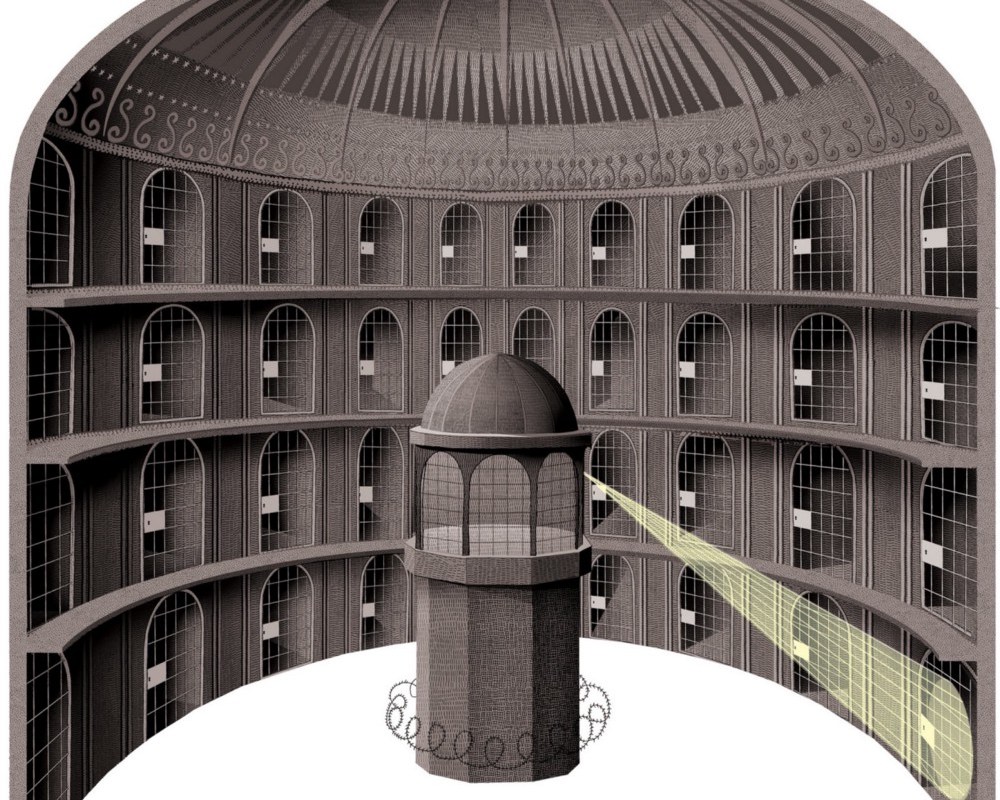
In the karmic sense, this means that there is no escaping fate, and, as with Santa Claus, he is constantly watching you, like some personified panopticon. See the short post on karma, too.

I’m not sure if the bible story of Judas and Jesus is really a karmic anecdote, but under this paradigm, everything is a no-fault situation. Judas was fated to betray Jesus. And despite this lack of responsibility, Judas still committed suicide once he realised what he had done and despite it not being an accident.

Passive-Aggression

In the passive-aggressive sense, it is to say the event A may be caused by something in person B’s unconscious mind—and not by some collective consciousness or a Universal Overseer. So, secretly, if Person B accidentally backed into your parked car, it may not be by some conscious volition; rather, it’s because or some deep-seated anger or other ill-will harboured and directed for you.

The problem is that if you accept that there are no accidents, then you—intentionally or otherwise—parked your car in a place where it would necessarily be hit by someone—by anyone. It just happened to be this other person for whom there are also no accidents. So, both parties are blameless. But people love to blame, and they like to defer responsibility.

Verdict

The bottom line is that both of these concepts are a bit sketchy. In a world of no free will, the karma situation might be plausible, but this wreaks havoc on moral-ethical systems. I discuss that in most post on karma.

…and Justice for All

1–2 minutes

I’ve been out of sorts as of late, too busy to be contributing to this blog. Abstract philosophy, as Geuss notes, is a field for the comfortably idle. I’ve been in the midst of a divorce, and it’s not that I don’t think about the abstract, but my focus is pulled toward the mundane. The US court system comes to mind. I’ve already served on several juries, so I understand how pathetically that side is structured; I’ve been of the claimant/petitioner side and the defence side, and now I am a respondent. I’ve never been an attorney or barrister, nor have I been a judge, but I’ve known some of each, and it’s really a blind faith they have in the system—as well as a paycheque (let’s be honest here)—that keeps them going. As Upton Sinclair once noted, ‘It is difficult to get a man to understand something when his salary depends upon his not understanding it’. Between this and escalating commitment, this poor excuse for a system is going nowhere fast.

“It is difficult to get a man to understand something when his salary depends upon his not understanding it.” — Upton Sinclair

I don’t even believe there is such thing as Justice, let alone some ability to systematise it. As I mentioned in my last post, the system is constructed to prioritise consistency over outcome and favour deontology over consequentialism with just a smidgen of virtue ethics for good measure, but it’s all still just smoke…… and mirrors. It’s theatre—procedure for procedure’s sake. I guess that Foucault may have been right about the Power bit, but there’s more nuance than that.

Meantime, I am trapped in this flawed system trying to navigate between Scylla and Charybdis. If I’m not out by the end of the month, come in to rescue me.

—Decidedly not a fan.

Good Riddance 2017

I can’t wait for 2018 to rear its ugly head.

Entering 2017, my primary interest was the validity of property rights. This devolved into an enquiry on rights more generally and then moved out of the realm of political philosophy into the domain of philosophy.

On the journey, I decided to self-identify as a subjectivist, entrenching from a mere relativistic position. This led me into the sphere of normative ethics, bringing me back into the realm of political philosophy. I realise that at some level we need a pragmatic philosophy to operate as a society—presuming that one feels that society is a desirable goal. It is for me. But I feel that the normative moral offerings are all weak tea.


freeimage-1455164-web
Weak Tea


I also realise that I think (read: process information) like a (stereotypical) female, thinking in terms of relationships rather the more male dominant deontology. Where my female accord differs is that I don’t buy whole hog into the Consequentialistic worldview.  Also, I haven’t experienced reality from a female point of view. Vive la difference.

So what’s up for 2018?

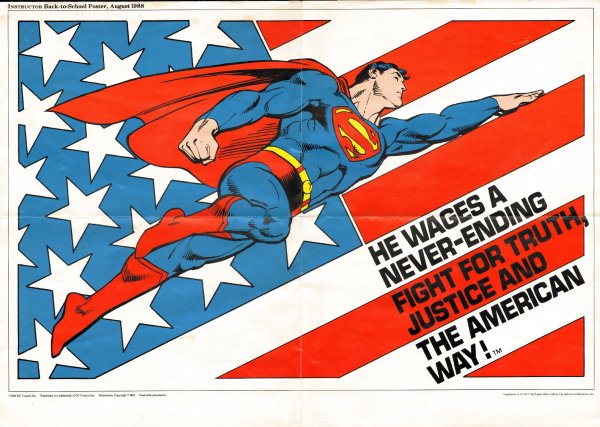
For now, I am going to continue to try to make sense of political philosophical positions. At the moment, I am pretty much a social constructivist, so I’ll see where this leads. Post-modernists (or post-structuralists, if you prefer) are under fire these days and have been for a while now. It’s not that I don’t understand or sympathise with the position of people who buy into thinking that we need to accept some normative morality. In fact, I have sympathised with Nietzsche’s quandary from the getgo.  I just don’t believe that a political worldview can be structured on a single tenet, whether God or country—Truth, Justice, and the American Way.

For_truth,_justice_and_the_American_way!!!!

On the topic of identity, I’ve always wondered how Superman decided to view himself as American. I also wonder if he is referring to the United States of America or of the larger continents. Given the backlash over immigrants and aliens, I have to wonder how nationalists react to this interloper.

Anyway, I am going to research other post-modernist thinkers as well as to continue to learn about the Classical thinkers—even though I seem to reject out of hand most of the ideas of most of them. The common thread seems to be the wishful thinking involved, whether the gods and goddesses thing or the pretence of some single (or at least tightly contained, small, finite set of) underlying and discoverable truths.

Until next time, I’ll see you on the other side…

Life Lessons from Battle Royale

I’ve played some multiplayer games in my lifetime, and there are lessons of fairness to be learnt. In these games—whether PUBG or World of Warcraft, there are competitive and cooperative elements. Some have in-game economies and others ex-game versions. The common theme is acceptance of the concept that one cannot simply purchase a win or even a winning character. The game is won with a combination of skill and luck—good old-fashioned RNG. Except at the margin, wealth is insignificant, and there is little dynastic benefit, which is to say one can’t inherit a better toon bequeathed by some other.

 “Socialism never took root in America because the poor see themselves not as an exploited proletariat but as temporarily embarrassed millionaires.”

In gaming, we recognise this to be unfair. Taking more classic games as examples, we would not find it acceptable for one player to start a chess game with additional pieces or to start a Monopoly game with hotels already in place.

In real life, many* don’t feel that this inbuilt advantage is somehow unfair. In fact, it’s desirable. Let alone that most—which is to say 90-plus-odd-percent of them—will never be in a position to give or receive this advantage. This is where Rawlsian logic comes into play. Under the veil of ignorance, the vast majority of humans would not choose this system.

Unfortunately, whilst people may not live under a veil of ignorance—at least not in the manner presumed by the thought experiment—, they also under a veil of delusion, living as if by the misattributed John Steinbeck quote that people somehow view themselves as temporarily embarrassed millionaires.

To be sure, as Michael Walzer noted, there are many places where market-based economics are appropriate, but it would be good to remember that there are many places where it’s not.


* By many, I mean to call out Libertarians, who have no issue with persisting wealth across generations. They apparently have a belief that (1) wealth can be earned, and one earned, (2) it can be carried forward into perpetuity—even if the subsequent wealth holder only acquires it through association, as with inheritance.

Binary: Meaning | -Meaning

There are 10 types of people in this world*:

  • Those who require meaning
  • Those who don’t require meaning

Of those who do not require meaning, I don’t have much to say, and anything I do have to say about this will be obvious in reflection to the people who do.

Some people—perhaps even the majority or super-majority of them—require meaning. Of these, some accept the doctrines offered by religion or society whilst others will construct meaning. Even those who don’t patently need meaning may still construct one anyway, whether employment, family, country, or duty.

People who require meaning feel that the world will devolve into chaos if no meaning were inherent, that people would become selfish anarchists, hooligans, and ne’er-do-wells.  Most of these people (convincingly) convince themselves that there is some source of objective morality and that that reality is known. Insomuch as, in this case, perception is reality, it doesn’t matter whether it is or isn’t.

Pinker’s possible objections in The Blank Slate notwithstanding—there may be some genetic component driving this delusion—, this reality is a social construct.

I guess the point is that some people are incapable of accepting a world with no meaning. Unfortunately, politicians, and Randian Objectivists (perhaps a large overlap in some circles) can prey on these gullible masses, and they can vilify others who are not so lucky in masking their motives.

* An age-old binary joke

An Inconvenient Truth

Ghost in the Machine - Jacob Sutton (Photographer)

It seems to me that the largest or largest complaint people claiming a realist, objective moralist perspective is:

How would it work if morals were not objective?

This is also a common defence by Christians who claim:

If there were no God, then people would just be mindless hedonists.

This is the same line of defence used by statists of all stripes, whether Republican, Democratic, Libertarian, Monarchist, Oligarch, or otherwise.

Anarchy can’t work because everything would just be chaos.

It is also the same argument mounted, as Steven Pinker points out in The Blank Slate, against a strong genetic component to human behaviour.

If we believe that, then what will prevent the next Nazi Holocaust?

In the end, because these people cannot fathom how it might work, it is easy to assuage cognitive dissonance through self-delusion. It’s as if the people defending actually know that they are wrong, but that if they deny it loudly enough, then, like religion, others will believe it’s just so, that they’ll follow the deceiving confederate in a psychology experiment.

The problem is that there is no god, there is no objective morality, government is unnecessary, and much behaviour and temperament have significant genetic foundations unaffected by environmental factors.