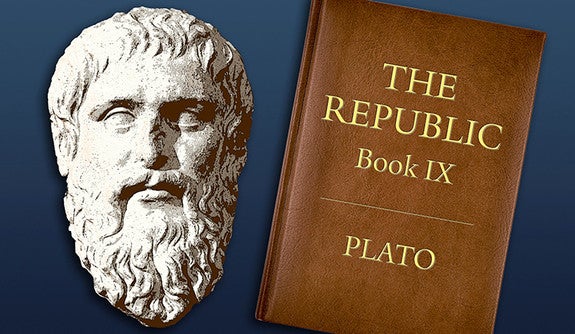
What John Stuart Mill Got Wrong About Freedom

3–4 minutes

Graham Tomlin wrote a piece for Prospect, upon which I comment and whence comes the title of this post. Always the deconstructivist curmudgeon, it seems, I agree with Tomlin’s assertion that Mill was wrong, but so is Tomlin.

In a nutshell, Tomlin makes the argument that the Ancients had it right, and the Enlightenment derailed it. Tomlin wants to return to the days of yore when the artifice of character and virtue ruled the day, a time when men were men and women were women. A return to the good ole days.

Tomlin waxes poetic, nostalgiac to a time that never was, a time that the prescription was to chase windmills of virtue and amass the currency of character. But character as currency is more unstable than Bitcoin.
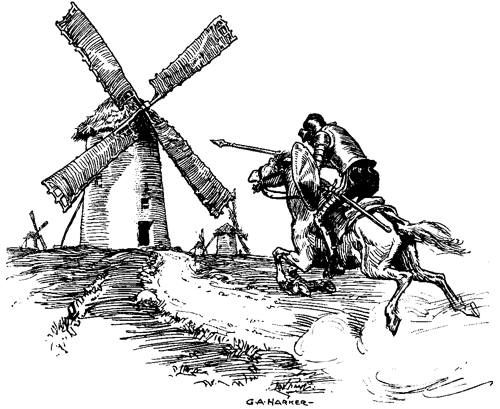
Don Quixote Tilting Windmills

Is there anything more capricious than the held perception of character? Is there anything more futile than chasing the vicious cycle of virtue, always searching for that deserving true Scotsman?

Character is a term especially bandied about by political Conservatives, although Progressives tend to play the #MeToo game because it’s a game of appearances. It doesn’t matter what you do; it only matters what it looks like you do.

And even this is a game. Time and again politicians ‘slip’ (read: get caught), they apologise for the temporary lapse, and ask for forgiveness. Whether or not they keep their position, they are still forgiven and may return to their position learning their lesson (read: don’t get caught again). Let’s just dispense with the formalities.

Perception is reality

In Plato’s day, he holds out four moral virtues to pursue: courage, temperance, justice, and prudence.

Courage: the resolve to act virtuously, especially when it is most difficult

Temperance: moderation in all things; the middle path

Justice: to render every man what’s due

Prudence: application of practical wisdom

Courage seems to be caught in an infinite loop, as it essentially says to exercise temperance, justice, and prudence in the face of danger. Typically, courage is associated with heroic acts, though I fail to see the connection to rescuing a baby from a burning building with any of these other virtues. Perhaps the definition has morphed over the years. Everyone needs a hero. Only Zeus needs a Hera.

Temperance is to find the middle ground: eat but not too much; drink but not too much; rape but not too much; kill but not too much. Is there really a middle ground for all things? In traversing a canyon, shouldn’t one stay close to the edge—or what about sidewalks? Is it temperance that led US President Donald Trump to declare that Nazis and white supremacists. are ‘some very fine people‘, or does he just lack prudence?

Justice is the constant and perpetual will to render to every man his due.

Justinian — Institutes 1.1

Justice I’ve written about at some length so I won’t spend any additional time here.

Common sense is not so common.

Voltaire

Prudence, which advises one to use common sense, relies on a rare jewel. As Voltaire wrote, « le sens commun est fort rare ».

Perhaps I’m just too hard on people, but I find that most people are pretty dimwitted outside of some small area of focus, and I have to agree with Voltaire’s position on common sense. This is why as an economist, I find it so difficult to accept the homo economicus assertion so key for modern microeconomic theory and why behavioural economics has become a bigger deal in the past 30 years as more and more social scientists realise that people are predictably irrational.

Thanks but no thanks. There’s got to be a better way.
Find Yourself

Find your self. What is this self you are searching for, and who is you in the first place?

You and self are taxonomical references—conveniences—, yet they don’t actually exist.


πάντα ῥεῖ : The only constant is change

Heraclitus of Ephesus

The Second Law of Thermodynamics states that entropy rules. Things decay. We can see this in the great structures of our ancient past. Try as we may, without energy, everything falls apart.

There is no you. The you that was born is not the same you that attended kindergarten, that graduated high school, dated, worked, or died. Even in a short span of time, you switch personae. Can you be multiple yous simultaneously? Are you only expressing some instance or another? I’m not buying it.

No one ever steps in the same river twice, for it’s not the same river and he’s not the same person

Plato, attributed to Heraclitus

When Heraclitus said that no man ever steps into the same river twice, it’s not only the river that has changed; the person has changed, too. It’s not the same person.

Woman in River

For the sake of convenience, we create this sense of identity, whether for ourselves or for others we want to categorise in some form or fashion. But they aren’t the same either.

It’s like the physical object that appears to be solid and yet is more space than material. It’s a matter of convenience, but it’s a trompe l’oeil. Yet again, your senses have deceived you.

Does this impact survival or some evolutionary progression? Apparently not. Not if you are here to read this. But that doesn’t make it real. Perception is reality.

But what about identity politics? Can’t a person choose their own identity? Sure. Choose away. It doesn’t it real.

When you search for yourself, you may actually find something, but what you find is not likely you.

I’ve written about the difference between sex and gender. Both are taxonomical creations. Whether a society accepts the distinction between sexes, genders, or even of the distinction of sex and gender is up to that society.

One is not born, but rather becomes, a woman.

Simone de Beauvoir, Second Sex

As with sex and gender, identity is a social construct. As such, its acceptance into a society is yet again a rhetorical effort.

Defending Democracy

2–3 minutes

Indeed, it has been said that democracy is the worst form of Government except for all those other forms that have been tried from time to time. 

Sir Winston Chirchill

I am not a defender of or apologist for Democracy. Any system is only as strong as its weakest link, but save for the rhetorical promises Democracy is nothing but weak links. Turtles all the way down. It’s another failed Enlightenment experiment. Sure, you can argue that the Ancient Greeks invented democracy—or at least implemented it at any scale—, but specious Enlightenment ideals pushed it forward into the mainstream.

The Achilles’ heel of Democracy is the principle-agent problem, the same one that separates management (CEOs) from owners (shareholders). Incentives are different.

Achilles’ Heel

Plato published his solution is Republic, but this proposal was naive at best. The notion that meritocracy is something real or that we can appropriately understand dimensions and measures in order to create the right incentives is another weak link.

Plato’s Republic

We see the same problem controlling elected officials. Time and again, we elect them, and time and again, they disappoint. We, the People, are the principles, and the elected are our agents. People in the US (and in so-called ‘democratic’ societies) have the vote, and yet—per the oft-cited definition of insanity—, they perform the same action and continue to expect different results; in fact; they are always surprised). At its core, it’s an incentive and accountability problem.

Kenneth Arrow wrote about the Impossibility Theorem, where he proved mathematically that no voting system would yield optimal results. Democracy is cursed with mediocrity. We like to soft-pedal the notion of mediocrity with the euphemism of compromise, another Ancient Greek legacy of moderation. If this makes you feel better, who am I to break the delusion? Cognitive dissonance is a powerful palliative.

μηδέν άγαν

Do Nothing in Excess, Delphic Oracle Inscription

Interestingly enough, many people clamour for term limits (a subversion of democracy) because they can’t help themselves from voting for the same shit politicians over and again. They rationalise it and say it is to defend against the other guy’s vote because they’d have never voted for shit representation.

This is often couched as ‘save me from myself’, but it is just as aptly cast as ‘save me from democracy’. I suppose a heroin addict might have the same thoughts.