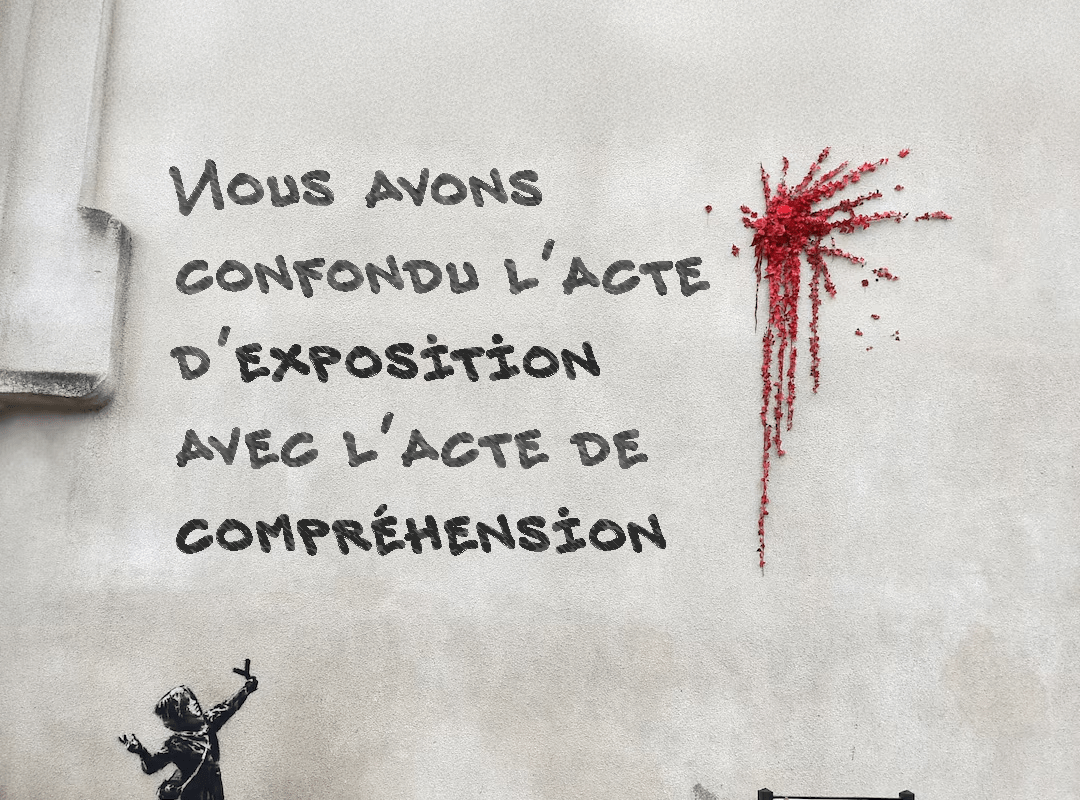
Every translation is a negotiation between fidelity and clarity. In the case of The Illusion of Light, some word choices are specifically English and either have no typical translation or don’t translate directly.
Some examples are as follows:
- Agency: In French, agence means agency, but not the sort of bodily autonomy as it does in English. Autonomie carries too much metaphysical connotation – though to be fair, so does the English version. I ended up with soi autonome.
- Against Agency: The title of an essay, but I still wanted to translate it. I decided to split the difference and run with Contre l’agency, hoping ‘agency’ would still be recognised in academic circles.
- Care: There’s no perfect equivalent for ‘care’ as both ethical and practical attention. Soin captures the tenderness but not the intellectual rigour; entretien captures the steadiness but loses affect. I used both, sometimes switching between them in deliberate tension.
- Dis-Integrationism: Variants of this will follow a Dés-intégrationisme pattern, retaining the negation and the hyphenation.
- Enlightenment: Of course, Enlightenment is perfectly French, but anti-Enlightenment, not so much. I opted for après-Lumières over anti-Lumières.
- Freedom: Liberté inevitably invokes Rousseau and 1789. English ‘freedom’ – a word with old English roots and Germanic cognates – feels looser, more existential. I leaned into liberté when I wanted that historic echo and used autonomie or franchise elsewhere to recover the personal register.
- Maintenance: In English, ‘maintenance’ sits halfway between repair and care. French forces a choice: entretien (maintenance as upkeep) or soin (maintenance as care). I alternated depending on whether the passage leaned toward the mechanical or the ethical.
- Normality: Normalité exists but sounds sociological, not moral. In Homo Normalis, I leaned on context to restore the Enlightenment’s moral undertone rather than altering the word itself. The surrounding prose had to carry what the French term doesn’t.
- Objectivity: The French objectivité is a near-cognate, but it feels heavier – almost bureaucratic – where the English still carries a trace of philosophical neutrality. I kept it, but softened the surrounding phrasing to prevent it from sounding bureaucratic.
- Omnivident: I opted for omnivoyant. In French, it typically means clairvoyant (mystical seeing), but it’s also used for La Joconde‘s unsettling stare – that optical illusion of being watched from every angle. The latter sense is what the Enlightenment promised: not prophecy but perfect surveillance, not mystic vision but total measurement. Mona Lisa’s gaze follows you; so does Reason’s. To be fair, my spell-checker isn’t very happy with omnivident either, but sometimes you just need to stick to your guns.
- Reason: Raison is obvious but slippery. In English, it can mean logic, justification, or sanity. French raison often sounds institutional – la Raison d’État lurks in its shadow – which helped the irony of my argument but occasionally demanded rephrasing to avoid unintended gravitas.
- The self: Le soi remains my preference over le moi; the latter brings too much Freud. Soi feels grammatical yet open – the right degree of abstraction for a ghost of the Enlightenment.
Translation isn’t the transfer of meaning but the calibration of resonance. Each word is a compromise between fidelity and hospitality – how much the host language can bear before it ceases to be itself.
I’m only at chapter five – the longest – with six more chapters ahead, plus appendices and back matter. This list will grow. Translation, like the maintenance ethics the book describes, is work without end: attentive, incremental, never quite finished.
 Philosophics