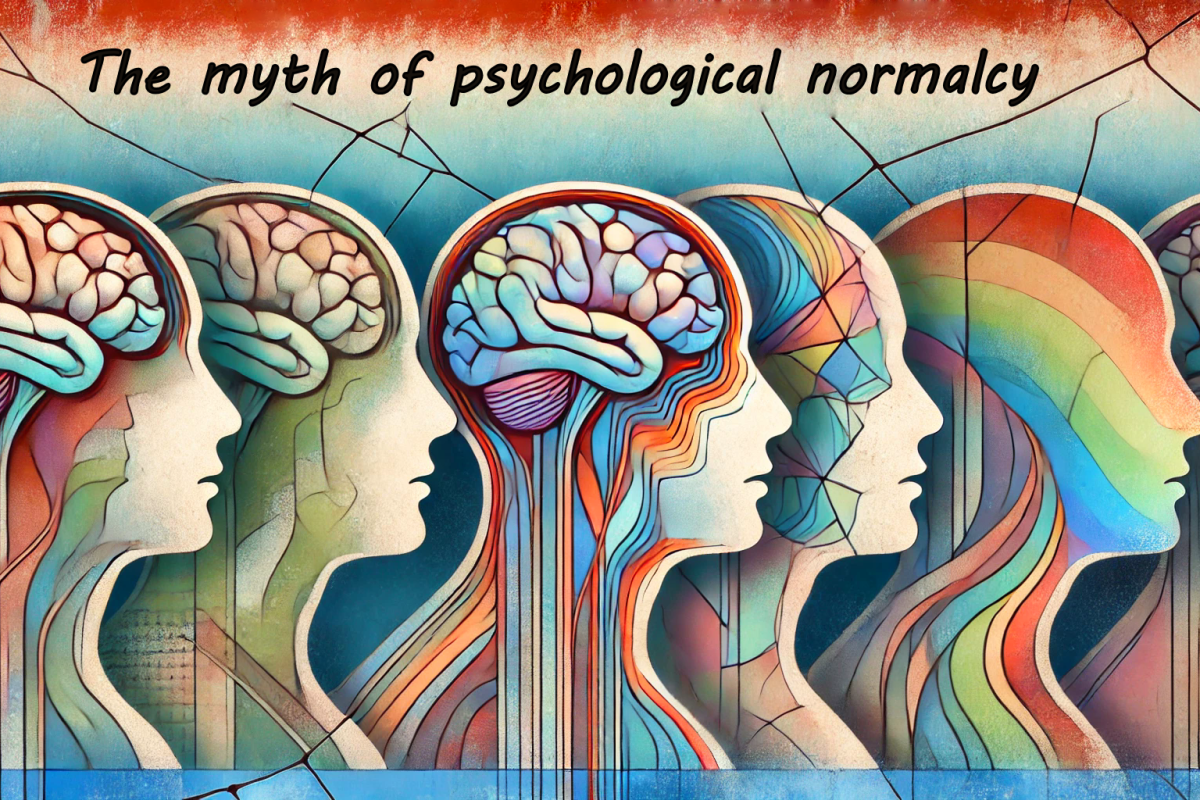
Neurodivergence is a hot topic today. But why? Are people more informed, or simply more comfortable speaking out?
Humans, by nature, are neurodivergent. This has always been the case, yet the illusion of neurological normalcy persists. The real issue lies in psychology’s pretence that humans fit into a standard model of normalcy.
In production processes, normality is expected—a product must meet specific standards, and deviations are considered defects. However, applying this industrial concept to human psychology is deeply flawed. Humans are not teleological except in the broadest biological sense. More people have brown eyes than blue or green; are those with brown eyes normal and others not? Ninety per cent of people are right-handed; does that make left-handed individuals abnormal? Statistically, they might be. However, in psychology, normalcy carries a judgmental connotation that goes beyond mere numbers.
Psychology, as expressed in behaviour, is not a suitable domain for discussing normality. Many people misuse the concept of “normal” as a moral qualification, which must stop.
In fact, the very concept of psychological normalcy is a relatively recent invention, one that has been used as a tool of control and categorisation. As philosophers have noted, the obsession with ‘normal’ behaviour reveals more about society’s desire for control than it does about the true nature of human diversity.
We are all neurodiverse. This is what typical looks like. Do some people vary significantly from others on certain dimensions? Yes, but this is a relative or contextual comparison.
By embracing neurodiversity, we recognise that our differences are not defects but essential variations, enriching the human experience. It’s time to move beyond the narrow confines of neurological “normality” and celebrate the full spectrum of human cognition. In doing so, we challenge the arbitrary boundaries that have long been used to divide and label.
 Philosophics