Here’s an article I found interesting that touches on the way that technology obscures morality.
Drones and robots won’t make war easier—they’ll make it worse

Socio-political philosophical musings
Here’s an article I found interesting that touches on the way that technology obscures morality.

In my post, The Truth of Truth, I linked to a BBC page outlining Emotivism. I did this even though the leading paragraph reads, as follows:
Emotivism is no longer a view of ethics that has many supporters. Like subjectivism it teaches that there are no objective moral facts, and that therefore ‘murder is wrong’ can’t be objectively true.
BBC Ethics Guide
As I subscribe to Emotivism and its Prescriptivist progeny, I’ll respond from my perspective. Let’s parse the paragraph stepwise:
Emotivism is no longer a view of ethics that has many supporters.
Notice immediately the appeal to popularity. People have been convinced rhetorically that this cannot be true, primarily because they are uncomfortable with the notion. People tend to resort to escalating commitment, digging in their heels and doubling down on their position.
Just because something is popular doesn’t make it incorrect, but neither are unpopular opinions untrue.
Like subjectivism it teaches that there are no objective moral facts…
Indeed, as I’ve discussed at length, there are no moral facts. Morals are human constructs of language and subject to contextual framing. The prevailing meta-narrative is that a moral code is necessary in a society, which is further predicated on the notion that society is necessary. Any moral code is, then, by definition, subject to this underlying meta-narrative.
I can say that I think society and cooperation are necessary for the continuation of our human species, but this is also admittedly and unabashedly self-centred hubris—another unquestioned meta-narrative.
We also have a domain boundary problem. At times, we have altered the boundaries to exclude people from the definition, hyper-focus on people in the definition, or exclude entire other species and kingdoms.
All of these are subjective. So when the inevitable response is, ‘I mean for humans’, we now know the subject.
…‘murder is wrong’ can’t be objectively true.
On the topic of emotion, murder is a heavy hitter. After all, who is going to argue that murder is not wrong, let alone subjective?
Even on the surface it’s obvious that this is a tightly scoped claim, and there a few things going on here:
If one—the subject—does not accept this frame, s/he also doesn’t accept the, let’s say, verdict. Vegan philosopher, Peter Singer claims that all animal life should be protected, that any killing is immoral. Some have claimed that nature itself should have a voice.
And so a statement like ‘murder is wrong’ is nothing more than a prescriptive emotional statement:
I feel that murder is bad (emotions with justification defended by protective layers of reason), and you should too.
Just Saying
Not an ounce of objectivity to be found, excepting, of course, for the objection I have to the counter-claim.
I’ll save you a click to the BBC page. These paragraphs are as silly as the first.
Emotivism has become unpopular with philosophers because the theory that led the Emotivists to think that moral statements were meaningless has fallen from favour.
Less technically, if expressing moral judgements is really no more than expressing one’s personal opinion there doesn’t seem any useful basis for arguing about moral judgements.
In practical terms, Emotivism falls down because it isn’t very satisfying. Even (most) philosophers think moral statements are more than just expressions of feeling.
And it’s perfectly possible to imagine an ethical debate in which neither party has an emotion to express.
Non-philosophers also think there is more to ethics than just the expression of an attitude or an attempt to influence behaviour. They want a better explanation and foundation for shared standards of morality than Emotivism can provide.

A few years ago, I shared with a colleague that I had noticed that my high school classmates who seemed to be the most non-conformist (or perhaps the most anti-authoritarian), the ones most likely to have abused drugs and alcohol and most likely to criticise the Man, have by and large become extremely conservative on the political spectrum. Most are card-carrying Republicans, and dreaded low-information voters, continuing the trend of low-information acquisition and processing. He said that he had noticed a similar trend.
I still keep in contact with some some old mates who are Conservative Republicans, but who were high-information consumers then and still, so I am not saying that all Conservatives are low-information people.
A man who is not a Liberal at sixteen has no heart; a man who is not a Conservative at sixty has no head.
—Benjamin Disraeli (Misattributed)
The past couple of years, in a sort of nod to Bukowski, I’ve been researching or circulating among the underbelly of the United States, the veritable dalit-class comprised of drug dealers and users, pimps, prostitutes, and thieves. And I’ve noticed the same trend. These people might fear or hate the police and the system, and they may not vote or even be high-information seekers, but they seem to have a marked propensity to Conservatism. I admit that this is anecdotal and rife with confirmation bias, but this is my observation.
To broad brush any group into some monolith is always a fools errand and missing dimensional nuance, but the general direction holds. In my observation, these people are very black & white, and they want to see law & order (as much as they want to avoid its glance). They are interested in fairness, and call out being beat, as in being shorted in a drug deal or overpay at the grocery store–the same grocery store from which they just shoplifted.
When they see a news story, ‘That bank robber deserved to get caught’ would not be an unexpected response. Even if they got caught, they might voice that they deserved it. The received sentence might be a different story.
I am not sure why this shift from anti-establishment to hyper establishment happens. I’ve also noticed that even if they dislike the particular people serving government roles, they still feel that the abstract concepts of government, democracy, capitalism, and market systems make sense, if only the particular instance is not great.
One reaction I had is that some of these people feel that the transgressions of their youth might have been avoided only if there were more discipline, and so they support this construct for the benefit of future generations, who, as embodied in Millennials, are soft and lack respect for authority.
I’d recently re-discovered a Bill Moyers interview with moral psychologist Jonathan Haidt, and there is some relationship. And whilst I could critique some of Haidt’s accepted metanarrative relative to society, his points are valid within the constraints of this narrative.
The video is almost an hour long and was produced in 2012, it is a worthwhile endeavour to watch.
I am wondering if anyone else has seen this trend or who has experienced a contrary trend. Extra points for an explanation or supporting research.
Cover image: Sean Penn, excerpt from Fast Times at Ridgemont High, and Brett Cavanaugh, SCOTUS and posterboy Conservative hack

It appears you are interested in the workings of morality from a practical perspective.
This statement occurred in a discussion thread on The Philosophical Hack.
I don’t feel there is another perspective. It is a human construct of language, but, in particular, it’s a social construct. By definition, language is arbitrary (though not capricious), any anything within language is necessarily arbitrary, too.

Morality and its cousin, ethics, are essentially normative rules of conduct, so they are, foundationally speaking, pragmatic: what is the best system for a society to flourish. This implies some goal or goals. In essence, this becomes an optimisation problem that involves systems thinking, and humans are particularly poor at systems thinking especially when faced with complexity. Along our evolutionary path, managing complexity was not a huge survival factor. Kahneman and Tversky identified two systems: System I is the sort of automatic reflexive system and System II is for advanced functions. System II requires a lot of energy and upkeep. For most humans, it’s not well-developed or maintained,and System I appears to be the arbiter and has right of first refusal, so it attempts to solve heuristically something that should be assessed analytically.
Why the ramble? Morality is a complex system with boundary conditions and dynamics: precisely what humans are poor at. Just defining the boundaries is a challenge. Perhaps this is why some people simply attempt to define the boundary as universal, but this creates its own challenges. And many reject universal morality, opting for smaller moral domains—nations, states, municipalities, communities, schools, churches, families, peer groups, couples. To Hegel and Nietzsche, the main concern is authenticity for the individual. And Nietzsche didn’t feel that there was any one-size-fits-all morality to begin with. I could operate with different moral imperatives than you. This was most evident in his Master-Herd distinction.
But since I reject the notion of objective morality, it is necessarily normative or relative or subjective. Here, we end up trying to optimise an equilibrium model, but the trick is what to optimise.
In the modern age, the consensus is to maximise happiness or utility, but, as I’ve mentioned before, we are still left in a quandary: do we optimise personal happiness or group happiness, and what group? A nationalist might choose to draw a boundary around the nation. This will maximise happiness within the borders without concern of whether ‘people are starving in Africa’.
Of course, there are multiple dimensions to any morality. If there are two people and one has $100 and the other would feel happier to take it, in a utility optimisation model, there is nothing to defend not taking it. Prospect theory within behavioural economics provides some rational insomuch as humans tend to value loss over gain, so the $100 received is perceived as having less value than the person losing it. This is further complicated if the person receiving it is poor—perhaps s/he has no money—and the person relinquishing it is Jeff Bezos, to whom it is nothing more than a rounding error.
I mention these because we could have a positive sum game (borrowing from game theory)—the gain to the poor person would outweigh the loss leading to a net positive gain—, and yet Pareto optimisation disallows this. Of course, happiness and utility cannot be measured in the first place and they are not persistent in the second place.
My point in all this is to argue that humans are woefully ill-equipped to grasp these topics, and so most of this is not much more substantial than mental masturbation. And this leads me full circle to me original contention that morality and so-called moral truths are nothing more that rhetoric, the ability to persuade that your position is the truest truth.

I happened upon a video where three philosophers engage in friendly debate over the nature of absolute goodness. The three each in turn give their positions, and then they debate three themes. This post captures their positions—until about 12.5 minutes—, and I’ll reserve the themes for future posts.

The swapping an evaluative good over a moral goodness is a slight of hand or a head fake. As Naomi Goulder states, citing Nietzsche,
“Our weak, unmanly social concepts of good and evil and their tremendous ascendancy over body and soul have finally weakened all bodies and souls and snapped the self-reliant, independent, unprejudiced men, the pillars of a strong civilization.”
—Daybreak, Friedrich Nietzsche
I won’t call Nietzsche on his facile belief in ‘self-reliant, independent, unprejudiced men‘.
The problem is as much one of mathematics as well as of language. Good is a weasel word, so it is easy to equivocate over its meaning. I’ve commented on this before, so I’ll leave it here at the moment and focus on the maths. No matter what bogey we are attempting to maximise, we are left optimising across to dimensions: individual versus some group, such as society; and present verses future.
I’ll start there. Without regard to which normative function to optimise, we should recognise that what provides the most what I’d deem benefit now not also be optimised in the future.
If I have enough money for either an ice cream cone or bus fare home on a hot day—so even on a relatively short time scale—,and I choose an ice cream, my near-term satisfaction quickly fades when I realise I now have to find alternative means to get home.
In fact, I am not simply optimising across now and a few minutes from now. I am optimising across all possible future times across my lifespan. Plus, taking some choices are necessarily going to eliminate the possibility of others. Rational choice theory be damned.
Beyond the time dimension, we’ve got the individual versus group dimension. This is just as silly. Not only is the group undefined, we are likely to constrain it to our perceived in-group. As a citizen of the UK, I may not consider the effects of my choice on, say, Germany or Myanmar.
In effect, this becomes a system boundary definition problem. Just because I adopt a nationalistic boundary does not mean that I’ve chosen this correctly. The Germans who made this calculaus circa World War II learnt that being on the losing side of a conflict yields outcoems divergent from original expectations. Had Germany and the Axis prevailed, who knows how this might have changed?
My point is that, even divorced from the language problem, the bulk of this topic is mental masturbation. It is unresolvable because it’s not much more than academic sophistry.

Paul Boghossian conveys three possible interpretations.
In the first he posits a strawman statement, ‘It is morally good to educate girls and young women’, a topic sure to get an emotional reaction from Western-indoctrinated people, assuming a moral high ground over fundamentalist Muslim beliefs. Proponents of this view claim that this can be assessed as simply true or false.
More fundamentally, he defends this approach in proxy by asserting that, ‘ultimately, there will be some normative claim at the bottom of that chain of reasoning which will either be true or false‘. It hinges on the expected role of the human, in particular the female of the species. Again, this is only true or false within some context, a context which is neither objective nor universal.
In the second, which he labels as relativistic, acknowledges the social contextual interpretation.
His last interpretation is nihilistic, wherein, ‘normative vocabulary is fundamentally confused; there is nothing in the world it answers to; if you really want to do things ‘right’, you just have to drop this vocabulary and find some other vocabulary—not itself normative; not itself evaluative—in which to describe these things that we call moral convictions or moral beliefs‘.
I subscribe to this last school, though I do not feel that language is fundamentally capable of this level of precision and even more fundamentally is not truth-apt.
He adds a fourth category, where preferences rule, which is weaker still, as preferences are not only normative but emotional and, I might argue, are somewhat arbitrary and capricious and subject to all of the weaknesses inherhent in preference theory.

Michael Ruse begins by downplaying the absolute notion of the good but then backtracks and defending something close to absolute by ‘taking it very seriously’.
He defends the believers in the quasi-absolute morality of good gods, ignoring the relative nature of that belief (and not to mention how to validate the objectivity). He goes on the defend Platonism but comes up short trying to assert the positive analytic notion of maths and a normative vantage where morality is objective.
I was pleasantly amused with his case where he highlights the inherent problem with a sexual morality formulated around a binary sex world if we imagine intergalactically a world with a ternary sex arrangement. We can observe this locally, as not all species are restricted by human sexual dimorphism.
For reference, the three themes discussed are as follows:
Theme One: Is there an absolute good?
Theme Two: Does morality apply to the act or the consequences
Theme Three: Should we strive for absolute truth

I happened upon an entry in Current Anthropology: Is It Good to Cooperate? [PDF] (Volume 60, Number 1, February 2019), wherein the authors claim there are 7 universal moral codes. The universality is suspect insomuch as they found a preponderance of observations, so unanimity was not always found. I am also concerned with the specificity of the definition of property.
The group studied ethnographic accounts of ethics from 60 societies, across over 600 sources. The universal rules of morality are:
It’s well past my bedtime, and I should be sleeping, so I just want to pick out one of these universals: property rights.
What is Property? — PIERRE-JOSEPH PROUDHON
La propriété, c’est le vol!
Property can mean several things: In the description of methodology, it appears that these authors are referring to property rather than possession, as a key identifier is the ability to transfer property intergenerationally. What is the scope of the definition of property. There is a difference between passing along a family home and passing along vacant property a world away. Is rent-seeking property ownership universal? Would all societies subscribe to the notion held by Western Capitalism, wherein one can own property that, theoretically, one may never have seen? In the United States, they have concepts like intellectual property, which is at best a subversion of the notion.
»» »» »» »» »» »» EDIT »» »» »» »» »» »»
There may be a problem with reading (or at least posting) at 2AM—and property is a hot button item for me. I may have been hyper-focused on the intergenerational wealth transfer. I’d like to read more about how other societies view this as well as which ones do and don’t. Of course, I’d like to understand how the interviewers couched the questions.
In the end, the summary was about possession and not property:
Private property, in some form or other, appears to be a cross-cultural universal (Herskovits 1952). Morality-as-cooperation leads us to expect that this type of cooperative behavior—deferring to prior possession—will be regarded as morally good .
Op. cit.
As an anti-Capitalist, I notice that no claims are being made into the morality of competition. I may may a few posts on my observations of the remaining 6 list items.

My girlfriend’s mother with whom we live was raised a Catholic. She asked me what my religious beliefs are, and I responded that I don’t believe in gods, angels, divine anything, a higher intelligence or power in the manner people ascribe to gods. She conveyed that she had been upset with her husband but got the last laugh after he died.
As she related it to me, the night after he dies, he came to her in a vision and told her that he was wrong and she was right, so now she knows that there is life after death. I’m not entirely sure if he was heaven-bound in this scenario.
So, as she finds comfort in this belief (and of the other spectres she’s seen, heard, and felt, I just nod and smile and say ‘that’s nice’). I try my best not to sprain anything as I roll my eyes on the inside.
At least Descartes admitted that his senses might be deceived. No such thing here. One of the issues I have with so-called religious tolerance is that it is not politically correct to call BS on nonsense like this. Of course, I am not about to jeopardise my relationship with my girlfriend by mocking her mother.
My girlfriend is a different story still. she was raised in a Catholic household but was not subjected to the church or parochial school like her mother, but she was still fed a diet of religious nonsense growing up. To her, hell is real. The fear of a hell actually influences some moral decisions. To the righteous, this is a fine consequentialist approach, the ends (of normalised behaviour) justify the means (of believing a lie).
To me, the lie is immoral, but to some, they actually believe it (or believe it enough) that they don’t see it as a fabrication. I suppose it’s easier for people like me who consider morality to be fabricated from whole cloth.

I’m an unabashed atheist, a position I’ve defended since 5th grade when I refused to pledge allegiance* in class—primarily on account of the God clause, but I’ve never been a fan of fealty. It was difficult as at the time I was being raised a WASP in a town comprised of 70-odd per cent of Roman Catholics.
I’d wrestled with the concept for years, even taking a middle-ground agnostic position until I decided to get off the fence and pick a side. Dawkin’s God Delusion made it easier when he published his 7-point spectrum, stretching between an absolute believer to an absolute atheist. Here I was able to remain agnostic but defend the atheist notion as, say, a 6 of 7 on the scale—or 6.9999 as the case might be.
The spectrum of theistic probability is published on Wikipedia:
I leave open there could be such a higher ‘energy’ or some such, but I feel the probability is pretty remote—something less than homoeopathic.

Allow me to sidestep the distinction between an atheist meaning not believing and an agnostic meaning not knowing. For the average person, this distinction is lost—sort of like the use of who versus whom or of fewer versus less at grocery checkout stations.
So why does an atheist care about religion enough to write about it? He doesn’t write about unicorns—except when discussing religion. Why can’t he just agree to individual religious freedom and leave it at that? And why does he refer to himself in third-person?
Religion…is the opiate of the masses
Karl Marx
Marx infamously wrote that religion is the opiate of the masses. He was correct, but religious belief is a cancer. It is not benign. Various people have exclaimed that ‘your right to swing your arm ends at my nose.’ Religion violates this sensibility and smacks you in the face.
Although moral sentiment a precedent to religion, religion is a crucible that codifies it. And like cancer, it spreads into the public sphere as law. I’ve written about the moral outrage of prostitution, and it seeps into legislation around abortion, adoption, and restroom usage. It’s not that one could not have developed these positions independently, but in the US these positions are highly correlated to religious beliefs.
It doesn’t much matter to me the causal direction of this relationship; the correlation is enough for me. I don’t want to say that all religious activity is harmful, but the basis of it is delusional. We consider psychiatric treatment for those with different delusions.
God is dead
Friedrich Nietzsche
And so my interest in religion is that I would prefer to pull it out by the roots. As Nietzsche notes, if God is dead, we don’t really have a suitable concept to keep society focused. The masses will go into withdrawal. Enlightenment Age Humanists tried to replace it with Natural Law and then some abstract notions that serve as philosophical mental masturbation, but society will not congeal around it, and so politicians prey on the delusional masses.
*The history of the US Pledge of Allegiance is fairly insidious.

His words, not mine.
Whilst I agree that all morality is contrived, Alan H. Goldman, Kenan Professor Emeritus of Philosophy at the College of William and Mary, presents his position that sexual morality is not divorced from any morality. It’s not particularly a special case. I agree in principle, but his argument is lacking.
Alan H. Goldman
Sexual desire aims directly at the pleasure derived from physical contact
He states that ‘As other philosophers point out, pleasure is normally a byproduct of successfully doing things not aimed at pleasure directly, but this is not the case with sex. Sexual desire aims directly at the pleasure derived from physical contact. [The] desire for physical contact in other contexts, for example, contact sports, is not sexual because it has other motives (winning, exhibiting dominance, etc.), but sexual desire in itself has no other motive. It is not a desire to reproduce or to express love or other emotions, although sexual activity, like other activities, can express various emotions including love.’
Pleasure is normally a byproduct.

    Sure.

This is not the case with sex.

    OK. Elaborate.

Sexual desire aims directly at … pleasure.

    I'm still following.

Sexual desire in itself has no other motive, which is pleasure.

    Damn. You lost me.
I might agree that pleasure (let’s ignore the fact that this is another weasel word) may be the motivation behind sexual desire, but we don’t really have means to determine motivation or intent, and we certainly can’t assess one attribute over another.

Foucault may have argued that the motivation is power—perhaps each side is making their own power calculus. Given the state of current knowledge, this is not ascertainable. Prof Goldman may feel that pleasure is the motive; one may even argue that power yields pleasure. I’ll not traverse that rabbit hole.
Later, he asserts that ‘More controversial is whether any consensual sex between willing partners is wrong’. I won’t debate this position, but there is no good way to full assess consent.
I’ll outline a fairly stereotypical scenario—excuse me for opting for a heterosexual situation, but the pronouns are easier to track. Say a man and a woman have met in a social setting—perhaps they’ve been dating for some period—, and they ‘mutually’ decide to engage in sex. We’d call this exercising agency, two consenting adults.
But what of ulterior motives? Following the stereotype, perhaps he feels that he is conquering her, and she feels she is securing a stable mate; or perhaps they don’t feel this at all. What is the actual intent? Not to go full-on Freud, but are they playing out some latent urge? Is this just some deterministic eventuality. There’s really no way to tell. Any story I tell is as speculative as the next.
So, to end on a tangent, a significant problem underlying philosophy, psychology, and jurisprudence is the issue of intent. The term is bandied about on most cop shows and legal dramas, but it is another just another vapid notion that we accept as valid. Of course, if we dispense of the notion, our legal systems would just unravel.
Yet again we’ve reached a point where the only truth is rhetoric.

Graham Tomlin wrote a piece for Prospect, upon which I comment and whence comes the title of this post. Always the deconstructivist curmudgeon, it seems, I agree with Tomlin’s assertion that Mill was wrong, but so is Tomlin.
In a nutshell, Tomlin makes the argument that the Ancients had it right, and the Enlightenment derailed it. Tomlin wants to return to the days of yore when the artifice of character and virtue ruled the day, a time when men were men and women were women. A return to the good ole days.
Tomlin waxes poetic, nostalgiac to a time that never was, a time that the prescription was to chase windmills of virtue and amass the currency of character. But character as currency is more unstable than Bitcoin.
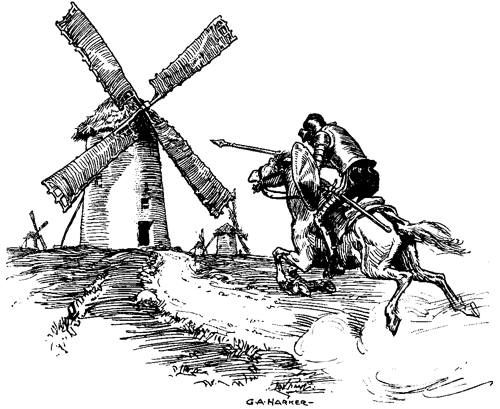
Is there anything more capricious than the held perception of character? Is there anything more futile than chasing the vicious cycle of virtue, always searching for that deserving true Scotsman?
Character is a term especially bandied about by political Conservatives, although Progressives tend to play the #MeToo game because it’s a game of appearances. It doesn’t matter what you do; it only matters what it looks like you do.
And even this is a game. Time and again politicians ‘slip’ (read: get caught), they apologise for the temporary lapse, and ask for forgiveness. Whether or not they keep their position, they are still forgiven and may return to their position learning their lesson (read: don’t get caught again). Let’s just dispense with the formalities.
Perception is reality
In Plato’s day, he holds out four moral virtues to pursue: courage, temperance, justice, and prudence.
Courage: the resolve to act virtuously, especially when it is most difficult
Temperance: moderation in all things; the middle path
Justice: to render every man what’s due
Prudence: application of practical wisdom
Courage seems to be caught in an infinite loop, as it essentially says to exercise temperance, justice, and prudence in the face of danger. Typically, courage is associated with heroic acts, though I fail to see the connection to rescuing a baby from a burning building with any of these other virtues. Perhaps the definition has morphed over the years. Everyone needs a hero. Only Zeus needs a Hera.
Temperance is to find the middle ground: eat but not too much; drink but not too much; rape but not too much; kill but not too much. Is there really a middle ground for all things? In traversing a canyon, shouldn’t one stay close to the edge—or what about sidewalks? Is it temperance that led US President Donald Trump to declare that Nazis and white supremacists. are ‘some very fine people‘, or does he just lack prudence?
Justice is the constant and perpetual will to render to every man his due.
Justinian — Institutes 1.1
Justice I’ve written about at some length so I won’t spend any additional time here.
Common sense is not so common.
Voltaire
Prudence, which advises one to use common sense, relies on a rare jewel. As Voltaire wrote, « le sens commun est fort rare ».
Perhaps I’m just too hard on people, but I find that most people are pretty dimwitted outside of some small area of focus, and I have to agree with Voltaire’s position on common sense. This is why as an economist, I find it so difficult to accept the homo economicus assertion so key for modern microeconomic theory and why behavioural economics has become a bigger deal in the past 30 years as more and more social scientists realise that people are predictably irrational.
Thanks but no thanks. There’s got to be a better way.
 Philosophics