1–2 minutes
I published A Language Insufficiency Hypothesis this month, and this is one of a series of videos summarising the content. In this segment, I’m discussing Chapter 1: A Genealogy of Insufficiency
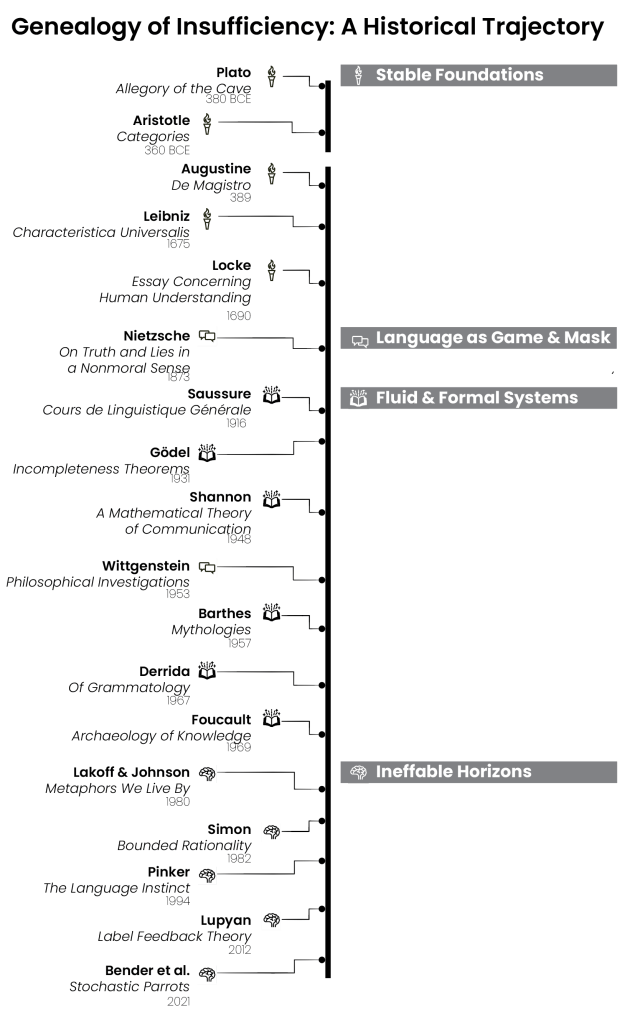
In this video, I touch on Plato to Barthes and Foucault. Derrida gets no love, and I mention bounded rationality, but not Simon. I discuss Steven Pinker’s dissent in more detail in a later chapter.
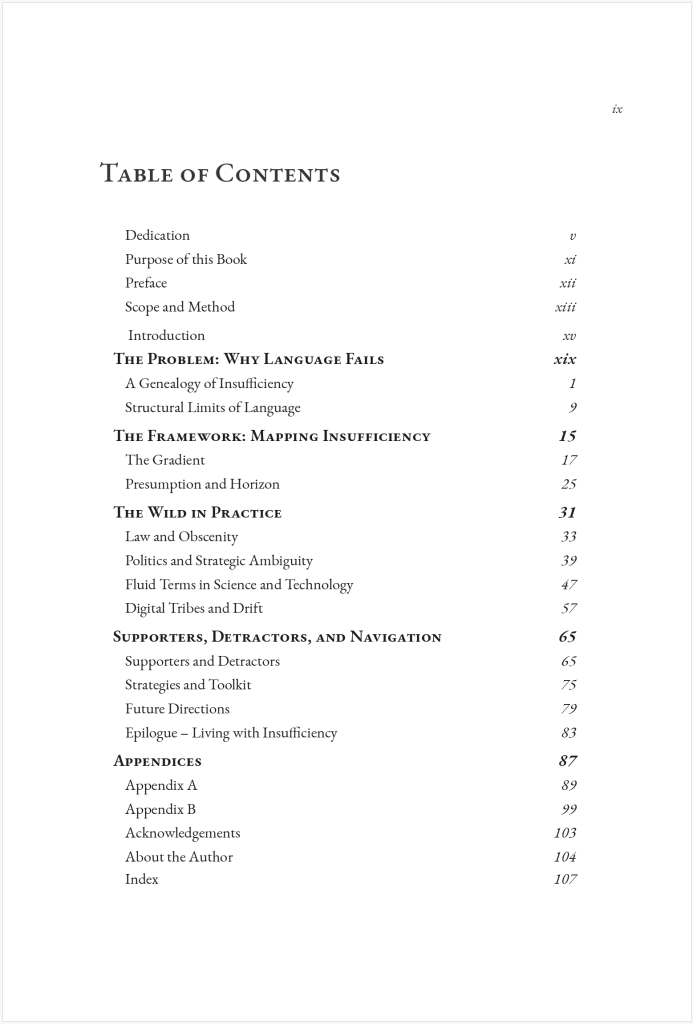
Below, I’ve included some artefacts from the book.
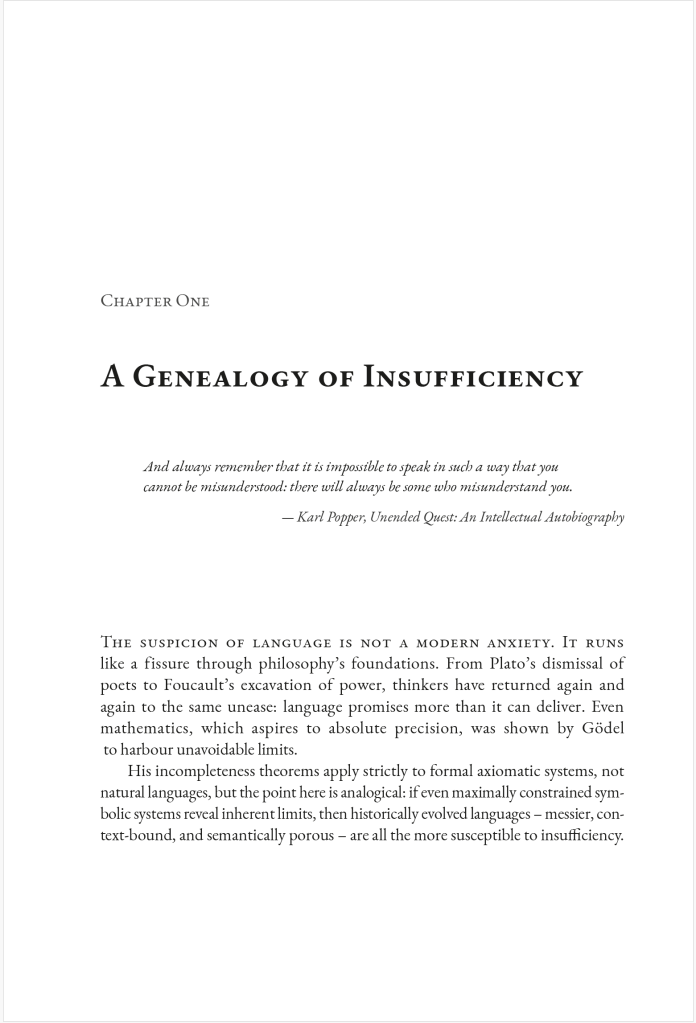
And always remember that it is impossible to speak in such a way that you cannot be misunderstood: there will always be some who misunderstand you.
— Karl Popper, Unended Quest: An Intellectual Autobiography


 Philosophics