I was writing a video script, and a warning popped up. I first noticed this warning a couple days ago, but I didn’t think anything of it.

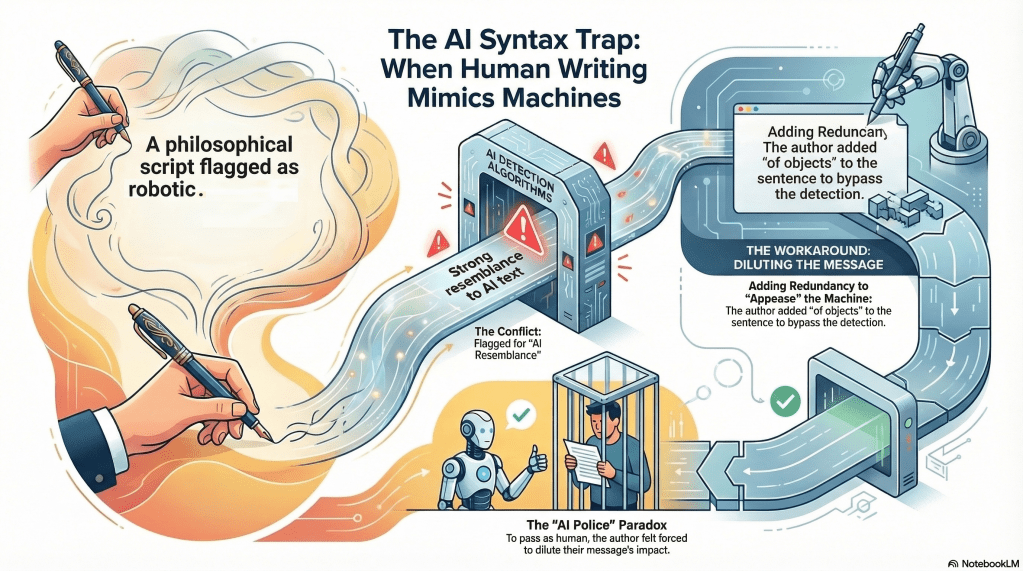
‘Strong resemblance to AI text.’
I am creating some videos to promote my latest book. I realise that it is academically dense, so I want to break down some of the subject matter.
As usual, my writing is on language and its insufficiencies.
But why was I being warned that my writing resembled AI? What does that even mean?
I reread the sentence:
What if the biggest trick language played on you is convincing you that the world is made of things?
I was looking for a hook to open the short clip. I altered it slightly:
What if the biggest trick language played on you is convincing you that the world is made of things, of objects?
This appeased the AI detector. I had to dilute the message by adding ‘of objects‘. As I write this, it reminds me of Margaret Atwood’s A Handmaid’s Tale and the naming of the women as property of their masters – OfFred, and so on. Of objects.
The AI police are annoying to say the least. Profiling: Minority Project. A 1984 thought crime.
I’m hopping down off the soapbox, down off my high horse, but I’m miffed by bollocks.
How does AI summarise it? Find out here:
EDIT: Does it get worse?
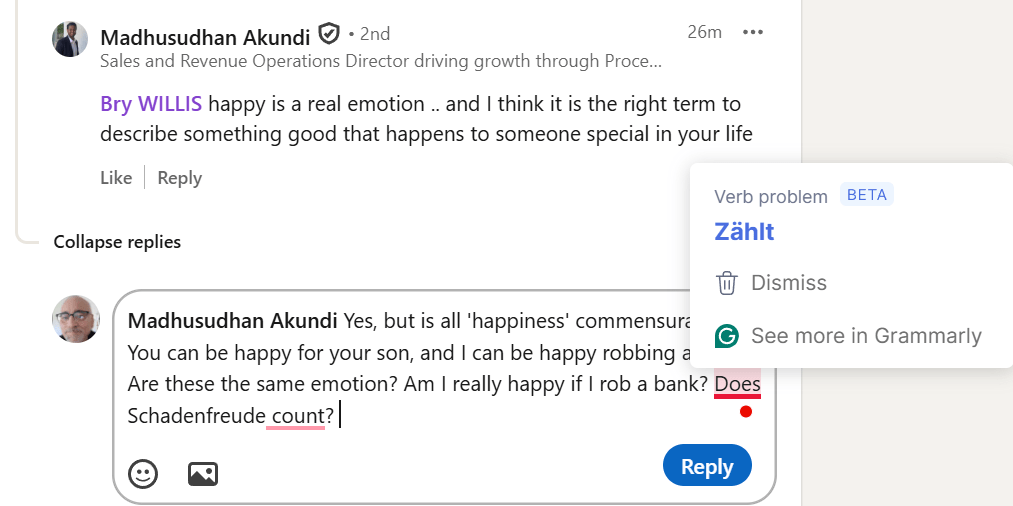
When I checked into LinkedIn to share this post, I was distracted by another thread chatting about Emotivism. I’ll spare you the entire thread, but now Grammarly wants me to write in German. Was ist los?

 Philosophics