
Indeed, it has been said that democracy is the worst form of Government except for all those other forms that have been tried from time to time.
Sir Winston Chirchill
I am not a defender of or apologist for Democracy. Any system is only as strong as its weakest link, but save for the rhetorical promises Democracy is nothing but weak links. Turtles all the way down. It’s another failed Enlightenment experiment. Sure, you can argue that the Ancient Greeks invented democracy—or at least implemented it at any scale—, but specious Enlightenment ideals pushed it forward into the mainstream.
The Achilles’ heel of Democracy is the principle-agent problem, the same one that separates management (CEOs) from owners (shareholders). Incentives are different.

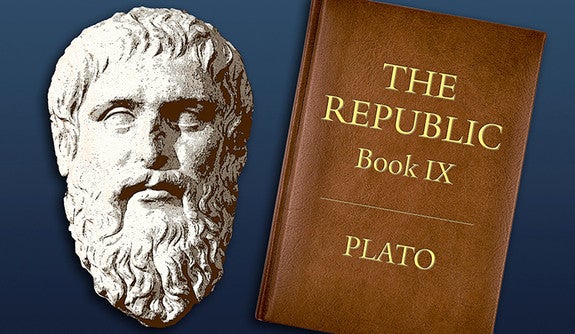
Plato published his solution is Republic, but this proposal was naive at best. The notion that meritocracy is something real or that we can appropriately understand dimensions and measures in order to create the right incentives is another weak link.
We see the same problem controlling elected officials. Time and again, we elect them, and time and again, they disappoint. We, the People, are the principles, and the elected are our agents. People in the US (and in so-called ‘democratic’ societies) have the vote, and yet—per the oft-cited definition of insanity—, they perform the same action and continue to expect different results; in fact; they are always surprised). At its core, it’s an incentive and accountability problem.
Kenneth Arrow wrote about the Impossibility Theorem, where he proved mathematically that no voting system would yield optimal results. Democracy is cursed with mediocrity. We like to soft-pedal the notion of mediocrity with the euphemism of compromise, another Ancient Greek legacy of moderation. If this makes you feel better, who am I to break the delusion? Cognitive dissonance is a powerful palliative.
μηδέν άγαν
Do Nothing in Excess, Delphic Oracle Inscription
Interestingly enough, many people clamour for term limits (a subversion of democracy) because they can’t help themselves from voting for the same shit politicians over and again. They rationalise it and say it is to defend against the other guy’s vote because they’d have never voted for shit representation.
This is often couched as ‘save me from myself’, but it is just as aptly cast as ‘save me from democracy’. I suppose a heroin addict might have the same thoughts.


