The Rhetoric of Truth

I’ve shared a new video on YouTube discussing the rhetorical nature of truth.

Before the Classical Hellenes, Mesopotamians recognised the power of rhetoric as the art of using language to convince or persuade.
The term itself derives from the Greek įæ„Ī·Ļ„ĪæĻĪ¹ĪŗĻŒĻ‚, rhētorikós.

As with any human construct such as language, truth and rhetoric are confined by limitations of the system and its logical structure.

In “Gorgias”, one of his Socratic Dialogues, Plato defines rhetoric as the persuasion of ignorant masses within the courts and assemblies.

Rhetoric, in Plato’s opinion, is merely a form of flattery and functions similarly to cookery, which masks the undesirability of unhealthy food by making it taste good.

Rhetoric typically provides heuristics for understanding, discovering, and developing arguments for particular situations, such as Aristotle’s three persuasive audience appeals: logos, pathos, and ethos.

But it’s more insidious than all of this. The notion of truth—or whatever we believe to be true—is nothing more than rhetoric.

If one is aptly convinced that something is true, it is. The physical world—the world of objects—contains facts—attributes of these objects, but these facts are tautological descriptors: a red car, une voiture rouge, ou quelque chose. In the conceptual domain of abstractions such as truth, justice, gods, and love, all bets are off.

As Geuss aptly suggests, most of society and civilisation don’t care about philosophical thought at this level. This is privileged activity. It’s not about level of intellect, per se; rather, it’s the privilege of free time to devote to abstract thinking.

Most people are more concerned with getting to the next day to earn a paycheque, and they accept sloganeering for any deeper meaning.

Humans are said to be rational beings. In fact, this predicates entire disciplines such as economics…

…and jurisprudence. Legal systems are founded on the concept that humans are at least rational enough to make fundamental decisions about right and wrong—and this, of course, presumes that the notions of right and wrong in and of themselves are meaningful.

For the sake of argument, let’s presume that humans are at least rational enough for our purposes, and whilst right and wrong may not be objectively validated, that within the context of a society—presuming that not to be mired in its own identity problem—, it can be defined in the manner of a social compact envisaged by the likes of Hobbes, Locke, Rousseau, et alii. As the saying goes, ā€˜if it’s good enough for the government… well.

Language is a human construct, yet it’s an apparition. Like a physical object, it appears solid, but there’s more space than not. What’s there is exiguous. Echoing Heisenberg’s observations at the atomic level, one cannot be fully certain of a particular meaning. This is what Derrida (via Barthes) meant by ā€˜the death of the author’, though there is nothing to guarantee that the author could fully articulate the meaning or intent even if they were present to defend it.

About the same time, Saussure was finding promise in the structure of language, Russell was creating a new language of logic to obviate its deficiencies. Structuralists and logical positivists were a natural extension of the scientism of the 20th Century, the prevailing wave since the Enlightenment, but as with the demise of gods, religious belief, and other things metaphysical, this faith in structure was also specious.

Historically speaking, there is progress (another illusion), and there are paradigm shifts. When a paradigm shifts, an old truth is replaced by a new one. This is typically credited to a progression of knowledge, but it’s actually just that, on balance, people have accepted a new frame, chalking it up to scientific method rather than some rhetorical sleight of hand.

Even so, scientific discovery is different to archetypal notions such as truth or justice. At least we can empirically test and verify a scientific notion, even if what we are observing is later revised because of some previously unknown factor or removed constraint. For example, until Einstein’s day, Newton would not have known that his theory of gravity would break down as it approached the speed of light. But truth is just an opinion—even if widely held. Enter the ā€˜appeal to tradition’ flavour of logical fallacy—I’ll not dwell on the fact that systems of government are based on this quaint notion of precedents. #JustSaying

“Truth is simply a culmination of the rhetorical power to persuade the ignorant masses.”

Plato

I’ve arrived at my philosophical position as an autodidact. I am not a conventional scholar, and my exposure to philosophy derives from books, videos, and online sources including Wikipedia, blogs, Reddit, and the such.

I consider myself to be a non-cognitivist in the realm of Ayers’ Emotivism, and I fully realise that society as we know it relies on some notion of ascertainable truth. Of course, Nietzsche was vilified for observing that ā€˜God is dead’ and unceremoniously subjected to the ad hominem attacks afforded to the likes of Marx.

I’ve got a certain amount of respect for Existentialists (and Absurdists), but I find the teleological component a bit at odds with the central tenet. To that extent, I am more of a Nihilist.

I am more comfortable with what’s been called ā€˜Post-Modernism’, despite admiring the effort of some Structuralists and Logical Positivists. Where this love affair ends is where the permeation of science fetishists begin. Scientific Method and Logic are the gods of the New Age.

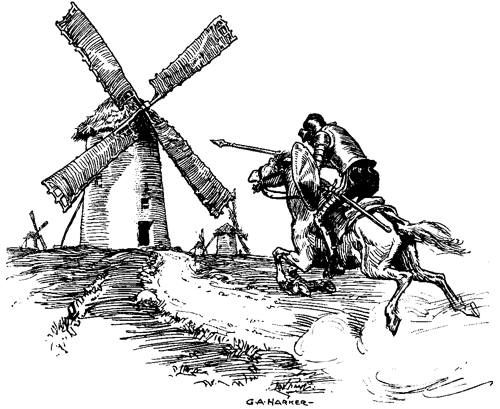
As a post-Enlightenment child, I’ve been steeped in all of its unfound glory, and it’s harder still for me to escape the pull of my Western indoctrination. So, to argue, one is forced to comply with the rules of logic within the limitations of human language—even the limitations of Russell’s language of Logic. And like arguing with a proponent of religion who points out that you can’t disprove his Ethereal Unicorn, one is forced into positions of arguing against Quixotic figments introduced as metaphysical elements.

Sam Harris and the Myth of Perfectly Rational Thought

…and Justice for All

1–2 minutes

I’ve been out of sorts as of late, too busy to be contributing to this blog. Abstract philosophy, as Geuss notes, is a field for the comfortably idle. I’ve been in the midst of a divorce, and it’s not that I don’t think about the abstract, but my focus is pulled toward the mundane. The US court system comes to mind. I’ve already served on several juries, so I understand how pathetically that side is structured; I’ve been of the claimant/petitioner side and the defence side, and now I am a respondent. I’ve never been an attorney or barrister, nor have I been a judge, but I’ve known some of each, and it’s really a blind faith they have in the system—as well as a paycheque (let’s be honest here)—that keeps them going. As Upton Sinclair once noted, ā€˜It is difficult to get a man to understand something when his salary depends upon his not understanding it’. Between this and escalating commitment, this poor excuse for a system is going nowhere fast.

“It is difficult to get a man to understand something when his salary depends upon his not understanding it.” — Upton Sinclair

I don’t even believe there is suchĀ thing as Justice, let alone some ability to systematise it. As I mentioned in my last post, the system is constructed to prioritise consistency over outcome and favour deontology over consequentialism with just a smidgen of virtue ethics for good measure, but it’s all still just smoke…… and mirrors. It’s theatre—procedure for procedure’s sake. I guess that Foucault may have been right about the Power bit, but there’s more nuance than that.

Meantime, I am trapped in this flawed system trying to navigate between Scylla and Charybdis. If I’m not out by the end of the month, come in to rescue me.

—Decidedly not a fan.

On Property

2–3 minutes

We take property for granted. John Locke espoused life, liberty, and property. Rousseau observed thatĀ ā€œThe first man who, having fenced in a piece of land, said ā€œThis is mineā€, and found people naĆÆve enough to believe him, that man was the true founder of civil society. From how many crimes, wars, and murders, from how many horrors and misfortunes might not any one have saved mankind, by pulling up the stakes, or filling up the ditch, and crying to his fellows: Beware of listening to this impostor; you are undone if you once forget that the fruits of the earth belong to us all, and the earth itself to nobody.ā€

The first man who, having fenced in a piece of land, said “This is mine,” and found people naĆÆve enough to believe him, that man was the true founder of civil society.

But property and its defence is nothing more than some accepted rhetoric. Libertarians presume this to be some inviolableĀ right, and Anarchists and Socialists believe that property—well, private property anyway; real property—is a common good.

I have an issue with ownership of real property, though I don’t have such a strong opinionĀ on possession. In reality, this is more of a practical matter than a defensible philosophical position. It has emotivist roots. As Hobbes noted (or I’ll paraphrase liberally), even animals in his state of nature have possessions, but there is no right to these possessions (which belong to the monarch anyway in society); there is only the ability to try to retain ownership through force.

In practice, this is what society does. Insomuch as the force is more potential than kinetic, allowing the state or community to exercise this force by proxy, it is not dissimilar to our consumption of meat products at arm’s length by sheltering the violent reality by intermediary grocers.

And we shelter ourselves through language. We don’t eat cows and pigs, we eat beef and pork, chateaubriand and bacon.

Returning to property, real property, it’s yours as long as you possess it, but it is not yours from a distance, and it’s not yours to bequeath. If we are to embrace capitalism—which I don’t, but for the sake of argument—, we should allow the property to go to the purpose that will provide the greatest utility. History as a judge demonstratesĀ that it is unlikely to happen to be the someone’s heirs.

Spheres of Justice

2–3 minutes

I’ve recentlyĀ happened upon Michael Walzer, and it turns out I agree with much of what he has written about in the realm of political philosophy. Although he published, Spheres of Justice in 1983, he may be more famous for Just and Unjust Wars:Ā A Moral Argument With Historical Illustrations. I am more interested in the former, and this work integrates well with Benedict Anderson‘sĀ Imagined Communities.

In the realmĀ of philosophy, it’s no mystery to those who know me that I am a Subjectivist, but I still need to operate in this physical socio-political domain, which is what attracts me to political philosophy.

I like to make an analogy relative to religious belief. Philosophically, I consider myself to be an igtheist, which is to say that I don’t really care about god or gods or ‘the universe’ or some metaphysical superpowerĀ in the abstract, but practically speaking, I am an atheist. The reason being that the non-existence of gods is irrelevant in a world where people behave as if there is one and create moral positions and form legal systems based on this premise, thus infecting these systems, so one needs to be an active atheist in order to disinfect the systems and extricate religion from it. Without getting too far off track, I am not saying that religious belief has had no benefit to ‘human progress’, but the price we pay is too high. The cost-benefit calculus is not favourable.

Walzer and Anderson both understand theĀ constructed nature of political identity, whether self, family, community, state, nation, all of humanity, or beyond. It’s all relative. Some modern political philosophers like Rawls and Nozick try to rise above the inherent relativity in this constructionist view, but after all the trying, their attempts are weak tea, as theirĀ solutions are also constructed.

In the end, politics and perhaps all of perceived reality are social constructs, whose major survival mechanism is rhetoric. The more convincing the argument, the better. In fact, the reason I have adopted this worldview is only thatĀ the rhetorical narrative resonates with me better than some other. Ditto if you concur, and ditto if another narrative resonates for you, whether Christianity, Pastafarian, a starchild, or a nihilist.

battleOfTheBean[1]

Given this, it makes me wonder how other people choose the rhetoric they have rather than my (obviously superior) version.

quote-i-am-by-far-your-superior-but-my-notorious-modesty-prevents-me-from-saying-so-erik-satie-49-63-66[1]

EDIT: After I wrote this, I happened upon a short(ish) video promoting veganism and commenting on the construction of culture, so I am adding it. James Wildman


Movement Is Not Progress

2–3 minutes
Before creating this, I searched online for instances of ‘movement is not progress‘ and ‘motion is not progress‘. I got results, but these results were generally either motivational or spiritual, which may amount to a different side of the same coin. To this contingent, movement is a necessary but not sufficient condition for progress. The dictionary defines progress as:

1. Forward or onward movement towards a destination

— or —

2. Development towards an improved or more advanced condition

Progress appears to be related to a specific type of movement: forward, but this still doesn’t seem to capture the essence of what we mean by the word progress. This is captured by the second definition by the inclusion of improved or advanced, but on what dimension are we assessing this improvement? Except in the minds of the adherents, this appears coincidentally to be arbitrary; anything in line with their wishes appears to be an advancement.

Unfortunately, progress is more than this still. Take the expanding universe model as an analogy—let’s not even discuss how a multiverse would further exacerbate things. Imagine that I can travel from Earth to Mars, and if I define Mars as the destination, then I have satisfied definition NĀŗ 1, as I have made progress towards Mars (my stated destination), but I haven’t actually made any improvement. All I’ve done is changed position. I’ve gone from here to there, but now there is here, and here is there. If I retrace my route from Mars to Earth, again I’ve made progress under the first definition, but, in fact, I’ve just completed a circuit. Sure, I can argue that I may have done something on Mars that I can label progress: perhaps I’ve planted a flag or started a colony, but how is this progress? Following the same logic, is a cancer in your pancreas colonising your, well, colon progress? A disinterested observer taking the perspective of the cancer might say that the cancer has progressed or spread, but the patient may disagree with the assessment of progress.

In the sense that history is (anecdotally) written by the victors, we may have the illusion of progress, but as notables from Rousseau to Thoreau have quipped, progress is no progress. Even so, this progress presumes a wholesale concept of worse and better, yet there is no objective measure. This can only be claimed within some context. So, if I accept, within in the human domain, that Capitalism is better than Feudalism, then I can claim to have progressed. If I build a house on a plot of land, I can claim progress. Of course, to the previously standing wood, this is no progress. To the creatures who had occupied the wood, again, no progress. So, is progress a zero-sum game that I can qualify as a positive sum game by narrowly defining the system boundaries? Probably so, but let’s leave that for another day.

ā€œDo not confuse motion and progress. A rocking horse keeps moving but does not make any progress.ā€ ― Alfred A. Montapert

So what’s my point? My point is that there is only the illusion of progress, and that only in the realm of jingoistic specieism can we accept this illusion. In reality, there is no progress; there just is. We just are.

Justice or nonsense?

Why should justice be the foundation of a society, and why not something else, say, honour or valour or wealth? What do we mean when we say justice? Do you mean the same thing as me? Dating myself to be sure, but would a Klingon from the Star Trek universe share your definition? So what is justice anyway?

legiao_W8DiZkmnspwzXaYu3AUoEM7xeQSCOLfcHlyGPNb_Ij[1]

ā€˜Justice is the constant and perpetual will to render to every man his due. Jurisprudence is the knowledge of divine and human affairs and knowledge of what is just and what is unjust’, or so writes Justinian in Institutes 1.1Ā in 533 CE.

ā€œIustitia est constans et perpetua voluntas ius suum cuique tribuens.Ā  Iuris prudentia est divinarum atque humanarum rerum notitia, iusti atque iniusti scientia.ā€

This is Justinian’s answer to the question: What is justice? In his Philosophy and Real Politics, Geuss relates that ā€˜justice is the constant and unflagging will to render to each person what is due to him’ (or perhaps ā€˜what he’s entitled to’), and thereinĀ lies the rub: what exactly is one entitled to?

GeussĀ goes on to point out that entitlement was contingent to one’s place in society. Citizens were entitled to some things, resident aliens another, and slaves, pretty much nothing at all. In fact, giving a slave more than s/he was entitled to would be considered unjust, as it would be considered to be undeserved. As Geuss writes, ā€˜that to treat a slave as if he or she had any entitlements would be a gross violation of the basic principles of justice’. Of course, you are thinking, post-Enlightenment ā€˜all men are created equal’, or so the saying goes.

US-Camp_x-ray_detainees-Guantanamo-Bay-Jan-11-2002-Phot-Shane-T-McCoy-US-Navy-Creative-Commons-513x239[1]In practice, it’s been easy to sidestep the application of justice by redefining a certain group to be outside of some protected group. During the illegal aggressionĀ by the United States against Middle Eastern countries that resulted in extraordinary rendition of civilians spirited off to GuantĆ”namo Bay, Cuba, off the coast of the United States and outside of their jurisdiction, their acting regime declared that the detaineesĀ were not people, strictly speaking, and as such were not subject to the protections afforded to people, therefore they had noĀ access to justice.

ā€œJustice is the first virtue of social institutions, as truth is of systems of thought.ā€
— John Rawls, A Theory of Justice

b011e383c73a4a0face4764413964684_Large
Hermione’s Time Turner

The ancient Greeks had a different idea of justice, so perhapsĀ we just need to break out our trusty time turner to see what Aristotle had to say about it.

Here Aristotle rather equates the notion of justice to that of equality, but that begs the question: what equality? as we understand that equality comes in a variety of colours, so I won’t belabour the point any further here.

Instead of asking about justice, why don’t we focus on the root of the word, just? This yields the following definition:

Just: (adj)Ā based on or behaving according to what is morally right and fair

This brings us into the normative domain of morality, fairness, and reason, so it’s not much to work with—basically, we are in the realm of opinion defended by rhetoric.

For ‘all’ intents and purposes, we’ve got four forms of justice. We’ve been focused on theĀ distributive type, but there are also procedural, restorative, and retributive varieties. In many cases, not just one form of justice is satisfying and so multiple varieties are deemed, well, just.

  • Distributive or economic justice is about fairness in how things are distributed, about getting a fair share.
  • Procedural justice is also about fairness, but it’s more aboutĀ fair play, an even playing field.
  • Restorative justice is about compensating for an injustice, about restoring some perceived balance.
  • Retributive justice is about punishment—retribution.

A problem arises when we try to quantify and measure justice. Consider distributive justice: If two people work in a field and each cultivates 50% of the crop, are each entitled to 50% of the yield? If the cultivated land was the ‘property’ of some other landowner, what portion would s/he be entitled to? All of it? Some of it? None of it?

What about the court system? Procedural justice comes into play here. Should a wealthy person have access to better attorneys than a poor person? Is this just? The poor person may argue no, but the wealthy person may argue that s/he earned the ability to pay for a better lawyer, so s/he is entitled to this benefit.

Restorative justice sounds simple at the surface. If I steal a loaf of bread, wouldn’t returning the loaf (or, at least, a similar loaf) be restorative—no harm, no foul? Many people will argue that this is not good enough. Balance has not been restored.

This is where retributive justice comes into play. Retributive justice is a poorly veiled euphemism for vengeance. This is where Hammurabi‘s code (orĀ Leviticus‘)Ā Ā eye for an eye—but not Matthew‘s turn the other cheek rendition—comes in. Let’s not get into Nietzsche’s take on forgiveness as being unjust and part of slave morality.

Keep in mind that in Hammurabi’s code, as with Roman law, justice was relative: Given eyes, (NĀŗ 196) ā€˜If a man put out the eye of a nobleman (amelu), his eye shall be put out’, yet (NĀŗ 198)Ā ā€˜If he puts out the eye of a freedman or breaks the bone of a freedman, he shall pay one gold mina’.

Through all of this, we are still left wondering: just what is justice besides some vague notion constructed solely to preserve the status quo.

Sources:

  1. http://legalhistorysources.com/LisbonRights/JusticeDefinitions.htm
  2. http://changingminds.org/explanations/trust/four_justice.htm
Image

So What?

Morality is a human construct. More specifically, it is a normative construct of language. It is used as a tool to maintain power and promote normalcy, but so what?

People are indoctrinated with this normative perspective, but accept it as some self-evident truth. But there is no absolute truth. This, too, is a contextual function of language.

Since the dawn of civilisation—and perhaps longer—, humans haveĀ been constructing moral codes of behaviour. From attributing moral origins to supernatural gods, they’ve attempted to move to a secular humanist vantage, ascribing these powers attributed to nature, but this is little more than a metaphysical euphemism in order to appear to be more scientific as a resultĀ of Enlightenment.

Clinging to absolute morality is like clinging to religion and gods.

As Marx said, ‘religion is the opiate of the masses.’ Clinging to a sense of absolute morality is not much different to clinging onto religion and gods. There’s a sense of security. It’s comforting and weaved into the fabric of most societies.

Still, so what? As long as the masses prefer to believe that morals somehow exist in the wild, and people, being story-lovers, are exploited by persuasive storytellers, we are resigned to this situation.