Midjourney Video Renders

Yesterday, I wrote about “ugly women.” Today, I pivot — or perhaps descend — into what Midjourney deems typical. Make of that what you will.

This blog typically focuses on language, philosophy, and the gradual erosion of culture under the boot heel of capitalism. But today: generative eye candy. Still subtextual, mind you. This post features AI-generated women – tattooed, bare-backed, heavily armed – and considers what, exactly, this technology thinks we want.

Video: Pirate cowgirls caught mid-gaze. Generated last year during what I can only assume was a pirate-meets-cowgirl fever dream.

The Video Feature

Midjourney released its image-to-video tool on 18 June. I finally found a couple of free hours to tinker. The result? Surprisingly coherent, if accidentally lewd. The featured video was one of the worst outputs, and yet, it’s quite good. A story emerged.

Audio: NotebookLM podcast on this topic (sort of).

It began with a still: two women, somewhere between pirate and pin-up, dressed for combat or cosplay. I thought, what if they kissed? Midjourney said no. Embrace? Also no. Glaring was fine. So was mutual undressing — of the eyes, at least.

Later, I tried again. Still no kiss, but no denial either — just a polite cough about “inappropriate positioning.” I prompted one to touch the other’s hair. What I got was a three-armed woman attempting a hat-snatch. (See timestamp 0:15.) The other three video outputs? Each woman seductively touched her own hair. Freud would’ve had a field day.

In another unreleased clip, two fully clothed women sat on a bed. That too raised flags. Go figure.

All of this, mind you, passed Midjourney’s initial censorship. However, it’s clear that proximity is now suspect. Even clothed women on furniture can trigger the algorithmic fainting couch.

Myriad Warning Messages

Out of bounds.

Sorry, Charlie.

In any case, I reviewed other images to determine how the limitations operated. I didn’t get much closer.

Video: A newlywed couple kissing

Obviously, proximity and kissing are now forbidden. I’d consider these two “scantily clad,” so I am unsure of the offence.

I did render the image of a cowgirl at a Western bar, but I am reluctant to add to the page weight. In 3 of the 4 results, nothing (much) was out of line, but in the fourth, she’s wielding a revolver – because, of course, she is.

Conformance & Contradiction

You’d never know it, but the original prompt was a fight scene. The result? Not punches, but pre-coital choreography. The AI interpreted combat as courtship. Women circling each other, undressing one another with their eyes. Or perhaps just prepping for an afterparty.

Video: A battle to the finish between a steampunk girl and a cybermech warrior.

Lesbian Lustfest

No, my archive isn’t exclusively lesbian cowgirls. But given the visual weight of this post, I refrained from adding more examples. Some browsers may already be wheezing.

Technical Constraints

You can’t extend videos beyond four iterations — maxing out at 21 seconds. I wasn’t aware of this, so I prematurely accepted a dodgy render and lost 2–3 seconds of potential.

My current Midjourney plan offers 15 hours of “fast” rendering per month. Apparently, video generation burns through this quickly. Still images can queue up slowly; videos cannot. And no, I won’t upgrade to the 30-hour plan. Even I have limits.

Uses & Justifications

Generative AI is a distraction – an exquisitely engineered procrastination machine. Useful, yes. For brainstorming, visualising characters, and generating blog cover art. But it’s a slippery slope from creative aid to aesthetic rabbit hole.

Would I use it for promotional trailers? Possibly. I’ve seen offerings as low as $499 that wouldn’t cannibalise my time and attention, not wholly, anyway.

So yes, I’ll keep paying for it. Yes, I’ll keep using it. But only when I’m not supposed to be writing.

Now, if ChatGPT could kindly generate my post description and tags, I’ll get back to pretending I’m productive.
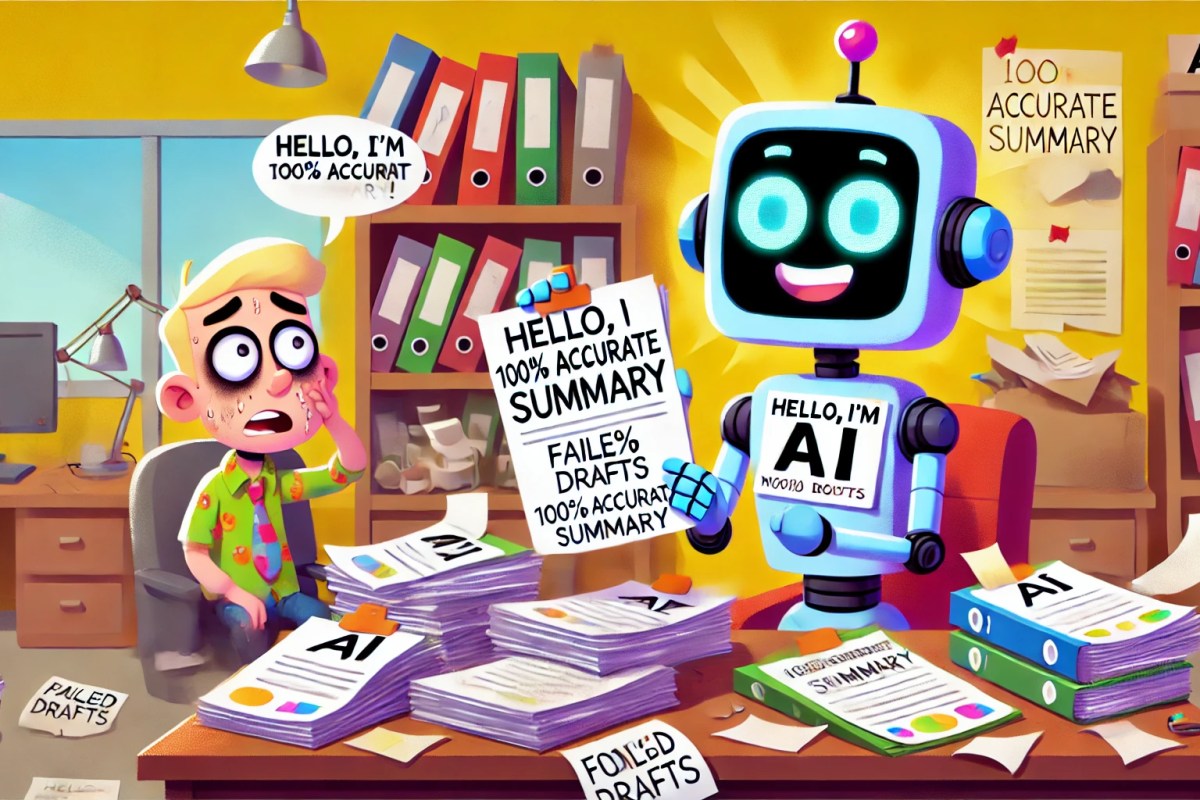
Beware the Bots: A Cautionary Tale on the Limits of Generative AI

Generative AI (Gen AI) might seem like a technological marvel, a digital genie conjuring ideas, images, and even conversations on demand. It’s a brilliant tool, no question; I use it daily for images, videos, and writing, and overall, I’d call it a net benefit. But let’s not overlook the cracks in the gilded tech veneer. Gen AI comes with its fair share of downsides—some of which are as gaping as the Mariana Trench.

First, a quick word on preferences. Depending on the task at hand, I tend to use OpenAI’s ChatGPT, Anthropic’s Claude, and Perplexity.ai, with a particular focus on Google’s NotebookLM. For this piece, I’ll use NotebookLM as my example, but the broader discussion holds for all Gen AI tools.

Now, as someone who’s knee-deep in the intricacies of language, I’ve been drafting a piece supporting my Language Insufficiency Hypothesis. My hypothesis is simple enough: language, for all its wonders, is woefully insufficient when it comes to conveying the full spectrum of human experience, especially as concepts become abstract. Gen AI has become an informal editor and critic in my drafting process. I feed in bits and pieces, throw work-in-progress into the digital grinder, and sift through the feedback. Often, it’s insightful; occasionally, it’s a mess. And herein lies the rub: with Gen AI, one has to play babysitter, comparing outputs and sending responses back and forth among the tools to spot and correct errors. Like cross-examining witnesses, if you will.

But NotebookLM is different from the others. While it’s designed for summarisation, it goes beyond by offering podcasts—yes, podcasts—where it generates dialogue between two AI voices. You have some control over the direction of the conversation, but ultimately, the way it handles and interprets your input depends on internal mechanics you don’t see or control.

So, I put NotebookLM to the test with a draft of my paper on the Language Effectiveness-Complexity Gradient. The model I’m developing posits that as terminology becomes more complex, it also becomes less effective. Some concepts, the so-called “ineffables,” are essentially untranslatable, or at best, communicatively inefficient. Think of describing the precise shade of blue you can see but can’t quite capture in words—or, to borrow from Thomas Nagel, explaining “what it’s like to be a bat.” NotebookLM managed to grasp my model with impressive accuracy—up to a point. It scored between 80 to 100 percent on interpretations, but when it veered off course, it did so spectacularly.

For instance, in one podcast rendition, the AI’s male voice attempted to give an example of an “immediate,” a term I use to refer to raw, preverbal sensations like hunger or pain. Instead, it plucked an example from the ineffable end of the gradient, discussing the experience of qualia. The slip was obvious to me, but imagine this wasn’t my own work. Imagine instead a student relying on AI to summarise a complex text for a paper or exam. The error might go unnoticed, resulting in a flawed interpretation.

The risks don’t end there. Gen AI’s penchant for generating “creative” content is notorious among coders. Ask ChatGPT to whip up some code, and it’ll eagerly oblige—sometimes with disastrous results. I’ve used it for macros and simple snippets, and for the most part, it delivers, but I’m no coder. For professionals, it can and has produced buggy or invalid code, leading to all sorts of confusion and frustration.

Ultimately, these tools demand vigilance. If you’re asking Gen AI to help with homework, you might find it’s as reliable as a well-meaning but utterly clueless parent who’s keen to help but hasn’t cracked a textbook in years. And as we’ve all learned by now, well-meaning intentions rarely translate to accurate outcomes.

The takeaway? Use Gen AI as an aid, not a crutch. It’s a handy tool, but the moment you let it think for you, you’re on shaky ground. Keep it at arm’s length; like any assistant, it can take you far—just don’t ask it to lead.
