Experience is more important than material wealth because you can’t take it with you.
This is silly on so many levels.
Firstly, you can’t take experiences with you any more than you can take material, so the entire logic is faulty.
Secondly, although unsaid, this is typically uttered by those who equate experience with travel to other places, and so one needs some notion of material wealth to do so.
Thirdly, just being alive and somewhat aware is an experience, but I understand the notion implies a diversity of experience.
Fourthly, you still can’t take it with you.
Personally, I love aphorisms, those near-phatic quips that no one really thinks about, yet they feel that these are somehow guiding principles.
Opposites attract.
versus
Like attracts like.
Which of these is correct?
In fact, each of these statements may be correct; it simply depends on context. The issue is that people spout these off to make a point.
Opposites attract is how we justify when two unexpected people, for example, are together. It is also the basis behind the Jungian anima-animus concept.
Like attracts like may be either to justify why person A is with person B, but it sometimes further is meant to imply a sort of guilt by association.
The other issue is one of dimension. When applied to people, they are multidimensional. So which dimension is opposite and which is like. Of course, we’ll choose the dimension that fits our purposes.
Perhaps a 172 cm brunette woman is a police officer has a life partner who is a 172 cm blonde man, who is a criminal, and who both enjoy art museums.
Without specifying what percentage the likeness needs to be to qualify, if like truly attracted like, wouldn’t the 172 cm brunette policewoman be attracted to another 172 cm brunette policewoman? Or would just another taller policewoman be good enough?
Anyway, nothing earth-shattering here. This is simply another example of the imprecision of language. That, and I couldn’t sleep.
Crispin Sartwell authored an Opinion piece about how to render history, and he presented several alternative perspectives.
The problem is that history is none of these or at least it doesn’t much matter. History is a narrative; it’s rhetoric; it’s a map, and an apparent goal is to simplify trends, but in fact, real history is a complexity of events and simplification is as often as reductio absurdum that not. Sure, facts are sprinkled in so people can latch on to them and say, ‘that happened’. But history is durative. It’s not just a locus of trivia and factoids. Some say that hindsight is 20/20, but even this is untrue. Humans are not very well equipped to perform analysis and even less so when the analysis is complex. We have all sorts of cognitive biases and backwards-form noise into signal or presume some weak link is as a strong link, moreover, a causal link. Humans love the simplistic notion of cause and effect. We rarefyNewton’s Third Law and even adopt this concept into morality vis-a-vis karma: what comes around, goes around. And we apply this to history. But what if history is more like music? What if, as Debussy said, regarding music, that history is the spaces between the notes, between the events?
“Music is the space between the notes.”
— Claude Debussy
In the world of mass market investment, it’s claiming the stock market declined because of some single factor. It’s a nod to facile humans and their limited capacity to grasp complexity and to settle for some heuristic that assuages cognitive dissonance.
On a smaller scale or considering grander themes, Hegel’s Dialectics is functionally decent, but it misses the Butterfly Effect of interrelated events and forces.
Emotivism and the rest are categorised under the non-cognitivist branch whilst ethical subjectivism falls into the cognitivist bucket. Intuitively, humans appear to have an innate bias toward accepting cognitivism, much in the same way as they seem to be wired to believe in supernatural concepts and see images of Jesus in toast. Whether these are vestiges of some successful evolutionary strategy is beside the point, but the problem it creates is that, in contrast, non-cognitivism is perceived as counterintuitive.
In its essence, cognitivism can be distilled down to the belief that moral statements are truth-apt, which is to say that they can be evaluated as true or false. Because of the current created by intuitionists, I lead with my fallback position, which is one of ethical subjectivism or more likely error theory.
Heads I win; Tails you lose
Although for reasons I’ll articulate later, entering a conversation assuming truth-aptness, the conversation can at least focus on the compositionality and universality components because whether I believe that moral statements cannot be evaluated as true or false, the default cognitive position of the general population is that they can be. This is not to say that I identify as a quasi-realist, which is to believe that there is no truth-aptness but to behave (pretend) that they do.
Image: Deciding the truth-aptness of a moral claim
God Is Dead
In his critique of Enlightenment beliefs, Nietzsche declared that ‘God is dead’ as he understood the implications of a society absent a justification for not only believing that morality claims are truth-apt but that they are true, divinated from some metaphysical, supernatural, and universal power. In practice, the Enlightenment replaced God with a rather animated and interactive concept of Nature, hence were born all sorts of natural rights. You may get a sense of some déjà vu, as humans, not being particularly creative, just reappropriated and rebranded the same tropes Theists use prior to that. They just performed a search-and-replace of God with Nature in a manner similar to the Christian appropriation of pagan holidays.
Image: God is dead
Non-cognitivism has generally fallen out of favour primarily because it was sort of painted into a corner by the Frege-Geach (embedding) problem, but this issue is only intractable if you accept the given frame.
I should probably just link out to a different source to explain the Frege-Geach problem because I feel it’s a red herring, which only presents a problem if you accept the frame established by the Structuralist
The problem here is that language is a complex, socially constructed communication system. Even if we accept Chomsky’s theory of the innate ability to parse language, the syntax, lexicon, and grammar are still arbitrary human constructs. I can’t likely repeat this point often enough: humans have a poor track record of creating and comprehending complex systems, examples of which are the various half-cocked socio-political, economic, jurisprudent, and philosophical systems. Hubris is evidently a successful evolutionary selection factor, as it persists everywhere and certainly in people of power.
The logical positivists ran into a similar problem when they proposed the verification principle that asserted that a statement is only truth-apt if it is either an ANALYTICAL statement or a SYNTHETIC statement, and yet this assertion with neither analytical nor synthetic, so it itself does not meet the verification principle. It’s simply a normative prescription.
Fundamentally, this quandary underscores the deficiencies of the constructed language system more than anything else, what I am developing with a working title of Insufficiency Theory. A tangent to this theory is my concept that the only moral truth (and many social truths) are simply rhetorical victories—situations where one agent employing rhetorical devices has convinced others as the truth of some condition.
Intermission
A problem with writing an unstructured stream of consciousness is that you look up and realise your post is getting pretty lengthy, and there is a lot more depth than you expected. Due to this, I am going to unpack this over several posts over several days.
Disclaimer
DISCLAIMER: I am not a professionally-trained philosopher, linguist, psychologist, or gynaecologist for that matter. I had considered studying Linguistics at uni as well as Philosophy, but I opted instead to study Economics and Finance, as these appeared to be more pragmatic. As relates to philosophy and language, I am an autodidact. This said, this particular area is new to me, so I am certain that I am missing key elements and may have large gaps in my understanding. In some cases, I’ve read more excerpts and others’ perspective on these people and their work than their actual work product. I am trying to catch up, but that leads me to a place fraught with selection and affirmation bias—though I do try to comprehend counter arguments as well. Moreover, I am painfully well aware of the Dunning-Kruger effect, and I am trying to allow for enough time to elapse to move further along this curve.
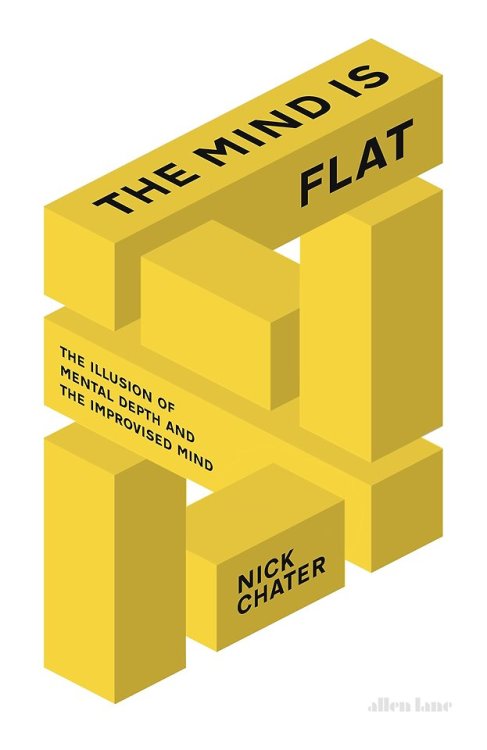
So, given the wide gap between the last post and this, it may be apparent that I’ve been otherwise occupied. I’ve been a bit distracted, but, among other things, I’ve just commenced reading The Mind Is Flat by Nick Chater.
Although this is more about the pseudoscience that is psychology, there is a bit of a philosophical, subjectivist undertone, and I find the political and jurisprudent implications interesting.
No amount of therapy, dream analysis, word association, experiment or brain-scanning can recover a person’s ‘true motives’, not because they are difficult to find, but because there is nothing to find. It is not hard to plumb our mental depths because they are so deep and so murky, but because there are no mental depths to plumb.
Of course, this perspective is right up my street: There is no there there, and this is where it becomes problematic: in the US anyway, much of law is based on the concept intent and motives—and the underlying belief that these can be sussed out. But in reality, as it were, it’s not much more than rhetoric obfuscated with smoke and mirrors.
Our ‘computational innards’ are not a churning sea of experiences, feelings, beliefs, desires, hopes and fears, whether conscious or unconscious. Our mind spins stories about how we work – driven by motives, beliefs, percepts, moral norms, religious precepts. And they are such compelling stories that we can imagine that they are true, or partially true, or surely at least along the right general lines.
From the perspective of evolution, humans are storytellers. More to the point, humans are storylisteners, and they can be are influenced by compelling narratives. These narratives range from a sense of identity to the yarn about history and progress. As Foucault might have noted, people in positions of power leverage these narratives and spin their own in order to maintain their advantage.
In practice, humans are mere parsing machines. Their brains may not work precisely like a computer, but practically, the brain is an interpreter and it generates ‘consciousness’ based on experiences and sense data. Input a new narrative and the brain will interpret it in context with other experiences—or as Chater puts it, ‘motives, beliefs, percepts, moral norms, religious precepts’.
Marketers, politicians, and other hucksters use this to their every advantage.
Well, enough typing for the moment. Back to reading…
I have no idea who wrote the headline for this piece—the title I borrow for this post—, but they didn’t read the article. I was wondering what educated person in the past 10 to 20 years still believes in the perfectly rational actor? The larger question is why educated people believe that humans are on balance more rational than not. It’s not particularly well-written, but, I am a sucker when it comes to articles about cognitive biases.
I have no idea who wrote the headline for this piece, but they didn’t read it. I was wondering what educated person in the past 10 to 20 years still believes in the perfectly rational actor? The larger question is why educated people believe that humans are on balance more rational than not. It’s not particularly well-written, but I am a sucker when it comes to articles about cognitive biases.
As with other concept nouns, rationality feels like it has weight, but it really doesn’t. If we so limit its definition, we can claim that the average person is rational on average, but that’s about it. Of course, almost everyone has ‘the quality of being endowed with the capacity for reason’, but that’s a bit too circular for my comfort.
Keynes understood the absence of rationality when he produced his macroeconomic opus and included a factor for animal spirits, yet adherents to classical and neo-classical economic theory continue to defend their models as good enough even in light of Nobel Laureate, Joseph Stiglitz, who showed that the models needed to follow chaos theory insomuch as a tiny almost imperceptible variance in an input could yield difference in orders of magnitude or even direction, but that’s a horse of a different colour.
DISCLAIMER: I suppose I should have saved this as a draft and finished it later, but I’ve been so otherwise occupied as of late, it will have likely ended up in the bin with the other half-commenced posts, so here it is in its raw stream of consciousness form.
There are no accidents, or so claimed Carl Jung in his work on synchronicity, positing that events may be connected causally or by meaning. Some people see this as the work of some karmic force whilst others use it to suggest that a person is being passive-aggressive.
Karma
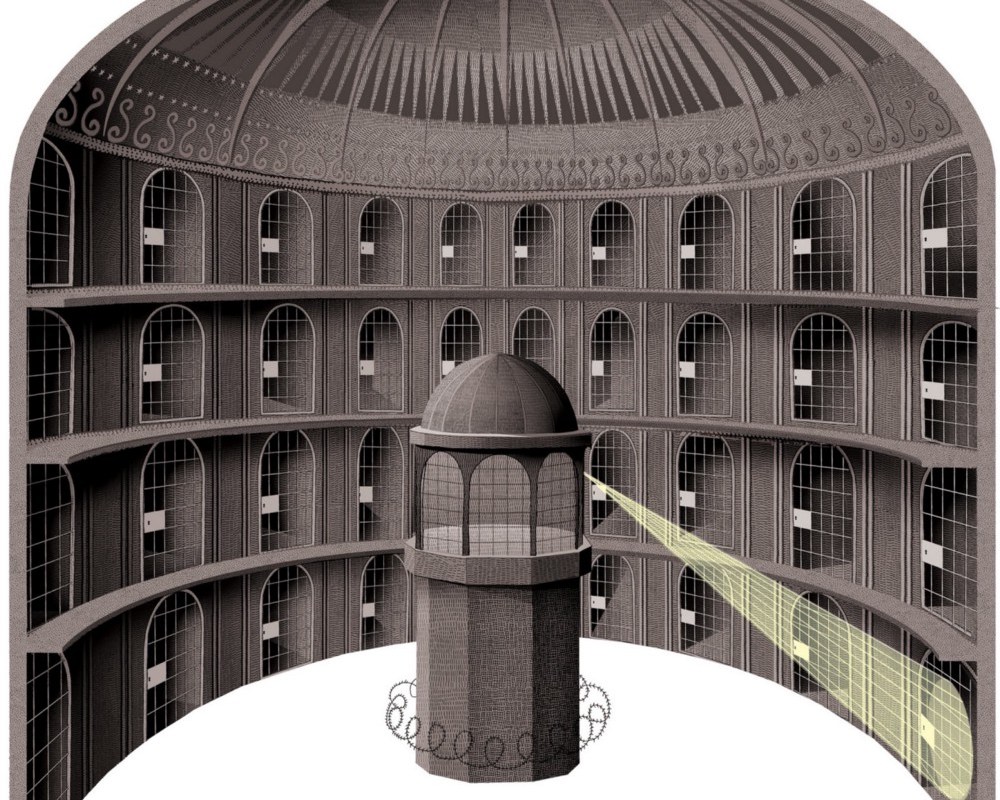
In the karmic sense, this means that there is no escaping fate, and, as with Santa Claus, he is constantly watching you, like some personified panopticon. See the short post on karma, too.
I’m not sure if the bible story of Judas and Jesus is really a karmic anecdote, but under this paradigm, everything is a no-fault situation. Judas was fated to betray Jesus. And despite this lack of responsibility, Judas still committed suicide once he realised what he had done and despite it not being an accident.
Passive-Aggression
In the passive-aggressive sense, it is to say the event A may be caused by something in person B’s unconscious mind—and not by some collective consciousness or a Universal Overseer. So, secretly, if Person B accidentally backed into your parked car, it may not be by some conscious volition; rather, it’s because or some deep-seated anger or other ill-will harboured and directed for you.
The problem is that if you accept that there are no accidents, then you—intentionally or otherwise—parked your car in a place where it would necessarily be hit by someone—by anyone. It just happened to be this other person for whom there are also no accidents. So, both parties are blameless. But people love to blame, and they like to defer responsibility.
Verdict
The bottom line is that both of these concepts are a bit sketchy. In a world of no free will, the karma situation might be plausible, but this wreaks havoc on moral-ethical systems. I discuss that in most post on karma.
I stumbled upon Professor Jordan Peterson and his defenders of virtue morality, like Dr Stephen Hicks, and I decided to watch some vids.
Full Disclaimer: Not a fan
I ended up on his lecture about Carl Jung.
I’d been interested in archetypal and depth psychology for ages, and I’ve read most of Jung’s work. I still own all of the volumes of his complete works. The difference between me and Professor Peterson is that I take it as metaphor and, by his words, I presume that he doesn’t.
The video clip is cued to the location where Jordan says, speaking of Nietzsche,
“…‘God is dead, and we have killed him’ led Nietzsche to pose another question, which was: What are we going to do to replace him? Because Nietzsche believed—and I think he was absolutely right about this. I can’t see how it could be otherwise—, he believed that the morality that had structured Western society was predicated on the fundamental axiom of divinity, and so, as far as Nietzsche was concerned, the whole purpose of morality was dependent on that axiom being true—or at least being accepted as true. And when that axiom was knocked out by, say, the conflict between science and religion—because in some sense that’s what did it—, then the whole system no longer had anything to stand on and could become entirely questionable…”
“The whole purpose of morality was dependent on [the existence of divinity] being true.”
As I’ve said time and again, this is the primary reason people—especially those defending or seeking some sense of status quo, conservative vanguards, and morality warriors—insist on the existence of a real, objective moral centre or a good-enough version of it—one that coincidentally conforms to their worldview.
I’m afraid that I am going to need to hear something well more convincing than that because I’m not buying what these guys are selling.
[EDIT: Researching immediately after I wrote this article, I skimmed—I’ll have to find time to read it later—Turkheimer’s paper Still Missing (PDF, 2011), where he walks back his original assertion.]
The question, “why are children in the same family so different?” is answered, “Because measurable differences in their environment make them that way.”
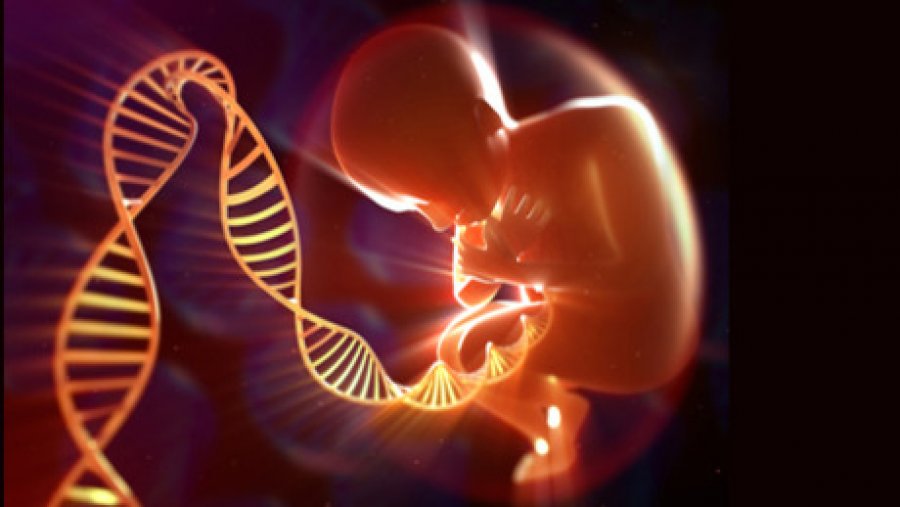
I finished Pinker’s The Blank Slate the other day, but I didn’t have much time to capture my reflections. I’m already onto my next book, Mill’s Utilitarianism, so I figured I record some thoughts before they become too distant.
The First Law: All human behavioural traits are heritable.
The Second Law: The effect of being raised in the same family is smaller than the effect of the genes.
The Third Law: A substantial portion of the variation in complex human behavioural traits is not accounted for by the effects of genes or families.
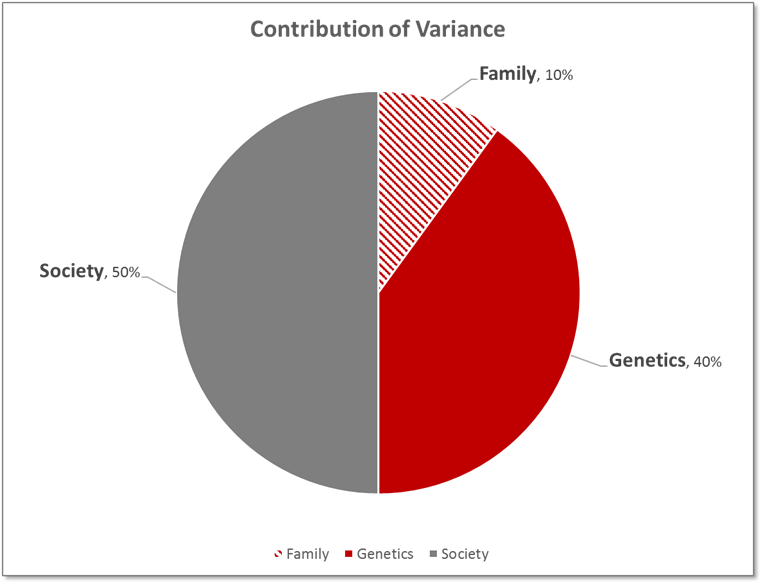
Elaborating on this, he summarises Turkheimer’s assessment on the variance in personality contributable to three factors: genetics, society, and family. According to this theory, variations in personality due accounted for by environment, are composed as
50 percent accounted for by society (non-shared environment); 40 – 50 percent accounted for by genetics (biology) and 0 to 10 percent attributable to family (shared environment). In his assessment, he was able to eliminate usual-suspect factors like birth order and siblings.
“Genotype is in fact a more systematic
source of variability than environment.”
According to Pinker, the 0 to 10 percent is generous, and it could just as well be 50% society and the rest is genetics. That doesn’t leave a lot of room for psychoanalysis, a discipline who strongly pushes back on this concept—just with emotional appeal in lieu of science.


![dunning-kruger-graph[1]](https://philosophics.blog/wp-content/uploads/2018/07/dunning-kruger-graph1.gif)

 Philosophics